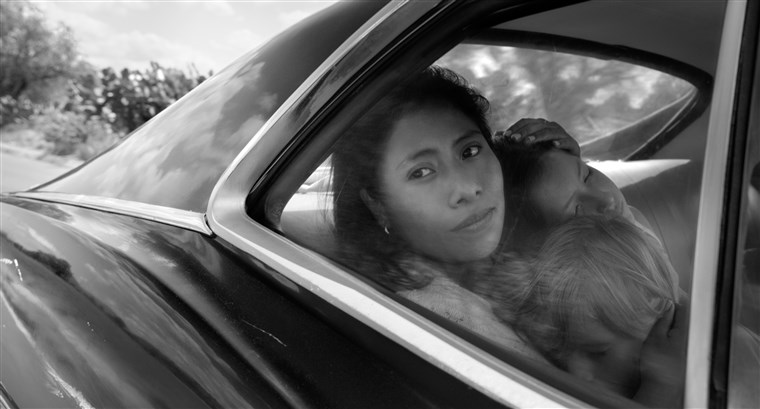
Mexican filmmaker Alfonso Cuarón returns with a stunning, yet melancholic film sure to dazzle audiences who catch his latest work, “Roma,” on the big screen.
Dripping in contrast thanks to its harsh black-and-white cinematography, “Roma” is a rich and searing look into Cuarón’s mind through a portrait of his childhood, and yet, chances are you’re never going to get the full “Roma” experience.
Purchased by Netflix as the streaming service’s premiere awards season contender, “Roma” has had a minor run theatrically in larger markets across the world before making its online debut Friday.
While this has made the wonderful drama much more accessible to the average moviegoer, ninety percent of audiences for “Roma” will never experience the film as Cuarón intended, especially disappointing given the picturesque, 65mm black-and-white style used to shoot “Roma.”
There are countless articles online that offer tips on how to configure televisions for optimal viewing of “Roma” for those inclined to get as close as they can to the real thing.
Set over the course of a year in early 1970s Mexico, “Roma” follows Cleo, a young live-in housekeeper in the employ of a middle-class family living in Mexico City.
Told in a lingering observational style for much of the film’s two-hour running time, “Roma” often relies on mood, non-verbalized emotion and framing to paint a broad picture of the struggles of two women, Cleo and Sofia, the matriarch of the family and mother to the four children in Cleo’s care.
“Roma” is by no means an easy watch. There’s an expectation of supreme patience and observation on the part of the viewer to take in the artistry of Cuarón’s work that’s far easier to accomplish in a theater than on a home television or cell phone.
First time actress Yulitza Aparicio wows with an understated, raw performance that feels effortless yet makes Cleo feel very lived in as a character. Her award-worthy turn feels especially natural due to the way Cuarón frames Aparicio in each shot, allowing audiences to peer inside Cleo’s innermost thoughts without Aparicio having to express them in dialogue.
Marina de Tavira also stands out in limited screen time as Sofia, balancing compassion for Cleo with a wavering confidence she attempts to maintain for her children.
The men of “Roma,” few and far between, are portrayed at a distance rather than the intimate closeness audiences feel in Cleo’s presence. This extends to the coldness of the performances themselves, where Fernando Grediaga as Sofia’s husband Antonio and Jorge Antonio Guerrero as Cleo’s boyfriend Fermin display a callousness rare to find in these sorts of family dramas.
So much of “Roma” feels semi-autobiographical that Cuarón himself becomes the film’s true star despite never appearing on screen. Moments of clarity from memories past bring themselves to life through Cuarón’s art, much like a master painter leaving broad strokes for viewers to interpret.
The most striking aspect of “Roma” is its technical achievements in visual and sound design.
Cuarón steps behind the camera to do his own cinematography for the first time and displays expert craftsmanship over long panning shots that track movement fluidly and smoothly in a way that makes viewers take notice but does not distract from the action on screen.
This is most evident in the film’s best scene, one continuous shot that follows Cleo and the children across a beach and into the ocean and back. There is an immediacy to the cinematography here that gives a floating effect, almost as if audiences are reflecting on a distant memory with vivid recollection.
The same is true of the film’s expert sound mixing and design, which at first glance isn’t recognizable until voices or other sounds pull viewers’ gazes away from the screen only to realize what they thought they heard from around them was technical wizardry from “Roma.”
The film is destined to garner Academy Award nominations across the board and is the clear frontrunner in the Best Foreign Language Film category this spring.
A Best Picture nod is all but assured, though victory in that category is less likely than say, A Star is Born or Green Book, given the Oscars’ preferential balloting system for the category usually results in the most agreed upon good film rather than the best one.
Netflix has placed all its weight behind Cuarón’s dynamic film in search of its first Best Picture win, though voters could opt to recognize Cuarón as Best Director to shut out the streaming service while still honoring “Roma” as a cinematic achievement.
Worth seeing in any format, “Roma” is best when viewed on the biggest possible screen with the least amount of distractions. Patient audiences should be rewarded with one of the year’s best dramas from a master craftsman like Cuarón.