Category: Oscar Contenders

Oscar contenders, awards-season coverage, awards predictions, nominations, and ceremony analysis. Historical archive category retained at its original URL; use selectively for awards-relevant articles.

  • Revisiting the Oscars: In defense of La La Land

    Revisiting the Oscars: In defense of La La Land

    Heading into last night’s Academy Awards ceremony, I was fully prepared to write another glowing column about “La La Land,” raving about the film’s actual merits on a night that felt like Damien Chazelle’s masterpiece was going to be picked apart by fans of other nominated films and later derided as “not a good Best Picture winner” by those who actively dislike the movie.
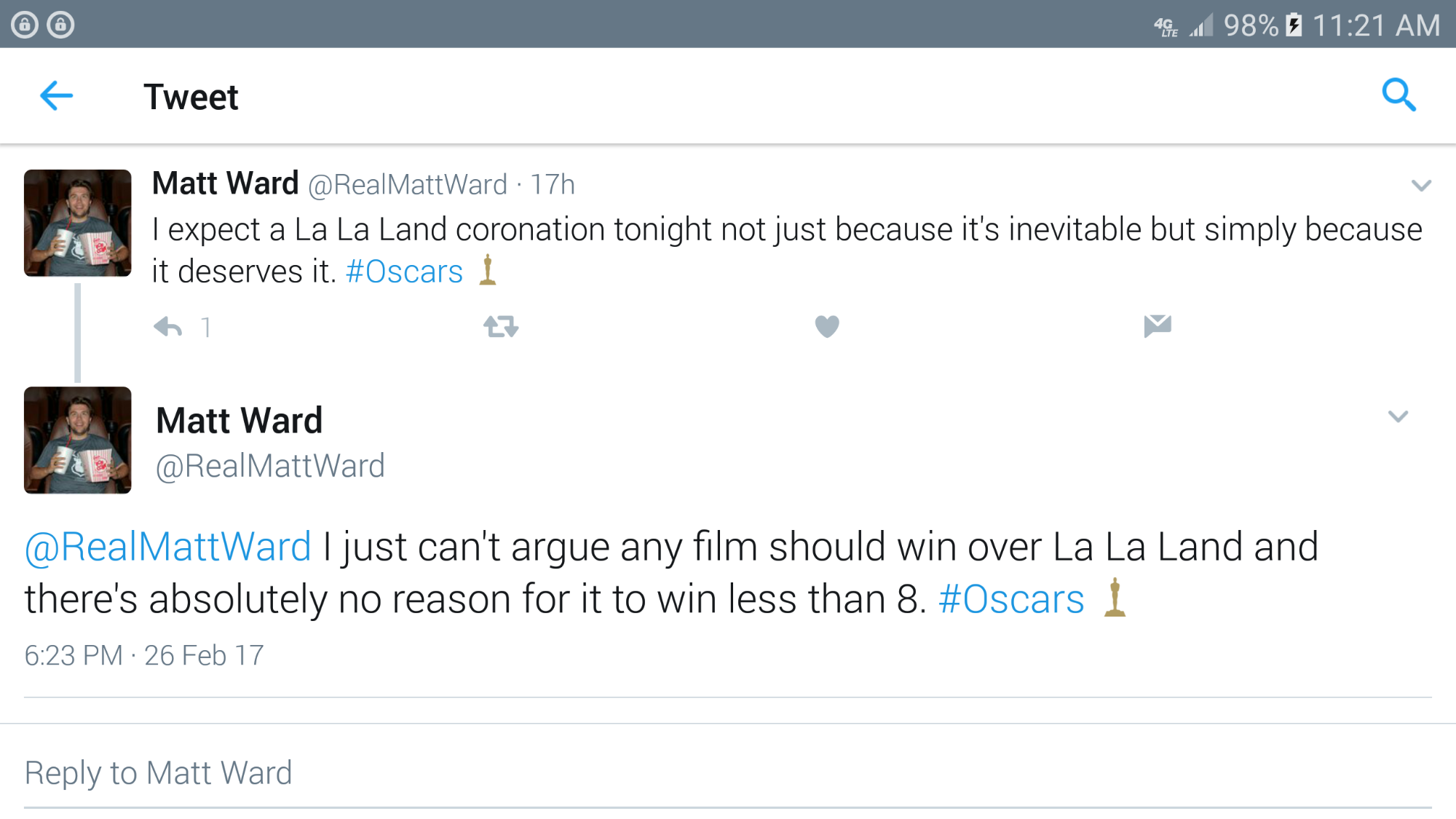
    Today, less than 24 hours after the Oscars, I still can’t find any reasonable argument that “La La Land” wasn’t the best cinematic experience of 2016, the perfect blend of commercial success and critical darling that we as moviegoers deserved to see win the Academy’s top prize.

    The fact that it tied with “Titanic” and “All About Eve” for the most nominations ever (14) or that it’s the 11th film in history to win six Oscars feels hollow now. And it’s not because of anything “La La Land” did or didn’t do or that “Moonlight” won Best Picture, signaling a whole new era of small, intimate independent filmmaking taking major strides forward in how we view quality cinema.

    I’m sad today because of the perception “La La Land” is left with – the “Yeah, but…” cinematic footnote it’s become and how it will be forever remembered in trivia lore as the only film to start accepting a Best Picture Oscar it didn’t actually receive.

    I’m hoping I can watch “La La Land” again without the mental stain I feel right now, without constantly second-guessing every note and line, every camera angle and lighting choice, every dance move and time cut, the Best Picture “what ifs.” Because I don’t know that I can.

    Because of my unhealthy obsession with Chazelle’s films, I saw “La La Land” in theaters seven times over the course of a month, finding something unique and new each time I watched it.

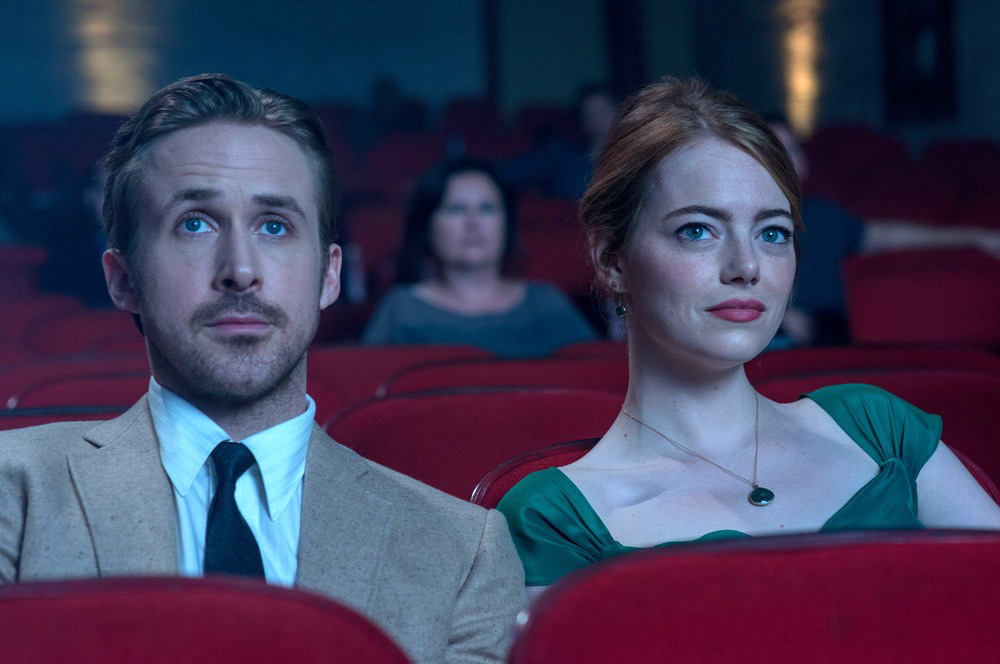
    I fell in and out of love with Emma Stone’s Mia (the character, not her Oscar-winning performance) as I found myself connecting with Ryan Gosling’s passionate Sebastian more and more with each viewing. I took note of all the little details he remembered about her life, how unwavering his support of Mia’s acting was and how devastating it was to watch him sacrifice himself for her so she could be truly happy, even if it wasn’t with him.

    With the help of the “La La Land” soundtrack on heavy rotation, I learned greater appreciation for the film’s much beleaguered musical numbers which suffered from poor sound mixing that muffled the live vocal track with the instrumental track and rendered much of the film’s dazzling opening number “Another Day of Sun” indecipherable. By viewing five, I was singing along with Seb and Mia during “A Lovely Night” and the Oscar-winning “City of Stars” because I simply couldn’t help myself.

    I grew to love composer Justin Hurwitz’s orchestral score more and more as I kept hearing each of the film’s major themes in small, intricate background moments that underscored the film’s bold lead acting performances. The soft guitar rendition of “City of Stars” mellowing out Mia and Seb’s first date on the Warner Brothers lot, the Lighthouse Café jazz band playing “Another Day of Sun” in blistering fashion, the musicality of “La La Land” hits you in waves you simply just can’t appreciate in one screening.
    Chazelle more than earned his Best Director Oscar with a wonderfully composed film that exudes technical craftsmanship, attention to the smallest detail and celebration of the human spirit. 

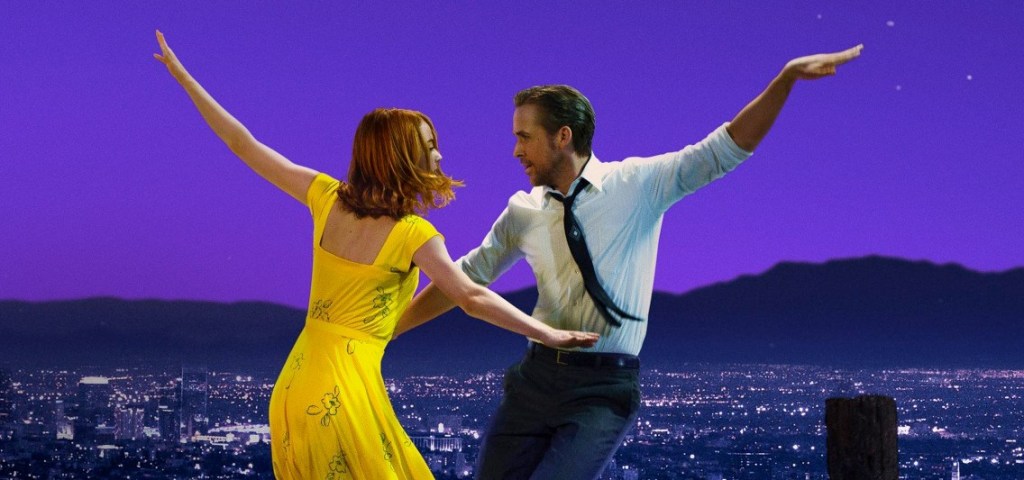
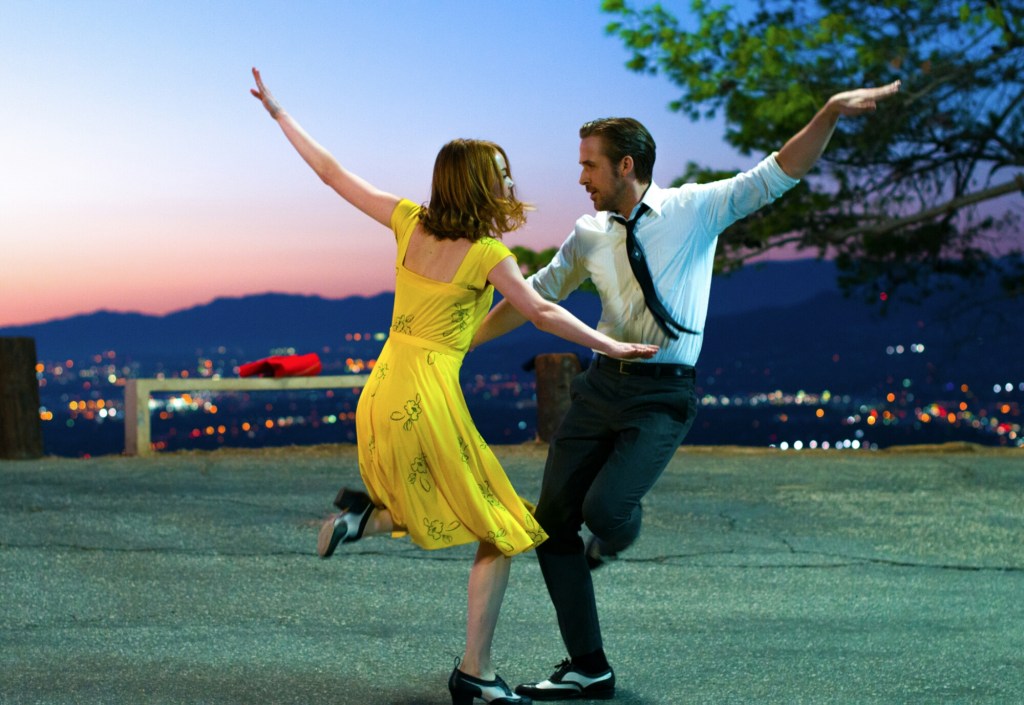
    Just watch the six-minute segment including the terrific song-and-dance number “A Lovely Night.” Shot all in one take on just the fourth try, Gosling and Stone carry on a flirtatious conversation along a dark street, sing a surprisingly challenging song live only to break out in a complicated two-minute dance sequence and head back into normal conversation without stopping. The technical precision involved in pulling off this cinematic feat is incredible, especially when you consider how Oscar-winning cinematographer Linus Sandgren was following the pair around the entire time on a crane.

    Cinema this good shouldn’t be possible. And yet somehow it is.

    Perhaps the smartest thing Chazelle did in “La La Land” – better than any camera movement or line of dialogue – was in casting top-notch actors rather than top-notch singers to bring Sebastian and Mia to life.

    At the end of the day, “La La Land” is as much a nostalgic, romantic drama as it is a movie musical, if not much more so. Remove the big dance numbers at the top, “Another Day of Sun” and “Someone in the Crowd,” and what you’re left with is still one of the three best films of 2016 that focuses more on the concept of following your heart or following your dreams and how difficult choosing one over the other might be.

    Singers who might have been able to project “City of Stars” and “A Lovely Night” better, those who could belt the high notes with the best of them, could have made “La La Land” a prettier sounding musical than the grittier, flawed soundtrack the film ultimately has. But there’s so much beauty within the flaws of Seb and Mia’s singing that help develop actual character and authenticity in the film.  Broadway singers could not pull this off. Their tone may be flawless, but the film’s tone would ring false.

    The best scenes in “La La Land” aren’t even the musical numbers. Gosling and Stone have such remarkable chemistry that scenes like their candlelit dinner argument, the Warner Brothers lot date, and the “Maybe I’m not good enough?” scene outside Mia’s house stand on their own as some of the year’s best straight-up acting work, rivalling scenes from heavy, character-driven dramas like “Fences” and “Manchester By The Sea.”

    Somehow, six Oscar wins and 14 nominations don’t feel like enough for “La La Land,” a film so special on its own merits that the irrational need for some to tear down “La La Land” as a means of lifting up “Moonlight” feels incredibly disingenuous.

    Both films are terrific, but “La La Land” stands out more for what is actually on screen, rather than what it represents as part of an ongoing cinematic and political narrative. It’s frustrating to see one of my favorite films this decade get caught in the middle of the crossfire.

    “La La Land” is a nearly flawless film.

    One award show miscue cannot change that.
  • Academy Awards stunner: Surprise winner Moonlight steals Oscars stage

    Academy Awards stunner: Surprise winner Moonlight steals Oscars stage

    Odds are that you probably haven’t seen this year’s Academy Award winner for Best Picture.

    And no, it isn’t Damien Chazelle’s poignant, bittersweet film “La La Land” about two struggling artists who fall in love in modern Los Angeles that just happens to be one of the most widely seen Oscar contenders in years.

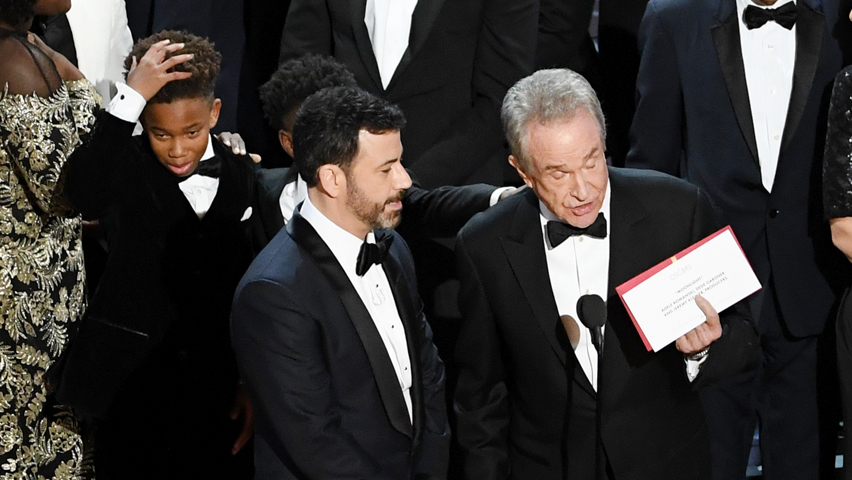
    “Moonlight,” an intimate independent feature from Barry Jenkins, took home the prize after “La La Land” was mistakenly awarded Best Picture. The film is a heartfelt, emotional journey told in three parts about Chiron, a young African-American boy growing up with a drug-addicted single mother living in Miami. Throughout the feature, Chiron struggles to find positive influences and role models as he seeks to find his own identity, both sexually and emotionally.

    Driven by a Best Adapted Screenplay winning script, “Moonlight” features a Oscar-winning performance from “House of Cards” star Mahershala Ali, who elevates his game to another level as Juan, the charismatic drug dealer with a soft spot for young Chiron. His ability to give Juan equal parts hard edge from life selling on street corners and comforting empathy is remarkable. Performed even slightly differently softer or harder, Juan becomes a caricature. But Ali is bittersweet and affecting, toeing the exact line with ease.

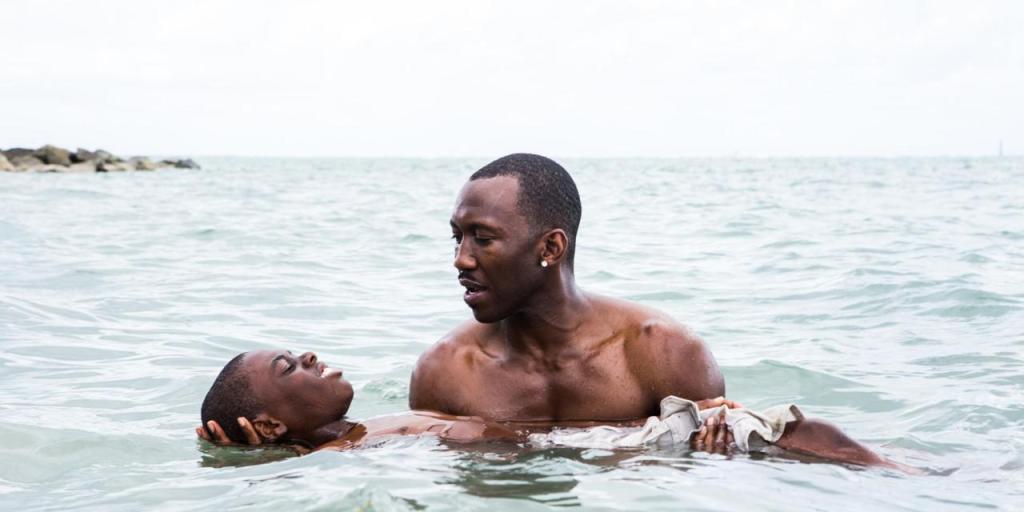
    “Moonlight” shines brightest visually, with cinematographer James Laxton beautifully giving a distinctive, uniquely vibrant feel to each of the film’s three segments. Each segment has its own visual hue, as if they were all shot in different film stock. The film’s most powerful and memorable scene, Juan teaching Chiron how to swim, is effective as much for Laxton’s stunning camera work in the scene as Ali’s masterful acting performance. The camera bobs up and down in the water, floating above the surface and crashing below with the waves in a captivatingly intimate portrayal of humanity you wouldn’t expect from a swimming lesson.

    Filmed over the course of three and a half weeks for a meager $1.5 million, “Moonlight” is a cinematic marvel by independent filmmaking standards that holds up better than most big-budget studio films. It’s far from a flawless film, however, with a plodding third act that tapers off in quality drastically the longer Ali is off screen.

    “La La Land,” the film that almost won Best Picture, isn’t perfect either – with a muddled sound mix that often left lyrics indecipherable for first time viewers – but the film’s 14 Oscar nominations are proof positive that Chazelle’s musical masterpiece more than lived up to the film’s considerable hype.

    Things started trending in the wrong way for “La La Land” early in the night when seemingly easy wins in categories like Best Costuming and Best Sound Editing went to other films. After taking home major prizes for Chazelle (Best Director) and star Emma Stone (Best Actress), Sunday’s final curveball stunned viewers and “La La Land” producers alike, with some of the musical’s team in the middle of giving their acceptance speeches when the Academy’s top prize was unceremoniously ripped from their grasp and given to another film.

    Regardless of how you may feel about “La La Land,” the political climate in America right now or how the Best Picture winner was announced, the worst possible thing you could do is dismiss “Moonlight” because Warren Beatty accidently read the wrong name.

    The best film of 2016 (“Hell or High Water”) didn’t win Best Picture. The best film with a chance of taking home the Academy’s top prize (“La La Land”) didn’t either. More than any other year in recent memory, several of this year’s nominees were more than deserving of film’s top prize.

    “Moonlight” deserved to win Best Picture. “La La Land” deserved to win Best Picture.

    Watch them both. Enjoy them both. Moviegoers deserve this kind of quality cinema all year long.

  • Loving: Implied intimacy 

    Loving: Implied intimacy 

    Richard and Mildred Loving’s inspirational tale of overcoming the odds to keep their love alive was bound for cinema. 

    The couple living in rural Virginia during the 1950s made waves with their arrests violating then-Virginia law against interracial relationships and later with Loving v. Virginia, the 1967 U.S. Supreme Court decision invalidating laws banning interracial marriage nationwide.

    In “Loving,” writer/director Jeff Nichols opts to make their tale a small, intimate piece as soft-spoken and subdued as the Lovings were in real life. The result is a fractured, painstakingly tedious arthouse drama that fails to connect on many levels, in spite of some wonderful moments of intimacy.


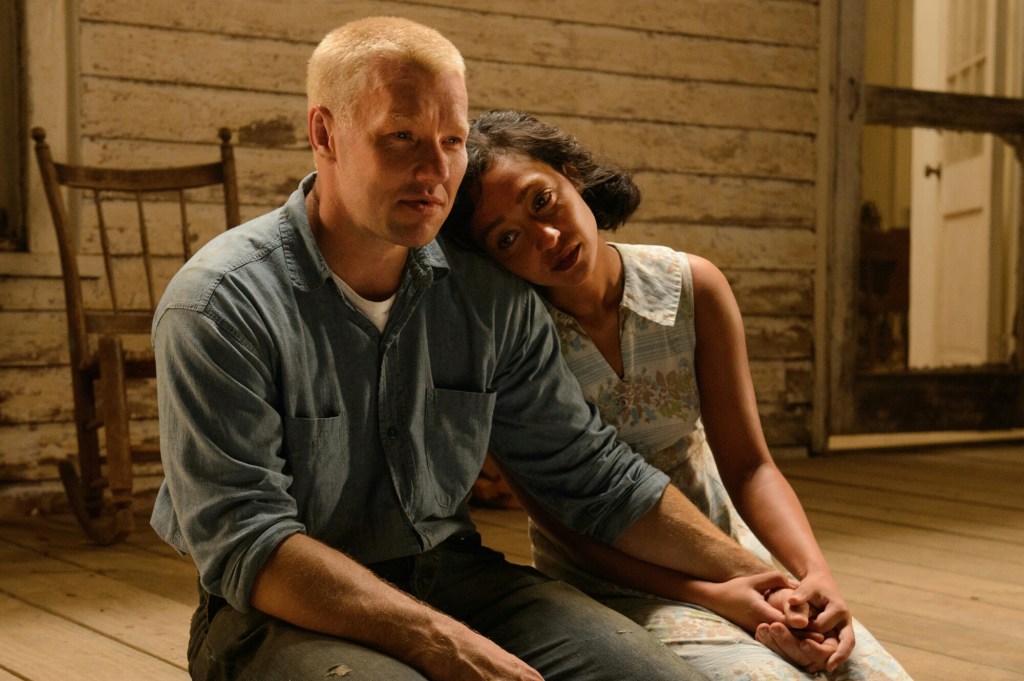
    Audiences are introduced to Richard, a simple, quiet bricklayer, and his then-girlfriend Mildred when Mildred tells Richard they are expecting a baby. Without hesitation, Richard proposes marriage and the couple live together in secrecy with Mildred’s family after travelling to Washington D.C. to be married legally.

    Beginning here proves problematic for “Loving” as Nichols cannot seem to portray why Richard and Mildred love each other, just that they do. Their romance is so subtle and hidden within the film that it’s borderline non-existent, which seems a disservice to the actual couple the biopic portrays on screen. All the nuance and technical skill that went into “Loving” just feels largely wasted, which is an absolute shame.

    Veteran character actor Joel Edgerton has a lengthy resume of simply melting into characters and his portrayal of Richard Loving is no exception. The Australian perfectly nails the quiet, modest Virginian both in tone and action. Audiences can easily feel Richard’s internal monologue secretly churning in the many he barely speaks.

    Ethopian-born Irish actress Ruth Negga earned an Academy Award nomination this year for her demure, understated turn as Mildred Loving, the outspoken one of the couple, though in Nichols’ script, outspoken takes on new, more reserved meaning. Negga offers much more demonstrative work in her non-verbal performance, letting her eyes do most of the talking. Her performance is perhaps the best thing about “Loving.”

    The film’s secondary cast is largely kept to the background, serving mostly to advance the story in one way or another and keep the focus on the couple.

    Frequent Nichols collaborater Michael Shannon is powerfully understated in a tiny role as a Life Magazine photographer who travels to do a photo essay piece on the couple during their Supreme Court trial, while Marton Csokas is fine as the film’s largely paint-by-numbers racist sheriff arresting the couple on multiple occasions.

    Perhaps the weakest link of the movie is comic actor Nick Kroll, who feels completely out of place and overwhelmed as the Lovings’ American Civil Liberties Union attorney defending the couple against the State of Virginia. Without question, Kroll desires to play the part of a serious actor, but can’t quite seem to do so without seeming invariably outmatched by his costars in every scene.

    Nichols extends the film’s subdued motif with a very tempered directorial and cinematic style that pervades every frame of “Loving.” Each shot feels weathered and broken like an art painting left out in the elements too long, which provides a nice gritty element to a movie that lives in the visceral. Nichols doesn’t take many chances stylistically and opts to let the film linger from scene to scene, accenting the quality of the lead performances but dampening the pace to a muddy, plodding level.

    The film’s lone awards nominee, Negga in the Best Actress category, probably won’t take home the Oscar as she sits firmly behind Screen Actors Guild winner Emma Stone of “La La Land,” Golden Globe winner Isabelle Huppert of “Elle” and former Oscar winner Natalie Portman of “Jackie.” Her nomination was indeed a bit of a surprise given the omission of Amy Adams in “Arrival,” a film which took home eight nominations, and may signify a trend towards increased emphasis in diversity in the acting categories.

    “Loving” may be a film ardent movie lovers seek out over the next several weeks leading up to the Academy Awards at the end of February, though most audiences should probably wait until the film reaches a streaming service like Amazon Prime or Netflix before taking a chance on Nichols’ problematic, strained film.

  • Manchester By The Sea: Affleck shines in family drama

    Manchester By The Sea: Affleck shines in family drama

    ​Convincing someone that watching a two-hour long family drama about melancholy and loss is a worth-while cinematic experience can be quite the feat.

    But writer/director Kenneth Lonergan’s rural Massachusetts tale turned Oscar contender “Manchester By The Sea” is well worth the effort.

    The film follows Lee Chandler (Casey Affleck), a 40-something Boston janitor forced back to his childhood home in Manchester to take care of his teenage nephew Patrick (Lucas Hedges) after the death of Lee’s brother, Joe (Kyle Chandler). Lonergan’s intensely powerful screenplay is unsurprisingly lifted by the talented cast of actors who bring authenticity and levity to his words, including Oscar nominee Michelle Williams in a supporting role as Lee’s ex-wife Randi.


    “Manchester By The Sea” hinges solely on Affleck’s ability to create depth of character in actions rather than words. As written on the page, Lee is a very quiet, distant man who has separated himself from the world, but that’s difficult to hear through dialogue alone. 

    Doing his best work since 2008’s “The Assassination of Jesse James by the Coward Robert Ford,” Affleck layers Lee both by how he interprets the character physically and by what he doesn’t do. It’s incredibly difficult to convey a guarded person via tone, but Affleck does a masterful job emoting non-verbally with such a soft, sullen demeanor. “Manchester By The Sea” represents Affleck’s best performance of his career and makes him a clear front-runner for an Academy Award for Best Actor.

    Hedges, a pleasant surprise in the Oscars’ Best Supporting Actor category, pulls emotional double duty in “Manchester” as Lee’s nephew Patrick, providing Affleck with a worthy counterpart in heavier scenes and offering up some much needed levity at various points throughout the script. Hedges goes to great lengths to allow viewers to see the emotional contrast between Lee and Patrick play out on screen while still offering up a compelling familiar bond that most uncle-nephew relationships lack in cinema.

    Seen entirely in flashbacks sprinkled throughout the film, Chandler’s honest, steadying portrayal of Lee’s brother Joe gives audiences added perspective on who Lee is as a man despite being a man of few words and helps develop the emotional core of the film. In fact, “Manchester” is peppered with a number of compelling minor performances from actors like Matthew Broderick and Gretchen Mol to bring Lonergan’s world to life.

    Williams recently earned her third Academy Award nomination for a dazzling supporting turn as Lee’s ex-wife Randi. Despite her limited screen time, she packs so much power into every frame that often outclasses Affleck in their scenes together, which is a hard feat in and of itself. Lee and Randi’s final conversation late in the film will be studied for years to come thanks to Williams’ brilliance in the scene and will serve as her Oscar reel next month.

    Each and every word of Lonergan’s masterful screenplay comes to life with such vibrancy that it’s often difficult to remember that viewers are watching a movie rather than peeking in on a Boston-area family’s real lives. Much of this feel comes from the subtle, reserved cinematography and direction that acts not to obtrude the acting work done on screen and only to clarify a sense of space and time.

    “Manchester By The Sea” recently earned six Academy Award nominations, including a Best Picture nod. Likely, the slow-burning drama will fall just outside the winner’s circle come Oscar night, save for Affleck doubling down on his Golden Globes win for Best Actor in what has proved to be a two-horse race between Affleck and two-time Oscar winner Denzel Washington in “Fences.”

    The film is wrapping up an extended theatrical run that began nearly a year ago when Amazon Studios bought the rights to “Manchester” at the 2016 Sundance Film Festival. Though the drama will still be shown in a variety of markets over the next month, Amazon is expected to release the film digitally through its streaming services within a week or so.

    Regardless of how you catch the film. “Manchester By The Sea” is certainly one of the five best films released in 2016 and a major awards contender worthy of taking a chance on between now and Oscars night on Feb. 26.

  • Oscar Nominations Reaction: La La Land and then everything else

    Oscar Nominations Reaction: La La Land and then everything else

    ​So did “La La Land” get nominated for anything? 

    I’m sure I didn’t hear their name called more than 14 times early this morning, tying a record for most nominations in Academy Awards history.

    It’s a City of Stars and we’re all just living in it.

    If you haven’t already seen “La La Land,” you’re going to want to go and watch Damien Chazelle’s cinematic masterpiece at least once over the next month before it takes the Oscars by storm.

    When you’re done with that, go find “Whiplash,” Chazelle’s equally brilliant 2014 film that earned a couple of nominations and a much deserved Best Supporting Actor win for J.K. Simmons. You’ll see that “La La Land” is no fluke.

    Before we get into more of the specifics, a few words on the nominations “ceremony” itself that shows just how out of touch the Academy is with the general movie going public.

    Nominations were released online at the crack of dawn (or before the crack of dawn depending on what time zone you’re in) via a pre-taped video reel featuring past nominees and winners talking about how great and life-changing it is to be nominated. Fantastic.

    Yet a good chunk of the country – the so-called “forgotten” ones we keep hearing about in Washington these days – will be too busy sleeping or getting ready for work that they’ll just glance at a list of nominees hours from now and lament about how they’ve barely seen any of these films.

    The Academy undercuts the value of their own Oscar nominations by releasing them haphazardly on a Tuesday morning. How perfect would it be for millions of Americans to see an hour-long special highlighting the nominees in prime time, with trailers and clips of the films to entice people into the theaters to see these films. 

    The divide between what Academy voters award nominations to and what moviegoers spend their hard-earned dollars on in theaters is widening and it’s not the audiences’ fault. Studios often make their best films difficult to find in rural America, cramming less quality movies down the throats of a populace much smarter than Hollywood gives them credit for.

    This isn’t to say that voters need to give “Deadpool” a Best Picture nomination, say, or a Best Actress nomination to Felicity Jones for “Rogue One.” But something’s got to change.

    The Academy needs to bridge the gap. And fast.

    Best Picture – “Arrival,” “Fences,” “Hacksaw Ridge,” “Hell or High Water,” “Hidden Figures,” “La La Land,” “Lion,” “Manchester By The Sea” and “Moonlight”

    The nine nominees in the Oscars’ top category are a terrific blend of everything right that’s going on in filmmaking right now in Hollywood. 

    Everything from big-budget blockbusters like “La La Land” and “Hacksaw Ridge” to small, intimate indie pieces like “Moonlight” and “Hell or High Water” are nominated. Amazon becomes the first internet company to earn a Best Picture nomination with “Manchester By The Sea,” which is surprising given how prevalent Netflix is in the online film world.

    All of these films are worthy of their nominations, but I can’t help but feel for films like Tom Ford’s haunting “Nocturnal Animals” and Martin Scorsese’s compelling “Silence” which feel incredibly under-seen and underappreciated given the complete nomination list. I had both films making the Best Picture race in my “best case scenario” predictions, besting “Hacksaw Ridge” and “Hidden Figures.”

    Acting Categories

    It’s probably best to start with the least surprising category – Best Supporting Actress – which went pretty smoothly with nominations for Viola Davis in “Fences,” Naomie Harris in “Moonlight,” Nicole Kidman in “Lion,” Octavia Spencer in “Hidden Figures” and Michelle Williams in “Manchester By The Sea.” All but Spencer seemed like an absolute lock for a nomination in this category.

    Spencer’s performance is very good in the critically acclaimed, surprise box office smash hit “Hidden Figures,” but I would have personally gone with Rachel Weisz’s wonderful turn in Derek Cianfrance’s criminally under-seen “The Light Between Oceans.”

    Best Supporting Actor had three certain choices confirmed with Mahershala Ali in “Moonlight,” Jeff Bridges in “Hell or High Water” and Dev Patel in “Lion.” Michael Shannon’s nomination in the category for his terrific work in “Nocturnal Animals” over Golden Globe winning costar Aaron Taylor-Johnson shouldn’t really come as much of a surprise to those who’ve seen the film. Both are fantastic.

    Lucas Hedges’ great work opposite Casey Affleck in “Manchester By The Sea” is well earned, though the Academy could have gone in any number of directions here, including Hugh Grant in “Florence Foster Jenkins,” Issey Ogata in “Silence” or my personal favorite fifth option, Mykelti Williamson in “Fences.”

    The Academy seemed to take the most chances with their nominations in the Best Actress category, though Natalie Portman in “Jackie,” Emma Stone in “La La Land” and 20-time nominee Meryl Streep in “Florence Foster Jenkins” aren’t surprises by any means.

    The biggest omission in any category has to be Amy Adams getting left out here despite her flawless performance in “Arrival,” a Best Picture nominee that simply does not work without Adams killing it in the lead role. Golden Globe winner Isabelle Huppert of “Elle” shouldn’t be as much of a surprise as it still feels like given her upset win last month, though Ruth Negga’s work in the barely-seen “Loving” will have average moviegoers who have never heard of the film scratching their heads.

    Best Actor, as expected, will feature the two-horse race between front runners Casey Affleck in “Manchester By The Sea” and Denzel Washington in “Fences.” They are joined by nominees Andrew Garfield in “Hacksaw Ridge,” Ryan Gosling in “La La Land” and Viggo Mortensen in “Captain Fantastic.”

    All are deserving, though it feels as if Garfield is nominated for the wrong film as his performance in Scorsese’s “Silence” is perhaps the best of his young career. Mortensen does a fine job in a great film, though “Captain Fantastic” feels like any number of terrific indie comedies that seem to come out every year. To me, Paul Dano and Daniel Radcliffe are both better in the tonally similar “Swiss Army Man,” but there are far too many fart jokes in that film for the Academy to take notice.

    Other various thoughts

    “La La Land” getting 14 nominations makes sense if you watch the film, though it will be incredibly unlikely the film carries the day as easily come Oscar night as it did sweeping all seven categories at this year’s Golden Globes. Backlash from the Globes could actually hurt its chances overall, though it probably has the best shot at Best Picture given the Academy’s preferential balloting system in the category.

    It feels pretty foolish for the Academy to pass on Pharrell’s incredibly catching tune “Runnin’” from “Hidden Figures” in the Best Original Song category given two “La La Land” nominations for “Audition (The Fools Who Dream)” and “City of Stars.” Voters might split their votes between the two songs and open the door for “Hamilton” creator Lin-Manuel Miranda to slip in and win the category with the great “How Far I’ll Go” from the hit Disney animated film “Moana.”

    “O.J. Made In America” should be the consensus favorite for Best Documentary, though the Academy certainly needs to clarify what is eligible here (and in the supporting acting categories). Like most who’ve seen Ezra Edelman’s terrific doc, I caught “O.J. Made In America” spread across several parts on ESPN rather than in one seven-hour sitting at a theater. To me, it’s a television miniseries rather than a single documentary. It will win, and probably deserves to, but it still seems fishy.

    Other nominations that I would have liked to have seen:

    – Alicia Vikander and Michael Fassbender for “The Light Between Oceans”

    – David Mackenzie’s direction for “Hell or High Water”

    – Love somewhere, anywhere for “Sing Street”

    – John Goodman for “10 Cloverfield Lane”

    – “Weiner” for Best Documentary

  • Academy Award Nominations: How they should go

    Academy Award Nominations: How they should go

    Offered without commentary, here’s how tomorrow’s Academy Award nominations should go (in alphabetical order):

    Best Picture

    1. Arrival

    2. Fences

    3. Hell or High Water 

    4. La La Land 

    5. Lion

    6. Manchester By The Sea 

    7. Moonlight

    8. Nocturnal Animals 

    9. Silence

    Best Actor

    1. Casey Affleck – Manchester By The Sea 

    2. Andrew Garfield – Silence

    3. Ryan Gosling – La La Land 

    4. Jake Gyllenhaal – Nocturnal Animals 

    5. Denzel Washington – Fences

    Best Actress

    1. Amy Adams – Arrival

    2. Natalie Portman – Jackie

    3. Emma Stone – La La Land 

    4. Meryl Streep – Florence Foster Jenkins 

    5. Alicia Vikander – The Light Between Oceans 

    Best Supporting Actor 

    1. Mahershala Ali – Moonlight 

    2. Jeff Bridges – Hell or High Water 

    3. Dev Patel – Lion

    4. Michael Shannon – Nocturnal Animals 

    5. Mykelti Williamson – Fences

    Best Supporting Actress 

    1. Viola Davis – Fences

    2. Naomie Harris – Moonlight 

    3. Nicole Kidman – Lion

    4. Rachel Weisz – The Light Between Oceans 

    5. Michelle Williams – Manchester By The Sea 

    Best Director

    1. Damien Chazelle – La La Land 

    2. Barry Jenkins – Moonlight 

    3. David Mackenzie – Hell or High Water 

    4. Martin Scorsese – Silence

    5. Denis Villeneuve – Arrival

  • Lion: Young boy’s tale of loss turns into journey of hope

    Lion: Young boy’s tale of loss turns into journey of hope

    Labelling Golden Globe and Academy Award nominee “Lion” something reductive like “the Google Earth movie” is unnecessarily unfair to the emotional, inspirational film from director Garth Davis.

    “Lion” is a family story about loss and hope, searching for a sense of place and identity. The poignant, touching tale is adapted from Saroo Brierley’s autobiographical book “A Long Way Home” by writer Luke Davies and is told in two parts broken up into hour-long segments. 

    The first tells the gripping, tragic tale of five-year-old Saroo, a boy living in rural India who is separated from his family and awakes in Calcutta alone hundreds of miles away from home. The second features a mature Saroo living in Tasmania with his adoptive parents, who longs for connection to his birth mother and brother and begins a search using the new Google Earth mapping program.


    While there are much more famous performers in “Lion,” young Sunny Pawar gives the film’s best and most devastating performance as the young Saroo. Pawar opens the film with such vibrancy of life and then slowly has it ripped away from him, leaving Pawar completely lost in the moments to incredibly heart-wrenching effect. “Lion” is as poignant of a film as it is wholly due to Pawar’s unique ability to draw audiences in and captivate their hearts, a talent few adults – let alone children –  have.

    Abhishek Bharate also delivers in spades with a strong performance as Saroo’s protective older brother, Guddu, who serves as much as a surrogate father to Saroo as he does a loyal brother. Bharate does a terrific job supporting Pawar’s touching portrayal without getting in the way.

    As the older Saroo, Dev Patel is an emotional wreck struggling to internalize his longings, hiding them from his adoptive family and girlfriend. Scene to scene, moment by moment, Patel slowly unravels Saroo’s inner demons as if they were layers of an onion being pulled apart. Audiences can feel Pawar’s performance haunting Saroo in Patel’s eyes as the pain of loss bubbles to the surface. It’s an emotional, touching portrayal that represents Patel’s best work to date.

    Oscar winner Nicole Kidman is a likely nominee for her supporting work as Saroo’s adoptive mother. In each scene whether she’s working opposite Patel or Pawar, Kidman brings such a motherly warmth to the performance that might often be phoned in by a less committed actress. One scene late in the film where Saroo confronts his mother about why she did not have any biological children of her own will probably serve as her highlight reel for a presumptive Academy Award nomination.

    “Lion” doesn’t give talented young actress Rooney Mara much to do, and as such her performance as Saroo’s girlfriend who helps get the ball rolling on his quest to find his family is pretty underwhelming. It feels as though script sacrifices were made to invest more time in Pawar, Patel and Kidman, though doing so at the expense of someone like Mara feels like a waste.

    Davis does a great job as director in staying out of the way for the most part, allowing the film’s performances to speak for themselves. 

    The film’s strongest point, more so than even its terrific cast, is the brilliant cinematography from director of photography Greig Fraser. In the film’s first half, Fraser brings the camera lower and angles upward, allowing viewers to experience India from young Saroo’s perspective. The intimate and often haunting images this shooting style allows give “Lion” a special vibrancy not normally found in biopic dramas.

    While not the obvious choice for a night out at the theaters or for the year’s top cinema prizes, “Lion” is well worth the price of admission and could be an upset winner in several major Oscar categories at next month’s ceremony. Its true story and efforts to raise awareness and funding for India’s large “street children” population will tug at audiences’ heartstrings as well.

  • Patriots Day: Extraordinary acts of heroism

    Patriots Day: Extraordinary acts of heroism

    It’s been less than four years since two radicals planted homemade bombs near the finish line at the 2013 Boston Marathon, and already, filmmakers are racing to dramatize one of the most senseless acts of violence in our nation’s history.

    The first of two films on the subject slated to come out in 2017, Peter Berg’s “Patriots Day” is a flag-waving, symbolic memorial to those who died, those who survived and especially to law enforcement officials critical in the hours and days that followed.

    “Patriots Day” examines the events of April 15, 2013 from nearly every angle, beginning several hours before the race starts and carrying through the attack and subsequent investigation that led to the death of one bomber and the capture of a second.

    Viewers are given intimate glimpses into the lives of a variety of law enforcement officials, every day citizens whose lives were impacted by the attack and the attackers themselves.


    In a film where such a climatic event is depicted from all perspectives, inevitably shortcuts must be taken by filmmakers to condense things down to a palatable running time for audiences.

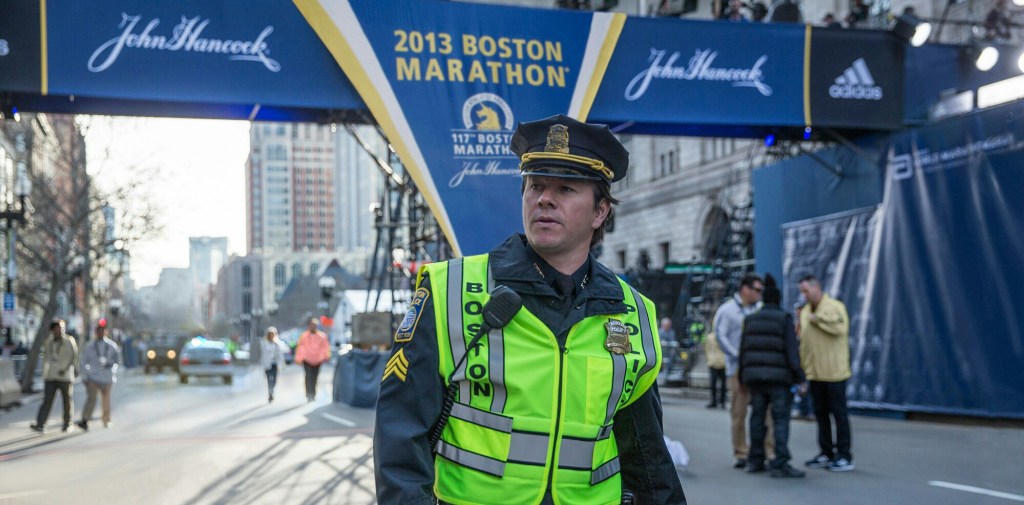
    The film’s biggest and most controversial shortcut in this respect is the casting of Boston native and producer on the film Mark Wahlberg as Sergeant Tommy Saunders, a Boston police officer who just happens to be everywhere at the right time throughout the film. Saunders is shown at the finish line when the bombs go off coordinating all the rescue efforts, with the FBI recapping the bombing, in Watertown engulfed in the shootout with the marathon bombers and at Fenway Park greeting Red Sox star David Ortiz.

    The problem is, Tommy Saunders isn’t a real person, rather a contrived composite of any number of law enforcement officials who answered the call to action after the attack.

    Wahlberg is largely effective as Saunders, giving a rousing performance as the cop who’ll stop at nothing to protect his city, essentially the living embodiment of “Boston Strong.” But as the movie zips along sequence to sequence, Saunders’ plausibility as a character wanes and Wahlberg’s performance feels more false in turn. For a film so reliant on the authenticity to the actual events, Saunders is the one false note ringing throughout to remind audiences that they’re watching a fictional narrative and not documentary.

    The film’s other major stars – from John Goodman as Boston Police Commissioner Ed Davis to Kevin Bacon as FBI special agent Rick DesLauriers to J.K. Simmons as Watertown Sergeant Jeff Pugliese – feel incredibly authentic in their performances, thanks in part to their close relationship to the actual officers they portrayed all serving as technical advisers to the film.

    From an acting perspective, the best moments in “Patriots Day” come in smaller, less flashy scenes.

    Themo Melikidze and Alex Wolff give hauntingly poignant performances as marathon bombers Tamerlan and Dzhokhar Tsarnaev, while “Supergirl” star Melissa Benoist wows as the American-born wife of Tamerlan in a climatic interrogation scene late in the film. The most gripping portion of “Patriots Day” centers around Dun Meng (Jimmy O. Yang), an immigrant who is carjacked and kidnapped by the bombers as they plan their escape to New York to set off bombs in Times Square. 

    Berg does a fantastic job of always keeping the audience in the moment regardless of what is actually occurring onscreen thanks to some terrific camera work from cinematographer Tobias Schliessler and crisp pacing from editors Gabriel Fleming and Colby Parker Jr. As a result, “Patriots Day” is a largely authentic, wholly compelling docudrama worthy of a trip to the local cinema.

    “Patriots Day” came out far too late in the awards process for the film to receive major Oscar consideration, though a technical award for editing would certainly not be out of the question. The film beautifully crosscuts between footage of the actors recreating the events of the marathon bombing and actual news footage as well as surveillance video from neighborhood business surrounding the attack.

    It’s very easy to get caught up in the moment as events unfold throughout “Patriots Day,” which is one of the most heart pounding, nationalistic thrill rides in several years and one that leaves audiences proud to be Americans.

    “Patriots Day” is a film for patriots and will make viewers leave the theater feeling “Boston Strong.” 

  • Moonlight: Golden Globe winner a wonderfully affecting drama

    Moonlight: Golden Globe winner a wonderfully affecting drama

    Three hours in, it seemed pretty safe to assume Barry Jenkins’ subtle and powerful independent character drama would go home empty handed Sunday.

    Things changed drastically, though, when “Moonlight” ended the night with the Hollywood Foreign Press Association’s biggest prize: the Golden Globe for Best Motion Picture – Drama.

    “Moonlight” was an unexpected winner after coming up just short in Best Supporting Actor (Mahershala Ali), Best Supporting Actress (Naomie Harris), Best Director (Jenkins), Best Score and Best Adapted Screenplay.

    The film is a heartfelt, emotional journey told in three parts about Chiron, a young African-American boy growing up with a drug-addicted single mother living in Miami. Throughout the feature, Chiron struggles to find positive influences and role models as he seeks to find his own identity, both sexually and emotionally.


    Each segment attacks Chiron’s journey of self-discovery differently from a cinematic and storytelling perspective. In segment one, 10-year-old Chiron a.k.a. Little (Alex Hibbert) hides from bullies in an abandoned motel where he is found and mentored by drug dealer Juan (Ali). Segment two features teenage Chiron (Ashton Sanders) dealing with his mother Paula’s (Harris) full blown drug addiction and a homosexual relationship with his best friend Kevin. In segment three, Chiron (Trevante Rhodes) grows up to become a drug dealer known simply as Black and reconnects with Kevin after years of separation.

    The choice to have three different actors play Chiron over the course of his life is an inspired decision by Jenkins, who perfectly casts similar, yet distinctive performers to interpret the character in their own way. The changes in Chiron performance to performance perfectly encapsulate how life changes an individual as they grow up. Hibbert, Sanders and Rhodes all deliver with strong individual performances that could be award-worthy as supporting nominations, but are better in lockstep as one transformative experience. 

    “Moonlight” also serves as a landmark feature for veteran character actors Ali and Harris, who are both sure to be nominated for Academy Awards in respective supporting acting categories.

    As the only character to appear in all three segments, Harris is devastatingly effective as Paula. Her performance is elegantly layered segment to segment as we see the strong, confident single mother drift away into drug-addled rage and depression over the course of the film. Her work in segment two is especially chilling and worth an awards shortlist on its own.

    Ali, best known for his supporting work on Netflix’s “House of Cards,” elevates his game to another level as Juan, the charismatic drug dealer with a soft spot for Little. His ability to give Juan equal parts hard edge from life selling on street corners and comforting empathy is remarkable. Performed even slightly differently softer or harder, Juan becomes a caricature. But Ali is bittersweet and affecting, toeing the exact line with ease.

    Jenkins, who adapted the script from Tarell McCraney’s semiautobiographical unproduced play “In Moonlight Black Boys Look Blue,” shows an adept hand at both screenwriting and directing that belie his relative inexperience making movies. “Moonlight” is just his second feature after 2008’s “Medicine For Melancholy,” though the past eight years seem well spent with “Moonlight” as the fruits of his effort.

    “Moonlight” shines brightest visually, with cinematographer James Laxton beautifully giving a distinctive, uniquely vibrant feel to each of the film’s three segments. Each segment has its own visual hue, as if they were all shot in different film stock. 

    The most powerful and memorable scene in “Moonlight,” Juan teaching Chiron how to swim in segment one, is effective as much for Laxton’s stunning camera work in the scene as Ali’s masterful acting performance. The camera bobs up and down in the water, floating above the surface and crashing below with the waves in a captivatingly intimate portrayal of humanity you wouldn’t expect from a swimming lesson.

    A Golden Globes win boosts the chances for “Moonlight” to take home Best Picture honors at next month’s Academy Awards, but the film will have to contend with Hollywood love letter “La La Land,” which swept all seven categories it was nominated in at Sunday’s Globes. 

    Perhaps the best bet for Oscars love will come in Best Supporting Actor, where Ali will be a frontrunner alongside Jeff Bridges for “Hell or High Water” and most likely won’t contend with Golden Globe winner Aaron Taylor-Johnson of “Nocturnal Animals,” who may not even receive a nomination from Academy voters.

    While occasionally slow, “Moonlight” is dramatically better than most large independent content you’ll find in cinemas these days and something ardent movie lovers need to see at least once early this year whether in theaters or later on DVD. 

  • La La Land: City of stars

    La La Land: City of stars

    Believe the hype.

    Unless you’ve been hiding under the proverbial rock, chances are you’ve seen the trailer for Damien Chazelle’s musical love letter to Los Angeles, the Academy Award frontrunner “La La Land” starring Ryan Gosling and Emma Stone.

    This modern take on vintage Hollywood storytelling leaps off the screen and pulls viewers in for a classy, adventurous ride about struggling artists falling in love in Los Angeles. It’s exactly the kind of film that might have starred Gene Kelly or Bing Crosby decades ago and yet feels so incredibly fresh and authentic in a modern, 21st century way.

    “La La Land” follows aspiring actress Mia (Stone) as she wanders through her life in Los Angeles until she meets jazz pianist Sebastian (Gosling) and the two begin a courtship for the ages over the next year.

    While the primary hook for “La La Land” is inevitably its musical genre, the film shines brightest as a straight character-driven drama with outstanding performances from leads Gosling and Stone. Now in their third film together, Gosling and Stone’s pitch perfect chemistry drive the entirety of the action and make viewers want to dream and fall in love all over again.

    Gosling is at his understated best as Sebastian, playing the role with the cool debonair of James Dean in “Rebel Without A Cause,” a film that just happens to be one of Sebastian’s favorites. Sebastian appears to be always in control even when things don’t go his way, a testament to the poise Gosling exudes in the character. He also performs his own piano numbers, which took over six months of rehearsal time and are the film’s best moments of quiet intensity.

    For as good as Gosling is, Stone is the film’s life force. “La La Land” is the career-defining performance for a talented, Oscar-nominated actress in need of a star-making role. Stone’s turn as struggling actress/barista Mia in Chazelle’s love letter to classic Hollywood musicals is a breath of fresh air amid the dark, harrowing performances we’ve grown accustomed to seeing from Hollywood’s top actresses.

    The entire film, Stone glides through scene after scene as if on a cloud of air. Her performance is so effortless and light, dancing on a road of eggshells in the most charming of ways. Mia is the quintessential persona of what we imagine falling in love to be like when we’re dreaming about it in our heads and Stone takes every care to make the entire experience feel natural.

    “La La Land” is the perfect vehicle for Chazelle to show just how talented of a young director he is.  The vibrancy he is able to create on screen with dynamic color hues that radiate into the audience frame by frame is perfectly balanced against the terrific score from Justin Hurwitz. Los Angeles comes alive in such a forward, present way that few filmmakers have been able to achieve.

    The visuals of “La La Land” are best in the film’s many night sequences, where cinematographer Linus Sandgren is able to accent Stone and Gosling’s performances with deep, rich blue and black color palettes. “A Lovely Night,” the song and dance sequence that feels pulled straight from the cutting room floor of a Fred Astaire-Ginger Rogers film, exemplifies this balance.

    Putting “La La Land” in award season context, Chazelle’s film is a cinch to win the Golden Globe for Best Motion Picture – Musical or Comedy as well as a likely winner for both Gosling and Stone in lead acting categories.

    Its Academy Award prospects are slightly murkier with strong support for dramas “Manchester By The Sea” and “Moonlight” that may prevent an acting or directing Oscar for “La La Land.” A Best Picture award is considerably more likely thanks to the Academy’s preferential voting ballots that boost films that appear as a voter’s second or third favorite film of the year. 

    There’s not really a more delightful cinematic experience in 2016 than “La La Land.” Visually perfect with the best musical score of the year, this modern take on vintage Hollywood storytelling leaps off the screen and pulls viewers in for a classy, adventurous ride.

    A clear frontrunner in award conversations this winter, “La La Land” is well worth seeking out in a theater near you.