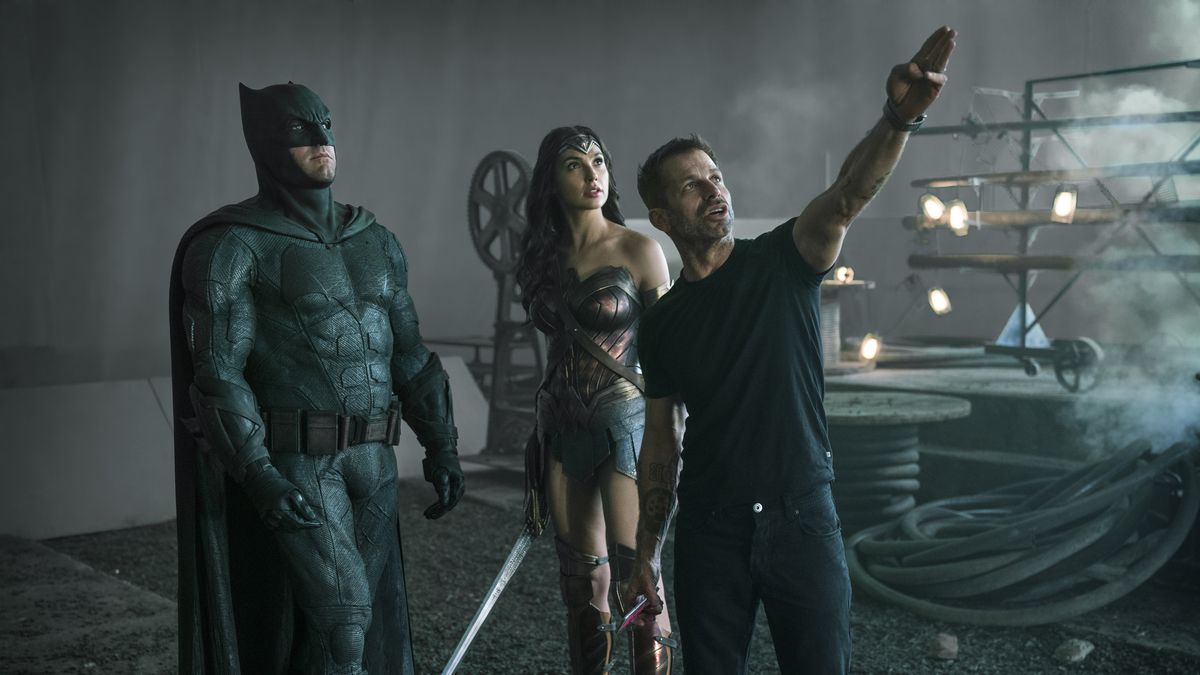

For years, Marvel Studios has dominated the blockbuster landscape with countless feature films debuting superheroes, building team-ups and raking in cash.
Its natural comic book rival, DC Comics, has always been behind the curve, attempting to play catch up by fast-tracking their way through Batman, Superman and Wonder Woman films to get to Justice League, their answer to The Avengers, a Joss Whedon movie that propelled Marvel into the cinematic stratosphere financially.
Director Zack Snyder had been given the reigns to the DC cinematic universe and after semi-successful turns with Man of Steel and Batman v Superman: Dawn of Justice, took the helm on Justice League only to cede control – ironically enough to Whedon – after the death of his teenage daughter during post-production.
A revitalized, extended version of the film Zack Snyder’s Justice League, better known to comic book fans as the Snyder Cut dropped on HBO Max Thursday four years after Whedon’s version was reviled by ardent fans of the series begging to see Snyder’s vision carried through.
The plot is largely the same. Bruce Wayne’s Batman has to assemble a team of heroes to attempt to stop an alien invasion from destroying the planet.
How direction influences everything about a film has never been clearer than examining the differences between Snyder and Whedon’s versions of Justice League. If events in both films didn’t unfold in essentially the same way with the same characters, it would be nearly impossible to see similarities between the two versions.
Whedon brightens the frame, shrinks action to its core and plays up the comic book nature of his heroes in a PG-13 wonderland that tries to Marvel-ify a DC property. In his eyes, it’s a commercial property.
Snyder’s voice shines through in the four hour 2021 edition, ramping up the length and brutality of the action sequences and pushing audiences to their absolute limit in a grounded meta-textual commentary on dramatic themes. The Snyder Cut is a somber elegy that happens to be about super heroes, striving for something closer to Christopher Nolan’s Dark Knight trilogy.
The main performances aren’t altered significantly. Ben Affleck’s Bruce Wayne maintains a gravel texture to his cadence and the added scenes only enhance Batman’s faith in others that stems from events in Batman v Superman.
The same could be said of Gal Gadot’s Wonder Woman, Henry Cavill’s Superman and Jason Momoa’s Aquaman, larger versions of characters that are already carved in stone.
But Snyder also extends the film to place newer heroes like The Flash and Cyborg on par with Batman, Superman and Wonder Woman with enhanced character development.
Ezra Miller’s Barry Allen (aka The Flash) has the same signature naivety and wit from the 2017 edition, but his motivations for joining the team are more layered and full-fledged.
Ray Fisher’s Cyborg becomes the lynchpin of the film rather than a hanger-on, giving Fisher the opportunity to infuse his character with a brooding anger that softens subtlety over the course of the film.
The best performance in the revised cut comes from six-time Oscar nominee Amy Adams, whose Lois Lane carries a major section of the 2021 edition with a deeply stoic melancholia that far exceeds everyone around her.
The Snyder Cut is an exceptionally remastered, wholly original version of the framework of “Justice League” that breathes life into the 2017 disaster and gives the film an identity as a film about family, redemption and teamwork that the original simply didn’t have.
Visually, Snyder makes his version distinctive in two key ways: changing the aspect ratio from widescreen to the virtually square 4:3 and removing the shine off Whedon’s version and replacing it with Snyder’s signature haze that places a weathered texture on the picture.
Clocking in at just over four hours and nearly double the original version’s run time, the Snyder Cut is really for hardcore comic book movie fans who also devour the extended versions of Peter Jackson’s The Lord of the Rings trilogy and won’t hold up as well for casual moviegoers. It is broken into six segments that almost make the Snyder Cut into a television miniseries capable of binging in one sitting or taking in piecemeal.
Whether this Snyder Cut will have a major impact on the future of the DC cinematic universe is somewhat unclear. Warner Brothers has not reached back out to the director since splitting in 2017.
But the same fans who sparked the online movement #ReleaseTheSnyderCut to get the film finalized and into the public could use this massive improvement to reinvigorate the franchise further and make the Snyder Cut a significant moment in cinema history deserving of wider audiences.
Thousands of senior citizens from all walks of life across the country are currently under legal guardianship, a means by which elderly individuals incapacitated from being able to make health and financial decisions for themselves.
In many situations, this is in the best interest of the individual, deemed a ward of the state and assigned a caretaker to assist with financial, medical and legal transactions on their behalf.
But as is so often the case, granting power of attorney over another person can be a corruptible action where the guardian looks out for their own self-interest and financial gain as numerous caretakers have been arrested in recent years for exploiting their wards.
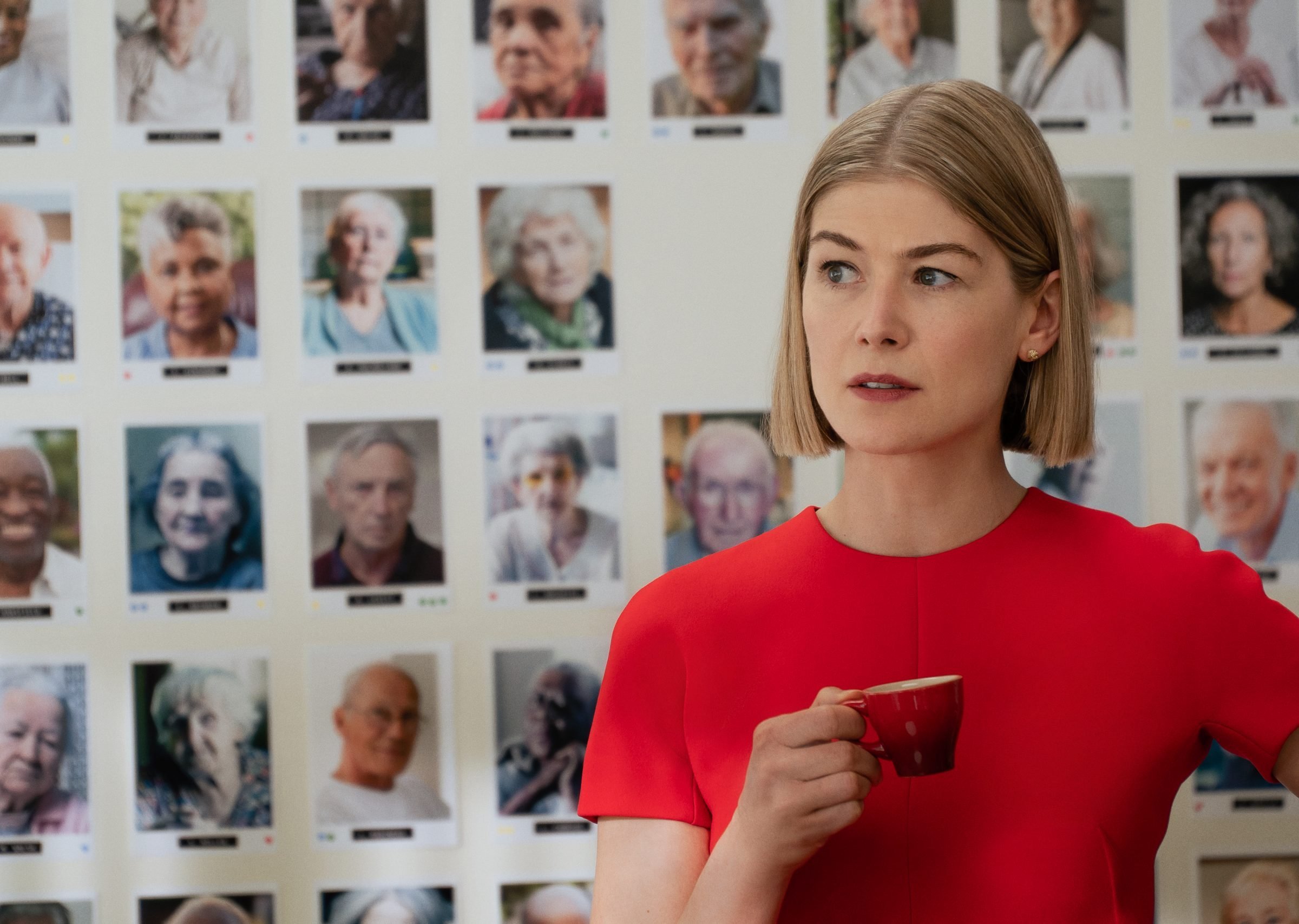
Writer/director J Blakeson points his camera lens squarely on the idea that nefarious people game the legal system to rob others of their life savings with I Care A Lot, a black dramedy that debuted at the 2020 Toronto International Film Festival before releasing on Netflix last month.
In the film, Golden Globe and Oscar nominee Rosamund Pike stars as Marla Grayson, who has turned her profession as a legal guardian to senior citizens into a money-making machine, convincing the courts to make rich retirees wards of the state in her care. When her eyes become trained on a new victim, things spiral out of control rather quickly.
Blakeson infuses his film with an abundance of dry wit painted over a stylized background of bright, shimmering hues that give I Care A Lot that “feels too good to be true” sense of something amiss under the surface. His points on the welfare system for the elderly are well-taken and Blakeson emphasizes the levels of corruption that can occur to swindle the unwitting every step of the way.
There are no heroes to be found here and as such, it often makes it difficult for the audience to truly connect with the film as viewers are forced to balance one character’s treachery with the next in a way that never truly feels stable.
In I Care A Lot, Rosamund Pike is a right proper villain as it were. Audiences feel the callousness and depths of Marla’s treachery oozing off every line delivery and the cold, blankness approach Pike brings to the character.
As the film’s protagonist, Pike goes to great effort in order to ensure an entertaining, engaging character with which to build a feature around. She does so in a way that commands the attention of those around her not with raw magnetism, but with Marla’s sheer willpower and determination to win at any cost.
Dianne Wiest is terrific in short bursts as Marla’s latest victim-to-be, Jennifer, blending both a naivety and hyper-awareness into a character slowly losing her agency and later her mind as Marla places her in a retirement home to wallow away her days.
A solid supporting cast including Eiza González as Marla’s partner and assistant, Peter Dinklage as a shadowy figure with ties to Jennifer and Chris Messina as a lawyer trying to free Jennifer give I Care A Lot added personality with vibrant performances and choices that don’t always work but feed into Blakeson’s directorial style.
I Care A Lot makes great effort to show how the elderly can be blindsided by a variety of corporate interests that take human beings and turn them into commodities for financial profiteering. Almost like something from an Ocean’s Eleven heist, Blakeson meticulously lays this out through a series of handshake deals, private court hearings and fake smiles as Marla and her associates perform their tricks to swindle seniors out of their life savings.
Blakeson does a terrific job of setting these initial expectations for his audience only to reveal something much more nefarious and darker. All the while, the bright sheen that covers I Care A Lot early visually begins to fade slightly as Marla’s world spirals out of control.
If Blakeson’s film was through and through the courtroom dark dramedy like originally framed, the premise of I Care A Lot was strong enough to really make it a true standout film. As it is, however, it simply devolves into genre fodder perfect for an intriguing evening Netflix watch on the couch.

There’s something simple, yet elegant about director Lee Isaac Chung’s latest feature, a semi-autobiographical tale base on his childhood growing up in America’s heartland.
The story is ordinary – and the cinema understated in large part – but there’s an ethereal quality to his film that opens with a young boy running in an empty field of green and never truly stops flowing in spite of the small character drama within.
Set during the 1980s in rural Arkansas, Minari follows the Yi family who move to a plot of land so Jacob can fulfill his dream of becoming a vegetable farmer selling his crops to an emerging Korean population in the South. His choices put a strain on his relationship with his wife, while his young son David contends with a health condition and his grandmother that he doesn’t consider to be his grandma.
Walking Dead and Burning star Steven Yeun centers the film with a driven, considered performance as Jacob, a man whose quest for the American dream begins to isolate him from the family he pulled from California. The forthright confidence of Jacob propels Chung’s narrative forward and allows the audience to examine the family dynamic in idyllic memory but with a hue of sadness and anger that pulls at the edges of this conceit.
It’s a performance that does tend to swallow the softer, almost muted work of Yeri Han as Monica who shines more in scenes opposite the young children rather than Yeun as her ability to draw compassion for Monica’s children far surpasses the anger she exudes during Monica’s conflicts with Jacob.
While Yeun is celebrated as the film’s lead, the true star of Minari is eight-year-old Alan Kim, who steals every scene he’s in as David with a childlike wonder and heart. Audiences experience the pain and uncertainty of the family’s plights through David’s eyes and Kim is a wide-open vessel through which viewers can be drawn into the story with his affable humor and inquisitive spirit.
The grandmother is expertly played by Yuh-jung Youn with a brash yet tender love that anchors the family – especially David and his mother. Moments with the other family members are important to the narrative of Minari, but the best work of the entire film is in scenes simply between Kim and Youn where the awkward unease of a boy meeting a relative for the first time melts into the emotional core thanks to tremendous chemistry between the two actors.
Will Patton’s Paul brings just the right amount of colorful twist to the story with his eccentric brand of Christianity challenging the Yi family.
It’s difficult to appreciate Minari receiving accolades in foreign language film categories simply because the majority of the film is in Korean with English subtitles because Minari is an American film about American immigrants living out the American dream. In some ways, it feels reductive to push Chung’s film out of categories and putting it in the box of “foreign film” as Minari deserves much more.
Chung directs from his own screenplay, which allows him to fully pull from his own childhood to make Minari feel both a distant memory and a clear and immediate reality. This is especially evident in the performances he is able to capture from Kim, Yeun and Youn and extends over to the visual artistry of the film.
The cinematography of Minari provides both a very muted, unobtrusive look for much of the film to allow for the audience to focus on the dialogue and performances, but it’s in the film’s more grandiose moments that director of photography Lachlan Milne’s work shines.
Capturing the countryside in bright, natural lighting, Milne provides a true sense of scale for the wide-open, limitless possibilities of the Yi family’s newfound life creating a farm and also Jacob’s personal hopes for the future as they grow and narrow over the course of Minari.
The film will likely make the cut for the Oscar Best Picture race, though it will probably see a stronger showing at the Film Independent Spirit Awards than with the Academy. Yeun could see his way into the best actor race in spite of a strong category while Youn should earn a supporting actress nomination but could miss out entirely.
Minari does suffer from not having a true theatrical release as the gorgeous panoramas and simple narrative beauty would create a terrific word-of-mouth campaign far stronger than the weaker one A24 has given it. With a digital release via video-on-demand to accent a small run in theaters, Minari should be the film ardent cinephiles with an eye for independent cinema seek out in preparation for the delayed awards season.
Few casual moviegoers will find Chloé Zhao’s latest directorial effort to be their absolute favorite film of the year, but even fewer can reasonably argue that it may be among the very best.
A haunting yet powerful portrait of a hidden life across the heartland, Nomadland finds some of the best of America wandering across the country in search of boundless freedom and of themselves.
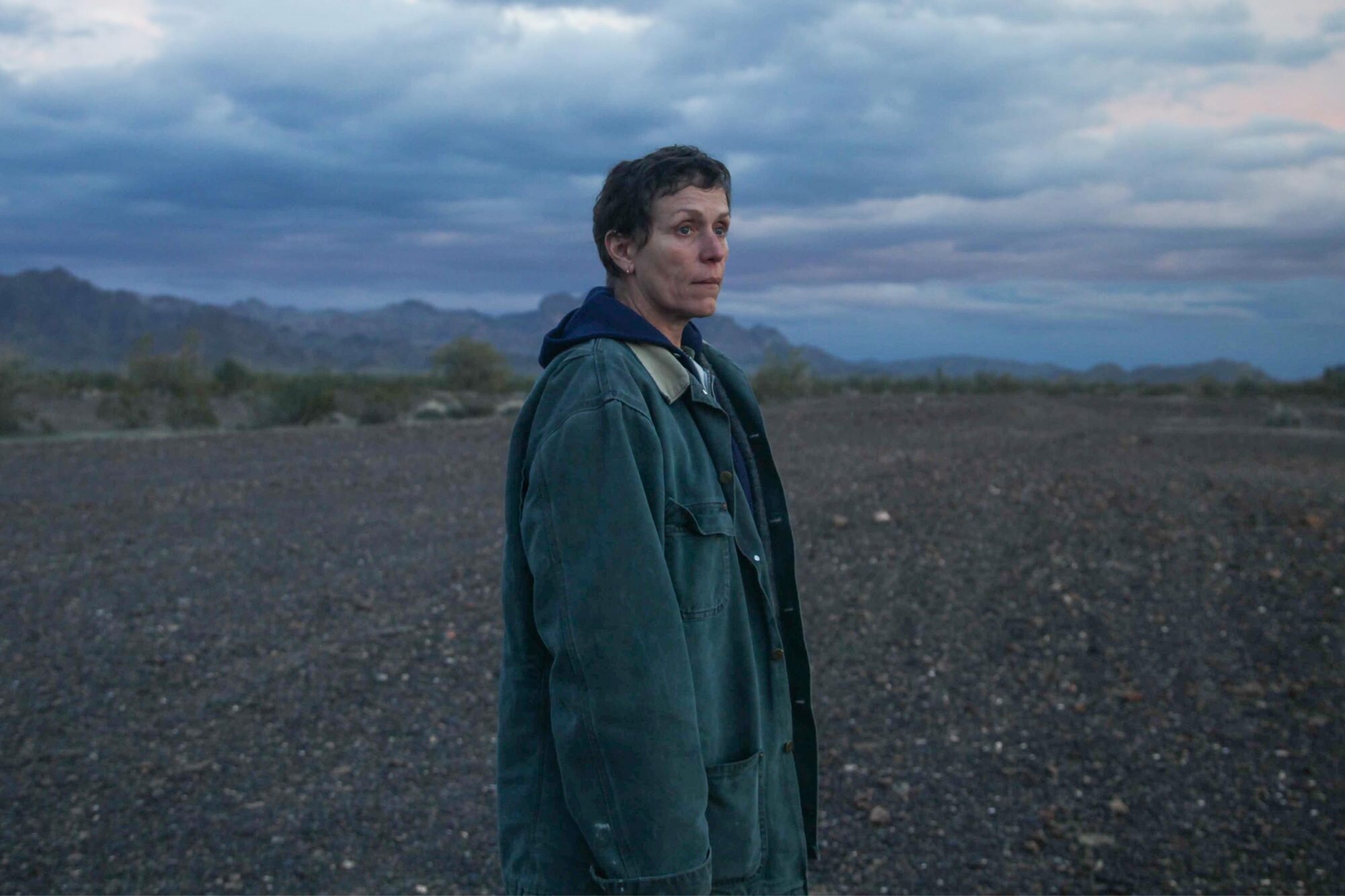
Frances McDormand stars as Fern, a seasonal worker traveling the country in an inauspicious white van following the death of her husband and collapse of the town they lived in after the US Gypsum plant closed down. Along the course of her travels, she meets a variety of interesting characters living as van-dwellers.
Rather than forcing plot down the throats of its audience, Nomadland meanders slowly through its 105-minute running time with a subtle grace that allows for deep reflection. Zhao’s film is an unassuming portrait of Americana through the lens of a woman unable to cope with massive changes in her life.
Nomadland is a quiet road movie filled with introspection, genuine performances from raw untrained talent and endlessly striking cinematography that maximizes natural light.
At its core is McDormand, who anchors the audience in the world of nomadic living with a somber, intentionally soft performance as Fern. Much of the film follows Fern experiencing life on the open roads for the first time and McDormand draws viewers in with a genuine warmth that masks deep inner pain.
What McDormand makes seem so effortless is incredibly difficult to pull off, having Fern be present in the moments presented to her by life’s unpredictability that gives Nomadland a sense of wonderous freedom.
Nomadland is less a narrative fiction and more an organic work of art thanks in large part to Zhao’s decision to cast nonprofessional actors – real life nomads playing themselves who deliver a large majority of the film’s emotional stakes and authenticity.
Characters like the reclusive Swankie or energetic Linda May provide Nomadland with a sense of color, bursting any superficial sheen that studio features might have. At times, Zhao’s film becomes almost a documentary with McDormand playing tour guide to an unknown world of America’s heartland. Her film honors the nomadic culture with quiet reverence and respect, allowing these wandering seniors to express themselves in pure honesty that radiates off the screen.
Aside from McDormand, the one recognizable face is veteran character actor David Strathairn, who plays Dave with a light touch, matching McDormand’s warmth and becoming a small part of the larger picture of the film with a simple presence.
Zhao takes audiences through Fern’s journey in an endless array of loosely connected vignettes meant to showcase her state of being. Scenes feel immensely organic as if they are occurring in real-time without prompting and Nomadland often has an improvisational quality to its storytelling that likely helped draw the first-time actors out of their shells.
Cinematographer Joshua James Richards masterfully utilizes an extended wide angle lens to frame the long, empty vastness of the film’s outdoor landscapes and mirrors that by pulling his camera in close to characters, tightening the frame to the point where there’s nowhere else to look but people telling stories.
Winner of the Golden Globe for Best Motion Picture – Drama, Nomadland is poised to be a frontrunner at this year’s Academy Awards with a Best Picture nomination a foregone conclusion. Zhao, who won Best Director at Sunday’s Golden Globes, is a certainty for an Oscar nomination as is previous winner McDormand, who gives the most subdued, yet enchanting performance of her career.
A cinematography nod is likely, but larger nominations in categories like adapted screenplay, score and supporting actor for Strathairn could become a precursor for a major awards sweep.
A fictional film that blends verité documentary storytelling with a loose narrative structure, Nomadland is the epitome of independent cinema at its finest and an absolute must see film streaming on Hulu for easy access by casual audiences.
Directorial control over the course of a film can make or break the quality of a feature film.
A strong hand at the wheel may lead to an exact, yet artistic vision that pierces the audience’s soul or a subtle touch might shine the light on a specific actor or highlight the nuances of the screenplay.
Poor direction – or worse yet, ineffective direction – can muddy the waters to such a degree that even the best of individual efforts or captivating stories will become a middling mess.
Such is the case for Lee Daniels, whose focused efforts on a small story about a troubled pregnant teen were the toast of 2009’s Sundance Film Festival and an Oscar award for Monique in Precious.
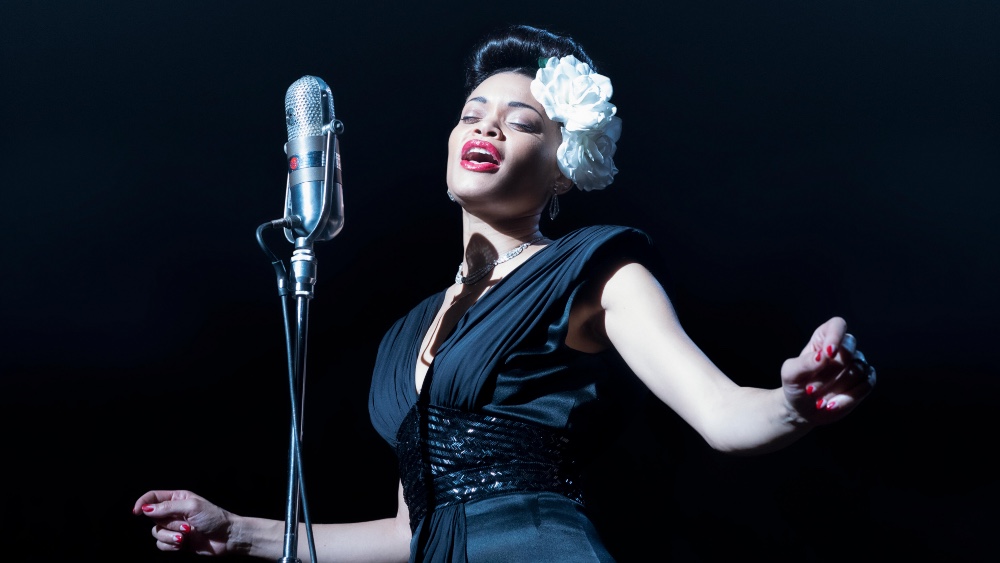
His latest work in collaboration with Hulu is a 130-minute odyssey into the life of famed singer Billie Holiday at the tail end of her success, battling drug addiction and constant harassment by the FBI’s narcotics unit hellbent on preventing her from singing her classic hit ‘Strange Fruit,’ a musical poem about lynching in the South.
Grammy Award-winning singer Andra Day makes her feature film debut as the title character, wowing audiences with both her immense vocal talent and ability to replicate Holiday’s songs as well as her emotional core that anchors numerous heavy dramatic moments throughout the film.
A seasoned vocalist who knows how to connect to the lyric, Day is able to capture the essence of her character and project Holiday’s inner thoughts outward far better than any first-time performer probably should be able to. It’s to Daniels’ credit that his greatest successes in cinema have come working with new actresses and guiding them to stellar debuts. Day’s mesmerizing turn has the same raw power that made Gabourey Sidibe an Academy Award nominee for Precious.
Moonlight star Trevante Rhodes plays a conflicted character that serves as both antagonist and love interest for Holiday, and while he has some genuine chemistry with Day, there’s not really enough in the middling screenplay to give Rhodes a chance to make Jimmy Fletcher relatable or intriguing.
The United States vs. Billie Holiday attempts to be a wide-ranging, comprehensive biopic but suffers greatly from Daniels’ immense lack of focus as a storyteller, both visually and narratively.
Daniels spoils a terrific Day performance with a manic, inconsistent feature that meanders back and forth over time leaving audiences constantly disjointed in the narrative. While it might seem like a nice touch to overlay period footage to set up Holiday concerts, fading in and out of black and white sequences at strange, uneven times just puts viewers unnecessarily on edge for a relatively straightforward biopic.
Often the narrative will choose to focus on themes that could easily have been a single subject for a tighter, more intimate portrayal of Holiday’s life – be that racism in the 1940-50’s, her run-ins with the FBI, substance abuse or a series of emotionally and sexually abusive men who took advantage of Holiday from a young age.
Crammed together in a bloated feature, Daniels’ film never truly gets into a rhythm and simply slogs its way through until the next song from Day can recapture an audience looking down at their phones.
In all likelihood, Holiday will go the way of Judy come awards season, a singular biopic with a buzz-backed lead performance nomination for the actress playing the title character although Day has little chance to win an Oscar like Renee Zellweger did last year for portraying Judy Garland in her final days.
Less a coherent feature and more like a CliffsNotes version of a miniseries that was never made, The United States vs. Billie Holiday might be worth a watch to see Day’s fantastic debut on the big screen that truly evokes a legendary performer, but the film itself is too much of a mishmash to not be at least a minor disappointment.
Note: This review was written based off an advanced screening for voting members of the Film Independent Spirit Awards.
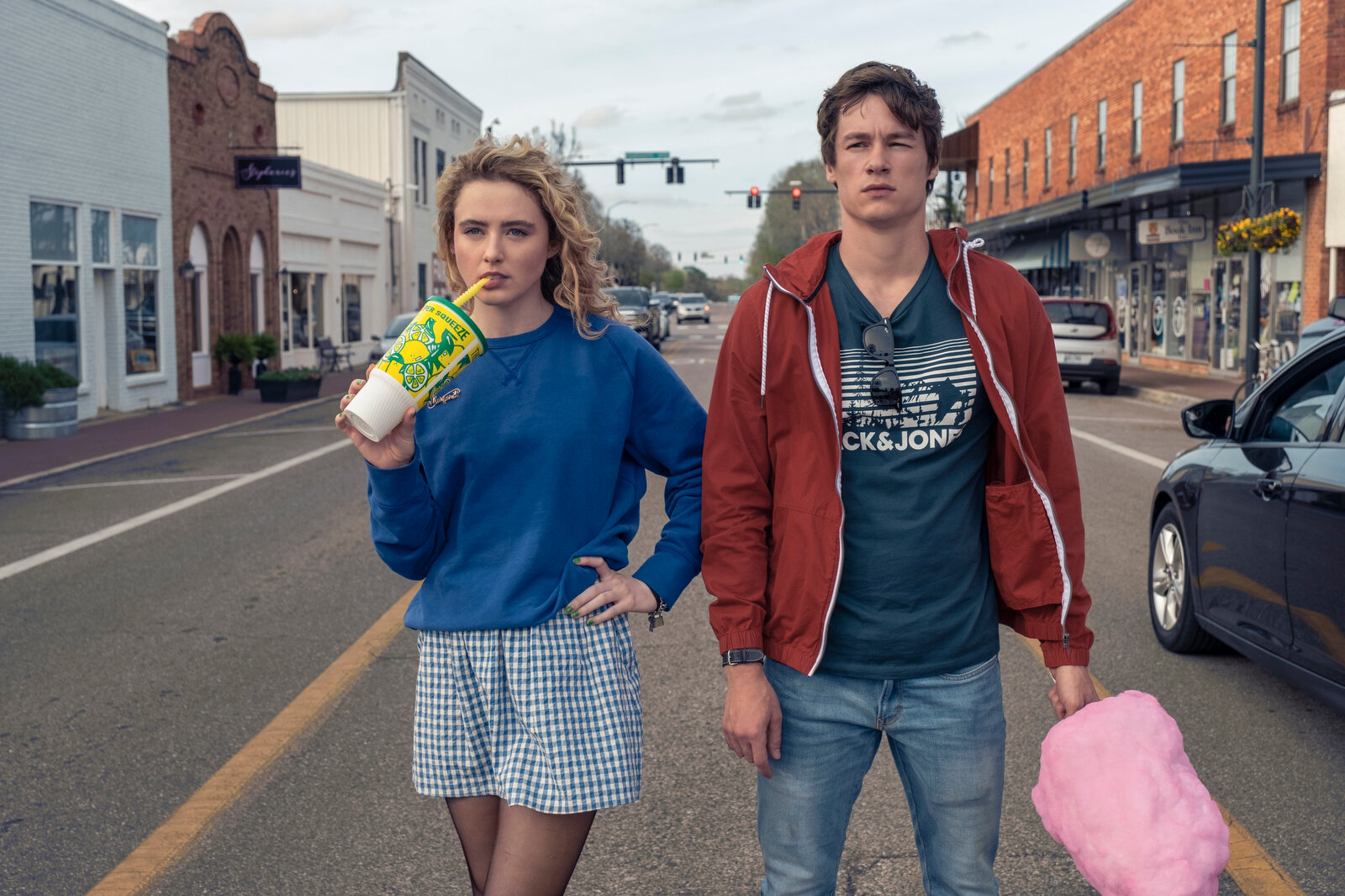
True, unabashed originality in filmmaking continues to be in shorter supply every year it feels like but ensuring that new twists on familiar premises is key to making a movie feel more like homage than shot-for-shot remake.
In recent memory, the Groundhog Day effect has emerged more often – characters trapped in an endless time loop – and it feels impossible to live up to the Bill Murray classic in a traditional romantic comedy sense.
Recent films like Edge of Tomorrow or last year’s Sundance breakout hit Palm Springs have put genre twists on the endless day theme, but a new independent movie debuting on Amazon Prime works just as well in its John Green-esque teen drama.
The Map of Tiny Perfect Things has the traditional premise – Mark relives the same day over and over again – but when Margaret crashes the monotonous routine of his cyclical adventures, he begins a pursuit of the girl that changed his stagnant world.
Kyle Allen gives Mark a John Cusack-like everyman quality that feels reminiscent of 80s John Hughes movies set to a modern pace. It’s surprisingly difficult to create a character relatable enough to get the audience to imprint themselves on, but Allen is effective at projecting a quiet normalcy that feels warm and genuine in spite of the Ferris Bueller bravado that also comes out in Mark.
Kathryn Newton plays Margaret with the appropriate amount of innocuous seductive charm and mystery befitting of her character’s role as the “manic pixie dream girl” of romantic films like Map where the female lead feels too good to be true to the point of almost becoming a vision that only the protagonist can see, let alone fall for.
Since the film becomes a bottle episode in essence where all of the focus is on Mark and Margaret, chemistry between leads is key. Thankfully, Allen’s affable nature pairs nicely with Newton’s ability to make Margaret feel just out of Mark’s reach at every turn.
Map comes together in large part thanks to the partnership between Lev Grossman’s terrifically witty and smart screenplay placed into the hands of Ian Samuels’ kinetic direction, which gives the film a vibrancy not really found in the teen drama genre.
Cross-cutting between scenes/time also helps Map stand apart from other time-loop movies as the mundane repetition of singular events begin to have a greater sense of urgency when viewed in different context, a point Grossman and Samuels go out of their way to poignantly illustrate for audiences.
For a small indie dramedy, the cinematography is exceptional at bringing out the beauty in the everyday, constantly circling Mark and Margaret as they wander all over town in search of perfect moments.
Long cinematic single-take tracking shots weave their way down hallways, across neighborhoods and through open spaces with ease that keep audiences in the dream-like state of Mark and Margaret’s wanderlust for something to spark their humanity. Samuels smartly rewinds the day visually as if memories are being erased for everyone around Mark, which creates both a signpost moment to signify the passage of time (or lack thereof) and help develop the film’s emotional core.
The Map of Tiny Perfect Things is a sappy, yet warm hug of a film that will entertain and tug at the heartstrings of viewers willing to buy into the teen romance and light melodrama, certainly worth checking out on Amazon Prime.
Chicago in the late 1960s was a boiling pot of water bubbling over with racial and political tension on a near daily basis, making it ripe territory for dramatic cinema.
Aaron Sorkin took his pen to the task with the Oscar-contending Trial of the Chicago 7 on Netflix late last year and now a better, transcendent film will hit theaters and HBO Max on Friday.
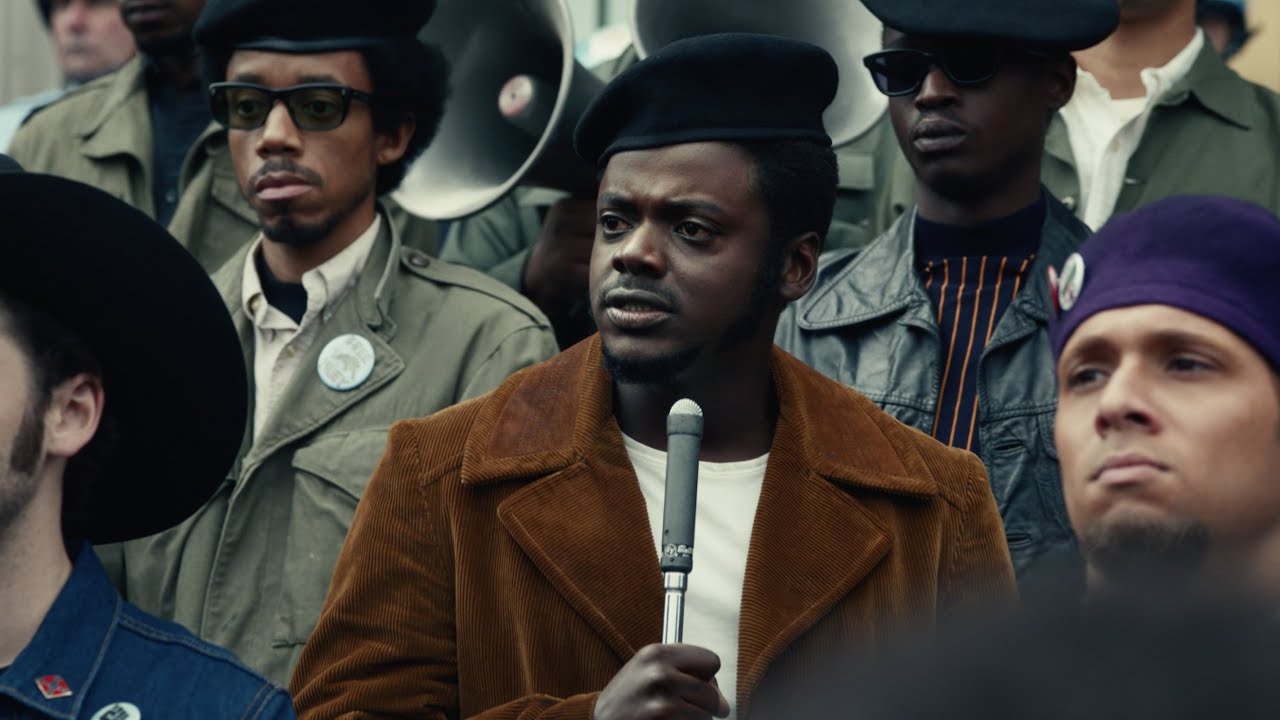
A late addition to this year’s Sundance Film Festival, Judas and the Black Messiah approaches the tensions from a different angle as director Shaka King puts his camera lens squarely on the betrayal of a civil rights activist that ultimately led to his murder.
Inspired by real events, the film follows Bill O’Neal, a car thief convinced to avoid jail time by infiltrating the Chicago chapter of the Black Panthers and getting in with the group’s leader, Fred Hampton, a target of J. Edgar Hoover who described Hampton as a “black Messiah” that would lead to the downfall of America.
Academy Award nominee Daniel Kaluuya offers a very humanistic, idealistic performance as Hampton, striking deep into the souls of viewers with his piercing eyes and crisp, confident delivery.
If Hampton is to be the titular Black Messiah, than Kaluuya grants him a calm confidence of wisdom without fear that isn’t self-righteousness or indignation, but part of a larger than life persona that was able to rally support behind his cause of revolutionary freedom and draw the ire of Hoover-era FBI agents seeking to take Hampton down.
Though Kaluuya is exceptionally special in the role of Hampton, Judas isn’t his film; it’s LaKeith Stanfield’s.
As O’Neal, Stanfield is an expert at showing the infiltrator playing both sides against the middle until the weight of the world ultimately comes crashing down on him. Stanfield quietly maintains a level of stoicism to O’Neal that’s required to keep the spy-craft under cover, but his ability to show small cracks of insecurity to the audience without being so obvious that other characters would notice makes O’Neal a worthy antagonist to Hampton.
King’s film is littered with an array of terrific supporting performances from Dominique Fishback’s award-worthy turn as Hampton’s fiancé Deborah Johnson to veteran character actor Jesse Plemons pushing the envelope as O’Neal’s FBI handler to Ashton Sanders and Algee Smith playing a pair of young Panthers with scene-stealing confrontations with police.
King cuts corners in the narrative to expedite the drama and accelerate the action with style rather than simply hitting all the bullet-points of the historical record, opting to trust the audience to connect the dots rather than spell things out like a documentary.
Judas is a film about emotions – both spoken and shown – and has the aura of inevitability to it like the ominous scent of death wafts over scenes as Hampton preaches to the people.
The message is clear and unapologetic, one that Trial of the Chicago Seven approaches with a stroke of a pen. By contrast, Judas forces audiences to see down the barrel of a gun.
The film’s anti-police rhetoric will play in stark reflection to moments over the past year, but this is done as much to remain authentic to the late 1960s power struggle between the Black Panthers and government officials as it is to make commentary on current events.
The only film released in 2021 with a guaranteed shot at 2020 Academy Awards nominations or wins with the extended eligibility timeframe, Judas should be a late contender for a Best Picture nomination and a lock for Kaluuya’s second Oscar nomination, this time in a supporting role.
A strong wave of support for the film could easily propel King into the Best Director and Best Screenplay conversation and less likely push Stanfield into Best Actor and Fishback into Best Supporting Actress contention.
Unquestionably the best film of 2021 so far and the crown jewel of Sundance, Judas and the Black Messiah is a powerful statement of arrival for King as a director combined with enchanting performances from Kaluuya and Stanfield.
It’s a pot-stirring, conversation-starting must see thrill ride from start to finish that will have audiences on the edge of their seats for two hours with one of the boldest directorial debuts in recent memory.
Note: This review was written after screening at the 2021 Sundance Film Festival ahead of its release to the general public on February 12.
Grief and tragedy have long been an overarching theme of independent dramas, especially those that find their way across major film festivals in search of studio buyers.
But they’re also a fantastic way for first-time directors to plant their flag in the sand as an emerging filmmaker or actors to announce their arrival as a behind-the-scenes star.
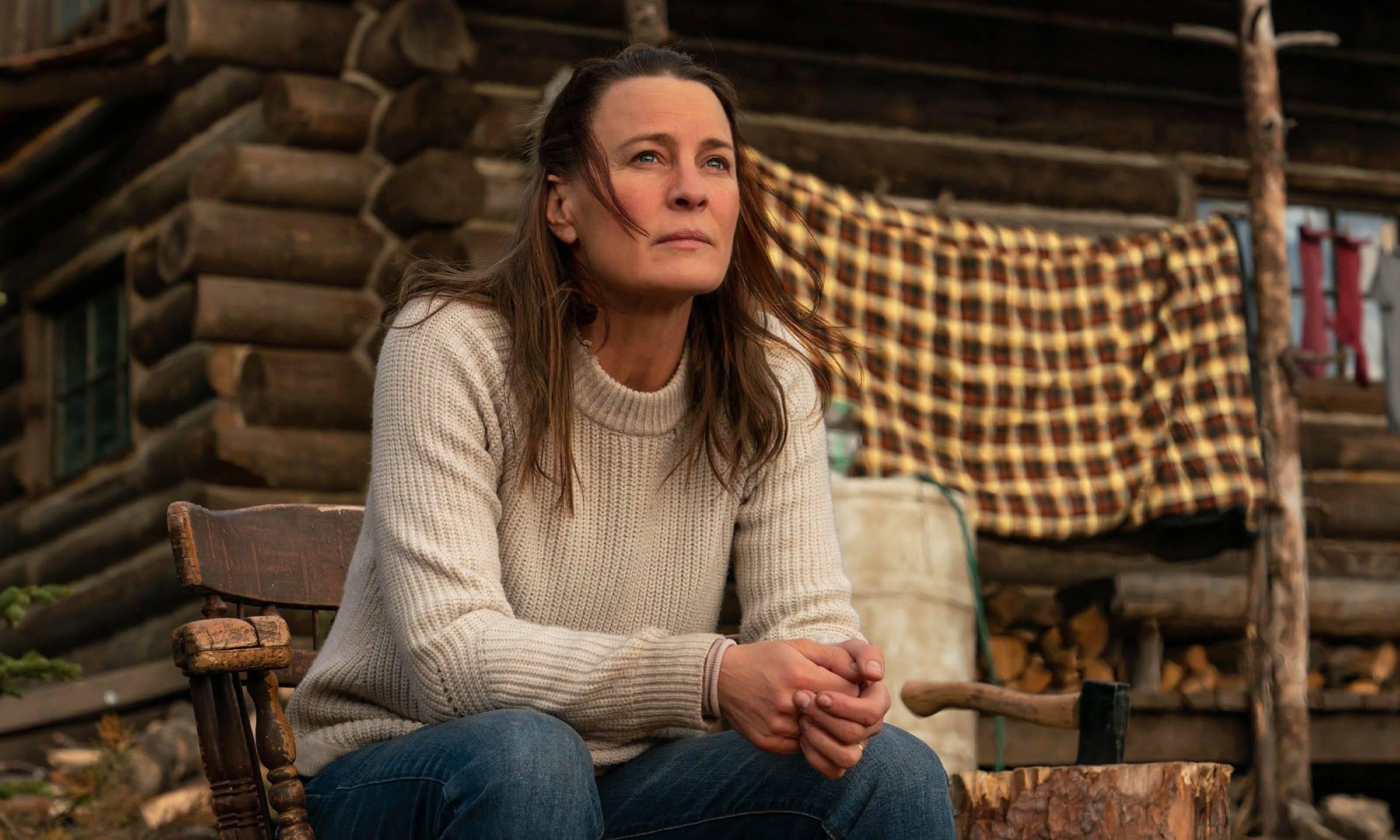
Golden Globe-winning actress Robin Wright – who directed several episodes of her award winning television drama House of Cards – makes her major motion picture debut with Land, which premiered Sunday evening at the 2021 Sundance Film Festival and is slated for a theatrical release February 12.
Set primarily in the wilds of rural Wyoming, Land stars Wright as a woman seeking complete solitude for reflection and self-destruction following tragedy. Her desire to shut herself away from the world in spite of lacking any survival skills places her in the path of Miguel, an area hunter who teaches her the ways of the land and helps her begin to find her soul again.
Wright’s journey as Edie begins with a hollow sorrowfulness that permeates through the screen, a bittersweet melancholia dripping out like oozing dark blue blood soaking into the nightscapes. Much of the film is sans dialogue, which gives Wright the opportunity to emote in silence only to break free with cries of despair at pivotal moments.
It’s a much better performance of restraint as an actress than as a director, where Wright feels like she’s holding back when something more is needed to take the film to the next level.
Land feels like a narrative half-step beyond films in its genre, the solo-explorers looking to find themselves again while overcoming obstacles both physical and emotional.
Exceptionally limited in its narrative, Wright’s film makes the absolute most out of its 89-minute running time; a longer feature would have become repetitive or bloated with outside influences that would have taken away from Edie’s journey of self-repair.
Demián Bichir provides warmth as Miguel, whose sense of purpose is unclear for much of the film, but Bichir delivers it honestly and with appropriate trepidation. As the primary figure audiences see in Land outside of Wright’s singular work, Bichir does a terrific job of supporting Wright just enough to give Edie a way forward without taking away any of the spotlight deservedly going to Wright’s efforts.
Land probably should find a second life on the big screen once audiences are able to fully make their way back into the theaters as Bobby Bukowski’s cinematography emphasizes grandiose landscapes of rural Wyoming with soft hues and natural light.
Often, Wright leaves little for the audience to experience beyond the visual – and the haunting score from Ben Sollee and Time for Three – giving Land a thin, cinematic quality that feels underwhelming on a home viewing. The naturalistic look of the film begs for large scale cinema to project the grandiose nature Wright and Bukowski capture.
While Land will make the window of theatrical releases eligible for the 2020 Academy Awards given the pushback in the Oscar timeframe, it will likely remain on the outside looking in with stronger performances in the Lead Actress and Cinematography categories. The one Sundance 2021 film likely to make waves this award season will be Shaka King’s Judas and the Black Messiah, which debuted Monday evening and will arrive in theaters and HBO Max February 12.
Land is unlikely to be among the most talked about films to come from this year’s Sundance class and though it will remain in the zeitgeist over the next few months, Land will be a popular pick among audiences desperate for escapism in the short term only to be largely forgotten by the end of the year.
Note: This review was written after screening at the 2021 Sundance Film Festival ahead of its release to the general public on February 12.

The world-changing impact of the coronavirus pandemic has infiltrated every part of life from business closures to global politics to personal interactions.
Cinema has been forced to retreat online in order to find its sheltering audiences and with it, the eventuality of films directly confronting our shared new way of life has finally materialized.
Director Doug Liman – based on a script from Steven Knight – brought together a team of filmmakers to produce the first of what is likely to be numerous small dramas filmed during and/or about COVID-19 pandemic restrictions with Locked Down.
Premiering on HBO Max January 14, the film stars Oscar winner Anne Hathaway and Academy Award nominee Chiwetel Ejiofor as a couple stuck in their London flat for an undetermined amount of time right after Linda ends her relationship with Paxton.
The first half of Locked Down is an intimate character study with Hathaway and Ejiofor internalizing a lot of the emotions that being confined at home for health and safety purposes can do to a relationship, especially a deteriorating one.
When Liman and Knight take the screenplay in a hard left turn at the end of the first hour, Locked Down becomes less interesting as a feature and more intriguing as a concept of filmmaking, causing the audience to wonder how COVID protocols allowed for scenes to be shot in the first place.
Hathaway shines in a performance that allows her to be as vulnerable as she was in indie drama Rachel Getting Married and as charming as her turn in Ocean’s Eight. Hathaway revels in the ability to master sharp dialogue with a perfect punctuation that seals audiences in the moment and it’s in Linda’s long self-absorbed monologues that Hathaway brings Knight’s screenplay.
Her chemistry – or intentional lack thereof – with Ejiofor’s Paxton works brilliantly throughout the first hour of Locked Down as Liman introspectively comments on how pandemic lockdowns bring people together and tear them apart.
Ejiofor brings a cool distance to Paxton that keeps the audiences at a distance much like how the character pushes everyone away from him, a sort of aimless wallowing that men put on furlough felt as they weren’t sure how to proceed with their lives in the short term, let alone amid the “midlife crisis” outside the world of pandemics.
Liman makes exceptional use of pandemic restrictions to bring in a talented supporting cast filming over Zoom in a way that rings true to the film’s setting and plot, while maximizing creativity as a filmmaker during challenging shooting conditions.
The film makes exceptional use of Ben Stiller and Ben Kingsley in limited scenes as Linda and Paxton’s respective bosses with Kingsley’s heavily religious character providing much needed comedic levity to a largely cold monotone drama.
For a movie conceived during quarantine and shot during September 2020 under strict protocols, Locked Down is a remarkable feat of cinematic achievement for putting together such a visually intimate, yet dynamic feature. Social distancing, mask wearing (or not) and the other little eccentricities of life during a pandemic are present throughout the background of Liman’s film because events during filming were that exact same way, perfectly documenting this unique moment in time with a fictional premise at the foreground.
Perhaps the best cinematic benefit to shooting Locked Down under heavy restrictions is the access Liman and his team were provided to take over everything from fancy London apartments to empty downtown streets to a deserted Harrod’s department store, settings far too impossible to recreate on a set and worse still to clear a shoot.
And yet, the emptiness of public settings in this specific moment in world history is perfectly encapsulated in the second half of Locked Down when Linda and Paxton venture outside their home and into the void left by a deserted city.
While it certainly won’t rise to the level of Malcolm and Marie, Sam Levinson’s upcoming drama for Netflix shot in one location during the pandemic, Locked Down captures the moment of time that the world isn’t out of yet and centers a unique, original tale about the end of relationship and the last flicker of hope that makes it worth checking out on HBO Max while cooped up at home.
Once a year, a film comes along that cuts so deeply against the grain that its ingenuity and craftsmanship push movies forward for years to come.
Amidst the backdrop of pandemic-led movie shortages, the stark contrast between the relatively mundane films of 2020 and writer/director Emerald Fennell’s debut feature, an instant hit when it debuted at last year’s Sundance Film Festival on its way to being the “it movie” for cinephiles’ most anticipated list.
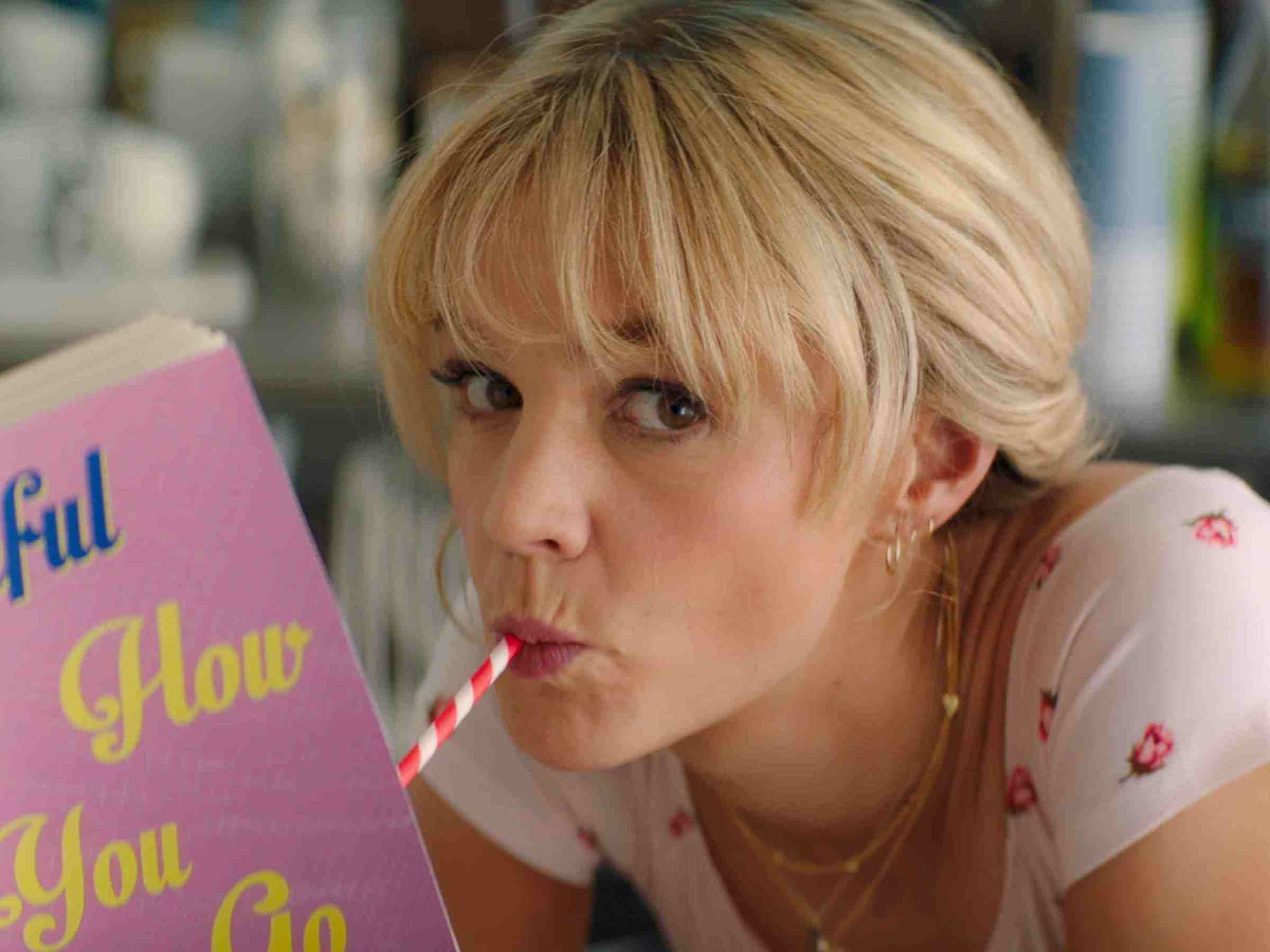
With her debut feature that more than lives up to the hype, Fennell creates a sugarcoated, pop fairyland that masks personal trauma behind the walls of an avenging angel-type loner.
Through neon lights and hyper-realistic social-media worthy imagery, Promising Young Woman exceeds and shatters the expectations of a revenge thriller to become something much more inventive and daring.
The film follows Cassandra Thomas, a medical school dropout living at home with her parents unable to fully recover from the trauma of a tragic event in her past. In her search for answers, Cassie spends nights out trying to lure men into her trap to teach them a lesson they won’t forget.
Fennell’s silver-tongued screenplay requires actors who can keep the sharp wit of her comedy balanced with the inner emotional nuance and Oscar-nominated actress Carey Mulligan creates a presence on screen that pulls the best from DeNiro in Taxi Driver and the films of Martin Scorsese.
Promising Young Woman will likely be compared to Joker, which is a derisive analogy for the simple fact that Fennell’s film operates on the complete opposite end of the spectrum, both in tone and character. What makes Cassie such a compelling lead character is how her drive for a sense of justice leaves her short-sighted to the world around her and yet acutely aware of how to twist the knife in on her perceived enemies.
Mulligan delivers a career-best performance as Cassie, the titular “promising young woman” whose life turns to disarray after the loss of her best friend Nina. There’s moments where it feels as though Mulligan is floating outside of Cassie’s body as events melt around her, but at times, a twisted sense of calculation and presence washes over Mulligan’s eyes to create the prologue to epic revenge fantasy.
The ensemble cast who give such depth to Cassie’s jaded world is a masterclass in finding the right performer for singular moments when the film needs it most.
Comedian and Eighth Grade writer/director Bo Burnham steps in front of the camera to challenge Cassie into a conventional normalcy, filling the role of sweetheart boyfriend Ryan with far more complexity than he’ll be given at first glance.
Connie Britton blends a reserved confidence that draws audiences in only to flip on a dime as needed for one pivotal scene, only to find herself overshadowed moments later by an incredible supporting turn from an uncredited Alfred Molina as a lawyer Cassie confronts.
The supporting women of the film provide a terrific counterbalance to Mulligan’s calculated mania, especially Alison Brie’s searingly hypocritical work as a former classmate of Cassie’s.
But it’s the litany of smaller roles given to men like Adam Brody, Christopher Mintz-Plasse and Max Greenberg – “that guy” actors known for playing adorable, safe good guys – that work so well in Promising Young Woman as audiences take the stereotypes they’ve built up in their heads for these performers and watch as Fennell and Mulligan help twist them into something much darker.
Promising Young Woman wonderfully sidesteps direct confrontation of sexual assault, something a lesser, more conventional prestige drama would linger on. The physicality and violence inherent in these moments are replaced with more raw, lingering emotions that trigger character development and further the plot, solidifying Fennell’s ability to pen a screenplay that will keep audiences on their toes and wanting to restart the film as soon as it’s over.
Fennell expertly infuses her film with a vast array of needle-drop moments from Britney Spears’ “Toxic” to Juice Newton’s “Angel of the Morning” to a haunting remix of “It’s Raining Men” that set the tone for a distinctly original story. Combined with Anthony Willis’ haunting score changing the mood as needed to keep the audience guessing, Promising Young Woman boast musical moments that will lodge themselves deep in the minds of ardent fans of the thriller.
Hands down a front-runner at the next Film Independent Spirit Awards, Promising Young Woman enters the end-of-year conversation at just the right time to pick up momentum towards Oscar nominations this April. Fennell’s debut feature is quite likely to earn nominations for Best Actress and Best Original Screenplay, with Best Picture and Best Director honors not out of the question.
Promising Young Woman has some of the best cinematic moments in recent memory and ones that shouldn’t be spoiled, making Mulligan’s awards-worthy performance an absolute must see on demand for ardent cinephiles who enjoy a film that will engage and challenge its audience at every turn.
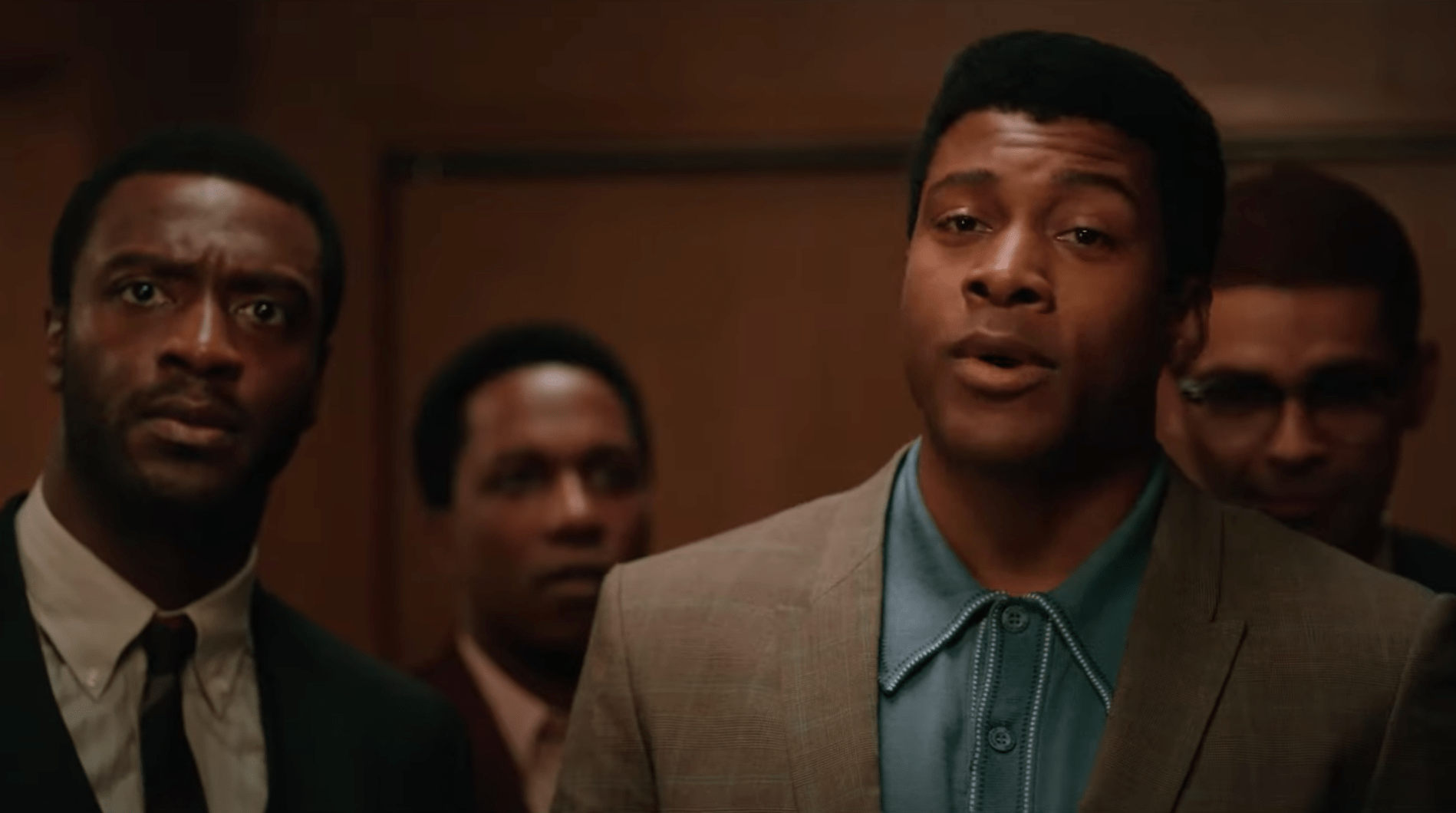
This review is based on an advance screening of “One Night in Miami” through this critic’s membership as a voter for the annual Film Independent Spirit Awards.
Four men gather in a hotel room to celebrate the accomplishments of one of their own.
Their party turns into a deep, philosophical conversation that crystallizes a moment in time in American history and challenges each to become a better version of themselves.
It’s already tantalizing subject matter for prestige drama, but make those men civil rights activist Malcolm X, football star Jim Brown and music sensation Sam Cooke getting together with their friend, newly crowned boxing champ Cassius Clay mere hours before he becomes Muhammad Ali; now that’s truly something special.
Based on a fictionalized account of one evening in the early 1960s, Oscar winning actress Regina King steps behind the director’s chair for the first time adapting Kemp Powers’ critically acclaimed 2013 stage play One Night in Miami.
King delivers a feature that’s terrifically solid in its cinema, but truly special in its theater. An opening salvo introduces the four protagonists individually with some matter of gusto, yet when King gets them all into one moderately sized hotel room together, the true magic of One Night in Miami occurs.
The film takes on its stage roots and becomes a dialogue heavy masterclass in character development, active listening and dramatic monologuing. King draws exceptional performances out of her leading men by knowing how to put them in the right spots to succeed and framing each in such a way that the men they portray feel as larger than life than their celebrity status suggests.
The success or failure of One Night rests squarely on casting and King absolutely crushes it with four massive home runs to fill out her small ensemble cast.
Kingsley Ben-Adir could very easily earn an Academy Award nomination for his soft-spoken, yet stirring turn as X, a man conflicted by his dissolving relationship with the Nation of Islam trying to keep it together to bring three influential celebrities into the fold.
Ben-Adir approaches each scene with a vigor as if his life is on the line rather than that of the character he portrays and it gives Ben-Adir an earnestness and resolve to calmly, yet forcefully attack each line of dialogue with a demonstrable passion that’s half convincing his friends and half convincing himself.
Both physically and in temperament, Eli Goree perfectly captures Ali’s charismatic cadence and unrelentingly affable personality and yet he infuses Ali with a quiet thoughtfulness that slowly bubbles to the surface over the course of two hours as Ali takes in debates between Cooke and X.
In a performance that’s more “float like a butterfly” than “sting like a bee,” Goree instantly rallies the audience to Ali’s side with a pitch perfect delivery of lines Ali probably never said but feel so genuine and authentic in Goree’s delivery.
As Brown, Aldis Hodge acts as the group’s stabilizing force, a literal mountain of a man that rarely speaks, but chooses his words with intention.
Hamilton star Leslie Odom Jr. blends his magnetic singing voice with some truly inspired acting work as Cooke, infusing the singer with a confidence that borders on self-righteousness but doesn’t become overly egotistical.
Each of the four approaches their character with a different take on the same basic concept, famous African American men twisting in the wind while trying to find the right path to help themselves and their community at large.
At times, One Night captures the same trapped energy that 12 Angry Men does by locking talented actors into a single room and engaging in sharp, thought provoking dialogue.
King develops the tension by constantly circling the room with the camera, keeping the viewers’ eyes ping-ponging back and forth between X and Ali on one side and a wary Cooke on the other.
One Night will likely be a major player in this year’s awards conversation with solid chances at Best Picture and Best Adapted Screenplay leading the way. The film could also be Amazon’s best shot at golden trophies and may lead to financially-backed campaigns for acting noms for Ben-Adir and Goree as well as directing honors for King, a shoo-in for any first feature prizes from awards groups.
One Night works as a perfect double feature with Netflix’s new adaptation of the August Wilson play Ma Rainey’s Black Bottom and is well worth seeking out when it arrives on Amazon Prime in mid-January.

Everyone assumes animated films made by Disney – or their Pixar Studios brand – are intended for younger audiences.
The colors are bright, the plotlines are largely wonderous in scale, the content is cheerful and easy to follow from start to finish.
Soul, the third Pixar feature from Oscar-winning director Pete Docter, isn’t for kids by any stretch of the imagination although it’s not at all inappropriate. Children just aren’t the intended audience, or at least, not when they are kids’ age.
Docter adapts his screenplay with One Night in Miami screenwriter Kemp Powers to imagine the essence of what gives humanity its purpose and individuals their personality. It’s an existential, thoughtful feature set in a genre that has the freedom to go anywhere and mold the indescribable into a visual wonderland.
Audiences follow Joe, an aspiring jazz musician stuck teaching middle school band whose soul is transported to “the great beyond” just as he’s about to catch his big break. Through a partnership with a new soul simply called 22, Joe must make his way back to his body in time for the performance of a lifetime.
There’s so much heavy material and references to worldly philosophies that younger viewers aren’t going to appreciate Soul as much as they did Docter’s prior films – Academy Award winners Up in 2009 and Inside Out in 2015. Soul lacks the cinematic balance to keep children engaged with the complex narrative themes despite a humorous script that rewards patient viewers.
But for adults who grew up on Disney’s animated classics, Soul strikes a resonant chord of pairing the childlike wonder of animation and twisting it for a lofty thematic purpose.
Much of the burden to make Soul work falls on the shoulders of Jamie Foxx, who carries Joe through an ever-winding tumult of situations with a kind heart, yet exasperated longing for something more. Foxx gives Joe a soft-spoken quality that renders him almost sheepish but serves the character well as he delivers lines with a sly half-smile that will charm viewers to his side.
The Oscar-winning actor provides the right blend of warm humor with introspective dramatic work and the animators capture a similar presence in constructing Joe’s tall, lanky body for the big screen.
Comedienne Tina Fey is a plucky, dynamic choice to voice 22, almost mimicking Ellen Degeneres’ turn in the Finding Nemo films but with a tad more snark.
However, with the majority of the cast representing the African American community and Soul being the first Pixar film with a Black leading character, Fey doesn’t quite feel like an ideal casting choice.
Soul is a transfixing visual delight, popping through an array of animation styles as Joe and 22 bounce from the real world to “the great before” and places in between. Docter and his team of visual artists flawlessly capture the relentless energy of New York City while still invigorating two-dimensional imagery with character that showcases where Joe comes from in his love of music.
A lock for a Best Animated Feature nomination at this year’s Academy Awards, Soul will be a frontrunner in the category along with the AppleTV+ feature Wolfwalkers and the film’s robust score, penned by Oscar winners Trent Reznor and Atticus Ross as well as jazz pianist Jon Batiste.
Originally slated for a theatrical release for Christmas 2020, the decision by Disney to move Soul to their Disney+ streaming service at no additional cost offers viewers the opportunity to engage with the film on their own time and in a more relaxed, pensive way that benefits the overall viewing experience.
Children won’t appreciate Soul like they might Docter’s previous Pixar films, but when they grow up, they may find this reflective feature to age like a fine wine.
 Cinematic Considerations