

Filmmakers transcend genre by making sure their voice remains at the forefront, regardless of whatever limitations might be artificially imposed.
This is especially true in the superhero genre, which can often feel stagnant and cookie-cutter as directors come to heel at the whims of a studio bent on franchise making and spectacle.
Wonder Woman 1984, director Patty Jenkins’ follow-up to her critically and commercially acclaimed 2017 film based on the DC Comics heroine, isn’t a typical superhero film by any stretch of the imagination, largely bucking the trend of explosions and brutality.
What makes it click are the themes, politics and humanity of its characters, who just happen to be in a comic book tale rather than have that define who they are and become.
While there are certainly shades of classic 80s movies and Richard Donner era Superman tales, 1984 most feels like a cross between Marvel’s best solo movie Captain America: The Winter Soldier and Tim Burton’s twisted take on comics with Batman Returns.
Set nearly seven decades after the events of the first film, 1984 finds the heroine in disguise as museum curator Diana Prince, wandering through life alone battling crime while trying to keep her identity a secret. When a colleague comes into contact with a stone that grants the holder any one wish they desire, events unravel and force a vulnerable Wonder Woman out into the open.
Gal Gadot continues to make the title character an unforgettable on screen persona, infusing her warmth and genuine heart into Diana Prince in a performance that’s hard to rival in terms of creating an empathic superhero.
Though at times her line delivery may feel a bit rigid, Gadot offers a forthrightness that carries over well from the 2017 original and layers in a sadness left by the void of Diana’s fallen beau, Steve. How this impacts her performance is remarkable as Gadot rightly struggles to connect with those around her until the Steve character makes his way back into the narrative.
As was true of the first film, Gadot’s best moments are opposite Chris Pine as Steve Trevor as the pair have a natural chemistry that powers large segments of the plot.
Pine’s Trevor is narratively the fish-out-of-water and brings a sense of wide-eyed wonder to scenes, balancing a Big-like naivety with the bravado Pine developed in the original.
Much of the politics of 1984 will center around Pedro Pascal’s relentless businessman Max Lord – evoking an “Art of the Deal” era entrepreneur who’s part television personality, part swindler and part distant father. Pascal channels his best Gordon Gekko impersonation, but pads Lord with far more charisma.
When Lord begins to see his plan come to fruition, Pascal does an admirable job of removing the blindfold from the audience’s eyes and revealing the inner madness within.
Kristen Wiig’s quirky, yet charming turn as introverted gemologist Barbara Minerva evokes Michelle Pfeiffer in Batman Returns with a strange yet mesmerizing look at a woman driven out of her shell by happenstance who comes to relish the notoriety that befalls her.
As is evident in Pascal’s work, how power changes and comes to define Minerva forces Wiig to radically alter her performance in the film’s latter moments, although this does push the talented comedienne into somewhat of a corner to serve the narrative’s comic book origins.
1984 is a comic book movie sequel that only concerns itself with superhero lore in terms of how characters are affected emotionally. It’s not about the action or the gimmicks. Jenkins grounds her tale in the drama of the humanity outside of the superpowers.
Even in traditional adventure sequences or crime-fighting moments, there’s a lot of care taken to ensure the purity of Diana’s motivations. The way Wonder Woman fights and protects those around her is a result of her humanity rather than simply a comic book plot device.
Because Jenkins relies less on blockbuster action that one would expect from the gaudy genre of superhero films, 1984 doesn’t need to be seen on the big screen in order to be enjoyed, something that works incredibly well with the decision by Warner Brothers to release the film in theaters and on the HBO Max streaming service simultaneously.
The film’s climatic ending leaves a somewhat bitter taste as 1984 gives way to the overly dark fight sequences that have become canon for the DC Comics Extended Universe. As its light dims, 1984 loses some of the character-based drama that Jenkins tries so hard to infuse her film with.
Better as a film than as spectacle, Wonder Woman 1984 is something made to last beyond the big screen with layers revealing themselves on multiple viewings as audiences interpret meaning and nuance in Jenkins’ film, making it an ideal feature for home screening on HBO Max before it leaves the service temporarily on January 24.

Ma Rainey’s Black Bottom, the latest awards contending prestige drama from Netflix, will likely forever be known for the final performance of the late actor Chadwick Boseman, whose career was cut short by cancer in August.
But what hopefully won’t be left out is that the film based on an acclaimed August Wilson play is also the finest work of Boseman’s career and a crystallization of not only the times in which the film is set but the wide array of emotions that bubble to the surface in jazz music and in the musicians who perform.
Set over the course of one afternoon in 1920s Chicago, Black Bottom watches tensions rise during a recording session for blues pioneer Ma Rainey as an ambitious trumpeter, white management and hot, claustrophobic conditions lead to an eruption of hidden truths and inner conflict.
Boseman is a firestorm of energy that bubbles over the surface slowly, captivating audiences from the opening moments and never letting go as Levee, a young musician and composer wanting to form his own jazz band and play more up-tempo music to attract Northern audiences.
The natural charm from his smile serves as a balm to audiences trying to find their way through the somewhat confusing introduction, and its only when Levee tells his bandmates the story of his parents that Black Bottom truly takes shape.
Boseman emotes so dynamically in this one moment, about 30 minutes into the feature, that the whole tone of the film changes on a dime, no longer being about making a record. With the longing and ache in Boseman’s voice and the tremble in his physicality, Levee takes Black Bottom and reveals Wilson’s true vision – a heart-wrenching, thought provoking treatise on race relations during the 1920s that still sears in modern times.
And none of it works without Boseman at the very top of his craft, balancing fragile emotion with a masquerade of bravado to fool not only everyone else but Levee himself.
Viola Davis – who won an Academy Award for her work in Denzel Washington’s 2016 adaptation of Wilson’s Fences – plays the title character with a larger-than-life persona that initially comes across as fake, but in smaller individual moments is revealed to be something much more nuanced and considered.
Where her work truly dazzles in the physicality she brings to Ma, using her body to get what she wants from everyone around her. There’s an imposing force to how Davis twists her hips or thrusts herself forward, implying Ma isn’t to be trifled with. Every movement is considered and electric, with the reverberations of her presence rumbling through the screen.
Black Bottom also boasts terrific work from the rest of its ensemble cast with Colman Domingo as the peacemaking band leader Cutler and Glynn Turman as piano player Toledo serving as standouts.
The film is such a fervent playground for these talented character actors largely because of the remarkable screenplay from Ruben Santiago-Hudson adapting Wilson’s words for the silver screen.
Dialogue gets peppered back and forth across short distances like bullets and the searing monologues delivered by Ma and Levee have an intensity and bite that can only come from an expert playwright like Wilson.
Stage adaptations often suffer from long, drawn-out running times that feel natural in a theater setting but drag on the big screen. Black Bottom, however, flies through a crisp 90-minute running time and Wolfe maintains an energy to the film from a visual perspective that keeps up with the sharp, relentless dialogue.
Cinematographer Tobias A. Schiessler keeps the camera in tight on performers while mixing up the color palette, enhancing the “anything can happen,” jazz improvisational style. At times, Black Bottom shows its stage roots, lingering in tight spaces and emphasizing the dialogue, and yet there’s a grandiose scale to the transitional pieces, moments in between the film’s “acts” that contextualize events and give Black Bottom a larger sense of place.
Black Bottom may well be a major contender for a Best Picture Oscar nomination, but it’s fairly written in stone that Boseman and Davis will both earn nods for their leading performance. The film’s adapted screenplay should earn accolades as well as technical honors for the film’s costuming, production design and Branford Marsalis’s score.
It’s quite possible, in fact, that Boseman could be the first posthumous double nominee with lead actor for Black Bottom and best supporting actor for Spike Lee’s Da 5 Bloods.
Certain to be near the top of any best of 2020 list, Ma Rainey’s Black Bottom serves as the perfect coda on Boseman’s magnetic career and is an absolute must-see for ardent cinephiles on Netflix this awards season.

How we handle pain, grief and tragedy – visceral, raw emotions – has always been a vibrant playground for filmmakers seeking weighty material to create artistic cinema.
Relative newcomer Tara Miele found inspiration from her own car accident to blend reality and fantasy in Wander Darkly, a melancholic film that finds new parents Adrienne and Matteo at a crossroads following a family tragedy that forces the pair to reflect back on haunting truths in their relationship and the uncertainty of the road ahead.
Wander Darkly is in many respects an amalgamation of any number of genres, mystifyingly complex, deeply romantic, otherworldly supernatural and devastatingly bittersweet.
Miele constructs a world that effortlessly changes at the drop of a hat to suit the needs of her character-driven story as the camera floats behind Adrienne dragging viewers through her fragile emotional state.
In unquestionably her career best performance, Sienna Miller is astonishingly transfixing as Adrienne, a woman coming to terms with remarkable trauma through great uncertainty that manifests as a combination of half-remembered dreams and painstaking what ifs. She is led through this journey of the soul by the vision of her husband, essentially playing the Jacob Marley from Charles Dickens’ “Christmas Carol” or Virgil from Dante’s “Inferno.”
Miller meanders through scenes in a daze as the totality of Adrienne’s tragedy sinks in. There’s something especially haunting about her slow, aimless stumble as Miele and cinematographer Carolina Costa linger on Miller’s feet visualizing the distance between Adrienne’s body and soul or between Adrienne and Matteo.
Diego Luna walks a tightrope between being the affable man Adrienne fell in love with and the distant figure she longs to get away from. His Matteo is more loosely defined in the performance than Miller’s more demonstrative Adrienne but works when considered in the context that viewers are seeing him most often through the lens of her memories.
Miller and Luna have an uneasy, uneven chemistry that doesn’t feel organically designed that way, but works in the greater scheme of the film as Wander Darkly relies heavily on a schism between Adrienne and Matteo that lingers like a cloud over their relationship.
A portrait of a relationship fading from view like a feather floating away in the breeze, Miele makes the wonderful choice of progressively pulling Matteo and Adrienne further apart as they are working to come back together emotionally.
The visual palette of Wander Darkly draws heavily from contrast heavy films like Eternal Sunshine of the Spotless Mind and pairs a connective one-take editing style with a constantly moving hand-held camera to stitch together a timeline-bending narrative and keep audiences always in motion ready for the film’s next emotional twist.
Where Wander Darkly struggles most is in its final third, which takes Adrienne’s journey of self-discovery into an overwhelming amount of grief that neither the characters nor Miele herself quite know how to convey. There’s so much potential for Wander Darkly to be a standout film from start to finish as the opening 65 minutes is an exertion of true artistic vision from a filmmaker who clearly has something to say.
A more refined finish, or better still, an open-ended one would have provided the chef’s kiss of a truly brilliant independent feature.
Wander Darkly is primed for much greater chances of success with critics’ groups and the Film Independent Spirit Awards than it will be with Oscar voters. The one exception, however, may be Miller, who could theoretically sneak her way into a Best Actress nomination in an uncertain year.
A film crystallized in emotions, Wander Darkly wallows in its melancholy far too much for some audiences, but those who become deeply invested in the characters – especially Miller’s transfixing Adrienne – will find Miele’s film original, genuine and beautifully haunting, something well worth seeking out on demand.
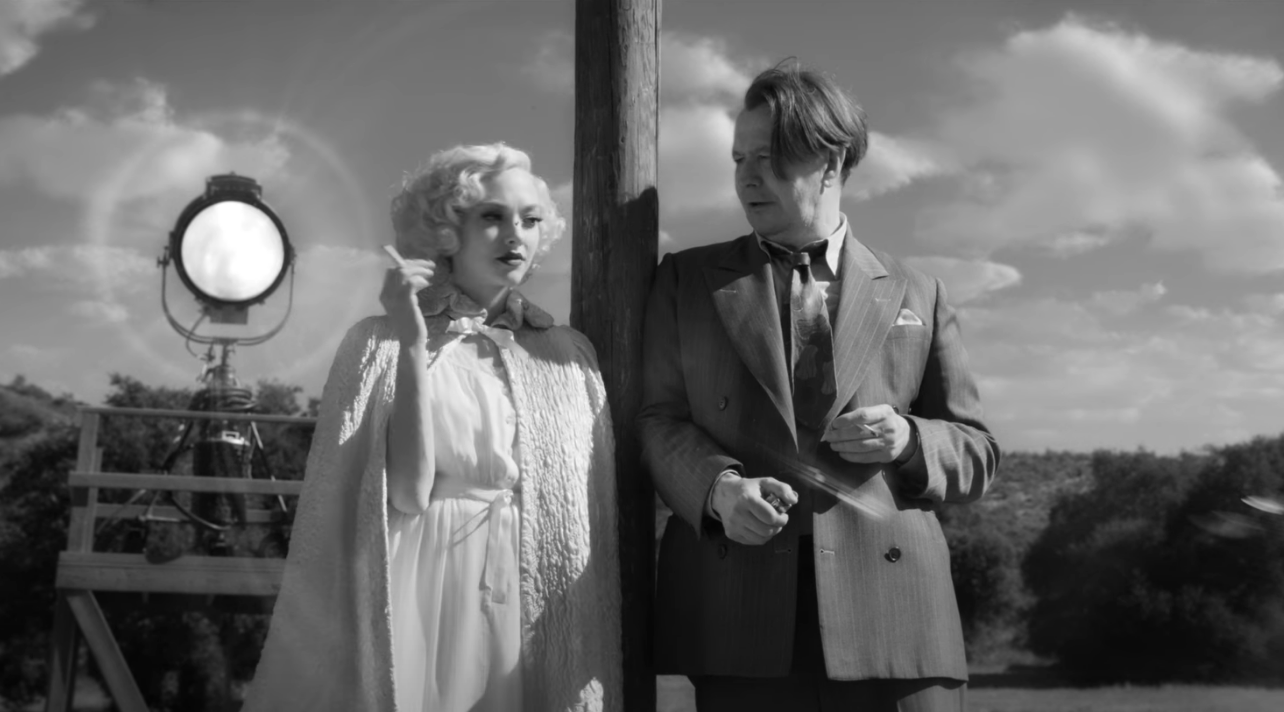
Though it’s expressed as a work of fiction, film scholars commonly understand the 1941 cinema classic Citizen Kane to be an unofficial biopic of newspaper magnate William Randolph Hearst and the launching of Orson Welles’ film career.
But the film also served as the magnum opus of social critic and Hollywood screenwriter Herman J. Mankiewicz, a man who battled with Welles for writing credit and was a frequent guest of Hearst through his connections with MGM executive Louis B. Mayer.
Some 80 years after the release of the lauded film masterpiece, Netflix partnered on a long-shelved project of celebrate auteur David Fincher, an artistic biopic of Mankiewicz that harkens back to classic Hollywood and meticulously revers both the original film and the man who wrote it without ever fully letting audiences in on either.
In many ways, Mank is to Citizen Kane what “Rosencrantz and Guildenstern are Dead” is to “Hamlet,” a narrow examination of a classic piece of art from the perspective from a character on the fringes of the original story.
Mank isn’t about what many expected before its release – the battle between Mankiewicz and Welles over screenwriting credit for Kane. Rather, the film posits itself as a deep character study of the M.G.M. script writer largely prior to Welles’ heavy involvement in the film itself.
Fincher – adapting a script from his late father Jack – uses Kane as a meta-text to construct the entire narrative of Mank from the visual cues and camera framing that feel lifted right off the R.K.O. studio lot to the back and forth structure panning back and forth in Mank’s life providing context for the scene that’s just played out on screen.
If Citizen Kane creates a portrait of a complicated man from the memories of those around him, Mank creates a portrait of another complicated man from the memories he tells himself.
Oscar winner Gary Oldman portrays the title character with the vigor of someone who has spent his whole life narrating and commenting on the lives of others – fictional and real – but has never really turned his mind towards himself. It’s a beautifully controlled performance that often harkens back to Welles’ turn as the indominable Charles Foster Kane of the 1941 film, but with a different twist that punches up Mank’s eccentricities.
The film hinges not on Mank’s ability to pen the screenplay for Kane, but on his relationships with three women – a distant marriage to wife Sara, an affable fondness for actress and Hearst mistress Marion Davies and unlikely friendship with secretary Rita Alexander.
Oldman approaches his chemistry with each of the three women differently while still maintaining a constant dry witticism that subdues those around him.
Lily Collins and Tuppence Middleton do admirable jobs as Rita and Sara, respectively, but both are outshined by Amanda Seyfried’s enchanting, almost radiant performance as Marion Davies, a picture perfect take on vintage Hollywood ingénues.
It’s remarkable how closely Seyfried mirrors her wide-eyed turn as Davies to the one given by Dorothy Comingore as Susan Alexander Kane in Citizen Kane, as if Seyfried herself fades off the screen and leaves Davies to play the real-life inspiration for the second Mrs. Kane. Scenes with Seyfried and Oldman have a heightened intensity and sparkle compared to the rest of Mank.
Netflix’s home viewing experience that will make Mank a far more approachable film also has the unfortunate effect of handcuffing the quality of Erik Messerschmidt‘s expert black-and-white cinematography.
Messerschmidt plays with light and shadow to create a compelling texture to scenes, engulfing the audience in a sea of bright white or endless void of darkness at a moment’s notice to reflect the overall tone of a scene and it’s in its boundlessly spectacular visuals that Mank truly feels like Fincher has studied Kane as the text for his film as Welles did with John Ford’s Stagecoach prior to shooting Kane.
But seen on a small screen, especially one with limited resolution quality or poor contrast settings, Mank will become muddled to the point of losing its pre-Technicolor cinematic luster, a shame given how striking it must be on the big screen.
Like its cinematic inspiration, Mank is poised to be a major player at the Academy Awards with likely nominations for Best Picture, Best Director, Best Actor, Best Supporting Actress, Best Original Screenplay, Best Original Score, Best Cinematography and Best Production Design. Prestige films about Hollywood have always overperformed at the Oscars and it’s easy to see Mank taking a similar path to the one The Artist did as a nostalgia for vintage moviemaking carries it to numerous trophies.
A thoroughly complicated and difficult picture to make and to sit through, Mank is sure to tantalize cinephiles and befuddle casual moviegoers. It feels impossible to completely appreciate and comprehend the depth of detail and cinematic texture Fincher and his team have painstakingly layered into a feature that feels like a masterpiece, though only history will ever tell if it actually becomes one.
Hillbilly Elegy has everything awards season voters seem to want in a best picture contender.
It’s a film with A-list actors giving showy performances in an adaptation of a true story from an Academy Award winning director set in the recent past that gives insight into the current political climate.
There’s plenty of golden reasons why Netflix paid $45 million in January for the rights to this “Oscar bait” feature, but none of them add up to terrific cinema.
Based on the 2016 memoir of the same name from J.D. Vance, Hillbilly Elegy follows a Yale law student returning home to his poor family in Ohio after a family emergency while reflecting on his youth growing up with his sister and drug-addled mother.
Director Ron Howard teams with screenwriter Vanessa Taylor to present the film both in the present and alternating flashbacks, which would work better if they were shot and framed in more distinctly separate ways. As it is, the retelling of J.D.’s youth feels more like a series of loosely constructed vignettes than a cohesive storyline driven by character development.
Perhaps that’s the fatal flaw of a film like Hillbilly Elegy, or perhaps its point altogether, that no characters truly change all that much from beginning to end. Likeable characters at the beginning of the film are still likeable; troubled characters rarely seem to redeem themselves beyond a stereotypical picking themselves up by the bootstraps and working hard motif.
Melodrama is laid on thick, almost to the point of cable television special with heavy orchestral scores to reinforce mood.
The lackluster story – and especially the underwhelming script – do no favors to Academy Award nominee Amy Adams, who is truly going for it as J.D.’s drug addicted mother Bev. It’s an unrestrained performance that doesn’t have an expected signature monologue of rage or anguish, but there’s a demonstrative excitement bordering on anxiety to her work here that feels a touch overdone at moments.
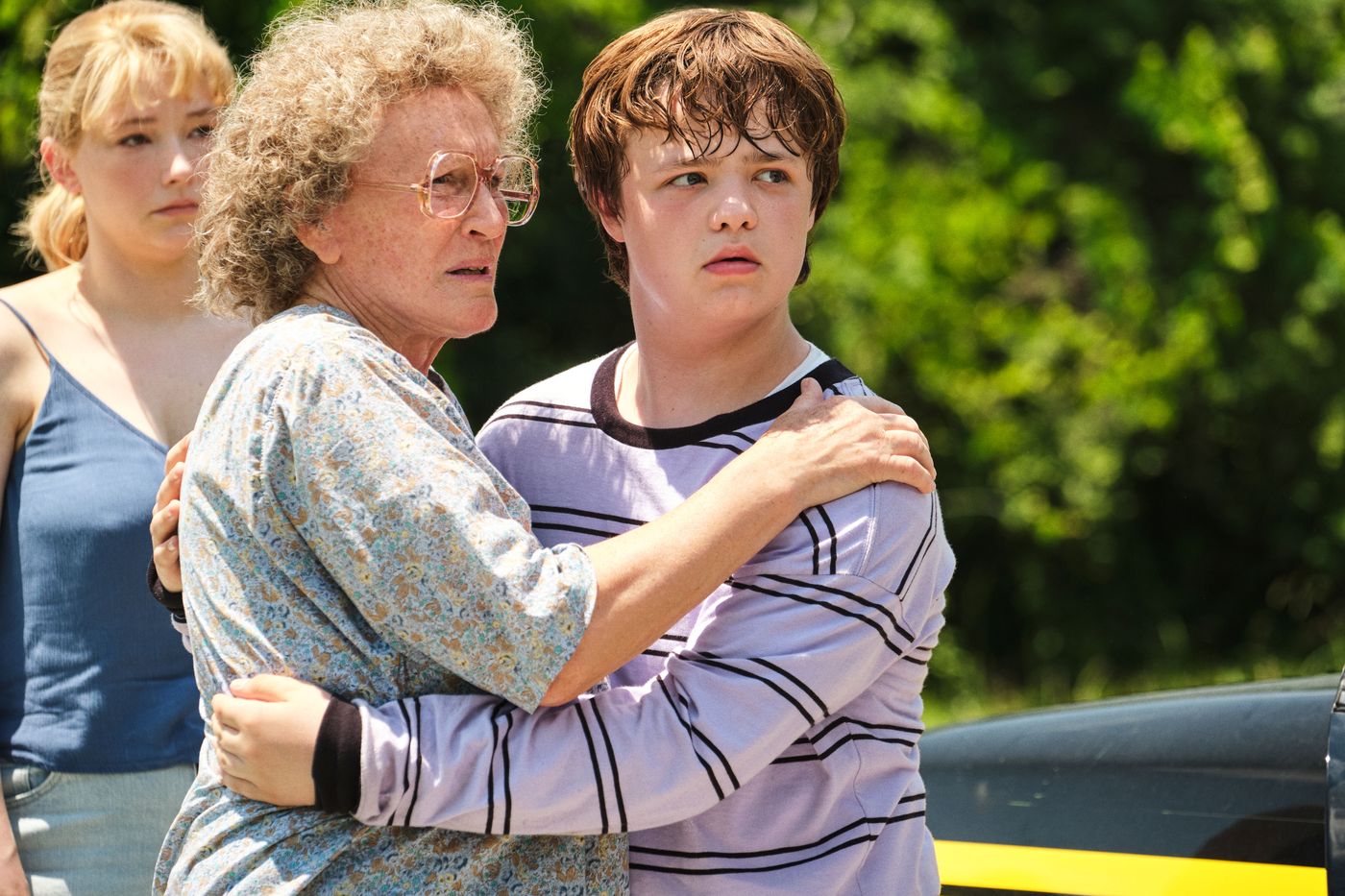
Glenn Close – who holds a record for the most Oscar nominations for an actress without a win – is sure to be a major contender for Best Supporting Actress in the film’s best performance as J.D.’s Mamaw. Her tough exterior combined with a winning heart of gold make Close’s work the most complicated yet rewarding effort in Hillbilly Elegy with Mamaw often serving as the stand-in for the audience’s perspective on events or the one true character viewers find themselves rooting for regardless of the situation.
The lead role of J.D. – played as a youth by Owen Asztalos and as an adult by Gabriel Basso – is especially disjointed. While Asztalos has remarkable chemistry with both Close and Adams and is largely effective in endearing himself to the audience, Basso’s standoffish, rather cold demeanor provides a stark contrast to the character that makes it harder to get behind his point of view from an audience perspective.
Haley Bennett is solid in an underwritten turn as J.D.’s older sister Lindsay, providing strength to her family when they need it but keeping her distance as much as possible to protect her own children from their grandmother. Ironically enough, Bennett is also featured in another Netflix adaptation of a critically acclaimed novel released in 2020, the far superior Western noir The Devil All The Time starring Tom Holland.
Slumdog Millionaire actress Freida Pinto sadly serves as essentially window dressing in a throwaway role as J.D.’s girlfriend Usha.
A film designed to win awards is surely going to be on the short list in any number of categories given the relative lack of competition this year, although it’s likely that only Close plays any serious threat to win.
There’s plenty of opportunity for Howard and Taylor to provide social or political commentary with the film, but by in large they simply don’t. Hillbilly Elegy is aggressively safe, spelling things out for audiences far more than needed and telegraphing events incredibly transparently so there lacks suspense or dramatic tension.
In its intention not to offend, Hillbilly Elegy doesn’t say what the filmmaker or Vance himself truly mean which provides for an easier watch, something Netflix may be going after here.
Along with the upcoming Mank from director David Fincher, Hillbilly Elegy is one of Netflix’s biggest releases of 2020 and will certainly be one of the year’s more talked about films regardless of where it ends up on awards season ballots, making it a worthwhile watch for ardent cinephiles already subscribed to the streaming service.

Every film has a price tag to be seen.
Some movies you’d pay full price to see on opening weekend. Others are rentals for home viewing that cost a couple dollars or streaming movies that feel free because you don’t have to pay extra for seeing them.
And then there’s also those movies that people would have to pay you to watch.
Over the course of the coronavirus pandemic as movie studios and theater chains battle over how and when to release big-budget films, the logistics have changed dramatically.
Movie lovers have gone from having to wait a calendar year for certain upcoming titles like the newest Marvel or James Bond film to come out to having some movies release digitally for $29.99.
Probably the biggest culprit of this price-gouging strategy, Disney’s reimagining of Mulan, became available for a reasonable cost with physical media rental this week after spending the summer as a $30 premium add-on to their Disney+ streaming service.
Continuing a Disney tradition of making live-action versions of their classic animated films, the 2020 edition of Mulan follows an old Chinese folktale about a young girl driven to serve in the Chinese army in place of her aging father to help defend the emperor from invaders.
Director Niki Caro’s version removes all the songs and Mulan’s dragon friend Mushu from the film in order to make the film more realistic and sadly strips away all the life out of the film.
Instead of being the bright, fun adventure of the original, the Mulan reimagining attempts to be too many things at one time: war odyssey, light-hearted children’s movie, visual spectacle and commentary on female empowerment and oppression. Yet Caro never really devotes enough time to any of these topics to become more than a mild backdrop to an abridged version of the 1998 original.
As the titular character, Yifei Liu is affable and enjoyable to watch with her facial reactions to events around Mulan often making or breaking the quality of a scene. Her chemistry with Tzi Ma as her father Zhou is authentic and is perhaps the only relationship in the entire film that feels like there is any sizable emotion there.
Veteran action star Jet Li is completely wasted here as the sitting emperor of China, basically only in the film to service plot points and be taken hostage by the invading rebel army. The same could be said of Jason Scott Lee, whose baddie Bori Khan has the character development of a one-episode TV drama villain.
Of the secondary cast, the only interesting performance comes from Gong Li as Xianniang, a new character created for this version of Mulan that serves as a troubled villainess or anti-hero aimed at being the darker side of what Mulan herself could become.
Caro’s Mulan doesn’t have the staying power of the animated original, nor the re-watchability. Scenes outside of the visually impressive action sequences lack dynamic energy or charisma and there’s not any of the Disney magic or catchy musical numbers to keep the attention of younger audiences.
Several of the hit songs from the original film like “Reflection” or “I’ll Make A Man Out Of You” are hinted at in the movie’s orchestral score, but not performed in the film itself, which hurts the ability of Mulan to connect with the younger audiences it’s targeting nor fans of the 1998 classic hoping to hear their childhood staples.
Battle sequences are few and far between in Mulan, but when they do arrive, there’s a lot of detail and impressive choreography to display Mulan’s inner chi and how her balance affects her ability to outfight scores of men on both sides of the battle.
It’s impossible to recommend this iteration of Mulan at the original $29.99 price point especially given how Disney+ has the 1998 original and the 2005 animated sequel already available with a regular subscription to the service.
Perhaps this is why the studio has altered their approach with subsequent new releases coming exclusively to Disney+ without a premium upgrade like Artemis Fowl or the potential Oscar contender Soul slated for Christmas.
For a single viewing rental on DVD/Blu-ray or when the film becomes part of the regular Disney+ subscription on December 4, Mulan could be something worth checking out at home despite missing out on the larger theatrical experience that the film’s visuals truly deserve.

Horror films do not have to be scary to be effective.
There doesn’t need to be scenes of bombastic violence or frightening jump scares to heighten the tension.
Sometimes the most terrifying things in cinema come from slowly built, meticulously crafted inevitability.
In that sense, writer/director Sean Durkin’s latest film is incredibly haunting, simply by focusing on a looming sense of doom in a relationship between two people who want different things out of their lives together.
The Nest is about the fracture of a marriage, the dissolution of the American dream and the suffering of individuals as they put physical and emotional distance between themselves and those around them.
British-born Rory O’Hara has been living relatively happily in New York for a decade with his wife Allison, their 10-year-old son and his teenage stepdaughter during the 1980s. Looking to make the most for himself, he persuades Allison to uproot their lives and move to a remote country manor outside of London, where the change in scenery dramatically alters the family dynamics.
Two-time Academy Award nominee Jude Law invigorates Rory with a relentless ambition that evokes the economic cynicism of Wall Street but in a film that focuses that drive as a catalyst for deep-seeded emotional trauma on everyone around him.
Law is the antithesis of demonstrative here, slow-playing the role with a chilling calmness that accentuates how the growing distance between Rory and Allison affects each of them differently.
Finally given the opportunity at a major leading role, Coon is impeccable at conveying internalized emotions through a seemingly vapid glance into nothing and the way she twists words like knives into Rory’s back is downright menacing in all the best ways.
Allison’s slow deterioration over the course of the 108-minute film is emotionally taxing on viewers who empathize with Coon’s magnetic performance and the fragility of Allison’s stability permeates the endless silence of lingering moments in Durkin’s film.
Durkin uses the O’Hara’s massive new house as a barrier to keep audiences from truly knowing these characters and to keep the family from each other. Long shots down barren hallways, lingering glances into the British countryside, a lengthy one-take introduction to the vast interior all give viewers an empty, sinking feeling about what is and what is to come for the O’Hara’s.
The way in which Durkin chooses his camera positioning and character movements are superb. In one pivotal sequence, Durkin keeps a close focus on Coon as she walks towards the frame and the background widens behind her to reveal a devastating blow to her character’s increasingly fragile psyche. Every visual moment of The Nest is intended to subtly – and occasionally overtly – frame the film within the headspace of the couple.
Cinematographer Mátyás Erdély brings viewers into the world of the film by relying on the natural elements of the setting and allowing light and dark to become active participants in the scenes. Framing one character dominating another physically by casting a shadow over them immerses the viewer in Durkin’s palette for the film, where character relationships and development are shown visually as much as they are translated from the written page.
Durkin also effectively utilizes a chilling score from composer Richard Reed Parry to drive home the dramatic tension with foreboding effect. The Nest often feels like a haunted thriller rather than the terse familial drama that it is thanks to Parry’s haunted orchestral warnings.
The Nest is far too much of an indie drama to make a major splash at next year’s Academy Awards even in spite of so many films being pushed out of contention. It should garner both leads acting nominations at the Film Independent Spirit Awards as it did last week with the Gotham Film Awards.
Easily dismissed by casual viewers as a small indie film that doesn’t do a whole lot, The Nest is a deep, artistic feature that takes care in the technical details and dramatic nuance which will resonate with fans of the lead performers and those willing to be sucked in to the slow-burn nature of this reserved, yet enthralling drama available on demand.

Fresh off of Halloween and on the way to more family holidays, Netflix is bound to cash in on the dearth of end of the year films with a number of seasonally themed features.
Their newest hit, which has topped the streaming service’s most-watched charts in the United States since its debut two weeks ago, is an objectively bad movie that knows its limitations and makes the most of its flaws, creating the must-see, fun terrible film of the year.
Director John Whitesell’s Holidate stars Emma Roberts and Luke Bracey as a pair of strangers tired of being alone for the holidays who decide to pair up as platonic plus-ones for every imaginable celebration throughout the year.
It’s a classic setup, but Holidate is more like a naughty Hallmark movie, sappy sweet and filled with traditional hate-to-like-to-love romance, but with implied sexuality and cursing one would never find on the family friendly television channel.
The script from Tiffany Paulsen is written in such a way where the end is always in sight from the beginning and there’s lots of overt meta-textual commentary about movie romances from Roberts’ Sloane lamenting how women are never actually taking a break from dating when the perfect guy comes along to a spoof of the iconic lift scene in Dirty Dancing.
Roberts comes across as just likeable enough to root for, but also nails an obscenely selfish streak that her Sloane isn’t totally aware she has but that everyone around her resents.
She has decent chemistry with Australian actor Bracey, who’s charming enough for the role of Jackson – the titular “holidate” – but lacks a broader charisma to keep audiences intrigued by what’s going on in his character’s life outside of his budding relationship with Sloane.
Frances Fisher is exceptionally abrasive in the best way as Sloane’s overbearing mother dead set on finding her daughter a husband as quickly as possible. She takes the direct dialogue and gives it a sharp twinge that twists the knife on Sloane’s loneliness while still reflecting the modicum of affection she clearly has for her daughter.
Tony Award winner Kristen Chenoweth delivers her most audacious performance to date, relishing every opportunity to be as naughty as she can as Sloane’s promiscuous aunt, Susan. It’s a turn that’s train-wreck waiting to happen, cringeworthy but in a way that audiences can’t help but keep watching as their bodies recoil away from the screen.
Holidate relishes any opportunity to take a holiday and make it insufferable for Sloane and Jackson as a way to force them together, be it a nauseating wedding dance to “I’ll Make Love to You” from Boyz II Men to implying the most disgusting possible end to a Halloween party. By pushing them together in these outlandish ways, Paulsen and Whitesell follow the exact rom-com motifs they have Sloane repeatedly mock in a meta-textual way that doesn’t quite hit the mark.
A second Holidate film is already in the works as Netflix seeks to capitalize on the breakout success of this feature, with Paulsen already lining out the plotline based on revelations from the film’s credits.
It’s a smart business venture for the streaming service and a welcome sight for fans of Holidate, which should be increasingly popular amid a holiday season where more and more people will be home longing for the comfort of friends and family amid a resurgent pandemic.
The film is certainly geared for couples cozying up near the fireplace on a cold holiday evening and Holidate is probably worth giving a casual chance for fans of naughty humor and the rom-com genre as a whole.
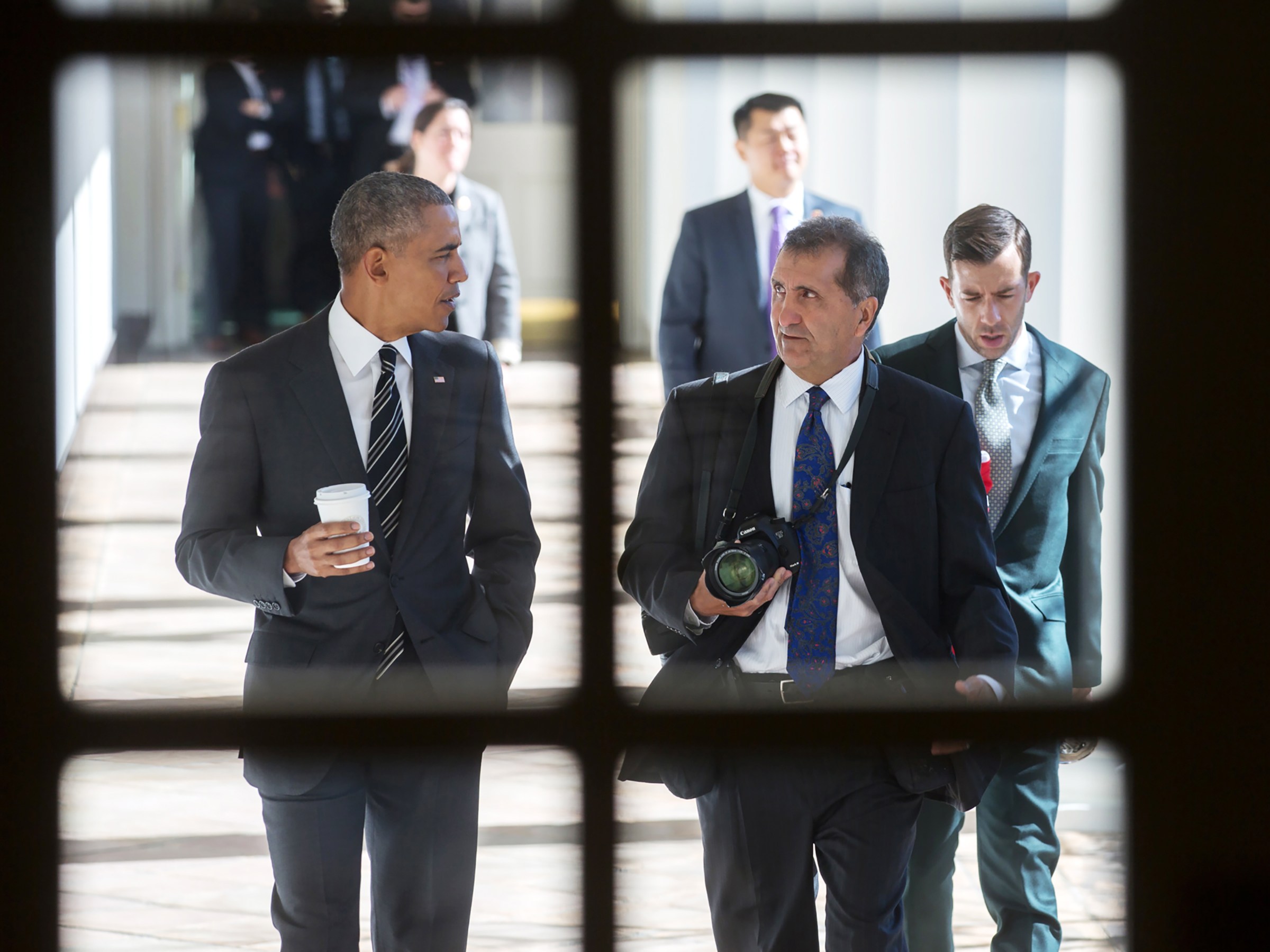
Pete Souza has had an inside look at Washington politics for decades.
He’s been in the room for countless national crises, meetings with foreign leaders and hundreds of White House press events without anyone ever really knowing his name.
As the official photographer for both the Ronald Reagan and Barack Obama administrations, Souza has seen intimate moments on both sides of the aisle and captured images that serve not only as a remembrance of the leaders he followed, but of the men they were and the history they made.
In a new documentary from director Dawn Porter and the producers of the Oscar-winning film Free Solo, Souza shares an extensive amount of his personal and official photography from the 1980s and 2010s to capture a larger portrait of the American executive branch from the perspective of a largely invisible bystander.
It’s clear from the outset that Souza has a distinct reverence for the office of the President and a close kinship to both of the men he covered who held that position, though his work portraying Obama is covered in more depth than Reagan, a man he covered for less time but still found the stateman’s wonderful humanity and empathy for others.
The visuals of the film are absolutely breathtaking in large part to Souza’s still photography setting the tone and the context for everything to come.
An early photo shown features Obama briefing president-elect Donald Trump on an impending national security emergency while Souza narrates the final day of Obama’s presidency and the transfer of power.
This should relatively innocuous, but the frame of the photo conveys so much. Trump’s signature red tie, a long hallway, the American flag in the background; all of these things symbolizing the transfer of power in a single image reflect instantly so much about the historic moments taking place.
Just before this, Souza captures Trump engaged in conversation with Obama’s running mate, with the soon-to-be former president in the background, beautifully staging the scene of years to come in American politics.
Souza has the eye for where the moments are taking place, how best to capture them unobtrusively and the access to give Americans a revelatory look into the lives of the men serving as commander-in-chief.
There’s an endless assortment of moments like this captured across The Way I See It, often coupled with news reel and video footage of the events to help orient audiences, but Souza’s still images routinely and masterfully supersede their moving counterparts, capturing a moment in time in a way that will leave viewers breathless.
So much of The Way I See It conveys a sense of neutrality or a larger sense of bipartisanship that it becomes somewhat troublesome as Souza uses the film’s preamble and its final moments to make an argument in voting President Trump out of office. This simple fact will keep a broad audience from finishing the film, or more likely, turning it on altogether.
But the problem with making this level of political statement is that it pulls away from capturing authentic American history, one with a reverence and respect for the executive branch that it’s so clear Souza has.
Politics will likely keep The Way I See It in the mix for an Academy Award nomination for best documentary feature, an honor the middle 90-minute thoroughly deserves for its intrepid look at the humanity of presidents on both sides of the aisle and one the film’s outer edges probably should disqualify it for.
One of the subjects of the film notes that “a photograph breaks down the idea that these people (U.S. presidents) are somehow different from us” and it’s in the humanity shown through Souza’s images of Reagan and Obama that The Way I See It shows its soul.
An imperfect film with a larger apolitical message about seeing others for who they are as people rather than the ideas they support, there’s too much beauty in the visuals not to give The Way I See It a chance regardless of what side of the aisle viewers are on or how the presidential election turns out.
Sofia Coppola’s new film doesn’t really go much of anywhere, but the road traveled is easy and the banter refreshingly charming.
Evoking a Woody Allen-esque style, Coppola’s On The Rocks hit AppleTV+ this weekend to little fanfare, but with a softer touch, a melancholic wistfulness and the dulcet tones of Academy Award nominee Bill Murray philosophizing on why men tend to stray from committed relationships.
It’s a film that forgets how upper class it is like so many Allen movies do, but Coppola balances out the gender dynamics between her characters much more fluidly.
At its core, On The Rocks is about a woman at a crossroads in her relationships with two men – the workaholic husband she suspects may be falling out of love with her and the playboy father who wanders back into her life at an unexpected time.
While there’s an overarching plot that follows Laura as she and Felix track Dean’s whereabouts for evidence of infidelity, the only real reason On The Rocks exists is to give Coppola time to reminisce about her own relationship with her father, award-winning filmmaker Francis Ford Coppola, and make subtle commentary on the good and bad of distant relationships between generations of artists.
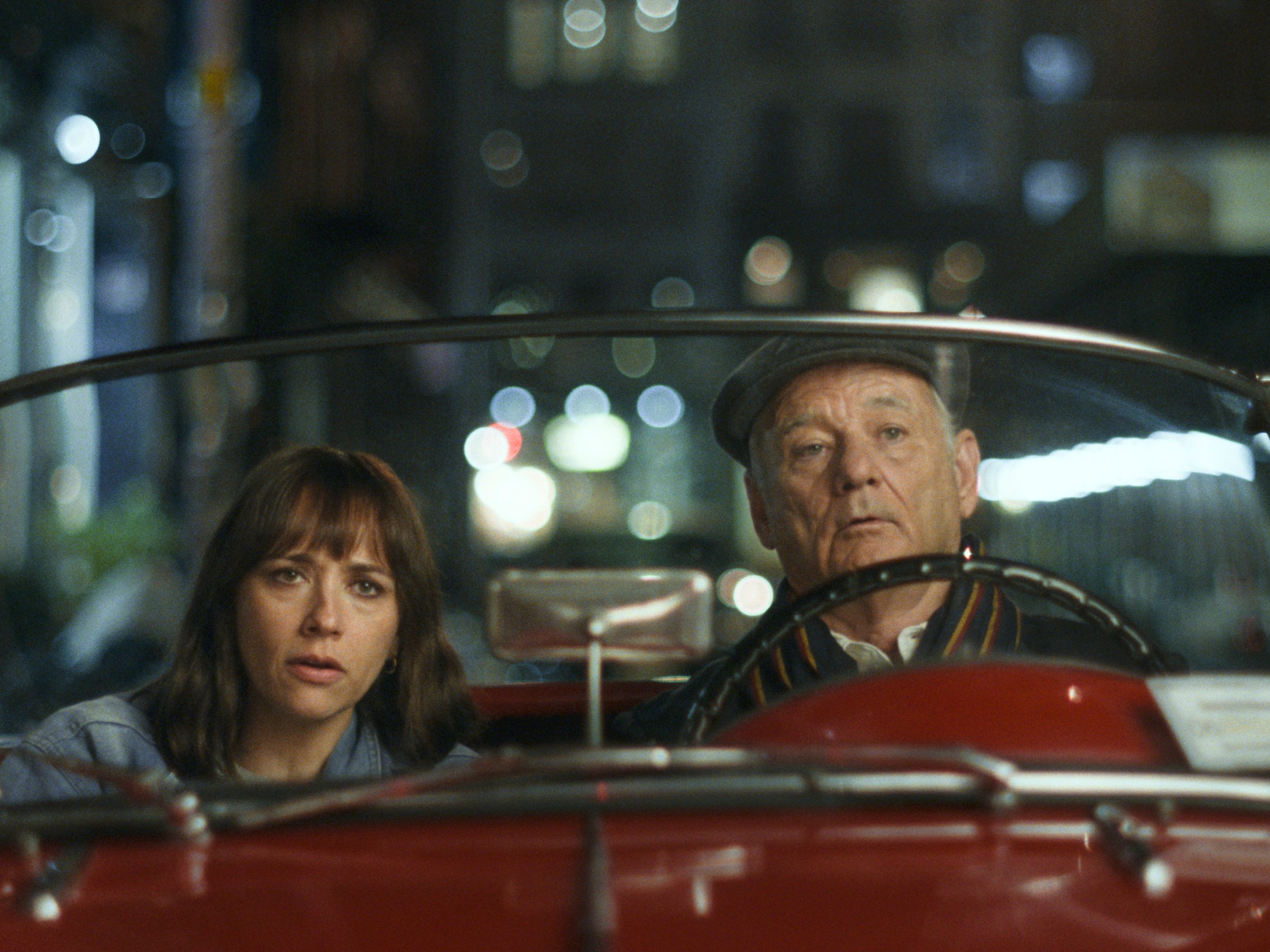
The pairing of Rashida Jones’ struggling writer Laura and Murray’s traveling art dealer Felix makes for the most compelling moments in the entire film, which often deal with raw humanity and the differences between men and women in the most frank, honest discussions shown on film in quite some time.
That these conversations are happening in dark New York City hotspots over pricey cocktails is the height of a COVID-induced lust for social interactions in a pre-pandemic world that feels much longer than six months ago.
Murray has rarely been as charming as he is in On The Rocks, effortlessly waltzing his way across the screen and making a man who could easily come across as snide or sleazy feel relatable and someone viewers can rally behind.
It’s a testament to Coppola’s ability to put the Oscar-nominated actor in the perfect situations, framing him just off center to highlight the charm in his eyes and writing lush dialogue that Murray can elevate with his wry sensibility.
His Felix is almost in conversation with a younger version of himself, Murray’s Bob Harris from Lost In Translation that Coppola directed, as Laura seems plagued with a similar malaise to the melancholy Bob felt wandering around Japan in Coppola’s 2003 film.
Known mostly for comedic television work, Jones stabilizes the film with a performance that shows growth for a character in Laura who lets life happen to her until her father pushes her to take control of her situation. There’s a genuine haze to Laura that Jones is able to bring out and then slowly remove over the course of the film that’s subtle, yet beautiful to watch.
One of Coppola’s best cinematic tricks is her terrific use of Jenny Slate’s Vanessa, a single mom who talks Laura’s ear off with her own complicated relationships with men outside the elementary school classroom where they pick up and drop off their children. These little snippets that last a minute or so offset the more subdued, dramatic moments and pop with a burst of energy that reengages the audience for the next big scene.
For a slow-burn dramedy, On The Rocks is exceptionally cinematic with Coppola having a distinctive eye for placing the camera at exactly the right angle to further character development and story. Cinematographer Phillipe Le Sourd does his best work outdoors, using the city landscapes to help give the film an elegant sense of place.
Not a front-runner for awards season, On The Rocks is still Apple’s best shot at their first Oscar nomination or win in a major category with Murray a strong contender for Best Supporting Actor and Coppola a possibility for Best Original Screenplay.
On The Rocks may be Coppola’s most subdued film to date, often evoking the subtle luxuriousness of those Lincoln car commercials echoing the tones of Matthew McConaughey’s bourbon-soaked voice. It’s an easy film wandering in the malaise of mid-life stagnation, which could be simply dismissed as lazy, but On The Rocks maintains a casual breeziness thanks to Murray’s tremendous lead performance and the brisk 95-minute run time.
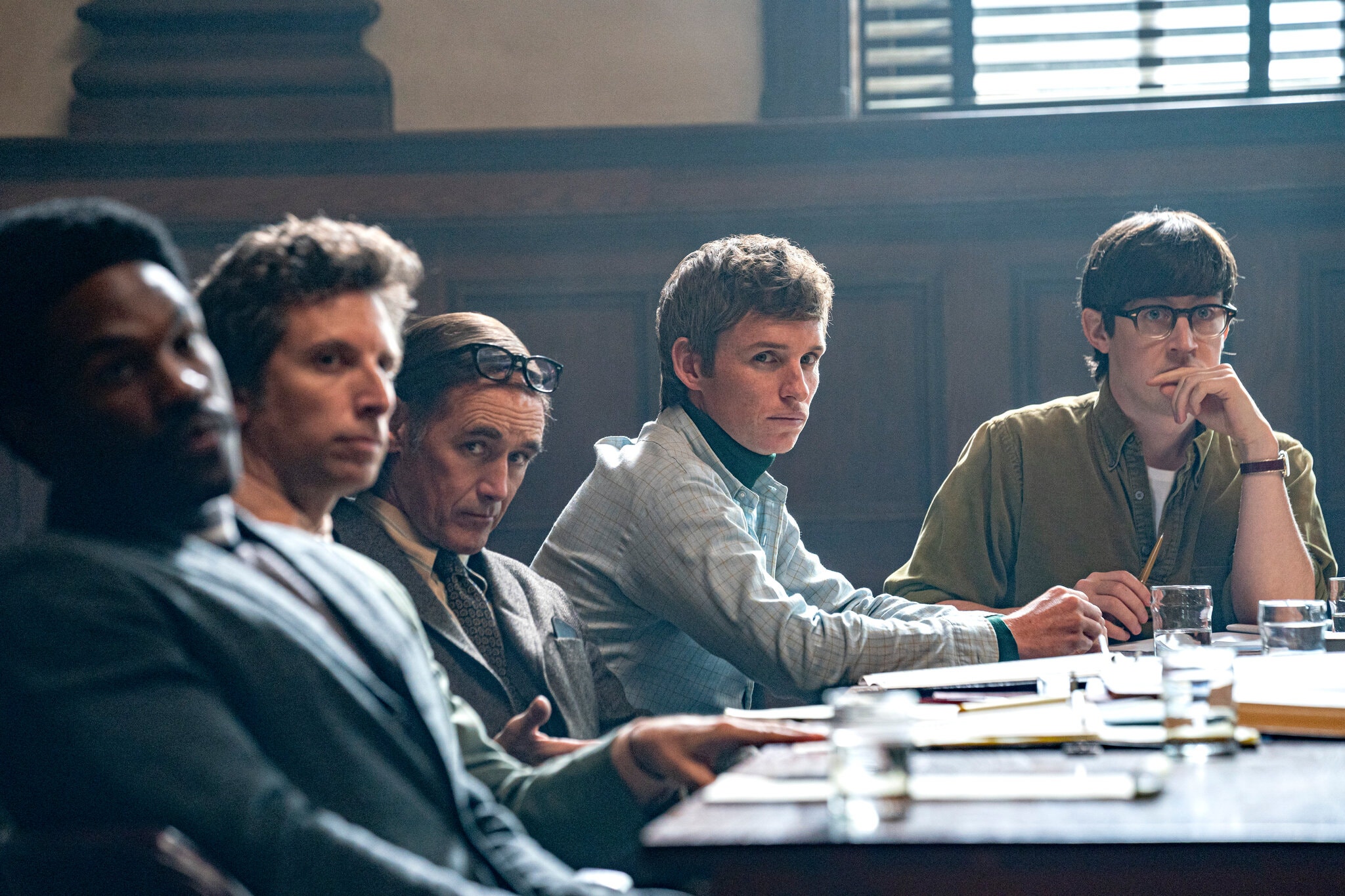
Cinematic wordsmith Aaron Sorkin is back at it again, with his dogged brain gushing dialogue onto script pages filled with unforgettable moments and sharp, biting lines.
The man behind powerful screenplays like A Few Good Men, The Social Network and Moneyball takes his second turn behind the director’s chair, filming a script he wrote himself about the events surrounding the 1968 Democratic National Convention.
The Trial of the Chicago 7 is a highly charged political courtroom drama that weaves its way into the current national spotlight by following a series of protests from groups trying to end the Vietnam War by staging demonstrations at a park in Chicago near the site where Democrats were nominating Hubert Humphrey for president.
Subsequent violent acts between protestors and Chicago police were met months later with the indictments of eight leaders of several different political organizations by federal prosecutors charging the anti-establishment movement with inciting riots.
At times, Chicago 7 is brilliant, leaning heavily on Sorkin’s extreme talents as a wordsmith to craft engaging and memorable moments. At other times, it becomes overly procedural and languishes in the melodrama that borders on an episode of Law and Order with blatant partiality and surreal buffoonery on the part of law enforcement that would feel comical if scenes weren’t based on real events.
Sorkin relies on his deep ensemble cast to lift the words off the page, including a pair of Academy Award winners with Eddie Redmayne as student protest organizer Tom Hayden and Mark Rylance as lead defense attorney William Kunstler.
Known for his more exasperated, showy performances, Redmayne is much more reserved and in control of his emotions as Hayden, often trying to be a sense of reason among all of the film’s dynamic tension while still pushing for an end to the Vietnam War.
Rylance provides the film with gravitas and, alongside veteran character actor Frank Langella as Judge Julius Hoffman and Joseph Gordon-Levitt as lead prosecutor Richard Schultz, gives Sorkin’s legal-heavy dialogue a sense of purpose and understanding for average audience members not as familiar with court proceedings.
Comedic actor Sacha Baron Cohen gives perhaps his most serious and best performance to date as mild antagonist and co-defendant Abbie Hoffman, whose pejorative rantings and snide commentary offer a searing commentary on the film’s events while also serving as a large majority of the much-needed levity. Sorkin places Baron Cohen just off the center of the action to serve as a sort of satirical Greek chorus, alongside Jeremy Strong as fellow Yuppie leader Jerry Rubin, and his college speeches that come across as part stand-up, part political rally are among the most engaging moments of the entire film.
The film’s best, yet underserved plot line finds Yahya Abdul-Mateen II in a breakout performance as Black Panther leader Bobby Seale, a target of relentless harassment by a prejudiced and less-than-subtly racist system seeking to incarcerate him by any means necessary.
Shown almost entirely in courtroom scenes with the other defendants, Abdul-Mateen commands the attention of viewers regardless of what is happening around him with an undeniable strength and charisma.
Sorkin shows significant improvement as a director with his second film, raising the stakes both in terms of visuals and scale over his 2017 feature Molly’s Game with Jessica Chastain and Kevin Costner.
Chicago 7 has grand, sweeping camera actions that flow in and out of conversations and character movement to give the audience a sense of scale.
The cinematography and production design are exceptional in this regard, but it’s the expert editing of Alan Baumgarten that keeps the momentum rolling and allows Sorkin to navigate through events in a loop-de-loop, forward and backward in time style with expert use of cross-cutting between scenes at the trial, the protest and the ensuing violence.
A film that has screamed for awards consideration since its production was announced, Chicago 7 feels to be a shoo-in for a number of nominations at the next Academy Awards ceremony as other contenders give away to releases in 2021. The film is a likely Best Picture contender along with Original Screenplay and acting nominations for former winners Redmayne and Rylance as well as Baron Cohen and Langella feel well within the realm of possibility.
It should come as little surprise that Chicago 7 lands in the top tier of films to be released in 2020, standing around the same level as fellow Netflix dramas Da 5 Bloods and The Devil All The Time; this reflects both a similar standard for the streaming giant in terms of quality and also just how narrow the pool for high quality films is given the constant back-shuffling of cinematic blockbusters.
Chicago 7 still serves as a major step forward for a screenwriter turned filmmaker with a lot on his ever-running mind and something worth checking out on Netflix for cinephiles starved for quality drama and relentless dialogue.
Things happen to protagonists in movies.
It’s what drives the plot forward and makes for compelling entertainment.
But more often than not, it’s the male characters who have much or all of the agency in a film – an understood, yet not explicitly stated ability to impact or change the overall course of events.
This is especially true of films directed by men, even when the movie features one or more female protagonists.
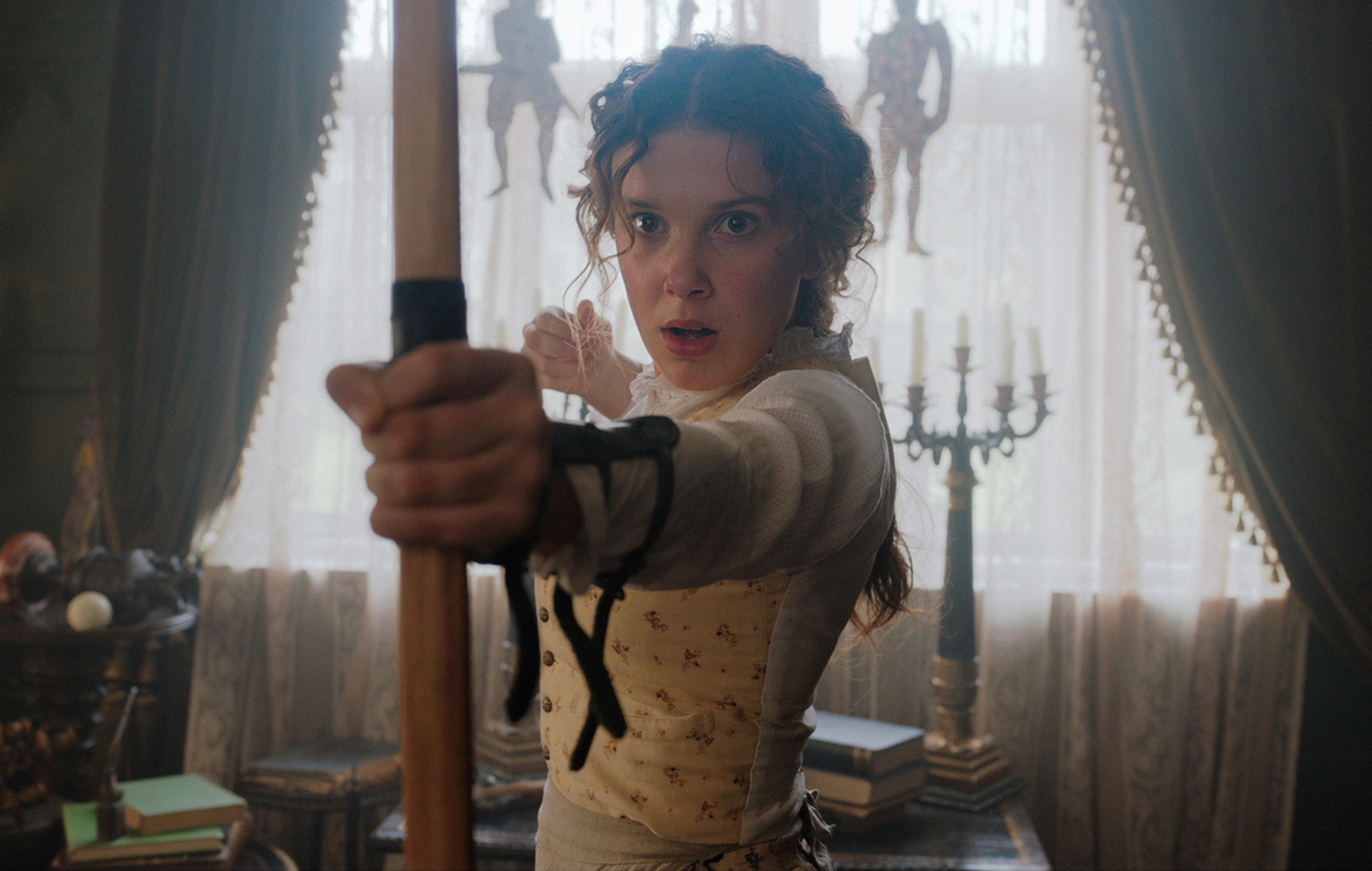
A new Netflix film – directed by Harry Bradbeer from a screenplay by Jack Thorne – revels in its ability to push back against this narrative, thanks in large part to the film’s producer and star, Stranger Things actress Millie Bobby Brown.
Based on the first of a series of novels by Nancy Springer, Enola Holmes follows the teenage sister of world-renowned detective Sherlock Holmes as she escapes from family members wanting to place her in a boarding school and sets off on a quest to find her mother, who disappeared suddenly on Enola’s sixteenth birthday.
While it’s certainly true of mystery films in general that events happen around Enola without her involvement, this is a movie where the drive comes from an impassioned lead, the root narrative is based on female empowerment in a restrictive 19th century England and the core dynamic stems from a mother-daughter relationship that haunts Enola in a positive way from start to finish.
Brown is electric and exceptionally charming as the title character, giving Enola a plucky, headstrong attitude that radiates energy off the screen and makes audiences glad to be along for the somewhat bumpy ride.
While some screenplays use narration as a crutch to prop up a lack of character development or to speed through plot elements, Enola Holmes breaks the fourth wall as Brown often speaks directly to viewers to both give insight into what’s happening on screen and to comment on the stupidity of those around her.
In these asides, Brown dazzles with a charm that evokes both a classic Jane Austen heroine and a snark distinct to portrayals of the character’s more famous brother, Sherlock.
The film never shies away from acknowledging the Sir Arthur Conan Doyle master detective, although Henry Cavill’s more restrained performance as Sherlock is more bemused older brother than wickedly smart sleuth. His is a more sympathetic turn than Benedict Cumberbatch’s eccentric post-modern version in the BBC series Sherlock and less bombastic than Robert Downey Jr. in the similarly styled Sherlock Holmes films from Guy Ritchie.
Oscar nominee Helena Bonham Carter leaves a long shadow over the entire film as Enola’s mother Eudoria, played mostly in flashbacks set over a number of years that help form the basis for Brown’s development of the Enola character as well as hide clues to solve the lingering mystery of the film.
Enola Holmes is far more colorful than any other iteration of the British super-sleuth canon originally developed by author Doyle as the England of the film is brighter and more cinematic, keeping with what one might expect of a Jane Austen adaptation.
But the punches rarely get pulled as Bradbeer and Brown bring a grit to the film’s action sequences. Fight sequences are structured to make Enola a wiry, agile fighter as opposed to the traditional brawler style of her brother Sherlock and there’s a kinetic rhythm to the action that makes everything feel orderly, yet like frantic chaos.
Enola Holmes moves at a brisk pace as viewers jet around the English countryside in search of the next clue to an ever-changing mystery and only in the last 20-30 minutes does the weight of the two-plus hour adventure feel slightly burdensome.
Bradbeer does a great job of creating an extensive world that could lead in a variety of different directions as a franchise starter for Brown and yet simultaneously building a somewhat tightly composed singular mystery that wraps up cleanly over the course of 120 minutes.
A sequel to Elona Holmes, practically a given with its high viewership and Netflix’s wide array of film development, would actually be a welcome addition to the catalog and something worth pursuing.
Enola Holmes definitely targets younger women as the primary audience, but there’s a genuine warmth and lighthearted nature to the entire film that will make this inevitable franchise starter something both men and women can enjoy.
 Cinematic Considerations