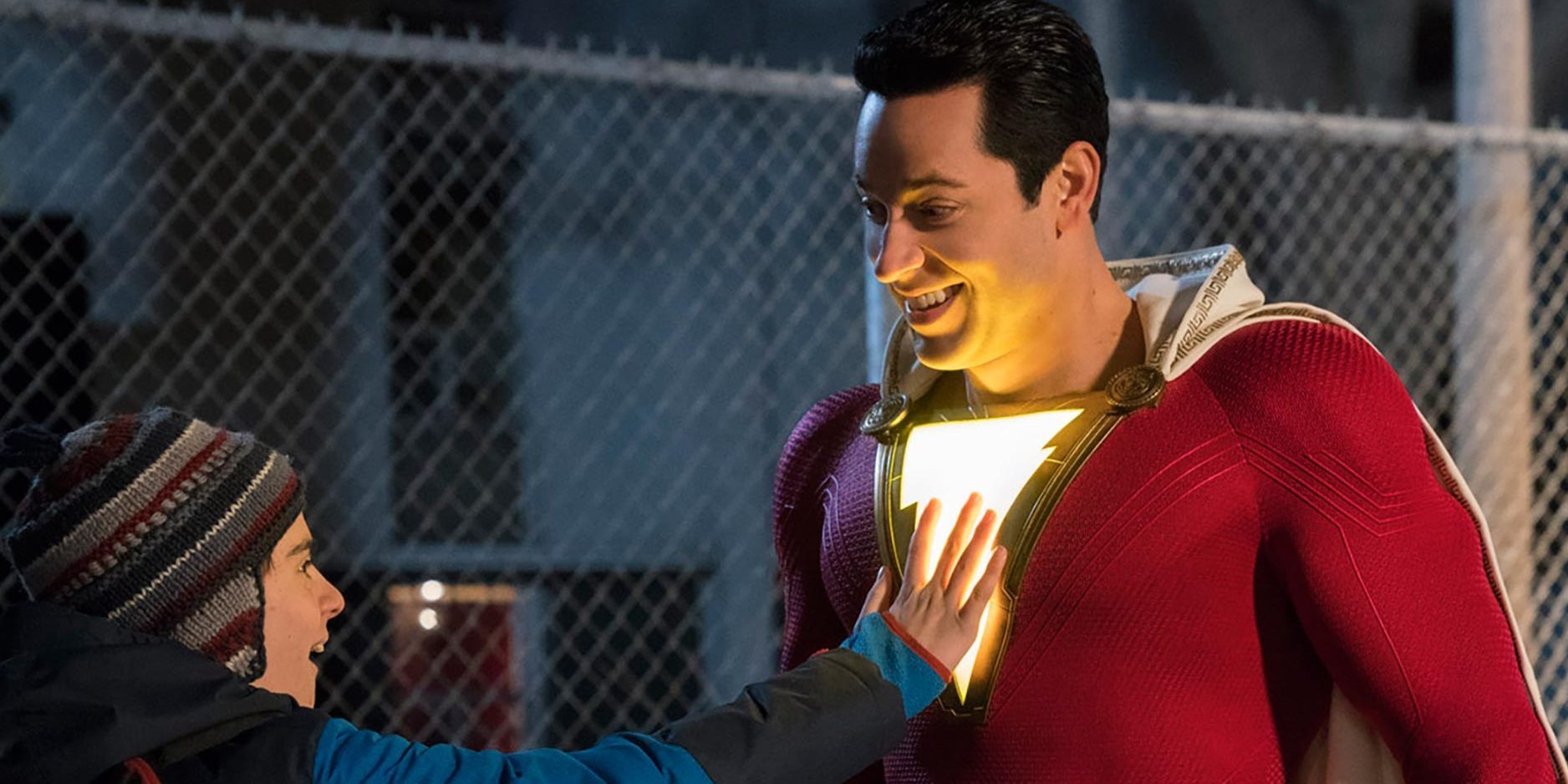

There isn’t anything remarkable, groundbreaking or transcendent about “Shazam,” the latest in a never ending cavalcade of superhero movies “you just have to see on the big screen.”
The latest offering of DC Comics films from Warner Brothers is invariably entertaining in the moment, but lacks a certain dynamic energy that will resonate with moviegoers after the credits roll.
It’s got a clear, unique hook to draw audiences.
“Shazam” follows foster kid Billy Batson, the prototypical well-intentioned delinquent who bounces from group home to group home until a wizard grants him the power to transform into an adult superhero in vaguely Superman-esque attire.
This premise offers up some genuinely funny moments as Billy and his new foster brother test the limits of Billy’s Shazam alter-ego.
But as with much of “Shazam,” scenes are dragged out well past the point of repetition as director David F. Sandberg proves well in need of some serious editing to trim the film’s bloated 132-minute run time.
The success or failure of “Shazam” hinges entirely on the dual performance of Asher Angel as teenage Billy Batson and Zachary Levi as his adult alter-ego Shazam.
Despite a lack in synchronicity between the two performances – Levi feels less like a strong Batson than an entirely new character – “Shazam” delivers on a pure entertainment level as both Angel and Levi grab the attention of audiences and rarely let go.
Levi especially is well attuned to the heightened humor of the role and still conveys a convincing amount of comedic range to make Shazam less of a one-note caricature.
Both actors display great chemistry with Jack Dylan Grazer, who often steals scenes as Billy’s foster brother Freddie Freeman.
Not all of the jokes land as much as Sandberg and screenwriter Henry Gayden would like, but “Shazam” hits much more often than it misses when some combination of these three actors are on screen.
More in keeping with the majority of the DC Extended Universe movies, “Shazam” is significantly darker in tone than its relatively cheery trailer might suggest.
The film’s villains include demonic personas of the “seven deadly sins,” grotesquely designed CGI gargoyles that terrorize and brutalize at will.
“Shazam” also borrows quite liberally from irreverent, R-rated superhero flick “Deadpool,” mixing in that film’s subversive nature by poking fun at genre tropes and other DC movies as well as ramping up the innuendo to the upper limits of the PG-13 rating.
As a result, “Shazam” occasionally feels derivative and may be upsetting for younger families who thought it may be more in the vein of “Wonder Woman” or “The Incredibles.”
Where “Shazam” particularly grinds to a halt is in the extended backstory of the film’s primary villain, Dr. Thaddeus Sivana, featuring gritty and exceptionally brutal scenes that far overcompensate for the lighthearted tone of Billy’s journey to become Shazam.
Veteran character actor Mark Strong has become notable for giving a series of solid performances in these blockbuster villain roles with films like “Sherlock Holmes,” “Green Lantern” and “Kick-Ass,” another film “Shazam” likens itself after much more than it should.
With Sivana, Strong gets to the point where playing so many similar evildoers becomes repetitive and his Sivana suffers from a relatively muted, bland performance that belies just how much time is spent trying to build the character up.
As superhero films continue to dominate the cinematic landscape, the sheer weight of quantity has begun to far exceed the quality most films in the genre can deliver.
In a vacuum, “Shazam” is an exceptionally average film.
Among superhero movies, and especially those outside the Marvel brand, there’s a lot to like about “Shazam.”
It’s just not super.
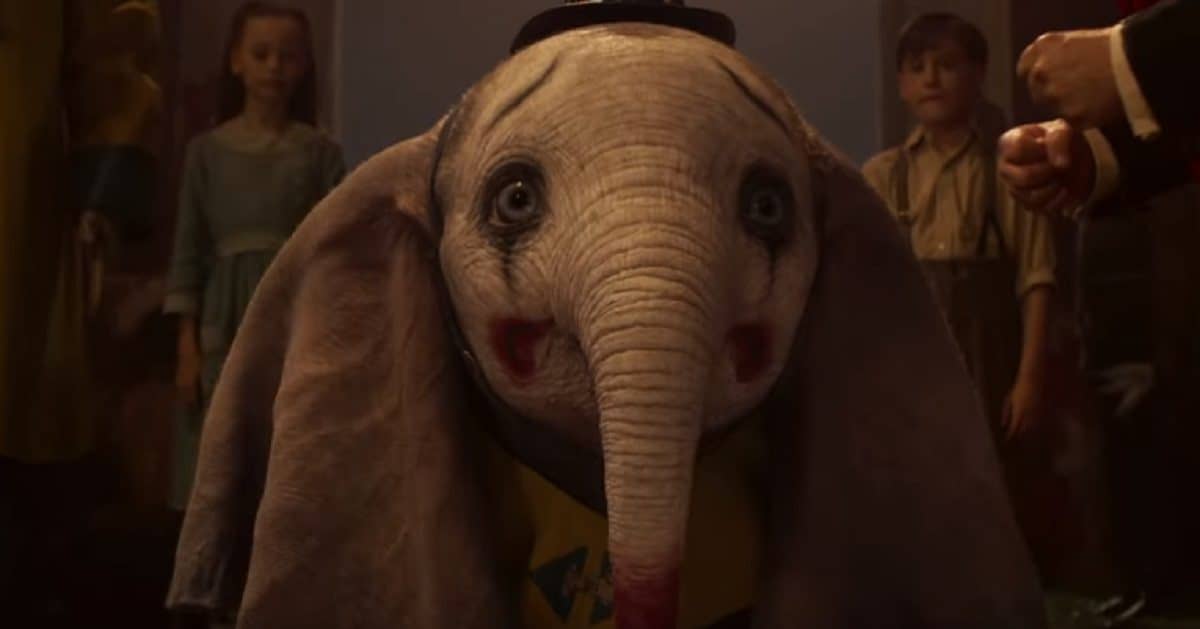
A film about a flying elephant should not work, but it did once.
Remaking an iconic Disney animated film about a flying elephant definitely shouldn’t work and certainly doesn’t here as director Tim Burton stumbles about the circus world for two hours in a clumsy, largely lackluster iteration of the 1941 film “Dumbo.”
To be clear, this retelling of a Disney classic compartmentalizes the original into about 45 minutes of storytelling, trashing the musical elements and talking animals in lieu of extended commentary about capitalism that will soar like Dumbo himself far over the heads of the young viewers the film is intended for.
The film follows the struggling Medici family circus who make it big when their lonely baby elephant begins to fly using his oversized ears. The novelty attraction perks the interest of entrepreneur V.A. Vandevere, who buys the circus to monetize little Dumbo at any cost.
Despite a big name cast of talented actors, the performances in “Dumbo” are muted, one-note caricatures that fail to draw audiences in.
Colin Farrell is decent as Holt Farrier, a returning war veteran who trains Dumbo with his two children, and Danny DeVito has his moments as circus owner Max Medici.
When Oscar nominee Michael Keaton strolls onto the scene as Vandevere, however, “Dumbo” begins a long stumble as Keaton can’t seem to get out of his own way. His charming snarl of a character feels out of touch and forced.
Burton’s “Dumbo” lacks a dynamic energy and scenes often fall flat when the titular elephant is off-screen. It’s difficult to connect emotionally with the thinly constructed characters whipping by at a breakneck pace.
“Dumbo” is adorably boring and immediately forgettable.
Iconic flying scenes should have a sense of awe to them and yet in “Dumbo,” the magic simply isn’t there.
Screenwriter Ehren Kruger, the mind behind three “Transformers” sequels, fails to be a competent choice to pair with the eccentric Burton for a “Dumbo” retelling as the result is a clunky mishmash of the 1941 original and an absurd caricature of corporate greed that subtly reeks of a takedown of Disney’s business model.
It isn’t just that a $170 million budget for such a bland movie feels exploitative to audiences. There’s a lot of quality artistry to make Dumbo the CGI character a vivid, dynamic work of art on screen.
Rare moments throughout the film, usually in the big top with flying elephants and animals made from bubbles, are genuinely entertaining and yet don’t linger with viewers.
But this is also a film where Farrell’s father figure refers to Dumbo as “Big D” and famed boxing announcer Michael Buffer urges the crowd on with a hearty “Let’s get ready for Dumbo!!!!”
Deliberate, conscious choices like these by Burton and company beg the question if the filmmakers were truly invested in the work or simply as tired of their corporate bosses as the Medici family circus.
The fact that everything around Dumbo, from the underwritten characters to the lack of musical numbers to the grim final third of the movie, is just exceptionally underwhelming makes it easy to question why a film like “Dumbo” got made in the first place.
There’s an obvious intention on Disney’s part to revitalize all their classic animated films with live-action stories.
Audiences have already paid a pretty penny for reboots of “Cinderella,” “The Jungle Book,” “Beauty and the Beast” and an underappreciated “Pete’s Dragon” with “Aladdin,” “The Lion King” and “Mulan” all slated to hit the big screen in 2019.
“Dumbo” could quite easily be the worst of all of these.
Entertaining in a “get the kids out of the house” sort of way, “Dumbo” is exactly the kind of low-energy, simple cash grab that smart audiences will avoid in theaters and wait for its inevitable release as part of Disney’s upcoming streaming service.
“Dumbo” may fly, but there’s simply nothing special about this reboot.

Are we our own worst enemy?
Jordan Peele’s latest film, “Us,” contemplates deeply personal, introspective ideas through the lens of horror.
The film’s main conceit, an ever precarious internal balance between good and evil, is pushed to the surface quite literally as a family on vacation are confronted by ominous doppelgängers of themselves, the violent opposite of their seemingly normal existence.
Peele’s second feature gives ample room for a talented cast to sink their teeth into multiple roles, with Oscar winner Lupita Nyong’o shining in the lead role of Adelaide Wilson, the matriarch increasingly fearful of a return to the beach where she faced a childhood trauma.
Nyong’o also astounds as Red, the matriarch of the doppelgänger family described as “the tethered,” where the talented actress is able to delve deeply into the fractured psyche of horror’s most unique female character.
“Us” is a heady, thought provoking horror film that relies on thematic terror as much as, if not more so, than traditional jump-scares.
The less that is known about “Us” prior to a first viewing the better, though repeat screenings will help audiences fully understand Peele’s complex allegory.
The profound thing about “Us” is that the imminent danger comes from the duality of each lead actor’s performance both in a mirrored and parallel sense.
This especially rings true with Nyong’o’s mesmerizing turn as both Adelaide and her doppelgänger Red.
The ways in which Nyong’o separates Adelaide from Red to heighten tension, but simultaneously reveal a deeper connection beyond the physical is truly nuanced, inhabited work.
If either Adelaide or Red feel false to the audience, the whole feature comes tumbling down like a house of cards, yet Nyong’o is profoundly present in both the unhinged Red and more reserved Adelaide.
How Nyong’o evolves both characters slightly over the course of the film as the plot reveals more about “the tethered” helps solidify Peele’s allegory. Taking on two complex characters in the same film and putting them on an equal level is incredibly difficult, beautiful acting from Nyong’o.
The other leads of “Us” – Winston Duke, Shahadi Wright Joseph and Evan Alex – also play their dual roles to perfection, with Alex especially shining in intimate moments between young Jason and his doppelgänger Pluto.
Cinematically, “Us” works best in its darker moments – at night and at the film’s most terrifying – as Peele collaborates with cinematographer Mike Gioulakis to create interesting, engaging shots that stimulate and accentuate the horror elements without become too gaudy.
This is especially effective in the family’s initial contact with “the tethered” as intimate shots of the family pressed against their doppelgänger build the suspense exponentially.
As easy as it would be to compare “Us” with Peele’s 2017 Oscar winning horror-comedy “Get Out,” this latest feature is a completely different animal that trades overt political statements for thematic allegory.
“Us” is the thinking man’s thriller, a film where Peele will point audiences in a direction and then push them to interpret the narrative of “Us” in their own way.
Some will see “Us” as a synonym for U.S., continuing a political motif from “Get Out” whereas others may dismiss this as a red herring designed to obscure what’s really going on.
Regardless, “Us” works as a singular genre film but should best be examined as an artistic interpretation of intentionally vague larger themes in much the same way Darren Aronofsky’s controversial “Mother” provided deeper allegory than a typical Friday night at the movies.
Though it’s much too early in the year to guarantee awards season acclaim, “Us” certainly has the potential to remain in the larger film conversation in the months to come, much like “Get Out” and “Black Panther” before it.
“Us” deserves strong consideration in the Best Picture and Best Director race as well as Michael Abels’ haunting score that lingers with audiences long after they’ve left the theater.
Acting performances in horror films rarely make waves in Oscar voting, but Nyong’o delivers the sort of layered, engulfing turn in dual roles that should break through the noise and potentially lead to her second Academy Award win following 2013’s “12 Years A Slave.”
More psychological thriller than outright terror, “Us” isn’t as scary as it is fear inducing and the film’s complexities will resonate with audiences long after they leave the theater.
Filmmaker J.C. Chandor is at his best making intimate, dialogue-heavy films about man’s unrelenting quest for the almighty dollar at any price.
His 2011 debut “Margin Call” was an intense, diabolical examination of the New York financial services industry that earned him an Oscar nomination for the film’s screenplay.
Three years later, Chandor returned with “A Most Violent Year,” a subtle and nuanced crime drama about the morally ambiguous world of a heating oil company CEO’s quest for the American dream.
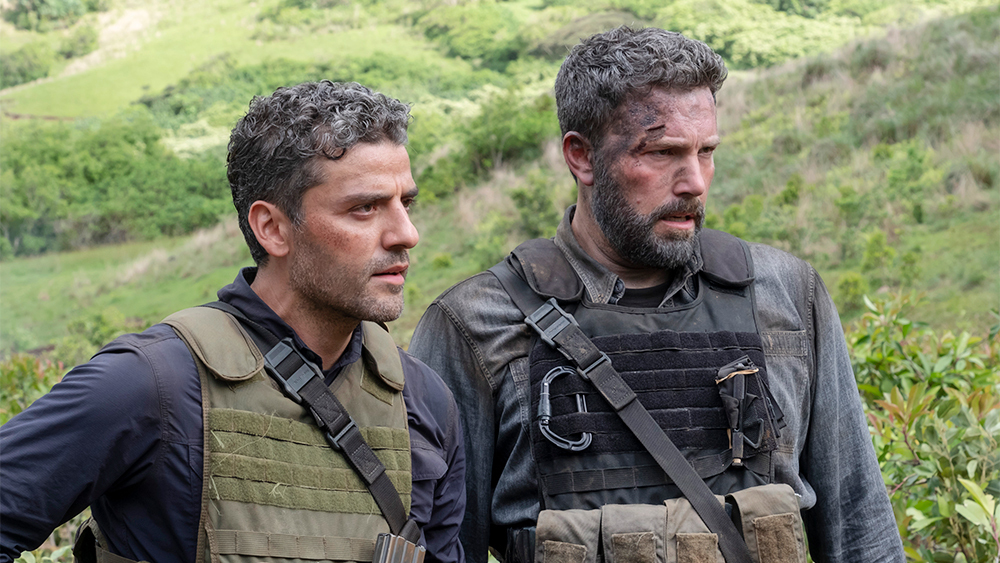
In his first collaboration with streaming service giant Netflix, Chandor’s “Triple Frontier” presents as a familiar heist film with retired military veterans attempting to rob a Brazilian drug lord.
But Chandor’s films are never so simple.
“Triple Frontier” examines what makes a soldier once there’s nothing left to fight for and is a somber, introspective film aside from all the gunfire and chase scenes.
It’s a brutal, uncompromising look at what happens when a team of elite soldiers assemble on a dangerous mission for self instead of country.
In “Triple Frontier,” former Special Forces operative Santiago Garcia learns of a hidden fortress of cash in the Brazilian jungle while working for the Colombian government hunting down cocaine dealers.
With the aid of his reluctant, retired team, Garcia aims to seize millions and take out the region’s deadliest villain.
Technically profound, yet dense thematically, it’s the kind of film that requires a concentrating, engaged audience with their finger off the stop button, which is a harder sell on Netflix than at a crowded movie theater.
Key to the overall success of the film is the terrific ensemble cast led by Oscar Isaac as Garcia, whose deliberate performance as the team’s driving force paced the entire film.
Charlie Hunnam, Garrett Hedlund and Pedro Pascal overcome thinly conceived character archetypes – the pilot with a drug problem, the gunner with a crazy streak, the dutiful straight arrow – and create genuine chemistry among the five leads which carry “Triple Frontier” through its more languishing moments.
Meanwhile, Ben Affleck gives one of the better turns of his career as Tom Davis, the former team captain emotionally wrecked by retirement, which drove him away from his family. There’s a sincere emptiness to his performance that reflects a sense of deep, profound loss of purpose in post-service veterans.
Chandor and Affleck carefully build Davis’ mental stability fracturing as the mission develops and the money grows closer in hand.
Affleck does a tremendous job giving Davis a sense of composure in spite of the increasingly frantic nature of the film’s events and Davis’ evolution over the course of “Triple Frontier” is perhaps the only true character development in the film, which may or may not be intentional on Chandor’s part.
“Triple Frontier” is the first Chandor film he did not write alone, helping to pen the screenplay with “Zero Dark Thirty” scribe Mark Boal.
The lack of a complete singular vision does manifest in the somewhat muddled tone of the film, which often skirts character backstory or development for larger general themes like the self worth of military veterans retired from the service or the cost of relentlessly pursuing money.
Like his other works, “Triple Frontier” can be a grind to get through on an initial viewing because Chandor packs so much into the subtext of his characters.
There’s some smart musical cues in “Triple Frontier” with a familiar and eclectic soundtrack as well as the best possible cinematic use for Fleetwood Mac’s “The Chain” as a character device.
On the whole, “Triple Frontier” is a film that deserves multiple viewings to understand the nuance Chandor sews under the surface so that audiences can come down from the shine of the fast-paced action-heist-thriller they were expecting to get for two hours.
While not quite on par with “A Most Violent Year,” “Triple Frontier” continues Chandor’s strong filmography and is well worth taking a chance on during the next Netflix surfing.
The fate of the universe lies in the balance.
It’s the central conceit of any galactic space opera or bombastic superhero adventure.
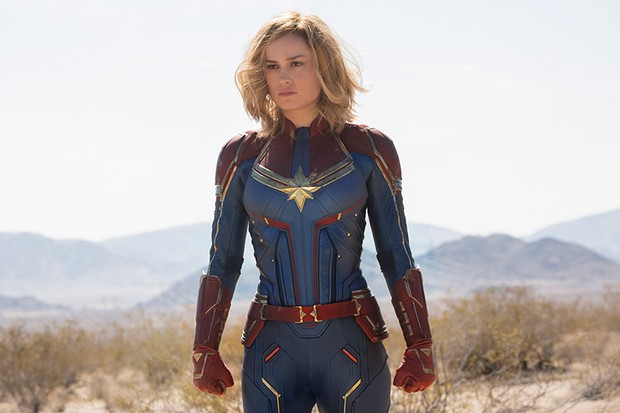
But rarely does it feel more true than with “Captain Marvel,” the new feature from the indie writing/directing duo of Anna Boden and Ryan Fleck that just also happens to be the 21st entry into the Marvel Cinematic Universe (MCU).
The weight of the whole MCU – painstakingly choreographed to this moment over more than a decade of movies – now rests on the shoulders of Brie Larson, indie darling turned Oscar winner upon whom the mantle of “first female Marvel hero to earn a solo movie” was thrust.
By audiences, film critics and the studio alike, expectations for “Captain Marvel” have climbed higher, reached further and compounded faster than any Carol Danvers origin story probably deserves.
And all that’s before mentioning the three Oscars won a few weeks back by “Black Panther” – first in the history of the MCU – or “Wonder Woman,” the 2017 DC Comics movie “Captain Marvel” will be unfairly be permanently linked with.
Try as they might, Boden and Fleck don’t quite hit the excessively high mark and yet, somewhat surprisingly, “Captain Marvel” is a largely enjoyable couple of hours.
In its attempt to serve many masters, “Captain Marvel” carries a clunky, burdensome story filled with a war between noble Kree warriors with literal blue blood and sneaky Skrull shapeshifters, an amnesiac Air Force pilot, the origin story of famed “Avengers” hero Nick Fury and a Calico cat.
Kree warrior Vers is dropped on Earth circa 1995 for a fish-out-of-water tale that feels eerily reminiscent of other superhero origin stories, which is probably due to the fact that “Captain Marvel” is a bloated amalgamation of MCU origin retreads and riffs on era-appropriate movies like “Terminator II” set to a “Now That’s What I Call The 90s” style soundtrack of bands like Nirvana and No Doubt.
Like the movie as a whole, Larson is much better in the smaller, more personal moments on Earth as opposed to the grandiose, yet largely frivolous space adventures Vers encounters throughout the film.
Given more time outside of an amnesiac state, Larson could be quite effective moving forward as the title character, though her Captain Marvel form feels rather perfunctory by comparison to other MCU heroes with richer backstories.
Larson’s best work in the film comes opposite original “Avengers” star Samuel L. Jackson, who receives ample room to entertain audiences while furthering his own character development as S.H.I.E.L.D. agent Nick Fury.
There’s a large segment of the film with Larson and Jackson that evokes 90s era buddy cop movies, especially when paired with the scene-stealing cat Goose who provides the film’s best moments ala Groot in the “Guardians of the Galaxy” movies.
To orient audiences through the minutia and give credibility to the outlandish galactic space war between Kree and Skrull, Marvel employed the talents of Oscar nominee Jude Law and Academy Award winner Annette Bening to deliver lengthy soliloquies about emotional control, the superiority of the Kree nation and eliminating the illegal invaders at any cost.
Both deliver serviceable efforts, though it’s veteran character actor Ben Mendelsohn who gives the most interesting and dynamic effort of the space-faring members of the “Captain Marvel” cast as Skrull leader Talos with a layered, emotional performance that outshines the “Star Trek” TV show gloop that his alien makeup resembles.
In a larger sense, “Captain Marvel” buckles under the weight of unrealistic expectations.
There’s far too much burden on the film to be the definitive “female Marvel superhero” movie and to carry at least five different storylines while also building towards “Avengers: Endgame,” the culmination of more than 10 years of MCU films.
Far from a failure, though, “Captain Marvel” is a good movie.
It will inspire young girls to strive for the best versions of themselves and entertain countless moviegoers.
It just isn’t something audiences have to fight through crowds to see. Simply catch “Captain Marvel” sometime before “Endgame” reimagines the entire superhero landscape on April 26.
Twenty-one films into cinema’s largest, highest grossing franchise, it’s okay not every single entry into the MCU changes the world.
“Captain Marvel” is a perfectly adequate, just fine movie and sometimes that’s enough.
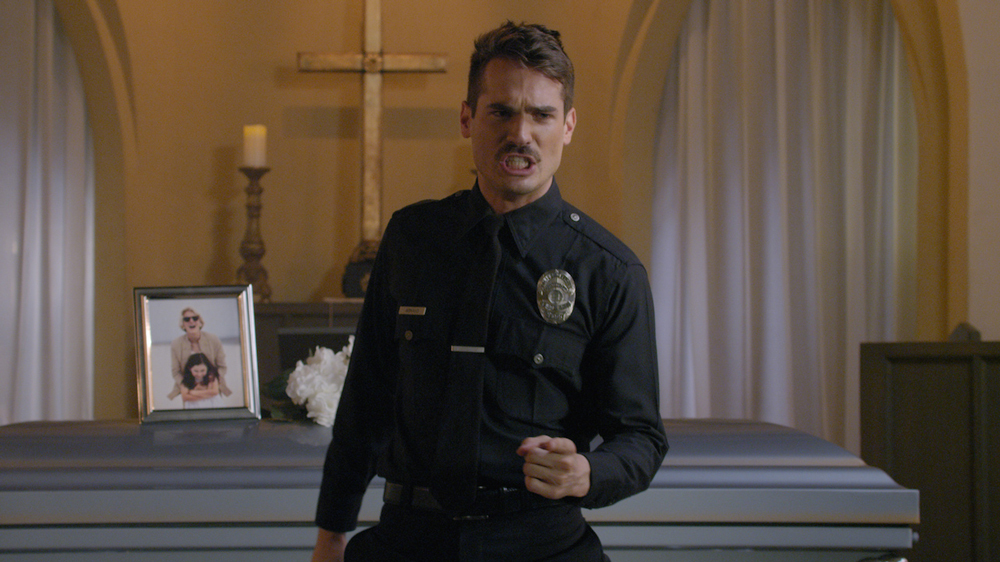
A static camera slowly presses in.
It never moves – only zooms deliberately – for what feels like an eternity but is only six or seven minutes as the protagonist mourns the loss of his mother during a chaotic, frantic eulogy at her funeral.
Over the course of a brisk hour-and-a-half, writer/director/star Jim Cummings delivers a film equally as manic as the character he portrays on screen. It’s a mesmerizing, haunting tale of love, loss and the fleeting nature of time.
Winner of the 2018 Grand Jury prize at the South by Southwest Film Festival, “Thunder Road” is a striking and poignant piece of independent cinema that will leave audiences wondering how no one made them see it weeks ago.
Cummings’ film follows Jim, a rural Louisiana beat cop trying to do right by his daughter while grieving over his mother’s death and an impending divorce. His difficulties leave Jim unable to relate rationally and place him at an emotional distance from the surrounding world.
These awkward moments of irrational anxiety are given ample room to breathe as Cummings’ screenplay and direction expertly allow the gravity of emotions from Jim’s fracturing soul to bubble over the surface.
“Thunder Road” is a rare feature to bring urgency to the grieving process without feeling contrived or irreverent. Moments of frantic expression are mellowed by a cold sense of place, usually within the same monologue, for a refreshing take on the family drama.
As Jim, Cummings gives 2018’s most complete and complex acting performance in a turn that though dynamically manic never veers wildly off course.
Each choice Jim makes moment to moment (and often second to second) is so nuanced and specific that Cummings dances like a ballerina on the line between the tragically absurd and bittersweet beauty.
It’s a singular, transformative performance that often belies just how good Cummings is as a screenwriter and director. Viewers can’t help but keep their eyes glued to Jim even as everything around him tries to pull focus.
Characters hover around Jim in constant orbit as his emotional gravity pulls them in and repels them away. Kendal Farr as Jim’s daughter Crystal and Nican Robinson as his best friend and partner Nate are exceptional at reading these shifts and offering genuine, natural reactions within their characters.
Cummings takes bold chances cinematically in the director’s chair and in the editing room, giving “Thunder Road” an unique style of sequential vignettes rather than traditional narrative. These small jumps can be mildly jarring for the viewers, though their intent continues the overall manic tone of the film.
There’s a deep passion to the artistry that permeates throughout “Thunder Road,” but nowhere is it more apparent than in the emotional dichotomy of laughter and pain dripping across the pages of Cummings’ script.
These harsh contrasting tones wear on the sleeve of Cummings’ performance as Jim and seep into his direction of the cinematography, which is simultaneously intently close and observationally distant.
It’s a hallmark of high caliber independent cinema where the thought and intentionality of the filmmaker is clear and lived in.
Made for a mere $200,000, Cummings’ nuanced comedy/drama never gained theatrical traction in the United States despite the backing of the Sundance Film Institute and top prize at South by Southwest.
The film made back its money within a week of its theatrical release in France and has found a new home online with Amazon Prime, waiting with open arms for American audiences to find this bold Southern tale.
“Thunder Road” is the sort of film worth seeing five times at home on Amazon Prime before even considering watching any of the current releases major movie studios are pushing in theaters.
A true pinnacle of independent filmmaking achievement, “Thunder Road” clearly cements its status as one of the five best films to be released in 2018 and is an absolute must see film.

Newly crowned Academy Award winner for Best Picture “Green Book” is like clanging a cowbell at the end of Shoshtakovich’s seventh.
Everyone who doesn’t understand what that means believes it’s perfect.
There’s nothing particularly wrong with “Green Book,” a well-acted and competently made film, yet completely ordinary by comparison to other features in the Academy’s Best Picture category.
It’s just that a film like Peter Farrelly’s enjoyably bland biopic is an Oscar favorite in the same way that the clanging of a bell rings false in a classic operetta.
Something’s just not right.
At work here is the Academy’s often problematic preferential balloting system, in which voters rank all nominees for Best Picture.
If no movie earns over 50 percent of the vote, the lowest ranked film is eliminated and those ballots are redistributed until a film passes the halfway point.
It’s in this sense that the Best Picture race is film’s equivalent to the Electoral College.
“Green Book” is self-described as being “inspired by” the real-life friendship of Don Shirley, a famous African-American pianist, and Tony “Lip” Vallelonga, a working class bouncer hired by Shirley to serve as driver/bodyguard for a concert tour of the American South during the 1960s.
Featuring now two-time Oscar winner Mahershala Ali as Shirley and Academy Award nominee Viggo Mortensen as Vallelonga, “Green Book” has received acclaim from critics and average viewers alike.
The film’s Best Picture win isn’t isn’t completely without merit. Mortensen and Ali elevate a middling script with brilliant, dynamic chemistry and deliver knockout scene after knockout scene over the course of a two-hour dramedy.
Mortensen melts into the “Tony Lip” persona, gaining upwards of 40 pounds while slovenly eating his way both figuratively and literally through scenes. Making a close minded, blue collar brute sympathetic and not stupid requires finesse and Mortensen delivers a memorable, heartwarming performance.
Despite a secondary part in the film, Ali’s turn as Shirley is more than equal to Mortensen’s Vallelonga, a nuanced effort that masks Shirley’s inner loneliness made all too clear by a revealing twist midway through the film.
The pair have a dynamic on-screen chemistry that elevates both performances and enhances the entire film as a whole beyond standard biopic fodder when either character is alone on screen.
It’s easy to forget, however, given how charming Mortensen and Ali are in their roles that “Green Book” lacks true emotional stakes because racism is sugarcoated in the film to such a degree where the actions of discriminatory Caucasians come across as simply unfortunate rather than harrowing or vigorous.
Hatred and bigotry are easily examined at a distance, none more so than the tepid response given in the script.
The biggest flaw of an otherwise genuinely enjoyable film, “Green Book” comes across as a novice’s guide to America’s racial divide during the Civil Rights Era, teaching audiences that the titular “Green Book” was essentially an almanac of businesses safe for African-Americans to use while traveling and explaining racism in an almost self-congratulatory, “aren’t we glad Americans aren’t that divided anymore” manner.
In a year where a Marvel film probes racial identity in a modern context with “Black Panther” and Spike Lee frames “BlacKkKlansman” with the violence of last year’s Charlottesville race riot, this oversimplification sticks out like a sore thumb even more.
Apparently none of that matters.
In the afterglow of a “Green Book” victory, I’m reminded of a response I received to my initial review of the film, one that’s stuck with me throughout awards season.
“I didn’t go to see a Ken Burns documentary,” one reader told me of “Green Book.”
What mattered is how “Green Book” made her feel, and in that sense, Farrelly’s film is a resounding success.
It’s nearly impossible to not leave the theater smiling (and perhaps a little misty-eyed) following a showing of “Green Book.”
Stellar performances from Ali and Mortensen bear that out.
And yet, there are better movies in 2018 than the one that took home top prize Sunday evening.
Truly a great film on a first viewing, “Green Book” simply doesn’t age well, no matter how many times you ring the cowbell.
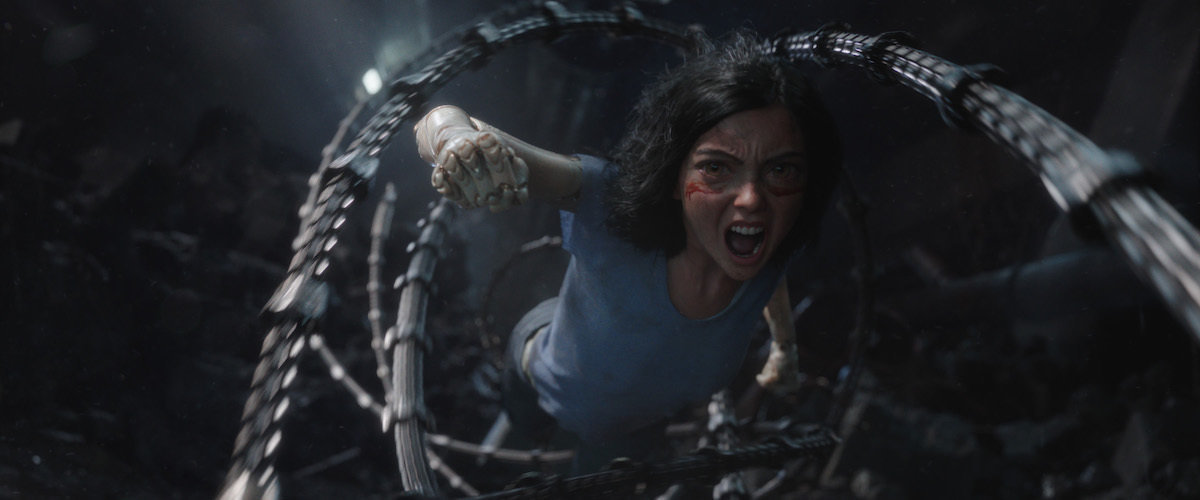
If there’s ever a time to watch “Alita: Battle Angel,” a clunky, uneven visual spectacle that values its cyber-steampunk style over substance, it’s now.
The latest film from Texas director Robert Rodriguez is a visual wonder from start to finish that won’t feel special in six months and this franchise hopeful will likely fade into obscurity.
Based on the Japanese manga comic book series “Gunnm,” “Alita” follows a young cyborg girl rescued from a junkyard unable to remember her past life until she goes out in search of answers amid turmoil between a rich cloud city floating far above impoverished Iron City.
As a story, it’s largely as unremarkable as it sounds.
On a big screen, Rodriguez gives audiences a rare peek into the future of cinema.
“Alita” stands on the forefront of the new age in visual effects with a hyper-realistic style that gives a near lifelike sheen to its cyborg characters.
In this regard, Rodriguez’s film compares quite favorably to the dynamic effects in Steven Spielberg’s 2018 adventure fantasy “Ready Player One,” which is currently nominated for an Academy Award in visual effects this spring.
Despite not being seen herself on screen, Rosa Salazar proves herself a star in a fantastic turn as Alita through advanced motion capture technology that was able to gather the nuances of Salazar’s physical performance and digitize it to create Alita.
Salazar is able to bring warmth and vibrancy to the character both emotionally and vocally with big, piercing eyes and the slightest tremble in her throat.
A lesser performance could have easily rendered “Alita” unwatchable, but Salazar draws viewers in beyond the special effects to care about Alita as a character.
Save for the legendary work of Andy Serkis (Gollum in the “Lord of the Rings” films, Caesar in the recent “Planet of the Apes” trilogy), there isn’t a better motion capture performance to hit theaters in five-plus years. Alita alone, both visually and emotionally, is worth the price of admission.
The film boasts a strong cast of secondary leads including a pair of former Oscar winners in Christoph Waltz and Mahershala Ali, though their work feels perfunctory, almost paint by numbers, in comparison to Salazar and fails to elevate the lackluster script.
There’s an epic grandeur to “Alita” – from scale to production design to CGI – that haphazardly works in segments and fails to elevate the film in others, though executive producer James Cameron is probably more to blame than Rodriguez.
Before shifting full attention to his “Avatar” trilogy, Cameron wrote an 180-page screenplay with over 600 pages of notes Rodriguez had to consolidate down into a manageable shooting script.
As a result, dialogue can feel choppy at times and especially expository. Rodriguez and Cameron never find a way to make conversation between characters as engaging as the action sequences, much like an average musical would “yada yada” its way between songs.
Like Alita herself, the action usually dazzles in “Alita” as the mixture of motion capture, live action and computer graphics combine for engaging, dynamic moments, especially as Alita takes on the violent world of motor-ball, a futuristic version of roller derby.
Like “Ready Player One” before it, the visual effects of “Alita” are so striking that an Academy Award nomination is likely despite the film being released over 10 months before voting would begin. There’s some truly special work being done by film artists.
It’s unfortunate, however, that the story as a whole can’t quite rise to the occasion.
“Alita” is one of the few remaining films that will suffer significantly in smaller presentation. For even mildly interested moviegoers, it almost has to be seen theatrically as “Alita” becomes less dynamic and enjoyable to watch when the dazzling effects don’t buoy the middling screenplay.
A mildly entertaining adventure with a lot to see and sequels to set up, “Alita: Battle Angel” is a better representation of the future of film than a good film itself.
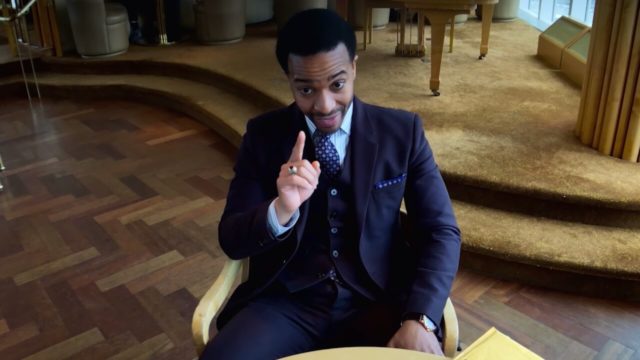
Characters go one-on-one both on and off the court in director Steven Soderbergh’s new sports drama “High Flying Bird,” though not much basketball’s being played.
There’s a ferocity to the head-to-head dialogue in the screenplay from playwright and “Moonlight” creator Tarell Alvin McCraney that seems to mimic intense showdowns Michael Jordan might have had with defenders in his heyday.
“High Flying Bird” aggressively attacks racial and class warfare in the high-rises, not on the streets. It’s a film where words come with searing precision to provoke response and engage an audience unprepared for the layers within this simple fictionalized sports story.
McCraney’s screenplay focuses on NBA player agent Ray Burke, forced to balance a naïve top rookie waiting to enter the league with the demands of his cash-strapped agency amid a lockout between players and owners that’s stopped basketball dead in its tracks for nearly six months.
Soderbergh’s film is “Michael Clayton” in the style of “Jerry Maguire” with the postmodern cinematography of an iPhone 8.
“High Flying Bird” cuts against the grain at every turn, defying convention with its rapid fire, two-handed dialogue and masterful use of place to frame scenes and individual performers.
At the forefront of it all is André Holland, who embraces the film’s kinetic energy as Ray, constantly moving his mouth, his body in brisk strides of intent, his frantically churning mind or some combination of the three.
From the opening scene, “Bird” soars off the intensity of Holland’s performance, setting a rapid fire pace that carries across the entire film with casual sophistication and confidence.
The other men of the film deliver solid work: Kyle MacLachlan as a smarmy yet charming team owner, newcomer Melvin Gregg as Ray’s top rookie and an outstanding Bill Duke as area youth basketball coach Spence, whose no-nonsense attitude provides both moments of humor and levity to the film.
But it’s the women of “Bird” that are the best surprises, especially given how lacking roles for women are in sports films.
The time in character development given to Zazie Beetz’s Sam, an assistant agent working under Ray, and Sonja Sohn’s Myra, a lawyer representing the players’ union, is unprecedented within the genre and gives “Bird” a tonal sense of balance and depth to the story that is tremendously compelling.
Both Beetz and Sohn challenge Holland’s Ray in a way that elevates the overall performances, yet it’s a quiet tea with Ray opposite an all star’s mother (played by an unforgettable Jeryl Prescott) that provides one of the film’s most memorable moments.
With the iPhone and a singular wide angle lens, Soderbergh is able to frame scenes in 360 degrees, giving viewers a full geography of each setting in a matter of seconds.
A dynamic, pivotal scene late in “Bird” slowly illustrates this freedom as Ray reflects with Spence while shooting hoops in an unbroken camera pan around the court.
Using the wide angle in close, more intimate shots gives “Bird” a harsh, unique contrast to break up the established visual dynamic of the film. This keeps the viewer interest piqued while maintaining the importance and integrity of McCraney’s screenplay.
Soaring wide angle shots remove the audience from the urgency of the action and give a sense of anonymity to its bold characters, their machinations made small by the mere placement of the lens. This also allows the world of New York to play an increased role in the film, engulfing and ever present on a moment by moment basis.
The film is a brisk 90 minutes, sharply and deftly edited by Soderbergh to accentuate the tempo of McCraney’s verbose dialogue, reorienting viewers to examine scenes from new perspectives as words glide off the tip of the tongue.
The only signposts – stable, static moments to break up a film constantly on the move physically and verbally – are black and white interviews segments with young NBA stars Reggie Jackson, Donovan Mitchell and Karl-Anthony Towns describing their memories of entering the league as a player and businessman.
“Bird” is intentionally, almost arrogantly complex and vague in its banter and plot. Audiences aren’t supposed to have all the answers on a first viewing.
Seemingly from nowhere, the first truly great film of the year has arrived in a very 2019 fashion, from an iPhone straight to the streaming service Netflix and back onto a phone again, just like it was meant to be seen.
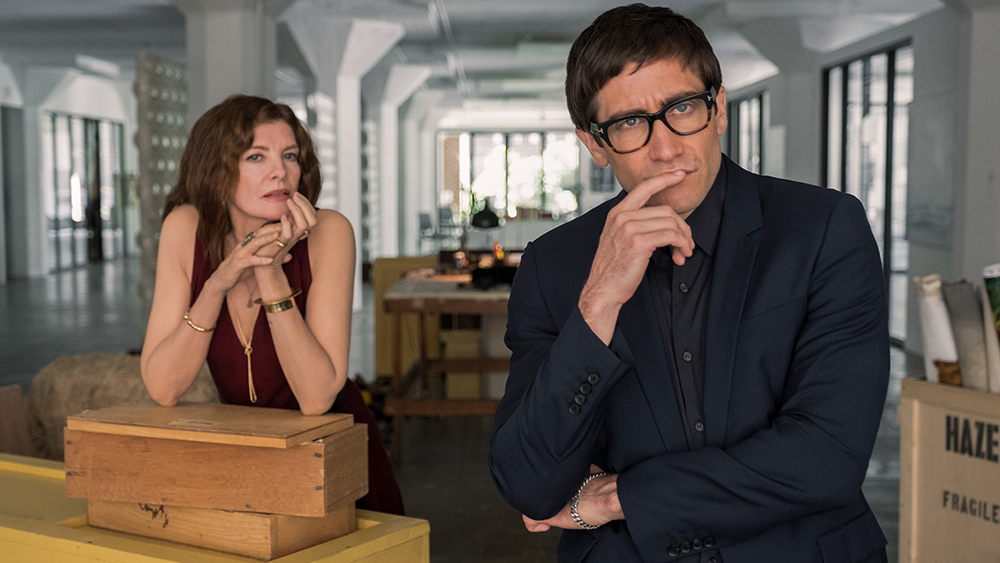
Until recently, buzzworthy films coming out of Robert Redford’s Sundance Film Festival each January took six to eight months to reach a wide audience.
A major film studio would snap up a noteworthy indie darling and stash it away from moviegoers until the fall and awards season long after the buzz had died down.
The advent of online streaming services has expedited access for average moviegoers to see these Sundance hits considerably.
Netflix’s boldest endeavor with
Sundance – writer/director Dan Gilroy’s artistic supernatural horror-thriller “Velvet Buzzsaw” – sets a new bar for turnaround from festival to mainstream as “Buzzsaw” dropped on the streaming service Friday just four days after premiering at the year’s first major film event.
Gilroy’s eccentric, occasionally erratic feature serves as both figurative and literal defense for Netflix’s instant gratification film strategy with “Buzzsaw” characters lamenting “What’s the point of art if nobody sees it?”
Set in the high end Los Angeles art world, “Buzzsaw” revels in Gilroy’s clawing, satirical screenplay that probably thinks itself more important than the artists the film takes down.
Audiences follow several artists, rival art dealers and a renowned critic as they aimlessly banter for close to 45 minutes until the work of a previously unknown talent is shown.
The tone changes dramatically as cutting satire turns to light horror masquerading as suspense. Pieces painted partially with the artist’s blood begin to have chilling psychological effects on those who view them for too long.
For Gilroy the filmmaker, “Buzzsaw” is less dynamic than his audacious and prescient take on the ruthless world of television news with 2014’s “Nightcrawler,” but still reflects a similarly gritty, cynical tone.
As the name implies, “Buzzsaw” is a somewhat bloody affair, though the film leans away from simple gore for a more exacting, largely unseen violence reliant on implied terror.
The screenplay is buoyed by a deep, talented cast that give the script’s natural wit added zing.
Gilroy re-teams with his “Nightcrawler” star Jake Gyllenhaal and pulls an increasingly manic, mesmerizing performance out of the Oscar nominated actor.
As self-important, sexually fluid art critic Morf Vandewalt, Gyllenhaal excels at slowing unraveling Vandewalt’s psyche and allowing audiences to use the character as a touchstone while events become increasingly absurd.
Rene Russo and Toni Colette both offer a calculated, menacing tone to their work as rival art collectors almost as if they were playing opposite sides of the same coin.
Although every John Malkovich role begins to feel the same, there’s a seamless authenticity to his turn as a languishing artist tired of the commercialization of his medium and out of ideas.
Zane Ashton holds her own at times opposite Gyllenhaal as up-and-coming collector Josephina, but the singular charisma within his performance often overshadows her work and the film as a whole.
With art as the centerpiece of the narrative, it should come as no surprise that “Buzzsaw” takes a lot of chances with camera positioning, lighting and angles that create a visually dynamic spectacle worth watching alone even with the sound off.
Gilroy and cinematographer Robert Elswit give the film an evocative presence that informs a sense of place and builds toward an unusual climax as viewers wander down the rabbit hole.
Likely to have been a box office disaster if it had been released theatrically, Gilroy’s film is an ideal choice for streaming as “Buzzsaw” will be endlessly re-watchable for its ardent fans and a cost-free early exit for those who find the esoteric nature of the screenplay unnecessarily snobby.
Richly artistic and mildly psychotic, “Velvet Buzzsaw” offers up a thrilling Gyllenhaal performance amid an uneven film worth checking out at home.
Intertitles, text at the opening of the film, explain how for celebrated author James Baldwin, “every black person born in America was born on Beale Street, born in the black neighborhood of some American city.”
“Beale Street,” he said, “is our legacy.”
Within the first five minutes of director Barry Jenkins’ latest film, “If Beale Street Could Talk,” adapted from Baldwin’s 1974 novel of the same name, a distinct tone is set that resonates throughout the next two hours.
It’s one of idyllic love, wonderfully shimmering in bright colors, fighting to survive. It’s one of weight, pushing its characters through a world set against them.
Though the “Beale Street” of Baldwin and Jenkins is of Harlem in the 1970s, the film resonates across the decades, proving ever true today in critical and emotional ways.
“If Beale Street Could Talk” is the best film no one is talking about, and yet it’s also the one moviegoers need to see the most.
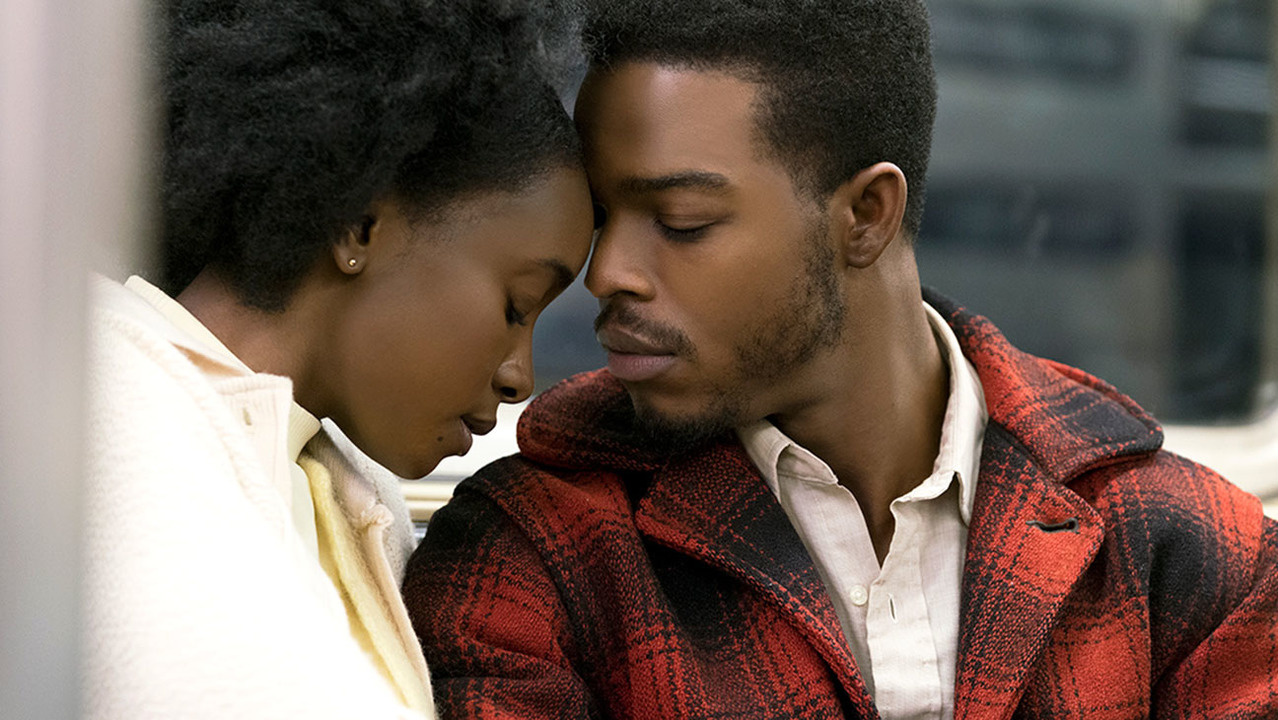
Audiences follow Tish, a 19-year-old girl forced into womanhood as she becomes pregnant by Fonnie, her 22-year-old fiancé and lifelong best friend recently accused of raping a Puerto Rican woman.
Theirs is a simple story told slowly over the course of two hours as Jenkins allows viewers to linger in the moment and feel the heaviness implicit in the emotional and societal stakes.
“Beale Street” is a tale of America, told powerfully by a master confident in his craft.
Key to the success of “Beale Street” is newcomer KiKi Layne, who gives Tish a quiet, humbling grace that belies her unenviable position. As the film’s narrator and protagonist, Layne steadily gives audiences an emotional touchstone to cling to over the course of the movie as well as inform and contextualize the narrative.
In a year with any number of terrific performances from first-time leading ladies, Layne’s performance shines brightest.
As Fonnie, Stephan James displays immense range in his eyes, especially as they flicker with the trembling of his voice. This gives Jenkins free range to focus the camera straight on and allow James to bring the audience inside Fonnie’s soul with a crackling look.
Separated by the glass of a prison visiting room, Jenkins pushes the viewer to become Tish, to become Fonnie, with camera placement as audiences see the world of “Beale Street” as the characters do.
Recent Golden Globe winner Regina King gives an Oscar-worthy performance as Tish’s mother, balancing quiet strength with painful outbursts of grief in almost effortless fashion.
Jenkins supplies “Beale Street” with a perfect assortment of talent to bring Baldwin’s characters to life, especially Colman Domingo as Tish’s father.
But in the matter of 15 minutes, Brian Tyree Henry takes over the entire movie with a dynamic, larger-than-life presence that fills the screen until it shrinks away to nothing.
Henry and James develop an instant kinship that evolves over the course of a conversation as two old friends slowly lower their guard from “I’m great” to “I’m fine” to finally “I’m not fine.”
Emotion reverberates throughout “Beale Street” through the artistry of the performances and James Laxton’s expert cinematography, but every peak and valley – no matter how faint or strong – rises and falls on the notes of Nicholas Britell’s flawless score.
Whether it’s the cringe of a wailing violin or the bravado of a jazz trumpet, Britell sets the tone for each scene and speaks volumes in poignant moments lacking dialogue.
In a just world, “Beale Street” would easily earn eight Academy Award nominations, but will likely be lucky to receive three or four.
But as time should tell, awards for this masterpiece will not matter.
With “Beale Street,” Jenkins cements his status as this generation’s cinematic poet laureate of the American condition. His latest feature is a wonder of true artistry, filled with romance amid pain, grief within joy.
Spoken with the words of a poet and shown through the lens of a visionary, “If Beale Street Could Talk” is a revelation, a can’t miss, genuine, instant classic piece of art.
Every year it seems, Hollywood races out historical docudrama meant to be a rallying cry to remind or influence Americans about a current political topic.
Last year, Steven Spielberg rushed through a good, not great feature on The Washington Post’s work on the Pentagon Papers as a defense for freedom of the press amid rampant allegations of “fake news.”
That film, “The Post,” felt incomplete, rushed to theaters in time for the 2018 Oscars at the expense of quality storytelling.
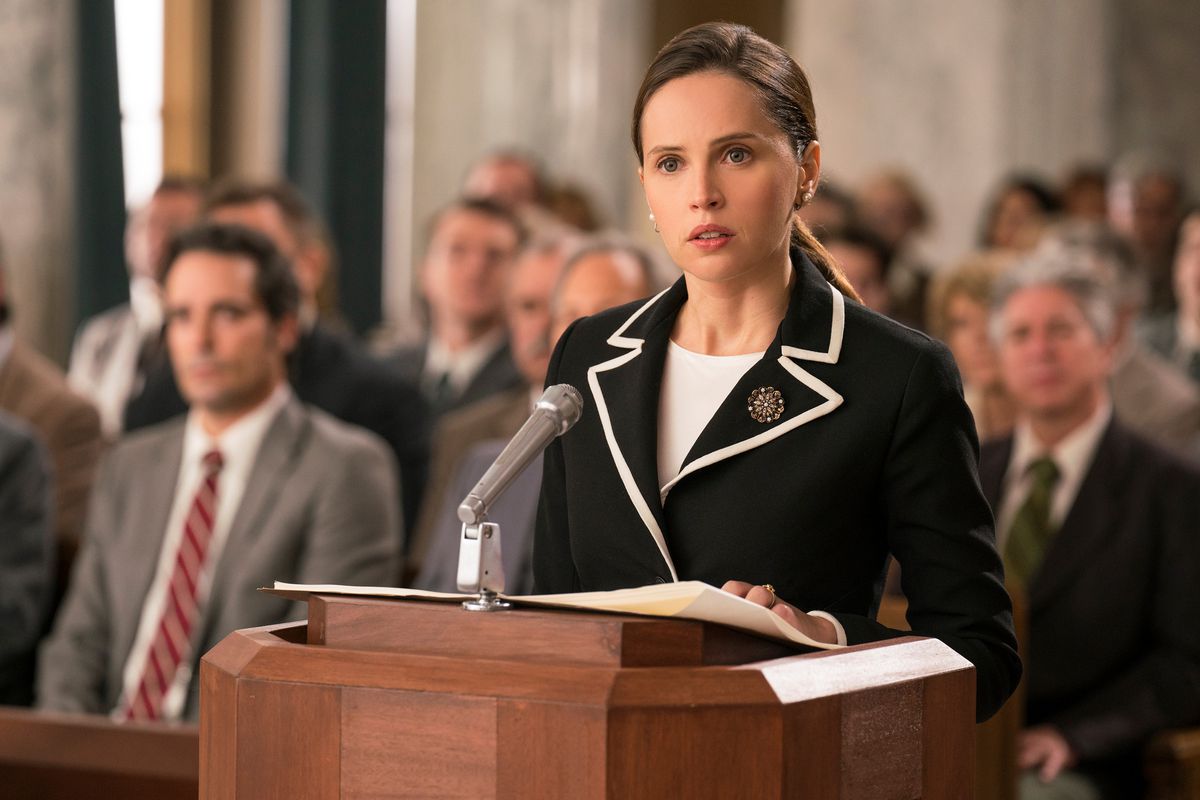
Director Mimi Leder leads the charge this year with a middling, unexceptional biopic of stalwart Supreme Court Justice Ruth Bader Ginsburg that drives home equality for all under the law, but with a lack of relentlessness or passion that Ginsburg has been known for.
“On The Basis Of Sex” covers about 15 years of Ginsburg’s life, beginning with her first year at Harvard Law balancing school work, an infant daughter and a husband with testicular cancer and continuing on through her work in the early 1970s seeking equal protection rights for women.
Leder approaches her subject matter with a paint-by-numbers approach that afflicts a growing plurality of biopic films. It’s one thing to continue the lineage of a tried and true genre; it’s another thing altogether to blandly unoriginal.
This isn’t to say that “On The Basis Of Sex” is completely without merit. The acting is solid across the board and occasionally exceptional.
As Ginsburg, Academy Award nominee Felicity Jones is more than capable of rallying audiences to the future Supreme Court justice’s cause in spite of a rather bland and often legally technical screenplay.
She conveys the all-consuming vigor Ginsburg has for the law and balances it with compassion for her family and the clients she serves.
Kathy Bates works wonders in little screen time as pioneering lawyer Dorothy Kenyon and Cailee Spaeny is exceptional in a secondary role as Ginsburg’s free-spirited daughter Jane.
The men of the film, however, are more of a mixed bag.
Armie Hammer shows solid chemistry opposite Jones as Ginsburg’s husband Martin and their relationship of equals satisfyingly serves as a metaphor for the equal rights for men and women they strive to achieve in the film.
Justin Theroux gives a marginal performance as over-antagonizing ACLU lawyer Mel Wulf while “Law and Order” vet Sam Waterston is reduced to a mustache-twirling, simple misogynist as the Harvard Law School dean turned U.S. Solicitor General Erwin Griswold.
For a film designed to celebrate an icon of American jurisprudence and the women’s rights movement, “On The Basis Of Sex” is aggressively mediocre.
In the film, Ginsburg states her assertion that “changing the culture means nothing if the law doesn’t change.”
Leder and screenwriter Daniel Stiepleman take this to heart in their filmmaking, resulting in a feature that fails to properly contextualize the women’s movement often referenced in dialogue but rarely shown on screen.
Jane attends a Gloria Steinem rally and Ruth walks through a similar protest at Rutgers, but these events feel so superfluous to the film that it marginalizes their importance.
A fringe Oscar contender at best, it’s increasingly likely that “On The Basis of Sex” is shut out of awards season contention, though a Best Actress nomination for Jones isn’t entirely out of the realm of possibility either.
In all likelihood, the CNN Films documentary “RBG” will be the only Ginsburg movie this year to receive acclaim and serves as a wonderful film to pair with a screening of “On The Basis Of Sex.”
Ginsburg’s life is exceptional and the film does a moderately capable job of inspiring audiences on their way out the door.
“On The Basis Of Sex” is a perfectly fine film that viewers shouldn’t go out of their way to see, but will enjoy at their convenience either on the big screen or at home months from now.
 Cinematic Considerations