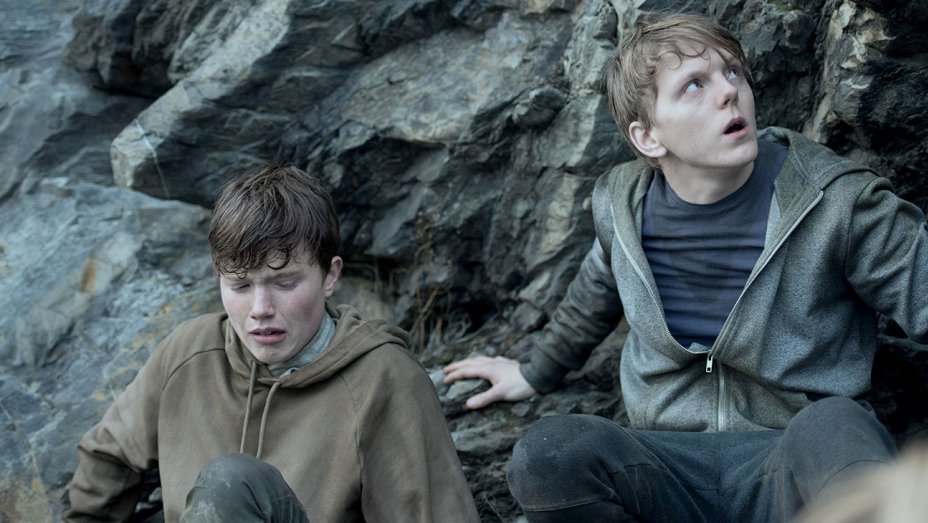

Approaching real terrorism dramatically is difficult subject matter for filmmakers to handle properly.
Whether it’s a faithful, authentic retelling like Clint Eastwood’s “The 15:17 To Paris” with the real heroes on screen or a more loose depiction like Peter Berg’s “Patriots Day,” there’s a great deal of care given to what and how the terror of catastrophic events and the terrorists who commit them are portrayed on screen.
Writer/director Paul Greengrass takes a wholistic approach with his latest endeavor “22 July,” a sobering docudrama about right-wing extremism in Norway in the middle of 2011.
A lone man, bent on ending Norway’s immigration entirely, bombed the prime minister’s office and then struck hours later, killing 69 students at a summer camp on a remote island outside Oslo.
Greengrass refuses to shy away from the violence in his film, taking a stark 20 minute sequence to methodically recreate the carnage of Anders Behring Breivik from multiple perspectives.
Audiences are thrust on both sides of the rifle barrel, watching helplessly as teens are gunned down with chilling callousness. “22 July” does not glorify the attack by any means, but the clinical approach Greengrass presents may come across as offensive to some viewers.
There’s a stoic precision to Greengrass’s work as he abandons his signature shaky-cam cinematography made famous in the Jason Bourne franchise and “Captain Phillips.” Shots move crisply from point to point with rigor, less in a clinical approach than a militant efficiency.
All the while, Greengrass draws out incredible performances from a talented Nordic cast led by Jonas Strand Gravli as Viljar, one of the teenage survivors, and Anders Danielsen Lie as Breivik.
Gravli measures his performance in segments, flowing seamlessly from popular and carefree to panicked to emotionally broken as viewers watch Viljar over the course of the film.
After the attack, Gravli turns in his best work, hiding Viljar’s pain but failing to shut out the aftershocks he constantly replays in his mind.
The detachment in Lie’s expert portrayal of Breivik chills viewers to the bone in a terrifying, yet mesmerizing way. Lie achieves a strange glazed-over façade as if Breivik is maintaining some sort of trance that is both eerie and feels genuine to the man.
“22 July” is a well acted ensemble film with solid turns from the entire cast, but especially Jon Øigarden as Breivik’s reluctant attorney conflicted between defending his client and confronting the atrocities before him.
The film wanders between redemptive drama and legal procedural throughout its second half, but this never feels reductive or long-winded.
Greengrass has made a career of finding political commentary in his cinema and this extends to “22 July” as well, but without the biting viciousness of Spike Lee’s “BlacKkKlansman.”
Netflix has given “22 July” one of the company’s biggest theatrical releases and while that may translate to award season eligibility, Greengrass’s film will probably be shut out.
If the film had been made in Norwegian instead of English, it certainly would have had a good chance at a foreign language Oscar nom but would still be far behind Alfonso Cuaron’s expected Oscar frontrunner “Roma,” a Netflix film debuting in December.
“22 July” is a difficult watch, especially all at once. Perhaps Netflix is the perfect venue for the film, allowing for viewers to pause or skip ahead if necessary. It’s certainly one of Greengrass’s better films and an important one at that.
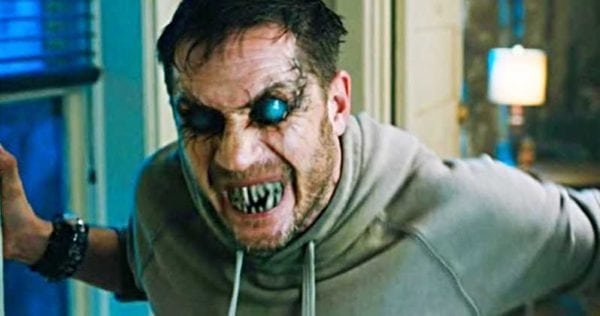
Tom Hardy deserves better.
Watching the talented actor’s latest film, it’s easy to tell that no one on screen cares more about their performance or has thought about their character more than Hardy.
Everything about his work is nuanced, with immense planning given to the affectation of each line, the physicality involved and the Jekyll and Hyde quality his work espouses.
But stuck in a superhero movie not produced by Marvel Studios, Hardy feels like he’s running in quicksand with “Venom,” a Spider-Man spinoff that can’t (or won’t) reference Spider-Man.
Hardy stars as Eddie Brock, an investigative video journalist who learns of experiments combining the homeless of San Francisco with alien symbiotes. When Eddie is exposed, he begins an unlikely alliance with his symbiote, Venom, in a struggle of good versus evil.
From the outset, it’s clear that Hardy is working the layers of Eddie and Venom (who he also voices) in internal conflict as some sort of mashup of superhero origin story and literary commentary.
Each part of the character(s) are distinct and unique and Hardy does an impressive job blurring the lines between normality and insanity. His reluctant charm carries the day, especially opposite Michelle Williams, who doesn’t seem all that interested in participating in the film.
Though Williams is intended to be Hardy’s fiancee, they have the chemistry of mild acquaintances. Hardy’s banter with his Venom alter-ego resonates ten times as much.
Riz Ahmed has been much more impressive as a villain than he is here as the rather bland Carlton Drake and a talented Jenny Slate is largely wasted with a small nothing part as one of Drake’s scientists that aided Eddie.
Perhaps the largest problem plaguing “Venom” is just how overworked the whole endeavor feels.
Hardy has said that his favorite 40 minutes were cut from the film and it’s unclear (but likely) that most of those changes were made as Sony insisted on a more marketable PG-13 rating for the film rather than the intended R rating.
All of the violence that resonates in the Venom character through the comics is lost without the gore you might find in a “Deadpool” or “Predator” film. As a result, the film feels unnecessarily handicapped.
There are some great sequences within “Venom,” usually involving Eddie and Venom’s inner monologue as they tear through the city. But 15 percent of a good film does not a quality film make.
If “Venom” ends up becoming the “Green Lantern” Hardy makes on the way to something better, then all Hardy’s effort will have been worth it.
This doesn’t feel very likely, however, given the $80 million opening weekend box office Sony raked and their affinity for churhing out bland, PG-13 material in the quest for the almighty dollar. A sequel is coming whether it’s deserved or not.
“Venom” is an alright movie. Fine even. It just massively underwhelms on its inevitable home on basic cable.
That nothing would have to be trimmed to make “Venom” ready for broadcast television should tell audiences everything they need to know about a movie where alien lifeforms steal people’s bodies and bite their heads off.
“Venom” lacks bite.
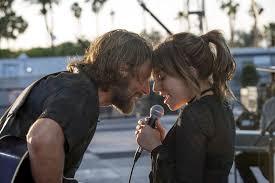
Audiences will be blown away by “A Star Is Born,” the remake of a remake of a remake from first time director Bradley Cooper.
This isn’t to say that the 2018 version is flawless (though it arguably comes close).
But “A Star Is Born” is a whirlwind of a film that will have audiences bracing for impact, blazing out of the gate with searing guitar riffs and fly-by-night romance that announce the arrival of Cooper as a filmmaker and Lady Gaga as a force of nature.
Based on the classic story of weathered star meets hidden gem, this version of “A Star Is Born” sees addict rocker Jackson Maine stumble into a bar only to instantly fall for Ally, a struggling singer/songwriter working in a restaurant to make ends meet.
Their chance meeting of destiny serves as the backdrop for Cooper’s heart-wrenching, gripping melodramatic commentary on celebrity, addiction and unbridled passion at any cost.
Gaga is a revelation as Ally, pouring her heart and soul into a part built to showcase her immense musical talent and ease her into the world of dramatic acting.
Even playing opposite a multiple Oscar nominee, Gaga more than holds her own scene to scene. The instantaneous, almost effortless chemistry she develops with Cooper on screen allows audiences to overcome the film’s conceits and buy in to the immediacy of Ally and Jackson’s romance.
She is especially astounding in the self-consciousness Ally shows in her singing early in the film. The emotions she feels on a phrase to phrase basis make it easier to identify Ally the shy performer and obscure Gaga the hit-maker.
Just as Gaga transforms beautifully from singer to actress, Cooper melts into character as grizzled rocker Jackson, a performer with the voice of Eddie Vedder, the soul of Neil Young and the blackest liver around. It helps considerably that Cooper penned lyrics to the songs that lean in to the type of performance he gives.
His ability to float in and out of consciousness as if by instinct is remarkable, both in scenes where Jackson has to get up and perform and in moments where his alcoholism drives him to the brink of destruction.
The performance melds perfectly with veteran character actor Sam Elliott, who delivers pitch-perfect dialogue in limited screen time that resonates long after he’s gone. The brotherly bond Cooper and Elliott find delves way beyond the similar intonation vocally and speaks to an understanding between musicians and brothers alike.
Everything that seems like it might not work in “A Star Is Born” works. Dave Chappelle coming out of retirement to play against type as Jackson’s supportive best friend is surprisingly perfect. A nearly unrecognizable Andrew Dice Clay provides equal parts warmth and bravado in a smaller turn as Ally’s brash, quintessentially Italian father.
Cooper has created the definitive version of “A Star Is Born,” a visually dynamic spectacle that surpasses the limitations of the musical genre.
Each song serves a purpose musically, emotionally and in character development. The lyrics penned by Cooper, Gaga and Lukas Nelson provide touchstones for the entire film, authoring Jackson and Ally’s meteoric relationship.
Cooper and cinematographer Matthew Libatique give “A Star Is Born” a crisp, yet cutting edge, flashing striking color contrast a la “Blade Runner 2049,” but with a smooth country flair. There’s a distinct attachment to the profile shot that resonates across the film that accentuates a running dialogue about the beauty in Ally’s nose, a subtle, yet enduring visually commentary.
“A Star Is Born” will certainly be a mainstay come awards season as a leading contender in the Best Picture, Best Director and acting categories. Libatique’s mesmerizing cinematography should garner nomination and it would be no surprise to see songs like “Shallow” and “I’ll Never Love Again” compete for votes in the Original Song category.
There’s something enduring about “A Star Is Born” that stays with audiences long after they’ve left the theater, a dramatic weight you carry home with you that lingers even longer with the soundtrack playing on repeat.
It’s a film that will be hard to see more than once, but Cooper brings viewers on a ride so totally worth the emotional rollercoaster that it’s hard not to turn right around and see it again.
“A Star Is Born” could very easily end up being the best film of 2018 and the leading Academy Award contender, making it a must see in theaters as soon as possible.

There are elements of a good movie in “Life Itself,” a deeply thoughtful melodrama from Emmy-winning “This Is Us” creator Dan Fogelman.
Slowly, painfully over the course of two hours, this is all stripped away as viewers are consistently ripped apart emotionally with jarring, contrived twists of fate.
It’s all in service of Fogelman’s overarching premise, that life itself is the ultimate unreliable narrator and that at any moment, the rug can be irreversibly pulled out from underneath you with good or (largely) bad consequences.
Much like “This Is Us,” the premise of “Life Itself” is framed around adorable couple Will and Abby and how the impact of tragedy ripples through generations of their family.
It’s difficult to explain the film beyond general terms without completely spoiling all the intricate details Fogelman litters into his script. “Life Itself” divides itself into distinct chapters, each with its own portion of the cast, setting and language. (A large segment of the film is set in Spain with Spanish dialogue and English subtitles.)
The great scenes within “Life Itself,” and there are some truly special pockets within the narrative, usually come when talented actors are left to their own devices to bring depth to a scene.
An entire film could be made of the relationship between Will and Abby and it would be brilliant and beautiful thanks in large part to the unlikely, yet terrific chemistry between Oscar Isaac and Olivia Wilde.
Their scene lying in bed together talking about musical comeback albums is perfect, bathed in warm sunlight and incredibly nuanced as Fogelman returns to the moment over and over again to highlight something different.
Mandy Patinkin is tremendous in a touching sequence as a grandfather consoling her fraught granddaughter. Given the room to play the scene with a range of emotions, Patinkin is a joy to watch, equal parts tender and strong in a complex moment. Fogelman actually enhances this scene through a plot device reliving the scene from several angles.
About 15 minutes of “Life Itself” is truly special, unique and beautiful cinema. The rest of the film, however, is plain difficult to watch without cringing either for the plight of the characters or the pretentiousness of the screenplay.
For a film so entranced by its multi-generational premise, Fogelman doesn’t really do an effective job dating the sections of “Life Itself.”
There’s a few early references to “Pulp Fiction” in a present context and characters in different chapters define their relationship to Bob Dylan music in a present/past way.
Aside from that, there are no visual or plot cues that inform audiences as to the greater context of “Life Itself,” which makes the whole feature unnecessarily convoluted and muddled.
It’s clear that Fogelman’s inexperience behind the camera as director was unable to overcome his strict adherence to his languishing, high-brow screenplay.
At its core, “Life Itself” is 120 minutes of an emotional gut punch to the stomach, insistent on speaking to the power of love and resilience at any cost.
If Fogelman were able to string out these associated stories into a miniseries or television program, perhaps the premise would be more effective and less brutal. Then again, that’s “This Is Us” in a nutshell.
The collection of talent Fogelman has assembled to give life to his film merits real consideration for a trip to the cinema. Isaac and Wilde — who simply aren’t in the film enough — are worth the price of admission alone.
For viewers, it all comes down to whether or not they can handle the emotional trauma “Life Itself” delivers.
Those who can may find the whole experience rewarding. For those who can’t, “Life Itself” may be pointless.

“Behind every great man…”
It’s a phrase used all too often to describe an underappreciated woman, yet the first word also expressly implies her place.
A critical examination of this concept — both in its positive and negative suggestions — forms the basis of the latest Glenn Close film, a slow burning relationship drama that packs in the tension below layers of context and subtle contempt.
Based on the novel of the same name by Meg Wolitzer, “The Wife” finds an aging Joan Castleman reexamining her life after her husband Joe learns he is to be given the Nobel Prize in Literature.
Set over the course of the award weekend in Sweden, the film examines individuality in marriage and the role of women in society unlike any other movie in recent history.
Screenwriter Jane Anderson turns Wolitzer’s poignant words into a wonderful play brought into three dimensions by six-time Academy Award nominee Close. As Joan, Close offers up the most internalized, self-reflective performance of her career, peeling layer upon layer off a doting wife and mother like an onion.
Each emotional revelation unfolds a new portrait of Joan’s inner psyche, giving Close an intricate character study that makes the most of her extensive theater background.
In a lot of ways, “The Wife” becomes a Broadway play with ever-changing sets and worldviews, allowing Close and veteran stage actor Jonathan Pryce to chew up the emotional scenery with nuance and precision.
Pryce delivers a terrific, love to hate him turn as Joe, a man relishing the fame and notoriety of his success but equally codependent on his wife to meet his basic needs. Throughout the film, Pryce is equally engaging and infuriating, sauntering around with excess bravado while also masking pain of his own.
Although they’ve never worked together before, Close and Pryce embody a weathered chemistry aged by decades of marriage that feels intimate and authentic. Their outstanding work showing the wear and tear of the couple’s relationship is reflected in the juxtaposition of flashback sequences of then literary professor Joe seducing his student Joan.
The expert casting of Close’s daughter Annie Starke as a young Joan further accentuates this dichotomy as Starke is a highlight among secondary performers.
Another masterful addition to the cast, Christian Slater balances a difficult amount of slime and charm as a nosy writer attempting to convince Joe to let him write Joe’s biography.
The intricate nuance to Close and Pryce’s performances is heightened by the masterful cinematography of Ulf Brantås under the direction of Björn Runge. There’s an intimacy to the visuals, especially in the lingering close ups, that provide added depth to the acting on screen.
While it’s true that much of “The Wife” feels captured from a stage play, Close’s best and most searing moments in the film are found in tightly composed, stark shots that allow audiences to revel in Joan’s inner turmoil.
Runge works meticulously to ensure audiences get the most out of the performances by cultivating moments in partnership with the actors, giving scenes time to breathe and then reining in the focus at just the right time.
If “The Wife” had Meryl Streep giving the exact performance Close does, it would be a shoo-in for multiple Academy Award nominations and a clear frontrunner for Best Actress.
As it stands, there’s just not enough notoriety around the film for it to receive much consideration.
However, Close should and will likely earn her seventh Oscar nomination and be a strong contender this spring.
Intimate and authentic, “The Wife” delivers gripping drama with top-shelf performances and expert filmmaking that make this independent feature worth a trip to the cinema.
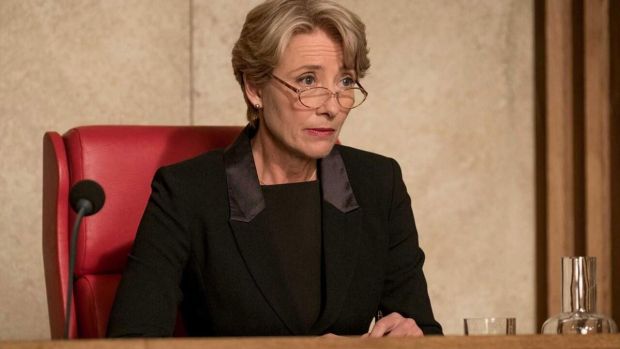
Religion, morality and the law play a large role in “The Children Act,” a very exacting, almost clinical British courtroom drama.
But it’s in the interpersonal relationships of the main characters where the film shines in spite of the otherwise stuffy, cold narrative.
A collaboration between a group of producers including BBC Films and indie-heavyweight A24, “The Children Act” takes audiences on the other side of the courtroom as Mrs. Justice Fiona Maye takes on a heavy workload deciding complicated family court cases at the expense of her strained marriage.
A decidedly urgent and complex case involving a 17-year-old leukemia patient refusing blood transfusions on religious grounds proves as life-altering for the judge as the patient.
Such a cold, calculated film wouldn’t work without the electric and captivating performance from Emma Thompson as Fiona, often called “My Lady” as a sign of respect, disdain or admiration by various characters throughout the 100-minute running time.
As one character observes, viewers can easily see Fiona thinking as Thompson grinds the gears of her brain in a subtle, yet marked way.
Each decision is swift and precise, yet the downward spirals of self control failing to compromise with emotion weighs on Thompson’s somber gaze.
So much of the screenplay, penned by “Atonement” author Ian McEwen based on his 2014 novel of the same name, balances on the notion of choice and the ramifications therein.
Thompson’s performance perfectly encapsulates this notion as Fiona’s rational judgment gives way to complex moral ambiguity.
As much as viewers are to emphasize with Thompson’s rigid and faltering Fiona, Stanley Tucci draws audiences in with a blunt, matter-of-fact affectation paired with natural charm as her husband Jack.
In limited scenes, Tucci is able to generate enough exasperation to propel Jack towards ending his marriage, yet in a manner that seems casually reasonable.
Moments between Thompson and Tucci are so wonderfully fleeting that an entire two-hour feature could be devoted to the Maye’s marriage and viewers would be raptured. The subtle nuances in how Tucci and Thompson speak (and don’t speak) to each other make for terrific bursts of emotion in an otherwise languid screenplay.
“Dunkirk” star Fionn Whitehall is impressive in a challenging role as the patient of Fiona’s case, though difficulties present themselves in the final act of the film due largely to McEwen’s plot.
While there’s a sobering coldness to the entire screenplay, occasionally these moments of succinct dialogue find the mark brilliantly. Only in a dry British film can a character outright admit “I think I’m going to have an affair” to his wife with equal parts humor and dramatic tension.
Director Richard Eyre, who thrived on social tension with “Notes on a Scandal,” takes an observational, protracted tone with his filmmaking here. Shots linger longer than they probably should and often preclude tension by setting the camera a bit too far away from the actors.
The result is a mixed bag with Thompson and Tucci lifting up the entire project, though the film likely won’t have enough critical or commercial appeal to garner award season recognition.
With the prevalence of big studio films in theaters, solid adult dramas like “The Children Act” have been pushed to smaller screens.
Cobbled together on a relatively limited budget, there isn’t much of a place for “The Children Act” theatrically, opening this past weekend on just three screens nationwide. However, a partnership with DirecTV has pushed “The Children Act” to a much wider audience base, where it is available for rent or purchase on most streaming services.
Strong performances from leads Thompson and Tucci with crisp, impactful dialogue make “The Children Act” a feature film worth renting for a night at home.

Romantic comedies are making a comeback.
Three decades after the now classic John Hughes movies and more than five years since “Silver Linings Playbook” was the last rom-com nominated for an Oscar, the genre is seeing a revival thanks to diversity in filmmaking and unlikely distributor support.
Films like “Book Club,” “Love Simon” and “Crazy Rich Asians” have sprinkled into theaters in 2018, but nowhere has the romantic comedy had a greater impact than on Netflix.
The latest in a growing line of rom-coms to hit the streaming service may in fact be the year’s best.
Based on the novel of the same name, “To All The Boys I’ve Loved Before” takes everything audiences love about the genre and wraps it in a Hughes-esque bow to offer viewers a carefree, easily rewatchable film sure to entertain movie lovers of all ages.
In true rom-com fashion, shy high school junior Lara Jean crushes on cute boys but can’t bring herself to tell them. Instead she pens love letters stowed safely in her room….. until they are mailed out and typical rom-com hijinks ensue.
There’s no reinvention of the wheel here and much of “To All The Boys” is exactly what one might expect to happen. But even when audiences know where they’re going in advance, the ride is just so gosh darn enjoyable thanks to breakout performances from the film’s young leads.
Lana Condor has floated in the background of major studio films like “X-Men: Apocalypse” and “Patriots Day,” but it’s with “To All The Boys” that Condor is able to spread her acting wings with a genuine, relatable performance not expected of a young actress making their leading debut.
Her Lara Jean is exceptional among wallflower characters, as Condor radiates Lara Jean’s presence scene to scene in a way that makes others take notice and not at the same time.
Often, viewers rally behind a protagonist because of the actor in the role. Condor isn’t playing Lara Jean. She (and the audience by extension) is Lara Jean.
The film finds unique balance for Condor’s performance in the casually charming Noah Centineo, a relative newcomer who brings emotional gravitas to the typically nothing part of the cute boy Lara Jean likes in spite of herself. There’s a palpable tension in scenes between Condor and Centineo that doesn’t pervade other sections of the film, as if to emphasize how intensely Centineo’s Peter is bringing out the true Lara Jean.
If Condor is the pulse of the film, Centineo is the heartbeat that brings “To All The Boys” to a higher level than the usual rom-com fodder.
This pair of fresh talent, along with first time screenwriter Sofia Alvarez and second time director Susan Johnson, give “To All The Boys” a light, breezy tone that would never pick up traction theatrically.
Major studios have proven less willing to commit financially to small or even mid-tier projects, spending all their capital on big stars, big explosions and cinematic universes.
Netflix has attempted to capitalize on this market inefficiency, scooping up rom-coms left and right in hopes of flooding the market and making the streaming service synonymous with the film genre.
Recent efforts have seen Netflix find various degrees of success with films like “Set It Up” and the recent Lily James romantic dramedy “The Guernsey Literary and Potato Peel Pie Society” striking a chord with audiences, while the star studded “Like Father” proved to be a slight misstep.
Netflix also aggressively went after distribution rights to box office smash hit “Crazy Rich Asians,” a film that highly benefits from being seen on large screens due to the luxuriousness of Singapore and the visually lavish cinematography.
In much the same way, “To All The Boys” is much more suited for the small screens of Netflix as the film’s conversational tone and simplistic cinematography feel more at home on a mid sized television or cell phone.
Ironically, it’s “To All The Boys” that is the better overall film, packing the emotional depth and well-written script “Crazy Rich Asians” lacks.
One of the year’s best films, “To All The Boys I’ve Loved Before” deserves a place at the top of any Netflix queue.

Spies executing covert missions on foreign soil to kidnap and extract prisoners is action thriller plot 101.
“Operation Finale,” based on true accounts, opts to reflect on the emotional and mental tolls war, hatred and loss can inflict with the high-stakes machinations taking a relative backseat.
L
Director Chris Weitz’s latest feature is the smallest possible version of a film about a group of Israeli Mossad agents tasked with the forced exfiltration of Adolf Eichmann, one of Hitler’s top SS lieutenants and the creator of the “final solution,” better known as the Holocaust.
Screenwriter Matthew Orton gives audiences a very clinical, paint-by-numbers approach to the nuts and bolts of the operation, choosing to layer in flashback and dream sequences to ground viewers in the humanity of the affair.
Audiences are to rally behind Peter Malkin, a headstrong agent playing a pivotal role at every turn. In the hands of immensely talented character actor Oscar Isaac, Malkin is brash, yet noble in his pursuit of justice and/or revenge, a dichotomy neither the script nor the man can fully resolve.
Verbose, heavy dialogue litters key moments of the film and Isaac elevates the material beyond the script page, in no small part due to his wonderful screen partner, Sir Ben Kingsley.
“Operation Finale” was made, at its core, to give an actor the caliber of Kingsley the chance to play Eichmann and the Oscar winner doesn’t disappoint with a subdued, elegantly reviling performance.
His Eichmann stalks in the background, haunting early moments in the film before revealing himself to be a rather cautious, subtle character.
It’s as if Kingsley’s entire performance is toned after a crucial early scene where Nazi supporters violently chant the “Heil Hitler” as Eichmann nods his assent with barely noticed finger tapping.
The brilliant ways Kingsley is able to internalize and focus Eichmann’s hatred make the verbal sparring between Isaac and Kingsley all the more engaging and result in the film’s best moments.
A capable supporting cast led by Melanie Laurent as a doctor on the team and possible love interest for Malkin fill in the gaps. But aside from one or two scenes early, the entire affair feels like a slowly burning buildup to Malkin’s face-to-face encounters with Eichmann.
The deliberate nature of the pacing would work better told in limited miniseries fashion. Within the confines of a two hour narrative, satisfying cinematic highs too often get weighed down by deliberate, yet well intentioned moralizing.
The film is buoyed by one of the year’s best scores penned by Alexandre Desplat, who won the most recent Best Original Score Academy Award for his work on “The Shape of Water.” Desplat enhances the tension without becoming overly involved, lifting the action sequences and setting the tone with urgency.
A traditional Oscar-bait movie, “Operation Finale” does not have the staying power nor the command performances necessary to overcome its Labor Day release.
It probably best serves as a palette cleanser coming out of a sequel heavy summer blockbuster season as studios prepare to release their best films beginning in October.
Though both Isaac and Kingsley are good in leading roles, neither turn will generate enough goodwill to overcome the buzz surrounding films like Bradley Cooper’s “A Star Is Born” and Ryan Gosling’s “First Man” to earn a nomination.
Whether a product of the script, the direction or some combination of both, “Operation Finale” drags its feet by a good 10 minutes and could benefit from a tighter, more expedient cut in order to amplify the tension and provide urgency to the characters’ decisions.
An interesting story competently told, “Operation Finale” does right by its subject matter while not quite rising to the bar of its assembled talent.
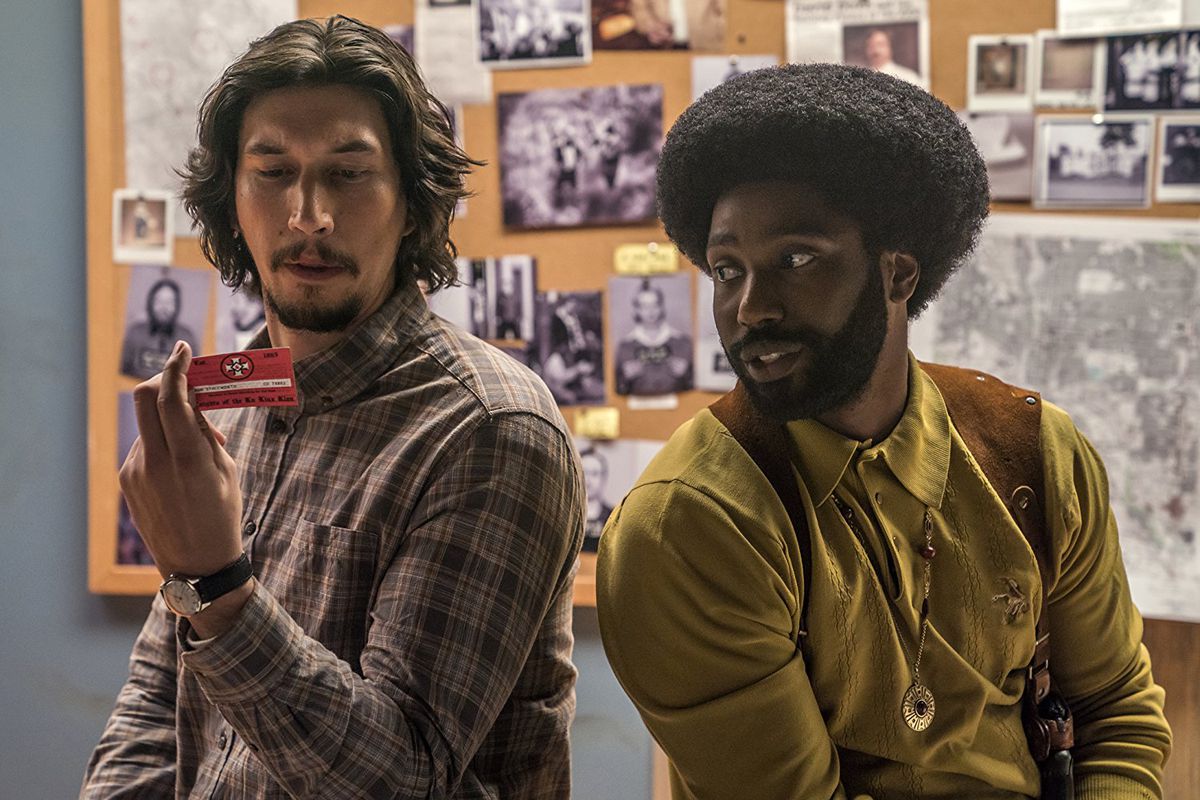
Black man infiltrates Ku Klux Klan.
That’s the hook for the latest Spike Lee joint, a film incredibly of the moment in spite of its 1970s era setting.
With “BlacKkKlansman,” Lee is back on the scene with his most powerful and important film since “Malcolm X,” delivering two hours of gripping, masterful drama, humor and social commentary in a way only the two-time Academy Award nominee can.
Based on the memoirs of Ron Stallworth, the first African American police officer in the history of Colorado Springs, “BlacKkKlansman” takes the unbelievably true account of a 1978 criminal investigation into a local chapter of the KKK and lifts the tale into the cinematic stratosphere.
Amid the humorous absurdity of events, Lee strikes a searing, somber tone for the vast majority of “BlacKkKlansman.”
Bright and vivid cinematography stylized in a vintage mix of 1970s Blaxploitation films and Lee’s unique visual style, the film turns cold in a hurry as true evil reveals itself.
Perhaps the most chilling of all is how effortlessly Lee parallels 1970s racism with present day society and gives viewers the sense events in “BlacKkKlansman” could happen tomorrow.
As Stallworth, John David Washington delivers a star-making performance with an unique balance of charisma and sense of place. The young actor earns the trust of audiences early in the film, which allows the increasing absurdity to remain grounded.
How he approaches each scene as Stallworth varies slightly from scene partner to scene partner, providing depth of character as Stallworth has to identify with the black power movement at one moment and then adjust himself mentally when interacting with fellow officers and then yet again when on the phone with Klansmen.
Perhaps the best young character actor working today, Adam Driver works wonders as an undercover cop who has to pretend to be Ron Stallworth when meeting with Klansmen face to face.
His ability to internalize his own character’s thoughts and feelings while externalize the racist persona he and the real Stallworth create is nothing short of masterful.
Topher Grace — known for his lead role on television’s “That 70s Show” — delivers a career-best performance as David Duke, then Grand Wizard of the Klan.
The ease with which Grace replicates Duke’s ability to woo audiences with hate speech is subversively subtle and effective.
The chances of turning such an easy character to hate into caricature are immense, especially given the fantastical comedy involved in phone conversations between Stallworth and Duke.
Grace swings hard the other way, infusing Duke with a casual conversation tone that emphasizes just how matter-of-fact racism and bigotry can be.
Through Grace and the other actors portraying Klansmen, Lee is able to contemporize the plot and give context to modern political issues to strike up conversation.
There’s a great deal of interesting commentary on cinema on top of the social and political issues you’d typically expect from a Spike Lee joint.
Characters discuss Blaxploitation films like “Shaft” and “Superfly” in terms of how the depiction of African Americans in those films influences the greater social climate.
But it’s in Lee’s overt references to the controversial 1915 D.W. Griffith Klan propaganda film “Birth of a Nation” that “BlacKkKlansman” speaks most eloquently.
Griffith’s use of cross-cutting between two scenes occurring simultaneously in “Birth of a Nation” is replicated to great effect as a Klan initiation and subsequent screening of the film is counterbalanced with Harry Belafonte’s poignant recounting of a lynching in Waco.
It’s in these 10 minutes that Lee captures the dissonance in expected symmetry with cinematic impact you won’t find on screen anywhere else in 2018.
Cinematographer Chayse Irvin, who shot Beyonce’s “Lemonade” music video, grounds “BlacKkKlansman” in the heart of the 70s visually. Shooting on film, Irvin enriches the movie’s color palette scene by scene to aid Lee’s effort to contrast Stallworth and police from the Klan they were infiltrating.
“BlacKkKlansman” is the year’s first virtual lock for a Best Picture nomination at next year’s Academy Awards. Lee’s achievements on this film as both a visual and dramatic storyteller virtually assure his first Best Director nod as well.
The winner of the Grand Prix at this year’s Cannes Film Festival may also garner acting noms for Washington and potentially both Driver and Grace in the supporting actor category.
A best adapted screenplay win is virtually assured among more technical categories and best editing may not be too far away from a certainty either.
Without doubt, “BlacKkKlansman” is the best film to arrive in theaters so far in 2018 and certainly the year’s most important.
Visually dynamic with vivid storytelling and award-worthy performances, this Spike Lee joint is an absolute must see film in theaters and one that will resonate long after the somber, powerful coda.
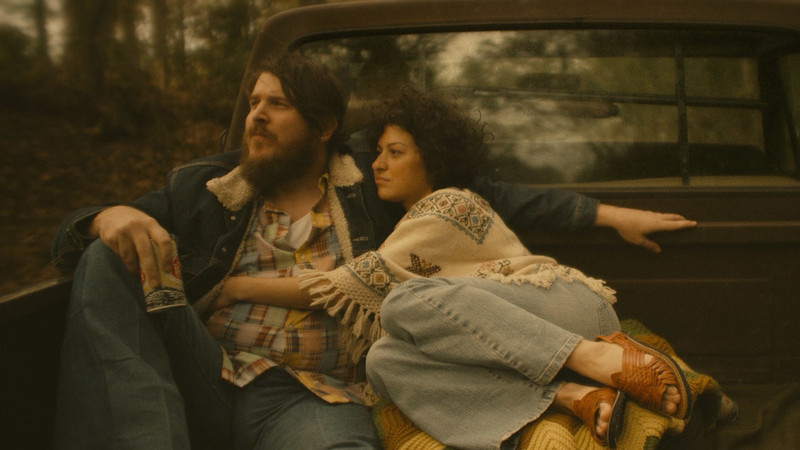
Biopics are movies made about stars.
Blaze Foley was never a star, simply a mythical folk hero who played with Townes Van Zandt and had his songs covered by the likes of John Prine, Merle Haggard and Willie Nelson.
It’s fitting then that the independent film telling his story isn’t a traditional paint-by-numbers biopic.
Filled with raw grittiness and passion, “Blaze” is a cinematic work of art on par with films like “Inside Llewyn Davis” and “Crazy Heart,” an ode to a musical legend.
“Blaze” also happens to be a terrific achievement for the film’s director and co-writer, four time Academy Award nominee Ethan Hawke.
His best directorial work to date, “Blaze” is ethereal and emotional, visually captivating and scored with an alluring array of Foley’s own tunes sung by musician Ben Dickey who stars as Blaze.
Unlike a traditional music film, “Blaze” does not follow a “cradle to grave” plotline. The movie opens with Blaze at his most wild, hopped up on drugs and banging away at a drum set while ranting about Cesar Chavez.
Almost immediately, viewers are transported to what feels like a different world entirely, a melancholy love story between a young Blaze and the Jewish actress he would run away with to live in a treehouse in the woods.
Whether intentionally or not, Hawke gives viewers momentarily glimpses into Foley’s fragile psyche and these fragments, however fleeting, linger throughout the two-hour running time that becomes a visual tapestry for Blaze’s music.
Dickey embodies Blaze in a way that feels immensely lived in, much in the same way you might describe an inhabited performance from the likes of Gary Oldman or Daniel Day-Lewis.
This is especially stunning considering Dickey makes his acting debut for longtime friend Hawke, who pulls out a sobering, bittersweet turn from the novice actor.
What Hawke and Dickey understand about Foley, it seems, is how theatricality and musicality intertwine into his on-stage performances and Dickey is able to extend that emotion over to the character’s talking voice.
It doesn’t hurt that many of Dickey’s best scenes are paired opposite a riveting, beautiful performance from Alia Shawkat as Sybil Rosen, Foley’s first love and muse.
Shawkat carries the weight of Sybil’s emotions right on the edge of her lips, in the pupils of her eyes, in such a way that feels both effortless and demonstrably difficult.
Dickey and Shawkat have magnetic chemistry not in the traditional physical sense, but with deep emotional bonds that push and pull back and forth as Blaze and Sybil fall in and out of love.
It’s a true testament to how perfectly cast they are as well as to Hawke’s commitment to making the whole film feel rich and authentic.
This extends to his ensemble cast, which could have easily been littered with star power.
Hawke’s relentlessness to capture the essence of Foley and his era of country music necessitated the casting of pitch-perfect secondary leads that push Dickey’s Blaze forward.
To that end, Charlie Sexton is a revelation as Foley’s friend and musical contemporary Townes Van Zandt, bringing gravitas and quiet confidence to the role of primary storyteller. Sexton has such command of the screen that draws audiences further into the story, while still keeping viewers locked in on Dickey’s Blaze.
Josh Hamilton continues an impressive year of performances, pairing his work here as Blaze’s close friend Zee with a poignant supporting turn in Bo Burnham’s “Eighth Grade.”
Stars do come out in smaller roles with the legendary Kris Kristofferson crushing an extended sequence as Blaze’s father, while recent Oscar winner Sam Rockwell and frequent Hawke collaborator Richard Linklater join the cast as record executives.
Music drives the film from start to finish, wandering from place to place tangentially as if an improvised jazz solo, or perhaps more appropriately, one of Blaze’s long-winded monologues that serve as preamble to his songs.
The visuals Hawke and cinematographer Steve Cosens are able to achieve in “Blaze” provide a wonderful backdrop for the whole affair.
Drenched in natural light, “Blaze” can meander from the sepia-tone haze of Foley’s wooded escape to the dank, dark haunts of the Austin Outhouse bar where he played his final show.
It’s in these scenes that Hawke shows true artistry as a director, following random patrons and Blaze himself around the bar, inside and out, without missing a beat. The look of Foley recording his live album covered in red neon with a wall-sized American flag behind him is the kind of cinematic iconography rarely seen on the big screen.
It doesn’t really matter if audiences have heard of Blaze Foley prior to watching the film. There’s enough of his life and free-flowing personality seared into the film to satisfy the curiosity of any moviegoer.
At worst, “Blaze” will have audiences downloading Foley’s music before leaving the theater.
A gorgeous portrait of a man who preferred the anonymity of legend over the notoriety of stardom, “Blaze” revels in artistic homage of a subject truly dedicated to the poetry of love and songwriting.
This is the Ethan Hawke film you have to go out of your way to see as soon as possible. It will be well worth the journey.

Netflix has always been a great source for binge-watching television programs you need to catch up on or seeing a movie you missed in theaters.
Their dive into original programming started with successful miniseries like “House of Cards” and “Orange Is The New Black,” shows that helped popularize the mantra, “Netflix and chill.”
An initial foray into becoming a full-fledged movie studio resulted in the purchase of critically acclaimed films like “Beasts of No Nation” and last year’s Oscar-nominated “Mudbound.”
Ever expanding their empire in hopes of competing with the movie-going experience, Netflix has sought in recent months to corner the market on romantic comedies with films like “The Kissing Booth” and “Set It Up” hitting the streaming service.
The latest big feature on Netflix, writer/director Lauren Miller’s “Like Father,” is the definition of this new breed of filmmaking, a modernized version of 90s rom-comes popularized by Tom Hanks and Meg Ryan.
In this not romantic rom-com, Kristen Bell plays Rachel, a work-a-holic New Yorker ditched on her wedding day for being too committed to work.
Amid the ensuing drunken stupor, Rachel invites her estranged father Harry (Kelsey Grammer) to join her on the week-long cruise intended to be her honeymoon.
Bell and Grammer have solid on-screen chemistry and their scenes occasionally pack zip, but much of the time the actors themselves show as much disinterest in the film themselves as their characters are expected to have about their awkward vacation in the first place.
In fact, the only performer who looks genuinely excited to be in the movie is Seth Rogen, box office success and perpetually stoned funnyman who simultaneously feels too good and not good enough for “Like Father.”
Cast because of (or in spite of) his marriage to the film’s writer/director, Rogen pops on screen as a recent divorcee and potential love interest for Rachel.
But because Miller either doesn’t know what lane she wants her film to go down or she wants to include everything she’s thinking and feeling, her film wanders aimlessly for much of the 95-minute running time.
Occasionally, “Like Father” will work its way through a cookie-cutter list of familiar relationship comedy tropes that work as boxes to check off rather than crafted plot points.
At times, “Like Father” feels less like a feature film and more like one gigantic advertisement for the Royal Caribbean cruise line. Extended montages both on and off the ship have a distinct “come sail away” vibe with that signature buttery shine you’d come to expect from discount travel agencies.
Even the three couples Rachel and Harry dine with — an adorable older couple on their 50th anniversary, a middle-age African American couple each on their second marriage and a hip, attractive gay couple — reek of focus group casting.
Everything hits a little too on-the-nose from visual cues to character development to overall storytelling. Rachel and Harry watch Kurt Russell and Goldie Hawn in “Overboard” because of course they do.
Viewer expectations will be met at a very tolerable, mediocre level and for a film with an unknown budget and hidden audience numbers, “Like Father” serves its purposes well.
Like many of the recent stream of Netflix “original” films, “Like Father” is pleasantly unremarkable cinematically, which plays well for the majority of Americans who will wind up watching it on their cell phones.
Its almost painstaking mediocrity makes it an ideal movie for the streaming service’s casual audience looking for something low-key to watch with some microwave popcorn on a Tuesday night on the couch.
Inoffensive, passable movies like “Like Father” have a real place in cinema and moving them off the big screen and onto streaming services is a great way to revitalize the relationship comedy genre that’s largely missing from theaters.
While the streaming service’s recent hit”Set It Up” is better as a whole, there’s enough good in “Like Father” to add to your Netflix queue and give a chance to on a rainy day.

Nine times out of 10, movies are for escapism, a chance to remove yourself from the cares, worries and needs of the day.
To simply be transported elsewhere.
“Eighth Grade” isn’t one of those films.
From first time writer/director Bo Burnham, a 27-year-old stand-up comedian, this searing, unexpected tale of a 13-year-old girl’s final days in middle school is every bit of life in 2018.
The expectation is that introspective, philosophical films are centered around pensive, wistful older men. “Eighth Grade” subverts that tradition by following 13-year-old wallflower Kayla in the final moments before middle school ends.
Being popular, liking a boy and hoping he likes you back, the life or death tragedies of someone too young to know true life or death tragedies are genuine in a way cinema doesn’t normally approach middle school drama.
There’s a raw, flawed quality to “Eighth Grade” that permeates from start to finish with “actors” taking Burnham’s script and becoming hyper-realized versions of themselves. The magic of the movie comes from how little movie magic there truly is.
Dialogue lacks refinement, scenes flicker in bouts of light and darkness, zits; the flaws are celebrated through the simplicity of acknowledgment.
Burnham’s greatest success as a writer/director isn’t found in a single moment or in the terrific performances he captures from real eighth graders. “Eighth Grade” works because Burnham envelops the entire film in reality, flaws and all, and doesn’t get in his own way by doing too much.
The same can easily be said of the dynamic 15-year-old actress who stars as Kayla, Elsie Fisher. Filming just a week after finishing middle school herself, the then 13-year-old Fisher channels the awkward shyness that comes from a young person wanting to be more outgoing than they truly are.
Because she’s obviously lived in these moments so recently, there’s a natural, effortlessness to her performance, which changes on a dime when Kayla is at the dinner table with her single father, at school surrounded by the same kids she’s spent eight years with or alone in her bedroom where no one is watching.
“Eighth Grade” is a fictionalized portrait of hope and existential crisis all smashed up into one messy heap of emotions. It requires the genuine, humble performance Fisher excels at bringing to the screen at every turn, making her experiences infinitely relatable even for those who — like the filmmaker — have never been a 13-year-old girl.
“Eighth Grade” revels in the uncomfortable, pressing audiences to squirm in their seats lightheartedly as Kayla attempts to flirt with a crush and then in more serious, compromising situations as well.
Burnham pulls no punches in the film, opting to press into subjects like depression, sexual experience (or lack thereof) and school violence rather than skirt the issue.
A visceral, gripping tale, “Eighth Grade” captures an innate authenticity and sense of place within modern culture for teens and pre-teens both cinematically and emotionally.
Social media — Snapchat and Instagram, rather than dated apps like Facebook and Twitter — provide context into Kayla’s inner thoughts through visual storytelling. Audiences are able to ride the emotional roller coaster of a 13-year-old girl by watching her angst over taking the perfect selfie.
The YouTube vlogs she makes over the course of the week also greatly enhance viewers’ understanding of existential crisis among early teens while simultaneously wrapping the film in a neat little bow of movie magic.
Sadly, this “indie darling” probably won’t gain enough positive momentum from an early August release to break into awards season consideration, though “Eighth Grade” will be sure to play a prominent role in a large number of critics’ top 10 lists at the end of the year.
Smaller groups, such as the Film Independent Spirit Awards, will likely honor Burnham for his terrific debut as a filmmaker and Fisher on her breakout lead performance.
Viewers may cringe more than once for Kayla. “Eighth Grade” is intended to be an unsettling experience.
At the same time, Burnham has crafted a film that stays with its audience long after the credits roll.
Parents may not want to bring their pre-teen or teenage children to see “Eighth Grade,” but there’s simply nothing in the R-rated film that doesn’t already happen in middle schools across the country.
It’s a conversation starter to be sure, but “Eighth Grade” proves the need for honest and open communication with families and friends.
A singular experience unlikely to be matched this year, “Eighth Grade” is 2018 both cinematically and in reality.
 Cinematic Considerations