

Love him or hate him, there’s no denying Tom Cruise is a movie star.
His latest film, “Mission: Impossible – Fallout,” cements Cruise as the last true Movie Star in capital letters, someone whose talent and charisma transcends box office success, critical acclaim and award season notoriety.
Cruise is a generational talent that has defined true stardom, that collaboration between cinema and celebrity people only talk about in past tense terms referencing Marlon Brando, Marilyn Monroe or Humphrey Bogart.
He puts his rubber stamp on modern moviemaking with “Fallout,” an action film that simply shouldn’t work as well as it does.
There’s nothing revolutionary about the plot, which follows the same basic format as the classic television show of the same name upon which it is based. Ethan Hunt and his team of Impossible Mission Force (IMF) agents must stop a psychopathic arms dealer from obtaining a Macguffin and causing international catastrophes.
This time, the Macguffin is a case of three plutonium balls intended for trade to a vigilante dead-set on detonating nuclear weapons for maximum global conflict.
The plot doesn’t entirely matter to the success of “Fallout.” It’s more of a means for propelling Cruise forward at breakneck speed.
There’s about 10 minutes at the outset of the film that orients the audience and establishes the most clear emotional stakes in the history of the franchise.
Then writer/director Christopher McQuarrie cranks the dial to 100 and sets Cruise loose for the next two hours in the most dazzling thrill ride you’re likely to see this year.
None of it works without Cruise.
In a world where over-reliance on computer-generated images have made the outrageous seem matter-of-fact, what Cruise does in his sixth turn as Hunt feels almost too possible given how easy movie magicians at a desk could make it look.
And yet, “Fallout” sees Tom Cruise, Movie Star, literally jump out of airplanes 25,000 feet in the air and choreograph a mid-air rescue that works like a stunning dance of fear and tension.
Cruise spends months learning to fly — and then actually piloting — helicopters in dazzling dogfight sequences. Incredibly, this doesn’t feel authentic in the moment on a first viewing.
Yet somehow more incredibly, it is.
The cinematic precision and practical stunt work at play in “Fallout” reveal itself in staggering fashion on a second, third or fourth trip to theaters.
Oscar winner “Mad Max: Fury Road” was lauded several years ago for its dynamic practical effects and movie magic featuring stunt men.
“Mission: Impossible – Fallout” takes things to the next level.
Cruise could have, and almost certainly should have, legitimately died five different times over the course of filming.
The fact that he only broke his ankle and delayed production eight weeks is simply astounding.
There’s a real emotional depth to his performance, too, given the daredevil nature of his stunt work.
Because everything audiences see is really happening, the hesitations we see on Cruise’s face are genuine. We can find ourselves churning our minds alongside him during these moments of peril.
Suspending disbelief isn’t necessarily because it’s the disbelief that makes the impossible happening in front of you even more incredible.
It certainly doesn’t hurt to have a talented and diverse supporting cast including a stoically serious Ving Rhames, relatable and hilarious Simon Pegg and alluring Rebecca Ferguson to pair with Cruise while Angela Bassett and Alec Baldwin provide sizable resistance and gravitas.
While Jeremy Renner had firmly planted himself in the “Mission: Impossible” franchise the last two outings, his absence here doesn’t feel missed.
McQuarrie helps carry the weight by stepping up considerably in the director’s chair, taking lessons learned from his last outing in “Rogue Nation”and pairing it with real stakes moment to moment you’d find in the more grounded Jason Bourne franchise or the recent James Bond films.
The thing that truly sets “Mission: Impossible – Fallout” apart from your average action film is its unwavering commitment to relentless, dynamic fun. Cruise and McQuarrie rev the engines from moment one and take off on the cinematic Autobahn.
Though a trip down memory lane watching the prior films of the franchise (especially the first, third and fifth) will help inform viewers, you don’t have to know a lot going in to enjoy the heck out of “Fallout.”
You have to see this film on the big screen.
They don’t make movies like this anymore.

A good movie trailer will entice you to watch a film and hopefully not spoil anything.
A great one will get you in the theater and leave you baffled when the world of the film becomes so much deeper and unexpected.
Such is the case with “Sorry To Bother You,” a hit film at this year’s Sundance Film Festival now making its way to larger audiences across the country.
Watch the trailer if you’d like, but be prepared for just about anything.
At first glance, writer/director Boots Riley seems to have made a stylized, yet mundane feature about office life in Oakland.
But to hear him tell it, his debut feature comments on a plethora of social and political topics over the course of 105 minutes because any story that’s merely about one idea isn’t worth telling.
Structurally, “Sorry To Bother You” maintains a traditional, easy to follow plotline led by Lakeith Stanfield’s Cassius Green, an unemployed man who takes up work at a telemarketing firm in order to move out of his uncle’s garage.
As he climbs up the ladder of success by mastering his “white voice” to increase sales, “Sorry To Bother You” begins a rollercoaster ride of original, cinematic grandeur that will shock reserved audiences and invigorate viewers looking for fresh perspectives.
Stanfield, known for the hit TV show “Atlanta” and last year’s Oscar winning “Get Out,” breaks out as a lead actor in a major way here as Cassius, a good-hearted man of the people conflicted by the power of money versus social justice.
Stanfield builds Cassius’ growth over the course of the movie, slowly and organically as if he is learning about himself simultaneously to Cassius. This allows the highs and lows Cassius faces over the increasingly absurdist comedy to feel authentic and grounded.
Conversely, Tessa Thompson has a decidedly less dramatic character arc as Cassius’ fiancee Detroit, though the power of her character evolves significantly over the course of the film.
The supporting performance pack comedic punch with notable turns from Danny Glover as a veteran coworker of Cassius and Patton Oswalt and David Cross in off screen roles as “white voices” for some of the most pivotal characters.
Armie Hammer takes the most chances — most of which pay off — as a playboy CEO that’s one part Mark Cuban, two parts “Wolf of Wall Street” and 100 percent out of his mind.
Unlike anything Hammer has done before, the “Call Me By Your Name” really goes for broke here in a performance that leans towards caricature without completely tipping over the edge.
Visually, “Sorry To Bother You” is a cavalcade of hues clashing and smashing against Riley’s anarchist screenplay with reckless abandon.
Like the film’s script, there’s so many hidden layers within shots from the obvious costume alterations of Thompson’s Detroit to the more subtle, emotionally calculated photo Cassius hangs everywhere he goes.
Once viewers are bombarded with the cinematic spectacle that is the first viewing, Riley’s nuanced examination (and almost entire rejection) of cinematic and political convention leap to the forefront.
The eccentricities and stylistic barrel rolls “Sorry To Bother You” grinds into audiences shouldn’t work on any plausible level, technically or theatrically.
Riley, a storytelling hip-hop artist by trade, defies the odds with captivating flair, taking the mind’s eye of a pre-teen boy and cramming modern societal commentary for one of the decade’s most outlandishly wonderful films.
Though ardent support will be given to make “Sorry To Bother You” a contender for award season nominations, the film is far more likely to garner recognition from independent filmmakers than more mainstream groups despite the Academy’s concerted effort to diversify the Oscar voting base.
Considerable acclaim for Riley’s unique style and direction as well as terrific lead performances from Stanfield and Thompson could easily see the trio earn acclaim regionally as well.
“Sorry To Bother You” is a film that strives and intends to bother audiences.
Fight the urge to dismiss the unorthodox filmmaking and indulge in a cinematic adventure unlike anything you’ve seen for a long time.

“Skyscraper” is a film made in the wrong era.
If it was made in the 1990s, “Skyscraper” would fit right in during the heyday of gloriously terrible action films that would pick up a second life on basic cable like “Dante’s Peak” or “Cliffhanger.”
A clear homage to unfiltered, low-budget, high-octane thrill rides of the past, this is a movie every Steven Seagal and Jean Claude Van Damme fan will love and a film both Seagal and Van Damme would dream of starring in.
In their stead, “Skyscraper” boasts bankable action star Dwayne “The Rock” Johnson, an actor who has surpassed the need to reference his professional wrestling past in most performances. Yet here, Johnson’s long standing fighting credentials in and out of the ring are an asset throughout.
Johnson stars as a man who must rescue his family from a tall building while Eastern European villains attempt to steal something from behind the locked vault doors of the building’s Asian owner.
That it comes out on the 30th anniversary of “Die Hard” is by no mistake.
“Skyscraper” is a film that tries so hard to replicate the magic of John McTiernan’s 1980s classic that homage seems a trite, simplistic description.
The cinematic lovechild of the Bruce Willis action flick and Steve McQueen’s 1974 thriller “The Towering Inferno,” “Skyscraper” pulls no punches as it slingshots, fisticuffs and duct tapes its way into the hearts of 17-year-old boys and men who used to be 17-year-old boys across the country.
If this were in the hands of any other action star, “Skyscraper” would likely be found in the bargain bin of the straight to DVD section of your local grocery store or gas station. With Johnson, however, the ridiculous plot and borrowed action sequences have at least some semblance of originality.
The natural charisma he brings from his wrestling persona “The Rock” combined with Johnson’s humble humanity from his personal life meld into a convincing enough portrait of a man trying to save his family with little bloodshed. While other action heroes would rely on firearms prowess, the physicality Johnson delivers feels plausible in spite of how incredulous the circumstances get.
When he needs to be, Johnson becomes our last true action star.
The film is littered with an array of instantly forgettable performances that are quintessential action movie tropes.
What sets “Skyscraper” apart, even if just slightly, is a welcome return from 90s television star and “Scream” queen Neve Campbell, who impresses in limited screen time as Johnson’s wife, a former combat medic who can hold her own when called upon.
Writer/director Rawson Marshall Thurber has made a living comedically with films like “Dodgeball” and “Central Intelligence,” but capably manages to craft a fun, albeit derivative popcorn flick with “Skyscraper.”
Certain moments within the film have real tension, especially as Johnson dangles from staggering heights time and again. Though action sequences lack the practical effects of the “Mission: Impossible” franchise or the visceral quality of the Jason Bourne films, there’s no shortage of entertainment value to be found.
To be sure, “Skyscraper” isn’t a good movie. In fact, the latest movie from “The Rock” is downright terrible.
….in all the best ways.
Infinitely re-watchable and a lighthearted spectacle of amusingly terrifying heights from start to finish, “Skyscraper” defines the notion of a film that’s far better than it has any right to be.
Whether we like it or not, it’s a film whose cinematic shelf life will far exceed a month-long stay at the box office.
Odds are good that televisions across America will stop down to make “Skyscraper” appointment viewing when it inevitably becomes a staple of a station like TNT or FX.

There are 20 official Marvel Cinematic Universe films.
Let that sink in for a minute.
That’s almost as many as there are James Bond flicks (24), seven more than “Star Trek” (13) and more than “Star Wars,” “Lord of the Rings” and “The Hobbit” movies (16 total) combined.
Somehow, Marvel continues to be at the top of their game with critical and commercial mega-hit “Avengers: Infinity War” pushing the Disney off-shoot studio bigger than ever.
It’s little wonder, then, why the next step in studio president Kevin Feige’s grand plan would be to go small, this time with the pint-sized sequel “Ant-Man and the Wasp.”
Figuratively and literally, everything about this latest hit sees the superhero franchise scale things way back. The heroes are smaller, the bad guys are tamer and the problems less cataclysmic.
The film, while not quite on par with director Peyton Reed’s 2015 original, is still a lot of fun.
Scott Lang is forced to hang up his Ant-Man suit while on house arrest after the events of “Captain America: Civil War” when a dream links him to his mentor Hank Pym’s wife, presumed dead after shrinking to a sub-atomic level.
A quintessential “Average Joe,” Paul Rudd reprises his role as do-gooding thief Lang and gives Ant-Man the wry, affable charm audiences have grown to love in Rudd’s performances over the years.
The light-hearted, “guy you’d want to have over for poker night” persona Rudd cultivates in Lang drives the heart of the film and cuts through a lot of the minutiae the science-heavy plot requires. Rudd excels at the adlibbed one-liners needed to keep the film flowing smoothly.
A title like “Ant-Man and the Wasp” implies equal importance for two major characters, especially when the film serves as a direct sequel to a self-titled “Ant-Man” movie.
Yet somehow, Rudd’s Ant-Man plays the secondary, goofy sidekick to Evangeline Lilly’s Wasp, the least developed character and worst part of the original film.
Lilly’s work is better here as her chemistry with on-screen father Michael Douglas is quite good, but overall, her Hope remains the flat, uninteresting character on a second go-round, just with more screen time. Douglas gets more to work with on a second outing as Pym, with a noticeable reduction in jargon-heavy dialogue and more quips for him to sink his teeth into.
The film also boasts a quality supporting cast of Marvel newcomers including Lawrence Fishburne as an old colleague of Pym, Walton Goggins as the requisite Mafioso boss and the iconic Michelle Pfeiffer in a small turn as Pym’s wife and Hope’s mother Janet that should develop more fully in future installments.
Where the film shines brightest are in small comedic moments from Rudd or scene-stealer Michael Pena and the well-crafted action sequences that take special advantage of all the shrinking and growing that Ant-Man and The Wasp can do. It’s here that Reed improves the most over the original film as the set pieces are more cleverly designed and engaging.
Tonally, “Ant-Man and the Wasp” serves as an important palate cleanser following the highly dramatic, darker tone of “Avengers: Infinity War.” The trademark humor of the “Ant-Man” films brightens the viewing experience and makes lengthy, complicated exposition about sub-atomic realms and quantum physics seem less tedious than it actually is.
Reed and his team smartly opt to separate themselves almost entirely from “Infinity War” and create a no-frills, just fun popcorn movie that will have kids ages eight to 80 laughing throughout. Completely on its own, the 20th Marvel movie lacks pizazz, becoming a tad too convoluted for its own good with myriad storylines and secondary characters.
Given its place within “Ant-Man” lore and in the larger context of the Marvel Cinematic Universe, it’s a solid film bridging the gap to what is surely to be better, more impactful movies. In essence, “Ant-Man and the Wasp” is a rich man’s “Thor: The Dark World,” a film that serves as much an episodic purpose as a cinematic one if not more so.
First time audiences to a Marvel movie won’t be too far behind as only the original “Ant-Man” provides necessary context to fully understand the plot.
However, “Ant-Man and the Wasp” is targeted at ardent Marvel fans who will overlook minor shortcomings and incomplete storytelling in this fun, yet flawed film as a small piece of a much larger picture.

There’s an immense freedom in small, independent filmmaking that comes across on screen in high quality art-house cinema.
Writer/director Paul Schrader has spent a lifetime fighting against modern Hollywood convention. His latest film, “First Reformed,” is a calculated, uncompromising examination of inner turmoil slowly churning in a stoic man of faith and represents the pinnacle of his directorial career.
If you’ve never heard of Schrader, it’s probably because you associate his most famous work — the screenplay for “Taxi Driver” — with director Martin Scorsese or star Robert DeNiro.
“First Reformed” harkens back to the 1976 psychological thriller, almost unintentionally serving as a companion piece or coda.
Slow and deliberate, Schrader composes a piece of cinema that will arrest some audiences and disenchant others. It’s a film that constantly asks characters, and by proxy its audience, “can God forgive us what we’ve done to His creation?”
Part theological wrestling, part existential crisis, Schrader’s powerful slow-burn of a film follows former military chaplain Ernst Toller, a somewhat broken man still mourning the loss of his son in Iraq and the subsequent end of his marriage.
To process his grief, he catalogues his every thought in a small journal he keeps while serving a rural “tourist church” in upstate New York. His world is forever changed when a young pregnant woman in his parish asks him to counsel her eco-obsessed, depressed husband.
“First Reformed” doubles as the name of the church featured prominently in the film, but it also aptly describes the weary pastor shepherding it.
Academy Award nominee Ethan Hawke gives the most dazzling performance of his career as Toller, putting up a facade of strength for those around him while slowly crumbling inside mentally. The quiet desperation within Hawke’s Toller appears subtlety at first and builds gradually throughout “First Reformed” in a beautiful crescendo of pain, grief and self-doubt.
Portrayals of men of the cloth are rarely this complex and it’s only upon leaving the theater that the true impact of Hawke’s searing work takes control.
Hawke takes great care to ensure that audiences understand just enough about Toller’s physical and mental anguish, while leaving events in the film open to interpretation. Schrader insists viewers decide on the meaning of “First Reformed” as a painter would for abstract art with Toller’s inner psyche being the canvas. The film showcases the unique synergy between writer, actor and director with Hawke melting into another world flawlessly.
The tiny cast has a number of solid actors filling the minute details of Toller’s life, but two familiar faces stand out among the crowd.
Amanda Seyfried wavers terrifically between coquette and demure housewife as the pregnant wife of a man Toller counsels. Hawke and Seyfried excel at this distant, yet magnetic symbiosis that draws and repels Toller and the young wife.
It’s an wonderful contrast with the excellent Cedric Kyles playing against type as head of a mega-church that sponsors Toller’s small parish. In limited screen time, Kyles transforms into a “faith-as-a-commodity” style pastor without feeling caricature, which is especially astonishing given his film history as Cedric the Entertainer.
Visually, Schrader frames “First Reformed” in 1.37 ratio, a near square picture that squeezes the audience’s collective eye and forces closer examination of smaller, nuanced details. A twitch of the eye, curl of the mouth, every choice made by the actors or by Schrader himself is put under the microscope.
From the first frame, it’s a visual pronouncement that “First Reformed” isn’t a typical drama and refuses to play by cinematic convention. Each moment delicately cultivated by Schrader is artistically captured by cinematographer Alexander Dynan whose visual palette is largely as demure as Toller, yet heightens for effect as the script and performances require.
Though a mid-summer release is often far too early for serious awards consideration, Hawke is just too good as Toller not to be a serious threat for a Best Actor next spring. It’s a poignant, gripping performance that should still resonate long after “First Reformed” leaves the big screen. Accolades for Schrader, Seyfried, Kyles and the film as a whole are more likely in smaller ceremonies with a limited pool of contenders, such as the Film Independent Spirit Awards.
Engaging from start to finish despite its slow-burn pace, “First Reformed” will likely be one of 2018’s best independently made films with a career-best effort from Hawke that needs to be seen on the big screen.

If who directed blockbuster movies didn’t matter, than any average filmmaker with a script outline, sizable budget and the filmography of Michael Bay on DVD could make a good popcorn movie.
Thankfully, Spanish auteur J.A. Bayona took the helm for “Jurassic World: Fallen Kingdom,” a dinosaur film much better than it probably has any right to be, with Bayona and stars Chris Pratt and Bryce Dallas Howard doing much of the heavy lifting.
It also happened to make $150 million domestically at the box office this weekend with more stories of Tyrannosaurus Rex, raptors and other prehistoric creatures sure to follow.
Despite a brief appearance from original star Jeff Goldblum, “Fallen Kingdom” take steps further and further away from Steven Spielberg’s iconic “Jurassic Park.” An expansion — in all sense of the word — of the 2015 blockbuster “Jurassic World,” this sequel to a sequel reunites raptor trainer Owen Grady and dinosaur advocate Claire Dearing in a high-stakes rescue mission to save the remaining dinosaurs from an impending volcano eruption.
Pratt once again shines as Grady, an Indiana Jones-esque adventurer with a quick wit and deep connection to the raptors he trained in “Jurassic World.” He displays an ease in playing the relatable hero, which gives authenticity to the thinly-crafted character and overshadows the increasing implausibility of events.
Continuing her most prominent role, Howard wavers between damsel in distress and can-do adventurer as the screenplay calls for, though aside from the ample screen time, her performance doesn’t particularly stand out in any way.
The ensemble cast works to varying degrees of success with veteran character actor James Cromwell virtually wasted as an aging billionaire and Rafe Spall playing the requisite mustache-twirling villain in a matter to be expected.
While a trio of newcomers play heroic roles in “Fallen Kingdom,” it’s the film’s most prominent dinosaur — Owen’s trained raptor Blue — that stands out memorably. Surprisingly, the raptor shows the most character development over the course of the film and Pratt has more chemistry with the CGI character than love interest Howard.
There’s also a deceptive amount of humor hidden within “Fallen Kingdom” and the film’s plethora of exotic dinosaurs get just as many well-earned laughs as perennial funnyman Pratt.
“Fallen Kingdom” is vibrant and broad, but lacks the emotional depth and message Bayona attempts to infuse. Most of the film’s beats are telegraphed far too easily, though Pratt’s charisma allows audiences to ignore the bland script and enjoy the ride.
Midway through, the style takes a hard left turn from grandiose blockbuster to more cerebral monster movie. Bayona is able to flex his cinematic muscles, transitioning out of bright colors and vivid landscapes to haunting darkness and claustrophobic intensity.
The film gets bogged down in a lot of minutiae, which spread the action sequences a little too far apart. A tighter cut — or more correctly, a better screenplay — could have easily cut 10 to 15 minutes off the running time without losing anything of consequence.
For the most part, the CGI used in the film in large sequences flows quite nicely with intimate animatronic scenes that occasionally evoke the technical style of Spielberg’s 1993 film.
Bayona creates small moments within “Fallen Kingdom” where audiences will truly feel transported, visually iconic scenes that are trademarks of the director’s unique style. This beautiful and transformative directorial vision are even more definitely on display in Bayona’s wonderful and underseen 2016 film “A Monster Calls.”
Unfortunately, it’s almost more important for audiences to see “Fallen Kingdom” as preparation for the inevitable third film in the “Jurassic World” offshoot trilogy than it is to see the film on its own merits.
If it allows Bayona to earn the capital to more closely develop his original work and gets more attention to his other films, then “Fallen Kingdom” will have been well worth it.
On its own, this is a film that simultaneously takes itself too seriously and not seriously enough, making for an occasionally puzzling, yet largely entertaining outing at the movies.

Maybe we’ve forgotten what it takes to make a truly great sequel.
In our lasting obsession with more, more, more and now, now, now, audiences have been demanding instant gratification and ever expanding cinematic universes.
Money hungry studios are more than willing to oblige.
It’s gotten to the point where the two-year average from box office hit to follow-up film feels like too long.
Thankfully, Brad Bird didn’t feel the pressure.
Moving on to other projects, Bird let a simple story idea gestate in his mind for 14 years, evolving the project creatively to craft the best possible movie.
That film, a follow-up to the 2004 Pixar sensation “The Incredibles,” rode the wave of anticipation and word-of-mouth to $180 million domestically in its opening weekend, breaking records as the highest grossing animated film of all-time over its first four-day stretch.
But what sets “Incredibles 2” apart from the rest besides its box office dominance is its quality, instantly vaulting into the top five of Pixar Studios’ illustrious filmography rivaling “Up,” “Wall-E” and the “Toy Story” trilogy.
Richly developed and cultivated by writer/director Bird, the script layers thoughts on family, tolerance, the world’s growing obsession with digital technology and much more into a witty two-hour film that will keep young viewers entertained and older audiences engaged by the mature themes and banter.
Set in the moments immediately following the conclusions of the first film, “Incredibles 2” finds the Parr family – superheroes living among average citizens – out of work after heroes are outlawed by the government. Unemployed and homeless, Mr. Incredible becomes a stay-at-home father to the children while Elastigirl fights for the rights of “supers” while battling crime illegally.
The talented voice cast from the original film returns, including Craig T. Nelson as Mr. Incredible, Holly Hunter as Elastigirl, Samuel L. Jackson as Frozone and Bird himself voicing fan-favorite Edna Mode. They’re joined by “Better Call Saul” star Bob Odenkirk and “Get Out” actress Catherine Keener to bring vibrancy and life to Bird’s screenplay and Pixar’s dynamic computer-generated animation.
Pretty much everything about “Incredibles 2” is superior to its predecessor, from the storyline to the character development, the humor to the heart.
But from the outset, what is most striking about the differences between the two “Incredibles” films are just how much further Pixar’s animation team has come in 14 years.
There’s a deep richness to every frame and characters are given depth in curves that creates the appearance of three dimensions with on a flat screen.
Visually, the most exciting and stunning scene is also potentially the most problematic for audiences. Midway through the film, Elastigirl faces off against the villainous Screen-Slaver in hand-to-hand combat inside a room filled with strobe lighting that may trigger reactions from photosensitive or epileptic viewers. Framed in rapid fire blasts of alternating white light and darkness, it’s a mesmerizing, iconic sequence and one of the film’s best moments.
As all the top Pixar films seem to do, “Incredibles 2” will likely be a strong contender for an Academy Award nomination for Best Animated Film, though Wes Anderson’s outstanding “Isle of Dogs” should prove to be stiff Oscar competition.
The film is preceded by the slow-paced, yet rewarding short “Bao,” directed by Domee Shi, a story of a mother struggling in her relationship with her son that could also earn an Oscar nod in the animated short category.
It took Bird and company 14 years to bring “Incredibles 2” to the big screen because they wanted to make sure they got it right.
And they did in a big way.
Sure to play to packed crowds for weeks to come, “Incredibles 2” establishes a new high in sequel filmmaking, especially among its animated peers. It’s a film that may prove to be a difficult ticket, but more than worth the price of admission for viewers under six to those well over 60.
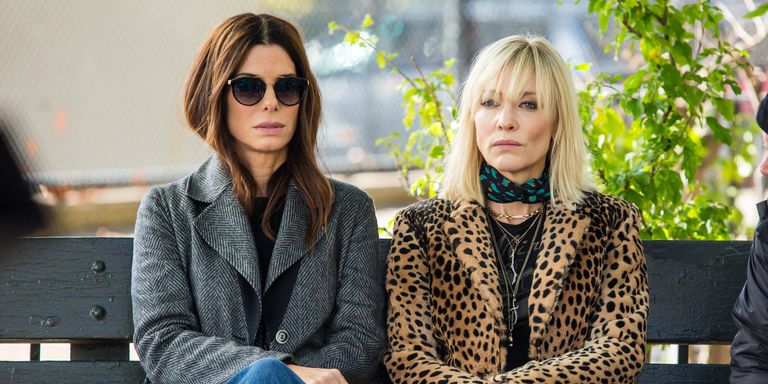
Cubic zirconia can look like diamonds from a distance.
It’s when you look closely that the flaws are exposed and it becomes apparent that it’s not a genuine diamond.
Ironically, swapping zirconia for diamonds is the major catalyst of “Ocean’s Eight,” a female-led heist spinoff of the classic “Ocean’s Eleven” trilogy that tries, and largely fails, to pass for the real thing.
Debbie Ocean has spent the past five years in prison planning the perfect score, following in her brother Danny’s footsteps. Upon her release, Debbie and partner-in-crime Lou begin rounding up a team of unlikely villainesses to snag a priceless diamond necklace off an unsuspecting actress during the illustrious Met Gala in New York City.
Headlining the film as ringleader Debbie, Sandra Bullock is up to her usual tricks, providing the necessary charm to pull audiences through increasingly implausible scenarios without battling an eye. Her natural ability to draw viewers provides a solid foundation upon which to build a solid ensemble and yet her performance seems very businesslike for much of the feature.
It’s only in the opening moments while Debbie goes on a five-finger shopping spree – sadly, the film’s best scene — and at the very end that it looks like Bullock is having any fun.
Cate Blanchett’s Lou, in many ways intended to be the feminine counterpart to Brad Pitt’s casually cool Rusty from the trilogy, attempts to bring a similarly effortless swag. Her work hits with a varying degree of success throughout the film, though sadly Blanchett brings more charisma outside of scenes opposite Bullock.
There’s a concerted, yet subtle undertone of unresolved, undeveloped sexual tension between Lou and Debbie, which would work much better in the overall scheme of the film if it paid off in any significant way.
Academy Award winner Anne Hathaway steals the show, however, as high-strung A-lister Daphne Kluger, the patsy in Debbie’s grand scheme. From start to finish, Hathaway is a breath of fresh air on screen as it’s clear she enjoys going against type as egotistical fashionista.
The men of “Ocean’s Eight” relatively take the role of simple window dressing with Richard Armitage poorly filling the shoes of the movie’s requisite villain. “Ocean’s Eight” probably would have been better served by casting someone with a higher profile or at least an actor whose off-screen persona would have been ripe for providing the character background nearly every performer lacks in the final product.
Boiling every member of the gang to a simple gimmick doesn’t really help things either. Performances are going to feel flat when describing characters is as simple as Rihanna’s computer hacker who loves to smoke weed or Mindy Kaling’s jewel expert who wants to get out of her mother’s house.
Perhaps it wasn’t the best idea to place an all-female heist flick in the hands of the guy who made “Seabiscuit.” The haphazard pacing, lack of character development and uneven tone of director Gary Ross’s feature belie a man seemingly ill-equipped to produce anything beyond pedestrian work.
This appears most blatantly in the timid, “paint by numbers” screenplay he co-wrote with Olivia Milch, a script that follows Steven Soderbergh’s “Ocean’s Eleven” so closely that scenes are shamelessly lifted from the 2001 film and repackaged as caricature. It’s easiest to spot in the opening moments of the film as Bullock’s Debbie talks her way out of prison on parole in identical fashion to George Clooney’s Danny, without the requisite flair and panache.
Nothing feels new or original in “Ocean’s Eight,” just pickpocketed from the Soderbergh trilogy or any number of heist movies.
Though the 2001 classic didn’t exactly re-invent the wheel – itself being a reboot of the 1960s Frank Sinatra film of the same name – “Ocean’s Eleven” felt fresh because of Soderbergh’s directorial vision, crafty shot selection and flawless casting. If there is a style to “Ocean’s Eight,” it’s in this celebration of high fashion that litters the film’s plot, costuming and cinematography.
“Ocean’s Eight” is fan fiction if anything else.
That being said, it’s an incredibly easy watch because there aren’t really any stakes enough. Sequences in the film feel enjoyable in the moment, but almost as easily forgettable. The talents of Bullock, Hathaway and company are readily on display as are a glittering array of fashion icons and other celebrity cameos.
At a basic level, “Ocean’s Eight” delivers on being a whole lot of no-frills fun. While it doesn’t quite hit the mark of the original trilogy or last year’s southern heist romp “Logan Lucky,” most audiences will probably leave the theaters satisfied, or at least not feel robbed, by Bullock and company.
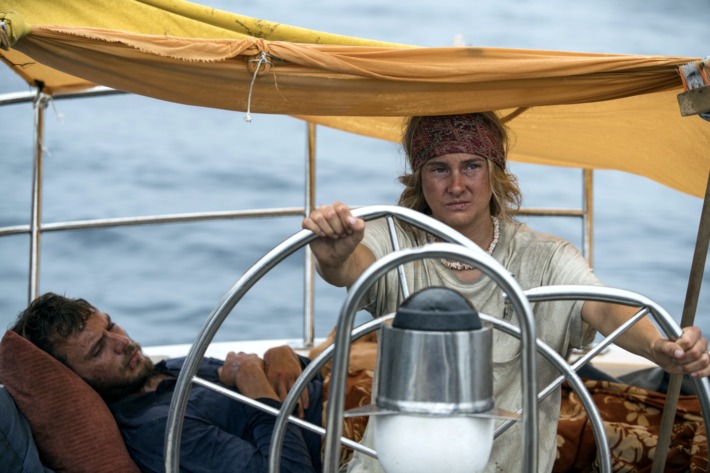
Tami Oldham and Richard Sharp’s story would feel like a tale ripped from the script of a 90s made-for-tv disaster flick, if it wasn’t so bizarrely true.
The couple’s head on collision with a Category 5 hurricane in the early 1980s is brought to life by Icelandic director Baltasar Kormakur, returning to the world of survival films after 2016’s “Everest.”
At first glance, “Adrift” should be a relatively paint-by-numbers biopic, but creative storytelling and a truly remarkable performance from Shailene Woodley gives the film a much richer tone in the vein of Jean-Marc Vallee’s 2014 film “Wild.”
Woodley stars as free-spirited nomad Tami, sailing into port in Tahiti with nothing in particular to do when she becomes infatuated by the equally cavalier Brit, Richard, played by Sam Claflin. Their quick romance leads to a yacht trip across the Pacific and into the eye of Hurricane Raymond.
Woodley delivers a knockout performance with a relentless effort to match Tami’s during the ordeal. The talented young actress displays a wide array of emotions as a woman frayed by physical and mental turmoil, stranded at sea thousands of miles from land.
There’s a deliberate precision to her performance as Woodley embodies Tami’s will to survive in a way that feels authentic and not caricature. Scenes with her alone on a broken-down yacht are perhaps the most engaging, astounding of the entire film.
Claflin, on the other hand, plays Richard with a much looser grip, which comes across as an actor phoning in a performance from time to time. In a two-handed like “Adrift,” both leading performances have to be equally strong for one not to stick out like a sore thumb. Woodley gives it her all from the opening moments to the final frame while Claflin appears to mentally check in and out of the film. It just feels off.
Unsurprisingly, scenes outside the boat are pleasantly enjoyable to watch in the moment and yet almost instantaneously forgettable after leaving the theater. If audiences are to connect with Tami and Richard as a couple, empathizing with their plight is key as their rushed romance does little to pull viewers in.
While Woodley puts in concerted effort to their chemistry, Claflin’s casual, almost laxidasical approach to the character makes buying into the duo as a couple next to impossible.
Imperfect, casual romances seem to be a recurring theme in Kormakur’s films as “Adrift” finds itself plagued with a similarly unbalanced relationship to those in his previous disaster film “Everest,” where the women in the hikers’ lives took even more of a backseat than Claflin does here.
Stories of survival told on the big screen typically have a clinical almost formulaic approach, where audiences have the foreknowledge of knowing things are going to get bad in a hurry long before the characters do.
Kormakur and the team of writers behind the film’s screenplay attempt to subvert this traditional narrative by thrusting viewers right into the middle of the action in the opening seconds. Then in a style heavily influenced by the work of British auteur Christopher Nolan, the film’s timeline becomes muddled as “Adrift” hops back and forth between the before, during and aftermath of the hurricane.
The intent is clear. Audiences are expected to engage with “Adrift” quickly ala traditional action movies before pulling back and allowing the story to unfold and the connection between filmmaker and audience to become deeper.
The result, however, is more of a mixed bag. Occasionally, the time jumping works and events unfolding on the yacht are better explained and contextualized through flashback sequences.
More often than not, the herky-jerky of the film’s editing leaves audiences emotionally seasick as “Adrift” wanders back and forth through time far too often.
When events are unfolding on the yacht, “Adrift” rides the line between good and great filmmaking thanks in large part to Woodley’s outstanding performance and the expert cinematography of Robert Richardson, who vividly captures the depth and scale of a lonely Pacific Ocean in both mild and chaotic conditions.
While events are based on a true story, it’s important for audiences not to spoil themselves before heading to the theater. Viewers willing to let things play out on screen will surely be rewarded.
Those intrigued by the overarching premise of the film or fans of Woodley’s increasingly special body of work outside the “Divergent” franchise should take a chance and get lost with “Adrift.”

“Solo” is a film on an island.
As much as the tag line “A Star Wars Story” entices audiences to imagine what hijinks a young Harrison Ford might have gotten into, what appears on screen is yet another completely average origin story reminiscent of a Marvel movie.
Sure, there are plenty of familiar faces and the Millennial Falcon soars through space, but a bonafide, genuine “Star Wars” movie this is not.
“Solo” waffles between action-adventure, heist flick, war epic and western seemingly at random, none of which have the space opera cinematic style audiences have come to expect from “A Star Wars Story.”
This latest adventure finds a young Han Solo on the run from smugglers and deserting the Empire’s army to team with fan favorites Chewbacca and Lando Calrissian on a heist for a rare fuel supply.
Cast with the near impossible task of filling Harrison Ford’s shoes, “Hail, Caesar!” star Alden Ehrenreich flashes signs of potential as Han, though it’s easy to long for another actor with a tad bit more swagger and charisma.
Ehrenreich isn’t bad in the role, but there’s nothing in his performance that captivates or draws audiences in like a true titular character should.
Scrutinizing Ehrenreich for being less than ideal for the part is difficult, yet understandable when both Chris Pine and Chris Pratt are giving superior performances with essentially Han Solo caricatures in the “Star Trek” and “Guardians of the Galaxy” franchises respectively.
“Game of Thrones” star Emilia Clarke also gives a solid, yet limited effort as Solo’s love interest Qi’ra, but for as rocksteady as her performance might be, it still feels as if Clarke is holding something back for future films.
Both Ehrenreich and Clarke are signed on for at least two more “Star Wars” appearances and their character arcs reflect the slow development multiple film projects implies.
If Ehrenreich represents a single or perhaps even a double as Han Solo, then “Atlanta” star Donald Glover is nothing short of an absolute home run in a riveting performance as Lando Calrissian.
Glover takes the role made famous by Billy Dee Williams in the original trilogy and embodies every slight grin, eye twinkle and sexual charisma down to the core.
His cadence, affect and accent are so on point for most of the film that it’s difficult to not imagine the lines are being dubbed over by Williams himself.
It’s readily apparent that Glover, who idolized Williams’ Calrissian as a child, took every care to be as precise as possible to embody the original character while simultaneously giving added depth.
Glover’s performance is the most believable and authentic in the film by an incredibly wide margin and it’s without question that a spinoff movie with Glover at the lead is a matter of when and not if it happens.
Woody Harrelson is up to his usual tricks in a steady, albeit take-it-or-leave-it turn as Solo’s mentor Tobias Beckett and Paul Bettany is fine as the film’s requisite villain Dryden Vos.
But from top to bottom, there’s a general unevenness to “Solo” that the film just can’t seem to get away from.
This is likely due to the significant disconnect in the direction with veteran actor/director Ron Howard taking the helm from “The Lego Movie” filmmakers Phil Lord and Christopher Miller, who were fired halfway through making the film.
The directors are inextricably linked with “Solo” constantly feeling tugged one way or another like a child with divorcing parents amid a custody battle.
No matter how great Glover is in the film or how gorgeous a particular shot from Oscar nominated cinematographer Bradford Young is, there’s a profound tension and unease to the whole film grounded in the first 30 minutes that never really goes away.
Disney has backed the Star Wars franchise into a corner, sacrificing must see spectacle for increased frequency in a quantity over quality quest for cash Mel Brooks foretold in his satirical, yet prescient “Spaceballs.”
As such, “Solo” feels more like a placeholder for a better movie yet to come or certainly at least one that makes better use of the new characters introduced and iconic ones slogging through yet another space heist film.
It’s okay if a movie opts for storytelling over character development, but only if the plot truly deserves it.
“Solo” has a large scale episodic television feel to it, which would work in any other franchise but “Star Wars.”
Forty-plus years of cinema have built the expectation that films branded with a “Star Wars” tag are supposed to feel epic and iconic. “Solo” is neither.
It’s too early to tell whether or not “Solo” is redeemable because there are far too many questions about where the inevitable future films are headed. How Disney moves forward with young Han, Chewbacca, and to a certain extent, Lando will redefine whether or not this “Star Wars Story” is a means to a satisfying end or simply unfulfilled potential.
At the end of the day, “Solo” is a pretty good, completely fine movie. Not bad, not great, just watchable.
That just doesn’t feel like “Star Wars,” does it?
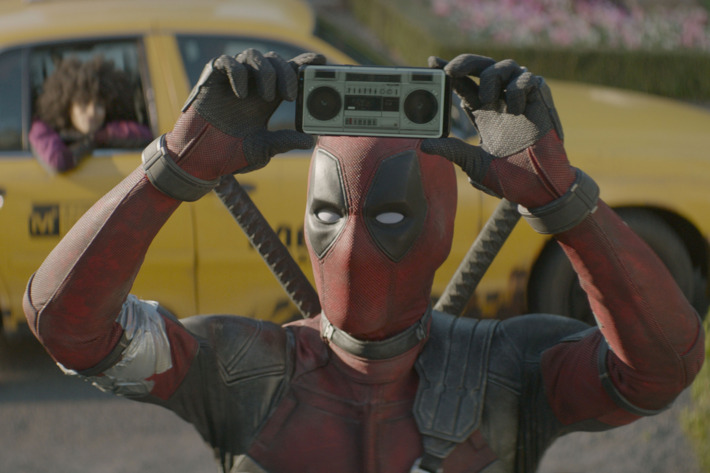
If you’re one of a growing number of frequent moviegoers tiring of the superhero genre, “Deadpool 2” is the epitome of everything you’ve come to hate.
Everything feels bloated and rehashed; the villains are under-written, poorly acted and inconsequential to the story as a whole. It’s the same movie all over again.
But if you’re among an equally large number of fervent fans desperate to see their childhood comic books come to life on the big screen, “Deadpool 2” is right in your wheelhouse.
The foul-mouthed, shoot-first-ask-questions-later vigilante Deadpool returns for more thrills, double entendres and bloodshed with reckless abandon.
Still out to prove that he’s not a superhero, Deadpool indiscriminately slaughters bad guys until he’s separated from his love, Vanessa, and in the crosshairs of a time traveling cyborg just this side of “The Terminator” franchise.
It’s getting to the point now it’s increasingly difficult to separate Ryan Reynolds the performer from the acting choices he makes as Deadpool.
His Wade Wilson is so inextricably linked with the man playing the part that Deadpool has almost become part of Reynolds’ psyche.
After Reynolds willed this version of Deadpool into existence, his deepening dive into the world of the character has transcended even his roles as performer, writer and producer, pushing Reynolds into a one-man media wrecking ball of shameless self-promotion.
In three short years, Reynolds has ingrained himself into the character at a level rivaling Robert Downey Jr’s Iron Man with just as much sass and a million times the expletives.
If his intense bravado and over-exploitation of pop culture endear you to both Reynolds and the character of Deadpool, you’ll be on the edge of your seat or rolling in the aisles for the better part of two hours.
Those who struggle to handle the heavily R-rated caricature will easily check out of the film within five minutes and long for their money back.
Josh Brolin makes his second superhero appearance in as many months, this time as the half-man, half-machine Cable after a rousing turn as the villainous Thanos in “Avengers: Infinity War.”
It’s easier to assess Brolin’s work here as he’s not covered by layers of CGI and yet the parallels between the two stoic, monotone performances are readily apparent.
While in “Avengers” the emotional weight Brolin carries within his performance works as both a catalyst to the story and dramatic depth, an equally weary Brolin turn didn’t work quite as well in “Deadpool 2” because the underlying drama of the film doesn’t feel earned.
Poor screenwriting that values frequent, obscure pop culture-based punchlines over cohesive plot structure is surely to blame.
With five new major characters and an equal number of newcomers, it’s hard for their to feel like a standout amongst a bloated cast for such a simple storyline.
Returners Morena Baccarin as Vanessa and T.J. Miller as best friend Weasel are fine if not largely unmemorable, whereas “Atlanta” star Zazie Beetz packs a lot of punch as the perpetually lucky Domino and Julian Denneson of “Hunt for the Wilderpeople” fame offers a terrific blend of humor and emotional depth as a troubled young mutant.
Director David Leitch makes his mark with well shot, yet conventional action sequences and stays largely out of Reynolds’ way for the film’s indulgent bouts of comedy.
If Leitch intended to make the sequel feel exactly like the original film with a larger budget, his vision works. It’s much more questionable whether or not doing the same thing on a bigger scale works as well for a comedy masquerading as a superhero film.
“Deadpool 2” has a high degree of difficulty for audiences not well versed in comic book and pop culture lore. Jokes about a famed Marvel artist’s inability to draw feet or who the superhero Shatterstar is will likely go over newcomers’ heads.
But searching out “blink and you’ll miss it” cameos from A-listers Brad Pitt and Matt Damon is still a fun exercise.
The jokes are crude and the spandex’s tight, but moviegoers who enjoy a good-natured amount of tasteless fun will get a kick out of Reynolds’ endless antics as “Deadpool 2” barrels its way towards an inevitable sequel.

Scroll too quickly through Netflix and you’ll surely miss “Kodachrome,” a feature that at first glance sounds like a benign documentary miniseries about dated photography techniques.
But take the time to actually sit down and watch director Mark Raso’s sophomore feature film and you may be struck by how poignant and bittersweet it truly is.
The story is far from unique.
An estranged father and son are forced together by circumstance and impending death, traveling across the country in search of the last store still developing Kodachrome film.
How Raso and his cast tell this all-too-familiar tale is a different story altogether.
Four-time Academy Award nominee Ed Harris delivers an emotionally-charged performance as Benjamin Ryder, a world-class photojournalist with little time left.
While lesser actors would chew through the scenery by playing Ben as an unredeemable aging narcissist, Harris provides needed depth to the role, infusing the character it’s the sort of clarity only death can provide.
There isn’t any one singular aspect to Harris’ performance that defines this shift. Instead slowly over time, Harris reveals to the audience a changed man and it turn that may come to
define the later stages of his illustrious career.
Paired against Harris, the hit-and-miss “Saturday Night Live” funnyman Jason Sudeikis shows unexpected dramatic range as Ben’s son Matt. Though audiences follow Matt through the film as the primary protagonist, Sudeikis calmly takes a backseat often in major moments, allowing other actors to shine.
His natural disarming charm and ease at playing the anti-hero allow Sudeikis to become wonderfully dislikeable and yet somehow redeemable at the same time. It’s a performance that shouldn’t work as well as it does.
Elizabeth Olsen continues a string of rock solid secondary lead work with a deliberate, headstrong turn as Ben’s nurse and personal assistant Zooey. Olsen does wonders with a woefully under written part whose back story feels shoehorned in at the last minute.
The character actress more than holds her own in scenes opposite Harris and regularly outshines Sudeikis, but not at the expense of either performance.
“Kodachrome” rounds out its main cast with terrific supporting efforts from Dennis Haysbert as Ben’s long-time manager and Bruce Greenwood as Ben’s younger brother and stand-in father figure for Matt.
On a surface level, no potential audience under the age of 30 is likely to actively seek out “Kodachrome,” regardless of how easy it is to view.
This makes Raso’s film an especially curious choice for a Netflix original film, where 100 percent of moviegoers will watch the movie on a cellular device or in the privacy of their own home.
It also significantly undercuts Raso’s deliberate decision to shoot “Kodachrome” entirely in 35mm Kodak film. Just as Ben laments in the feature, digital translation of the picture loses a lot of the film’s authenticity and texture never to be recovered.
Only the few audiences lucky enough to have caught the movie at the 2017 Toronto International Film Festival will get to experience the film as it’s meant to be seen.
Raso overcomes a flawed script littered with frequently overused cliches by leaning on the talents of his cast and focusing each frame as if it were a photograph Ben took, a snapshot in his mind.
Keeping this thought in mind for a second viewing enhances both the depth and quality of the film.
“Kodachrome” would face an upward battle come awards season even with studio backing, but it appears Netflix has little interest in giving the indie upstart any push or promotion.
Casual Netflix viewers will already have to dig through piles of pedestrian cinema and the majority of Adam Sandler’s increasingly bland filmography to find “Kodachrome.”
Audiences willing to be aggressive with their search function will be highly rewarded with an emotional, resonating dramedy that harkens back to an era of filmmaking that’s harder to find by the minute.
 Cinematic Considerations