

Football has “Rudy” and “Remember the Titans.” Baseball has “Pride of the Yankees” and “Field of Dreams.” Even hockey has “Slapshot.”
Now the sport of tennis has its first truly great film with “Borg vs. McEnroe.”
Following the events that led up to and through their infamous match at Wimbledon in 1980, “Borg vs. McEnroe” is a cerebral, dynamic drama that closely examines the inner psychology of elite athletes.
Helmed by Danish director Janus Metz, the film finds Swedish tennis superstar Björn Borg on the cusp of his fifth consecutive Wimbledon title only to clash with a brash twenty-one-year-old New York prodigy in John McEnroe.
Metz and screenwriter Ronnie Sandahl go to great lengths highlighting the stark contrast between the two players. Borg defends from the back line while McEnroe aggressively bullies his way to the net. Borg plays with a robotic like precision whereas McEnroe’s frenzied passion rifles through every shot.
There’s a natural symmetry to the characters that extends through the performances into the script and especially in the dynamic cinematography from Niels Thastum.
As Borg, Swedish actor Sverrir Gudnason embodies the cerebral while not so subtly hinting at an inner turmoil holding the star player back. It’s easy to see the years of training Borg endured from a young boy weathered into Gudnason’s stoic face and the Swede does a remarkable job of balancing Borg’s fragile emotional state.
In a perfect collision of actor and role, the consistently controversial Shia LaBeouf emotionally pummels his way through a scene chewing performance as McEnroe. For a turn that’s filled with bravado and unrelenting machismo, the part also represents LeBeouf’s most nuanced, entrancing performance to date.
As much as LeBeouf as McEnroe could easily become a train wreck, it somehow doesn’t. LeBeouf tries so hard to become the perfect McEnroe that it ironically feels effortless, a surprisingly astounding display of acting audiences have longed for from the beleaguered young star but never thought we’d get.
The perennially solid character actor Stellan Skarsgård doesn’t disappoint as Borg’s longtime mentor and coach Lennart Bergelin and Tuva Novotny fares well as Borg’s devoted fiancee Mariana.
Metz dives into his directorial debut in narrative features with gusto, delivering a deliberate, yet moderately paced drama that occasionally grinds its gears. While the filmmaker succeeds at letting audience is in behind the scenes with both Borg and McEnroe, the movie enters childhood flashback sequences once or twice too often in a way that might jostle casual viewers.
On a technical level, “Borg vs. McEnroe” dazzles with cinematic excellence. There’s a pronounced linear quality to both shot selection and framing that gives the entire film a very measured feel.
When it comes to the actual tennis on screen, Metz and Thastum bring added life to what could be portrayed as a particularly monotone sport. Each point played out in the film possesses a dance like quality, replicating real events down to a single foot step and backhand. Tennis is rarely as tense as the iconic match the film seeks to recreate, and “Borg vs. McEnroe” convincingly maximizes the action and intrigue.
Unfortunately, the decision to release the film early in the year usually in theaters and on-demand will prove to make this terrific genre film both a box office and awards season casualty.
LeBeouf’s work as McEnroe is significantly better then Steve Carell’s similar turn in a Golden Globe nominated performance as Bobby Riggs in last year’s “Battle of the Sexes.” For as much as he may deserve acclaim, the lack of eyeballs on foreign independent film and LeBeouf’s personal struggles will prove to make “Borg vs. McEnroe” invisible this fall.
One of the better sports films in years, “Borg vs. McEnroe” is certainly worthy of more eyeballs than it will ultimately get it and is well worth seeking out in theaters or streaming on demand at home.

Ten years and 18 films have lead to this moment.
Nearly a decade to the day after the release of a Robert Downey Jr. led superhero movie, 2008’s “Iron Man,” Marvel Studios breaks the bank once again with the release of “Avengers: Infinity War,” a grandiose, visually indulgent action spectacle that will earn more money with its release than some smaller studios will in an entire calendar year.
A film of this size and scale simply shouldn’t work. There’s far too many moving parts, conflicting storylines and bits of comic book lore how to make “Infinity War” seem even remotely plausible, yet alone watchable, on the big screen.
But because of Marvel Studios’ attention to detail in slow building a franchise, the latest “Avengers” film doesn’t just work, it exceeds expectations with flying colors.
Bringing together superheroes from eight different solo films, “Avengers: Infinity War” culminates a decade long journey to the arrival of arch-villain Thanos, an alien seeking six Infinity Stones that will provide him ultimate power to change and or end the universe all together.
The superheroes themselves will likely be familiar — Iron Man, Captain America, Black Panther and the Guardians of the Galaxy among others all return — but the combinations the major plot lines of “Infinity War” provide make the film a fresh and compelling two-and-a-half hour joy ride.
The “Avengers” movies aren’t typically breeding grounds for strong acting, though “Infinity War” finds its strength in making the most of the talented ensemble cast in small doses spread throughout the film, highlighting each actor while simultaneously hiding their weaknesses.
For the most part, this leads to a large series of one-dimensional performances that are greater than the sum of their parts. Several notable exceptions rise above this level.
Downey reprises the role as billionaire playboy Tony Stark, the original Avenger himself Iron Man, for the eighth time and brings emotional gravitas to the film. The weight of each decision Iron Man has made over the course of these eight films feels pressed upon Downey’s shoulders and the emotionally taxed actor carries this burden beautifully through every scene of the film.
A terrific turn from Josh Brolin evens the playing field as Brolin confidently, almost seductively, transforms into Thanos. That he is able to make a stoic, purple CGI creation and successfully evoke even the smallest sense of empathy from the audience is Brolin’s biggest accomplishment.
There’s a great deal of information audiences need to know from watching other films in the series. Yet, somehow, directors Anthony and Joe Russo manage to make “Infinity War” accessible and understandable for audiences who might never have seen any of the 18 prior films in the Marvel Cinematic Universe.
While the directors must be given credit for the movie’s dynamic and measured pace, screenwriters Christopher Markus and Stephen McFeely wonderfully maintain a balance between all of the superheroes while working with directors of other films in the franchise to ensure continuity in tone and character development.
This allows audiences to see the lighter, more comedic side of Chris Hemsworth’s Thor as developed in last year’s “Thor: Ragnarok” and the more developed Black Panther from February’s film of the same name as opposed to the stiff, confining performances from early films in the franchise.
It’s important to know as little about the events of “Infinity War” as possible before an initial screening as the film truly deserves to be seen with fresh eyes. In the same token, not spoiling the film for others is more critical for this Marvel movie than any other in the franchise.
“Infinity War” certainly cements its status one of the best 3-5 films in the Marvel Cinematic Universe and is considerably better then dark horse Oscar Best Picture nominee “Black Panther.” To say that “Infinity War” completely revolutionizes the franchise is a massive understatement.
The defining chapter in the next step of the world’s biggest film series, “Avengers: Infinity War” has to be seen on the big screen, most likely multiple times, in order to be truly appreciated.
For good or bad, this superhero film could easily prove to be this generation’s defining adventure, a movie younger audiences will talk about for years in the same reverence as we do now with “Raiders of the Lost Ark” and “The Empire Strikes Back.”
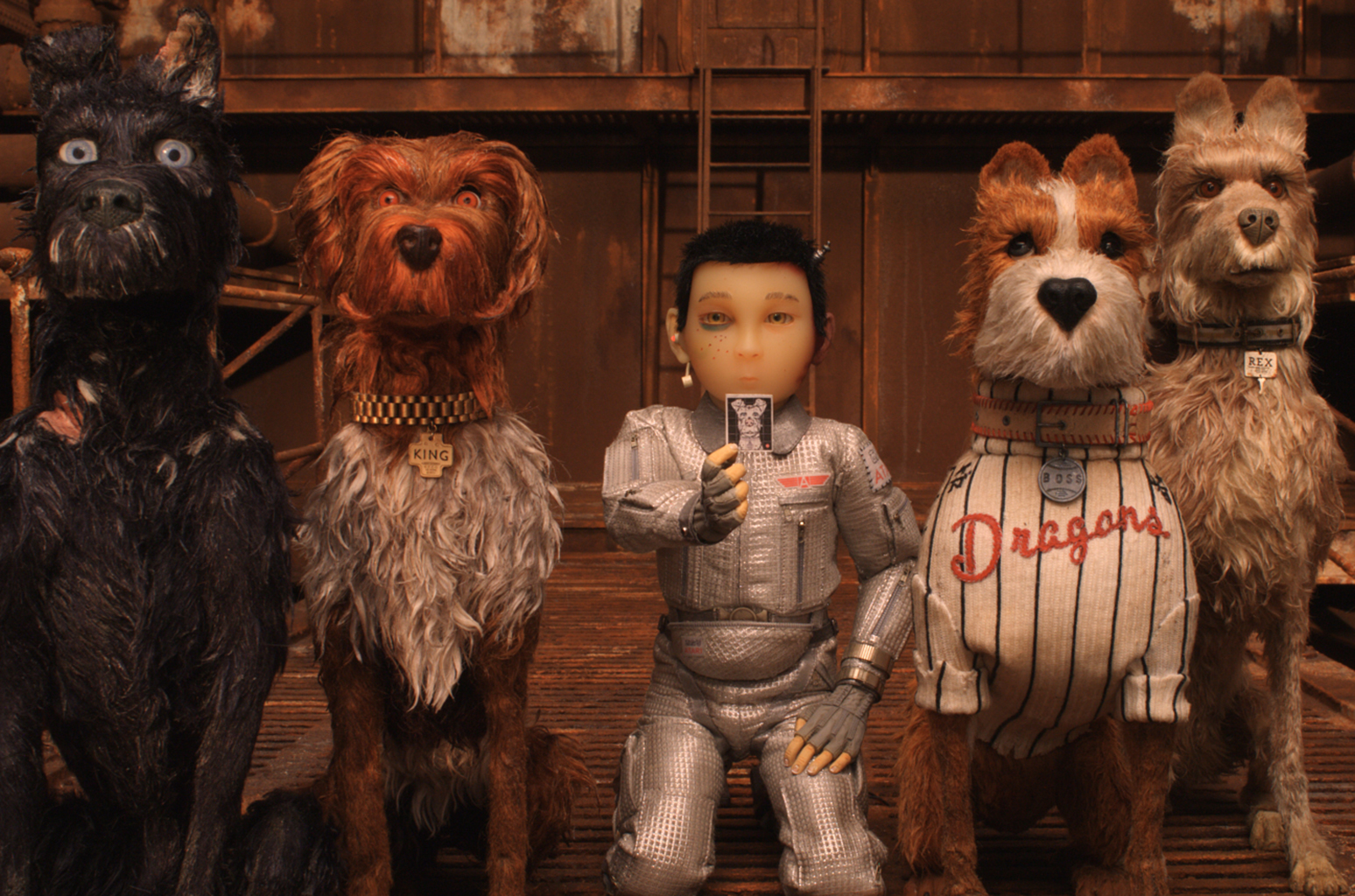
Wes Anderson stumbled across the idea for his new Japanese-inspired animated film while working on a movie in London.
While driving across town, the Texan writer/director went past the turn for the Isle of Dogs, a vintage location where a 16th century king housed his hunting animals.
In true Anderson fashion, he transformed this Victorian concept into a modern Asian allegory that has the cinematic heart of a classic children’s film and the gripping plot of heavy adult drama.
“Isle of Dogs” describes exactly what one thinks it might, a trash junkyard island where all the canines of Megasaki City have been banished by decree after a massive dog flu outbreak.
A pack of once domesticated dogs — Chief, Duke, Rex, Boss and King — stumble upon a young boy in search of his missing dog Spots while the Mayor of Megasaki City plots to get rid of the canines once and for all.
Meant as a not-so-subtle allegory for immigration issues, “Isle of Dogs” keeps the rhetoric largely in check while still making Anderson’s thoughts on the matter convincingly clear.
Anderson makes the wonderful decision to place audiences in the paws (as it were) of the titular dogs, allowing viewers to understand them in plain English while the Japanese citizens speak in their native tongue.
Seems are deliberately written in such a way that the foreign dialogue can be easily be understood, whether through context clues or deliberate translation.
Voice acting is key to the success of the film’s satirical, quip heavy screenplay with Anderson leaning heavily on frequent collaborators like Bill Murray, Edward Norton and Jeff Goldblum in the film’s snappy pace and keep audiences rolling in their seats.
First time Anderson actors Bryan Cranston, Greta Gerwig, Scarlett Johansson and Courtney B. Vance round out the talented, pitch perfect supporting cast.
Just as impressive is the technical wizardry performed by Anderson’s illustrious team of puppeteers, animators and designers, who intricately frame each individual movement, twitch and line of dialogue claymation cast of hundreds.
Taken all together, “Isle of Dogs” impresses with a visually quirky wonder. But upon closer examination, the intricate detail to the blink of an eye or a wag of the tail sets “Isle of Dogs” apart from middling animated fodder.
There’s so much to see within every moment of “Isle of Dogs” that a second viewing may be required to simply revel in the film’s simple beauty.
Details in texture and composition will go easily overlooked for first-time audiences as they focus more on the story at hand then what actually appears on screen.
Without question, “Isle of Dogs” sets the bar for animated features in 2018 and is almost assuredly a lock in that Oscar category early next year. This would match the universal acclaim for Anderson’s 2009 film “The Fantastic Mr. Fox,” which lost a close Academy Awards race to “Up.”
Additionally, it would be unsurprising if a Best Original Score nomination loomed for the melodically hypnotizing work of Alexandre Desplat, fresh off of a win this year for “The Shape of Water.”
“Isle of Dogs” probably isn’t best for younger audiences as the film’s highbrow humor and allegorical storyline will likely prove too heavy for children under 12.
However, fans of Anderson’s other work or smart, sophisticated comedy will find “Isle of Dogs” a refreshingly off-kilter, change of pace feature worth seeking out at the theaters.

Two life changing events happened on a seemingly innocuous weekend in July 1969.
Everyone knows the latter, Neil Armstrong’s groundbreaking the moon as part of the Apollo 11 mission soon to be depicted in Damien Chazelle’s biopic “First Man.”
What happened late one night 18 hours earlier is less clear as a car crash into a pond along the Eastern seaboard killed the presidential hopes of a famous Senator and took the life of one of his aides.
Director John Curran’s “Chappaquiddick” examines this fateful accident and Ted Kennedy’s attempt to salvage his political future over the course of a weekend while the world looked to the skies.
Australian actor Jason Clarke is convincingly all-American as the brazenly confident, yet somber Kennedy, still dealing with the recent death of his brother Bobby. His wandering melancholy early in the film flips on its head after the accident as Clarke decisively takes Kennedy into crisis management mode.
There’s an aggressive decisiveness that’s chillingly calm and unflinching in Clarke’s performance, leaving audiences to question the motivations of every decision and if Kennedy feels genuine remorse.
While “Chappaquiddick” tries to remain balanced and not imply answers to unanswerable questions, the film certainly doesn’t do Kennedy any favors.
His father Joseph also comes out worse for the wear in a striking, nuanced performance from Oscar nominee Bruce Dern. Confined to a wheelchair for the waining moments of his life, Dern’s elder Kennedy is a cold, calculated retired politician who wields an iron fist with a simple glare or disapproving nod.
The physicality (or lack thereof) Dern displays in demonstrating Kennedy’s aphasia following a stroke is stirring and convincing, matching Dern’s best work as an aging man in 2013’s “Nebraska.”
“Chappaquiddick” is aided by a talented, yet unassuming supporting cast including Kate Mara as the late Kennedy staffer Mary Jo Kopeckne, Jim Gaffigan as right hand “yes man” Markham and a superbly nuanced turn from funnyman Ed Helms as Kennedy’s cousin Joseph Gargan, a family fixer who surprisingly becomes the moral compass of the film.
There’s a lot to be surmised about what happened on that night in 1969.
Though screenwriters Taylor Allen and Andrew Logan take some liberties with conversations between Kennedy and Kopeckne, nothing about “Chappaquiddick” feels forced or disjointed.
Even the film’s early climactic moment with Kopeckne in the car has a plausible practicality that feels dramatically genuine, even if that wasn’t how events unfolded.
Curran walks a fine line to ensure his film leaves scenes open to the audience’s interpretation and viewers will have widely different experiences watching “Chappaquiddick” based on their own personal ideologies.
Leaving the movie intentionally ambiguous is perhaps the film’s biggest single strength.
Unfortunately, “Chappaquiddick” arrives far too early in the calendar year to merit any serious conversation come award season, although Clarke and especially Dern would prove worthy of nominations.
While other recent political biopics have taken a firm stance on issues, “Chappaquiddick” feels refreshingly impartial in allowing viewers to come to their own conclusions.
Now in limited release, “Chappaquiddick” certainly deserves audiences that would make the extra effort to seek out the film.
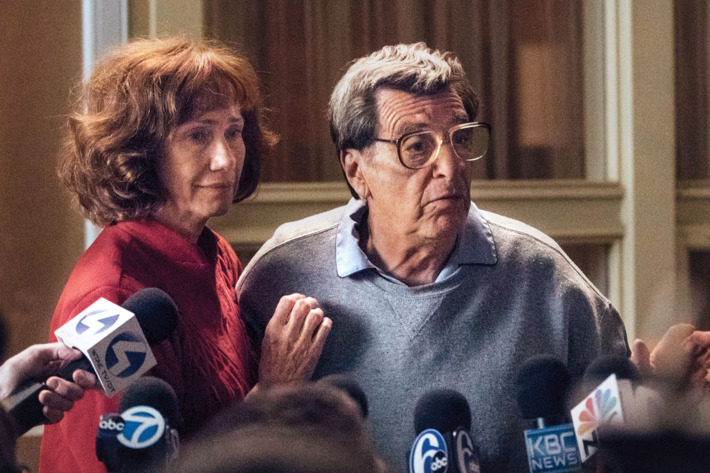
On paper, it seems like a surefire winner to have an acting legend like Al Pacino take on the role of college football’s winningest coach.
Pacino exudes gravitas for days and it doesn’t hurt at all that the Academy Award-winning actor bears a striking resemblance to the 84-year-old sports icon.
But the execution leaves a little bit to be desired as Oscar-winning director Barry Levinson’s biopic of Penn State football coach Joe Paterno for HBO Films simply misses that extra gear it needed to truly encompass such a complex story.
Told over the course of several weeks in late 2011, “Paterno” follows “JoePa” and Penn State University officials immediately following sexual abuse of a child charges being filed against former assistant coach Jerry Sandusky.
For as much as the film is about Sandusky’s actions and who Penn State knew about them, there’s little of Sandusky on screen although his presence looms large throughout especially within Paterno’s psyche.
It’s nearly impossible to get a sense of Sandusky as a man or understand how events unfolded. But for Levinson, that really isn’t the point of “Paterno.”
The film was made for, and viewers turned into see, Pacino’s interpretation of a beloved sports hero’s fall from grace. The choices the veteran actor makes with the roll are surprisingly nuanced.
Gone are the traditional speeches of bravado that usually accompany a weighty Pacino performance. The boisterous personalities he’s known for have taken a backseat to a somber, measured turn as Paterno.
Perhaps the best, or at least the most human, aspect of his performance is how heavy the weight of the scandal increasingly takes its toll on Paterno.
It’s almost as if Pacino what’s his shoulders and sags his physicality gradually over the course of the film to help reflect the inner turmoil setting in. There’s a lot that isn’t said in Pacino’s performance, but so much hiding in plain sight as well.
Riley Keough anchors the film’s other major plot line as a young investigative journalist trying to stay ahead of other news outlets while sensitively and judiciously telling the story of Sandusky’s victims. She offers a stabilizing, even-keeled effort that paces major sections of “Paterno” without being too obtrusive.
A solid supporting cast lifts Levinson’s feature when neither Pacino or Keough are the main focus of the storyline. However, the relative anonymity and lack of star power here makes it difficult for audiences to keep track of the film’s many moving parts.
Much of “Paterno” jumps around at a haphazard pace thanks to a muddled, uneven screenplay from writers Debora Cahn and John C. Richards.
Though events unfold in linear fashion, audiences have to scramble to orient themselves scene to scene as Levinson hops from Paterno himself to Penn State officials scheming in the background to an investigative journalist to the gridiron at a frantic pace.
“Paterno” attempts to say a lot of things about a lot of different subject matters – the importance of the press, moral versus legal culpability, what defines a man’s legacy. None of them are achieved particularly well.
The Sandusky scandal at Penn State, especially as it relates to the tarnishing of Paterno, is handled significantly better in the highly engaging, well constructed documentary “Happy Valley,” now available on streaming platforms.
It’s good that outlets like HBO Films are taking chances on long-form narrative features like “Paterno” and the upcoming “Fahrenheit 451” starring Michael B. Jordan and Michael Shannon instead of bloating their budgets for an Oscar season race or turning the whole project into a 10-episode mini-series.
As quality artists increasingly leave film for television ventures, maintaining a solid mid-tier of feature-length films is critical but you keep Hollywood from homogenizing movies to action blockbuster spectacles.
With a timely plot and solid performance by Pacino, “Paterno” definitely deserves consideration for viewers’ next movie night at home.

Who’s ready for an Easter egg hunt?
Director Steven Spielberg is back with his most ambitious film in close to a decade, giving the pop culture obsessed ample opportunity to ooh and aah an obvious and obscure references from movies, music and video games.
Based on Ernest Cline’s novel of the same name, “Ready Player One” is a high-octane action adventure film that crams so much information and detail into a little over two hours that a second screening may be necessary to catch even 75 percent of the film’s hidden content.
Spielberg’s film is both a celebration and critique of society’s increasing reliance on technology to transform and/or take over our lives. The dazzling visual flurry on screen is both amazing and emotionally draining, often to the point of excess.
“Ready Player One” follows Wade Watts (Tye Sheridan), a young man born into a near post-apocalyptic future who like everyone else lives out his days in a virtual reality world known as “The Oasis.”
Following the death of the technology’s creator, Wade and a group of friends he’s never met in person race against an evil corporation to find a hidden Easter egg that gives the possessor ultimate control of the virtual world.
The film’s acting performances are solid across the board. Sheridan and Olivia Cooke have genuine chemistry despite a thinly painted romance and Wade’s best friend Aech is a spectacularly developed character worthy of their own story.
While Ben Mendlesohn’s villainous Sorrento is largely one note, fellow veteran character actor and Oscar winner Mark Rylance melts into the role of “The Oasis” founder Halliday.
Played both as a young man and an older recluse, Rylance’s Halliday has a nuanced eccentricity that helps propel the film’s main mystery while also serving as the emotional center point.
His ability to balance emotional distance with an unspeakable sadness makes Rylance one of the main reasons “Ready Player One” elevates itself beyond genre fodder.
After spending close to a decade focusing on procedural historical dramas, Spielberg goes back to what he does best: dazzling audiences with an inventive, innovative blockbuster.
Perhaps the best thing about Spielberg’s direction is how nostalgic it feels, harkening back to the days where a ridiculous adventure was just simply fun. Despite how technically difficult “Ready Player One” must have been to make, the whole thing feels so easy and effortless, signs of a true cinematic master.
The film occasionally follows life on the outside, though the vast majority of “Ready Player One” is spent in “The Oasis,” designed by highly nuanced computer graphics featuring motion-capture performances from the lead actors.
The intricacy in detail from the obscure characters floating in the background of scenes to the technical wizardry behind individual skin patterns and strands of hair flowing in the wind is downright incredible.
Computer-generated features in this genre rarely receive recognition as contenders for best animated film awards. “Ready Player One” can easily be the exception to this rule and would definitely be worthy for the technical achievements of the film alone.
Devoted pop culture enthusiasts will likely spend hours upon hours watching “Ready Player One” frame by frame hoping to catch a glimpse and then catalog every secret clue and hidden gem Spielberg and his team crammed in to the movie’s nooks and crannies.
Casual viewers should still stay entertained even if they don’t get some of the film’s secondary references. “Ready Player One” has a highly engaging, thrill ride style of a storyline that will keep most audiences on the edge of their seat.
It’s still early in the year, but there’s no question that “Ready Player One” could sneak its way on to any number of Best of 2018 lists, which makes it a must see on the biggest screen possible.
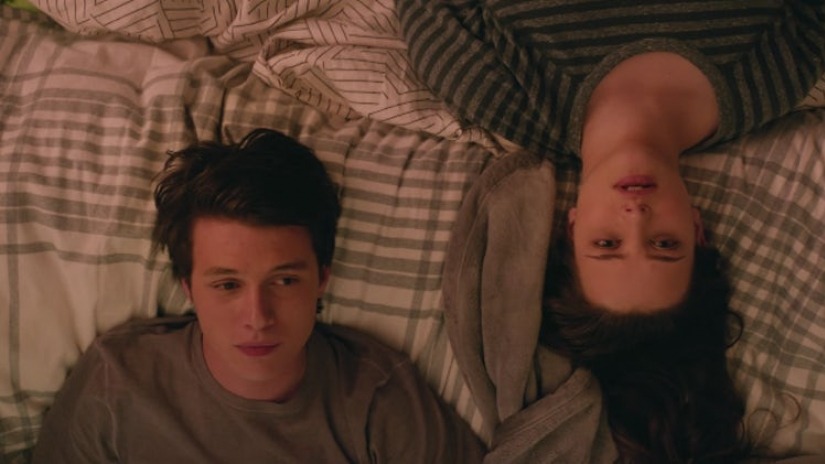
Teenage boys struggling to find their voice while dipping their toes into the world of romance isn’t exactly groundbreaking cinema.
What separates director Greg Berlanti’s new film “Love, Simon” from the pack is its commitment to opening a dialogue about love, identity and self-discovery that will last long after audiences leave the theater.
There will come a day when films like “Love, Simon” won’t have to be prefaced by saying its protagonist is homosexual, but part of the appeal of this film in this is the way that it preaches respect and acceptance of sexual identity.
Simon (Nick Robinson) is an average high school student starting his senior year with a good family and good friends, none of whom know his secret.
When another gay teen in the closet anonymously reveals himself online, Simon begins an email conversation that evolves into infatuation.
Given such a complex character, it’s remarkable that Robinson is able to play both the foil for the comedic hijinks of other characters and carry the film’s largest emotional burden. Robinson balances his dual role with ease, providing a simple, yet measured performance that evokes an 80s-era John Cusack.
Josh Duhamel offers a surprisingly well-rounded performance as Simon’s dad, a stereotypical former high school quarterback who pals around with his son in overly masculine fashion and doesn’t know how to properly relate to Simon.
It’s hard to tell whether Duhamel is intentionally playing up the awkwardness of their relationship or his inability to relate on screen is actually working in his favor. Regardless, it comes across well in the final product.
Conversely, Jennifer Garner gives a very even-keeled turn as Simon’s mother aside from one profoundly wonderful scene late in the film as she tries to reconnect with her emotionally distant son.
This moment is a powerful gut-punch in a relatively light-hearted film that helps hammer home the movie’s central message with great effect, largely due to Garner’s pitch-perfect delivery in the moment.
The film’s best secondary character, Principal Worth, could be blandly one-dimensional, but is hysterically brought to life by “Arrested Development” star Tony Hale.
Even in the quickest of scenes, Hale is able to interject new life into the film with a quippy one-liner that might easily fall flat in the hands of a less talented comedic performer.
Berlanti does an effective job directing the well-written script from Elizabeth Berger and Isaac Aptaker by largely staying out of the way and allowing moments to develop on screen naturally.
It should be noted, albeit disappointingly, that “Love, Simon” would be unquestionably the number one movie at the box office if it were a traditional, heterosexual romantic comedy.
The fact that it isn’t, ironically, elevates and complicates the rather common, pedestrian genre of high school coming of age stories to interesting, engaging cinema.
“Love, Simon” insist on audiences dropping their preconceived notions of what love is and who it’s meant for, reminding us all that being different isn’t a bad thing.
The message of “Love, Simon” will get lost on those who need to hear its message the most: Potential audiences who, for whatever reason, will refuse to give “Love, Simon” a chance.
“Love, Simon” is a perfect companion piece to “Call Me By Your Name,” last year’s Oscar-winning coming of age drama that spoke a similar message in a much different way.
If prestige arthouse cinema isn’t your cup of tea, maybe the youthful, upbeat humor and heart-warming drama of “Love, Simon” could be the John Hughes-esque movie audiences didn’t know they needed.
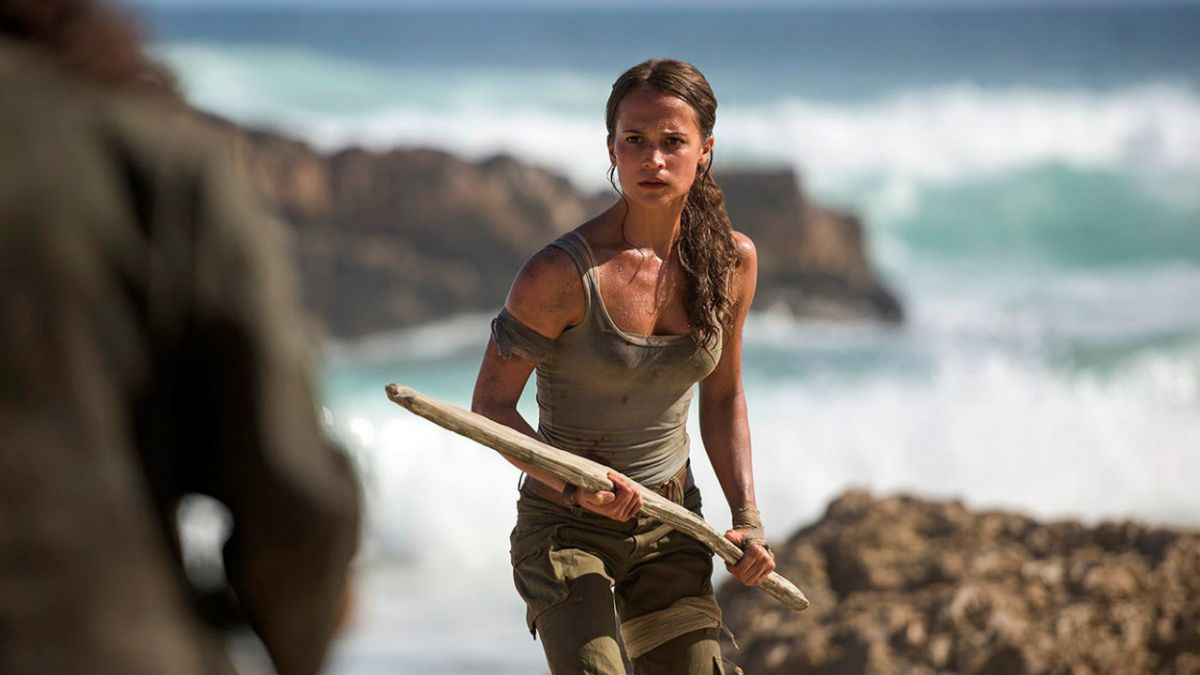
Seventeen years ago, a below-average action flick based on a video game took Hollywood by storm and turned Angelina Jolie into a movie star.
Back then, it didn’t matter how outlandish the plot or unrealistic the characters seemed. “Lara Croft: Tomb Raider” was the film pretty much everyone saw and nearly everyone (critics aside) enjoyed.
If you go back and watch the 2001 film now, you’d have to agree that it doesn’t even remotely hold a candle to 2018’s vastly superior reboot simply titled “Tomb Raider.”
Like Jolie, Alicia Vikander comes to the title role off an Academy Award win and yet the 29-year-old Swedish actress brings significantly more to the table.
This reimagining of Lara Croft’s origin tale finds the young treasure hunter on the trail of her father, missing and presumed dead while searching for the burial place of an ancient Asian queen.
Unlike Jolie’s fully-formed and overly-endowed Lara, Vikander starts from the ground up with the character and brings a fresh vibrancy to the almost formulaic concept of a free-spirited woman shirking responsibility and her family fortune.
Her performance is measured and rich in nuance, emoting Lara’s inner monologue with her eyes with a dedication the character you typically don’t find in action movies.
Vikander doesn’t shy away from the intense moments, training over seven months for the role and doing a vast majority of the grueling stunts required.
It’s Vikander’s performance alone that makes “Tomb Raider” unquestionably the greatest film adaptation of a video game and merits the budget, director and script to further explore the complexities of her character in a worthwhile sequel.
Frequent villain Walton Goggins sneers with just the right amount of menace as the movie’s requisite bad guy Mathias Vogel, a character so loosely written one might half expect him to be the primary foe in a Roger Moore-era Bond film.
Dominic West attempts to match Vikander’s gravitas in flashbacks as Lara’s father Lord Richard Croft, He falls short of the mark, though it’s unclear whether the performance or a lackluster screenplay are to blame.
Films based off of video games are almost categorically subpar, as studios bank on name recognition and hardcore gamers spend big money at the box office after dropping $60 or more for their favorite game.
At times, “Tomb Raider” falls prey to these characteristics with a bumbling, uneven script from co-writers Geneva Robertson-Dworet and Alastair Siddons proving to be the film’s biggest, most troubling stumbling block.
And yet somehow, “Tomb Raider” is largely just a whole lot of fun.
Director Roar Uthaug invigorates his film with exciting, “how did they just do that” style action set pieces placing Lara at the brink of death only for her to survive the seemingly impossible.
There’s an array of unique and entertaining sequences from close-up hand-to-hand combat encounters to death-defying feats of heroism to a stunningly engaging bicycle chase early in the film that will draw audiences in.
It’s a pleasure to watch Vikander grow in the role over the course of the film, making Lara a woman stumbling across and finding strength in her brains, willpower and conviction.
Matching this with a hard-headed devotion to finding her father at any cost may seem formulaic or trite, but given the genre, it feels wholeheartedly authentic.
Video games like “Tomb Raider” are usually littered with cinematic, visually stunning mini movies known as “cut scenes” that further the story while the player simply watches.
Uthaug’s film feels like one extended, two-hour “cut scene,” prepping players for adventures yet to come.
With a stirring, impassioned performance from Vikander and daring action sequences, audiences would be hard-pressed to find a more entertaining time at the movies until the highly-anticipated “Avengers: Infinity War” drops next month.

Disney’s latest film cost 100 million dollars to make, and yet somehow, neither Marvel nor the Star Wars universe are attached.
Rebooting the classic children’s novel by Madeline L’Engle after a poorly received 2003 television film, “A Wrinkle in Time” hits theaters as Disney seeks to capitalize off the success of “Black Panther,” another film from an up-and-coming African American director.
Ava DuVernay approaches the source material with gusto, invigorating “A Wrinkle in Time” with a diverse array of cinematic approaches, clearly influenced by everything from “Alice in Wonderland” to “Avatar.” There’s a vibrancy to the work that isn’t quite matched by the script and only occasionally by the actors performing the lines.
“A Wrinkle in Time” follows middle schooler Meg Murry and her younger brother Charles Wallace as they travel through time and space with the aid of three celestial beings in search of her missing father. The theatrical version simplifies L’Engle’s rich, complex novel to a linear, point-by-point adventure dedicated to love and family.
Relative newcomer Storm Reid is a solid, confident performer meant to be the center of attention, but it’s hard not to be captivated by breakout star Deric McCabe’s wonderful turn as younger brother Charles Wallace.
From the minute he appears on screen, McCabe exerts a knack for bulldozing his way through a scene with the irrational confidence of a headstrong, brainy five-year-old. His ability to flawlessly crack one-liners belies his youth and inexperience as he outshines multiple Oscar winners on a regular basis.
Casting the larger than life personality Oprah Winfrey as the monstrously tall Mrs. Which feels like a gimmick at first glance, but Winfrey provides the necessary gravitas bring the film together and give the needed emotional stakes genuine weight.
On the flip side, red-headed Academy Award winner Reese Witherspoon flies about the screen with an energy befitting the manic, yet carefree Mrs. Whatsit in a performance that makes the most of her limited on-screen presence.
The film also has a talented, yet significantly underutilized supporting cast led by Mindy Kaling as the quote-happy philosopher Mrs. Who, Zach Galifianakis at his most subdued as the visionary Happy Medium and Chris Pine as the wayward father.
Pine especially gives an all-out effort in limited minutes, bright-eyed and impassioned while not understanding how his devotion to his work separates him from his family.
DuVernay comes off of a pair of films with heavier subject matter, 2014’s Martin Luther King biopic “Selma” and 2016’s “13th,” a documentary about flaws in the American penal system. “A Wrinkle in Time” brings out the kid in DuVernay, who gives her latest feature a warmth and brightness she hasn’t exhibited to date.
It’s evident that DuVernay did the kind of film that she would have wanted to see as a child, attempting to make “A Wrinkle in Time” this generation’s “The Neverending Story.”
The complexities of the science-fiction within L’Engle’s source material prove considerably difficult to translate effectively to film and younger audiences may disengage for several minutes of exposition.
While it won’t match the critical or commercial success of its kindred spirit film “Black Panther,” DuVernay’s feature does mark a new milestone cinematically for both female and minority directors. As the film industry moves to highlight diverse voices, it’s good to see that quality hasn’t diminished at the expense of perceived progress.
At its core, “A Wrinkle in Time” gives audiences exactly what they’re looking for this time of year: a crowd-pleasing, family-friendly adventure that will keep kids engaged and entertained for several hours while providing enough humor and depth satisfy adults as well.

It’s true.
The reigning Academy Award winner for Best Picture and 13-time Oscar nominee features a scene of inter-species sex between a mute woman and a fish-man-god.
That’s cinema in the modern era, a changing of the guard that began last year with the surprising upset win by gay coming-of-age story “Moonlight” that continues through genre films like “The Shape of Water,” “Get Out” and most recently with “Black Panther.”
Fifteen years ago, traditional historic dramas like Steven Spielberg’s “The Post” or Joe Wright’s “Darkest Hour” with an Academy Award-winning performance from Gary Oldman as Winston Churchill would be frontrunners, winning Oscars hand over fist.
Honors ran the gambit at Sunday evening’s ceremony, a testament to just how deep and diverse the quality of movies being made is today. Nine of 2017’s best features earned a Best Picture nomination, with seven of the nine taking home Academy Awards Sunday night.
In fact, the year’s best film — Greta Gerwig’s “Lady Bird” — has zero Oscars.
Cinema is remarkably good at the top right now.
Take for example, “The Shape of Water,” an admittedly weird, highly stylized genre film about a janitor who falls in love with what is essentially “The Creature from the Black Lagoon.” Conceptually, this shouldn’t be quality cinema.
Upon closer inspection on the big screen, Oscar-winning director Guillermo del Toro’s fantastical, dark, melancholy monster movie elevates beyond genre expectations to transforms the hearts and minds of cynical moviegoers with an unexpected, deeply personal adventure that will captivate audiences willing to give it a chance.
“The Shape of Water” is presented in broad brushstrokes painted by a master filmmaker whose 25-plus career in movies have led to this moment, as if every lesson, note or idea del Toro has had for a quarter-century culminated in a two-hour spectacle that has to be seen to be believed.
Blessed with an Oscar-winning score from Alexandre Desplat, del Toro’s visionary film floats on air as viewers fall in love with Eliza (Academy Award nominee Sally Hawkins), a woman hiding in plain sight struggling to find her voice and clinging to those few who hear it.
“The Shape of Water” is a celebration of the outsiders – from the handicapped to closeted homosexuals to overlooked minorities – told in mythical fairy tales set in the American 1960s, as if Hans Christian Andersen lived during the Cold War.
It’s a mistake to passively watch “The Shape of Water,” opting to wait until del Toro’s cinematic opus is available for rental or streaming. For its technical merits alone, “The Shape of Water” to be seen on the big screen where viewers can be completely engulfed by the film’s magical sights and sounds.
“The Shape of Water” is not for everyone.
Some audiences will leave aghast at the social and/or moral implications the film espouses; others will find themselves unable to relate to the film’s moderate pacing and stylized storytelling.
That’s okay. Those viewers need to see movies like “The Shape of Water” in theaters even if they hate it for the rest of their lives.
If you can allow yourself to be transported inside del Toro’s mind as he intends, “The Shape of Water” is a rare cinematic experience that might only come along once every decade or so.
Conversations sparked from interesting, engaging cinema seen with friends, family or complete strangers are the lifeblood of a worthwhile moviegoing experience, one you’re not going to get watching a two-hour film on a laptop, 32-inch flat screen television or cell phone.
2017 was a year of inspirational, controversial, imaginative films that inspire dialogue movies 20 or 30 years simply didn’t do.
As a representative of everything visionary, diverse and artistic that made last year perhaps the best collection of movies top to bottom this decade, “The Shape of Water” stands as a pinnacle of a changing world in cinema.
Films about mothers and daughters, or young men exploring their sexual identity, or what race means in America are being made at the highest level now. It’s a trend unlikely to change anytime soon.
And yes, the “fish-sex movie” is that good. Welcome to a new age.
Continue the conversation online at cinematicconsiderations.com
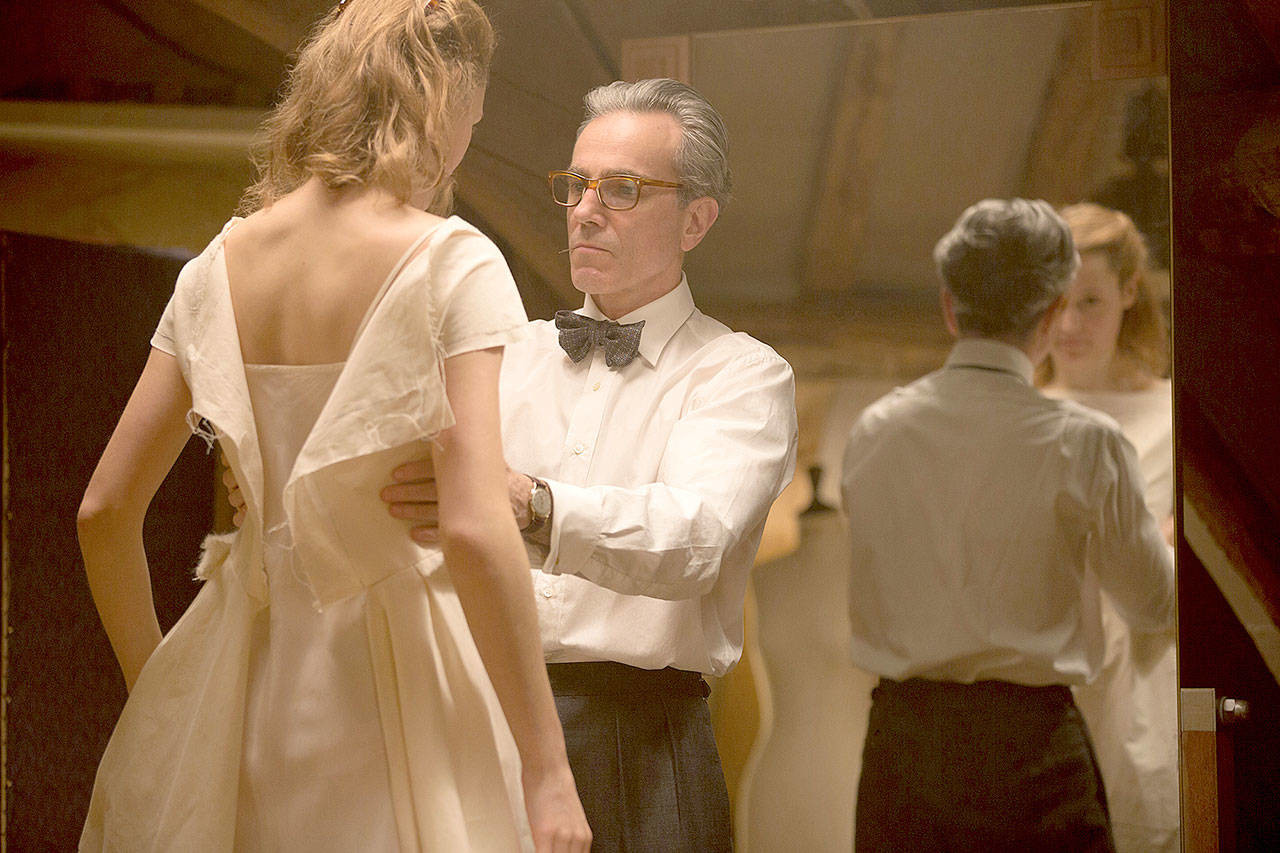
Daniel Day-Lewis deserves to go out better than this.
Almost by default, Day-Lewis has been earmarked for a sixth Oscar nomination ever since the iconic English actor announced his retirement last year.
If in fact “Phantom Thread” truly marks the last on-screen appearance of one of cinema’s most accomplished actors, what audiences will expect to see in theaters is a far cry from what actually appears in writer/director Paul Thomas Anderson’s film.
The second pairing of Anderson and Day-Lewis following the Academy Award winning 2008 film “There Will Be Blood,” “Phantom Thread” is, at its core, the cinematic definition of pretentiousness, a film that secretly giggles to itself as mainstream audiences struggle to understand or maintain interest in this incredibly highbrow film.
Set in London during the 1950s, “Phantom Thread” follows a reclusive fashion designer working exclusively in high society who falls in love with a young rural waitress and embarks on a romantic game of cat-and-mouse as their love affair changes both their lives.
Day-Lewis exudes an elitist air with a vast array of whispered inflection as Reynolds Woodcock, a man whose judgment — of clothes, of society, of the women in his life — hangs over the film like a drenched rag. “Phantom Thread” is tampered to a snail’s pace by increasingly obscene subtlety, most derived from Day-Lewis’s soft-spoken, yet heavy-handed approach to the character.
This is especially true in Reynolds’ relationship with Vicki Krieps’ Alma, a woman Reynolds verbally and emotionally dominates from their first interaction. The pseudo-sexual nature of their relationship flows naturally back and forth across the line between flirtation and harassment just this side of Harvey Weinstein.
It’s intended for audiences to overlook many of Reynolds’ misgivings simply due to Day-Lewis’s turn in the role, though this sounds difficult to do when Krieps so often outshines Day-Lewis on a scene to scene basis.
Timid and meek at the outset, Krieps’ Alma undergoes the most concerted character development in “Phantom Thread” with the Luxembourgian actress finding her footing as rapidly as Alma does under intense scrutiny.
It’s a shame that of the film’s three primary characters, Krieps is the one without a nomination, mainly due to a lack of name recognition that will likely not follow her moving forward. “Phantom Thread” is a game changing performance that will bring Krieps to the next level of her career.
If Day-Lewis is the aggressive predator and Krieps the learned prey, Oscar nominee Leslie Manville shreds through limited scene work as the film’s tiger, Reynolds’ sister and business partner who approaches interactions with clinical precision and intimidating tenacity.
There’s a great deal of technical craft and artistry to “Phantom Thread,” with the film’s glamorous costuming and visually arresting cinematography being the true highlights of a feature that, at times, devolves to the cinematic equivalent of watching paint dry.
A true outsider film in a year of outsider nominees, “Phantom Thread” significantly exceeded expectations with six Oscar nominations including best director, best actor and best supporting actress nods. Its best chance at a statuette understandably is in costume design, though wide support for front-runner “The Shape of Water” could help shut Anderson’s film out entirely.
Of the nine films nominated this year for Best Picture at the Academy Awards, “Phantom Thread” stands out as the most unlikely despite being one of the most traditional. Moviegoers hoping to catch all of 2017’s top films will find Day-Lewis’s final feature the most un-relatable, inaccessible drama and very difficult to size up on the first screening.
Patient cinephiles or ardent fans of Anderson and Day-Lewis will find “Phantom Thread” a rewarding experience to catch in theaters.
Others unable to differentiate between an inseam and a herringbone should probably wait to stream the film or skip it altogether.
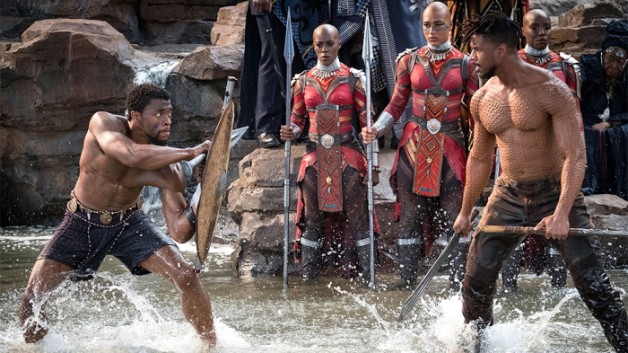
When is a movie just a movie, and when does it become something more?
These are the questions posed by reviews and think-pieces about the latest comic book film from Marvel Studios, “Black Panther,” a film that stands out for its predominately African American cast from African American director Ryan Coogler.
Viewed under the microscope of its place in the larger Marvel Cinematic Universe, “Black Panther” veers far off on its own and doesn’t really set up May’s looming blockbuster “Avengers: Infinity War.”
More likely, Coogler’s standalone film intentionally yanks moviegoers in a completely different direction as a way to reflect social and cultural diversity within Hollywood, undoubtedly welcome and long overdue.
Racial identity plays a pivotal role within “Black Panther,” a semi-serious superhero adventure film whose events directly follow those of 2016’s “Captain America: Civil War.”
Following the death of his father, T’Challa must take up the throne of King of Wakanda and the mantle of Black Panther while facing challenges from rival tribes and outsider threatening to overthrow a peaceful, secluded nation.
Chadwick Boseman never gets in the way of the film as T’Challa, king of Wakanda and the titular Black Panther. But the somber, monotone whisper Boseman breathes as T’Challa gives the character unintentional weakness that neither Boseman nor Coogler are able to overcome.
It’s a difficult performance to get behind, though audiences know that they should and the film’s deep, recognizable cast help push Black Panther to the side as secondary characters fight for screen time.
A film that features Oscar winner Lupita Nyong’o as an one-note ally/former lover of T’Challa, Angela Bassett as his proud, yet abrasive mother and Academy Award winner Forest Whitaker as uncle and spiritual guide dominates Boseman’s weakness from start to finish.
The strength of “Black Panther” ironically lies in its villainy with motion-capture pioneer Andy Serkis delivering a knockout performance in full frame as nefarious vigilante Ulysses Klawe.
Yet Coogler demonstrates his true directorial power with the perfect casting and collaboration with Michael B. Jordan, reteaming with his “Fruitvale Station” and “Creed” star for the film’s most impactful, well-developed character.
As the antagonist Eric Killmonger, Jordan develops a depth of character rarely seen in comic book film and certainly an outlier for bad guys in the Marvel Cinematic Universe. Killmonger’s inner pain and thirst for vengeance has real quantifiable stakes in a performance that seems far too exceptional for traditional comic book fare.
The best thing about “Black Panther” by a wide margin, Jordan outclasses Boseman and two Academy Award winners with ease, leaving audiences wanting more of the authentic villain than the reclusive, almost secondary hero the film gets its title from.
Coogler proves strongest as director and co-writer in the smaller, intimate moments as the large, action-packed sequences have a recycled, been there done that feel to them. When “Black Panther” leans into themes of racial identity and proper use of power, Coogler offers legitimate topics of conversation Americans need to have.
Somewhere along the way, however, this conflicts with the lighter superhero movie he’s tasked with making.
Without question, the social and political implications for the success of “Black Panther” far exceed its technical merits. There’s no exceptional artistry or bursts of creativity that separate Coogler’s film from the 17 previous installments of the Marvel Cinematic Universe.
“Black Panther” is a quintessential superhero film, and an above-average one at that, but it isn’t a cinematic revelation.
In truth, there isn’t a large amount of difference between “Black Panther” and “Wonder Woman,” 2017’s comic book movie of the moment, where engaged storytelling fell prey to predictable trope and over-reliance on computer-generated imagery in the third act.
There’s no debating that equality and inclusion in filmmaking of all kinds, blockbusters or otherwise, is a long-overdue step in the right direction for the future of cinema.
Stories need to be told from fresh perspectives regardless of race, color, creed or sexual orientation. Yet at the same time, it’s important that we don’t oversell these advances as something more than they are because of how long overdue they are. There likely won’t, and shouldn’t be, serious awards consideration for Coogler’s film months from now, and that’s okay.
“Black Panther” is an above average superhero movie that deserves the critical and financial support it’s receiving.
Putting it in an elite echelon with films like “The Dark Knight” or “Logan” feels like a sizeable stretch, but moviegoers would be hard-pressed to find a better action adventure film this spring.
 Cinematic Considerations