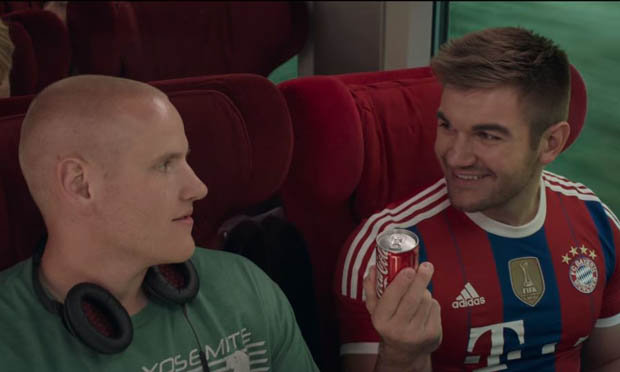

Ten minutes rarely make a feature as unforgettable as Clint Eastwood’s latest directorial effort, an ode to American servicemen who put their lives on the line for strangers they’ll never truly know.
No feat of filmmaking can ever truly express the amount of heroism shown by Spencer Stone, Alek Skarlatos and Anthony Sadler as well as three other European men on a seemingly random train ride across Europe.
Try as he might, Eastwood’s latest biopic drama “The 15:17 to Paris” would be better served as a 20-minute short film rather than a 90-minute feature as the climatic third act overwhelmingly dwarfs the film’s haphazard, lazy first hour.
Three friends, along with several unnamed European travelers, thwart a terrorist attack on a train from Amsterdam to Paris. Based on true events, “The 15:17 to Paris” builds from a slow beginning to a gripping climax as Spencer, Alec and Anthony leap into action while on a leisurely trip across Europe.
In a bold twist, Eastwood cast the actual heroes to play themselves for much of the film. This gives “15:17 to Paris” unmatchable authenticity that feels increasingly voyeuristic over the course of 90 minutes. Yet at the same time, there’s something seemingly unsettling about washing American heroes reliving imminent danger and potentially traumatic acts of terrorism.
Casting the real men to play themselves gives “15:17 to Paris” a leg up in realism as Stone, Skarlatos and Sadler overcome their acting inexperience with a committed, inspirational effort.
In attempting unparalleled authenticity, Eastwood veers widely off course at times, most likely due to a poorly-written screenplay from first-time writer Dorothy Blyskal. Her haphazard adaptation fails to do even remote justice to the heroism of three Americans, not to mention the English and French businessmen on the train who risked their lives to save countless others.
There’s a lot of weird, random things in “15:17 to Paris,” but none more so than the outlandish, almost unbelievable scene where Spencer and Anthony take a bike tour in Germany led by a guide who sings “Springtime for Hitler” from Mel Brooks’ “The Producers” in one of the decade’s wildest left turns.
“15:17 to Paris” also becomes burdened with social commentary, lamenting attention deficit disorder diagnosis with throwaway lines like “My God is bigger than your statistics” and Anthony’s dated obsession with a selfie stick.
Told in traditional biopic fashion, Blyskal’s bland screenplay languishes in an over-exerted preamble to the actual attack, referencing moments briefly to keep audiences’ attention before diverting back to an hour’s worth of vapid, amateurish dialogue.
When the attack actually occurs, Blyskal and Eastwood rush through the aftermath in an attempt to wrap things up in a neat little bow. Viewers never get a clear picture of the impact terrorism has on the subjects it victimizes or the psychological ramifications these American heroes are placed under.
It’s easy to forget how languishing, emotionally detached the prior 75 minutes are when the film’s final 15 are so outstanding. Viewers can rightfully pay full price for the third act of “The 15:17 to Paris.”
Patience and the proper mindset will be paramount for audiences until the train leaves the station.
In his later years, Eastwood has defined his directorial career with vivid, cinematic biopics honoring the legacy of true American heroes. A weak screenplay devastate any real chance Eastwood had of telling this tale on the same cinematic or emotional level as Chester Sullenberger’s in 2016’s “Sully” or Chris Kyle’s in 2014’s outstanding “American Sniper.”
Without a doubt, stories like these need to be told on the big screen as a reminder of what it means to be American. Unfortunately, Hollywood hasn’t quite hit the mark with a film unlikely to age well.
In spite of its many flaws, “The 15:17 to Paris” is a film that deserves a wide audience that can truly appreciate and become inspired by the heroism of ordinary people doing extraordinary things.
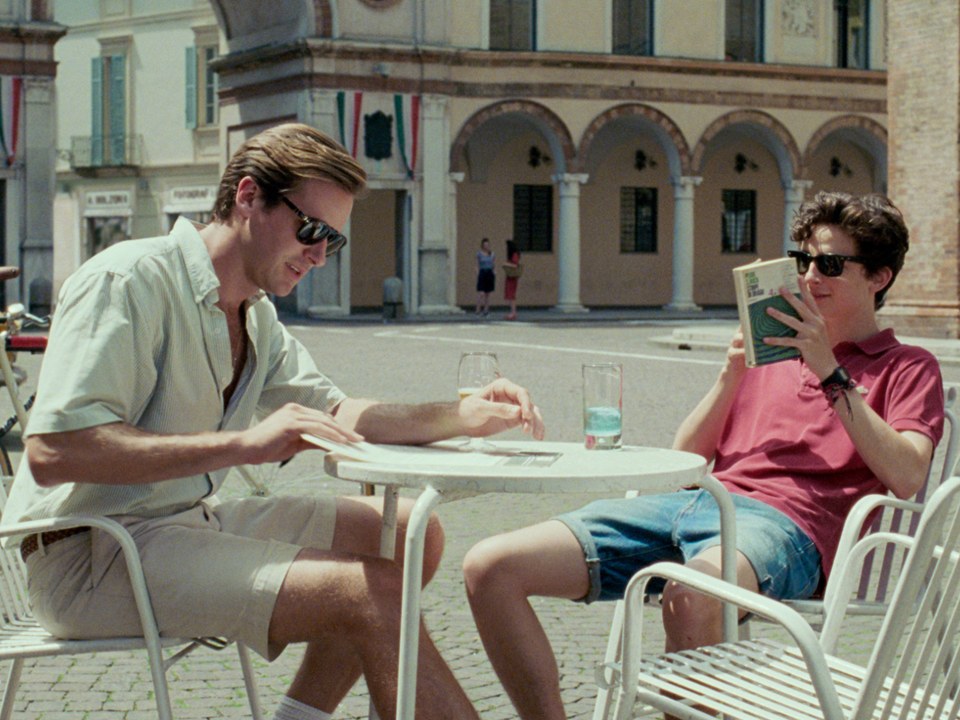
“Call Me By Your Name”s
Italian director Luca Guadagnino delivers one of the year’s most striking, eloquent films, a coming-of-age summer romance with a profound emotional impact.
It just happens to be about a 17 year old boy who falls for a somewhat older man in his father’s employ.
This shouldn’t be a relevant factor in 2018, but less progressive audiences will balk at “Call Me By Your Name,” a critical darling and a four-time Academy Award nominee.
Based on the 2007 novel of the same name by André Aciman, “Call Me By Your Name” follows Elio, a free-spirited young man living in an Italian villa with his family for the summer. He resents the presents, and is then later smitten by, Oliver, a graduate student that comes to live in the villa.
As Elio, Timothée Chalamet broods in emotional turmoil and yet also exudes a brash teenage confidence that rivals outright cockiness. His nuanced performance radiates off the screen with a depth many young actors simply don’t have.
His Elio dips his toe into the waters of exploration with a care and hesitancy that speaks to the universal truth of first love regardless of sexual orientation. It’s a performance that should cement Chalamet as a lead actor in major independent cinema for years to come.
Armie Hammer flashes the All-American charming smile as he attempts to match Chalamet scene to scene as Elio’s love interest, Oliver. At times, Hammer holds his own and displays authentic chemistry with Chalamet, but is often overwhelmed by the younger actor’s performance.
While Chalamet melts into the role of Elio, Hammer portrays Oliver as a shade of Hammer himself, which occasionally feels slightly inauthentic.
In one of the year’s most outstanding supporting performances as Elio’s father, Michael Stuhlbarg subtly commands the screen with a poignant elegance in the film’s final moments. Stuhlbarg delivers in astonishing, heartbreaking monologue that perfectly encapsulates genuine unconditional love from a father to his son.
An act that may seem so simple – having meaningful conversation on a couch – is actually incredibly difficult to pull off in an authentic manner. Stuhlbarg refuses to force the issue, allowing the moment to come to him and resulting in the film’s single best scene.
“Call Me By Your Name” boasts one of the year’s most picturesque locations, the northern Italian countryside, lovingly shot in 35mm by cinematographer Sayombhu Mukdeeprom. With a little bit of grit and a bright yellow hue, Mukdeeprom envelops the film with a timeless warmth that will captivate audiences from start to finish.
Each moment feels pulled straight out of a different era, transporting viewers in a way only true cinema masters can. Guadagnino and Mukdeeprom craft organically composed shots that give audiences a definitive sense of place, warming their hearts in the Italian countryside and priming them for an emotionally charged third act.
“Call Me By Your Name” has made a strong showing during awards season, earning Oscar nominations for Best Picture, Best Actor, Best Adapted Screenplay and Best Original Song. The film is unlikely to take the top prize with stronger sentiments for front-runners like “The Shape of Water” and “Three Billboards Outside Ebbing, Missouri” as well as the thought that “Call Me By Your Name” is too similar to LGBT coming of age drama “Moonlight,” which took home Best Picture last year.
Of its nominations, Chalamet stands the best chance of winning in what appears to be an even race with Gary Oldman’s rousing performance is Winston Churchill in “Darkest Hour.”
“Call Me By Your Name” is certainly not for all audiences – the leisurely pace will bore some and a controversial scene involving fruit will turn away others.
Moviegoers willing to give an untraditional, yet simultaneously classic romance film a chance will find “Call Me By Your Name” one of the year’s most intriguing, quality pieces of cinema.
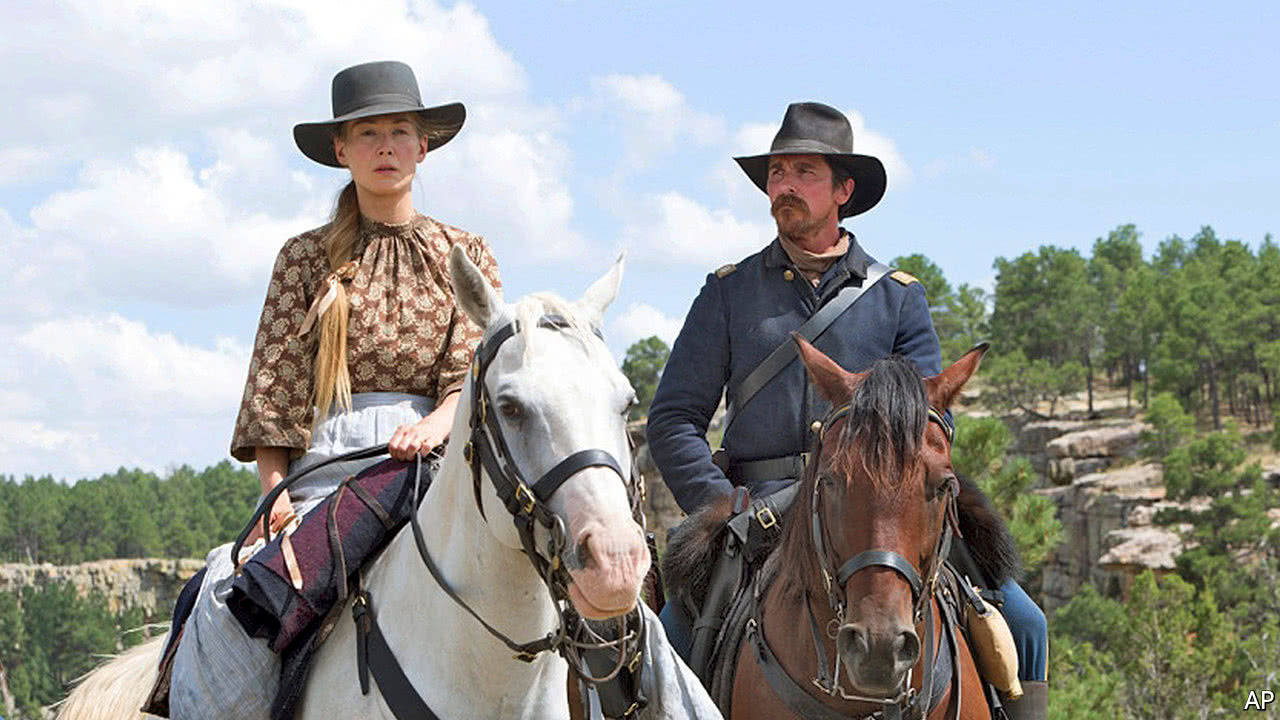
Westerns just aren’t as simple as they used to be.
No longer can a filmmaker simply declare that “this town ain’t big enough for the both of us” and set in motion a lively, usually gregarious sequence of events that typically ends with a duel at high noon.
Complexity is key to a strong Western nowadays. Director Scott Cooper’s fourth feature film makes major strides towards deep meaning, but occasionally falters while on the journey for truth.
Racial tensions between white frontiersman and Native American tribes take center stage director in “Hostiles,” a searing, yet excessive tale of a retiring Army captain forced to escort his dying rival across dangerous territory during the 1890s.
Academy Award winner Christian Bale gets plenty of opportunity to brood and chew up scenery as the legendary Captain Blocker, a legendary man who prefers to speak with actions rather than words and brandishes justice with a bullet to the head.
There’s nothing particularly exceptionable about Bale’s performance, yet the talented actor will draw audiences in with his supreme confidence slowly being withered away as he comes to respect a menacing chief who killed many of his close friends.
With her best work since her Oscar-nominated turn in 2014’s “Gone Girl,” Rosamund Pike revels in a range of emotions with a half psychotic, half catatonic performance as a grieving widow.
Her character’s changing attitudes towards Native Americans reflects the overall point Cooper goes for with “Hostiles” and it’s only in Pike’s work that he achieves his end. While it’s clear the film wants viewers to relate to the battle-hardened Blocker, Pike’s dynamic performance forces audiences to view the film from a different perspective.
Billed as the third lead, Wes Studi (and all of the Native American performers in “Hostiles”) takes the proverbial backseat to the trials and character development of white performers, which feels counterintuitive to the overall goals of the film. Studi’s stoic, almost nonverbal performance is powerful and yet feels incomplete.
“Hostiles” also underutilizes a talented supporting cast including “Hell or High Water” star Ben Foster as a derelict officer and 2018 Academy Award best actor nominee Timothée Chalamet as a private under Blocker’s command.
Inherent danger and violence play key roles within “Hostiles” and the film confronts these realities head on in a manner that’s not exactly gruesome, but certainly not for the faint of heart either. Death by gunfire is approached with a plain, matter of fact casualness fitting of the time and yet may feel exceedingly callus to audiences.
Like his three prior films, Cooper maximizes the performances of his lead actors. Yet his films languish with tedious, poorly paced conversations.
“Hostiles” especially lingers well past the ending of moments failing to often achieve the artistic effect Cooper desires in his work.
Visually, “Hostiles” radiates with a warmth and depth usually found in only the best of the western genre.
Cinematographer Masanobu Takayanagi renders each frame vividly and artistically, as if audiences are leisurely strolling through a high-end gallery.
This gives Cooper’s film a perfect setting through which to examine racial strife, life and the meaning of death. However, “Hostiles” rarely rises to the level it pontificates at.
Viewers hoping to be challenged by deep, meaningful insights might be better served by Dee Rees’ Oscar nominated drama “Mudbound,” now available on Netflix.
Designed as Oscar fodder, “Hostiles” rightfully wound up just short of contention in any category, though the film’s artistic and acting merits were worthy of consideration.
As western films go, “Hostiles” strives to be classified alongside prestigious arthouse films like “Dances With Wolves,” but never really makes it into that rarefied air.
In spite of an end product that’s about 15-20 minutes too long, there’s enough quality within Cooper’s film to merit serious conversation for a trip to the theater.

So it’s Oscar nomination morning and I have some thoughts….. Let’s get into these picks and do super early winner predictions.
Best Picture: Call Me By Your Name, Darkest Hour, Dunkirk, Get Out, Lady Bird, Phantom Thread, The Post, The Shape of Water, Three Billboards Outside Ebbing Missouri
I had seven of these nine nominees yesterday when I made my final picks heading into this morning, with Darkest Hour and Phantom Thread taking spots I had slated to go to I, Tonya and The Florida Project.
At first glance, there appear to be four serious contenders — Get Out, Lady Bird, The Shape of Water and Three Billboards — with fringe candidates in Call Me By Your Name and Dunkirk. Then there are the just happy to be there films like Darkest Hour, Phantom Thread and The Post.
Strong support in the technical categories could prove to be gamechanging for Shape of Water, which could go on a Mad Max: Fury Road like run on its way to major Oscar stagecraft wins only to fall just short in the Best Picture race. The Academy’s preferential balloting system will help a film like Lady Bird, which is a consensus favorite, but it’s still too early to see which film faces the inevitable backlash that befalls one major contender each year.
Right now, this feels like a Shape of Water victory given the film’s 13 nominations. Three Billboards could easily ride momentum from the Golden Globes and SAG Awards to win as well.
Best Actor: Timothee Chalamet (Call Me By Your Name), Daniel Day-Lewis (Phantom Thread), Daniel Kaluuya (Get Out), Gary Oldman (Darkest Hour), Denzel Washington (Roman J. Israel, Esq)
This category feels incomplete with the glaring omission of Disaster Artist director/star James Franco, who may or may not have been a casualty of ongoing sexual misconduct allegations that came out after his Golden Globes win. But then again, that didn’t stop the freight train that was Casey Affleck last year for Manchester By The Sea, so who really knows?
I had Tom Hanks taking the fifth spot in this category as the standard nomination for a beloved performer in a Best Picture nominee that’s probably getting a reputation nod more than one based on merit, but apparently that spot was reserved for Washington in a film that came and went out of theaters without any fanfare or attendance for that matter.
Daniel Day-Lewis getting a nomination for his reportedly final performance seemed like a given and it’s a great accolade for Kaluuya to earn a Oscar nomination as well, but this is a two horse race between 22-year-old Chalamet and veteran character actor Oldman, who has shockingly only been nominated once for an Academy Award with 2012’s Tinker Tailor Soldier Spy and feels well overdue for a win.
Give me Golden Globe winner Oldman with a transformative performance in an old school Oscar movie, a stuffy period World War II film where it’s impossible to recognize the actor. It’s a great turn that feels like Winston Churchill is actually there.
Best Actress: Sally Hawkins (The Shape of Water), Frances McDormand (Three Billboards Outside Ebbing, Missouri), Margot Robbie (I, Tonya), Saoirse Ronan (Lady Bird), Meryl Streep (The Post)
Best Actress always felt like the easiest category to predict and things fell into place as expected.
With Golden Globe and SAG wins, McDormand has to be the early favorite here, but this is probably the most competitive category this year and possibly the most competitive slate of actresses to be nominated in the same year this decade.
21-time nominee and three-time winner Meryl Streep is the least likely to take home a golden statuette this year. Think about that. The 2017 field is deep.
You could easily make an argument for any of these nominees that would be more than reasonable. Personally, I think this comes down to Ronan’s Dustin Hoffman in The Graduate-esque turn in Greta Gerwig’s fantastic Lady Bird and Hawkins’ spellbinding and silent mastery in Oscar frontrunner The Shape of Water.
And yet somehow, McDormand winning this category feels inevitable.
Best Supporting Actor: Willem Dafoe (The Florida Project), Woody Harrelson (Three Billboards Outside Ebbing, Missouri), Richard Jenkins (The Shape of Water), Christopher Plummer (All The Money In The World)
Michael Stuhlbarg is outstanding in secondary roles for three different Best Picture nominees — Call Me By Your Name, The Post and The Shape of Water — and yet somehow gets left off this list. It just doesn’t feel right.
Sorry. Moving on.
Rockwell has been the favorite here for a while now, winning everywhere, but the addition of Harrelson from the same film might split votes and open the door for Dafoe’s well-received turn in an indie darling or more likely Plummer swooping in at the last minute to dominate a J. Paul Getty movie that attempted to wipe the meory of disgraced former star Kevin Spacey.
Who are we kidding? This is Rockwell’s award to lose, which feels increasingly unlikely by the second.
Best Supporting Actress: Mary J. Blige (Mudbound), Allison Janney (I, Tonya), Leslie Manville (Phantom Thread), Laurie Metcalf (Lady Bird), Octavia Spencer (The Shape of Water)
Manville was the only surprise here, taking the spot I had pegged for Holly Hunter of The Big Sick.
While Blige and Spencer are solid, this comes down to a two-horse race between Janney and Metcalf with Janney the early leader.
As much as this feels like a toss-up to me, Best Supporting Actress might be the only chance to reward I, Tonya and it feels like the ultimate call.
Best Director: Christopher Nolan (Dunkirk), Jordan Peele (Get Out), Greta Gerwig (Lady Bird), Paul Thomas Anderson (Phantom Thread), Guillermo del Toro (The Shape of Water)
I love Nolan as a filmmaker and he’s certainly deserving of acclaim. The same can be said of Gerwig, whose fantastic directorial debut showcases a lot of potential.
This award has del Toro’s name written all over it, plain and simple. The Shape of Water is his magnum opus, culminating more than two decades of excellence in the industry. Any other winner in this category would be shocking and would spell doom for the film’s Best Picture chances. It just doesn’t seem very likely.
Other thoughts:
– I was happy to see well earned screenplay nominations for The Big Sick in the original category and Logan in the adapted category. Neither stands a major chance of winning (Lady Bird or Three Billboards in original and Molly’s Game in adapted).
– Roger Deakins earned his 14th cinematography nomination and yet somehow has never won. His splendid work in Blade Runner 2049 wouldn’t make a win a career achievement award, though Deakins certainly deserves it.
– Despite what anyone might tell you to the contrary, Wonder Woman did not get snubbed because it didn’t receive a nomination. Try watching the final 20 minutes of that film and then tell me it earned acclaim. Even when DC gets movies right, they still find ways to screw it up.
– As I said last year, it’s a mistake for the Academy to simply stream their nominations early in the morning and not broadcast them on national television. It’s a major disservice to the nominees and hurts the potential to reach new audiences.
Offered without commentary, here’s how tomorrow’s Academy Award nominations should go (in alphabetical order):
Best Picture:
1. Call Me By Your Name
2. Dunkirk
3. Get Out
4. I, Tonya
5. Lady Bird
6. The Florida Project
7. The Post
8. The Shape of Water
9. Three Billboards Outside Ebbing, Missouri
Best Actor:
1. Daniel Day-Lewis, Phantom Thread
2. Gary Oldman, Darkest Hour
3. James Franco, The Disaster Artist
4. Timothee Chalamet, Call Me By Your Name
5. Tom Hanks, The Post
Best Actress:
1. Frances McDormand, Three Billboards Outside Ebbing, Missouri
2. Margot Robbie, I, Tonya
3. Meryl Streep, The Post
4. Sally Hawkins, The Shape of Water
5. Saoirse Ronan, Lady Bird
Best Supporting Actor:
1. Christopher Plummer, All The Money In The World
2. Michael Stuhlbarg, Call Me By Your Name
3. Sam Rockwell, Three Billboards Outside Ebbing, Missouri
4. Willem Dafoe, The Florida Project
5. Woody Harrelson, Three Billboards Outside Ebbing, Missouri
Best Supporting Actress:
1. Allison Janney, I, Tonya
2. Holly Hunter, The Big Sick
3. Laurie Metcalf, Lady Bird
4. Mary J. Blige, Mudbound
5. Octavia Spencer, The Shape of Water
Best Director:
1. Christopher Nolan, Dunkirk
2. Greta Gerwig, Lady Bird
3. Guillermo del Toro, The Shape of Water
4. Martin McDonagh, Three Billboards Outside Ebbing, Missouri
5. Steven Spielberg, The Post

There’s little doubt that 2017 will go down in history books for far different reasons than its cinema.
Films that changed the landscape of moviemaking as we know it were few and far between this year, but several – three to be exact – made game-changing impact on the possibilities big screen theatrical releases could become moving forward.
Despite emerging sexual harassment and abuse scandals surrounding Hollywood movie mogul Harvey Weinstein and a growing number of prominent actors, online streaming outlets like Netflix and Amazon haven’t made significant strides to curb quality films from hitting the big screen…. yet.
As a whole, the cinematic class of 2017 is special at the top and sharply dives towards the dumpster pile after about 25-30 movies. Big budget spectacles like “Pirates of the Caribbean” and “The Mummy” feel like even bigger cash grab opportunities from studios trying to bait audiences into the theater.
Yet, the 10 best films of 2017 – and probably a dozen or so more – offered moviegoers great value on their cinematic investment every time they traveled to the local cineplex.
This year’s recap is later than normal as I tried to catch every possible contender prior to writing, though you won’t see these lackluster, misguided movies that are the cinematic equivalent of watching paint dry on this list. All apologies to typically great filmmakers like Alexander Payne and Matt Damon (“Downsizing”), Sean Baker and Willem DaFoe (“The Florida Project”) and especially Paul Thomas Anderson and the retiring Daniel Day Lewis (“Phantom Thread”).
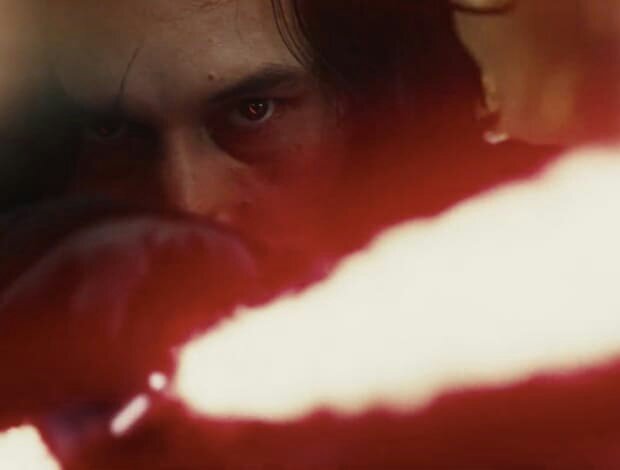
Best supporting actor – Adam Driver, “Star Wars: The Last Jedi”
Given more to work with in his second time as the heir apparent to Darth Vader, Adam Driver does the best work of the entire film as the eternally conflicted, yet increasingly evil son of Leia and Han Solo.
Director Rian Johnson serves his film well by removing Kylo Ren’s Vader-inspired mask, allowing audiences to see the external and internal scars on Driver’s face. There’s so much rage in pain within Driver’s eyes; his complex performance leaps off the screen at every turn.
While Ren projects strength and brash self-confidence, the conflict within betrays him. The nuance displayed by Driver, especially when paired against Ridley is stunning. It could very easily be the best cinematic villain since Heath Ledger’s sinister Joker in 2008’s “The Dark Knight.”
Also considered were Woody Harrelson (“Three Billboards Outside Ebbing, Missouri”), Richard Jenkins (“The Shape of Water”), Jason Mitchell (“Mudbound”), Patrick Stewart (“Logan”) and Michael Stuhlbarg (“The Shape of Water”).

Best supporting actress – Allison Janney, “I, Tonya”
Margot Robbie’s terrific turn as disgraced former figure skater Tonya Harding is heavily influenced by the outstanding work of Golden Globe winner Allison Janney, who verbally and physically brutalizes her way through the script as Harding’s no-holds-barred mother LaVona. With the tact of a wrecking ball, Janney eagerly devours each scene with an indignant self-righteousness that implies her cruel-hearted parenting style to be the best way to rear a champion.
Janney’s LaVona perfectly sums up the “she gets it from her mother” notion the film intends. Little inflections in LaVona’s speech and tone work their way into Robbie’s performance as the two dynamic actresses syncopate their work.
Also considered were Holly Hunter (“The Big Sick”), Laurie Metcalf (“Lady Bird”) and Octavia Spencer (“The Shape of Water”).

Best actor – James Franco, “The Disaster Artist”
Far from a traditional pick, James Franco’s seemingly ridiculous, made up performance as “The Room” director Tommy Wiseau, a man of unknown origin and wealth that either aspires to or thinks he is the next James Dean, is better than you could possibly expect. Shockingly, everything about Franco’s turn is 100 percent authentic from the cadence to the walk to Wiseau’s too-obscure-to-be-faked accent.
While Franco is expertly versed in maximizing the humor of Wiseau’s antics, he’s equally as impressive showing off Wiseau’s emotional softer side. Franco creates a man deeply wounded by the slightest criticism and yet exceedingly resilient to bring his masterpiece to life at any cost.
Among male actors in 2017, you’ll be hard-pressed to find a more nuanced, multifaceted character brought painstakingly to life by a performer who stayed in character even while directing a film about a man he stars in.
Also considered were Timothee Chalamet (“Call Me By Your Name”), Jake Gyllenhaal (“Stronger”), Hugh Jackman (“Logan”) and Sam Rockwell (“Three Billboards Outside Ebbing, Missouri”).
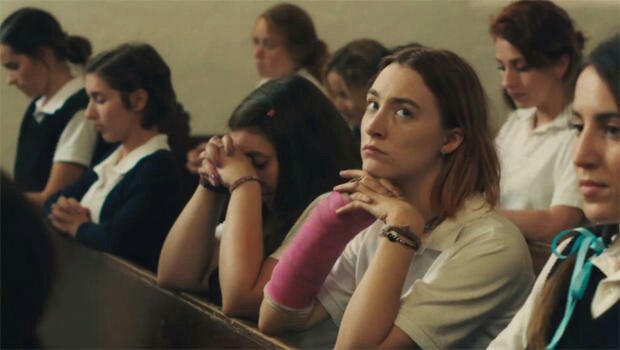
Best actress – Saoirse Ronan, “Lady Bird”
Irish-American actress Ronan, best known for her Oscar-nominated work in the 2015 film “Brooklyn,” dazzles as the charismatic yet rebellious Lady Bird. Ronan brings a mesmerizing confidence to the role, charming your way through scenes where whether or not the audience should like her remains ambiguous.
It’s a daring role for the 23-year-old actress, playing against type is the girl with a constant attitude. Yet Ronan embodies a rich livelihood within the character, compelling the audience become deeply invested in her loves and losses.
Also considered were Jessica Chastain (“Molly’s Game”), Sally Hawkins (“The Shape of Water”) and Margot Robbie (“I, Tonya”).

Best director – Guillermo del Toro, “The Shape of Water”
While the film’s actors are spectacular, “The Shape of Water” makes its mark on the cinematic landscape due to the deeply innovative, vivid world handcrafted and molded by del Toro. Each nook and cranny in the storytelling, every minute detail in the background or subtle shadow feels uniquely commanded from del Toro’s brushstroke.
“The Shape of Water” marks the pinnacle of the Mexican auteur’s career as if every lesson, note or idea del Toro has had over the past 25 years culminated in a two-hour spectacle that has to be seen to be believed.
Also considered were Greta Gerwig (“Lady Bird”), Craig Gillespie (“I, Tonya”), Martin McDonagh (“Three Billboards Outside Ebbing, Missouri”) and Christopher Nolan (“Dunkirk”).
Top 10 films of 2017
Finishing just shy of the top 10 were (in alphabetical order): “Baby Driver,” “Call Me By Your Name,” “Detroit,” “Last Flag Flying,” “Logan Lucky,” “The Meyerowitz Stories (New and Selected),” “Molly’s Game,” “The Post,” “Stronger” and “Wind River.”
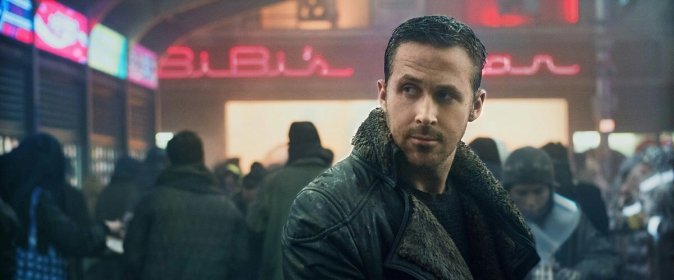
10. “Blade Runner 2049” (directed by Denis Villeneuve, starring Ryan Gosling and Harrison Ford)
“Blade Runner 2049” is a movie drenched in frills, crafted with a discerning eye and a work of art that will be long debated years from now as one of the best films in 2017 and in the sci-fi genre in general.
Coming off a Best Actor Oscar nomination last year for “La La Land,” Gosling delivers a more reserved, internal turn as a young “blade runner” known simply as K. It’s a performance that won’t blow audiences away on a first viewing; there’s too much happening on screen to notice the nuance in Gosling’s somber, emotional work.
With closer examination, viewers will appreciate the subtle changes Gosling brings out in K as the plot twists and winds towards its conclusion. K’s conflict as he struggles with his humanity and the job required of him is delicately unwoven by Gosling in a performance rarely matched in science fiction filmmaking.
Thirty-five years after starring in “Blade Runner,” Ford returns in “2049” with a decidedly smaller, but equally intriguing performance as now-retired blade runner Rick Deckard. While it may seem at first glance that Ford lacks interest in revisiting old roles, he invigorates Deckard with a well-worn weariness that hides deeper emotion.
Villeneuve takes his time with a deliberate, metered film that allows “Blade Runner 2049” plenty of room to breathe. This lingering in and out of scenes will thrill viewers mesmerized by the vibrant cinematography and will infuriate audience members longing for the film to shave off 20-30 minutes off its running time.
But “2049” would be such a dramatically different, lesser film if constrained by time that its slight excesses become wholly justifiable and necessary to the overall success of the film.
Visually, “Blade Runner 2049” is one of the most dynamic, spectacular pieces of cinematic art you’ll find in a long time. The care, craft and artistry taken to frame, light and shoot each second of “Blade Runner 2049” is so meticulously designed that the film stands as a 160-minute advertisement advocating for the continued longevity of cinema as an art form best seen on the big screen of a movie theater.
Dynamic and captivating, “Blade Runner 2049” is without question one of the best films to arrive in theaters in 2017. Its picture-perfect cinematography and terrific performances combined with a complex storyline and lengthy running time make “2049” a must see or a must skip film depending on what kind of moviegoer you are.
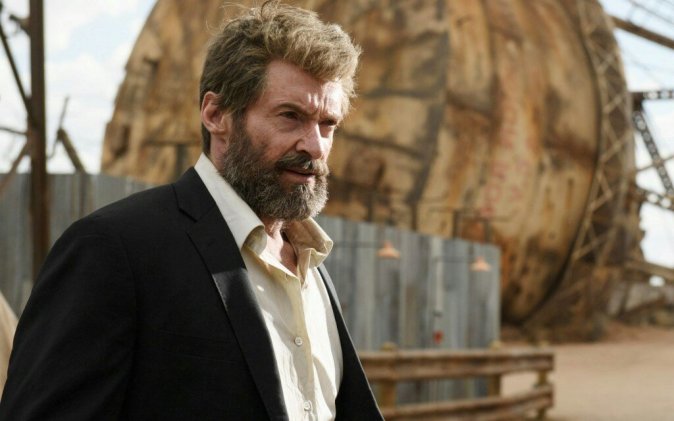
9. “Logan” (directed by James Mangold, starring Hugh Jackman and Patrick Stewart)
Hugh Jackman has been synonymous with the comic book hero Wolverine since his debut in Bryan Singer’s “X-Men” arrived on screen in 2000.
Seventeen years later, Jackman takes his final bow as the claw-wielding, self-healing mutant in James Mangold’s “Logan,” a brutally daring epic that wows audiences from start to finish with its dark tone and ruthless efficiency.
The haunting, heartfelt character-driven drama is the first real attempt at prestige cinema in the superhero genre since 2008’s “The Dark Knight,” cementing its place as one of the all-time greats among comic book movies. “Logan” is unquestionably the definitive X-Men film and a career peak for both Oscar nominee Jackman and “Star Trek” heavyweight Patrick Stewart, now in his fifth turn as Professor Charles Xavier. The film bears a striking resemblance in tone to classic westerns like “Unforgiven,” “True Grit” and “Shane.”
Performances in comic book adaptations rarely aspire to noteworthy – let alone award contending – turns, but Jackman turns in a powerful, nuanced performance as the titular Logan that will ultimately rank in the top three acting efforts in the history of not only the superhero genre, but of Jackman’s career as well.
While Jackman has always given the Wolverine character a rough, primal exterior, his inner turmoil bubbles to the surface like never before in the most intriguing ways in “Logan.” The pained, exhausted grimace his character radiates on screen from start to finish invokes the weary gunfighter motifs made famous by cinema’s most heralded westerns. His weapons may be adamantium rather than steel and stab rather than shoot, but Logan carries emotional and physical scars from decades of battles on his chest like a badge of honor turned into a constant, painful reminder of the hellish journey.
The entire film lives and dies on Jackman’s every movement, with the film’s harrowing action sequences only serving to reinforce the brutality and pain Logan has endured. In the hands of a lesser actor, the character as written on the page could have been woefully mishandled, but Jackman approaches each scene, each moment in time with such care and precision that a complete fantasy tale is enveloped with deep, rich humanity.
Thespian extraordinaire Stewart also rises to the challenge in a wonderfully compelling turn as Xavier, Logan’s mentor and the world’s most powerful telepath suffering from a neurodegenerative disease. The performance ranges the gambit from beautifully neurotic to outlandishly mad and back again to a warm kindness that belies just how perfect and secretly charismatic Stewart is in the role.
It should be noted that, unlike nearly all other films in the genre, “Logan” earns a hard “R” rating for deep, bloody violence true to the Wolverine character from the comic books, but largely missing from superhero movies in general. Whereas in most previous X-Men installments the camera cuts away as Wolverine stabs a bad guy with his claws, “Logan” forces audiences to face the brutality of the character head-on.
Mangold uses this bloody, graphic imagery not to engage the bloodlust of his audience, rather to reinforce the emotional stakes of the film by putting Logan’s visceral nature (and the toll that comes along with it) on display. Audiences are forced to feel the deaths Wolverine causes on an emotional level as the character does, further rooting Logan’s struggle in a more human context.
Visually, “Logan” is a dynamic, spectacular film that takes its lead character’s gritty persona and captures that same tone frame to frame with a sandy, worn hue. Fight sequences rely on expertly designed choreography instead of budget-bursting computer graphics and further accentuate the realistic tone Mangold sets out to achieve in the film.
Without question, “Logan” is an instant classic and one of the most intriguing, impactful performances in Jackman’s career. While some cursory background knowledge of the X-Men universe is certainly helpful in understanding “Logan,” it isn’t necessary to enjoy Mangold’s brilliant piece of cinema.
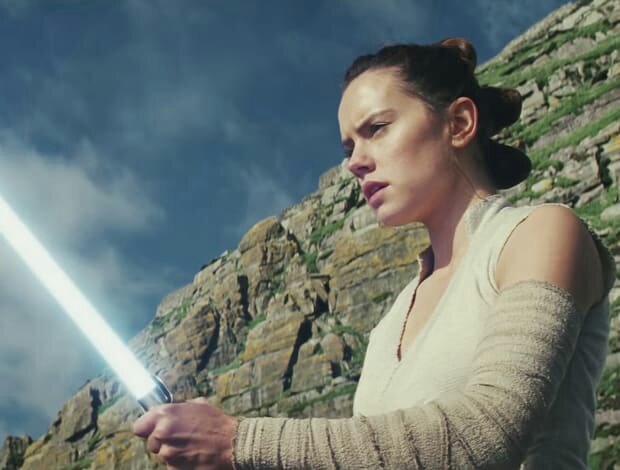
8. “Star Wars: The Last Jedi” (directed by Rian Johnson, starring Carrie Fisher, Mark Hamill and Daisy Ridley)
“The Last Jedi” isn’t the “Star Wars” installment anyone wanted. It’s the one we all deserve.
Everyone from casual moviegoers to hardcore sci-fi nerds has an opinion on one of the most talked about films this decade.
It’s easy to nitpick such a broad, bombastic film series, but “The Last Jedi” seeks to please many masters, most of whom have widely varying opinions about what a “Star Wars” film should be. As moviegoers, we are allowed – and outright expected – to make each and every installment our own, that there is a place for all of us in the “Star Wars” universe.
It’s the same notion that makes us question whether or not we like “The Last Jedi” because it isn’t what we dreamed it would be. And that’s okay.
Many of Johnson’s unique visual choices will soon go down as iconic moments in the history of the franchise, most notably a stunning battle sequence inside a First Order ship and the film’s climatic ending, which may leave viewers simultaneously in awe and in tears.
It’s highly doubtful that “The Last Jedi” will make much of an impact come awards season, though this doesn’t mean at the latest Star Wars film isn’t a contender for one of the year’s ten best. In the hands of a decorated auteur like Johnson, “The Last Jedi” is proof positive that cinematic creativity in blockbuster filmmaking can enhance a film’s quality without jeopardizing the bottom line.
Audiences will laugh, they’ll cry and they may even complain a little (or more realistically, a lot). But this isn’t to say that “Star Wars: Episode VIII” doesn’t deliver on the promise that “The Force Awakens” started.

7. “The Disaster Artist” (directed by James Franco, starring James Franco and Dave Franco)
Movies about making movies seem to come along all the time, so what makes director/star James Franco’s bombastic biopic “The Disaster Artist” special?
Amid all of the crude, avant-garde humor one might expect to find in a Franco film, “The Disaster Artist” layers a vibrant amount of drama and offers perhaps the most heart of any 2017 film.
If you haven’t seen 2013’s “The Room,” writer/director/star Tommy Wiseau’s cult classic film, don’t. “The Disaster Artist” offer an unique and mesmerizing cinematic journey that would almost be stunted if audiences know too much going in.
The film’s hook is obvious. A crazy man with way too much time and money on his hands makes probably one of the worst movies this century.
Yet his motives are so well-intentioned – a point “The Disaster Artist” lovingly hammers home – that it’s impossible not to be carried away by Wiseau’s charismatic, electrically eccentric personality and the show stopping portrayal of Wiseau by Franco.

6. “Three Billboards Outside Ebbing, Missouri” (directed by Martin McDonagh, starring Frances McDormand, Sam Rockwell and Woody Harrelson)
There is no such place as Ebbing, Missouri, regardless of how ripped straight out of current-day America it might be. In Martin McDonagh’s latest film, the Midwest rarely feels as vibrant on film.
Potential audiences will want to approach this movie with caution as “Three Billboards Outside Ebbing, Missouri” is one of the year’s most provocative, colorful films. It’s a divisive endeavor where characters are just as liable to get thrown out of a plate glass window as have deep, meaningful conversations.
Frances McDormand delivers one of the most outstanding performances of her career with “Three Billboards,” certainly the best since her Oscar-winning turn in 1996’s “Fargo.” McDormand layers Mildred with a sly wit and a devil-may-care intensity, while not so subtly hiding deep emotional scars within. Her complex performance makes Mildred a character viewers can easily empathize with despite the exceedingly bold, radical decisions Mildred makes over the course of the film.
Veteran character actor Sam Rockwell has the most to play with slightly incompetent, mostly racist Officer Dixon and does not disappoint with an equally charismatic yet disturbing performance. His Dixon is the personification of the simple-minded law enforcement officer turned on its head, riddled with insecurity in spite of glimmers of potential. Rockwell’s natural charm prevents Dixon from becoming too unlikable and the actor’s gradual turn over the course of the film is textbook character acting.
Woody Harrelson also shines as the exceedingly likeable sheriff who may or may not have done enough on Mildred’s daughter’s case. In limited screen time, Harrelson propels the film forward with a metered, even-keeled performance that resonates throughout the entire two hours.
“Three Billboards” isn’t the most interesting of McDonagh’s films. That honor goes to the hyper violent, cynical comedy “Seven Psychopaths,” also starring Rockwell. Ironically in spite of its quirks, “Three Billboards” might be McDonagh’s most accessible film thanks to its sharp writing and bevvy of layered performances.
The film is expertly paced, shifting gears from high octane action to sombering melodrama with ease and always keeping audiences on their toes guessing what will come next.
Deserving of its R rating, “Three Billboards” is a brash, crude film that refuses to hold back at any point. McDonagh carefully crafts an enchanting, sadistic piece of cinema that some viewers might find excessive or offensive and yet struggle to turn away.
Sometimes in spite of itself, “Three Billboards” is a film that demands to be seen no matter how off color or outlandish things get. British writer/director McDonagh colors the world of small Ebbing, Missouri with rich, interesting characters that compel audiences to watch just a little bit longer in spite of themselves.
“Three Billboards” is a film audiences will be talking about for months to come and can’t miss piece of cinema.

5. “I, Tonya” (directed by Craig Gillespie, starring Margot Robbie, Allison Janney and Sebastian Stan)
Born from a pair of highly contradictory interviews, director Craig Gillespie’s outlandish tale from the wrong side of the tracks who just wants to figure skate has unsurprisingly become one of the year’s most side-splitting comedies.
“I, Tonya” follows the roller coaster life of an elite sport’s most blue-collar athlete whose rise to fame in the early 90s became forever marred by an attack on her figure skating rival that Tonya Harding may or may not have been complicit in planning.
The film packs a lot of punch within its two-hour running time even offers those familiar with the events new, personal insight into the hows and whys.
“I, Tonya” is blessed with an incredible, richly constructed script from Steven Rogers, which balances a whole host of unreliable narrators in an attempt to explain and give context to the rise and fall of Harding. Based on extensive interviews Rogers conducted with both Harding and Gillooly, “I, Tonya” fondly evokes the hysterical chaos of “Goodfellas” while maintaining a casual earnestness that could come across as a way to seek redemption for Harding’s shortcomings.
Gillespie keeps the action flowing at a constant, rapid fire pace that rarely gives the audience time to breathe. This allows viewers to remain engaged and connected to the story during the film’s more outlandish, unbelievable moments and maintain some semblance of authentic plausibility.
A tragic laugh riot from start to finish, “I, Tonya” builds off a strong script with a pair of outstanding performances to deliver one of 2017’s most engaging, exciting films.

4. “The Big Sick” (directed by Michael Showalter, starring Kumail Nanjiani and Zoe Kazan)
Falling in love with a girl in a coma sounds like a corny premise for a romantic comedy.
But “The Big Sick” isn’t simply a knockoff of “While You Were Sleeping.” It’s something much, much more.
Based on the true romance of star Kumail Nanjiani and his wife Emily V. Gordon, “The Big Sick” is one of the most honest, straightforward, quality pieces of American cinema this decade. There’s nothing flashy; no gimmick cameos or mindless dirty comedy bits.
“The Big Sick” is a story of boy meets girl, refreshingly simple and genuine. It’s one of the best movies of 2017 and you have to see it as soon as possible.
Though it helps that the “Silicon Valley” actor is playing himself in a film he co-wrote, it never truly feels like Nanjiani is acting in “The Big Sick.” The performance is so effortless and genuine that it often feels documentary in nature, making Kumail easy to root for in spite of some of the admittedly stupid things he says to Emily. His performance encapsulates everything that makes “The Big Sick” a special film: casually charming, simple and straightforward in nature.
Even though Kazan’s Emily is in a coma for a large portion of the movie, her work is so radiant and enjoyable early that Emily always feels present in every scene despite Kazan not being on screen. Her natural chemistry with Nanjiani carries the day in a film that could easily fall off the rails. Audiences want Kumail and Emily to make it as a couple just as much for Kazan’s endearing performance as they do for Nanjiani’s simple honesty, a true testament to both actors.
The biggest strength of “The Big Sick” is how perfectly the film turns on a dime from traditional rom-com to something much deeper, a credit to director Michael Showalter for bringing Nanjiani and Gordon’s script to life in an organic, authentic way. There’s never a “this is the time to get sad” moment in the film. Events flow naturally and progress as real life impacts Kumail, Emily and their families.
Producer Judd Apatow, well known for raunchy coming of age comedies like “Superbad” and “Knocked Up,” has carved out a niche in recent years helping comedians make honest, layered comedies from 2009’s “Funny People” to to 2015’s “Trainwreck” to the 2016 Netflix miniseries “Love.” As the driving force behind getting “The Big Sick” made, Apatow pressed Nanjiani to hone the film’s script over four years. The result is one of the best written comedies in more than a decade.
“The Big Sick” turns the corner for the romantic comedy genre, hopefully leading Hollywood to develop more honest, original films. Nanjiani’s film is the new standard by which rom-coms heading forward should be judged and it’s a film that audiences should seek out.
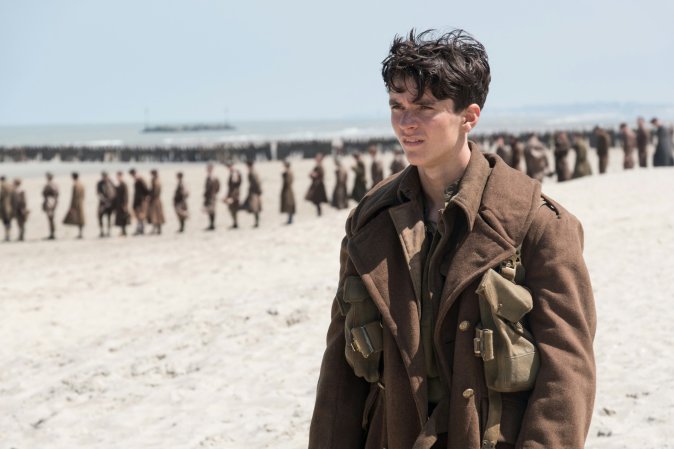
3. “Dunkirk” (directed by Christopher Nolan, starring Tom Hardy and Mark Rylance)
Films like “Dunkirk” are why we go to the movies.
Christopher Nolan, famed British auteur of award-winning movies like “Inception” and “The Dark Knight,” cements his directorial seal on the historical drama genre with “Dunkirk,” a sweeping World War II film unlike anything you’ve ever seen before. Audiences will have to pay careful attention to the nuances of how and why Nolan weaves these three plotlines into one cohesive story.
Better still, “Dunkirk” is a film that begs repeat viewing; first to become fully immersed in the captivating grandeur of Nolan’s spectacle and then later to capture all the subtlety required to completely understand the film’s brilliance.
A true ensemble piece, “Dunkirk” has a bevy of veteran and novice actors offering poignant, stoic performances that blend together flawlessly. Whether it’s Oscar winner Mark Rylance at the helm of a small yacht headed towards war or newcomer Fionn Whitehead becoming overwhelmed on the beaches, there are no stars here. Not Tom Hardy and surprisingly not even former “One Direction” band member Harry Styles feel too big for “Dunkirk.”
By keeping character development intentionally minimal and using a large number of relatively unknown British actors in major roles, “Dunkirk” thrives on the intense urgency of war as anyone involved in the conflict could die at any moment.
Words are spoken only when absolutely necessary and names are even less important in “Dunkirk,” perhaps the most intriguing and avant-garde way Nolan tells a conventional historical drama in the least conventional way.
For his rousing turn as a shell-shocked sailor pulled from the water, Cillian Murphy is credited simply as Shivering Soldier. It’s a mere example of just how insistent Nolan is in making “Dunkirk” about thousands rather than a tale of a single individual or small group of soldiers. The focus is on the bigger picture – rightfully so – and often driven home with iconic, wide sweeping shots.
Watching Nolan movies on the big screen has always been a must-see cinematic experience, but where audiences see his latest film matters more than ever. Nolan and director of photography Hoyte von Hoytema shot “Dunkirk” using primarily IMAX cameras on 70mm film, a rarely used format that makes panorama shots feel like intense close-ups. Watching “Dunkirk” on a regular movie projector dulls the film’s vibrancy and prevents audiences from feeling the full weight of the tension Nolan seeks to create on screen.
The remarkable claustrophobia that pervades many of Nolan’s most intimate scenes, combined with an Oscar-worthy score from legendary composer Hans Zimmer, gives “Dunkirk” a colossal feel that no amount of computer generated imagery could replicate.
With “Dunkirk,” Nolan continues to prove why he’s a true cinema master with his most personal and tightly composed feature to date.
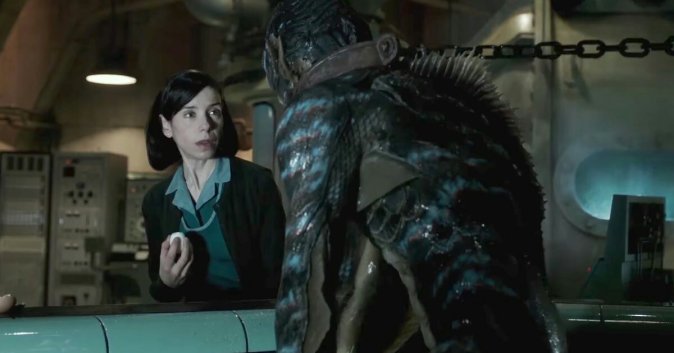
2. “The Shape of Water” (directed by Guillermo del Toro, starring Sally Hawkins, Richard Jenkins, Michael Shannon and Octavia Spencer)
It feels counterintuitive to suggest that a dark, melancholy monster movie could turn into a landmark piece of cinema.
But in the hands of Mexican auteur Guillermo del Toro, “The Shape of Water” elevates beyond genre expectations in transforms hearts and minds of cynical moviegoers with an unexpected, deeply personal adventure that will captivate any audience willing to give it a chance.
This avant garde, stunningly beautiful film melds 1960s Americana with classic monster movie and Cold War spy thriller. At its core, “The Shape of Water” is about a mute woman whose mutual infatuation with a monstrous prisoner locked inside a government research facility.
Part museum painting come to life and part “Creature from the Black Lagoon,” the film’s genre-bending execution twists “The Shape of Water” into a darkly complex, richly layered fairytale that will antagonize and intrigue audiences.
Freed from the constraints of dialogue, Sally Hawkins is given the rare opportunity to wholeheartedly emote as the shy, naive Eliza. Hawkins’ natural expressiveness speaks volumes with her eyes and hands painting a picture far more vivid than words would allow.
Actions on the script page and instructions from the director inform her choices, but Hawkins is fully able to create Eliza without limitations. This provides audiences with an unusual, yet intriguing lens to experience del Toro’s imaginative world construct.
Perhaps the most stunning performance in the entire film comes from Doug Jones, a six-time del Toro collaborator who melts into an athletically challenging, nuanced turn as the mysterious creature known simply as “the asset.”
It’s easy to overlook Jones’ work because of the captivating, detailed costume that transforms the wiry, unassuming man into a hulking monster. But for as good as Hawkins is as Eliza, the film’s central romance simply doesn’t work without Jones’ careful, emotional physicality to balance out the story.
“The Shape of Water” revels in its exemplary supporting performances with memorable, challenging turns from Michael Shannon as the film’s primary antagonist and Golden Globe-nominated efforts from Richard Jenkins as Eliza’s closeted neighbor and Octavia Spencer as her co-worker and de facto guardian angel.
It would be a mistake to passively watch “The Shape of Water,” opting to wait until del Toro’s cinematic opus is available for rental or streaming. On its technical merits alone, “The Shape of Water” to be seen on the big screen where viewers can be completely engulfed by the film’s magical sights and sounds.
“The Shape of Water” is not for everyone. Its roots firmly placed in 1960s nostalgia and unconventional examination of love and sexuality make it a difficult watch for some viewers.
If you can allow yourself to be transported inside del Toro’s mind as he intends, “The Shape of Water” is a rare cinematic experience that might only come along once every decade or so.

1. “Lady Bird” (directed by Greta Gerwig, starring Saoirse Ronan and Laurie Metcalf)
“Lady Bird” represents something more dynamic and changing within modern filmmaking, a new pinnacle for female-led and female driven cinema that transcends genre and becomes something much more unique and revolutionary. It’s “Wonder Woman” on cinematic steroids, without all that CGI muddling the frame and one of the year’s three best screenplays.
You’d be hard-pressed to find more vivid, authentic female characters than in “Lady Bird,” writer/director Greta Gerwig’s deeply personal drama about an outcast high school senior growing up in Sacramento, California in late 2002. Though not based on a real story, Gerwig’s vibrant, natural tale of a young woman who insists on being called Lady Bird in order to stand out feels immensely biopic in nature in spite of how different the titular character might be from Gerwig’s own life experiences.
It may be difficult to tell at first glance, but Gerwig’s directorial debut has her unique signature stamped all over the film. While many writer-directors allow more free flowing improvisation and ad-lib, Gerwig stresses strict adherence to the written word on the page. This ironically gives actors more freedom to find the characters’ inner voice rather than its literal one and the result is deeper, more intense character study.
There’s also a deep richness to the cinematography, which feels ripped out of the late 60s or early 70s despite its 2002 setting. Cinematographer Sam Levy gives Lady Bird a distinct, vintage hue as if a slightly transparent paper covered the camera lens at all times, filling the screen with a lightly faded, yellow tone.
It’s difficult to adequately describe the feeling you get while watching “Lady Bird” for the first time in theaters. There hasn’t been a film that more accurately depicts the transition out of adolescent life since Mike Nichols’ 1967 powerhouse “The Graduate.”
“Lady Bird” is that good. Be sure not to miss out on one of the decade’s ten best movies. You’ll be doing yourself a major disservice if you don’t see this transformative film at least once.

Why make a shiny, glimmer-y sports redemption film about Olympic silver medalist Nancy Kerrigan when the source material is so much richer with the comedically tragic tale I’ve disgraced former figure skater Tonya Harding?
Born from a pair of highly contradictory interviews, director Craig Gillespie’s outlandish tale from the wrong side of the tracks who just wants to figure skate has unsurprisingly become one of the year’s most side-splitting comedies.
“I, Tonya” follows the roller coaster life of an elite sport’s most blue-collar athlete whose rise to fame in the early 90s became forever marred by an attack on her figure skating rival that Harding may or may not have been complicit in planning.
“I, Tonya” packs a lot of punch within its two-hour running time even offers those familiar with the events new, personal insight into the hows and whys.
The irreverent, deeply personal glimpse into Harding’s world begins and ends with a highly stylized performance from Golden Globe nominee Margot Robbie. Completely unfamiliar with Harding prior to her involvement in the project, Robbie built her version of the controversial figure skater from scratch walked into the mindset and tone for her performance well before ever meeting with Harding.
Whether her portrayal of Harding is totally accurate matters very little over the course of the film. Robbie’s deeply brash, antagonistic turn may come to completely redefine public perception of Harding, deserved or not.
Her performance is heavily influenced by the outstanding work of Golden Globe winner Allison Janney, who verbally and physically brutalizes her way through the script as Harding’s no-holds-barred mother LaVona.
With the tact of a wrecking ball, Janney eagerly devours each scene with an indignant self-righteousness that implies her cruel-hearted parenting style to be the best way to rear a champion.
Janney’s LaVona perfectly sums up the “she gets it from her mother” notion the film intends. Little inflections in LaVona’s speech and tone work their way into Robbie’s performance as the two dynamic actresses syncopate their work.
While Sebastian Stan ably portrays Harding’s ex-husband Jeff Gillooly, the best secondary performance of “I, Tonya” comes from Paul Walter Hauser as the captivatingly confident, yet tone deaf more on bodyguard Shawn. Acting unintentionally dumb on screen can prove to be quite the formidable challenge, yet Hauser find the correct comedic timing and affectation to make the absurd seem authentic and genuine to the character.
“I, Tonya” is blessed with an incredible, richly constructed script from Steven Rogers, which balances a whole host of unreliable narrators in an attempt to explain and give context to the rise and fall of Harding. Based on extensive interviews Rogers conducted with both Harding and Gillooly, “I, Tonya” fondly evokes the hysterical chaos of “Goodfellas” while maintaining a casual earnestness that could come across as a way to seek redemption for Harding’s shortcomings.
Gillespie keeps the action flowing at a constant, rapid fire pace that rarely gives the audience time to breathe. This allows viewers to remain engaged and connected to the story during the film’s more outlandish, unbelievable moments and maintain some semblance of authentic plausibility.
It’s never quite clear in “I, Tonya” who (if anyone) is actually telling the truth, but Rogers and Gillespie perfectly blur the lines between truth and fiction that every character feels reliable in specific moments.
The film’s leading ladies, Robbie and Janney, will be among the frontrunners to take home a golden statuette in the Best Actress and Best Supporting Actress categories respectively. Beyond that, the Oscar hopes for “I, Tonya” become decidedly murkier as the dark comedy could be on the outside of crowded races for Best Picture and Best Original Screenplay.
A tragic laugh riot from start to finish, “I, Tonya” builds off a strong script with a pair of outstanding performances to deliver one of 2017’s most engaging, exciting films.
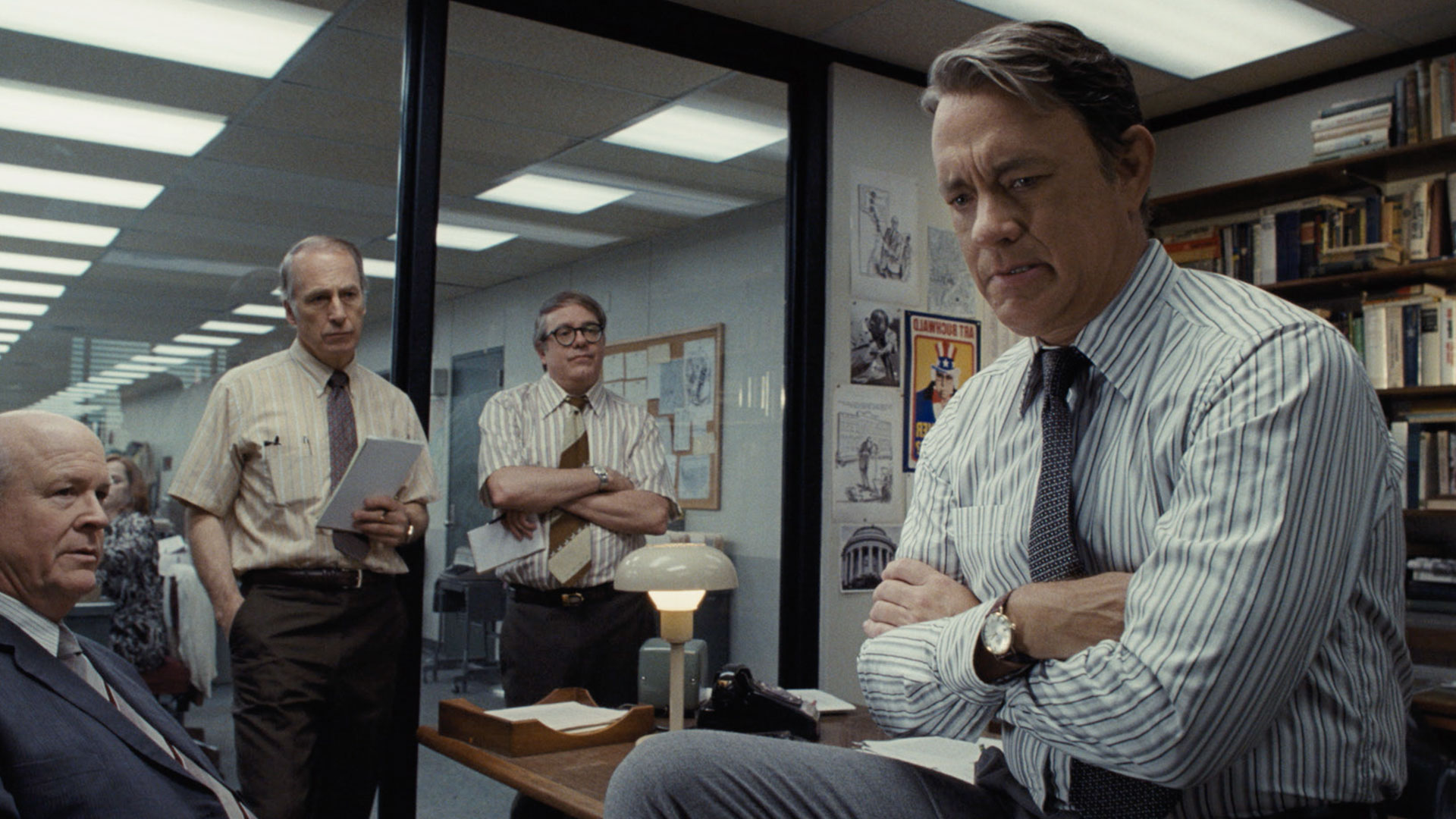
Give the greatest filmmaker of our generation a pair of Oscar winners performing one of the year’s most topical scripts and you’ve got yourself a practically surefire recipe for success.
For as much cavalcade and fanfare as Steven Spielberg’s “The Post” rightfully earns on paper, the end result is an above-average film that somehow doesn’t live up to all the promise.
This is a good, not great journalism movie rushed to screens across the country to prove a political point. While it doesn’t deliver the impact of 2015’s Oscar-winning “Spotlight,” Spielberg’s latest film still reminds audiences the real value of a free, independent media amid a highly partisan political environment.
Though the film rightfully acknowledges the work of The New York Times, “The Post” follows the executive editorial staff of The Washington Post in 1971 pre-Watergate as journalists across the country uncovered secrets of the Vietnam War hidden within the Pentagon Papers.
Other films might focus on Daniel Ellsberg, the man who leaked the infamous documents, or even the Times’ First Amendment trial against the government. Yet Spielberg speeds through relevant historical events in CliffNotes-like fashion in order to focus on moral and ethical dilemmas facing Post staff and their publisher, Katherine Graham, the first female head of a major American newspaper.
Critics and audiences alike will talk about Academy Award winner Meryl Streep’s showy, demonstrative performance as Washington Post publisher Katherine Graham. It’s a role that could easily define the latter stages of her illustrious career despite being one of her most pedestrian efforts to date.
This isn’t to say that Streep doesn’t deliver in spades, but that mediocre material she works with and rapid pace Spielberg filmed under kept Streep from delivering yet another career-defining performance.
The closest thing to a modern-day Jimmy Stewart, America’s consummate everyman Tom Hanks should be a shoo-in for the Oscar nomination he hasn’t seen since 2001, an absolute travesty in the industry.
As Washington Post executive editor Ben Bradlee, Hanks is the epitome of the stern, well-meaning boss insisting on the truth and seeking out the best in his staff at every turn. Audiences will buy into his performance on resume alone, although Hanks’ authenticity in the role experience in journalism he simply doesn’t have.
Frankly, the biggest strength of “The Post” stems from its illustrious, talented supporting cast including a nomination worthy turn from Bob Odenkirk as assistant managing editor Ben Bagdikian, Bruce Greenwood as longtime Department of Defense head Robert McNamara, Alison Brie as Graham’s daughter Lally and “The Americans” star Matthew Rhys as Ellsburg.
Criticizing Spielberg is difficult given the fact that he signed on to the film in March and spent a mere 43 days making “The Post.” Despite its cinematic warts, there’s no doubt that the film is quintessential Spielberg, a film that categorically draws its audience in and leaves them begging for more regardless of how haphazard and disjointed the script from first-time writer Liz Hannah and Josh Singer gets.
It’s impossible to make a film about The Washington Post and not evoke Alan J. Pakula’s seminal classic “All The President’s Men,” a movie casting a massive shadow over “The Post” from start to finish. For as good as Hanks is in the role, there’s simply no comparing his work to Jason Robards’ iconic turn as Bradlee. “The Post” doesn’t exude the grit-and-grind mentality of true investigative journalism, either.
Oscar hopes for “The Post” certainly weren’t helped by a lackluster showing at this year’s Golden Globes, where the film was shut out despite six nominations. Spielberg and company are just as likely to remain a bridesmaid and never a bride at the Academy Awards, which should shower “The Post” in nominations that will feel like runner-up ribbons.
Given the film’s relevance to the current political climate, a best picture nod seems like a foregone conclusion, as do nominations for Spielberg as best director, Hanks for best actor and a 21st nomination for Streep. Barring a massive shift (or well timed tweet from Washington), it’s unlikely that “The Post” will pose any serious threat to take home a golden statuette this March.
Political biases on either side of the aisle will ultimately frame how audiences view “The Post,” a film that by no means shies away from espousing certain ideology. Smart viewers will still set all of that aside and take “The Post” for what it’s truly meant to be, an unabashed defense of free press and yet another reminder of the long-term impact quality investigative journalism can have on a local and national level.
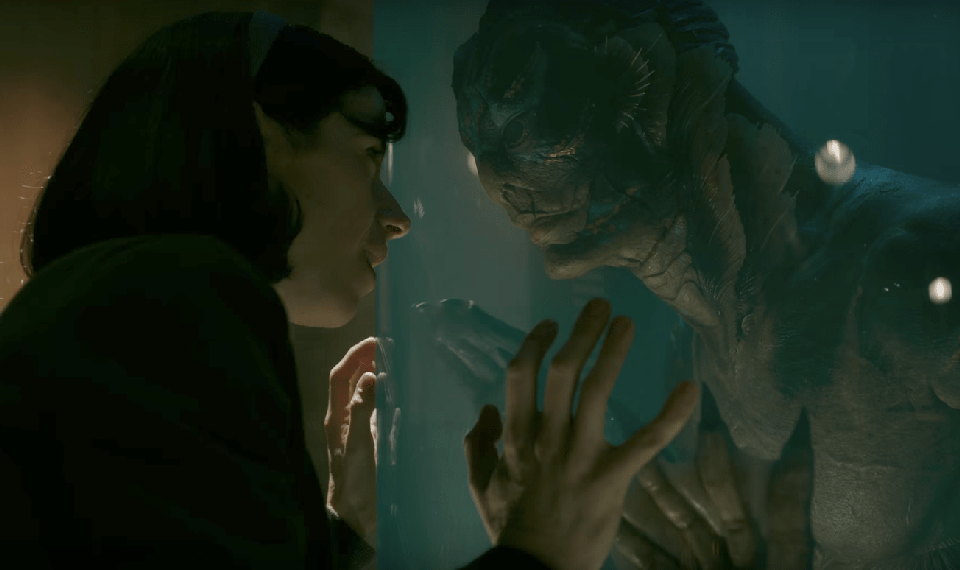
It feels counterintuitive to suggest that a dark, melancholy monster movie could turn into a landmark piece of cinema.
But in the hands of Mexican auteur Guillermo del Toro, “The Shape of Water” elevates beyond genre expectations and transforms hearts and minds of cynical moviegoers with an unexpected, deeply personal adventure that will captivate any audience willing to give it a chance.
This avant garde, stunningly beautiful film melds 1960s Americana with classic monster movie and Cold War spy thriller. At its core, “The Shape of Water” is about a mute woman whose mutual infatuation with a monstrous prisoner locked inside a government research facility.
Part museum painting come to life and part “Creature from the Black Lagoon,” the film’s genre-bending execution twists “The Shape of Water” into a darkly complex, richly layered fairytale that will antagonize and intrigue audiences.
Freed from the constraints of dialogue, Sally Hawkins is given the rare opportunity to wholeheartedly emote as the shy, naive Eliza. Hawkins’ natural expressiveness speaks volumes with her eyes and hands painting a picture far more vivid than words would allow.
Actions on the script page and instructions from the director inform her choices, but Hawkins is fully able to create Eliza without limitations. This provides audiences with an unusual, yet intriguing lens to experience del Toro’s imaginative world construct.
Perhaps the most stunning performance in the entire film comes from Doug Jones, a six-time del Toro collaborator who melts into an athletically challenging, nuanced turn as the mysterious creature known simply as “the asset.”
It’s easy to overlook Jones’ work because of the captivating, detailed costume that transforms the wiry, unassuming man into a hulking monster. But for as good as Hawkins is as Eliza, the film’s central romance simply doesn’t work without Jones’ careful, emotional physicality to balance out the story.
“The Shape of Water” revels in its exemplary supporting performances with memorable, challenging turns from Michael Shannon as the film’s primary antagonist and Golden Globe-nominated efforts from Richard Jenkins as Eliza’s closeted neighbor and Octavia Spencer as her co-worker and de facto guardian angel.
While the film’s actors are spectacular, “The Shape of Water” makes its mark on the cinematic landscape due to the deeply innovative, vivid world handcrafted and molded by del Toro. Each nook and cranny in the storytelling, every minute detail in the background or subtle shadow feels uniquely commanded from del Toro’s brushstroke.
“The Shape of Water” marks the pinnacle of the Mexican auteur’s career as if every lesson, note or idea del Toro has had over the past 25 years culminated in a two-hour spectacle that has to be seen to be believed.
With two wins – Best Director and Best Original Score – from seven Golden Globe nominations Sunday evening, “The Shape of Water” is a strong contender to take home Academy Awards later this spring. Hawkins and del Toro have to be considered among the frontrunners in their respective categories, while the film is likely to earn multiple wins in technical categories not given out at the Golden Globes.
The care and artistry put into the film’s production design, makeup, cinematography and sound should put “The Shape of Water” into firm position as a leading contender for Best Picture, where it seems to have passed Christopher Nolan’s war epic “Dunkirk.”
It would be a mistake to passively watch “The Shape of Water,” opting to wait until del Toro’s cinematic opus is available for rental or streaming. On its technical merits alone, “The Shape of Water” to be seen on the big screen where viewers can be completely engulfed by the film’s magical sights and sounds.
“The Shape of Water” is not for everyone. Its roots firmly placed in 1960s nostalgia and unconventional examination of love and sexuality make it a difficult watch for some viewers.
If you can allow yourself to be transported inside del Toro’s mind as he intends, “The Shape of Water” is a rare cinematic experience that might only come along once every decade or so.
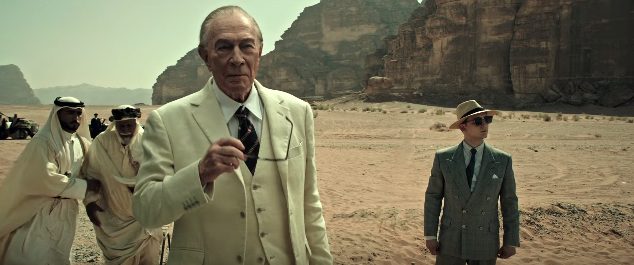
Ten days and 10 million dollars was all it took to make cinematic history.
Recasting parts during the production of a movie isn’t unheard of by any means, but completely starting from scratch after a picture is already locked never happens. Almost.
When sexual misconduct allegations came out against Kevin Spacey during post-production for the new film “All The Money In The World,” director Ridley Scott sprang into action. Recasting a pivotal role within 36 hours, Oscar winner Christopher Plummer stepped into the role of reclusive billionaire J. Paul Getty.
The final product – four-fifths of an original piece and 20 percent replaced with reworked material – is a testament to craftsmanship by an expert filmmaker, though it’s hard to still not imagine Spacey in the role despite him not being on screen.
“All The Money In The World” examines the kidnapping of then-16-year-old John Paul Getty III, grandson of the illustrious original Getty, and the subsequent search to bring him home safely alive led by the boy’s mother and a former CIA operative.
Despite a star-studded cast, the standout performance of “All The Money In The World” comes from young breakout Charlie Plummer. Ironically, the actor playing kidnap victim Getty III has no familial connection to the elder Plummer who stars as his grandfather.
Kidnap victims are often portrayed on television and cinema very one-dimensionally, but Plummer layers the youngest Getty with a complex, nuanced performance deeply seeded in mistrust and a moderate case of Stockholm Syndrome. Watching Plummer transform emotionally over the course of the movie is surprisingly the most interesting part of Scott’s film and may be due in part to the fact that almost none of the scenes involving the younger Getty had to be reshot.
The elder Plummer’s performance will ultimately be more heavily scrutinized because of the casting change. However, his stoic, searing turn as the seemingly soulless grandfather is just as mesmerizing on screen and nearly beyond reproach.
It’s remarkable to think that any actor could so wholly inhabit a character as quickly as Plummer does. His Getty is a man that audiences will love to hate and yet cannot get enough of.
Academy Award nominee Michelle Williams carries the film’s emotional weight in a somewhat more one-dimensional performance. Her turn as the kidnap victim’s mother is gripping, but mired in a stilted accent and muddled in sobs, there’s little room for depth of character.
As the former CIA operative tasked by Getty to find his grandson, Mark Wahlberg is his usual solid yet unspectacular self, trying to bring a calm sense of purpose to the film and drive the plot forward.
Filming, cutting and reshooting his movie on the fly, it must have been incredibly difficult for Scott to maintain a consistent tone throughout “All The Money In The World.” What finally arrives in theaters is a cold, morose movie that drags like a European spy film and could probably be shortened by around 20 minutes.
It’s incredibly vibrant visually, layered in a bluish-gray cinematic hue that evokes the early 1970s period the film is set in. Though the film is not picturesque in every scene, Scott and cinematographer Dariusz Wolski give “All The Money In The World” a richness that enhances the performances on screen.
Though few had seen the film to that point, “All The Money In The World” earned a trio of Golden Globe nominations, including best picture drama and acting nods for Plummer and Williams. The film’s Oscar hopes are bleaker, however, with only Christopher Plummer a potential contender for recognition come awards season.
There are times that “All The Money In The World” feels like a grind to get through. But patient audiences will be rewarded with an interesting, complex look at the convergence of familial strife, economic greed and international crime worth taking a chance on whether in theaters now or at home in a couple months.
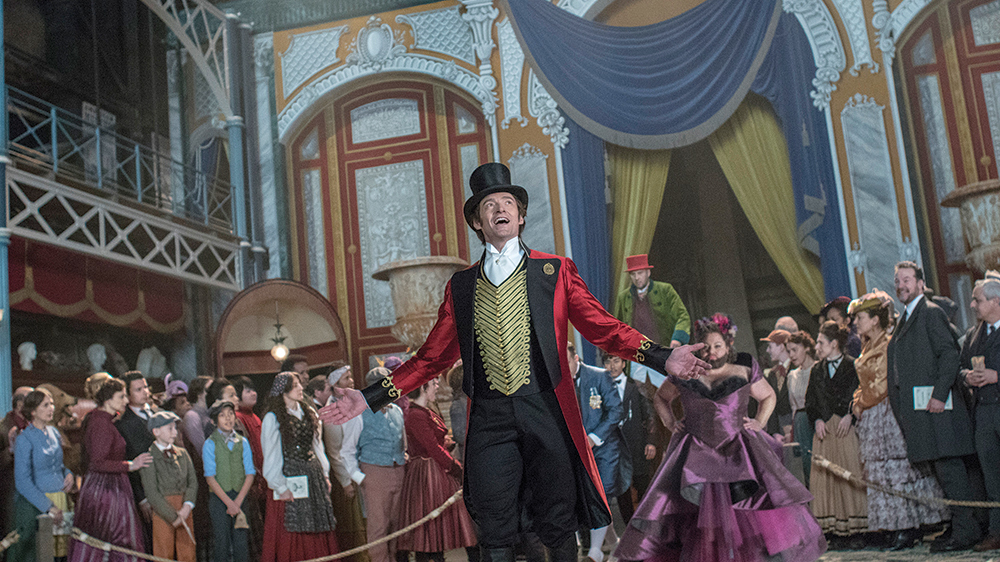
Style far exceeds substance in Hugh Jackman’s latest film, a biopic of famed circus founder PT Barnum that’s more Broadway musical than anything else.
It’s unlikely you’ll find anything quite like “The Greatest Showman” in theaters this winter. Director Michael Gracey delivers a cinematic experience that becomes almost one over-extended music video with bits of dialogue in between as opposed to a musically enhanced drama.
The stage is set for “The Greatest Showman” to be a smash. Combine the talents of a deep ensemble cast led by Tony Award winner Jackman with the music of “La La Land” and “Dear Evan Hansen” composers Benj Pasek and Justin Paul surefire recipe for success.
Despite the film’s peaks being exceptionally high, however, the valleys in “The Greatest Showman” are strikingly pedestrian and often feel like a grind to get through as viewers eagerly await the next show-stopping number.
Gracey’s film gives a rough outline of the famed circus entrepreneur’s rise from poverty to wealth, but nearly all the drama and romance rightly expected from a Barnum biopic is wasted as Gracey crams another song and dance number into the 100-minute film. Audiences can never truly be convinced that Barnum is in fact “the greatest showman” as the film’s title implies, but certainly the flashiest one.
The first time director’s flaws are readily apparent, heeding the advice of the classic Chicago song: “razzle dazzle ’em and they’ll never catch wise!”
Color, pizazz and a whole lot of movement obscure a film where the performers don’t have to try really hard to convey character and dialogue scenes appear to be loosely sketched out rather than fully realized.
The brightest spot in “The Greatest Showman” comes from the remarkable musical artistry of Pasek and Paul, whose memorable, infectious tunes are brought to life an interesting, often visually dazzling ways. This usually comes in the form of bombastic, dance-heavy group numbers like “The Greatest Show” or “This Is Me,” but the film’s best moments are more stripped down.
Jackman does his best acting work of the entire film with an early number dreaming about the life Barnum wants to give his wife and their two young girls. The multi-talented star is a perfect choice to play Barnum given how Gracey wants Barnum’s audiences, and the ones in the theater by extension, to simply be charmed and won over by a smile.
It’s clear from the first frame how much Jackman wants The Greatest Showman to be amazing, though a decidedly smaller count of effort is equally apparent on screen from Jackman’s two leading ladies.
Neither Rebecca Ferguson nor Academy Award nominee Michelle Williams appear to be having much fun or even halfway engaged in their performances as Swedish songbird Jenny Lind and Barnum’s wife, Charity, respectively. Though it varies from scene to scene, there’s a clear disengagement from the material the eyes of both performers who seemed as if they just want to sing their songs and go home.
The same cannot be said of former Disney stars Zac Efron and Zendaya, whose characters share the film’s secondary romance and pull off the most captivating number of the entire movie, a dazzling aerial display set to Pasek and Paul’s “Rewrite The Stars.” It’s here – along with the Efron and Jackman duet “The Other Side” – that the performers, and in turn the audience, have the most fun, resulting in spectacles worth the price of admission alone.
The Greatest Showman earned the Golden Globe nominations for best picture and best actor in the musical and comedy category as well as for best original song, accolades that don’t seem translatable to the Oscar race. While Academy Award winners Pasek and Paul may be a lock for a song nod, things look bleaker for the film’s best picture and actor hopes the slew of high-quality dramatic films the Golden Globes moved into a separate category.
A Broadway musical captured in cinematic style, The Greatest Showman might not be for everyone. But this family-friendly film led by a charismatic Jackman and featuring some truly magnificent musical spectacle be something worth taking a chance on this holiday season.
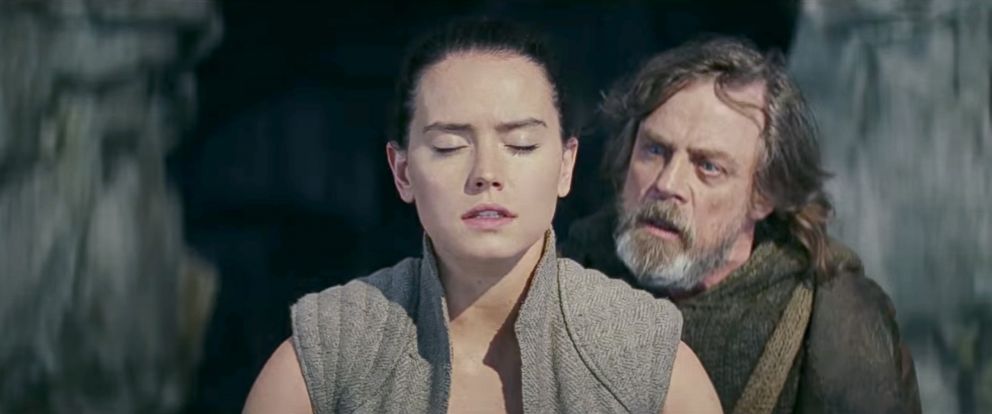
Millions upon millions of eyes will scrutinize every single frame, nuance, bit of dialogue or perceived misstep in writer/director Rian Johnson’s new film.
Granted, you’ve probably never heard of the 44-year-old director unless you’re an ardent fan of his indie noir feature “Brick” or his time-traveling, action adventure “Looper.” But moviegoers everywhere are familiar with Johnson’s latest work, the long-awaited eighth episode in George Lucas’s space opera epic “Star Wars” series.
“The Last Jedi” has brought in over $220 million domestically since it opened Thursday, making it the second highest grossing film on an opening weekend of all time behind 2015’s “Star Wars: The Force Awakens.”
As such, everyone from casual moviegoers to hardcore sci-fi nerds has an opinion on one of the most talked about films this decade.
It’s easy to nitpick such a broad, bombastic film series, but “The Last Jedi” seeks to please many masters, most of whom have widely varying opinions about what a “Star Wars” film should be.
Some will say it’s too long, that it tries too hard to be humorous, that it isn’t funny enough, that there are too many characters or not enough of “insert your favorite character here.”
Everyone is right, and yet everyone is wrong at the same time. More so than any other film franchise, “Star Wars” is a series widely open to interpretation.
As moviegoers, we are allowed – and outright expected – to make each and every installment our own, that there is a place for all of us in the “Star Wars” universe.
It’s the same notion that makes us question whether or not we like “The Last Jedi” because it isn’t what we dreamed it would be. And that’s okay.
The eighth episode picks up right where “The Force Awakens” left off, with Leia and her Resistance fighters on the run from The First Order and emerging leader Rey seeking out a now mythical Luke Skywalker to turn the tide of the war.
In what will be likely her final appearance on screen, Carrie Fisher gives a measured, layered performance as former princess turned rebel general Leia. The warmth and gravitas she’s able to bring to the role grounds “The Last Jedi” in a firm sense of place, giving Johnson’s film unanticipated but much appreciated emotional depth.
The same can be said of Mark Hamill in his return as Luke Skywalker. Like Fisher, Hamill’s performance in the role gets better with age and his reluctant mentorship of Daisy Ridley’s Rey provides several of the film’s best moments.
For as iconic of characters as Luke and Leia are, neither has been portrayed as carefully or with as much forethought than in “The Last Jedi.”
The three main heroes from “The Force Awakens” – Ridley’s Rey, John Boyega’s Finn and Oscar Isaac’s Poe – all return for this installment and do solid work. However, pedestrian storylines for Boyega and Isaac leave the talented actors with little to work with and marginalized compared to Ridley, on whom the franchise has rightfully placed all their hopes.
While Ridley does solid work as the young defender of the light side of the force, Rey’s dark side counterpart Kylo Ren proves to be more than formidable in the always steady hands of veteran character actor Adam Driver. Given more to work with in his second time as the heir apparent to Darth Vader, Driver does the best work of the entire film as the eternally conflicted, yet increasingly evil son of Leia and Han Solo.
Johnson serves his film well by removing Kylo Ren’s Vader-inspired mask, allowing audiences to see the external and internal scars on Driver’s face. There’s so much rage in pain within Driver’s eyes; his complex performance leaps off the screen at every turn.
While Ren projects strength and brash self-confidence, the conflict within betrays him. The nuance displayed by Driver, especially when paired against Ridley is stunning. It could very easily be the best cinematic villain since Heath Ledger’s sinister Joker in 2008’s “The Dark Knight.”
Johnson’s film could rightly be accused of needing some extra time in the editing room. “The Last Jedi” races off in several directions all at the same time and ping-pongs back and forth between them at a frantic, haphazard pace.
Many of Johnson’s unique visual choices, however, will soon go down as iconic moments in the history of the franchise, most notably a stunning battle sequence inside a First Order ship and the film’s climatic ending, which may leave viewers simultaneously in awe and in tears.
It’s highly doubtful that “The Last Jedi” will make much of an impact come awards season, though this doesn’t mean at the latest Star Wars film isn’t a contender for one of the year’s ten best. In the hands of a decorated auteur like Johnson, “The Last Jedi” is proof positive that cinematic creativity in blockbuster filmmaking can enhance a film’s quality without jeopardizing the bottom line.
Audiences will laugh, they’ll cry and they may even complain a little (or more realistically, a lot). But this isn’t to say that “Star Wars: Episode VIII” doesn’t deliver on the promise that “The Force Awakens” started.
“The Last Jedi” isn’t the “Star Wars” installment anyone wanted. It’s the one we all deserve.
 Cinematic Considerations