

There is no such place as Ebbing, Missouri, regardless of how ripped straight out of current-day America it might be. Yet in Martin McDonagh’s latest film, the Midwest rarely feels as vibrant on film.
Potential audiences will want to approach this movie with caution as “Three Billboards Outside Ebbing, Missouri” is one of the year’s most provocative, colorful films. It’s a divisive endeavor where characters are liable to get thrown out of a plate glass window as have deep, meaningful conversations.
“Three Billboards” follows the story of Mildred, a divorced mother whose daughter was raped and set on fire by an unknown assailant. Months after her death, a distraught yet fed up Mildred ponies up $5,000 to lease three billboards along a desolate road out of town chastising local police for failing to find her daughter’s killer.
Frances McDormand delivers one of the most outstanding performances of her career with “Three Billboards,” certainly the best since her Oscar-winning turn in 1996’s “Fargo.”
McDormand layers Mildred with a sly wit and a devil-may-care intensity, while not so subtly hiding deep emotional scars within. Her complex performance makes Mildred a character viewers can easily empathize with despite the exceedingly bold, radical decisions Mildred makes over the course of the film.
Veteran character actor Sam Rockwell has the most to play with slightly incompetent, mostly racist Officer Dixon and does not disappoint with an equally charismatic yet disturbing performance. His Dixon is the personification of the simple-minded law enforcement officer turned on its head, riddled with insecurity in spite of glimmers of potential. Rockwell’s natural charm prevents Dixon from becoming too unlikable and the actor’s gradual turn over the course of the film is textbook character acting.
Woody Harrelson also shines as the exceedingly likeable sheriff who may or may not have done enough on Mildred’s daughter’s case. In limited screen time, Harrelson propels the film forward with a metered, even-keeled performance that resonates throughout the entire two hours.
McDonagh also peppers the film with quality supporting performances from Peter Dinklage, Annie Cornish and Oscar nominee Lucas Hedges, who also plays a minor role in awards front-runner “Lady Bird.”
“Three Billboards” isn’t the most interesting of McDonagh’s films. That honor goes to the hyper violent, cynical comedy “Seven Psychopaths,” also starring Rockwell. Ironically in spite of its quirks, “Three Billboards” might be McDonagh’s most accessible film thanks to its sharp writing and bevvy of layered performances.
The film is expertly paced, shifting gears from high octane action to sombering melodrama with ease and always keeping audiences on their toes guessing what will come next.
Deserving of its R rating, “Three Billboards” is a brash, crude film that refuses to hold back at any point. McDonagh carefully crafts an enchanting, sadistic piece of cinema that some viewers might find excessive or offensive and yet struggle to turn away.
“Three Billboards” is a strong contender in any number of categories come awards season with a sure-fire nomination for Best Picture and McDormand for Best Actress. McDonagh could easily a pair of nominations for Best Director and Best Original Screenplay, while Harrelson and Rockwell each stand a chance to earn a Best Supporting Actor nod. It’s easily a movie that could take home five awards or none depending on how strongly voters feel.
Sometimes in spite of itself, “Three Billboards” is a film that demands to be seen no matter how off color or outlandish things get. British writer/director McDonagh colors the world of small Ebbing, Missouri with rich, interesting characters that compel audiences to watch just a little bit longer in spite of themselves.
Though it may be just a bridesmaid and never a bride, “Three Billboards” is a film audiences will be talking about for months to come and can’t miss piece of cinema in theaters near you.
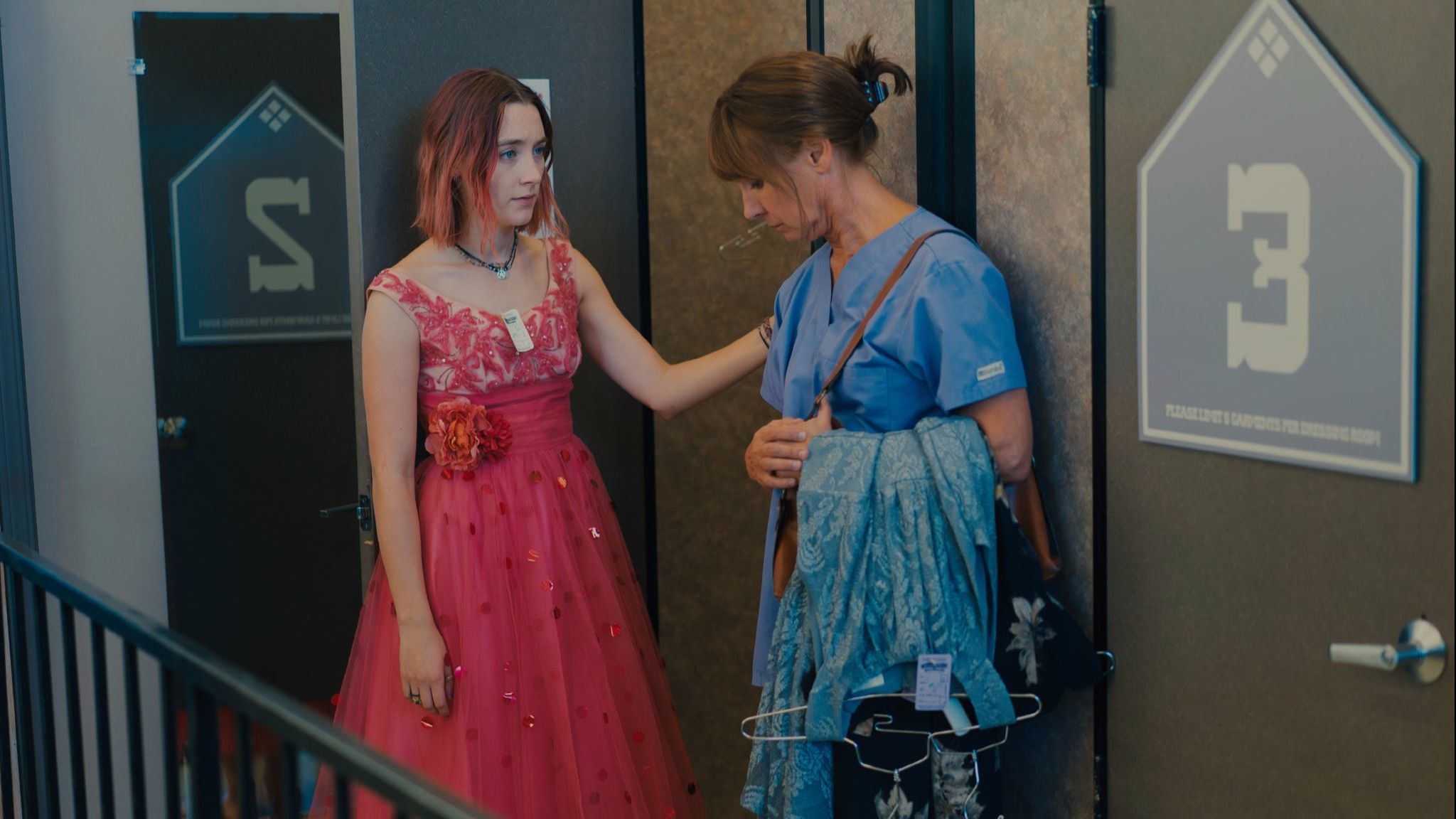
It’s easy to pen “Lady Bird” into a corner, especially given the fact that the indie romantic comedy/drama currently stands as the best reviewed film in the history of Rotten Tomatoes.
But “Lady Bird” is more than just an universally beloved film. It represents something more dynamic and changing within modern filmmaking, a new pinnacle for female-led and female driven cinema that transcends genre and becomes something much more unique and revolutionary. It’s “Wonder Woman” on cinematic steroids, without all that CGI muddling the frame and has one of the year’s three best screenplays.
You’d be hard-pressed to find more vivid, authentic female characters than in “Lady Bird,” writer/director Greta Gerwig’s deeply personal drama about an outcast high school senior growing up in Sacramento, California in late 2002.
Though not based on a real story, Gerwig’s vibrant, natural tale of a young woman who insists on being called Lady Bird in order to stand out feels immensely biopic in nature in spite of how different the titular character might be from Gerwig’s own life experiences.
Irish-American actress Saoirse Ronan, best known for her Oscar-nominated work in the 2015 film “Brooklyn,” dazzles as the charismatic yet rebellious Lady Bird. Ronan brings a mesmerizing confidence to the role, charming her way through scenes where whether or not the audience should like her remains ambiguous.
It’s a daring role for the 23-year-old actress, playing against type as the girl with a constant attitude. Yet Ronan embodies a rich livelihood within the character, compelling the audience become deeply invested in her loves and losses.
Integral to the success of the film is Ronan’s fluid chemistry with veteran character actress Laurie Metcalf, who takes the best-written character of her career and turns it into a dominant powerhouse as Lady Bird’s loving yet guarded mother, Marion. The give-and-take between the two actresses is pitch perfect, richly balancing the love between a mother and daughter with the natural separation teenage angst causes in such a relationship.
Both performances feel vivid and authentic due in large part to the care Gerwig puts into the script as well as the effortless syncopation put out on screen between Metcalf and Ronan.
“Lady Bird” is littered with a cavalcade of outstanding supporting performances from the subtle, stoic work of Tracy Letts as Lady Bird’s father Larry to newcomer Beanie Feldstein’s conventionally- unconventional turn as best friend Julie to even more minor yet pivotal roles from Stephen McKinley Henderson and Lois Smith as instructors at the Catholic school Lady Bird attends.
But the standout secondary performances come from a pair of young male actors, one with an Oscar nomination under his belt and the other sure to earn his first Academy Award nod this spring.
“Manchester By The Sea” star Lucas Hedges does some of his finest work in a small but pivotal role as Lady Bird’s first love Danny. Up-and-coming actor Timothée Chalamet brings a quiet confidence to his James Dean-esque role in the film, which will only propel him forward as a front runner in the best actor category for his work in the drama “Call Me By Your Name.”
It may be difficult to tell at first glance, but Gerwig’s directorial debut has her unique signature stamped all over the film. While many writer-directors allow more free flowing improvisation and ad-lib, Gerwig stresses strict adherence to the written word on the page. This ironically gives actors more freedom to find the characters’ inner voice rather than its literal one and the result is deeper, more intense character study.
There’s also a deep richness to the cinematography, which feels ripped out of the late 60s or early 70s despite its 2002 setting. Cinematographer Sam Levy gives “Lady Bird” a distinct, vintage hue as if a slightly transparent paper covered the camera lens at all times, filling the screen with a lightly faded, yellow tone.
“Lady Bird” should be a virtual lock for any number of awards come this Oscar season. The film is a shoe-in for the best picture and lead actress categories with Ronan a major contender to win early next year. There’s also strong possibilities for the film’s dynamic script in the original screenplay category, Gerwig and Metcalf for best supporting actress. Missing out on a film like “Lady Bird” would be a serious gap on the screening resume of any awards-minded moviegoer.
It’s difficult to adequately describe the feeling you get while watching “Lady Bird” for the first time in theaters. There hasn’t been a film that more accurately depicts the transition out of adolescent life since Mike Nichols’ 1967 powerhouse “The Graduate.”
“Lady Bird” is that good. Be sure not to miss out on one of the decade’s ten best movies. You’ll be doing yourself a major disservice if you don’t see this transformative film at least once.

Unless you were looking for it, odds are good that you might never stumble across a film like “Mudbound,” a small, intimate drama that snuck its way onto Netflix last week.
The tale of two families – the McAllens, a moderately affluent white family transplanted to farming country, and the Jacksons, poor African-American sharecroppers seeking out land to call their own – is in many ways a solemn reminder of where America has been and perhaps where it is today.
Acquired by Netflix after its Sundance run early this year, “Mudbound” examines racial relations and familial history in rural Mississippi during the 1940s. The film pinballs back and forth between members of both families as they experience lives of quiet desperation in the Deep South.
“Mudbound” aggressively tackles a wide variety of issues from racial inequality to the role of women in society to post traumatic stress disorder with a subtle hand of candor.
Its slow roll approach to these broad issues may disenchant and bore casual viewers, though attentive audiences may become enthralled and captivated by the film’s stunning cinematography and terrific ensemble cast.
Although “Mudbound” lacks definitive star power, director Dee Rees’ movie boasts a plethora of veteran character actors who thrive as part of the collective group.
The film’s most stunning performance is delivered by up-and-comer Jason Mitchell, who broke out in the 2005 hit “Straight Outta Compton” and dazzled in Kathryn Bigelow’s noir drama “Detroit” earlier this year.
With “Mudbound,” Mitchell tackles his most dramatic role to date as the Jackson’s eldest son Ronsel, a tank sergeant under General Patton who finds a much colder reception returning home than he did traversing Europe.
Mitchell toes the line of being aggressive with his performance without becoming showy or overstated. His ability to show more anger with his eyes than his words is mesmerizing to watch on screen and proof positive of Mitchell’s star potential in the years to come.
He shares great and effortless chemistry with Garrett Hedlund, who gives a distant yet nuanced performance as younger McAllen brother Jamie. Their uneasy, unlikely bond over wartime stories and shared post traumatic stress informs most of the film’s best moments and carries “Mudbound” for much of the film’s second half.
Jason Clarke and Carey Mulligan also shine as the elder McAllen brother Henry and his wife Laura. Much of the film’s first third ironically relies on an intended lack of chemistry between Henry and his new bride and the couple’s awkward pairing comes through on screen in spades.
It sometimes feels harder for two actors to authentically capture a relationship that doesn’t work like two puzzle pieces forced together. Clarke and Mulligan make the couple’s unspoken tension feel real in a special yet tense way.
“Mudbound” rounds out its cast with outstanding supporting turns from Jonathan Banks as the McAllens’ stubbornly racist father Pappy, Rob Morgan as sharecropper/pastor Hap Jackson and an nearly unrecognizable Mary J. Blige as Hap’s wife Florence.
Rees and cinematographer Rachel Morrison do a wonderful job of giving “Mudbound” a deeply rich, vivid picturesque look that feels ripped straight out of the pages all the history book. Thankfully, the cinematography is shot in a way that accents and enhances the performances rather than impeding them.
If there is a flaw in the filmmaking, “Mudbound” consistently drags a touch from beginning to end and often relies too heavily on narration to give viewers insight into the characters.
Seemingly a strong contender come award season, “Mudbound” may fall prey to the same Netflix curse that befell 2015’s stellar yet underappreciated African warlord drama “Beasts of No Nation.” Major studio backing would probably have secured the film a best picture nomination as well as potential nods for Mitchell and Hedlund. Those certainly worthy, it’s far too early two pencil “Mudbound” in as a serious contender come Oscar season.
Regardless, this character-driven, historical drama has far too much going for it not to merit the attention of patient, smart movie lovers seeking a quality film to fall in love with on a quiet Tuesday evening.
Continue the conversation online at cinematicconsiderations.com

Putting Batman, Aquaman, Wonder Woman and The Flash on screen together should be a pretty exciting, slam-dunk of a movie.
But then why does “Justice League,” the latest DC Comics film from director Zack Snyder, feel so much like a rollercoaster ride?
There’s a lot of ups over the course of two hours, but a lot of wild left turns and some heavy downs too in Snyder’s all over the place follow-up to 2016’s “Batman vs. Superman: Dawn of Justice.”
The film follows Batman alter ego Bruce Wayne following the death of Superman as he tracks new evil emerging in the Man of Steel’s absence.
Unable to stop the impending threat alone, Wayne must track down and form an alliance with powerful, yet reluctant heroes to prevent the god Steppenwolf from destroying the planet.
Rightfully so, “Justice League” leans heavily on Israeli actress Gal Gadot, whose crowd-pleasing turn in the smash hit “Wonder Woman” solo movie earlier this year make her the perfect choice to center the emotional core of the film around.
Gadot’s innate ability to emphasize with unknown characters around her despite incredulous situations continues to be the best piece of acting in any DC film and makes the Amazonian princess the series’ most relatable hero.
The same cannot be said of Ben Affleck’s unaffecting, mediocre work as Batman, a character it’s clear the veteran actor/director no longer wants to play. Recently, Affleck admitted he wants to find a way to gracefully leave the franchise, though his relative disinterest appears on screen and helps hold back the DC franchise from becoming something greater.
The film’s breakout star, Ezra Miller, is a delight to watch on screen as the super fast, super geeky young superhero The Flash. The comedian steals the show at every turn with well written, expertly delivered punchlines that lighten the heavy overall tone of Snyder’s film.
Just as breathtaking are scenes of The Flash in action as the film often slows down in time to allow viewers the opportunity to experience what being super fast really feels like. These sequences are reminiscent of the spectacular Quicksilver scenes in “X-Men: Days of Future Past” and “X-Men: Apocalypse,” though they still feel unique to the DC Universe.
There’s also a lot of potential in Jason Momoa’s Aquaman, a thinly written, shirtless heavyweight who bruises his way through Justice League in an attempt to make the characters seem more than just the guy who talks to fish.
Momoa certainly looks the part of an intimidating, rebel superhero, though it’s too early to make a determination until the “Aquaman” solo picture arrives next year.
Where “Justice League” struggles most is in its clunky, uneven screenplay penned by Chris Terrio with rewrites from “Marvel’s The Avengers” director Joss Whedon. DC doesn’t offer the writers any favors by requiring the film to fill in the back story for three new superheroes.
“Justice League” often feels weighed down and bloated as it constantly jumps from subplot to subplot in its attempts for fan-service and sequel building rather than developing one consistent plot. This isn’t to say that Snyder’s film doesn’t offer fun and exciting moments, just they are gapped by extended filler is the DC superhero adventure from being a better movie.
The unevenness of this adventure carries over into the director’s chair, where Snyder’s dark brooding touch casts a shadow over a significant portion of the film. Stylistically, Snyder’s films often look as if the director forgot to budget proper lighting equipment and his hand feels present in all of this film’s heavier moments.
Whedon, who came on late in the filmmaking process to handle reshoots after a death in Snyder’s family, gives “Justice League” a friendlier, more accessible tonal shift and has to be given much of the credit for the film’s considerable comedic pop.
“Justice League” benefits and is simultaneously hindered from having a pair of directors with widely different visions of the film pushing their ideas into the final product.
If nothing else, “Justice League” serves as a decent roadmap for the DC film franchise moving forward, building on the success of “Wonder Woman” and leaning away from the lesser “Batman vs. Superman” and “Suicide Squad” films.
It’s a film best seen on the big screen for the spectacle of it all, but “Justice League” serves a limited audience of superhero fans and hardcore comic book nerds. It’s not a film viewers can jump into blindly.
If you know and love all things DC Comics, “Justice League” is built just for you. If not, taking a pass and catching more accessible films like “Thor: Ragnarok” or the simply delightful “Wonder” might be a better decision.

There’s nothing like a little perspective to let you know that things could always be worse. Such is the case with the new Netflix original film “The Meyerowitz Stories (New and Selected).”
Writer/director Noah Baumbach’s latest film allows audiences to feel better about their own family dramas by shining a light on a much more troubled clan of moody, prima donna artists and free spirits.
“The Meyerowitz Stories” follows several months of the lives of Harold Meyerowitz and his three estranged children, whose lives all collide over Harold’s family home and large art collection. It’s Woody Allen meets “August: Osage County,” dry and observant but yet deeply personal and affecting at the same time.
“The Meyerowitz Stories” is a game-changer in the slice of life genre dominating independent filmmaking over the past several years and includes outstanding performances from dramatic heavy hitters and comedic actors playing outside their normal range.
Unquestionably, Baumbach’s film marks a career-best performance from “Saturday Night Live” funny-man Adam Sandler. As oldest son Danny, Sandler is warm and affecting well also wandering in a state of melancholy and frustration.
While his moments of anger produce some of the film’s most humorous moments, it’s in the quieter, introspective times that Sandler surprisingly shines brightest.
His Danny is eminently relatable, struggling to get along with an aging father who ignored him and a half brother who got all of the attention.
Sandler more than does the work required here, offering a complex performance he’s not known for giving.
This could be a wonderful break into deeper, more meaningful filmmaking that could give Sandler’s career a breath of fresh air it desperately needs.
Likewise, “The Meyerowitz Stories” offers comedian Ben Stiller a chance to play a subdued everyman, a role he thrives in more than the bombastic, outlandish roles we’ve seen from Stiller in the past.
His Matthew is the perfect counterbalance to Sandler’s Danny, allowing viewers a better reflection of the Meyerowitz’s complex family dynamic that instigates, excites and livens Baumbach’s film.
Academy Award winner Dustin Hoffman delivers another knockout performance as the overly self-indulgent patriarch Harold.
In a dialogue-heavy film, Hoffman brings life to every word in such an interesting, challenging way that leaves audiences on the edge of their seat waiting with bated breath for Harold’s next diatribe.
The film is also blessed with a terrific ensemble cast, including Elizabeth Marvel as the mousy middle sister Jean, Oscar winner Emma Thompson as Harold’s fourth wife Maureen and taxi star Judd Hirsch as Harold’s artistic contemporary and erstwhile rival L.J.
“The Meyerowitz Stories” also serves as a new career best for Baumbach, who delivers a modern take on New York slice of life dramedy that evokes vintage Woody Allen.
The directing is unobtrusive, which allows his fantastic screenplay to shine in a way that feels personal authentic to both the actors performing and the audience watching at home.
It’s unclear if Netflix be able to break into a wide field of Academy Award contenders, either with “The Meyerowitz Stories” or their upcoming peroid drama “Mudbound.”
But it’s clear that if this film where to be recognized, nominations for best original screenplay and for Hoffman’s stellar supporting work would be likely.
There’s a smaller chance for the worthy performances of both Sandler and Stiller in the crowded lead actor category as well.
“The Meyerowitz Stories (New and Selected)” offers an engaging look into a colorful family that will leave viewers longing for more. It’s original filmmaking that plays better on the smaller screen formats Netflix streaming allows for, making it an easily accessible quality dramedy that might become a factor during awards season this winter.

Superheroes to the rescue!
After a lackluster summer at the box office, Hollywood hit back in a big way as Disney sent a film to the big screen for the first time since June with “Thor: Ragnarok.”
The latest in the ever popular Marvel Cinematic Universe franchise brought home $121 million nationally, giving moviegoers their first slam dunk reason to head to theaters since Sony’s “Spider-Man: Homecoming” in July.
An amalgamation of several popular Marvel Comics including the Ragnarok and Planet Hulk series, “Thor: Ragnarok” follows god of thunder Thor as he seeks to prevent a foretold apocalypse aimed to destroy his home world of Asgard. His travels find him pitted against – and possibly working with – his mischievous adopted brother Loki and fellow Avenger The Incredible Hulk.
Finally given material worth sinking his teeth into, Chris Hemsworth is at his best as the titular Thor.
The Australian actor excels at the quippy one liners throughout “Ragnarok” and seems to be more engaged in this film than in any prior installment of the Marvel Cinematic Universe.
Hemsworth is firmly in his element with light-hearted performances here and in 2016’s “Ghostbusters” remake. His Thor is decidely less wooden and considerably more memorable in “Ragnarok.”
Tom Hiddleston brings his considerable charm to the devilish Loki, though his performance suffers from a lack of quality material and limited screen time relative to his much better turns in the role in both the original “Thor” film and “Marvel’s The Avengers.”
Unquestionably the star of “Thor: Ragnarok” is director Taika Waititi, a terrific up-and-coming comedic filmmaker who steals the show as CGI rock monster Korg.
Normally such a dry comedic character is difficult to pull off through simply voice acting, but Waititi shines with a brilliant, side-splitting that mesmerizes audiences at every turn. Korg is worth the price of admission alone.
A shockingly game Cate Blanchett provides a solid supporting performance as villainess Hela, though limited screen time character largely wastes the Oscar winner’s considerable talents.
Jeff Goldblum delivers a very typical performance as the devious Grandmaster.
His turn is exactly what you might expect from Goldblum, but it’s exactly what Ragnarok needs to bring levity to its bloated yet entertaining second act.
Saying “Ragnarok” is the best “Thor” movie is like saying Alec Baldwin is the best Baldwin brother. This is technically true, but it doesn’t really mean a whole lot.
As Marvel movies this year go, “Ragnarok” is no better than second behind the significantly better “Spider-Man: Homecoming” and might not even be as well made a film as “Guardians of the Galaxy Vol. 2.”
This isn’t to say that “Thor: Ragnarok” isn’t a good movie. It most certainly is.
But for a movie franchise dripping in Shakespearean melodrama, the abrupt right turn Thor Ragnarok takes tonally is more than a little jarring.
The film’s humorous, engaging script from writers Craig Kyle and Eric Pierson meanders a bit too much in the middle third and lacks a linear central plot.
However, for a film intended to inch the overall storyline forward toward next year’s Avengers Infinity War, Ragnarok is nothing short of a total crowd-pleaser with the requisite action sequences, Easter eggs and surprise appearances to keep hardcore Marvel fans excited for films yet to come.
“Thor: Ragnarok” is a movie that begs to be seen in theaters and not just for its visually appealing fight sequences.
This is one of those rare films that will be a staple of watercooler talk throughout the next month.
Moviegoers who don’t want to be spoiled on the film’s numerous twists and turns or left out of the conversation need to see “Ragnarok” on the big screen.

When war ends, new battles begin for soldiers returning home from combat.
Quite often the things they’ve seen, the experiences they’ve had fundamentally change who they are as a person and their ability to relate to those loved ones who never served.
These struggles strike at the core of writer/director Jason Hall’s “Thank You For Your Service,” a military drama based on real events that focuses on post-traumatic stress disorder among a small unit of soldiers serving in Iraq during the late 2000s.
The film follows three men (Miles Teller, Beulah Koale and Joe Cole) as they arrive back in the U.S. after events at the tail end of another tour of duty change everything.
With “Thank You For Your Service,” Teller proves why he’s one of Hollywood’s more underrated actors with a steady, nuanced performance as Adam.
He provides the quiet heartbreak of a man struggling with depression, but refusing to cave in and show his emotions to others.
In his eyes, it’s easy to see the desperation of a soldier unable to come to grips with the fallout of his time at war and incapable of relating to family members back at home.
Without ever really showing it, the inner dialogue of Teller’s Adam feels like it’s constantly imploring him to remain strong, do right and set an example for his brothers in arms when all he wants to do is break down. There’s a confidence and subtlety to the performance that
Teller genuinely relates to, making his work one of the year’s most powerful.
Newcomer Beulah Koale shines in a breakout role as Adam’s best friend, an American Samoan nicknamed “Solo.”
It’s always refreshing to see fresh faces go toe to toe while acting in scenes opposite more famous counterparts.
Koale rises to the occasion in every scene with Teller, providing a perfect counter-balance to Adam’s somber submission with a heart-wrenching spiral into depression.
Teller also has terrific on-screen chemistry with Haley Bennett, who plays military spouse better than most actresses have in similar films. Her Saskia feels compassion for her returning husband, but can’t understand why he won’t let her in.
There’s a lot of power to Bennett’s performance that elevates Hall’s surprisingly mediocre screenplay.
If there’s a true flaw within “Thank You For Your Service,” Amy Schumer feels largely out of place as a bereaved widow of one of Adam’s fellow soldiers. While she ably tries to bring levity to the material, it’s difficult to believe her performance thanks to her crude comedic career.
Though other comedians have successfully traversed the path from humor to drama, Schumer’s small work feels more like stunt casting for box office appeal rather than the right person for the role.
First time director Hall plays things largely safe with “Thank You For Your Service” and scenes often have that “Hollywood” shine to them that can pull audiences out of the authentic moment.
It’s difficult to determine whether that’s a result of a script not as polished as his “American Sniper” screenplay or the follies of a first-time leader at the helm of the film.
“Thank You For Your Service” comes at a perfect time with overhauling of the Department of Veterans Affairs expected under the Trump administration.
While the realism of the situation portrayed in the film is often rewarded with award season accolades, “Thank You For Your Service” isn’t a strong enough contender to garner much Oscar consideration this winter.
That being said, the film is a highly emotional, largely effective drama that’s going far too underseen.
Whether you catch it on the big screen or wait until it hits streaming services months from now, “Thank You For Your Service” touches on too important of a topic to miss out on.
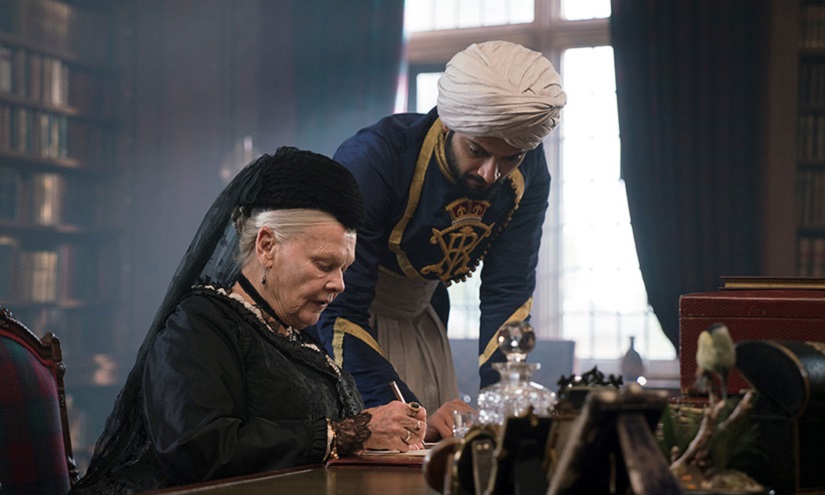
Give Dame Judi Dench a role in your movie and good things are going to happen.
Make her royalty and your film is bound to shine no matter how average and uneven the script might be.
Such is the case with “Victoria and Abdul,” the latest film from British director Stephen Frears.
Based on the book of the same name from Shrabani Basu, “Victoria and Abdul” follows the unlikely, but true account of a Muslim man from India’s friendship and tutelage of an aging Queen Victoria during the final years of her reign in the late 1800s. Their devotion and loyalty to each other creates massive cracks in the British Royal Family and threatens to destroy her reign.
As Queen Victoria, Oscar winner Dame Judi Dench is a stoic, stern monarch withered by decades of loneliness seeking companionship during the waning years of her life.
Over the course of the film, her Victoria warms considerably in response to Abdul’s kindness and friendship and Dench’s performance becomes increasingly engaging as the movie progresses.
Having Dench melt into the role of Victoria is exactly as captivating as it sounds.
While certainly not as broad and demonstrative as Meryl Streep’s turn as the titular character in Frears’ “Florence Foster Jenkins,” Dench could easily see herself earn her eighth Academy Award nomination and second as Queen Victoria following 1997’s “Mrs. Brown.”
Bollywood star Ali Fazal brings warmth and nuance to the role of Abdul.
There’s a slight layer of naivety and amazement Fazal offers early in the film that fades into the background as Dench’s performance almost completely overwhelms the screen.
This dynamic feels intended by Frears, as Abdul takes a considerable backseat once the two begin their work together. Fazal is left with a rather one-note performance, though that one-note of friendly foreigner is played very successfully.
There just isn’t the same level of character depth to the unlikely student/teacher dynamic as can be found in the similar, yet more exceptional “The King’s Speech.”
The film also boasts a wealth of strong supporting talent, including Eddie Izzard as Victoria’s conniving son Bertie and the late Tim Pigott-Smith as the queen’s private secretary.
But the most impressive secondary performance comes from Adeel Akhtar as Abdul’s friend and aide Mohammed. Akhtar delivers a consistent scene-stealing comedic presence in much the same way he sparkled in limited screen time as Naveed in the hit romantic comedy “The Big Sick.”
He is able to provide the same dry, brash humor to Mohammed, but also carries more than his fair share of dramatic acting with a rich, bittersweet performance capped off by two of the best acted scenes any supporting performer will give this year.
The thing that’s most surprising about “Victoria and Abdul” is its subtle, subversive humor that undercuts and accents what otherwise would be a pretty mundane, average period drama.
Jokes don’t fly off the screen in “Victoria,” but audiences paying attention to the banter will be treated with consistent, quality laughs.
Much of the film’s success stems from Frears’ ability to draw quality performances from his actors, most notably his chemistry with Dench, who earned an Oscar nomination for her work in his 2013 film “Philomena.”
While it’s unlikely that “Victoria” will match the same level of critical or awards season success as the four nominations for “Philomena,” Dench will certainly be a strong frontrunner for a Best Actress nomination and the script from writer Lee Hall could be an outside contender in Best Adapted Screenplay.
A very dry film that may rub some audience members the wrong way, “Victoria and Abdul” is a well above average biopic featuring a royal Dench at the top of her game.
Her performance alone is worth the price of admission, and there’s enough dry humor to boot to make “Victoria and Abdul” a drama worth seeing this fall.
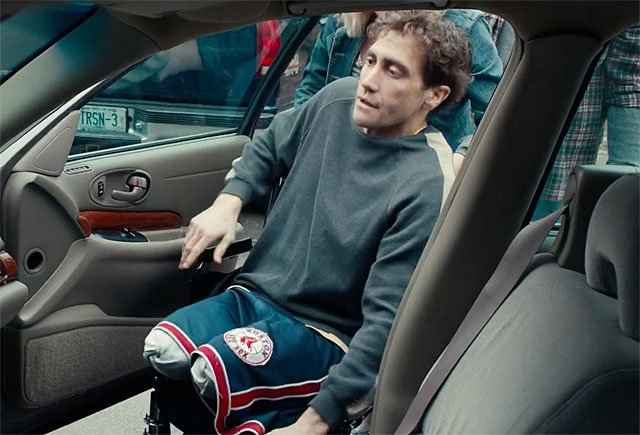
Jeff Bauman is more than a photograph, more than just a symbol of strength during a harrowing moment in American history.
In a now iconic picture, Bauman is shown being carried to safety by a stranger in a cowboy hat following a terrorist attack at the 2013 Boston Marathon.
His journey before and after a homemade bomb took his legs and ripped his life apart has become the subject of “Stronger,” an emotional and gripping drama from director David Gordon Green.
Elegant and touching, “Stronger” doesn’t focus on the attack itself, but rather the physical and mental turmoil the events inflict upon Bauman, his family and estranged girlfriend Erin.
There’s a beautiful simplicity to the screenplay written by John Pollono that shows how Bauman seeks to define himself on his own terms and how something greater can come from the most difficult circumstances.
Academy Award nominee Jake Gyllenhaal does a masterful job giving Bauman immense complexity, balancing Jeff’s natural sense of humor and warmth with a bitter inner coldness that the bombing left inside him emotionally.
It’s a credit to Gyllenhaal’s performance, and especially to Bauman as a man, that everything about Jeff in “Stronger” comes from a place of love, that all his intentions are driven by a deep, rich heart.
No more evident is that love shown than in Gyllenhaal’s remarkable chemistry with Emmy winner Tatiana Maslany, who plays Bauman’s estranged girlfriend Erin Hurley.
The passion that Jeff and Erin have for each other radiates off the screen in a raw emotional way, where it truly feels that every word they speak to one another hammers home to the soul of their partner.
While his is the much larger part, Maslany undoubtably rises to the occasion and matches Gyllenhaal’s dedication and passion for authenticity. Their relationship is the single best part of “Stronger.”
“Stronger” occupies the same physical space and time as “Patriots Day,” Peter Berg’s methodical action/drama about the bombing, but approaches from a distinct, singular perspective.
“Patriots Day” is flashy and attempts to encapsulate the entire experience in a 120-minute film; “Stronger” is much more nuanced and smaller in its examination.
The bombing itself defines “Patriots Day” whereas Jeff Bauman’s inspirational journey is the driving force of “Stronger,” which is a better film on the whole.
Director Green makes the wise decision to stay out of his actors’ way for much of “Stronger,” allowing Gyllenhaal and Maslany ample room to breathe in the moment.
This gives the film a more grounded, realistic tone, fitting Sean Bobbitt’s tempered, unobtrusive cinematography.
The single moment this changes, however, comes via a devastatingly moving flashback sequence that drives viewers inside Bauman’s mental state in a profound way. The effect is brief, yet forceful and does a terrific job of jarring audiences awake and bringing them into the moment.
“Stronger” will ultimately be a fringe awards contender in most categories, though Gyllenhaal’s dynamic and powerful performance could lead to a Best Actor nomination at the Academy Awards.
The one drawback would be a reluctance on voters’ part to fill the category with biographical performances when Gary Oldman’s turn as Winston Churchill in “Darkest Hour” and Benedict Cumberbatch’s role as Thomas Edison in “The Current War” will likely also garner consideration.
Backed by smaller independent studio Roadside Attractions, “Stronger” hasn’t gotten the attention it rightly deserves from audiences who frankly don’t know this film exists. It’s a movie that people simply need to see.
With terrific performances from Gyllenhaal and Maslany and a touching inspirational story, “Stronger” is an affecting drama worth grabbing some tissues and catching in theaters.

Prestige cinema comes at a price.
For some, the nearly two-hour and 45-minute science fiction epic “Blade Runner 2049” is a masterpiece of dynamic, visually stunning moviemaking from French Canadian auteur Denis Villeneuve.
And yet other moviegoers will find the Ryan Gosling sequel to the 1982 Harrison Ford cult classic excessive, boring or outright stupid.
What “Blade Runner 2049” does best is help define who we are as moviegoers. It’s a film that rewards active, engaged audiences seeking deeper meaning artistry. It’s also a film that punishes more passive audiences looking for simple, no-frills entertainment.
“Blade Runner 2049” is a movie drenched in frills, crafted with a discerning eye and a work of art that will be long debated years from now as one of the best films in 2017 and in the sci-fi genre in general.
The less you know about the film heading to the theaters the better, though rewatching Ridley Scott’s original film will help fill in the background. The only explanation of “Blade Runner 2049” needed prior to screening is defining the title itself. In the world of the film, a “blade runner” is a law enforcement officer tasked with the “retirement” or elimination of “replicants,” highly intelligent robot slaves designed to be nearly identical to humans.
Coming off a Best Actor Oscar nomination last year for “La La Land,” Gosling delivers a more reserved, internal turn as a young “blade runner” known simply as K. It’s a performance that won’t blow audiences away on a first viewing; there’s too much happening on screen to notice the nuance in Gosling’s somber, emotional work.
With closer examination, viewers will appreciate the subtle changes Gosling brings out in K as the plot twists and winds towards its conclusion. K’s conflict as he struggles with his humanity and the job required of him is delicately unwoven by Gosling in a performance rarely matched in science fiction filmmaking.
Thirty-five years after starring in “Blade Runner.” Ford returns in “2049” with a decidedly smaller, but equally intriguing performance as now-retired blade runner Rick Deckard.
While it may seem at first glance that Ford lacks interest in revisiting old roles, he invigorates Deckard with a well-worn weariness that hides deeper emotion. Support for the film as a whole as well as Ford’s storied career could lead to a surprising, yet deserved Oscar nomination for Best Supporting Actor.
Villeneuve takes his time with a deliberate, metered film that allows “Blade Runner 2049” plenty of room to breathe. This lingering in and out of scenes will thrill viewers mesmerized by the vibrant cinematography and will infuriate audience members longing for the film to shave off 20-30 minutes off its running time.
But “2049” would be such a dramatically different, lesser film if constrained by time that its slight excesses become wholly justificiable and necessary to the overall success of the film.
Visually, “Blade Runner 2049” is one of the most dynamic, spectacular pieces of cinematic art you’ll find in a long time. The care, craft and artistry taken to frame, light and shoot each second of “Blade Runner 2049” is so meticulously designed that the film stands as a 160-minute advertisement advocating for the continued longevity of cinema as an art form best seen on the big screen of a movie theater.
The film’s cinematographer, Roger Deakins, has been nominated for thirteen Academy Awards for shooting iconic movies like “The Shawshank Redemption,” “No Country for Old Men” and “Skyfall.” Without a doubt, “Blade Runner 2049” is his most stunning, captivating work to date and has to be considered the frontrunner for the cinematography Oscar.
Deakins winning his first Academy Award on a fourteenth nomination would not be considered a lifetime achievement award, but the cap on top of the pinnacle of his illustrious career.
Strong critical support and dazzling technical work will likely make “Blade Runner 2049” a contender in numerous Oscar categories including Best Picture in much the same way “Mad Max: Fury Road” did with 10 nominations in 2015.
Dynamic and captivating, “Blade Runner 2049” is without question one of the best films to arrive in theaters in 2017. Its picture-perfect cinematography and terrific performances combined with a complex storyline and lengthy running time make “2049” a must see or a must skip film depending on what kind of moviegoer you are.

Billie Jean King’s infamous tennis match with aging trash talker Bobby Riggs takes a back seat to private, personal moments in the new biopic “Battle of the Sexes.”
While the film makes its mark with the 1973 King/Riggs showdown at the Houston Astrodome, viewers rarely see the two on screen together as directors Jonathan Dayton and Valerie Faris meander through King’s love life and Riggs’ incessant gambling and showmanship.
There’s a number of excellent performances including Academy Award winner Emma Stone as King and Academy Award nominee Steve Carell as Riggs. But the scenes are so disjointed and uneven that “Battle of the Sexes” misses the mark as a feature film.
It’s clear that Dayton and Faris want to be as complete and thorough as possible, but in doing so, no one aspect of “Battle of the Sexes” succeeds.
It seems inevitable that Stone will earn another Academy Award nomination for her portrayal of King, which is nearly on par with her Oscar winning turn in “La La Land” and has the real King’s seal of approval. Stone does a wonderful job of bringing audiences into King’s conflicted mind with a single look and she displays remarkable chemistry with her “Birdman” co-star Andrea Riseborough as King’s hairdresser and mistress Marilyn.
Love takes center stage throughout “Battle of the Sexes,” especially in Stone’s storyline as King seeks to balance her love for her husband Larry and emerging infatuation with Marilyn against her obsession with tennis.
An additional subplot that squares King off against the male-dominated U.S. Lawn Tennis Association gives Stone plenty of meaty moments to shine in and will make her Oscar highlight reel difficult to wean down.
By comparison, Carell’s slimy, arrogant and broad turn as self-described “male chauvinist” Riggs feels secondary, as if Dayton and Faris decided to make the Riggs storyline an occasional afterthought for comedic relief against the more dramatic fodder.
Regardless of how it’s used in the film, Carell barrels his way through scenes with brash aplomb with a performance that evokes his Golden Globe nominated work in “The Big Short.”
“Battle of the Sexes” also boasts an outstanding, though underutilized supporting cast including comedienne Sarah Silverman as King’s business manager, Austin Stowell as King’s almost too understanding husband and Alan Cumming as King’s stylist representing the plight of closeted LGBTQ individuals during the era.
Of note among the supporting players is Bill Pullman’s all too convincing work as U.S. Lawn Tennis Association head Jack Kramer, a part Pullman melts into as he delivers frank, misogynistic diatribes with ease.
Technically the film is masterfully shot by Linus Sandgren, who comes off Oscar winning work on “La La Land” to deliver a rich, deep tone to “Battle of the Sexes” that simultaneously highlights period color palettes and contemporary camera work.
It’s a film that feels made in the 1970s in almost documentary style where there’s a coarse grit to each frame that makes “Battle of the Sexes” appear as a series of pictures shot in succession during 1973.
“Battle of the Sexes” will probably be in awards conversation this fall thanks in large part to strong support from the film’s subject and its inclusive message.
Among the potential nominees, Stone has the best chance to win an Academy Award, though a Best Picture nomination isn’t out of the question and a win could result under the right set of circumstances.
Carell likely will miss out on accolades for his work as Riggs, though it could be lumped into the minds of voters when they consider his turn in Richard Linklater’s “Last Flag Flying” due in November.
Strong turns by Stone and Carell make “Battle of the Sexes” a solid, yet flawed biopic that does justice to its subject matter without rising to an elite level.
Moviegoers interested in watching as many award contenders as possible should find a way to catch “Battle of the Sexes,” though rushing to the theater might not be necessary.

You’re not going to like the new Jennifer Lawrence movie.
It’s a slow, plodding arthouse melodrama filled with allegory and widely open to interpretation. If you can make it through the entire two-hour running time, you’ll be stunned how a film like this gets made.
But that’s just the way director Darren Aronofsky likes it. He relishes how audiences have left “mother!” in disgust, making it one of the rare features to earn a F from CinemaScore, which polls audience reaction.
There’s an entire promotional campaign that accurately bills “mother!” as perhaps the most polarizing film this decade.
“mother!” isn’t good. It isn’t bad, either. It’s both and neither, simultaneously.
The film is nothing short of a spectacular disaster, beautifully brilliant in a “why would people want to see this” sort of way. Aronofsky and Lawrence have teamed to make a grotesque, melancholy feature that leaps to the top of any best bad film or worst good film list.
“mother!” is a uniquely enthralling experience that almost no one should go and see in theaters, but that the most adventurous audiences will find absolutely captivating.
If you decide to trek and find “mother!” on the big screen, it’s important to know as little as possible going into a screening. This will allow viewers to authentically experience how Aronofsky layers and builds his complex, controversial allegory. The weird, subversive brilliance of what Aronofsky attempts to create on screen will hit different audience members at different times, leaving viewers stunned, scarred, upset and any other multitude of emotions.
Names are never truly spoken within the film, a deliberate construct used to develop the allegory. Lawrence’s credited role of Mother lives in a large isolated farmhouse with her husband (Javier Bardem), a brooding poet only referred to as Him. When a Man (Ed Harris) and Woman (Michelle Pfeiffer) arrive unannounced at the home, their presence sets off a chain reaction that shakes the foundation of the couple’s marriage.
Lawrence delivers a tremendous, subtle performance with the entire film resting on her shoulders, as Aronofsky frequently frames the camera tightly on her pale, withering face. Her turn isn’t flawless, especially as the film progresses deeper into Aronofsky’s mind, but Lawrence plows forward with reckless abandon.
“mother!” forces Lawrence on an emotional roller-coaster that she rides with vigor, giving her best in the moments that nearly crack the character’s core. This will prove to be among her most iconic performances, as much for her devotion to being present in the moment as the strangeness of the film’s content.
Oscar winner Bardem thrives in this environment, given the freedom to saunter in and out of scenes with a strong, brooding character that reverberates in the moment long after he’s no longer present. Bardem is a master of twisting a phrase so tightly that a character’s true intentions are a complete mystery. There’s something dynamic about his performance that gives “mother!” the energy necessary early in the film to bridge the gap until Aronofsky’s script reveals itself
“mother!” has the attitude and vibrancy as if audiences are peering inside the mind of the film’s auteur director after a weekend bender.
Aronofsky simply doesn’t care about the audience reaction and approaches everything from dialogue to story structure to the overwhelming number of extreme closeups on Lawrence in this manner. The result is an elegantly infuriating dramatic dance that culminates in one of cinema’s wildest rides.
There’s simply no chance that “mother!” will be honored with any major accolades this fall. It’s a far too divisive and controversial film to hold much of a chance for an Academy Award win. It would not be surprising, however, to see Lawrence’s emotionally charged, increasingly demonstrative performance earn Best Actress considerations as the film’s lone nomination.
“mother!” isn’t for the mainstream audiences it was promoted for; it isn’t even the provocative horror film it was made out to be. But there’s something alluring in the broken brilliance of Aronofsky’s work that might engage and excite a small portion of frequent moviegoers keen on experiencing film in a way they’ve never seen before, or likely ever again.
 Cinematic Considerations