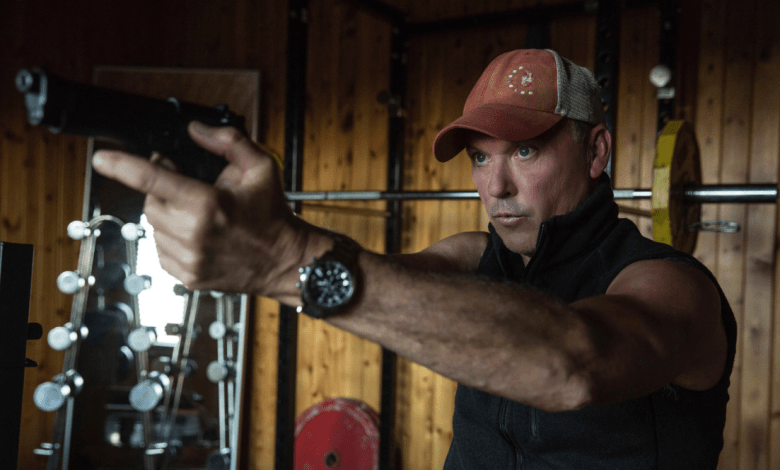

There’s a room with a half-dozen armed terrorists that need to be taken down.
It’s possible to slowly take them out one by one using stealth and smarts, or by just running in the room and shooting them all in the head.
“American Assassin” is the kind of movie that breaks down the door and shoots all the terrorists in the head.
With a name like “American Assassin,” it’s hard to imagine this hyper-violent, in-your-face action film doing anything else.
Based on the Vince Flynn novel of the same name, “American Assassin” follows the rise of Mitch Rapp (Dylan O’Brian), an average American whose obsession to slaughter bad guys begins after a terror attack claims the life of his fiancée.
He’s soon reined in by the Central Intelligence Agency and sent to train under legendary field ops handler Stan Hurley (Michael Keaton), which leads to a globe-trotting mission of nuclear proportions.
O’Brien plays Rapp as an out-of-control missile, whistling around at rapid fire pace looking to destroy its target without hesitation. “American Assassin” doesn’t ask the young “Maze Runner” star to exert too much thought while taking on a room full of terrorists with reckless abandon.
O’Brien’s Rapp is a loaded gun with an itchy trigger finger ready to explode at a second’s notice.
And yet still, there’s a stoic calm about his performance in the quieter moments that almost belies a deeper emotion to Rapp, but those moments quickly fade out.
It’s become common for studios seeking out a grizzled old veteran to turn to Oscar nominee Keaton, because Keaton always delivers. “American Assassin” is no exception.
His Stan Hurley is a beleaguered, war-ravaged man tasked with weaponizing Rapp and turning him loose on indiscriminant bad guys with foreign accents.
There’s not much to the part, but Keaton is able to turn nothing into at least a little something, which is more than can usually be said about acting in action movies.
Most of the “baddies” are random, forgettable placeholders whose sole purpose is to kill and be killed.
The one exception is Taylor Kitsch, whose Ghost is the veritable Rapp predecessor gone rogue, thus fulfilling one of action films’ most cliché tropes.
In this regard, Kitsch essentially succeeds, but still has a hard time acting his way out of a paper bag. But given how little regard “American Assassin” gives to its enemies, this makes sense.
The success of “American Assassin” lies in its unforgiving, relentless action and director Michael Cuesta doesn’t disappoint.
From the opening moments, “Assassin” is a hyper-realistic, stunningly violent display of R-rated blood, guts and terror.
The film’s inciting incident, an attack at a tourist beach in Spain, is among the most graphic, horrifying displays of plausible violence seen on screen in some time. Given recent terrorist attacks, this opening will undoubtedly affect audiences in one way or another.
As “Assassin” progresses, the action becomes increasingly unrealistic and absurd as is to be expected in a typical genre film.
Here, the filmmakers rely on a large CGI-budget to accomplish massive set pieces on land, sea and sky in a bombastic finish that feels torn out of the pages of a bad James Bond script.
But even then, Cuesta ramps up the violence with a daringly, cringe-inducing torture sequence that will unsettle viewers.
There’s nothing particularly ground-breaking or special about “American Assassin,” but that doesn’t mean it’s not above average action fodder for those seeking an escapist adventure at the movies.

Reese Witherspoon’s newest movie, the romantic comedy “Home Again,” is a soft pillow and warm blanket to wrap up in.
It doesn’t matter how well the pillow is made or if the blanket is itchy. Comfort is what counts.
Such is the case with “Home Again,” an overly familiar, safe romantic comedy in the vein of a Tom Hanks and Meg Ryan vehicle, yet without any of the wit and charm.
It’s an incredibly easy film to enjoy in the moment, but somehow leaves viewers unsatisfied.
Something’s clearly missing, though it’s never quite clear if the extra oomph “Home Again” needed was left on the cutting room floor or out of the script entirely.
In typical rom-com fashion, the plot of “Home Again” is thin and unlikely. Witherspoon’s Alice is the daughter of a deceased Hollywood director and moves back into her father’s luxurious home with her two daughters after separating from her husband.
She stumbles across three young filmmakers trying to make a black-and-white (read: serious) movie, and as it always happens, the trio move in with her and her family.
Witherspoon plays the role with her usual breezy attitude, making Alice easy to get behind and root for despite never really knowing what went wrong with her marriage.
It’s not a flawless performance, but Witherspoon performs so effortlessly that any flaws in the character work don’t really seem to matter, a truism of most romantic comedies.
There isn’t much chemistry with Pico Alexander, who plays love interest Harry, or veteran character Michael Sheen as her estranged husband Austen for that matter.
It’s especially troubling for the usually superb Sheen, who plays the role as if he were simply reading lines off a script during rehearsal.
Alexander works hard as Harry in a role he clearly wants to go all out for, despite being hamstrung with filmmaking buddies Teddy (Nat Wolff) and George (Jon Rudnitsky) sharing screen-time and storylines.
Their work, in a perfect reflection of the film as a whole, is fine in a passed-the-test, C-minus sort of way, but nothing really moves the needle in one direction or another.
Perhaps the biggest flaw of “Home Again” is the downright criminal underutilization of Candace Bergen as Alice’s mother Lillian, who floats in and out of the picture at a whim despite being the most engaging, enjoyable character in the entire film.
Investing more time in Lillian, as well as Alice’s two young daughters, would have been much preferable to the self-indulgent, knowing diatribes about how movie studios manipulate young filmmakers.
Perhaps this is the right time to mention that writer/director Hallie Meyers-Shyer is a first-time filmmaker boosted by her director parents, including mother/producer Nancy Meyers of “Something’s Gotta Give” and “The Holiday” fame.
“Home Again” wraps itself up in such a tight little bow that it’s nearly impossible for viewers to relate to with an ending so sugary sweet that audiences may feel a toothache coming on.
It almost works better as an extended television pilot for a series that never received a full season order.
While clearly not on the same level as the vastly superior “The Big Sick,” there is a place for films like “Home Again” on the Hollywood landscape.
Audiences could do a lot worse than spending a casual 90-minutes with Reese Witherspoon in a romantic comedy, even when there’s not much romance to go around.

Hollywood’s going to get the wrong idea.
It doesn’t matter that action-comedy “The Hitman’s Bodyguard” has zero major competition at the box office or was released in a month where studio films go to die.
All that truly matters, unfortunately, is that the Ryan Reynolds and Samuel L. Jackson movie just clinched its third consecutive week at number one in national ticket sales.
That should be enough to kick start plans for a sequel and a half dozen vaguely similar movies to enter pre-production this week.
But for audiences, “The Hitman’s Bodyguard” represents yet another paint-by-numbers, rushed product that seeks to trick viewers with flashy trailers in hopes of quick cash.
In this comedy scarce of laughs, top assassin Darius Kincaid (Jackson) has been called to testify on the war crimes of a tyrannical head of state.
In order to ensure his arrival, former bodyguard Michael Bryce (Reynolds) has to get Darius to the court on time.
While each actor is independently funny in their own right, Reynolds and Jackson don’t demonstrate much chemistry on screen as Reynolds’ snarky tone clashes with Jackson’s direct, no-nonsense attitude.
It’s almost as if both performers are going through the motions, rehearsing the scenes rather than engaging in them.
For Jackson, this is especially a disappointment as “Bodyguard” leans heavily on the veteran actor’s trademark expletive and acknowledges just how often he claims someone commits incest.
The actual character of Darius becomes completely secondary to Jackson imitating himself from better films, a sad caricature of a much more talented performer than appears in “Bodyguard.”
Reynolds comes off a little bit better as his roguish charm is occasionally appealing as Michael, but even the “Deadpool” actor can’t buy the laughs Tom O’Connor’s subpar script intends him to.
His chemistry is surprisingly better with thinly-written love interest Elodie Yung, though even that relationship doesn’t really do much to tip the scales and make “Bodyguard” an interesting film.
Academy Award nominee Gary Oldman is known for melting into his roles in accent, character and makeup.
Perhaps he would have been better served disappearing from “Bodyguard” entirely, as his second-rate baddie Dukhovich fails to make any impact on screen no matter how much Oldman snarls and spews evil.
It’s a paycheck effort given to allow Oldman the creative freedom to work on projects like “Darkest Hour,” where Oldman will star later this year as Winston Churchill. Nothing more, nothing less.
The film’s action sequences are as hit or miss as its attempts at comedy and vary wildly on a stunt to stunt basis.
There are moments – like when Michael is flung through a car windshield and lands safely on his feet – that can be mouth-dropping.
Other moments feel like stolen imitations from better action films or something that would be better served in the next Steven Seagal straight to DVD adventure.
Much of this blame has to lay at the feet of the film’s director, Patrick Hughes, who essentially attempted to recreate his last feature, “The Expendables 3,” and build a buddy comedy around it. It’s part spy film, part action flick, part R-rated comedy, and 100 percent mediocre.
“The Hitman’s Bodyguard” is destined to become the kind of basic cable movie viewers stop and watch occasionally while flipping channels, but never something that anyone seeks out as must-see entertainment.
Box office success doesn’t always line up with quality filmmaking as much as we might want it to.
There’s hardly a better example than the exceptionally mediocre “The Hitman’s Bodyguard.”
Taylor Sheridan can write the tail off a script.
The creative mind behind probing, emotional thrillers like “Sicario” and “Hell or High Water” takes to the director’s chair for the first time with “Wind River,” his third feature film script and perhaps the most stoic, reserved entry in his filmography.
Set in the harsh cold of the Wind River Indian Reservation in rural Wyoming, Sheridan’s thriller takes on the best and worst of its environment with a tense, bone-chilling crime drama that also suffers from a glacially slow opening act, a rare imperfection in an otherwise outstanding film.
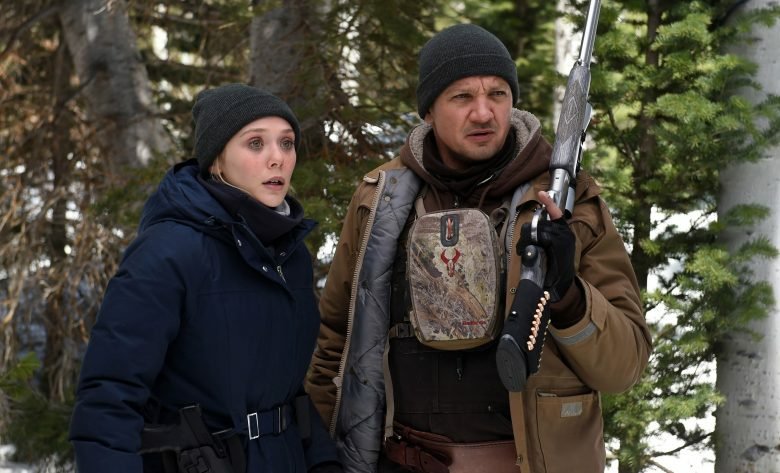
Academy Award nominee Jeremy Renner stars as Cory Lambert, a Wildlife and Fisheries Department tracker who stumbles across the frozen corpse of a missing Native American girl miles from home in the snow. When FBI agent Jane Banner (Elizabeth Olsen) is called into investigate, the duo begin hunting for the truth about her death.
While Renner will probably be more closely attached to his work in the Marvel Cinematic Universe or Kathryn Bigelow’s Oscar-winning “The Hurt Locker,” there simply isn’t a better performance from this talented character actor than his Cory in “Wind River.” Renner perfectly captures the inner conflict of Cory’s soul both verbally and non-verbally in every moment of “Wind River.”
Viewers can feel the pain in Cory’s eyes desperately fighting and clawing to get out while he devastatingly forces his emotions down. Every look, every word from Renner is cold, calculated, precise in a turn that marks a new height in Renner’s illustrious career.
Olsen delivers a solid, unspectacular performance as Jane, the head-strong, but over her head FBI agent trying to bring justice to a situation where little justice is ever served. Gil Birmingham, who was a revelation as Jeff Bridges’ partner in “Hell or High Water,” is equally phenomenal in “Wind River” as the young woman’s grief-stricken father, permanently scarred by his daughter’s death.
“Wind River” is a film that’s admittedly rough around the edges, intentionally as rugged and worn as Renner’s Cory appears on screen. It’s a movie that openly envisions what might happen if Clint Eastwood’s Man With No Name had become stricken with grief, what emotional sobs in silence look like both visually and internally.
As such a cold movie, “Wind River” struggles to draw viewers in during its first quarter, keeping a stoic, somber distance from its audience while Sheridan builds the plot in linear, crime procedural fashion. When the tone flips on its head later in the film, “Wind River” becomes something else entirely: a vivid, gripping peek into life on the fringes.
Sheridan’s biggest strength as a director comes from how intricately he knows the script, which he shot after a single draft. “Wind River” circles its plot like a lion slowly trapping its unwitting prey, until all of a sudden, it’s right on top of you.
Because he feels at ease in the film’s quieter, dialogue-heavy moments, Sheridan allows himself the freedom to take bigger chances in the narrative’s action sequences.
Several times in “Wind River,” Sheridan places the camera as the viewpoint of one of the characters, allowing audiences to experience heightened anxiety. Putting viewers in Jane’s shoes as she sweeps a crime scene with gun drawn, for example, is one of the film’s most engaging, visually stimulating moments.
The film’s independent status makes “Wind River” a long shot for any awards consideration, though Renner’s performance and Sheridan’s script are both certainly worthy of acclaim this fall. Backing from The Weinstein Company, a notoriously heavy spending in award campaigns, should bevy its chances of being this year’s “Hell or High Water,” a film that earns several key nominations but fails to win in any category.
Led by stellar performances from Renner and Olsen as well as another terrific Sheridan screenplay, “Wind River” is the year’s first true quality dramatic thriller to hit the big screen.
In a summer dearth of heavier, gripping films, this Sundance favorite is worth making a trip to catch in theaters.
It’s all a matter of perspective.
The concept of one man’s trash is another man’s treasure comes to the forefront in “The Glass Castle,” Destin Daniel Cretton’s family drama based on Jeanette Walls’ best-selling memoir of the same name.
It’s a tale of a family at odds against itself, father against mother, children against parents, fighting separately but together in a struggle for survival in rural America. Father Rex is a dreamer distrusting of upper class society who longs to have his children experience life rather than be drug through it. Chronic alcoholism and poverty have placed the Walls family in various destitute states for most of their childhood.
“The Glass Castle” floats back and forth, examining Jeanette’s childhood in rural West Virginia and contrasting worldview as an engaged journalist living in a New York City penthouse while her parents squat in an abandoned building. Scenes in both timelines often work well, but there’s a noticeably distinct lack of cohesion in the narrative from start to finish.
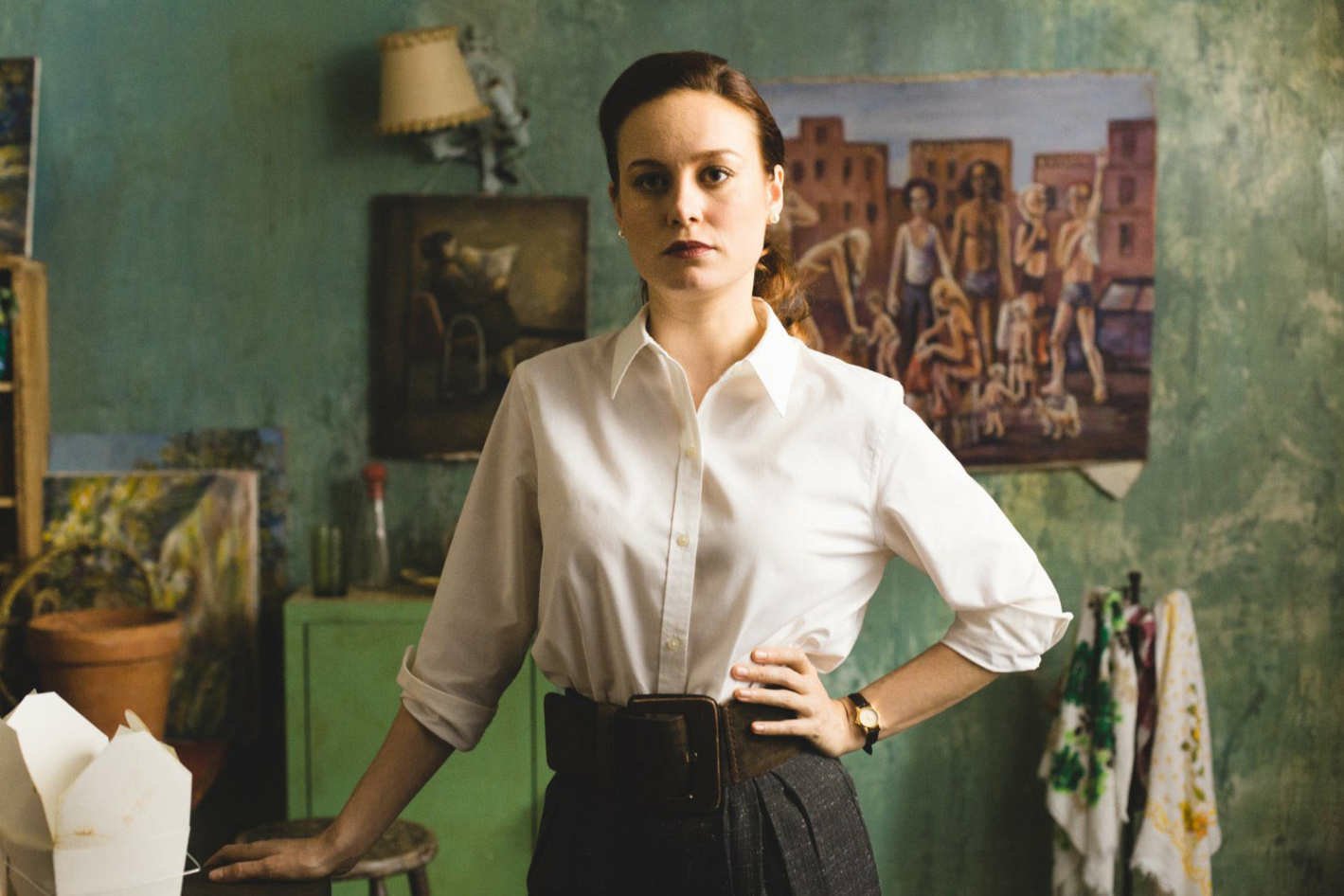
As the eldest Jeanette, Academy Award winner Brie Larson delivers a standout performance with her ability to project confidence and inner turmoil simultaneously at the drop of a hat. Each choice Larson makes with the character is subtle and calculated, reflecting her immense understanding of Jeanette and the angst she feels inside.
Oscar nominee Woody Harrelson has the film’s flashiest turn as Rex, displaying moments of brilliance in the quietest moments of “Glass Castle.” When Harrelson allows Rex to be small and present in the moment, there’s an immense heart and charm to the portrayal that it’s nearly impossible not to fall in love with. Contrast that with Rex’s large displays of drunken bravado where Harrelson teeters towards the edge of caricature and audiences can easily disengage from any redemption arc Rex might travel down in the course of the film.
Third-billed in a role that could have easily underutilized her talents, Academy Award nominee Naomi Watts sparkles in limited screen time as the conflicted, but ever joyful matriarch Rose Mary. Likewise, many of the young performers who portray the four Walls children over the course of the film turn in terrific ensemble performances, especially Ella Anderson as young Jeanette and Iain Armitage as youngest Brian.
There’s an elegance to the way Cretton approaches the material visually, allowing audiences to peek into a world where bright colors seem brighter and darkness feels more pitch black.
Cinematographer Brett Pawlak’s poignant framing and camera work do a masterful job of bringing Cretton’s desire to say something about present day America with “The Glass Castle.” The problem is Cretton just doesn’t say what he means.
Cretton brings the most out of his actors in “Glass Castle,” especially Larson, who starred in Cretton’s Sundance hit “Short Term 12.” What doesn’t necessarily work as well for the writer/director is the film’s meandering storyline where every fourth scene falls a little flat.
Perhaps a better cut of the film or some tightening of the script to shave 15-20 minutes off the two-hour running time would elevate the material as a whole and allow the strong performances to shine more.
Regardless, “The Glass Castle” does carry enough weight for Larson to potentially earn another Best Actress nomination after winning in 2016 for “Room.” Supporting nominations for Harrelson and Watts might have been in the cards, though an early release date and mixed reviews for the film will put both on the outside looking in when award season rolls around.
A flawed, but promising family drama, “The Glass Castle” might be fairly accused of playing things too even-handed, failing to scathingly indict the avant-garde lifestyle of the elder Walls or fully embrace a feel good tear-jerker.
But for large budget independent work, “The Glass Castle” features a terrific ensemble cast with dynamic visuals worth seeking out at the theater.
Kathryn Bigelow is used to telling stories about the fragile nature of war.
Her last two films – 2009’s Oscar-winning “The Hurt Locker” and 2012’s “Zero Dark Thirty” – examine the immense pressure and brutality felt by those living in conflict zones, powder-kegs ripe to explode in violence at any moment.
With her first film in five years, “Detroit,” the Academy Award winning director examines conflict closer to home.
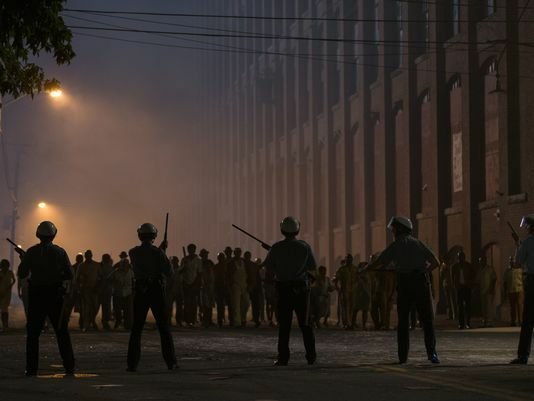
Taking on the racially charged 12th Street Riots in 1967, Bigelow and screenwriter Mark Boal place themselves at the heart of one of the deadliest, most destructive events in American history.
“Detroit” is the story of three men – two African-American and one white – whose paths and circumstances brought them to the Algiers Hotel where the ensuing nightmare reflects an ominous resonance to modern times.
The second act of “Detroit” plays out like a psychological horror show as Detroit beat cops verbally and physically terrorize hotel guests, ultimately resulting in multiple fatalities. It’s in this most gruesome middle section of the film that Bigelow does her best work, balancing multiple narratives in a somber display of voyeurism.
“Detroit” opens and closes rocky as Bigelow attempts to contextualize the events at the Algiers Hotel.
Within the well-crafted 20-minute opening of the film, it’s hard for viewers to understand or identify with any of the major players as things keep whipping from storyline to storyline. The opposite can be said for the unnecessarily elongated ending where events play out in bland, monochromatic fashion.
Where “Detroit” shines the most is in its deep, talented cast that provides knockout performance after knockout performance.
There’s a subtle brilliance in the way Will Poulter approaches the role of Krauss, the film’s primary antagonist that approaches ‘racist boogeyman’ but never quite falls over into caricature. Poulter’s eyes often boil over in a manic rage as Krauss attempts to coerce confessions. It’s in the quieter moments, however, that the performance really shines as Poulter is able to internally justify Krauss’s unjustifiable actions, expressing Krauss’s inner demons with cold, glazed-over stares that chill audiences’ bones.
Poulter’s brash, demonic performance is counter-balanced nicely by John Boyega’s even-keeled, measured turn as Dismukes, a young African-American security guard who gets caught in the crossfire while trying to douse racial tensions. Though much of the performance is internalized, Boyega takes great care to show audiences Dismukes’ inner monologue as he struggles with the events unfolding around him.
Algee Smith is a revelation as Larry, lead singer of an upstart Motown group called The Dramatics who tries to escape rioting on the streets of Detroit by hiding out at the Algiers. Smith is able to capture each and every moment within “Detroit” with such a pure energy and emotional authenticity that his performance resonates with audiences and places viewers in Larry’s shoes beautifully.
Bigelow assembles a terrific ensemble cast to fill out the rich, multi-layered story including top performances from Anthony Mackie as a returning Vietnam veteran thrust into Detroit’s racial divide, Jason Mitchell as a brash teen antagonizing the police and Jacob Latimore as Larry’s best friend and band manager Fred.
There’s a smooth ease to cinematographer Barry Ackroyd’s artful style, which represents the frantic nature of on-screen events with “head-on-a-swivel” precision. Yet at the same time, “Detroit” never has the herky-jerky camera frenzy popular in action films. More so than most movies today, the cinematography of “Detroit” enhances and heightens the dramatic tension as it weaves in and out of the fray with precision.
Releasing “Detroit” in early August does no favors to its chances for award season success as it will likely be far from the minds of voters come this fall. But make no mistake, Bigelow’s film is a captivating and horrifying film worthy of a Best Picture nomination and acting nods for Poulter and Smith.
While not a flawless movie, “Detroit” represents the gritty, visceral filmmaking sorely needed from major studios.
This award-worthy film is a terrific change of pace film sure to grip audiences and provoke needed discussion about the world in which we live in.

Arthouse independent filmmaking mashes quite nicely with blockbuster action in “Atomic Blonde,” Charlize Theron’s latest movie billed as a cross between the debonair suave of James Bond and the lethally brutal “John Wick.”
What director David Leitch actually delivers, however, is an interesting, albeit graphic take on spy serials in the style of a John le Carré novel. It’s “Tinker Tailor Soldier Spy” for the 21st Century, if you will.
Theron stars as British intelligence operative Lorraine Broughton, tasked with infiltrating a divided Berlin in 1989 just before the wall fell in search of a list of undercover spies hidden across the globe.
While the plot of “Atomic Blonde” may seem straight forward, the execution is anything but.
Thematically, Leitch’s film feels drenched in spray paint shining with a bright neon glow and that design permeates its way into every aspect of “Atomic Blonde” from the cinematography to the action sequences to the acting performances themselves.
Aside from a few stoic upper management parts, every performance within Leitch’s film radiates balled up energy like an over-cranked children’s toy waiting to be released.
Perfectly cast as the cold-as-ice spy with emotions bubbling under the surface, Oscar winner Theron seamlessly eases into her role as Broughton. Though the film opens with her emerging naked and bruised from an ice bath, it’s the scars Theron subtly hints at under the skin that permeate and haunt her performance.
The single best performance within “Atomic Blonde” is offered by James McAvoy, who gives his David Percival a controlled mania that could only result from far too many consecutive viewings of “Fight Club.” Whether he’s spouting off Nietzsche or shaking down informants for intel, McAvoy radiates a chaotic balancing act between loyalty to his country and self-serving rule bending. It’s always the most interesting thing to watch on screen.
Sofia Boutella, who has worked her way into larger roles in action films after “Kingsman” and “The Mummy,” does her best and most promising work to date here as naïve love interest Delphine. Boutella stands her own in scenes opposite both McAvoy and Theron and never feels outmatched or out of place.
“Atomic Blonde” is also aided by strong supporting performances from John Goodman and Toby Jones as stoic middle management types working for MI6 and the CIA. Scenes with the pair debriefing Broughton are among the film’s best and give “Atomic Blonde” the dramatic weight needed to elevate Leitch’s film above standard action film fodder.
In terms of spectacle, “Atomic Blonde” usually opts for flashy cinematography over big explosions.
The main exception here is a stunning five-plus minute action sequence that looks like it was shot all in one continuous take. Witness Theron – who performed 98 percent of her own stunts in the film – take on several Russian henchmen while dragging an informant to safety will last as the film’s most iconic and impressive moment.
There’s a level of brutality inflicted by and upon women that hasn’t been seen in a major feature film since 2011’s “Sucker Punch.” And while “Atomic Blonde” does occasionally evoke elements of that average, under-seen film, Leitch takes care to ensure that the violence is offset with memorable character performances on top of the flash. His film has a lot more grit and heart as a result.
Moviegoers looking to catch a summer action blockbuster that takes chances while providing a bloody good time should make their way to a local theater to catch “Atomic Blonde.”

Consider the Oscar race officially on.
Christopher Nolan, famed British auteur of award-winning movies like “Inception” and “The Dark Knight,” cements his directorial seal on the historical drama genre with “Dunkirk,” a sweeping World War II film unlike anything you’ve ever seen before.
Despite the better part of five months of movies still to come, Nolan’s tenth feature will unquestionably end the year among the top two or three best films of 2017 and help redefine a genre for many years to come.
Based on true events, the film chronicles attempts to rescue 400,000 British soldiers stranded on the beaches of Dunkirk, France surrounded by German forces.
Told in three overlapping timelines, “Dunkirk” follows events as they play out on land, air and sea in a dynamic, nonlinear fashion. Audiences will have to pay careful attention to the nuances of how and why Nolan weaves these three plotlines into one cohesive story.
Better still, “Dunkirk” is a film that begs repeat viewing; first to become fully immersed in the captivating grandeur of Nolan’s spectacle and then later to capture all the subtlety required to completely understand the film’s brilliance.
A true ensemble piece, “Dunkirk” has a bevy of veteran and novice actors offering poignant, stoic performances that blend together flawlessly.
Whether it’s Oscar winner Mark Rylance at the helm of a small yacht headed towards war or newcomer Fionn Whitehead becoming overwhelmed on the beaches, there are no stars here. Not Tom Hardy and surprisingly not even former “One Direction” band member Harry Styles feel too big for “Dunkirk.”
By keeping character development intentionally minimal and using a large number of relatively unknown British actors in major roles, “Dunkirk” thrives on the intense urgency of war as anyone involved in the conflict could die at any moment.
Words are spoken only when absolutely necessary and names are even less important in “Dunkirk,” perhaps the most intriguing and avant-garde way Nolan tells a conventional historical drama in the least conventional way.
For his rousing turn as a shell-shocked sailor pulled from the water, Cillian Murphy is credited simply as Shivering Soldier. It’s a mere example of just how insistent Nolan is in making “Dunkirk” about thousands rather than a tale of a single individual or small group of soldiers.
The focus is on the bigger picture – rightfully so – and often driven home with iconic, wide sweeping shots. Watching Nolan movies on the big screen has always been a must-see cinematic experience, but where audiences see his latest film matters more than ever.
Nolan and director of photography Hoyte von Hoytema shot “Dunkirk” using primarily IMAX cameras on 70mm film, a rarely used format that makes panorama shots feel like intense close-ups. Watching “Dunkirk” on a regular movie projector dulls the film’s vibrancy and prevents audiences from feeling the full weight of the tension Nolan seeks to create on screen.
The remarkable claustrophobia that pervades many of Nolan’s most intimate scenes, combined with an Oscar-worthy score from legendary composer Hans Zimmer, gives “Dunkirk” a colossal feel that no amount of computer generated imagery could replicate.
While the cinematic depth Nolan creates is apparent, seeing this play out on an IMAX screen with bone-rattling sound that leaves arms shaking well after leaving the theater increases the effect 100-fold.
There’s simply nothing like “Dunkirk,” one of the best World War II films ever made, in a large format theater.
“Dunkirk” rivals “Inception” and “The Dark Knight” as Nolan’s finest work and has to be among the major contenders come award season.
Though there is not a singular acting performance likely to be honored, this should be the first Best Director Oscar nomination for unquestionably the best filmmaker this generation and a front runner for Best Cinematography, Best Score and especially Best Picture.
With “Dunkirk,” Nolan continues to prove why he’s a true cinema master with his most personal and tightly composed feature to date. Moviegoers would be amiss to not catch this World War II epic on the biggest screen possible.
Unless you happen to have a 70 mm film projector lying around the house, no home theater experience will compare.
Films like “Dunkirk” are why we go to the movies.

Falling in love with a girl in a coma sounds like a corny premise for a romantic comedy.
But “The Big Sick” isn’t simply a knockoff of “While You Were Sleeping.”
It’s something much, much more.
Based on the true romance of star Kumail Nanjiani and his wife Emily V. Gordon, “The Big Sick” is one of the most honest, straightforward, quality pieces of American cinema this decade. There’s nothing flashy; no gimmick cameos or mindless dirty comedy bits.
“The Big Sick” is a story of boy meets girl, refreshingly simple and genuine. It’s one of the best movies of 2017 and you have to see it as soon as possible.
The film follows Nanjiani, who plays himself, as he meets young medical student Emily (Zoe Kazan) at a comedy club and the couple begin dating. Several months into their romance, Emily becomes hospitalized with an unknown disease and she is placed into a coma. Kumail’s parents, devoutly Muslim Pakistani immigrants, complicate matters by forcing Kumail to meet Pakistani women in hopes of an arranged marriage.
Though it helps that the “Silicon Valley” actor is playing himself in a film he co-wrote, it never truly feels like Nanjiani is acting in “The Big Sick.” The performance is so effortless and genuine that it often feels documentary in nature, making Kumail easy to root for in spite of some of the admittedly stupid things he says to Emily.
His performance encapsulates everything that makes “The Big Sick” a special film: casually charming, simple and straightforward in nature.
Though Kazan’s Emily is in a coma for a large portion of the movie, her work is so radiant and enjoyable early that Emily always feels present in every scene despite Kazan not being on screen. Her natural chemistry with Nanjiani carries the day in a film that could easily fall off the rails.
Audiences want Kumail and Emily to make it as a couple just as much for Kazan’s endearing performance as they do for Nanjiani’s simple honesty, a true testament to both actors.
Having Ray Romano play Emily’s father feels like stunt casting, until you actually watch Romano on screen. It’s an unexpectedly subdued, warm performance unlike anything the veteran TV comedian has given.
Holly Hunter, on the other hand, offers a wildly bombastic, aggressive performance as Emily’s mother Beth that brashly attacks the screen until it becomes irresistibly engaging. Audiences will easily find a dozen women they know inside Hunter’s fierce matriarch, a surprisingly exciting turn for Hunter.
While the actors portraying Kumail’s very traditional Muslim family aren’t nearly as famous, the performances are equally wonderful. Among them, Adeel Akhtar stands out as Kumail’s brother Naveed, often matching Nanjiani punchline for punchline.
The biggest strength of “The Big Sick” is how perfectly the film turns on a dime from traditional rom-com to something much deeper, a credit to director Michael Showalter for bringing Nanjiani and Gordon’s script to life in an organic, authentic way.
There’s never a “this is the time to get sad” moment in the film. Events flow naturally and progress as real life impacts Kumail, Emily and their families.
Producer Judd Apatow, well known for raunchy coming of age comedies like “Superbad” and “Knocked Up,” has carved out a niche in recent years helping comedians make honest, layered comedies from 2009’s “Funny People” to to 2015’s “Trainwreck” to the 2016 Netflix miniseries “Love.”
As the driving force behind getting “The Big Sick” made, Apatow pressed Nanjiani to hone the film’s script over four years. The result is one of the best written comedies in more than a decade.
“The Big Sick” turns the corner for the romantic comedy genre, hopefully leading Hollywood to develop more honest, original films.
Nanjiani’s film is the new standard by which rom-coms heading forward should be judged and it’s a film that audiences should seek out in theaters.
There likely won’t be a better comedy in 2017.

There have been five Spider-Man movies to hit the big screen prior to Marvel’s latest blockbuster, “Spider-Man: Homecoming,” debuting last weekend.
Though several early films are heralded as among the best superhero films of all time, none have ever felt as authentic to the comic book version of Peter Parker than “Homecoming” does.
Finally, the Spider-Man movie we’ve all been waiting for is here. And it delivers.
It’s a true homecoming for the webbed wall-crawler, whose film rights were sold to Sony Pictures well before Marvel Comics ever dreamed of developing their own movie studio. A deal struck in 2015 allowed Marvel to regain creative control over Spider-Man while Sony financed any Spidey solo movies and kept the profits. Marvel’s rebooting of the classic superhero began last year with a small appearance in “Captain America: Civil War,” bringing on Tom Holland to play a 14-year-old Peter Parker.
“Spider-Man: Homecoming” builds on this foundation by placing Peter in the midst of high school, struggling to contain his excitement for a larger piece of the action while figuring out who Peter Parker (and Spider-Man by extension) is as a person.
While not a true origin story by any means, “Homecoming” serves itself well by scaling back the grandiose nature of most comic-book movies. It’s a film largely grounded in reality with emotional stakes uncommon in superhero films, firmly in the mold of classic John Hughes movies from the 1980s like “The Breakfast Club” or “Weird Science.”
Holland is the perfect actor to bring this version of the character to life as he’s able to balance Peter’s awe of his new-found abilities with the natural naivety that comes with being a teenage boy unsure of his place in the world.
Holland has a natural ability to display authentic emotion in scenes opposite experienced actors like Robert Downey Jr. and Michael Keaton that gives “Homecoming” unexpected depth in such a bright, colorful movie.
Marvel fully ties in Spider-Man to their cinematic universe by making Downey’s Tony Stark/Iron Man mentor to Peter Parker/Spider-Man. It’s an unique, terrifically written bookend to the character Downey originated back in 2008 and allows his Tony Stark to come full circle from the brash, naïve hero Marvel started their cinematic journey with.
Keaton does a masterful job elevating the typical superhero villain to something interesting and engaging to watch outside of confrontations with the hero. As The Vulture, Keaton brings gravitas to a part that might not normally require weight.
Scenes where Keaton sheds his bird-suit and digs into the meat of the character are among the best in the entire film. This is especially true of a pivotal moment in the third act that redefines verbal confrontations between hero and villain.
For a film billed as a comic book action-adventure, “Spider-Man: Homecoming” is largely better when no one is fighting on screen, save for sequences at the Washington Monument and on the Staten Island Ferry.
The core of “Homecoming” is about walking before you run, and the action of the film definitely rolls at a brisk walk at best. Audiences are certainly heading to the theaters to see Spider-Man fight The Vulture, but it’s not what they’re going to be talking about when they leave.
With one of Marvel’s most iconic character back under their creative control, the future of Spider-Man looks very bright. “Homecoming” is an incredible start in re-launching a hero that has misfired in its last three solo adventures.
Holland should easily become the first of the next generation of Marvel stars carrying the Avengers franchise forward for many years to come.
As blockbuster summer movies go, it’s hard to do better than the refreshingly fun “Spider-Man: Homecoming.” It’s a must-see in theaters for any avid moviegoer.

Fast cars, terrific writing, solid acting performances and a killer soundtrack help make “Baby Driver” one of the year’s two or three best films so far.
Director Edgar Wright’s latest movie pays homage to early Quentin Tarantino action/adventure films like “Pulp Fiction” and “True Romance,” but it’s also one of the most original films you’ll find on the big screen in several years.
The premise feels pretty straight-forward. A young getaway driver named Baby (Ansel Elgort) grinds his way through a life of crime only to fall in love with a pretty diner waitress (Lily James) who makes Baby want to leave the criminal life behind for good.
“Baby Driver” cruises along at a brisk pace as Baby and his boss, Doc (Kevin Spacey), execute a number of heists, but nothing ever feels rushed. The movie runs at a steady 75 mph whereas other recent, more formulaic action movies have a herky-jerky 90 mph, 20 mph, 95 mph roller coaster feel.
A smooth cinematic adventure, “Baby Driver” is the kind of film you’re going to want to watch over and over again.
While viewers follow Baby everywhere from start to finish, Elgort does a great job of not over-playing the role of Baby and letting things flow naturally. At first glance, much of Elgort’s performance feels like it comes as an extension of his theatrical movement. But the true heart of his work comes in the subtle nature of how Elgort changes his inflection slightly to evoke emotion in a relatively monotone character. The look in his eyes often matches this subtle vocal change in a beautiful, emotional way.
Academy Award winner Spacey is well-suited for the role of crime planner Doc, a part that could have easily gone to Christopher Walken or Jack Nicholson 15 years ago. Spacey fits the role like a glove just like those great actors would have in a solid, unspectacular supporting performances that helps elevate the entire film.
Jamie Foxx’s brash, unfiltered performances as take-no-prisoners thief Bats is as loud and in your face as the Michael Jackson-era red leather jacket Foxx sports throughout the latter half of “Baby Driver.” It’s a part Foxx has played before and feels that way on screen, but his Bats works in the larger context of the crews Doc assembles because the performances around Fox allow him to make broad choices with Bats.
The film is rounded out with a terrific supporting cast including Jon Bernthal as the intimidating gun-toting muscle, Jon Hamm and Eiza González as a couple who get their thrills pulling heists together and Red Hot Chili Peppers guitarist Flea as an injury prone robber called “No Nose.”
Action movies nowadays rely so heavily on explosions, limitless gunfire and stunt work that it all seems to blend together.
Wright takes great care to ensure that, while the visuals are modern technically, every car chase and gun battle also feels ripped out of another era. Baby whipping a variety of cars across Atlanta with ultimate precision harkens back to films like “Bullitt” and “The French Connection.” It’s almost as if Wright hasn’t seen an action movie made before 1996, which is incredibly refreshing both tonally and visually.
Key to the success of “Baby Driver” is Wright’s expert integration of the film’s soundtrack into the story. It’s used both in character development – Baby drowns out the constant ringing in his ears by listening to music – and seeps its way into each and every scene better than any movie has done this decade.
The “Guardians of the Galaxy” films are often heralded for their amazing use of music, but those superhero movies can’t hold a candle to “Baby Driver.” The film’s opening heist sequence is expertly choreographed like a dance to The Jon Spencer Blues Explosion song “Bellbottoms,” Then Wright effortlessly flows into a wonderfully nuanced, timed to the split-second scene as Baby glides across downtown Atlanta while jamming out to “Harlem Shuffle” by Bob & Earl.
Perhaps the most original film to come on the screen so far in 2017, “Baby Driver” is a can’t miss event movie that’s immensely refreshing given Hollywood’s sequel-heavy film slate.
“Baby Driver” is a stunning reimagining of classic 60s heist films meshed with 90s cinema flare.
Infused with practical, yet picturesque car chase sequences, the film is a perfect blend of yesteryear and modern era movie-making that has to be seen in theaters.

Chemistry between performers can go a long way to help or hurt a movie.
Two actors who share good rapport and work together frequently provide an added spark that audiences pick up on, enhancing a film. Actors without chemistry often wreck well-intention projects both critically and commercially.
“Gifted,” a film that could easily have been written and produced on the Lifetime Movie Network, is a surprisingly refreshing family dramedy solely because of remarkable chemistry between “Captain America” star Chris Evans and young actress McKenna Grace.
The film follows Frank (Evans, a loner working as a boat repairman in Florida, as he bonds with and cares for his niece Mary (Grace) after the death of her mother. First grader Mary’s mathematical wizardry solving differential equations puts her in the spotlight and in the sights of her estranged grandmother Evelyn (Lindsay Duncan), who seeks to farm her granddaughter out to universities and think tank groups solving impossible proofs.
Stepping outside the Marvel franchise for the first time in years in a leading performance, Evans takes to both the drama and witty banter of Tom Flynn’s script as Frank. It’s a strong change of pace for cinema’s Captain America to portray honesty and vulnerability in a realistic manner, which Evans largely succeeds in on a scene to scene basis.
Evans may be the box-office draw, but Grace is the absolute star of Gifted with her beautifully touching performance as young genius Mary. In a role that could destroy the entire picture if done poorly, Grace gives Mary an authentic, genuine heart that radiates off the screen. Her chemistry opposite Evans is remarkable and reflects a well-developed bond between the two actors that extends into the performances. It’s a wonderful turn that may remind some of a young Dakota Fanning.
Though it never falls completely over into full-fledged villainy, Duncan’s one-note turn as Mary’s fame-obsessed, stereotypically British grandmother Evelyn is perhaps the weakest part of a strong supporting cast. Her cold, callous demeanor never really takes on any layers or changes when Evelyn is addressing Mary or Frank, displaying a lack of true understanding of the character. The performance is serviceable at best and advances the story forward without adding to it in any definitive way.
Comedienne Jenny Slate takes a more serious turn as Mary’s elementary school teacher Bonnie and is largely successful supporting both Evans and Grace’s lead performances. Bonnie is a pretty thinly written part that Slate doesn’t do a lot to extend beyond the page, but the modicum of emotion she displays serves the film well.
Oscar winner Octavia Spencer also fills one of the film’s thinly written supporting roles as landlord and family friend Roberta. Like Slate’s Bonnie, there’s not much to Roberta, but Spencer’s natural charisma and warmth provides gravitas to a part desperately in need of credibility with the audience.
Director Marc Webb does an effective job of making an engaging, mostly entertaining film from start to finish. Webb begins to stumble towards the finish line the further “Gifted” strays from Evans and Grace together on screen in service of extended moments of courtroom drama. For the most part, “Gifted” is a paint-by-numbers script helmed by a director more than willing to stay within the lines cinematically.
The film’s biggest draws – its unconventional premises and two lead performers – more than hold up their end of the bargain as Frank and Mary’s adorable relationship delivers a genuinely enjoyable experience at the movies.
Audiences intrigued by the film’s trailer should make their way to theaters, though waiting until “Gifted” hits an inevitable long run on basic cable wouldn’t be a mistake either.
 Cinematic Considerations