

There’s nothing terribly wrong with “Going In Style,” the comedy crime caper about aging steel workers who plan a bank heist after being robbed of their pensions.
But for a film starring three Academy Award winners, director Zach Braff’s adaptation of the 1979 movie of the same name just feels flat. “Going In Style” is a leisurely stroll through the park rather than the raucous joyride audiences may have expected going into the theaters.
Senior citizens Joe (Michael Caine), Willie (Morgan Freeman) and Al (Alan Arkin) have worked together for decades, but a poor economy has left them out of work and without their pensions. When Joe observes a bank robbery take place, he gathers his longtime friends together to settle the score and make their families whole.
It’s impossible to discuss the performance of any one of the leads without the other two, mainly because the characters Arkin, Caine and Freeman play are so interchangeable and shades of the same basic archetype: senior gentleman doing bad for altruistic purposes.
The chemistry between the trio is considerable and makes up most of the best moments within “Going In Style.” Banter between Joe, Willie and Al is dynamically genuine and the three actors feel like they’ve been friends for years.
Scenes involving all three leads work better than any single subplot – Joe’s house has been foreclosed on, Willie can’t afford to fly cross-country to see his granddaughter and Al is getting romantically involved with a supermarket employee. Each of the three leads is given ample screen time to shine on their own, but it’s hard as a viewer not to want “Going In Style” to rush the trio back together again.
“Back To The Future” star Christopher Lloyd makes the most of his short time on screen as aloof, misguided lodge buddy Milton. There’s so much charm in Lloyd’s effortless performance that it’s constantly heart-warming to see Milton every time he shows up. It’s the perfect supporting role of the movie. Milton appears often enough to get a laugh or two at his expense, but not so often that the returns diminish in quality.
Ann-Margret is a welcome surprise as Al’s love interest Annie, though nothing in her small supporting performance is remarkably dissimilar to her turn in the “Grumpy Old Men” movies.
Braff is not the best choice to direct “Going In Style” as he lacks the vision necessary to adapt Theodore Melfi’s script into a crisp, energetic comedy. His films work best when he directs his own material, which reflect the slow, plodding mumblecore genre of movies Braff helped create with pictures like his 2004 effort “Garden State.”
Melfi should have taken the reins on the film, coming off of back to back success directing his screenplays for 2014’s “St. Vincent” and the 2016 Academy Award nominated box-office hit “Hidden Figures.” Both of those films have a more engaging, character-driven pace that Melfi could have infused “Going In Style” with to make the overall experience more enjoyable.
You can’t really go too wrong with Freeman, Caine and Arkin headlining a movie, though “Going In Style” isn’t exactly a strong entry in the filmography of any of the Oscar winners.
The “go big or go home” mentality of the bank heist plot doesn’t particularly mesh well with the low energy screen adaptation, making “Going In Style” a largely forgettable movie experience.
Audiences already planning a trip to the theaters might consider “Going In Style” as a better option than other critical and commercial misses, but it’s not a film worth going out of your way to see as soon as possible.

Sometimes you have to look a little harder for quality cinema, especially during months where blockbusters worth the price of admission are few and far between. Often, smaller independent or art-house films provide a bridge in these leaner times.
Director Mark Pellington’s “The Last Word” with Shirley MacLaine and Amanda Seyfried is a perfect example of a film audiences may have to go out of their way to find, but will be greatly rewarded for their efforts. The emotional, poignant relationship dramedy will resonate with viewers young and old alike.
MacLaine stars as Harriet, a semi-retired advertising executive with a superiority complex and need to micro-manage every aspect of her life that drives friends, family and co-workers away. Preparing for the final stages of her life, the meticulous Brenda forces her way into a young writer’s life and insists on crafting the perfect obituary to encapsulate the life Brenda believes she’s led.
Oscar winner MacLaine commands the screen with a stern, foreboding presence that never truly softens, but changes gradually and subtly over the course of the film as the people around Brenda have a growing impact in her life. Nothing about her performance is particularly endearing, but it was never meant to be and the rigidness of Brenda’s personality seems to crack with small pockets of sunshine. MacLaine is wonderful at displaying Brenda’s wonder at the changes in herself while doing everything in her power to keep it all internal. Looking back at the end of 2017, this may very well be one of the year’s most underrated performances.
Seyfried holds her own opposite the headstrong, brash turn MacLaine gives with a solid, unspectacular performance as obituary writer and occasional essayist Anne, though it’s clear from the outset that her limited role serves mostly to accentuate MacLaine’s scene-chewing. While Seyfried is good in the role, it’s hard to take your eyes off MacLaine.
The same can be said of young AnnJewel Lee Dixon who plays Brenda, a young orphan Harriet takes under her wing through a Big Brothers/Big Sisters program. Dixon gives it her all mimicking and giving MacLaine the same brash attitude Harriet exudes, but the chemistry between the duo just doesn’t resonate as much as Pellington probably would like it to. Ironically, there’s actually a much stronger connection between Seyfried and Dixon in limited moments than either actress with MacLaine.
The weakest link in “The Last Word” is Pellington’s lazy, pedantic direction that keeps the film from really flowing from start to finish. The final product is able to overcome a lack of cohesiveness early and audiences willing to stick with the film and its unlikely premise will find themselves charmed by MacLaine in spite of Pellington.
“The Last Word” features a terrific screenplay from Stuart Ross Fink that challenges audiences to reflect on their own concepts of identity, mortality and legacy through a perfect blend of humor and drama that may bring some viewers to tears by the film’s end.
Music plays a large role in the film as Harriet and Anne bond over a mutual love for vinyl records and Harriet takes a job as a local radio disc jockey. As such, “The Last Word” also boasts an impressive and layered soundtrack with songs from Al Lerner, Arbuckle, The Kinks and more providing much needed context and accompaniment to the movie.
It might take a little bit of extra effort to find “The Last Word” on the big screen, but the cinematic experience and Maclaine’s wonderful performance is well worth the journey. Thanks to its stars and a deftly written script, it’s an utterly charming film that will leave viewers inspired to make every moment in their lives matter.
Seek the movie out in theaters or wait until its home video release, but make sure you give this touching indie film a chance.
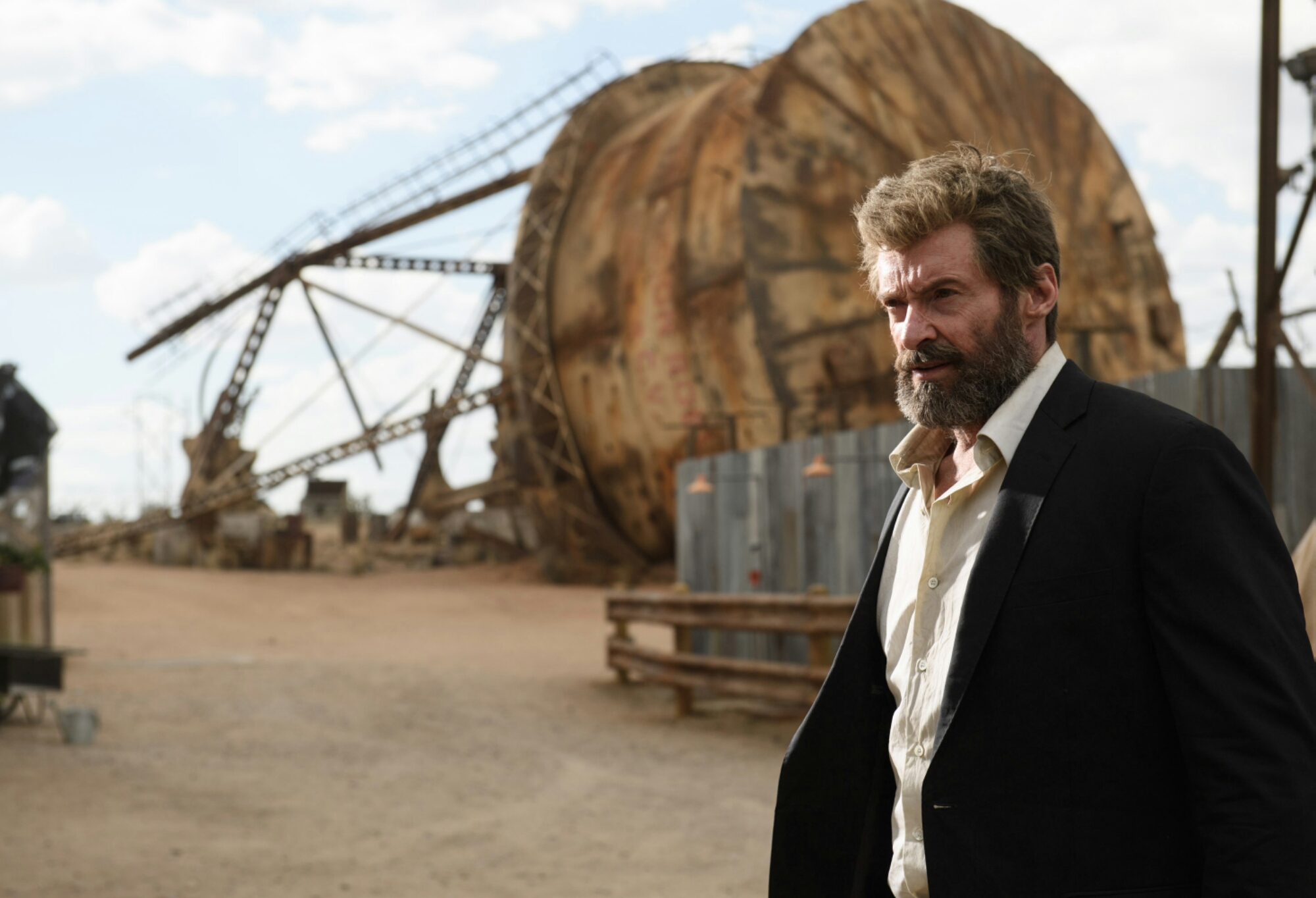
Hugh Jackman has been synonymous with the comic book hero Wolverine since his debut in Bryan Singer’s “X-Men” arrived on screen in 2000.
Seventeen years later, Jackman takes his final bow as the claw-wielding, self-healing mutant in James Mangold’s “Logan,” a brutally daring epic that wows audiences from start to finish with its dark tone and ruthless efficiency.
The haunting, heartfelt character-driven drama is the first real attempt at prestige cinema in the superhero genre since 2008’s “The Dark Knight,” cementing its place as one of the all-time greats among comic book movies. “Logan” is unquestionably the definitive X-Men film and a career peak for both Oscar nominee Jackman and “Star Trek” heavyweight Patrick Stewart, now in his fifth turn as Professor Charles Xavier.
Bearing a striking resemblance in tone to classic westerns like “Unforgiven,” “True Grit” and “Shane,” the film opens with an aging James “Logan” Howlett hiding in plain sight as a limo driver working in 2029 El Paso hustling for prescription drugs. Long retired from his Wolverine persona, Logan and fellow mutant Caliban (Stephen Merchant) keep ailing Professor Xavier safe from harm inside an abandoned smelting plant just across the Mexican border. Their secrets remain hidden until Logan’s path crosses with a young mutant and her caretaker on the run from a mysterious security force.
Performances in comic book adaptations rarely aspire to noteworthy – let alone award contending – turns, but Jackman turns in a powerful, nuanced performance as the titular Logan that will ultimately rank in the top three acting efforts in the history of not only the superhero genre, but of Jackman’s career as well.
While Jackman has always given the Wolverine character a rough, primal exterior, his inner turmoil bubbles to the surface like never before in the most intriguing ways in “Logan.” The pained, exhausted grimace his character radiates on screen from start to finish invokes the weary gunfighter motifs made famous by cinema’s most heralded westerns. His weapons may be adamantium rather than steel and stab rather than shoot, but Logan carries emotional and physical scars from decades of battles on his chest like a badge of honor turned into a constant, painful reminder of the hellish journey.
The entire film lives and dies on Jackman’s every movement, with the film’s harrowing action sequences only serving to reinforce the brutality and pain Logan has endured. In the hands of a lesser actor, the character as written on the page could have been woefully mishandled, but Jackman approaches each scene, each moment in time with such care and precision that a complete fantasy tale is enveloped with deep, rich humanity.
Thespian extraordinaire Stewart also rises to the challenge in a wonderfully compelling turn as Xavier, Logan’s mentor and the world’s most powerful telepath suffering from a neurodegenerative disease. The performance ranges the gambit from beautifully neurotic to outlandishly mad and back again to a warm kindness that belies just how perfect and secretly charismatic Stewart is in the role.
Making her feature film debut, Dafne Keen is quietly powerful as young mutant Laura, instantly bonded to Jackman’s Logan in a makeshift father-daughter kinship that works far more effectively that one might expect. Playing the character silent aside from the occasional grunt or howl, Keen does all the talking she needs to with her mesmerizing eyes that tells stories far beyond her young life.
It should be noted that, unlike nearly all other films in the genre, “Logan” earns a hard “R” rating for deep, bloody violence true to the Wolverine character from the comic books, but largely missing from superhero movies in general. Whereas in most previous X-Men installments the camera cuts away as Wolverine stabs a bad guy with his claws, “Logan” forces audiences to face the brutality of the character head-on.
Mangold uses this bloody, graphic imagery not to engage the bloodlust of his audience, rather to reinforce the emotional stakes of the film by putting Logan’s visceral nature (and the toll that comes along with it) on display. Audiences are forced to feel the deaths Wolverine causes on an emotional level as the character does, further rooting Logan’s struggle in a more human context.
Visually, “Logan” is a dynamic, spectacular film that takes its lead character’s gritty persona and captures that same tone frame to frame with a sandy, worn hue. Fight sequences rely on expertly designed choreography instead of budget-bursting computer graphics and further accentuate the realistic tone Mangold sets out to achieve in the film.
Despite being released more than nine months before voting opens, “Logan” is the best chance a superhero film has had to earn an Academy Award nomination for Best Picture since “The Dark Knight” and should be considered a serious contender for several technical awards as well.
Without question, “Logan” is an instant classic and one of the most intriguing, impactful performances in Jackman’s career. While some cursory background knowledge of the X-Men universe is certainly helpful in understanding “Logan,” it isn’t necessary to enjoy Mangold’s brilliant piece of cinema.
Skipping a trip to the local theater to catch “Logan” on the big screen would be a mistake ardent movie fans tolerant of the R-rated gore and violence should not make.

Heading into last night’s Academy Awards ceremony, I was fully prepared to write another glowing column about “La La Land,” raving about the film’s actual merits on a night that felt like Damien Chazelle’s masterpiece was going to be picked apart by fans of other nominated films and later derided as “not a good Best Picture winner” by those who actively dislike the movie.
Today, less than 24 hours after the Oscars, I still can’t find any reasonable argument that “La La Land” wasn’t the best cinematic experience of 2016, the perfect blend of commercial success and critical darling that we as moviegoers deserved to see win the Academy’s top prize.
The fact that it tied with “Titanic” and “All About Eve” for the most nominations ever (14) or that it’s the 11th film in history to win six Oscars feels hollow now. And it’s not because of anything “La La Land” did or didn’t do or that “Moonlight” won Best Picture, signaling a whole new era of small, intimate independent filmmaking taking major strides forward in how we view quality cinema.
I’m sad today because of the perception “La La Land” is left with – the “Yeah, but…” cinematic footnote it’s become and how it will be forever remembered in trivia lore as the only film to start accepting a Best Picture Oscar it didn’t actually receive.
I’m hoping I can watch “La La Land” again without the mental stain I feel right now, without constantly second-guessing every note and line, every camera angle and lighting choice, every dance move and time cut, the Best Picture “what ifs.” Because I don’t know that I can.
Because of my unhealthy obsession with Chazelle’s films, I saw “La La Land” in theaters seven times over the course of a month, finding something unique and new each time I watched it.
I fell in and out of love with Emma Stone’s Mia (the character, not her Oscar-winning performance) as I found myself connecting with Ryan Gosling’s passionate Sebastian more and more with each viewing. I took note of all the little details he remembered about her life, how unwavering his support of Mia’s acting was and how devastating it was to watch him sacrifice himself for her so she could be truly happy, even if it wasn’t with him.
With the help of the “La La Land” soundtrack on heavy rotation, I learned greater appreciation for the film’s much beleaguered musical numbers which suffered from poor sound mixing that muffled the live vocal track with the instrumental track and rendered much of the film’s dazzling opening number “Another Day of Sun” indecipherable. By viewing five, I was singing along with Seb and Mia during “A Lovely Night” and the Oscar-winning “City of Stars” because I simply couldn’t help myself.
I grew to love composer Justin Hurwitz’s orchestral score more and more as I kept hearing each of the film’s major themes in small, intricate background moments that underscored the film’s bold lead acting performances. The soft guitar rendition of “City of Stars” mellowing out Mia and Seb’s first date on the Warner Brothers lot, the Lighthouse Café jazz band playing “Another Day of Sun” in blistering fashion, the musicality of “La La Land” hits you in waves you simply just can’t appreciate in one screening.
Chazelle more than earned his Best Director Oscar with a wonderfully composed film that exudes technical craftsmanship, attention to the smallest detail and celebration of the human spirit.
Just watch the six-minute segment including the terrific song-and-dance number “A Lovely Night.” Shot all in one take on just the fourth try, Gosling and Stone carry on a flirtatious conversation along a dark street, sing a surprisingly challenging song live only to break out in a complicated two-minute dance sequence and head back into normal conversation without stopping. The technical precision involved in pulling off this cinematic feat is incredible, especially when you consider how Oscar-winning cinematographer Linus Sandgren was following the pair around the entire time on a crane.
Cinema this good shouldn’t be possible. And yet somehow it is.
Perhaps the smartest thing Chazelle did in “La La Land” – better than any camera movement or line of dialogue – was in casting top-notch actors rather than top-notch singers to bring Sebastian and Mia to life.
At the end of the day, “La La Land” is as much a nostalgic, romantic drama as it is a movie musical, if not much more so. Remove the big dance numbers at the top, “Another Day of Sun” and “Someone in the Crowd,” and what you’re left with is still one of the three best films of 2016 that focuses more on the concept of following your heart or following your dreams and how difficult choosing one over the other might be.
Singers who might have been able to project “City of Stars” and “A Lovely Night” better, those who could belt the high notes with the best of them, could have made “La La Land” a prettier sounding musical than the grittier, flawed soundtrack the film ultimately has. But there’s so much beauty within the flaws of Seb and Mia’s singing that help develop actual character and authenticity in the film. Broadway singers could not pull this off. Their tone may be flawless, but the film’s tone would ring false.
The best scenes in “La La Land” aren’t even the musical numbers. Gosling and Stone have such remarkable chemistry that scenes like their candlelit dinner argument, the Warner Brothers lot date, and the “Maybe I’m not good enough?” scene outside Mia’s house stand on their own as some of the year’s best straight-up acting work, rivalling scenes from heavy, character-driven dramas like “Fences” and “Manchester By The Sea.”
Somehow, six Oscar wins and 14 nominations don’t feel like enough for “La La Land,” a film so special on its own merits that the irrational need for some to tear down “La La Land” as a means of lifting up “Moonlight” feels incredibly disingenuous.
Both films are terrific, but “La La Land” stands out more for what is actually on screen, rather than what it represents as part of an ongoing cinematic and political narrative. It’s frustrating to see one of my favorite films this decade get caught in the middle of the crossfire.
“La La Land” is a nearly flawless film.
One award show miscue cannot change that.

Odds are that you probably haven’t seen this year’s Academy Award winner for Best Picture.
And no, it isn’t Damien Chazelle’s poignant, bittersweet film “La La Land” about two struggling artists who fall in love in modern Los Angeles that just happens to be one of the most widely seen Oscar contenders in years.
“Moonlight,” an intimate independent feature from Barry Jenkins, took home the prize after “La La Land” was mistakenly awarded Best Picture. The film is a heartfelt, emotional journey told in three parts about Chiron, a young African-American boy growing up with a drug-addicted single mother living in Miami. Throughout the feature, Chiron struggles to find positive influences and role models as he seeks to find his own identity, both sexually and emotionally.
Driven by a Best Adapted Screenplay winning script, “Moonlight” features a Oscar-winning performance from “House of Cards” star Mahershala Ali, who elevates his game to another level as Juan, the charismatic drug dealer with a soft spot for young Chiron. His ability to give Juan equal parts hard edge from life selling on street corners and comforting empathy is remarkable. Performed even slightly differently softer or harder, Juan becomes a caricature. But Ali is bittersweet and affecting, toeing the exact line with ease.
“Moonlight” shines brightest visually, with cinematographer James Laxton beautifully giving a distinctive, uniquely vibrant feel to each of the film’s three segments. Each segment has its own visual hue, as if they were all shot in different film stock. The film’s most powerful and memorable scene, Juan teaching Chiron how to swim, is effective as much for Laxton’s stunning camera work in the scene as Ali’s masterful acting performance. The camera bobs up and down in the water, floating above the surface and crashing below with the waves in a captivatingly intimate portrayal of humanity you wouldn’t expect from a swimming lesson.
Filmed over the course of three and a half weeks for a meager $1.5 million, “Moonlight” is a cinematic marvel by independent filmmaking standards that holds up better than most big-budget studio films. It’s far from a flawless film, however, with a plodding third act that tapers off in quality drastically the longer Ali is off screen.
“La La Land,” the film that almost won Best Picture, isn’t perfect either – with a muddled sound mix that often left lyrics indecipherable for first time viewers – but the film’s 14 Oscar nominations are proof positive that Chazelle’s musical masterpiece more than lived up to the film’s considerable hype.
Things started trending in the wrong way for “La La Land” early in the night when seemingly easy wins in categories like Best Costuming and Best Sound Editing went to other films. After taking home major prizes for Chazelle (Best Director) and star Emma Stone (Best Actress), Sunday’s final curveball stunned viewers and “La La Land” producers alike, with some of the musical’s team in the middle of giving their acceptance speeches when the Academy’s top prize was unceremoniously ripped from their grasp and given to another film.
Regardless of how you may feel about “La La Land,” the political climate in America right now or how the Best Picture winner was announced, the worst possible thing you could do is dismiss “Moonlight” because Warren Beatty accidently read the wrong name.
The best film of 2016 (“Hell or High Water”) didn’t win Best Picture. The best film with a chance of taking home the Academy’s top prize (“La La Land”) didn’t either. More than any other year in recent memory, several of this year’s nominees were more than deserving of film’s top prize.
“Moonlight” deserved to win Best Picture. “La La Land” deserved to win Best Picture.
Watch them both. Enjoy them both. Moviegoers deserve this kind of quality cinema all year long.
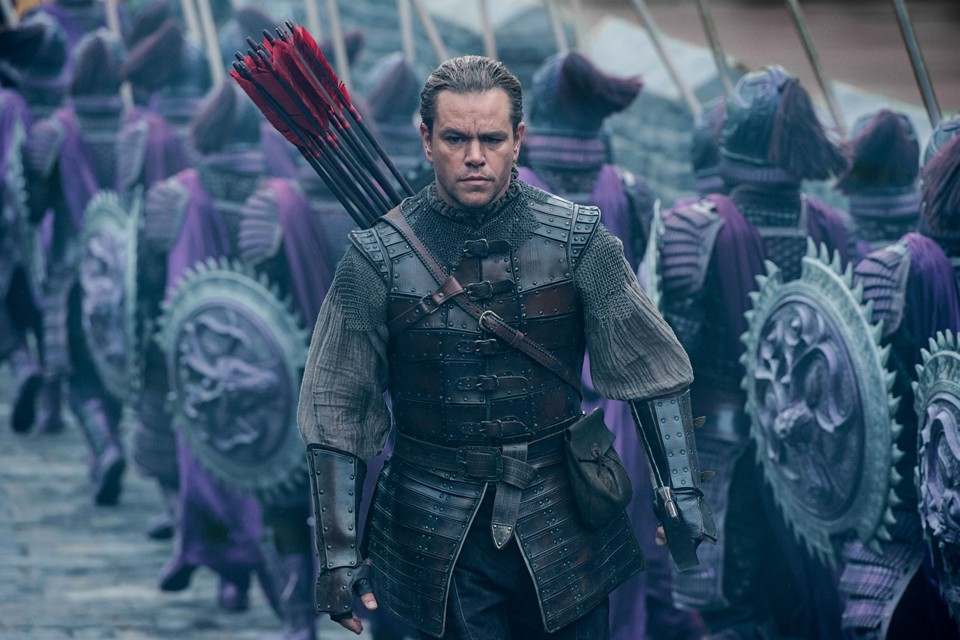
China’s largest and most iconic landmark never felt so diminutively small as it does in Yimou Zhang’s English-language debut “The Great Wall.”
Known for his bold and colorful style paired with intricate character-driven storytelling, the director of international hits like 2002’s “Hero” and 2004’s “House of Flying Daggers” should have been the perfect choice to bring top-notch Asian cinema to American markets.
But for a film with distinct technical wizardry and an Oscar nominated Hollywood actor leading the way, “The Great Wall” is paper thin on plot and exceedingly bland overall.
International box office draw Matt Damon stars as William, a European trader seeking legendary gunpowder during unspecified medieval times. When he and his colleague Tovar (Pedro Pascal) are captured by Chinese forces blockading a massive wall, the pair are thrust into an epic, centuries-long war to protect the nation from giant lizards that ravage the countryside every 60 years.
Damon seems to understand just how absurd and misguided the film’s plot is and acts accordingly as a man taking a large paycheck to sell his star power for foreign and domestic markets. While there really isn’t much there on the page for him to work with, it doesn’t feel like Damon attacks the part with the same gusto that audiences are used to seeing, save for one or two early moments with Pascal’s Tovar.
“Game of Thrones” star Pascal brings a largely believable persona as Tovar, the brooding, dry-witted ally longing to acquire mythical gunpowder for financial gain. Even with a character painted on the page with the broadest of strokes, Pascal seems to revive Tovar with a sly charm that stands out compared to all the blandness offered by the co-stars around him.
Veteran character actor Willem Dafoe simply has no real place in “The Great Wall” as his Ballard is almost completely inconsequential to the plot from start to finish. It feels as if heavy editing removed most of Dafoe’s scenes to make the movie’s running time more palatable at 90 minutes than the usual two-hour affair.
The villains of the film, gigantic computer-generated lizards that crawl and slink en masse across the screen like hordes of rats, are largely wasted as cannon fodder for Zhang’s grandiose battle sequences that feel like lesser homages to Peter Jackson’s iconic Battle of Helm’s Deep in “The Lord of The Rings: The Two Towers.”
For all its shortcomings, “The Great Wall” kicks off with a pretty spectacular opening 20-25 minute sequence that finds William and Tovar on the run from bandits and concludes with what ends up being the film’s largest (and best) battle as the Chinese army fends off the first wave of invading lizards. It’s a promise for the next hour that Zhang simply can’t live up to.
The film slogs along for the next 45 minutes with a thin, forced romance angle between William and a female general and exceeding amounts of strategic minutia that drain all the life-force out of “The Great Wall.” When the film finally picks back up again, viewers can no longer buy in to the over-the-top fantasy premise and disengage from the theatricality involved. This makes the movie’s simplistic conclusion feel like an afterthought.
Since many more Hollywood-China collaborations are on the way, studios both at home and abroad have to be at least somewhat disappointed with the lackluster “The Great Wall,” a movie so perfectly average that audiences often leave theaters simply shrugging their shoulders.
What ultimately appears on screen is a disjointed, haphazard mess of a film. Seeing the movie in theaters, waiting to rent it or simply skipping the whole thing altogether all seem like completely reasonable options which, like “The Great Wall,” is just okay.
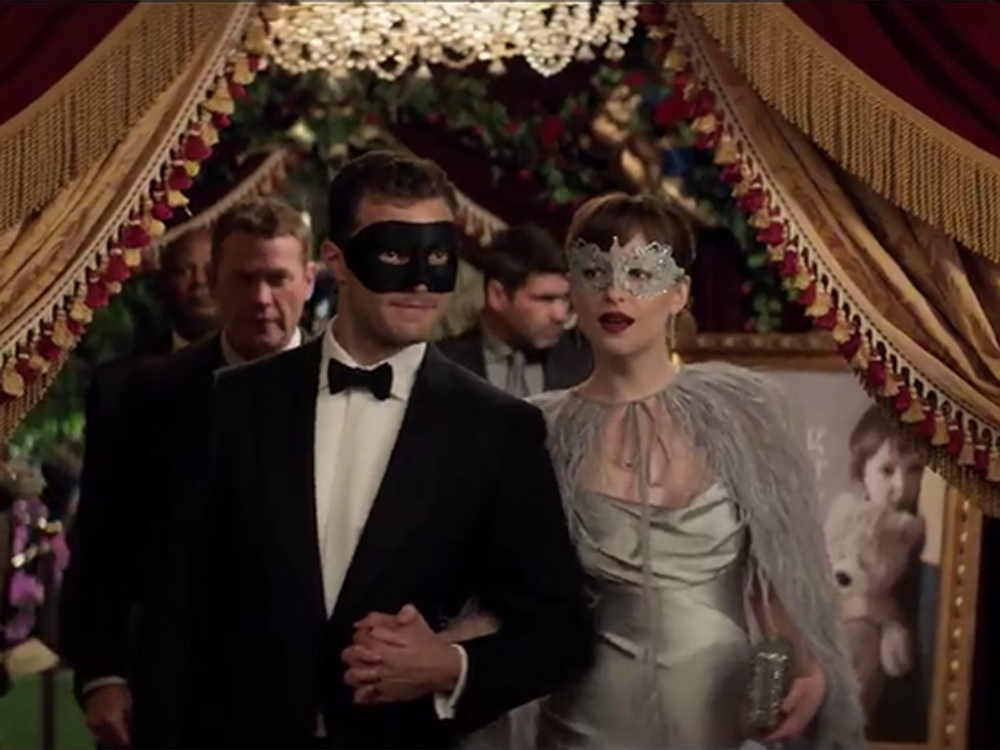
“Every fairy tale has a dark side.” – ‘Fifty Shades Darker’ tagline
Sexual romance drama franchise “Fifty Shades” returned to theaters this weekend with the arrival of “Fifty Shades Darker,” a film that feels safer and brighter than it probably should.
Adapted from the E.L. James’ novel, “Darker” follows up within days after the conclusion of 2015’s “Fifty Shades of Grey” as billionaire and self-described sadist Christian Grey (Jamie Dornan) attempts to regain his ex Ana Steele (Dakota Johnson). The BDSM violence that caused Ana to ditch Christian at the end of the first film is washed away, first by Ana and later by the filmmakers as the dark allure of the first movie becomes largely abandoned for a plot ripped from a Lifetime TV special.
Johnson continues to be the shining light in this otherwise languishing, vapid franchise. She gives another dazzling performance considering the poor quality of Niall Leonard’s haphazard screenplay and talentless costars bringing little to the table. Her visible lack of chemistry with Dornan – to the point that Johnson reportedly had to down shots of whiskey before shooting sex scenes – completely destroys the film’s romantic angle, though Johnson surely cannot be blamed.
Much like in “Fifty Shades of Grey,” Dornan attacks Christian with a monotone, almost robotic droll that often lulls audiences to sleep. Unable to identify with his character in any substantial way, Dornan resorts himself to softening his lines to make them sound sexy. The constant whisper he uses as Christian dulls the senses and completely undermines Christian’s complex backstory.
Far too often on a scene to scene basis, the result has Johnson acting against a whispering wall of emotionless abs regurgitating lines off a page rather than a composed, professional performer.
It should be expected that the couple’s sexual exploits would be ramped up in the film to compensate for the lackluster on-screen romance, but the exact opposite is true of “Darker.” In lieu of the erotic kinks and BDSM subculture, director James Foley drives viewers down the road to traditional thriller but fails to bring the same level of suspense he did while at the helm of the “House of Cards” Netflix series.
Canadian actor Eric Johnson underwhelms as Ana’s domineering, sexually aggressive boss Jack, while Australian actress Bella Heathcote isn’t entirely to blame for the paint-by-numbers manic ex with a grudge Leila, a character destroyed by Leonard’s uneven script.
Kim Basinger, brought in simply due to her “9½ Weeks” erotic drama credentials, mails in a bland, uninspired performance as Elena Lincoln, a villainous romantic rival from Christian’s past who saunters in to “intimidate” Ana. The five minutes of effort Basinger puts into the role feels more appropriate for a daytime soap opera rather than a major motion picture.
What truly works in “Darker” is a series of secret understandings.
Audience members understand that “Darker” is the kind of movie you want to go and see in the theater with your girlfriends and never discuss publicly, pure sexual escapism.
The filmmakers – from the studio heads to the writers to the director and on down the line – know that things like coherent plot points, compelling characters and nuanced performances don’t matter. A movie like “Fifty Shades Darker” is the cinematic equivalent of Fabio-adorned novels.
Ardent fans of the book trilogy and/or the “Fifty Shades of Grey” film adaptation may find “Darker” to their liking in spite of the major writing and acting flaws. Those viewers should also stick around through the credits to watch a small teaser trailer for the final movie in the trilogy, “Fifty Shades Freed,” slated for Valentine’s Day weekend 2018.
There’s little romance – or sex for that matter – in “Fifty Shades Darker,” a film probably better suited for private enjoyment when its inevitable “unrated” release hits DVD and Bluray later this year.

Everything about tonight’s incredible, dramatic Super Bowl that saw the New England Patriots rally back from 19 points down to win 34-28 in the first overtime championship game in NFL history begs to be turned into cinema.
I started tweeting about #DeflateGateTheMovie during the Pats’ ridiculous comeback in the fourth quarter and basically started trying to will this concept into existence because, let’s face it, I want to see that movie.
You and I both know Mark Wahlberg has already called Peter Berg and demanded a Patriots movie go into pre-production. First drafts of scripts are being written as we speak. It’s going to happen.
Here’s how I think it should go down….
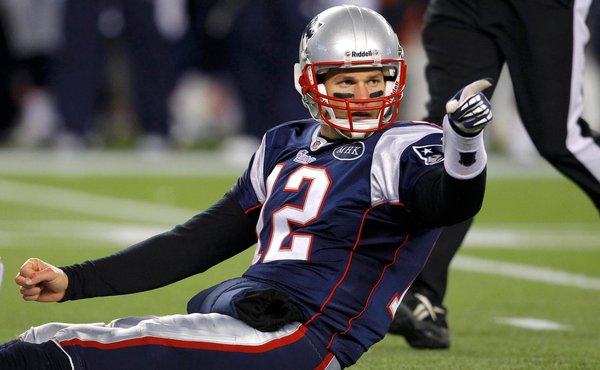
The film opens with a montage of Patriots’ near misses, ending with the crazy helmet catch that helps the New York Giants defeat the Pats in Super Bowl XLII.
We then cut to Tom Brady during warmups of SB51 trying to put that out of his mind as a Roger Goodell monologue plays in the background.
Over the course of the first half, the film intercuts between on-field highlights, bench discussions and flashbacks to the darker moments of DeflateGate for Pats fans, including Brady talking to ball boys prior to the game.
The film speeds through the third quarter and goes right into the huddle for Brady’s miraculous fourth quarter comeback to tie the game, when it abruptly stops to relive Brady’s suspension being upheld and missing the first four games of the season.
Overtime ensues and the film ends with Goodell approaching Brady, fading to black just as Goodell is poised to speak.
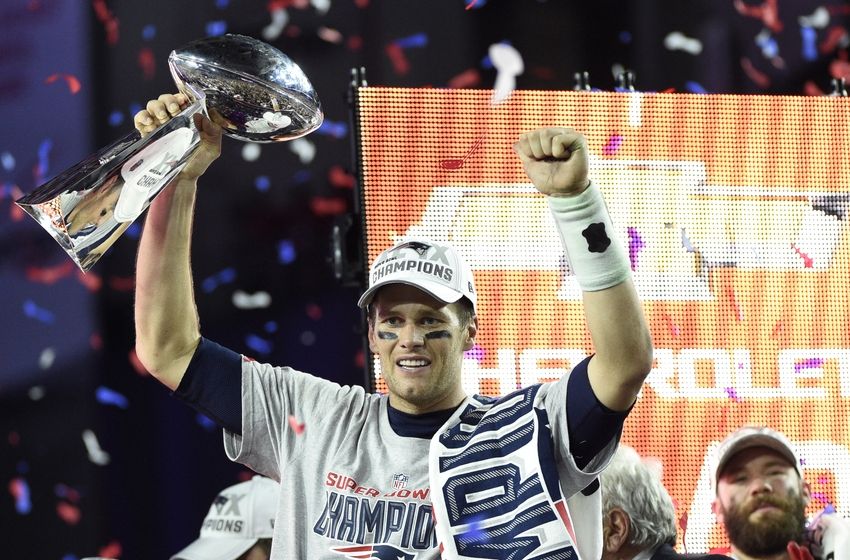
And that’s pretty much it. It’s the only way you can make the movie compelling to Pats fans AND fans of other teams, though it’s doubtful much of the nation will end up seeing this movie anyway.
So there you go, Mark. I’ll take a story by credit and maybe a producer nod if you’re feeling extra generous.
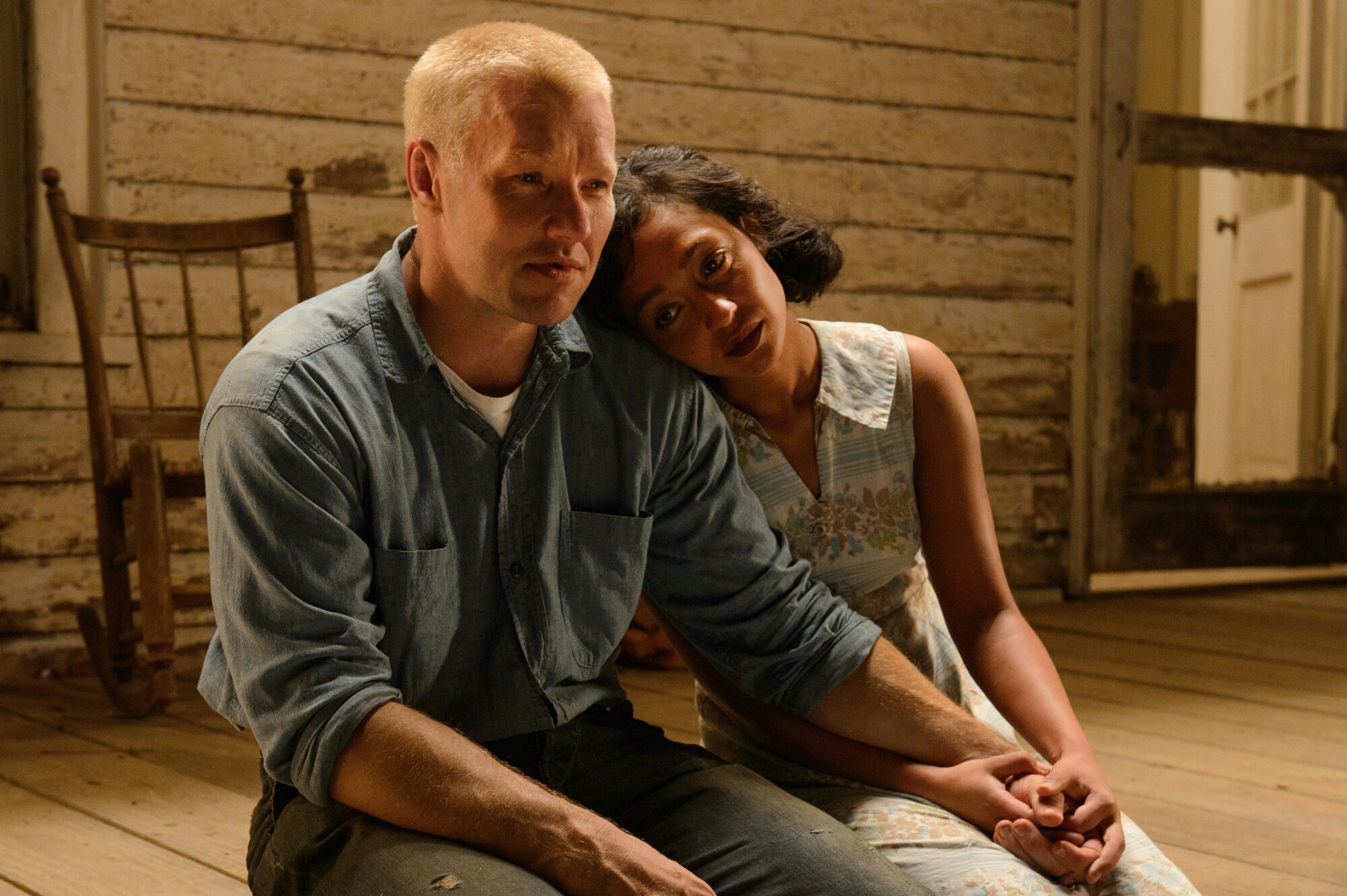
Richard and Mildred Loving’s inspirational tale of overcoming the odds to keep their love alive was bound for cinema.
The couple living in rural Virginia during the 1950s made waves with their arrests violating then-Virginia law against interracial relationships and later with Loving v. Virginia, the 1967 U.S. Supreme Court decision invalidating laws banning interracial marriage nationwide.
In “Loving,” writer/director Jeff Nichols opts to make their tale a small, intimate piece as soft-spoken and subdued as the Lovings were in real life. The result is a fractured, painstakingly tedious arthouse drama that fails to connect on many levels, in spite of some wonderful moments of intimacy.
Audiences are introduced to Richard, a simple, quiet bricklayer, and his then-girlfriend Mildred when Mildred tells Richard they are expecting a baby. Without hesitation, Richard proposes marriage and the couple live together in secrecy with Mildred’s family after travelling to Washington D.C. to be married legally.
Beginning here proves problematic for “Loving” as Nichols cannot seem to portray why Richard and Mildred love each other, just that they do. Their romance is so subtle and hidden within the film that it’s borderline non-existent, which seems a disservice to the actual couple the biopic portrays on screen. All the nuance and technical skill that went into “Loving” just feels largely wasted, which is an absolute shame.
Veteran character actor Joel Edgerton has a lengthy resume of simply melting into characters and his portrayal of Richard Loving is no exception. The Australian perfectly nails the quiet, modest Virginian both in tone and action. Audiences can easily feel Richard’s internal monologue secretly churning in the many he barely speaks.
Ethopian-born Irish actress Ruth Negga earned an Academy Award nomination this year for her demure, understated turn as Mildred Loving, the outspoken one of the couple, though in Nichols’ script, outspoken takes on new, more reserved meaning. Negga offers much more demonstrative work in her non-verbal performance, letting her eyes do most of the talking. Her performance is perhaps the best thing about “Loving.”
The film’s secondary cast is largely kept to the background, serving mostly to advance the story in one way or another and keep the focus on the couple.
Frequent Nichols collaborater Michael Shannon is powerfully understated in a tiny role as a Life Magazine photographer who travels to do a photo essay piece on the couple during their Supreme Court trial, while Marton Csokas is fine as the film’s largely paint-by-numbers racist sheriff arresting the couple on multiple occasions.
Perhaps the weakest link of the movie is comic actor Nick Kroll, who feels completely out of place and overwhelmed as the Lovings’ American Civil Liberties Union attorney defending the couple against the State of Virginia. Without question, Kroll desires to play the part of a serious actor, but can’t quite seem to do so without seeming invariably outmatched by his costars in every scene.
Nichols extends the film’s subdued motif with a very tempered directorial and cinematic style that pervades every frame of “Loving.” Each shot feels weathered and broken like an art painting left out in the elements too long, which provides a nice gritty element to a movie that lives in the visceral. Nichols doesn’t take many chances stylistically and opts to let the film linger from scene to scene, accenting the quality of the lead performances but dampening the pace to a muddy, plodding level.
The film’s lone awards nominee, Negga in the Best Actress category, probably won’t take home the Oscar as she sits firmly behind Screen Actors Guild winner Emma Stone of “La La Land,” Golden Globe winner Isabelle Huppert of “Elle” and former Oscar winner Natalie Portman of “Jackie.” Her nomination was indeed a bit of a surprise given the omission of Amy Adams in “Arrival,” a film which took home eight nominations, and may signify a trend towards increased emphasis in diversity in the acting categories.
“Loving” may be a film ardent movie lovers seek out over the next several weeks leading up to the Academy Awards at the end of February, though most audiences should probably wait until the film reaches a streaming service like Amazon Prime or Netflix before taking a chance on Nichols’ problematic, strained film.
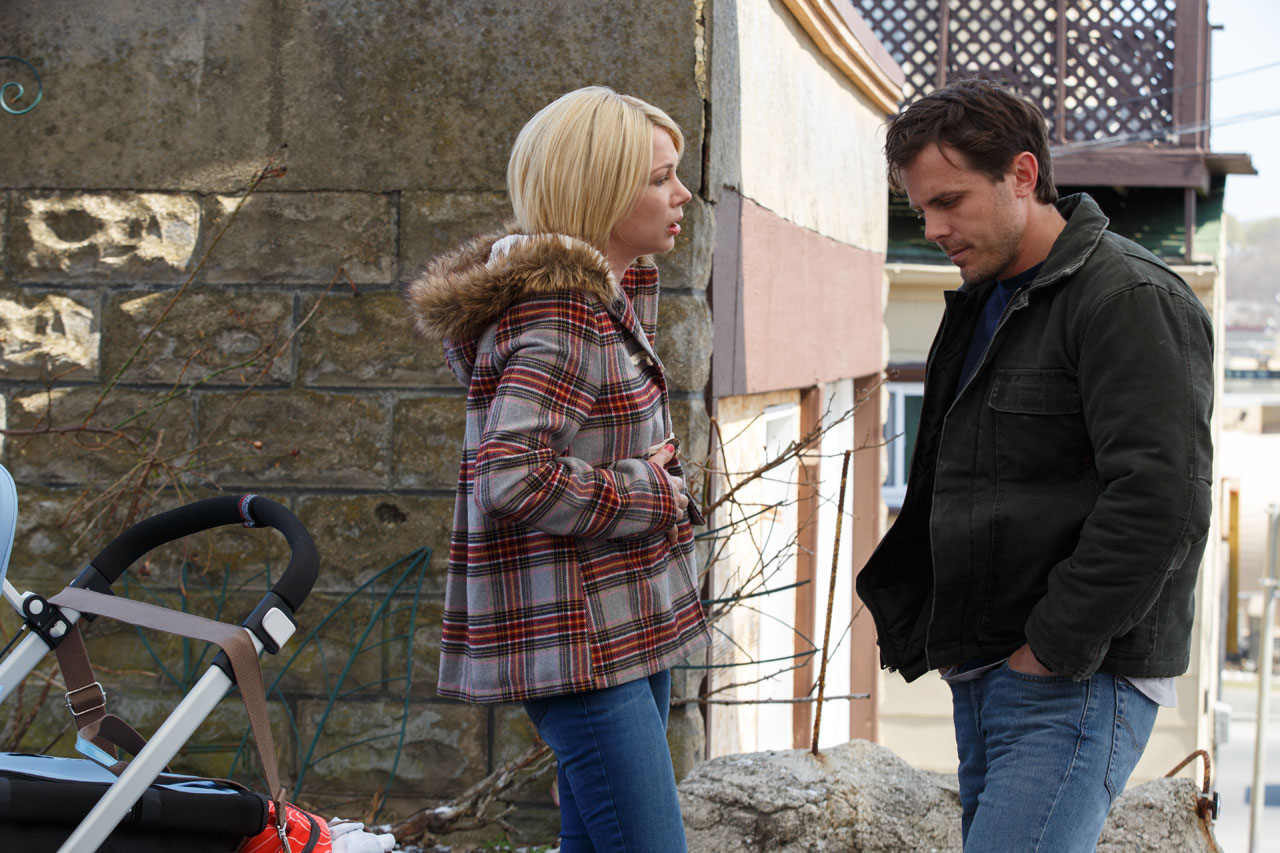
Convincing someone that watching a two-hour long family drama about melancholy and loss is a worth-while cinematic experience can be quite the feat.
But writer/director Kenneth Lonergan’s rural Massachusetts tale turned Oscar contender “Manchester By The Sea” is well worth the effort.
The film follows Lee Chandler (Casey Affleck), a 40-something Boston janitor forced back to his childhood home in Manchester to take care of his teenage nephew Patrick (Lucas Hedges) after the death of Lee’s brother, Joe (Kyle Chandler). Lonergan’s intensely powerful screenplay is unsurprisingly lifted by the talented cast of actors who bring authenticity and levity to his words, including Oscar nominee Michelle Williams in a supporting role as Lee’s ex-wife Randi.
“Manchester By The Sea” hinges solely on Affleck’s ability to create depth of character in actions rather than words. As written on the page, Lee is a very quiet, distant man who has separated himself from the world, but that’s difficult to hear through dialogue alone.
Doing his best work since 2008’s “The Assassination of Jesse James by the Coward Robert Ford,” Affleck layers Lee both by how he interprets the character physically and by what he doesn’t do. It’s incredibly difficult to convey a guarded person via tone, but Affleck does a masterful job emoting non-verbally with such a soft, sullen demeanor. “Manchester By The Sea” represents Affleck’s best performance of his career and makes him a clear front-runner for an Academy Award for Best Actor.
Hedges, a pleasant surprise in the Oscars’ Best Supporting Actor category, pulls emotional double duty in “Manchester” as Lee’s nephew Patrick, providing Affleck with a worthy counterpart in heavier scenes and offering up some much needed levity at various points throughout the script. Hedges goes to great lengths to allow viewers to see the emotional contrast between Lee and Patrick play out on screen while still offering up a compelling familiar bond that most uncle-nephew relationships lack in cinema.
Seen entirely in flashbacks sprinkled throughout the film, Chandler’s honest, steadying portrayal of Lee’s brother Joe gives audiences added perspective on who Lee is as a man despite being a man of few words and helps develop the emotional core of the film. In fact, “Manchester” is peppered with a number of compelling minor performances from actors like Matthew Broderick and Gretchen Mol to bring Lonergan’s world to life.
Williams recently earned her third Academy Award nomination for a dazzling supporting turn as Lee’s ex-wife Randi. Despite her limited screen time, she packs so much power into every frame that often outclasses Affleck in their scenes together, which is a hard feat in and of itself. Lee and Randi’s final conversation late in the film will be studied for years to come thanks to Williams’ brilliance in the scene and will serve as her Oscar reel next month.
Each and every word of Lonergan’s masterful screenplay comes to life with such vibrancy that it’s often difficult to remember that viewers are watching a movie rather than peeking in on a Boston-area family’s real lives. Much of this feel comes from the subtle, reserved cinematography and direction that acts not to obtrude the acting work done on screen and only to clarify a sense of space and time.
“Manchester By The Sea” recently earned six Academy Award nominations, including a Best Picture nod. Likely, the slow-burning drama will fall just outside the winner’s circle come Oscar night, save for Affleck doubling down on his Golden Globes win for Best Actor in what has proved to be a two-horse race between Affleck and two-time Oscar winner Denzel Washington in “Fences.”
The film is wrapping up an extended theatrical run that began nearly a year ago when Amazon Studios bought the rights to “Manchester” at the 2016 Sundance Film Festival. Though the drama will still be shown in a variety of markets over the next month, Amazon is expected to release the film digitally through its streaming services within a week or so.
Regardless of how you catch the film. “Manchester By The Sea” is certainly one of the five best films released in 2016 and a major awards contender worthy of taking a chance on between now and Oscars night on Feb. 26.

So did “La La Land” get nominated for anything?
I’m sure I didn’t hear their name called more than 14 times early this morning, tying a record for most nominations in Academy Awards history.
It’s a City of Stars and we’re all just living in it.
If you haven’t already seen “La La Land,” you’re going to want to go and watch Damien Chazelle’s cinematic masterpiece at least once over the next month before it takes the Oscars by storm.
When you’re done with that, go find “Whiplash,” Chazelle’s equally brilliant 2014 film that earned a couple of nominations and a much deserved Best Supporting Actor win for J.K. Simmons. You’ll see that “La La Land” is no fluke.
Before we get into more of the specifics, a few words on the nominations “ceremony” itself that shows just how out of touch the Academy is with the general movie going public.
Nominations were released online at the crack of dawn (or before the crack of dawn depending on what time zone you’re in) via a pre-taped video reel featuring past nominees and winners talking about how great and life-changing it is to be nominated. Fantastic.
Yet a good chunk of the country – the so-called “forgotten” ones we keep hearing about in Washington these days – will be too busy sleeping or getting ready for work that they’ll just glance at a list of nominees hours from now and lament about how they’ve barely seen any of these films.
The Academy undercuts the value of their own Oscar nominations by releasing them haphazardly on a Tuesday morning. How perfect would it be for millions of Americans to see an hour-long special highlighting the nominees in prime time, with trailers and clips of the films to entice people into the theaters to see these films.
The divide between what Academy voters award nominations to and what moviegoers spend their hard-earned dollars on in theaters is widening and it’s not the audiences’ fault. Studios often make their best films difficult to find in rural America, cramming less quality movies down the throats of a populace much smarter than Hollywood gives them credit for.
This isn’t to say that voters need to give “Deadpool” a Best Picture nomination, say, or a Best Actress nomination to Felicity Jones for “Rogue One.” But something’s got to change.
The Academy needs to bridge the gap. And fast.
Best Picture – “Arrival,” “Fences,” “Hacksaw Ridge,” “Hell or High Water,” “Hidden Figures,” “La La Land,” “Lion,” “Manchester By The Sea” and “Moonlight”
The nine nominees in the Oscars’ top category are a terrific blend of everything right that’s going on in filmmaking right now in Hollywood.
Everything from big-budget blockbusters like “La La Land” and “Hacksaw Ridge” to small, intimate indie pieces like “Moonlight” and “Hell or High Water” are nominated. Amazon becomes the first internet company to earn a Best Picture nomination with “Manchester By The Sea,” which is surprising given how prevalent Netflix is in the online film world.
All of these films are worthy of their nominations, but I can’t help but feel for films like Tom Ford’s haunting “Nocturnal Animals” and Martin Scorsese’s compelling “Silence” which feel incredibly under-seen and underappreciated given the complete nomination list. I had both films making the Best Picture race in my “best case scenario” predictions, besting “Hacksaw Ridge” and “Hidden Figures.”
Acting Categories
It’s probably best to start with the least surprising category – Best Supporting Actress – which went pretty smoothly with nominations for Viola Davis in “Fences,” Naomie Harris in “Moonlight,” Nicole Kidman in “Lion,” Octavia Spencer in “Hidden Figures” and Michelle Williams in “Manchester By The Sea.” All but Spencer seemed like an absolute lock for a nomination in this category.
Spencer’s performance is very good in the critically acclaimed, surprise box office smash hit “Hidden Figures,” but I would have personally gone with Rachel Weisz’s wonderful turn in Derek Cianfrance’s criminally under-seen “The Light Between Oceans.”
Best Supporting Actor had three certain choices confirmed with Mahershala Ali in “Moonlight,” Jeff Bridges in “Hell or High Water” and Dev Patel in “Lion.” Michael Shannon’s nomination in the category for his terrific work in “Nocturnal Animals” over Golden Globe winning costar Aaron Taylor-Johnson shouldn’t really come as much of a surprise to those who’ve seen the film. Both are fantastic.
Lucas Hedges’ great work opposite Casey Affleck in “Manchester By The Sea” is well earned, though the Academy could have gone in any number of directions here, including Hugh Grant in “Florence Foster Jenkins,” Issey Ogata in “Silence” or my personal favorite fifth option, Mykelti Williamson in “Fences.”
The Academy seemed to take the most chances with their nominations in the Best Actress category, though Natalie Portman in “Jackie,” Emma Stone in “La La Land” and 20-time nominee Meryl Streep in “Florence Foster Jenkins” aren’t surprises by any means.
The biggest omission in any category has to be Amy Adams getting left out here despite her flawless performance in “Arrival,” a Best Picture nominee that simply does not work without Adams killing it in the lead role. Golden Globe winner Isabelle Huppert of “Elle” shouldn’t be as much of a surprise as it still feels like given her upset win last month, though Ruth Negga’s work in the barely-seen “Loving” will have average moviegoers who have never heard of the film scratching their heads.
Best Actor, as expected, will feature the two-horse race between front runners Casey Affleck in “Manchester By The Sea” and Denzel Washington in “Fences.” They are joined by nominees Andrew Garfield in “Hacksaw Ridge,” Ryan Gosling in “La La Land” and Viggo Mortensen in “Captain Fantastic.”
All are deserving, though it feels as if Garfield is nominated for the wrong film as his performance in Scorsese’s “Silence” is perhaps the best of his young career. Mortensen does a fine job in a great film, though “Captain Fantastic” feels like any number of terrific indie comedies that seem to come out every year. To me, Paul Dano and Daniel Radcliffe are both better in the tonally similar “Swiss Army Man,” but there are far too many fart jokes in that film for the Academy to take notice.
Other various thoughts
“La La Land” getting 14 nominations makes sense if you watch the film, though it will be incredibly unlikely the film carries the day as easily come Oscar night as it did sweeping all seven categories at this year’s Golden Globes. Backlash from the Globes could actually hurt its chances overall, though it probably has the best shot at Best Picture given the Academy’s preferential balloting system in the category.
It feels pretty foolish for the Academy to pass on Pharrell’s incredibly catching tune “Runnin’” from “Hidden Figures” in the Best Original Song category given two “La La Land” nominations for “Audition (The Fools Who Dream)” and “City of Stars.” Voters might split their votes between the two songs and open the door for “Hamilton” creator Lin-Manuel Miranda to slip in and win the category with the great “How Far I’ll Go” from the hit Disney animated film “Moana.”
“O.J. Made In America” should be the consensus favorite for Best Documentary, though the Academy certainly needs to clarify what is eligible here (and in the supporting acting categories). Like most who’ve seen Ezra Edelman’s terrific doc, I caught “O.J. Made In America” spread across several parts on ESPN rather than in one seven-hour sitting at a theater. To me, it’s a television miniseries rather than a single documentary. It will win, and probably deserves to, but it still seems fishy.
Other nominations that I would have liked to have seen:
– Alicia Vikander and Michael Fassbender for “The Light Between Oceans”
– David Mackenzie’s direction for “Hell or High Water”
– Love somewhere, anywhere for “Sing Street”
– John Goodman for “10 Cloverfield Lane”
– “Weiner” for Best Documentary
Offered without commentary, here’s how tomorrow’s Academy Award nominations should go (in alphabetical order):
Best Picture
1. Arrival
2. Fences
3. Hell or High Water
4. La La Land
5. Lion
6. Manchester By The Sea
7. Moonlight
8. Nocturnal Animals
9. Silence
Best Actor
1. Casey Affleck – Manchester By The Sea
2. Andrew Garfield – Silence
3. Ryan Gosling – La La Land
4. Jake Gyllenhaal – Nocturnal Animals
5. Denzel Washington – Fences
Best Actress
1. Amy Adams – Arrival
2. Natalie Portman – Jackie
3. Emma Stone – La La Land
4. Meryl Streep – Florence Foster Jenkins
5. Alicia Vikander – The Light Between Oceans
Best Supporting Actor
1. Mahershala Ali – Moonlight
2. Jeff Bridges – Hell or High Water
3. Dev Patel – Lion
4. Michael Shannon – Nocturnal Animals
5. Mykelti Williamson – Fences
Best Supporting Actress
1. Viola Davis – Fences
2. Naomie Harris – Moonlight
3. Nicole Kidman – Lion
4. Rachel Weisz – The Light Between Oceans
5. Michelle Williams – Manchester By The Sea
Best Director
1. Damien Chazelle – La La Land
2. Barry Jenkins – Moonlight
3. David Mackenzie – Hell or High Water
4. Martin Scorsese – Silence
5. Denis Villeneuve – Arrival
 Cinematic Considerations