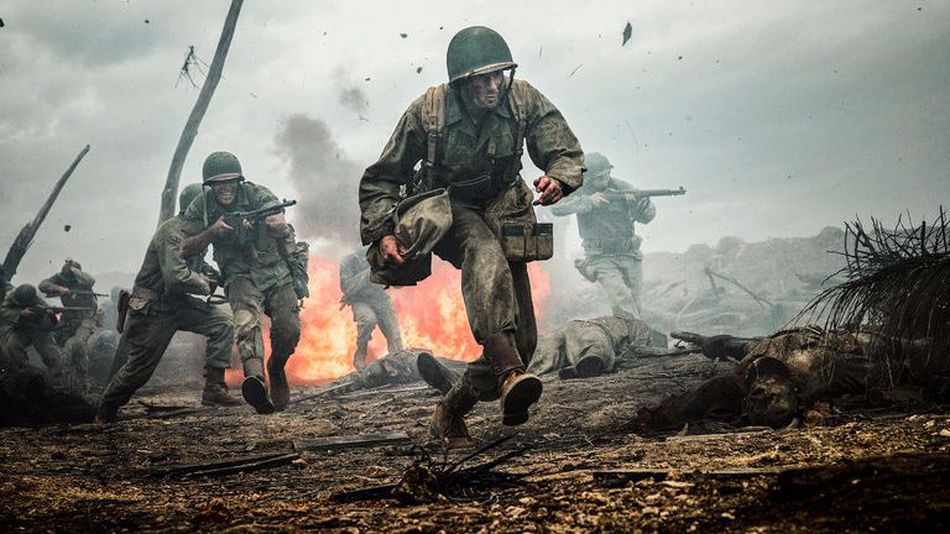

Unwavering heroism amidst the ravages of war is explored in Mel Gibson’s latest directorial effort “Hacksaw Ridge,” sure to be one of the year’s ten best feature films.
Gibson expertly combines gruesome World War II era violence akin to Steven Spielberg’s classic “Saving Private Ryan” with dramatic underpinnings of faith, family and love for your fellow man that one might expect in a traditional faith-based movie.
“Hacksaw Ridge” tells the true story of Desmond Doss, a Seventh Day Adventist who volunteers to serve in the Pacific during World War II despite being a conscientious objector who refuses to carry a weapon into battle. Doss overcame court-martial to serve his country at the Hacksaw Ridge offensive during the Battle of Okinawa, rescuing 75 men as a combat medic largely behind enemy lines.
Andrew Garfield shines as Doss, a man imbued with unshakeable conviction for both his country and his nonviolent beliefs. “Hacksaw Ridge” is unquestionably the best work of Garfield’s career and, along with a stellar turn in last year’s “99 Homes,” marks a turning point past two films in the “Spiderman” franchise. While it could be easily said that “Hacksaw Ridge” is an incredible war film, Garfield’s expert portrayal of a man who refuses to fight but demands to serve elevates the performances of every actor around him and the movie as a whole.
Hugo Weaving, who has largely slept-walked his way through films since his breakout as Agent Smith in “The Matrix” trilogy, comes alive opposite Garfield as Doss’s alcoholic, belligerent father racked with emotional guilt after being the only of his friends to survive two tours of duty during World War I. Many war films attempt to gloss over the home life of the soldiers they feature, but Gibson embraces the task head-on in limited, but well-acted scenes between Weaving and Garfield. Both actors perform flawlessly in developing the character of the man Doss was by hammering home how he came to be that man.
Less successful in this respect is the film’s romantic interludes as Doss courts a local nurse named Dorothy (Teresa Palmer) who later becomes his wife. At first glance, it’s unclear whether the romance angle of “Hacksaw Ridge” falters due to script issues or Palmer’s bland, ineffective performance, but the on-screen couple have very little chemistry.
Doss’s military superiors as played by “Avatar” star Sam Worthington and funnyman Vince Vaughn are unusual casting choices, but neither actor gets in the way of the overall film.
“Hacksaw Ridge” is perhaps the most graphically violent World War II era war film since “Saving Private Ryan,” but Gibson relies on the authenticity of the conflict to drive home just how harrowing Doss’s story of heroism and survival genuinely was. With the lead character serving as a medic, it shouldn’t come as much surprise that the level of gore within “Hacksaw Ridge” is amplified by the length of time bodies with severed limbs are shown on screen.
Embracing violence has been a trademark of his films dating back to 1995’s “Braveheart,” but Gibson does a terrific job of approaching the ravages of war from a fresh perspective and is buoyed by Garfield’s strong individual effort. “Hacksaw Ridge” will likely stay in the Oscar conversation, but ultimately fall short due to the graphic violence and controversial nature of the film’s director. It would not be a surprise, however, to see Garfield’s work in the film honored as part of a nomination for his role in Martin Scorcese’s “Silence.”
Doss’s tale of patriotic heroism is too important for mature audiences not to make an effort to see “Hacksaw Ridge” at least once and Gibson’s film will probably never look better than it does on the big screen. Even though it arrives in a highly charged political climate, the film opts to avoid definitely becoming a pro-war or anti-war piece and benefits greatly from its relative evenhandedness.
While not a perfect film, “Hacksaw Ridge” will ultimately be remembered as one of Hollywood’s best World War II efforts and a must see for those capable of handling its brutality.
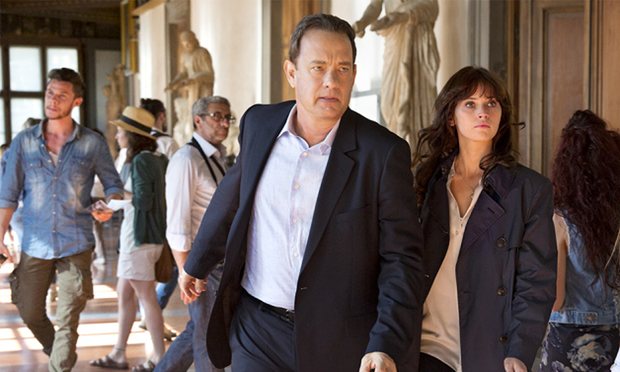
It’s difficult to imagine a film called “Inferno” would be one to pull its punches.
But aside from a few interesting moments early, Ron Howard’s adaptation of the Dan Brown novel by the same name goes out of its way to play it safe.
This makes Tom Hanks’ third turn as expert symbologist Robert Langdon a largely flat, uninspiring jaunt around Europe on par with the film adaptation of “Angels and Demons” and well below “The Da Vinci Code.”
Langdon awakens in a hospital room with a gunshot wound to the head and short term memory loss, tasked with solving a series of puzzles left by a billionaire madman with an obsession with Dante’s classic “Inferno.” Aided by a beautiful doctor (Felicity Jones), Langdon must evade questionable law enforcement officers and solve the mystery to stop a plague from killing half of civilization.
Hanks has great familiarity with the Indiana Jones-esque Langdon, who essentially devolves into a Harvard-educated version of Matt Damon’s amnesiac Jason Bourne without the killer fight skills in “Inferno.” But three films into the role, it’s readily apparent that one of Hollywood’s best actors cannot muster up enough enthusiasm to elevate the material beyond second tier action fodder.
Academy Award nominee Jones makes her biggest feature film appearance to date in “Inferno,” though her role as Langdon ally Sienna Brooks isn’t quite an auspicious major motion picture debut. Looking back, it’s clear moviegoers will remember her 2016 more for her lead performance in the upcoming “Star Wars” standalone film “Rogue One” in December.
As Brooks, Jones isn’t quite a damsel in distress or the Watson to Langdon’s Sherlock Holmes or any other definable characteristic. What comes across on screen is an awkwardly lethargic female lead whose main purpose is to take some of the expositional dialogue off Hanks’ shoulders and advance the plot forward.
Ben Foster, who was incredible as an anti-hero bank robber in “Hell or High Water,” comes off equally as generic as the film’s main villain, Zobrist. The script pulls a lot of the punch from the character, but Foster plays Zobrist with little gusto given the fact that his character is trying to murder half the world’s population. It’s proper casting executed poorly.
The film’s best moments come in Langdon’s many visions caused by amnesia, where Langdon glimpses clues to the puzzle as a terror-filled apocalypse. Because “Inferno” is a PG-13 adventure made for wide audiences, Howard doesn’t go too over the top with the gore for his Halloween weekend release. But the departure is the most welcome piece of cinema within “Inferno” as a whole.
Screenwriter David Koepp could easily be excused from simplifying Brown’s novel for film adaptation by cutting some corners early in the screenplay and eliminating minor fringe characters. What there really isn’t an excuse for, however, is the massive alterations to the film’s final act, which fundamentally changes the core motivations for several characters and weakens Brown’s unique original ending.
“Inferno” doesn’t really hold up over the course of two hours thanks in large part to poor plot structure and a middling effort from Hanks. The result is a decent, not good thriller that symbolizes a significant downward trend in the Robert Langdon franchise that only ardent Hanks fans may leave the theaters happy with.
Though Howard may finally be running out of steam, “Inferno” is still worth taking a chance on in theaters for those willing to turn their brains off for 90-plus minutes and just enjoy the ride.
Award season doesn’t hit for another several months, with major contenders typically not hitting theaters until mid-December.
There’s usually one exception to this rule annually and in 2016, it comes in the form of Meryl Streep, an actress so synonymous with Academy Award nominations that her mere involvement in a feature vaults it to the top of prognosticators’ lists.
Her latest film, the comedic biopic “Florence Foster Jenkins,” certainly doesn’t disappoint in any regard.
After finding critical and moderate commercial success in early August, Streep’s latest film returned to new theaters last week and wowed audiences with its rarely successful combination of humor and poignancy.
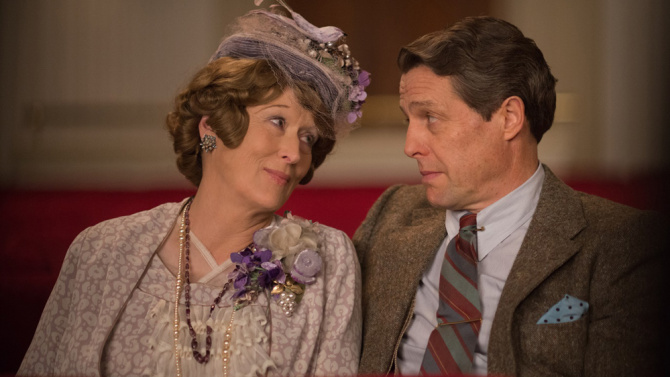
In the film, Streep stars as Jenkins, a World War II-era socialite who utilizes her family fortune to sponsor classical music concerts across New York City. Eager to make it herself as an opera star, she enlists the talents of her actor/manager husband St Clair (Hugh Grant), pianist Cosme (Simon Helberg) and an assistant conductor for the Metropolitan Opera to coach her despite the fact that she is unaware how incapable she is of singing well.
Films like “Florence Foster Jenkins” aren’t worth making without a generational talent like Streep and she proves it once again in the film’s titular role. At first glance, there’s a lot of Streep’s Oscar nominated turn as Julia Child in “Julie and Julia” within her Florence. But Streep imbues Florence with significantly more depth than it might appear and certainly more than “the world’s worst famous singer” moniker might imply.
While it’s obvious to point out how difficult it is to intentionally sing poorly (and Streep does so masterfully), the true brilliance within her performance is how effortlessly Streep layers Florence’s public and private personas. As a character, Florence naturally interacts differently with all the men in her life, but does so in a much more authentic way than one might expect from a traditional biopic. Streep does a wonderful job of invigorating each of her characters with such extreme individuality.
Grant’s charming, yet duplicitous turn as Florence’s husband St Clair could very well earn the veteran actor his long overdue first Academy Award nomination. Grant makes St Clair charming and out for himself just enough to justify his secret affair while simultaneously demonstrating his character’s immense and enduring love for Florence.
“Big Bang Theory” star Helberg surprises not only with his refreshingly touching and humorous role as pianist Cosme McMoon, but with his actual musical talent. A well versed musician in his own right, Helberg plays all of the music within “Florence Foster Jenkins” himself. It’s a unique talent that helped land the TV funnyman his first big movie in a critical supporting role opposite Streep.
What make Helberg perfect for “Florence Foster Jenkins,” however, is his pitch perfect comic timing in both the verbal and non-verbal sense, matching exactly the audience’s genuine reaction to Florence’s musical idiosyncrasies. Viewers are best able to emotionally connect with the film’s poignant third act by growing to love Florence as Cosme does. Helberg’s terrific performance elevates the entire film beyond being simply “a Meryl Streep movie.”
“Florence Foster Jenkins” isn’t remotely close to director Stephen Frears’ best work, with 2006’s “The Queen” and 2013’s “Philomena” both being better written, more technically savvy works. But Frears knows enough to get out of his own way and let his stars’ performances shine.
In all likelihood, “Florence Foster Jenkins” will only be in contention for accolades in acting categories despite being one of the year’s most singularly delightful offerings. Streep’s name alone could garner her 20th Academy Award nomination for a deserving performance while a charming Grant could slip into best supporting actor contention depending on how other films shake out in December.
Though the humor is dry, “Florence Foster Jenkins” is anything but a bore and should be a must see for movie fans looking for the film’s second theatrical run or as a rental at the end of the year.
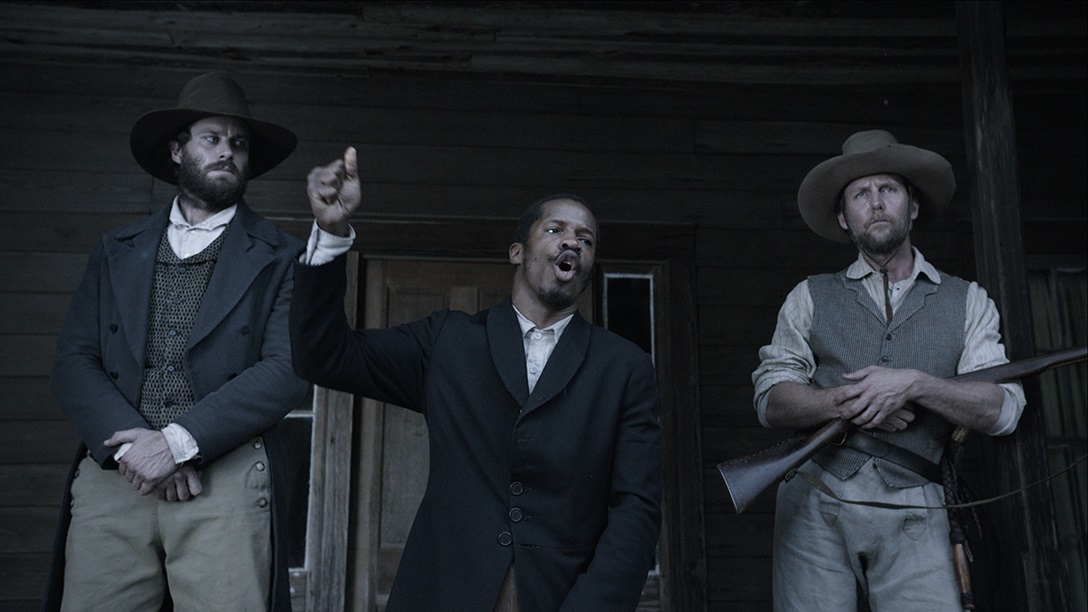
Note: This is not a review of the 2016 Sundance award winning film, The Birth Of A Nation. This is a personal narrative about my struggles deciding if I should watch the Nate Parker film at all after news of rape charges in 1999. I don’t know that I’ll ever be able to bring myself to put pen to paper and write a full review of the film. I won’t write a single word of that review that references the controversy surrounding Parker. I only want to review the art, not the artist.
It’s been nearly a week since I drove an hour away to see The Birth Of A Nation.
It was incredibly difficult for me to put my thoughts into words then while hammering away a few notes on my cell phone.
It’s incredibly difficult for me to write about this film now. And it shouldn’t have had to be.
Ever since Nate Parker’s Civil War-era biopic blew viewers away at Sundance winning both the audience award and jury prize, The Birth Of A Nation had been on the top of my must see list for nearly a year. Early reviews were glowing; 23 of the 24 critic reviews on Rotten Tomatoes were positive and verging on gushing over this film, which seemed to be the cure-all for the #OscarsSoWhite controversy that roared throughout Hollywood in early 2016.
The Birth Of A Nation was an important movie then. And it’s still an important movie now, but for so many other reasons.
I wish I could have experienced The Birth Of A Nation then, when Parker’s determination to give up his career and finances to make his passion project was the film’s primary narrative; when the cinema mattered more than the man who made it.
I’ll never get to experience that Birth Of A Nation.
My Birth Of A Nation experience is/was/will forever be shrouded in the fog of the August revelation that Parker had been charged with raping a fellow undergrad while on the wrestling team at Penn State University in 1999. He was later acquitted of those charges, but his friend and Birth Of A Nation co-writer Jean Celestin was found guilty and sentenced to six months in prison.
Everything changed.
The Oscar buzz dried up. Critics couldn’t write reviews without referencing controversy. Promotional efforts shrank. Wanting to see the film felt like a stain you couldn’t wash out.
Personally, I hadn’t considered skipping The Birth Of A Nation until an independent filmmaker I truly respected posted on Facebook that he felt legitimately conflicted about seeing the movie after the Parker controversy was made public.
Was there something that I was missing?
Having zero experience with sexual assault (or sex at all for that matter) and nearly no knowledge of rape culture, I did what I would do with any topic: read as many articles as I could and watched the most respected documentaries on the topic I could find.
A couple weeks before the Parker controversy came to light, I had seen ESPN’s terrific and powerful “30 for 30” documentary Fantastic Lies about the Duke lacrosse team scandal where three players were accused of the gang rape of a stripper they hired for a team party. Those allegations had later been proven false.
When I first read about Parker’s rape charges and acquittal, instantly the Duke case came to mind. I think I wanted the rape to be untrue, even though I’ve since learned that a small percentage of rape allegations actually are. Instantly, I knew The Birth Of A Nation was poisoned beyond repair and I was sad. I wanted to see this up-and-coming filmmaker’s work in the light it was made to be seen it. Now that was impossible.
I’ll never know for certain whether the rape happened. And that’s immensely frustrating. Definitive proof one way or another would have selfishly made my decision whether or not to see the film easier, or at least easier to justify.
Something still felt wrong.
Was I perpetuating rape culture by wanting to see this film, by wanting to see this filmmaker vindicated for my own selfish purposes?
I certainly didn’t want to be.
I watched The Hunting Ground, Kirby Dick’s emotional and powerful documentary about rape on college campuses as seen through the experiences of victims seeking justice through their universities and finding little to none. It’s a heartbreaking film.
I still didn’t feel like I understood enough, so I watched it again. And again. And again. Four screenings of The Hunting Ground just made me feel lost and helpless. I wanted to help end the cycle so no woman or man would have to go through the pain and suffering of such an emotionally scarring, devastating event. I didn’t know that I could.
Was watching The Birth Of A Nation a betrayal of these feelings? To this day, I still don’t know.
A couple of days before I saw the Sundance Award winning film, I watched another emotionally wrecking and powerful documentary, Audrie and Daisy, on Netflix. The documentary follows the stories of several teenage girls who are victims of sexual assault in their early high school years. Though both Audrie and Daisy are emotionally devastated by their assaults, Audrie commits suicide while Daisy struggles to regain herself before joining fellow teen victims to create a survivors’ organization.
http://m.youtube.com/watch?v=29Dr4ChJUBc
I thought about that film and those young women a lot in the last week and a half. I thought about the Duke lacrosse players whose lives are irreparably changed because of allegations that just weren’t true. I thought about Brock Turner, the Stanford swimmer who sexually assaulted an intoxicated woman behind a dumpster and left her there only to receive three months of actual jail time. I thought about the woman who killed herself in 2012 because she continued to be haunted by the events that occurred between her, Parker and Celestin one night at Penn State in 1999.
I continue to wonder “What if that had been me? What if that had been someone I loved?” as I attempt to place myself in the shoes of both accuser and accused in every situation. I still have no answers.
Those thoughts flooded my mind as I drove 45 miles to see The Birth Of A Nation, all the while questioning whether I should watch something else or just turn around and go home.
I decided to watch The Birth Of A Nation because for that two-hour window one Saturday morning, I was able to separate Nate Parker the filmmaker from Nate Parker the person.
I don’t know if I’ll ever watch The Birth Of A Nation again. I don’t know if I can.
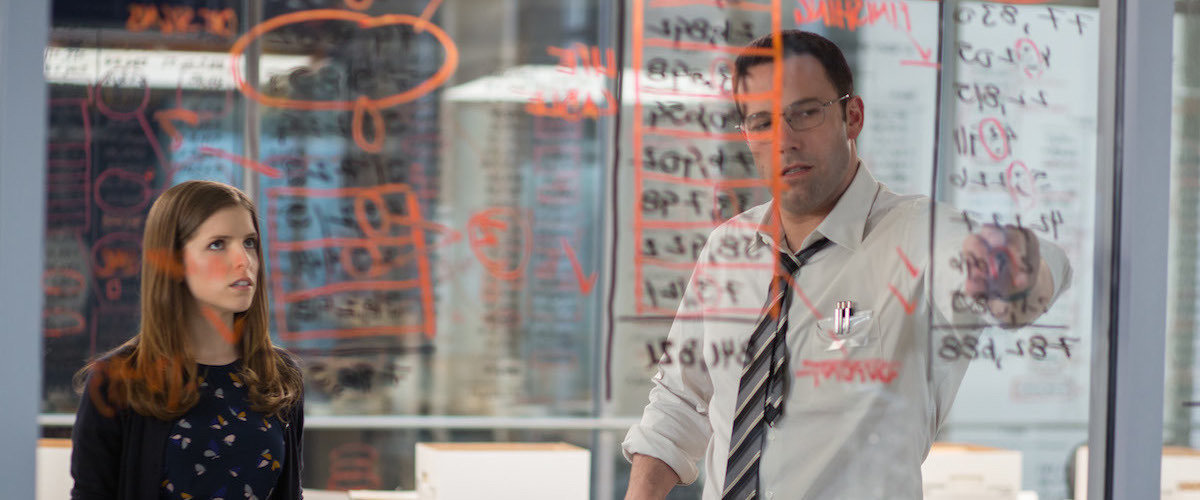
There’s a scene early in Gavin O’Connor’s “The Accountant” where a young boy completes a complex 1,000-piece puzzle with the cardboard side up.
It’s a scene meant to inform viewers how Christian Wolff (played in adult form by Academy Award winner Ben Affleck) handles his inherent duality as an exceptionally bright person who just so happens to have high-functioning autism. Instantly, it establishes the duality of the character that later manifests into mild-mannered CPA by day, vigilante assassin by night. The film itself also finds an interesting duality as both traditional action fodder and thinking man’s drama.
Now an adult, Wolff serves as CPA to the most dangerous criminals and warlords around, which inevitably puts the Treasury Department on his tail. He believes he is playing it safe by taking a consulting job working for an up-and-coming robotics company, until the bodies start piling up.
Affleck portrays Wolff with all the care one might expect from award season dramas rather than a simple blunt instrument for death and financial investigation. An autistic anti-hero is inventively unique in the action genre, but it takes real talent to flesh out the character on screen and not turn it into a caricature of “Rain Man.” Affleck toes the line well here in this complex, layered role and provides the much-needed heartbeat of the entire feature.
Christian Wolff is exactly the type of action role moviegoers have been waiting to see from Affleck after various degrees of missteps as Bruce Wayne/Batman in “Batman v Superman: Dawn of Justice” and Jack Ryan in “The Sum of All Fears.”
Anna Kendrick channels much more of her Oscar nominated turn in “Up in the Air” than “Pitch Perfect” as junior accountant turned damsel in distress Dana Cummings. There isn’t a lot for Kendrick to do with the lightly written character, but Kendrick imbues Dana with just enough of her own spunky, affable personality to make Cummings a refreshing counterbalance to Wolff’s inherent stoicism.
Jon Bernthal, fresh off a compelling turn as The Punisher in season two of “Marvel’s Daredevil,” puts a lot of gusto and life into Brax, the film’s obligatory hitman for hire. Much of Bernthal’s quality work is lost in a plotline that doesn’t exactly belong in the first half of the film and Brax would have probably been better served as the main villain of a sequel film. But Bernthal powers through with a strong effort nevertheless.
The cast is rounded out by solid, yet unspectacular performances from John Lithgow as the owner of the robotics company Wolff investigates, Jeffrey Tambor as a money launderer who teaches Wolff the black money market and J.K. Simmons as the veteran Treasury Department agent on his trail.
It shouldn’t come as much surprise that “The Accountant” was penned by “The Judge” screenwriter Bill Dubuque, who seems to have an affinity for writing one subplot too many into his scripts. “The Accountant” bounces all over the place instead of keeping the action firmly following Wolff, an affliction “The Girl On The Train” fell prey to when it veered away from Emily Blunt.
Jumbling up the storyline with too many flashbacks and side plots forces the hand of director O’Connor, who probably shoots about 20 minutes more film than he needs to. Scene to scene, “The Accountant” is well executed on a technical level with Seamus McGarvey’s cinematography a highlight, but the film’s poor pacing often drags the whole narrative down. It’s a film that tries to cram three hours worth of plot into a two hour hole.
In spite of its flaws, “The Accountant” is a well acted, thoughtful action-thriller in the vein of films like “Jack Reacher,” “John Wick” and “The Equalizer,” all of which have sequels slated.
Led by strong efforts from Affleck and company, “The Accountant” richly deserves a second run at the big screen and is a most worthy film to check out in theaters this fall.
Best selling books don’t usually translate all that well onto the big screen in major motion picture adaptations. It’s why the ones that work – like “Fight Club,” “The Godfather,” “The Wizard of Oz” and more – are widely heralded.
Book to film is an inexact science, one that requires a deft hand at the director’s chair and especially in the screenplay adaptation.
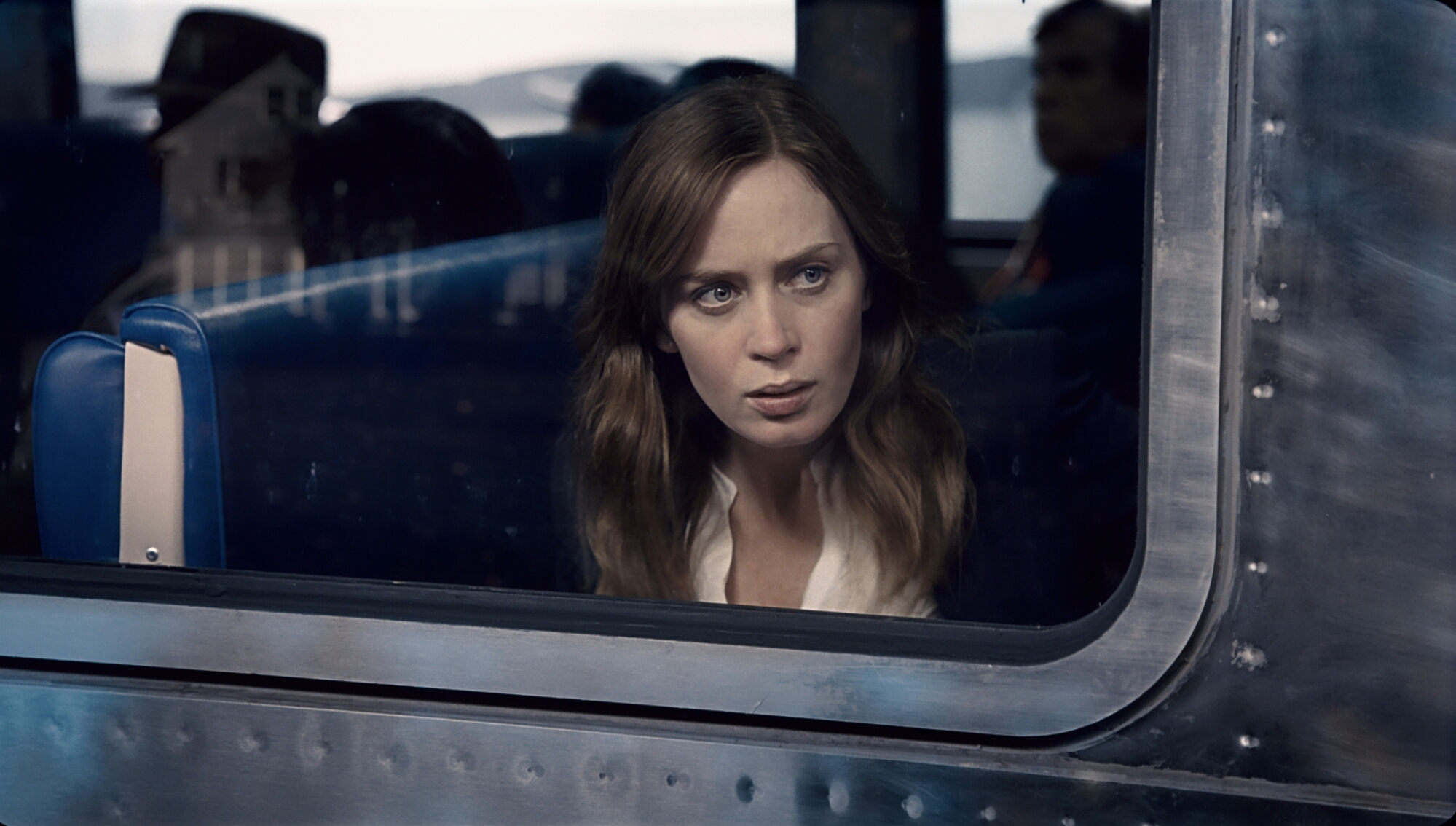
“The Girl On The Train” starring Golden Globe winner Emily Blunt follows an emerging trend of relationship-driven mystery/thrillers that have made the leap from the printed word to the cinemas. The standard-bearer in this subgenre, David Fincher’s “Gone Girl,” is the most frequently used comparison for Tate Taylor’s adaptation of the Paula Hawkins penned “The Girl On The Train.” But that logic just simply isn’t fair to either film.
Blunt stars as Rachel, an alcoholic divorcee with a penchant for spying on a beautiful couple seemingly in love while riding a train from her suburban home into the city for work. When Rachel catches the woman kissing another man on her patio and Rachel’s voyeuristic fantasies are shattered, all hell later breaks loose as the woman turns up missing and Rachel is pegged as a prime suspect in her disappearance.
As the film’s titular character, Blunt is simply marvelous as “girl on the train” Rachel, weaving in and out of various states of inebriation with remarkable care and subtlety. Viewers are readily able to infer just how many cocktails Rachel has had from one scene to the next by the degree to which Blunt elevates or subdues her performance. It’s the single best portrayal of chronic alcoholism and depression in many years.
In the moments where the audience is allowed to follow Rachel through the mystery, “Girl On The Train” is a taut, potent thriller. If Taylor’s entire film were told from the perspective of Blunt’s uniquely devastating, beautifully layered character, “Girl On The Train” would be a runaway smash success.
Unfortunately, Taylor misinterprets his film as an ensemble film and slightly marginalizes Blunt’s tour de force effort. “Girl On The Train” is a star vehicle for Blunt and the single best piece of acting so far in her emerging powerhouse career. Blunt proves to be too talented for most of her cast mates – whom she dominates from scene to scene effortlessly – or the film’s disjointed, poorly penned script from Erin Cressida Wilson.
Haley Bennett, fresh off a turn in the action-western “The Magnificent Seven,” remains stoically cold in her portrayal of the film’s missing person, Megan. Her performance both hinders and hurts the overall tone of “Girl On The Train” over the course of two hours as Megan is both devilishly engaging and clinically un-relatable for viewers. Luke Evans, who plays Megan’s husband Scott, is equally stoic and difficult to read, making for often clunky viewing experiences in scenes featuring the two actors.
Justin Theroux as Rachel’s ex-husband Tom and Rebecca Ferguson as his new wife Anna are competent in their limited screen time throughout the majority of the film, but are criminally underutilized as a whole. Their scenes opposite Blunt are some of the highlights of the entire movie and could have been easily expanded based on the source novel.
In this same respect, character actor Edgar Ramirez is largely wasted in a subservient, plot-driven role as Megan’s psychiatrist as was Allison Janney as a one-dimensional and stereotypical bulldog detective investigating Megan’s disappearance.
This is representative of the fatal flaw, if there is one, within Taylor’s movie. Simply put, “The Girl On The Train” feels like the visual CliffsNotes version of Hawkins’ novel rather than the reimagining of her best-selling thriller. Cressida Wilson does a poor job adapting the book into screenplay format, leaving Taylor with little ability to make the high level thriller he believed he could make.
However, it should be said that audiences completely foreign to the source novel will likely be engrossed with the theatrical version of “The Girl On The Train” from start to finish in spite of its many issues. Despite the fact that Taylor’s film often devolves into “Lifetime movie on steroids” territory, there are audiences who will truly love this film. Ardent fans of Hawkins’ novel just probably won’t be among them.
You’ll probably leave the theater a little upset and pretty angry.
That doesn’t mean audiences shouldn’t flock to the theater in droves to see “Deepwater Horizon,” the based-on-a-true-story disaster film from “Lone Survivor” director Peter Berg and star Mark Wahlberg.
The new film follows veteran driller Mike Williams (Wahlberg) and assorted crew members of the offshore oil drilling unit Deepwater Horizon as they prepare to open a new well for British Petroleum (BP) off the coast of Louisiana. Faulty installation of cement at the base of the well helped lead to catastrophic problems, major explosions and oil spilling into the Gulf of Mexico.
While recent biopics like “Sully” have delved into the aftermath of major events – Tom Hanks’ film focuses on the NTSB investigation of the plane landing on the Hudson River – “Deepwater Horizon” approaches its events in more chronological, straightforward terms, leaving out the investigation into BP. However the oil company is represented in Berg’s movie as a major villain, primarily through John Malkovich’s expert portrayal of BP executive Donald Vidrine.
In order to keep “Deepwater Horizon” as much of an action/thriller as possible, Berg’s film rarely utilizes the impassioned soliloquys usually found in biopic dramas and offers a “no frills” approach to his cinema. As a result, the acting performances in the film are somewhat tampered down.
The film’s main focus, Mike Williams, is portrayed by Wahlberg with much gusto. But as with so many other Wahlberg performances, a solid effort from the veteran Boston actor is overshadowed by another actor, the spectacle of the movie itself, or in the case of “Deepwater Horizon” both.
Malkovich’s Donald Vidrine doesn’t get a lot of screen time in the overall scheme of the movie, but his perfect portrayal of the greedy, conniving BP executive is the best piece of acting in the entire film. His confrontation scene with Wahlberg shortly before the explosions begin give a dynamic summary of BP’s attitudes towards the events causing the disaster. In fact, “Deepwater Horizon” would have been a much different and arguably much better film had the Vidrine character been expanded significantly.
Aside from Wahlberg, “Deepwater Horizon” leans heavy on a talented, but secondary supporting cast including Kurt Russell as the rig’s captain, Dylan O’Brian as a driller working the main floor of the rig and Gina Rodriguez as the ship’s pilot. Among these performances, Kate Hudson offers her best work in several years in the small, but crucial role as Williams’ wife Felicia.
The effectiveness in Hudson’s portrayal, representing all of the families of Deepwater Horizon crew members, helps viewers emotionally invest in the outcome of the film. Many times in films like this, the stereotypical “family member left at home” character is played incredibly shallow and the “back home” relationship for the main character is better left on the editing room floor.
With “Deepwater Horizon,” Mike’s relationship with his wife is the emotional core of the entire film and drives home the dramatic elements of a largely action-based feature. Hudson and Wahlberg show good chemistry in limited screen time together and their efforts make the overall narrative more convincing as a result.
Perhaps the biggest flaw within “Deepwater Horizon” lies in Matthew Michael Carnahan and Matthew Sand’s screenplay, which rarely shies away from the overt technical jargon related to offshore oil drilling. Whereas a film like Oliver Stone’s “Snowden” goes to extreme lengths to simplify a complex topic like government surveillance, “Deepwater Horizon” powers through conversation after conversation between workers on the Deepwater Horizon without much care given to audiences’ understanding of why the explosion and subsequent spill happens.
Viewers will eventually infer the basics of the whys and hows, but the screenplay refuses to slow down in lieu of maintaining a brisk pace. Those sparked to learn more about the technical aspects of the disaster from watching “Deepwater Horizon” should seek out the 2014 documentary “The Great Invisible,” a South by Southwest Film Festival award winning film that covers the root causes of the disaster as well as the ensuing government investigation.
“Deepwater Horizon” is unlikely to receive any critical accolades this fall, though that isn’t because Berg’s film isn’t worth spending 107 minutes on in theaters.
An imperfect film, “Deepwater Horizon” will likely leave viewers with questions about real life events and in utter awe over how many individuals’ lives were saved by the bravery of the rig’s crew and other extraordinary circumstances. Overall, the “Lone Survivor” team of Berg and Wahlberg make a taut, engaging film that audiences won’t be disappointed in once they leave the cinema.
“The Magnificent Seven” is a completely unnecessary remake.
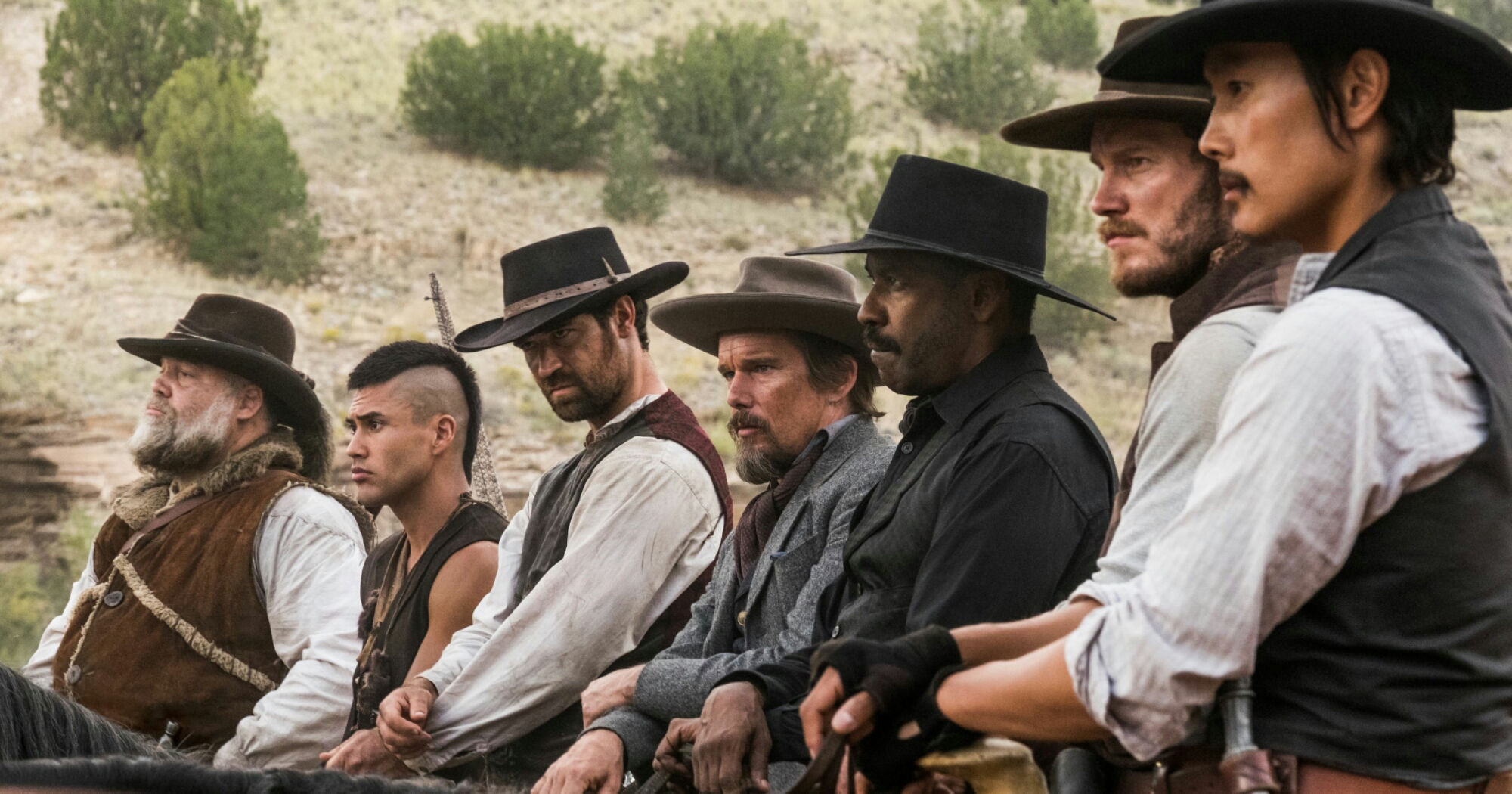
It’s not because the Denzel Washington led western isn’t a quality movie, but rather that the re-imagining of the 1960 film starring Yul Brenner and Steve McQueen doesn’t actually resemble the original film itself. In fact, the newest film from director Antoine Fuqua would probably be better served with a different title altogether as Fuqua’s movie is more in-the-style-of “The Magnificent Seven” than a true remake.
The bare-bone essentials are the same: seven mercenary gunmen protect a town from a ruthless villain and his large army of bandits. That’s pretty much all the two films share in common besides their name. Brenner and company fought for a purpose; the new team fights because they don’t have anything better to do.
Amid the often chaotic frenzy within the film, Washington brings his usual gravitas to the role of bounty hunter Sam Chisholm, leader of the “seven.” Audiences are able to buy into the group coalescing as one as a result of Washington’s stature and presence on screen, commanding the respect of his fellow actors and the audience watching comfortably in their seats.
Chris Pratt is an inspired choice to play the group’s unofficial lieutenant, smart-mouthed playboy gunslinger Josh Faraday. The former funnyman turned action star keeps “The Magnificent Seven” balanced with his wit and charm, offsetting the more deliberate performance from Washington.
Unfortunately, Ethan Hawke’s turn as Civil War sharpshooter Goodnight Robicheaux was criminally underutilized in the film. Hawke has the capability to perform at an incredibly highly level dramatically, but not enough time was spent developing Robicheaux’s wariness to use his weapon.
It’s this sort of character development that Fuqua opts to minimize for the sake of the action sequences, proving the director doesn’t get the point of classic western films like “The Magnificent Seven.” The why characters act the way the do is often as important if not more so than what they do. Fuqua oversimplifies these character nuances, turning them into mere anecdotes in service of explosions. This isn’t to say that “The Magnificent Seven” isn’t a largely entertaining film. It certainly is. It just could have been a lot more.
Among the secondary cast, the film’s best performance comes from veteran character actor Vincent D’Onofrio as rugged mountain-man Jack Horne. Most of the characters in “Magnificent Seven” are pretty bland as individuals and serve mainly to further the action sequences late in the film. D’Onofrio brings a life to Horne with a striking accent and depth of emotion unusual in Fuqua’s movies outside of “Training Day.” Indeed, it’s D’Onofrio’s work that is most reminiscent of the Brenner-McQueen film, where each of the seven are given definitive characters from which to work with.
Peter Sarsgaard delivers an embarrassingly memorable performance as the villainous industrialist Bartholomew Bogue ruthlessly terrorizing the small town. Just shy of mustache twisting, Sarsgaard’s Bogue is a subpar imitation of Daniel Day-Lewis’s Oscar winning performance with a similar character in “There Will Be Blood.” For as strong as many of the heroes in “The Magnificent Seven” are, the film’s villain is equally as weak making for a somewhat underwhelming conclusion.
Director Antoine Fuqua makes the most of a pedestrian screenplay by Nic Pizzolatto and Richard Wenk, combining vintage western landscapes with modern action sequences to provide a largely compelling outcome from what could have been a terrible film. Each scene is vibrant and pops off the screen thanks in large part to cinematographer Mauro Fiore. From a directorial sense, “The Magnificent Seven” is a western film that acts more like a traditional action thriller both to the movie’s credit and hindrance at various times over the course of two hours.
Moviegoers expecting an update on the western classic similar to how the Coen Brothers updated the John Wayne classic “True Grit” may leave disappointed. “The Magnificent Seven” couldn’t be much farther from the film it takes its name from.
But if you’re able to ignore or forget the film’s cinematic heritage, “The Magnificent Seven” is a largely entertaining romp of a western that emulates blockbuster action films in the most satisfying ways. Washington and Pratt deliver a fun time at the cinema worth heading out to theaters for.

There’s an inevitable desire to start constantly looking over your shoulder and watching what you post on social media after screening the political drama “Snowden,” now in theaters.
Oscar winner Oliver Stone’s paranoia-inducing image rehabilitation feature narrative on famed former NSA analyst and fugitive Edward Snowden hits heavy for those relatively uninformed about the titular character’s life and actions. However, for news-minded individuals, “Snowden” comes across as an uninspired, paint-by-numbers tale about love in the time of mass surveillance.
Told in an awkward flash-back, flash-forward narrative structure, Stone’s film follows Snowden (Joseph Gordon-Levitt) as he comes to work for the CIA and later the NSA. He serves the country with the best of intentions for many years while falling in love with his longtime girlfriend, Lindsey Mills (Shailene Woodley). When Snowden is tasked with working on NSA surveillance programs targeting large numbers of U.S. citizens, he makes a break out of the country with highly classified intel in tow.
More biopic than political thriller, Stone and co-screenwriter Kieran Fitzgerald opt to humanize the polarizing Snowden for audiences through a significantly developed love story with Mills. While this allows viewers to be better able to put themselves in Snowden’s shoes, it reinforces the dramatization of Snowden’s life story more so than an average biopic would. In this sense, “Snowden” becomes the cliff notes to a true person’s life story, the “Idiot’s Guide to NSA Surveillance” if you will.
It feels like the intent of the filmmakers – and star Gordon-Levitt has spoken publically to this effect – that “Snowden” is simply a means through which audiences will begin a conversation about the issues raised in the film and do more research on their own. In this respect, the film takes a great deal of time dramatizing the filming of the Oscar-winning documentary “Citizenfour,” which shows a real-life Snowden working with journalists to expose secret government programs to the general public.
Watching “Citizenfour” or seeing Snowden speak publically, it’s readily apparent how spot on Gordon-Levitt’s portrayal of the whistleblower truly is. He captures Snowden’s unique cadence and accent perfectly, adopting his eccentric mannerisms in a vividly imaginative performance. It’s unlikely that he will get major awards recognition for his efforts, especially given the subject, but Gordon-Levitt still turns in one of 2016’s best performances in an otherwise pedestrian film.
After starting her career with terrific turns in independent films like “The Descendants” and “The Spectacular Now,” Woodley has been languishing away in franchise fodder through three “Divergent” movies before returning to drama with “Snowden.”
It’s evident that Woodley gives the role of Mills her full effort, especially during argument scenes opposite Gordon-Levitt. But the middling screenplay leaves Mills languishing from start to finish, operating simply as character witness for Stone’s hero-making effort for Snowden rather than her own unique character.
“Snowden” boasts an impressive and deep supporting cast including Oscar winner Melissa Leo as documentarian Laura Poitras, Tom Wilkinson and Zachary Quinto as a pair of Guardian journalists and Rhys Ifans as Snowden’s mentor/boss with nefarious intentions. These performances all serve the narrative relatively well, but it’s Nicolas Cage’s outlandish casting and effort as a CIA trainer and friend that feels over the top and ridiculous. Nearly all of the actors in “Snowden” do an effective job of supporting Gordon-Levitt’s turn as Snowden, but Cage just brings the movie to a screeching halt in his limited screen time.
For whatever reason, “Snowden” just doesn’t feel like an Oliver Stone movie. Frequently a risk taker with his films, Stone just takes the easiest road and plays the entire film pretty safe both visually and narratively in service of his obvious goal of lionizing Snowden as a whistleblowing patriot.
The result is a disjointed, haphazard film that is probably better suited as a rental or streaming option several months from now rather than a film audiences need to rush out to theaters to see in spite of a terrific Gordon-Levitt performance.
“Citizenfour,” the Oscar winning documentary highlighted in “Snowden,” comes highly recommended and should fill moviegoers’ Snowden needs until the Oliver Stone hero-making piece arrives in home video.
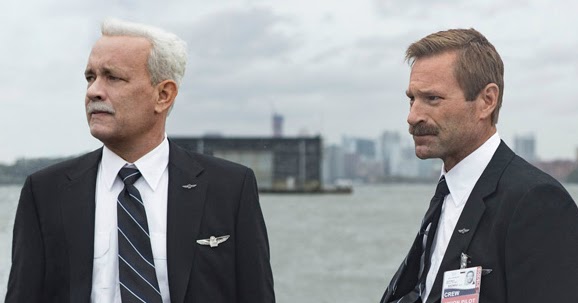
What happens to unlikely heroes after their miraculous deeds?
Academy Award winning director Clint Eastwood seeks to answer this complex question with yet another introspective look at a recent American hero following 2014’s spectacular “American Sniper.”
In “Sully,” Eastwood examines the “hero on the Hudson,” veteran U.S. Airways pilot Chesley “Sully” Sullenberger as he constantly relives his 208-second flight from LaGuardia Airport which ended with a forced water landing on the Hudson River. Based on true events, Sully (Oscar winner Tom Hanks) and his first officer Jeff Skiles (Aaron Eckhart) are questioned by media and the suspicious National Transportation Safety Board (NTSB) investigators in the days immediately following the January 15, 2009 incident.
Told almost exclusively from the perspective of Sully himself, Eastwood’s film forces Sullenberger to relive (and occasionally hallucinate) about the fateful flight, which makes the veteran pilot question whether he made the right decision.
As the titular hero, Hanks is mesmerizing in his unsettled confusion with Sullenberger’s frequent, yet private emotional breakdowns serving as many of the film’s best moments. While “Sully” drifts into police-procedural territory in the final third as the NTSB investigation wraps up, Hanks elevates average dialogue with his quintessential everyman performance style. Despite his storied career, “Sully” may prove to be Hanks’ defining performance over the latter stages of his career and certainly over the last decade. An Academy Award nomination for his performance would not be out of the question.
Eckhart gives a serviceable, largely unmemorable effort as first officer Skiles, essentially riding shotgun to a career-defining Hanks performance. In a film where so many characters felt authentic, Skiles sticks out as Aaron Eckhart reading the lines given to the character of Skiles rather than Eckhart actually becoming Skiles. However, this isn’t particularly detrimental to the overall success of the film.
Veteran character actress Laura Linney offers a strong supporting performance as Sullenberger’s wife Lorraine. The part is especially difficult as Lorraine is separated from the rest of the cast and only has scenes with her husband over the telephone. Not being able to see and react off your acting partner with their physical presence can be immensely challenging, though Linney handles the role well. Her performance helps round out Sully’s character and allows Hanks to portray the pilot’s rare emotional releases.
The first film to be shot entirely with IMAX cameras, “Sully” is visually spectacular from start to finish and especially shines in the air during scenes depicting the plane crash. This is approached from a variety of angles and perspectives throughout the film and cinematographer Tom Stern does a terrific job of making each scene feel cohesive and yet fresh at the same time. Reliving the harrowing events over and over will probably make you leery of flying any time soon, however.
Eastwood continues to prove himself to be one of the elite filmmakers of our time with “Sully,” which features Eastwood’s no-frills directorial style and original music. Like so many other Eastwood films, “Sully” plows forward from act to act with solid pacing, picturesque shots and solid acting performances across the board. It’s thanks to Eastwood that planes crash-landing on the Hudson River are shown in the least flashy, blockbuster way possible.
“Sully” should be a shoe-in for several technical awards as the film’s depiction of the plane landing on the Hudson will likely be one of the year’s most visually impressive moments. Academy Award nominations could also be in the cards for Hanks as Best Actor, Eastwood as Best Director and the film for Best Picture depending on how the rest of 2016 plays out.
Led by a career-defining performance from Hanks and impressive cinematography, “Sully” is a sure bet to be an audience favorite and is definitely worth the trip to the theaters.
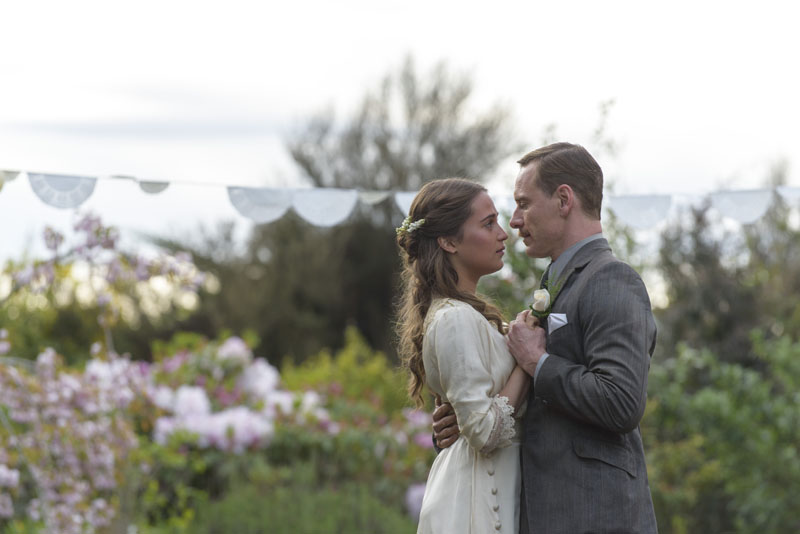
Every year there’s a film that sneaks its way through theaters without much commercial fanfare and then makes a strong showing in Oscar nominations.
In 2016 that film is assuredly “The Light Between Oceans,” a picturesque, romantic period drama featuring reigning Best Supporting Actress winner Alicia Vikander and Oscar nominee Michael Fassbender along with a terrific supporting performance from Academy Award winner Rachel Weisz.
Based on the 2012 novel by M.L. Stedman, “The Light Between Oceans” follows Tom (Fassbender), a single man returning from war to take post on a remote lighthouse and falls in love with a young Australian woman (Vikander) living on a nearby island. Though it’s fair to call the film a romance, Tom and Isabel’s courtship isn’t at the center of their story. Rather, Tom and Isabel’s struggle to form a family while living away from civilization proves to be the catalyst for their emotionally gripping tale.
This is a movie best viewed with fresh eyes. More so than many other films, divulging too much about the plot (or watching the film’s trailer for that matter) may prove to be catastrophic for viewers’ ultimate enjoyment of “The Light Between Oceans.”
It’s hard to play stoicism in a romance much better than Fassbender does as Tom, a man shattered by the things he saw and did as a soldier in the Western front of World War I. His performance is the near perfect definition of melancholy early in the film. The way Tom is transformed – brought back to life, as it were – by Isabel over the course of the film is remarkable. A nomination will likely elude Fassbender this year given a number of much flashier performances yet to hit the big screen this fall, but the performance is definitely worthy of consideration.
While Tom anchors the narrative structure of the film and takes a majority of the screen time, “The Light Between Oceans” is Vikander’s movie and her performance is beautifully crushing. It’s impossible to keep your eyes off her Isabel, emotionally mesmerizing and layered beyond compare. Her scenes of grieving loss toward the latter part of the film’s first hour are devastatingly poignant.
In a film filled with highlights, Vikander is the best thing about “The Light Between Oceans” and it’s not particularly close. Another Oscar nomination feels inevitable at this point and a second straight win for the Swedish actress wouldn’t be out of line either.
Weisz doesn’t make an appearance in the film until the second hour as the relationship between Tom and Isabel is given time to bloom. But once the former Oscar winner hits the screen as a grieving widow, Weisz holds her own against strong efforts from Vikander and Fassbender. It’s difficult to spend too much time on Weisz’s performance without revealing too many plot points, but her work is often exceptional and just occasionally too stiff for the overall tone of the film.
Director Derek Cianfrance moves “The Light Between Oceans” at a much slower, leisurely pace than his dynamic previous films “Blue Valentine” and “The Place Beyond the Pines.” Yet despite the slow, two-hour build to the movie’s third act crescendo, “The Light Between Oceans” maintains constantly entrancing cinema, thanks in large part to the masterful performances Cianfrance is able to draw from his lead actors.
The film is additionally bolstered by Adam Arkapaw’s stunning cinematography, which Cianfrance uses to frame the beginning and end of each scene.
Unfortunately, “The Light Between Oceans” was released far too early in 2016 for major consideration in Best Picture races come awards season, though Vikander’s standout work will remain firmly in the Oscar hunt. Regardless, Cianfrance’s largely riveting melodrama will appeal to fans of period cinema and of the lead actors.
It wouldn’t come as any surprise to see “The Light Between Oceans” end 2016 as one of the year’s 10 best movies and those willing to take a chance on the film in theaters shouldn’t be disappointed.
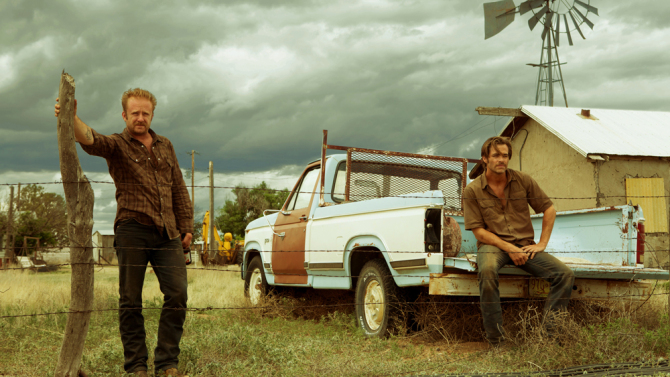
“Hell or High Water” is the best film you’ll see this year.
This isn’t hyperbole or a statement made lightly, especially given the fact that there’s still four months and an entire season of Academy Award candidates yet to be released.
Beautifully crafted and acted, the first major release film from director David Mackenzie stars Chris Pine and Ben Foster as brothers who resort to robbing banks in sleepy West Texas towns while being pursued by a grizzled veteran Texas Ranger played by Jeff Bridges.
“Hell or High Water” is a funky combination of thriller and neo-Western ripped straight out of a different era. Were they alive today, “High Water” is a movie that Steve McQueen and/or James Dean might star in – a quintessential tale of antiheros running from the law for morally just reasons. “Hell or High Water” is “The Getaway” with a conscience; a western “Rebel Without A Cause.”
What Mackenzie hits audiences over the head with from the outset is Giles Nuttgens’ artistic, nuanced cinematography that paints the film’s West Texas landscape so perfectly. Nuttgens and Mackenzie masterfully use the natural lights and shadows of early sunrises and sunsets to mask the film’s slower, poignant moments, helping to keep audiences engaged in between tense action. Effectively shooting in low light situations is a difficult skill to master and Nuttgens does the best job of any cinematographer in 2016 of handling this challenge.
Pine has proven to be a very capable leading man especially in popcorn franchise films. But he has never been quite as elegant and layered with a performance as he is in “High Water.” His broken, weathered effort is award worthy as a man struggling to balance the death of his mother, a dying family ranch and two sons from a failed marriage. There’s just enough stoicism in his performance to balance the more manic turn from Foster that elevates the entire film beyond crime genre stereotypes.
At first glance, Foster doesn’t appear to be the ideal choice to play the demonstrative, devil-may-care older brother. The veteran character actor has waded in these waters many times before and often overacted with gimmicky caricatures. In “High Water,” Foster teeters right on the cusp of going too far with the part. but whether it’s Mackenzie holding him back or Foster finally playing with restraint, his performance is safely just on the edge of crazy without billowing over into complete madness. Foster’s innate chemistry with Pine in the film is undeniable and it’s in their kinship that the film truly shines.
Inevitably, Bridges’ performance in “High Water” will be compared to Tommy Lee Jones’ effort in the similar, yet much darker Coen Brothers film “No Country for Old Men.” The parts are different sides of the same coin, the aging Texas lawman out for one last ride. In “High Water,” Bridges does display a very effective “I’m too old for this” mentality, but it’s couple with an uniquely crude and albeit racist sense of humor that’s unexpectedly brilliant. There’s a great deal of levity in Bridges’ partnership with a younger Native American colleague that tracks quite nicely throughout the film. When looking back on Bridges’ career, “High Water” will ultimately represent one of his best performances in a long, storied filmography.
British director Mackenzie seems well at home shooting a film so entrenched in the desolate West Texas plains and his movie offers terrific, cutting insight to life in stagnant rural economies. Many of the sleepy cities portrayed in “Hell or High Water” feel like modern day ghost towns with the entire film playing out as if it were a Clint Eastwood western from the 1960s. Mackenzie does a masterful job of adapting screenwriter Taylor Sheridan’s script, matching the tone of the pitch-perfect dialogue with visual cues and backgrounds that build layers of depth to the overall finished product.
Several months from now, critics and award voters will likely overlook this small, limited release independent western in favor of “showy”-er efforts from bigger names in biopics with acting performances from Pine and Bridges as well as Mackenzie’s directorial effort feeling like major snubs.
But it’s not an exaggeration to say that “Hell or High Water” is the best film of 2016, even with four months left in the year. It’s the single best piece of cinema that you could possibly watch in a theater right now and an absolute must see film.
 Cinematic Considerations