

There’s a fantastic film hiding somewhere deep within Don’t Worry Darling, Olivia Wilde’s follow-up to her surprise hit directorial debut in 2019 with “Booksmart.”
In an idyllic world, Darling takes an incredible Florence Pugh performance and elevates it with exceptional cinematography and production design as well as an ensemble cast that can help create a larger world and bring an intriguing concept to life.
The building blocks for a top-five movie of the year are there, but nothing ever really comes together in Darling, a big swing and largely hit-or-miss drama that doesn’t settle on a proper tone nor truly lets the audience in on what’s going on.
Darling follows Pugh as 1950s suburban housewife Aliceliving out a life of relative luxury in a corporate based community ripped straight out of a mid-20th-century American dream. It’s only when Alice learns that there’s something much darker behind the bright façade that her life begins to spiral.
The centerpiece of the film, Pugh is exceptional at keeping this fledgling genre-bending drama afloat with a subtly manic performance that leaves audiences constantly questioning if Alice is the crazy one or if everyone around her is.
As is often the case with her work, Pugh dances around any other actor she’s on screen with and it’s clear on a scene-to-scene basis that her Alice isn’t like anyone else in the film, nor is her performance on the same level as anyone else. It’s a magnetic turn from a brilliant actress that allows the increasingly confusing, bizarre narrative to take shape while keeping viewers interested.
Pugh being a class above everyone else in Darling is especially true in the wide gap between her work and that of musician Harry Styles cast as Alice’s husband Jack. Their romantic chemistry is increasingly visual through tight camerawork and an emphasis on the physicality of their love.
But whether it’s the screenplay by Katie Silberman or Styles’ inability to emote or some combination therein, there’s a tone-deafness to their marriage that’s much deeper than Wilde or the script might want to imply.
The larger ensemble cast does well with what they are given for the most part.
Chris Pine continues to showcase his ability to be a more well-rounded actor as the Svengali-esque leader of the Victory community. It’s a performance that’s part William Shatner, part Dr. Oz, part Jordan Belfort but always engaging and challenging the audience’s expectations.
Wilde does a solid job of creating mystery behind Pine’s character visually, largely keeping him in the shadows ever lurking but a firm presence for much of Darling.
Where it often seems like Wilde doesn’t have as strong of a grasp is in the supporting female performances in the film, which highly evoke a Stepford Wives vibe but just doesn’t fully click.
It’s problematic that the only African American actress in the film, KiKi Layne, is burdened with a role that accentuates white savior tropes and doesn’t showcase how dynamic of a performer she truly is, but Layne excels at breaking the walls down in an emotional and frantic way.
Darling boasts some of the most engaging cinematography of the year with director of photography Matthew Libatiqueenveloping the world of Victory with a bright glossy sheen that starts to wear off as the plot unfolds. Darling needs to look perfect in the beginning and progressively become an uglierplace and Libatique becomes a secondary star with a constantly moving camera that spirals and encircles Alice to heighten the tension and Pugh’s magnetic performance.
It’s nearly impossible to experience Darling objectively given the lengthy behind-the-scenes drama involving several lead actors and the director, which is a shame given how strong much of the film is. Only the third act truly falters and it’s in the final moments where all the goodwill and momentum Wilde and Pugh have built over the course of 70 minutes comes crashing down.
A Hollywood blockbuster that is meant to be seen on the big screen, Don’t Worry Darling has enough highs to be enjoyable for much of its running time from a magnetic Florence Pugh to exceptional cinematography and production design that make it a movie worth checking out in theaters.

Sometimes it’s impossible to fully recapture the magic of what made a classic film great.
This is especially true in comedy, where age might confuse, muddle, or downright destroy punchlines and characterizations that were likely hilarious decades prior but are out of touch with modern taste and sensibilities.
It’s likely why there’s been such a gap in revitalizing the Fletch film series based on the novels by Gregory Mcdonald.
The Chevy Chase-led 1980s comedy saw the Saturday Night Live veteran take a quirky investigative journalist and make him even more eccentric and bizarre in a quintessentially Chase way that’s almost impossible to replicate.
Filmmaker Greg Mottola, known for movies like Adventureland and Superbad, aptly takes on this challenge with his latest feature, Confess, Fletch, perhaps the most faithful to the original novel that reboots the franchise with a more dry, subdued, and charming Jon Hamm of Mad Men fame as the titular Fletch.
Largely set in Boston, Confess, Fletch is a film of international mystery and intrigue that’s significantly more light-hearted than many murder mysteries but doesn’t have the same dynamic flair as something like director Rian Johnson’s Knives Out.
It’s a film that lives and dies on the performance of Hamm, who is probably given the best chance in his career to show off his comedic chops. While the laughs aren’t gut busting, Hamm makes the most of the exceptionally dry dialogue and situations that smart comedy fans will love, and casual moviegoers might not fully appreciate.
Hamm isn’t trying to recreate the Chase version of Fletch. There are no bombastic cheap jokes, no wild changes in tone. It’s a very demure performance by Hamm relative to the audacious Chase that works much more fluidly with the overall semi-serious noir style of the film.
Confess, Fletch isn’t a comedy that tries for broad humor, nor does it beat audiences over the head with opportunities to garner a laugh. Quantity over quality is the key to the screenplay from Mottola and co-writer Zev Borow.
The supporting cast is solid if not mostly unmemorable.
Two police detectives played by Roy Wood Jr. and Ayden Mayeri are not the bumbling cops that one might expect to find in a mystery comedy like this but play off the dryness of Mottola’s script well. Each bring some unique characterization to otherwise flat characters with their cadence and line delivery that helps bring the comedy off the page.
If anyone in Confess, Fletch feels more in tune with the original 80s films in their performance, it’s Marcia Gay Harden as a European countess who at times is almost indecipherable with her heavy accent masking dialogue, mumbling through words and phrases and hiding under heavy costuming and thick makeup to cover up the ridiculousness of the character.
It’s a fun performance that feels a tad too exaggerated compared to everyone else in Confess, Fletch, often taking viewers out of the moment, but one that also adds more color and branches the divide between the Hamm-led and Chase-led versions of the series.
Confess, Fletch is sharp but unobtrusive in its cinematography and editing, probably the cleanest in the series from a technical and visual aspect with some engaging road sequences that highlight just how different this film will be from the original and evoke more of a dry European flair.
While there hasn’t been much promotion of the film for its theatrical release, Confess, Fletch will likely gain steam among some cinephiles as they are able to see it either in limited screenings or later in the privacy of their own home on VOD or Showtime.
Led by a strong performance from Hamm and smart, observant dialogue, Confess, Fletch is a fun start to what appears to be an intrigue fall of murder mystery and comedic dramas that will help give audiences a fun alternative to serialized programming on streaming services.
What does it mean to tell a story? What does it mean to be a storyteller?
These are questions that have dated back as far as humans have interacted with one another trying to entertain, enlighten, make points, and create something greater than themselves.
It’s an existential question that can never truly be answered, but one that director George Miller attempts to tackle with his first feature film since the masterful Mad Max: Fury Road back in 2015.
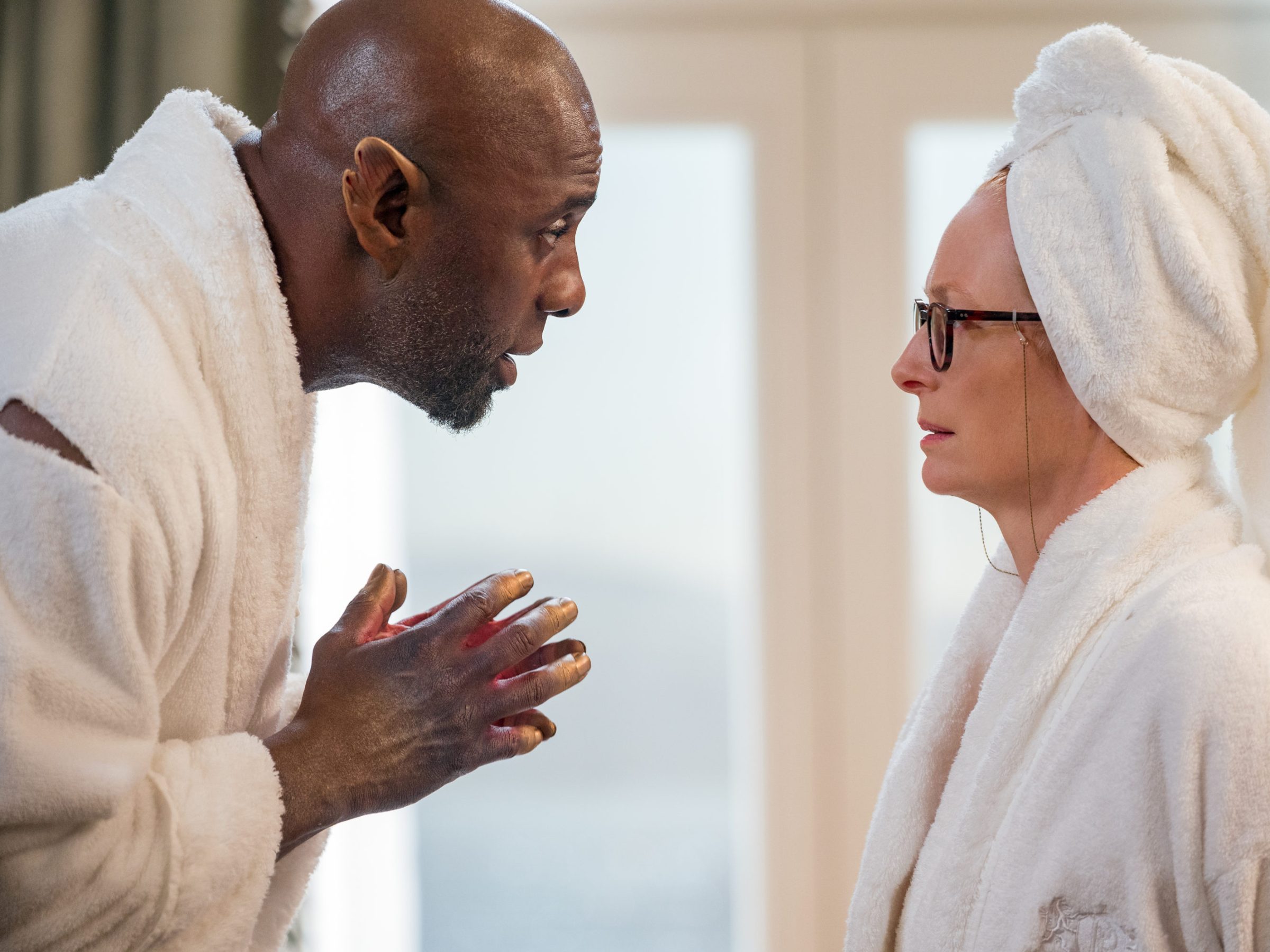
Three Thousand Years of Longing, based on a short story by A.S. Byatt, is an avantgarde fantasy romance movie filled with paradox, confusion and simplicity all wrapped around grandiose cinema, practical effects and top-notch actors doing their best to describe the indescribable through words and actions.
The film follows an aging professor named Alithea on her way to give a lecture when by circumstance and fate, she encounters a mystical Djinn, a genie of sorts, offering to grant her three wishes. From this moment on, Alithea and her Djinn begin a beautiful, yet awkwardly misplaced cinematic dance that will astound some and confound most.
Miller is an expert at making art out of the bizarre and Longing is no exception. So much of the film is beautifully shot by cinematographer John Seale and each moment is incredibly well composed and visually compelling.
But for a film about the practice and wonder of storytelling, the storytelling in Longing is the weakest part of the film. It’s a movie based on a short story that probably should have been wrapped up in 60 minutes but takes well over 90 minutes, a film that features stories within stories none of which get to a deeper level and only serve as a “Canterbury Tales”-esque plot device to balance the larger narrative.
As a result, as much as audiences would like to know more about Alithea and the Djinn, everything is kept at an arm’s length. Viewers never truly wrap their minds around these characters in the way in which they should thanks to a bizarrely surface level examination of character in service of larger theme and certainly not in the way that talented character actors like Tilda Swinton and Idris Elba deserve.
Swinton’s Alithea is skeptical and inquisitive in a very quintessentially Swinton-esque way. The character actress revels in the verbosity of the screenplay by Miller and Augusta Gore with Swinton being probably the best choice to play the role, but by the end of 100 minutes, so little growth comes from her performance mainly due to the fact Swinton is a bystander, a secondary character in her own fil, that no deeper meaning is ever truly explored.
The same thing could easily be said of Elba’s Djinn although audiences do get to experience a wider berth of his performance as the Djinn plays a much more significant role in secondary storylines that predate Alithea. Audiences can feel the longing that the Djinn has, but it’s a largely unresolved, unrequited longing through no fault of Elba’s performance. Because Miller insists on the film being so open-ended, nothing mystical or magical ever materializes.
What makes Longing a film even remotely worth seeing theatrically are the technical aspects, which are a masterclass taking a subpar screenplay and elevating it to somewhat memorable status through the visual arts.
Largely done during the COVID-19 pandemic in small, intimate locations with minimal actors, Miller shoots practically and Longing has a wide array of visual style from tight closeups to make the grandiose Djinn feel even more larger than life to wonderfully engaging medieval set pieces that illustrate the romance of the period rather than the brutality held within.
A film that should be a shoo-in for awards season contention, Longing is too eccentric and inaccessible even for the most liberal of awards voters and while the technical mastery could very easily be rewarded in a normal year, it seems too farfetched even by Academy standards for recognition.
Three Thousand Years of Longing is a big swing from a filmmaker with the cinematic credentials to take risks, although it’s a relative misfire despite all the talent involved and one maybe not worth taking a chance on for casual audiences.

The stage play and musical film “The Music Man” examines the world of the carnival charlatan Harold Hill, a larger-than-life character that transfixes and charms an entire town to his own financial gain.
A product of the 1950s and early 1960s popular culture, it’s a relatively lighthearted cautionary tale meant to warn audiences away from being taken advantage of by con men posing as a moral compass for others.
The biggest flaw of “The Music Man” is the surface level examination of who Harold is as a character, and it’s in that spirit that independent filmmaker Adamma Ebo crafts a boisterous tale of grandiose religious zealotry with her Sundance Film Festival selection and feature directorial debut Honk For Jesus. Save Your Soul, which debuted in select theaters and began streaming on Peacock this past weekend.
Filmed largely in a comedic mock-documentary style popularized by shows like The Office, Parks and Recreation and most recently Abbott Elementary, Honk For Jesus follows Regina Hall’s Trinitie Childs, the proud wife and “first lady” to Southern Baptist mega-church pastor Lee-Curtis as the couple seeks to rebuild the congregation of Wander to Greater Paths, which closed amid a scandal the pastor and his wife refuse to acknowledge publicly, and more importantly, to each other
The success and failure of Honk For Jesus boils down to the two leading performances, which take up over 90 percent of the entire film, with Hall and This Is Us star Sterling K. Brown more than up for the task.
The pair take audiences on the journey of the film by slowly revealing the cracks in the marriage of Trinitie and Lee-Curtis, as well as the larger cracks on their individual psyches with care and precision.
Honk For Jesus isn’t a film that plays for large laughs, but more cutting, nuanced humor that drips throughout Ebo’s screenplay. Unfortunately, the comedic elements often run a bit too dry for home viewing on a streaming platform like Peacock, but this is more than counterbalanced by wonderfully complex drama in the final act.
Hall is exceptional throughout Honk For Jesus, taking her Tammy Faye Bakker-esque character from superficial stereotype to pained wife struggling with conflicts between her moral compass and Christian duties to her husband. Audiences are able to see the wear and tear strains in Trinitie’s marriage have taken in Hall’s eyes, which begin to lose their luster midway through the film. It’s an exceptional physical performance in a role where it may be more than Ebo expected as a director.
Brown portrays Lee-Curtis as half carnival barker, half charismatic politician who has bought so deeply into his own story that he cannot even control the increasingly contradictory nature of his choices. It’s by far the most demonstrative performance of Brown’s career and it’s clear that that the actor revels in the wide berth Ebo gives him as a director to be reckless with Lee-Curtis’s choices.
The divide in their marriage stands out in just how distant Hall and Brown are from each other as performers and it plays out to great effect as the film veers away from the mockumentary style and leans into the more emotional drama.
Ebo’s film uses the camera as a storytelling device from the outset, though it may not entirely clear to viewers at first glance.
Through a subtle, yet distinctive framing trick, Honk For Jesus carries itself in and out of the narrative structure visually more than expected as Ebo swaps a widescreen 2:35:1 format and a more 1:55:1 box format in a second by second basis to indicate moments that are happening in real-time versus ones captured by the documentary crew.
This doesn’t become apparent until Lee-Curtis and Trinitie engage more directly with the off-screen characters of documentarian Anita and her film crew, one of whom Lee-Curtis thrusts into the narrative in a somewhat shocking scene that brings out the best of Brown’s increasingly manic performance.
An imperfect film with astonishingly memorable characters, Honk For Jesus. Save Your Soul isn’t necessarily the kind of comedy that would bring down the house in large theaters but may be the perfect dramedy to take a chance on with a home viewing experience on Peacock.
A man walks into an Atlanta area bank.
Honorably discharged from the Marine Corps, he’s soft and unassuming, calm and friendly to the teller.
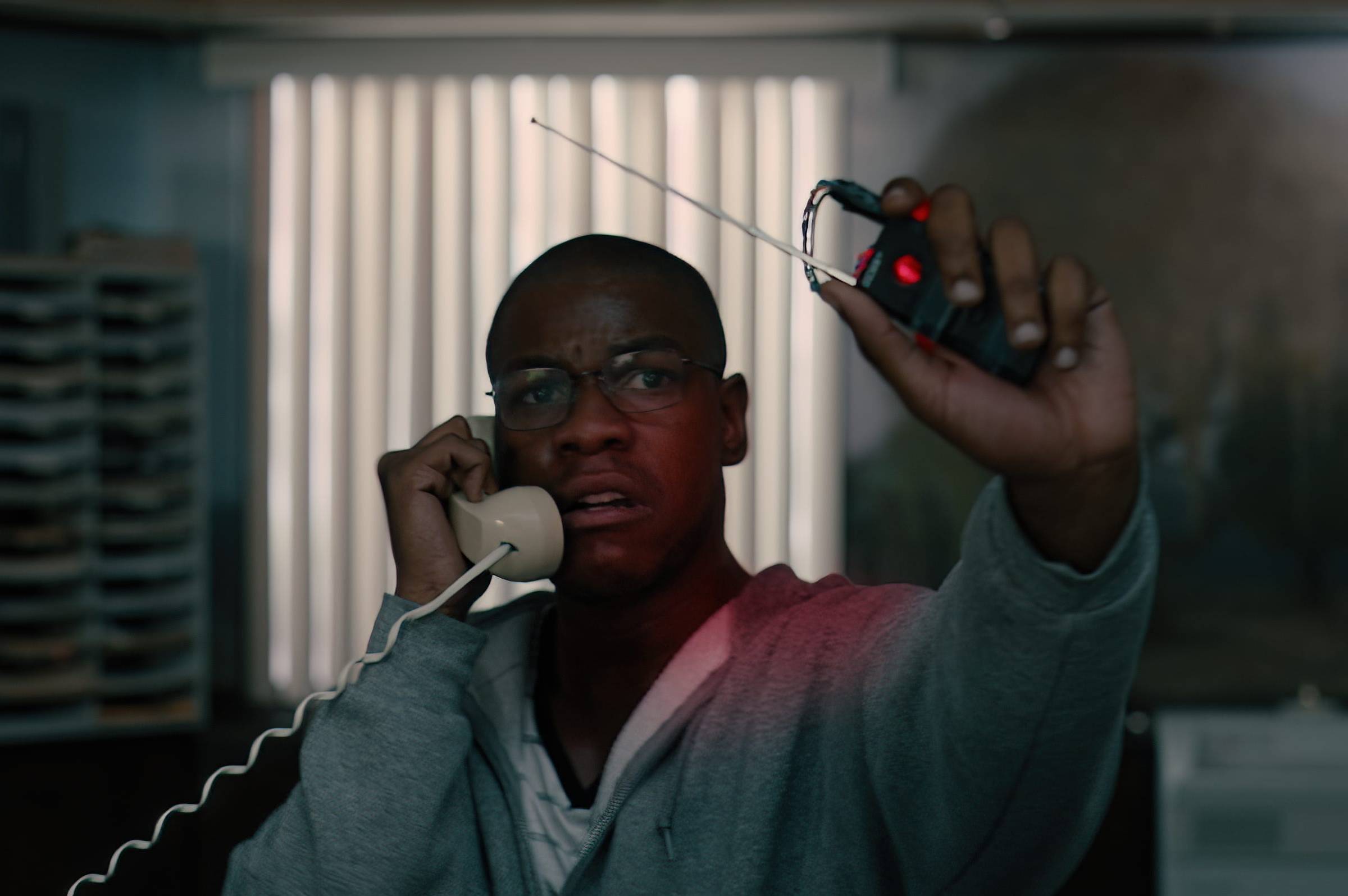
There’s one problem though. He slides a note across the counter with the words “I have a bomb” on it and sets off a chain reaction of events with unexpected consequences.
Based on the true story of Brian Easley, the Sundance Film Festival award winning film Breaking dropped with little fanfare this past weekend in moderate theatrical release. It’s clear that Bleecker Street, the studio releasing director Abi Damaris Corbin’s thriller, has no clue what kind of a movie they have on their hands.
Breaking should be a film in every theater in America, especially given the dearth of quality options in August, and John Boyega’s leading performance as Brian might end up being one of the most poignant and powerful of the year.
The film feels like a blend of Al Pacino’s classic Dog Day Afternoon and films that examine what happens to soldiers when they return home and there’s no war anymore like Thank You For Your Service and The Hurt Locker.
A majority of the relatively crisp 103-minute running time happens in the bank and when Corbin’s camera is trained on Brian and his two hostages, there’s a unique depth of both emotional drama and subtle character work that isn’t often found in bigger-budget thrillers.
The intimacy Corbin draws out from Boyega, especially as she and cinematographer Doug Emmett pull in tight on Brian’s forlorn face, frazzled demeanor and simple appearance create a surprising connection between the audience and Brian.
This isn’t to say that viewers suffer from Stockholm Syndrome, the condition that bonds hostages to their captors. Boyega’s translation of Corbin and co-writer Kwame Kwei-Armah’s script never puts the audience in any real danger, which softens Brian’s character without diffusing any of the tension in the bank.
Boyega shines in the film’s many emotional moments, both in flashbacks with Brian’s young daughter and in heartbreaking exchanges with the police negotiator and a television producer Brian calls to tell his story.
Breaking is perhaps the most complex and thoughtful performance in Boyega’s career as viewers can see the weight of the world being carried on Brian’s shoulders. The way Boyega is able to emote calmly and carefully while showcasing Brian’s increasingly erratic mental health is astonishing.
The film is boosted by a strong supporting cast around Boyega that earned the Sundance special jury prize for best ensemble in January.
In his final role before his tragic death last year, The Wire star Michael K. Williams brings immense passion and emotional connection as police negotiator Eli Bernard. Though they never share the screen together, Williams and Boyega bring out the best in each other’s performances and the fragility of their bond is among the most compelling moments in the entire film.
Nicole Beharie and Selenis Leyva as the two bank employees held hostage provide a great balance to the harrowing events with Beharie’s more calm, rational demeanor offsetting the fearful fluster of Leyva.
The biggest flaw in Breaking comes from a lack of consistency in storytelling. When the camera is focused on Brian and his world both in and out of the bank, Corbin’s film is exceedingly compelling and transfixing.
As things pan outside of Brian’s purview, especially in scenes featuring the police or Brian’s ex, Breaking doesn’t maintain the same gravitational pull drawing the audience in and it often takes viewers out of the moment. Some sharper editing or more well-rounded characters might have helped here, but it’s clear when Brian is in focus, Breaking really soars.
It’s unfortunate that a wider audience will have to wait until Breaking hits a streaming service or on demand before experiencing this largely compelling independent thriller. Strong performances from Boyega and Williams as well as a heart wrenching narrative make it a film that deserves more than what it will likely find at the box office.
Smart, engaging moviegoers would be well served to seek out Breaking in the next couple of weeks while the cinema slate is lighter.
How often are our lives inexplicably and permanently changed by a single moment with major impact on the future?
One decision, one choice, one matter of happenstance could easy alter the course of individual history. It’s these questions of “what if” that dominate the romantic dramedy genre and for the first time since the 1998 feature Sliding Doors, a new movie confronts the duality of a single moment head on.
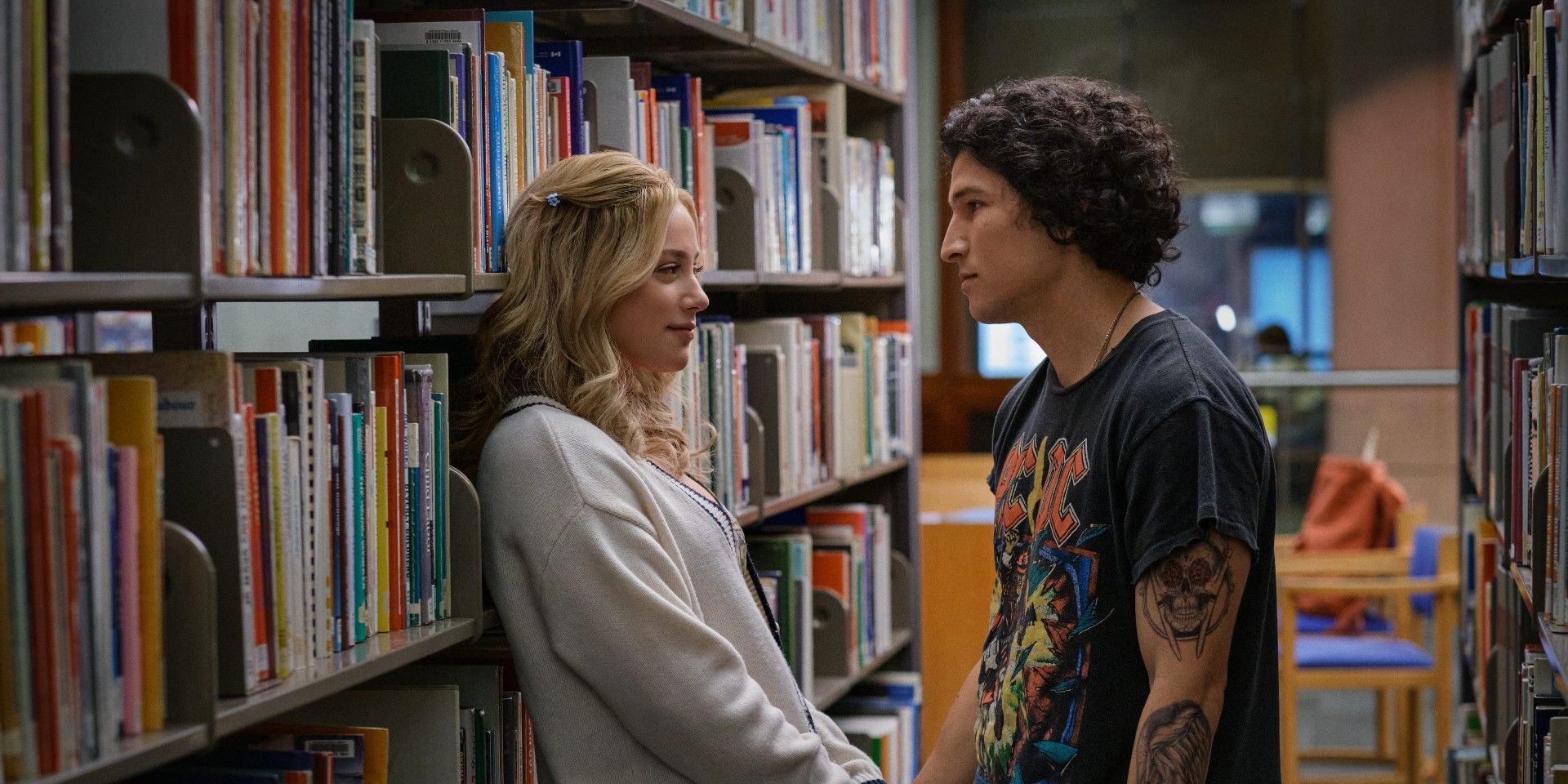
Look Both Ways, which debuts on Netflix this past week, centers around a University of Texas senior and the pregnancy test that could keep her from her dream job as an animator in Los Angeles and propel her into a whole new world of motherhood. Director Wanuri Kahiu’s feature from a script by writer April Prosser blends two distinct narratives – one where Natalie’s test is positive and the other where it’s negative – into a largely successful, if not slightly derivative romantic dramedy that will help tide things over for cinephiles in an August calendar with slim pickings for new cinema.
“Riverdale” star Lili Reinhart pulls double duty as Natalie, fully embracing the challenge of playing the same character from very different perspectives. It’s a performance that’s easy to get behind as a viewer with her affable wit and once the story really picks up, Reinhart capably manages to soften Natalie in both motherhood and adulthood with charm and grace.
There’s limitations to the character work due to the duality of the narrative as Reinhart has to basically start from scratch twice with small variations on Natalie and build outward from a single inciting incident. Audiences don’t really get a deep understanding of Natalie’s individuality outside of the men in her life and Reinhart doesn’t try to explore with much nuance.
Danny Ramirez as Natalie’s long-time friend Gabe and David Corenswet as love interest Jake both provide just enough to be plausible romantic outlets for Natalie’s affections, but neither performance is especially memorable once the credits roll.
In fact, the most engaging work in the film comes from Andrea Savage and Luke Wilson as Natalie’s parents, whose natural chemistry with Reinhart provides the film with some truly endearing moments that are among the highlights of the entire feature.
The key to the film’s success or failure for audiences mainly comes from the balance in the narrative structure once the central conceit is established. It would be exceptionally easy to ruin Natalie as a balanced character by focusing too much on one version.
If viewers spend too much time with Natalie as a mother, there’s no room for audiences to connect emotionally with career-focused Natalie and vice versa. Kahiu’s film hinges on the ability to translate Prosser’s screenplay visually, emotionally and in the editing room in a manner that treats both sides of Natalie’s journey with equal focus and clarity.
This isn’t always an easy hurdle to climb, especially in the early moments as Kahiu must introduce the duality of Look Both Ways by hopping cross country at a moment’s notice with little set up or signposting to viewers that a change is coming. It truly becomes more apparent over time thanks to subtle changes in Natalie’s hair and clothing to reflect visually how much her two lives veer apart.
Kahiu ties this together strikingly well at times with some impactful animations done in the style of Natalie’s art that help reorient audiences within the realities and timelines.
There’s nothing especially groundbreaking with this relatively run-of-the-mill dramedy, but Netflix would stand to do well by continuing to pump out these moderately affordable, easily accessible dramedies to fill the void left by major studios who no longer develop mid-budget rom-coms that audiences used to flock to in the early 2000s with stars like Jennifer Aniston and Katherine Heigl.
Until the box office begins to show light at the end of the tunnel, moving from the summer doldrums into awards season where the biggest films of the year are released beginning in October, it’s hard not to give a dramedy like Look Both Ways a shot for viewers looking to turn off their brains and relax at home.

Docudramas give audiences first-hand insight into intense, intimate moments of real people, disasters, and inspirational experiences.
Usually tagged with the keyline “based on a true story,” these films bring viewers on a plane bound for the Hudson with Sully himself, on the deck of an exploding oil derrick in the middle of the sea in Deepwater Horizon or on a harrowing quest to free Americans trapped overseas in Argo.
While often docudramas focus on one or two individuals to showcase the larger event, Ron Howard’s latest film goes extremely wide to highlight the epic scale of people coming together to help prevent a tragedy.
Thirteen Lives recreates the global effort to aid in the 2018 rescue of a boys’ soccer team trapped in the flooded Tham Luang cave in Thailand. Working from a screenplay by William Nicholson, Howard’s film attacks the 18-day ordeal from a wide range of perspectives from the team themselves to their parents and Thai government officials to an international group of rescue divers.
The scale of the effort is demonstrably clear throughout as the cast of characters plus extras must be in the hundreds. Despite this fact, Howard consistently keeps audiences oriented and in the moment so that it never feels overwhelming and the film’s 147-minute running time gives the director enough space to flesh out characters in multiple arenas.
The drawback, however, is that in keeping things so wide open, it’s far easier to viewers to disengage from the story without a consistent character to identify with and endear to.
There aren’t many recognizable stars throughout the first third of Thirteen Lives, and while the story clips along at a decent rate, it isn’t until Colin Farrell and Viggo Mortensen appear as British rescue divers volunteering to aid in the search that any real appreciable character work happens.
Most of the problem is in the screenplay, where individualism is kept to a minimum to maintain a broad scope and the only memorable Thai characters are the boy who asks to go into the cave before his birthday celebration and the governor forced to stay on and take the fall if disaster strikes.
Even the international dive team, played by famous character actors like Farrell and Joel Edgerton and an Oscar nominee in Mortensen, don’t really have a compelling story arc and any nuance to their personalities takes a backseat to moving the story forward.
The rescue itself takes the largest chunk of Thirteen Lives and the cinematography orients audiences well in the visual geography of the cave as divers make their way to the boys. This is further aided by graphics along the way that track the team’s progress into the cave although it becomes somewhat unnecessary in the final stage of the film after the same graphic has appeared many times.
Audiences will definitely get a claustrophobic feeling at times thanks to the exceptional underwater cinematography from Sayombhu Mukdeeprom and the fantastic sound design that fully captures the horrifying audible terror of endless rushing water and the sinking feeling of drowning potential at any moment.
In fact, if there’s any Oscar potential at all for Thirteen Lives, it’s likely to come in the sound category where the mastery of the technical element truly enhances the narrative as well as the audience experience.
While Thirteen Lives enjoyed a limited release in theaters, it’s much better suited for its home watching experience on Amazon Prime, where it dropped last Friday. It’s a prime candidate for more episodic viewing in 20-30 minute chunks rather than all at once, where the scope feels a bit laboring.
Those who are particularly interested in the story will likely find last year’s exceptional documentary The Rescue from Oscar-winning directors Elizabeth Chai Vasarhelyi and Jimmy Chin to be far more compelling cinematically and from a narrative perspective, though Thirteen Lives is a well composed feature docudrama that will help supplement the larger experience.

Remember when summer blockbusters were fun?
The plots rarely matter, the set pieces entertain, and the characters were memorable for their quirks regardless of how flimsy or one note they might seem.
Bruce Willis climbs through an air vent and walks on broken glass; Arnold Schwarzenegger crashes through a window with a machine gun; Tom Cruise runs from explosions.
What happens along the way and why are irrelevant. Somehow meaning became essential to having a good time or else the film had to be based on a comic book or some other IP.
David Leitch’s new film leans heavily into the dialogue-heavy, strangers destined to collide by coincidence or fate style of writer/director Guy Ritchie and Leitch’s Bullet Train aspires to be a more action heavy version of Snatch or Lock, Stock and Two Smoking Barrels.
The premise feels like an amalgamation of samurai films, British gangster flicks and outrageous comic book action.
Five killers unwittingly find themselves at odds with each other and mysterious onlookers as they seek a briefcase stashed on a bullet train from Tokyo to Kyoto.
While each assassin is given their own motivation and storyline, audiences are driven through confounding series of events mainly through the eyes of Ladybug, a self-proclaimed “snatch-and-grab” guy with a bad luck streak that pushes him away from violence.
Bullet Train simply doesn’t work without a very game, yet endlessly casual Brad Pitt at the center of it all as Ladybug.
Pitt elevates what would otherwise be a very mediocre movie with a laidback charisma reminiscent of his scene-stealing turn as Chad in the Coen Brothers’ 2008 black comedy Burn After Reading. No matter how absurd or avant-garde the situation Ladybug finds himself in, Pitt can stabilize and center the scene with affability while holding his own in some unique hand-to-hand combat sequences.
It’s rare to see an actor of Pitt’s caliber perform as many of his own stunts as the Oscar winner does in Bullet Train though Leitch’s film doesn’t have the same amount of action that one might expect from the director of Atomic Blonde and Deadpool 2. But each moment is hard-hitting and only relies of CGI effects in the third act to hammer home the finale with bloody gusto.
For a film that relies heavily on an ensemble cast to surround Pitt with, Bullet Train is a heavy mixed bag of good and bad performances.
Aaron Taylor-Johnson and Brian Tyree Henry often steal the show as a pair of professional yet bumbling British mercenaries with a pension for Thomas the Tank Engine and shooting first, asking questions later. Much of the film’s humor comes in moments with their Lemon and Tangerine squaring off verbally with Pitt’s Ladybug and a tighter focus on these three hitmen could have made for a more compelling narrative.
Sandra Bullock appears just often enough to work in limited time as Ladybug’s handler in a straight-forward role, while more puzzling performances are given by Michael Shannon, Joey King, and Zazie Beetz. What at first glance might be a gimmick cameo from rapper Bad Bunny actually brings a lot of needed variety to Bullet Train as his assassin codenamed “The Wolf” has the most compelling backstory and the rapper gives a strong enough effort in his biggest role to date to make the character work.
Stylistically, Leitch propels Bullet Train down a fast track with swift camera movements that accentuate the action and flashy, artistic sequences that develop the backstories of each assassin. Though it doesn’t always land with the same gusto and occasionally feels repetitive, the direction and cinematography have a unique flair that sets Leitch’s film apart from the average action flick and helps engage audiences in times their attention might wander.
Bullet Train might not hit as hard as some viewers might like from an R-rated action flick, but there’s enough powering the film’s engines to give audiences a casually entertaining feature to see in theaters during the August doldrums at the box office.

B.J. Novak’s debut feature film opens with the former star of “The Office” on a New York rooftop in vapid, existential conversation with musician John Mayer, playing a somewhat exaggerated version of himself.
The pair pontificate about having everything in life figured out and the ease of mindless dating women saved in their phones like “Random House Girl.” Then Novak’s Ben – a journalist and aspiring podcast host – talks to his producer about the division and unrest in America because of time.
It’s a sort of existentialism that one might expect from a Woody Allen film and the primary framing device of Novak’s Vengeance, a film that seeks to create a conversation about America by bringing elitist New Yorker Ben to the wild emptiness of West Texas, where the family of old fling Abby insists that he come to her funeral and help investigate her death they’re certain on “gut” was murder.
But it’s clear over the course of 90 minutes that Novak doesn’t learn the lessons that he hopes his protagonist – Novak writes, directs and plays the lead in Vengeance – will learn and his dark comedy, while funny and entertaining, misses the mark about what separates us politically and socially.
Much of the issues that hold Vengeance back from being an exceptional independent film come from the mixed tonality as Novak tries to make a crime thriller, a biting dark comedy and a richly cynical observation piece all at once.
These elements work in part but never coalesce into a complete film as it often feels like Novak is trying to do too much in front of the camera and not focusing on the bigger picture behind the camera.
As an actor, Novak excels at creating a character known for feigning mild interest in others to survive awkward moments and his Ben slowly progresses to admiration of this Texan family he befriends with relative believability. Some of the major leaps in logic and character development around Ben in the third act seem to be much more a result of the screenplay rather than his on-screen work.
The film’s humor largely comes from the actors portraying Abby’s family despite how one-dimensional they appear on the script page.
Boyd Holbrook shows some genuine emotion despite the rural naivety stereotype Vengeance often leans into as Abby’s older brother Ty; Louanne Stephens relishes in the moment having all the best one-liners as no-nonsense Granny Carole and Elli Abrams Bickel brings the most heart in the entire film as the younger brother nicknamed “El Stupido,” completely overcoming a somewhat insulting depiction with innocence and charm.
Among the more famous cast members, Issa Rae is well suited to be Ben’s witty, supportive producer Eloise while Ashton Kutcher is terribly miscast as a West Texas record producer who chooses to spend his fortune seemingly in the middle of nowhere.
Directorially, Novak takes the most risks in the opening moments as he establishes a quick paced editing style that bounces back and forth between dialogue in choppy bits to help symbolize the disperse, fleeting nature of New York conversations and elongates these moments as Vengeance heads south.
The centerpiece of this film should be Novak’s witty script, which has moments of sharp reflection and some genuinely funny interactions between his fish-out-of-water New Yorker with West Texas culture. But his view of Texas life is so often skewed by loose caricature that it’s unclear by the end if Novak has learned any of the lessons his film tries to preach.
Yet somehow in spite of itself, Vengeance has enough disjointed parts to be one of the summer’s most entertaining and original features that audiences looking for something fresh should consider checking out in theaters or at home closer to the end of the year.
Excelling at genre movies is a tricky thing to pull off consistently.
When a filmmaker becomes known for creating original, inventive content in a similar space, it becomes easy or derivative to praise them unabashedly as the next Spielberg or Hitchcock; or to go too far the other way, suggesting that their work isn’t as good as prior films and dismissing it outright.
Things are somewhere in the middle for Jordan Peele, a terrific comedy writer/actor in his own right who seemed to come into his own directorially with his Oscar-winning blend of drama, horror and comedy in 2017’s Get Out. His sophomore feature, Us, followed up with a critically acclaimed take on the body double subgenre in horror that lacked the same commercial appeal but kept the filmmaker firmly in the conversation for most anticipated future projects.
Peele’s third directorial effort leans less into dark horror and is perhaps his most accessible film to date, blending science fiction with summer blockbuster to thrill and chill audiences with a visually dynamic, genre-bending tale that makes up for a confusing and lackluster narrative by providing unmistakably brilliant cinematic moments.
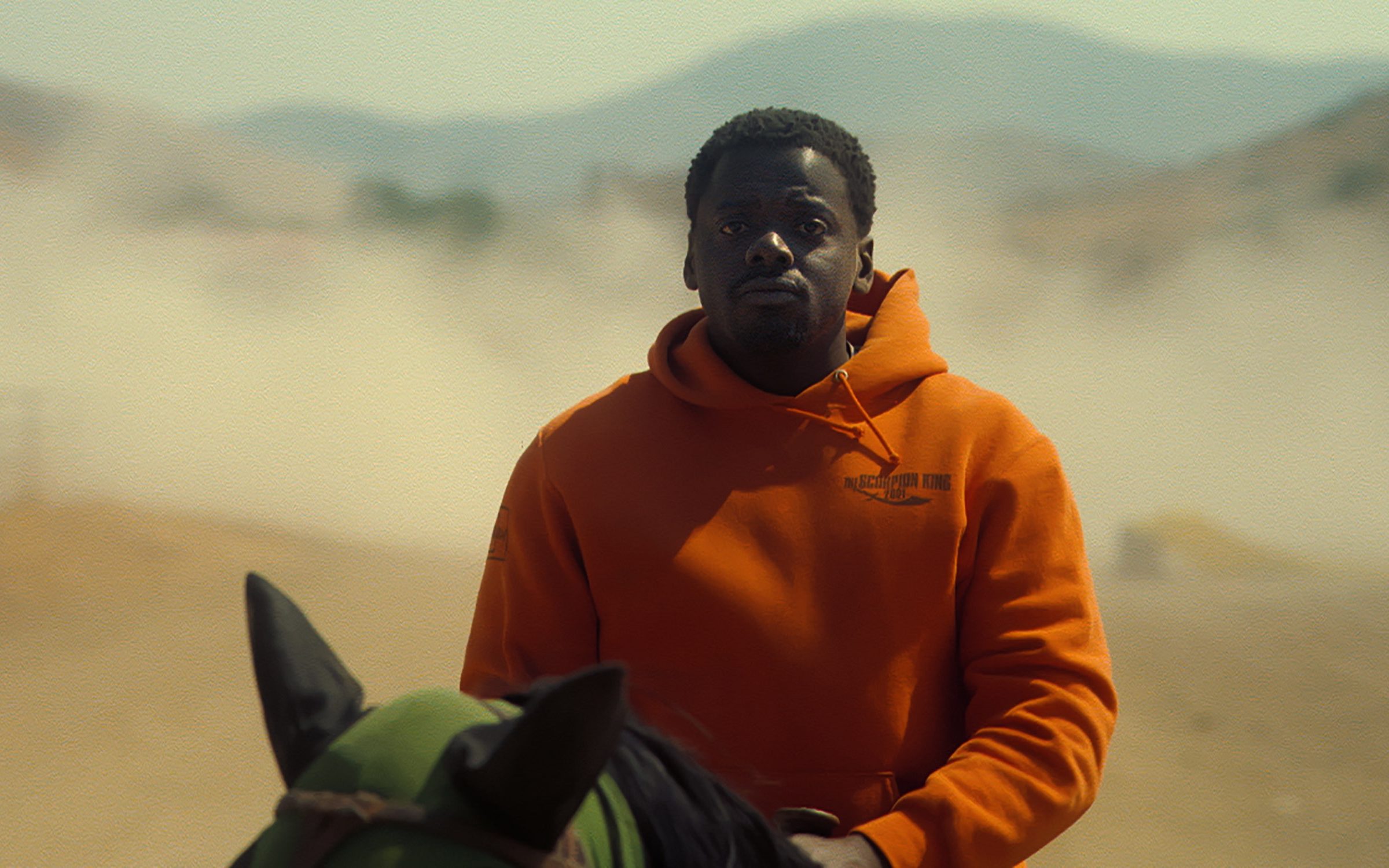
Nope follows brother-sister duo Otis Jr. and Emerald as they run their family Hollywood horse-wrangling business after the mysterious and untimely death of their father. Strange occurrences in the sky months after his death prompt the pair to investigate alongside a bumbling electronics salesman and reclusive cinematographer.
The narrative twists and turns of Nope aren’t as dynamic as Peele’s other features – he won an Academy Award in 2018 for the Get Out screenplay – but what truly gives his movies, including Nope, life is the terrific performances he’s able to draw from every cast member in his films.
After a star-making turn in Get Out, Daniel Kaluuya reteams with Peele for a much less showy, but nonetheless tonally perfect turn as Otis Jr. Kaluuya melds the character’s general aversion to outsiders with deep family bonds and a blue-collar work ethic for a gruff, yet relatable protagonist that audiences can rally behind.
Kaluuya’s more subdued work allows for Keke Palmer to break out in a major way as the bombastic, sarcastic Emerald. Palmer is exceptionally expressive both in tone and with her facial expressions that perfectly capture the incredulous nature of the moment. Adding Brandon Perea’s quirky Angel into the mix midway through the second act really makes the narrative more engaging as well.
Thought the film lacks a traditional antagonist, Minari star Steven Yeun gives Nope a deeper layer of social commentary with a charming, yet somewhat underhanded turn as a former child star turned theme park owner living at the ranch adjacent to Otis and Emerald.
Nope has a ton of impressive, memorable moments throughout and it’s clear that Peele has a clear vision for the project from early development onward.
But it’s in the visuals and non-verbal moments – those created in the director’s chair rather than on paper – where Nope really hits its stride.
This is large part thanks to a strong collaborative effort between Peele and director of photography Hoyte van Hoytema, a frequent cinematographer for director Christopher Nolan.
Nope is Peele’s first foray into shooting with film instead of digitally and Hoytema does a masterful job of making the movie’s seven night sequences both menacing and layered in shadows. Conversely, bright daytime shots give the added sensation of a blistering desert heat with wide panoramas that accentuate the emptiness of the surroundings as well as the height and depth of the action taking place.
While it’s unlikely to be as lauded as Get Out was come awards season, Peele’s film does have a solid shot in some technical categories, especially for the sound work.
The less audiences know and the more open minded they are heading into a screening of Nope, the greater the opportunity they will have to become captivated by the quality cinema Peele presents over two hours despite its narrative flaws.
A terrific ensemble cast paired with exceptional technical wizardry make Nope the premiere popcorn blockbuster of the summer and the last must-see box office hit in theaters before September.
No one seems to mind when every romantic comedy follows the exact same plot.
Boy meets girl, girl falls for boy, something outlandish happens to separate them, love brings them back together. Rinse. Dry. Repeat.
Somewhere along the way, it seems that moviegoers have lost their appetite – or perhaps more aptly, critics have lost their taste – for by-the-numbers action films that focus on big fight sequences and a standard plot because of too many franchises churning out the same thing over and over again.
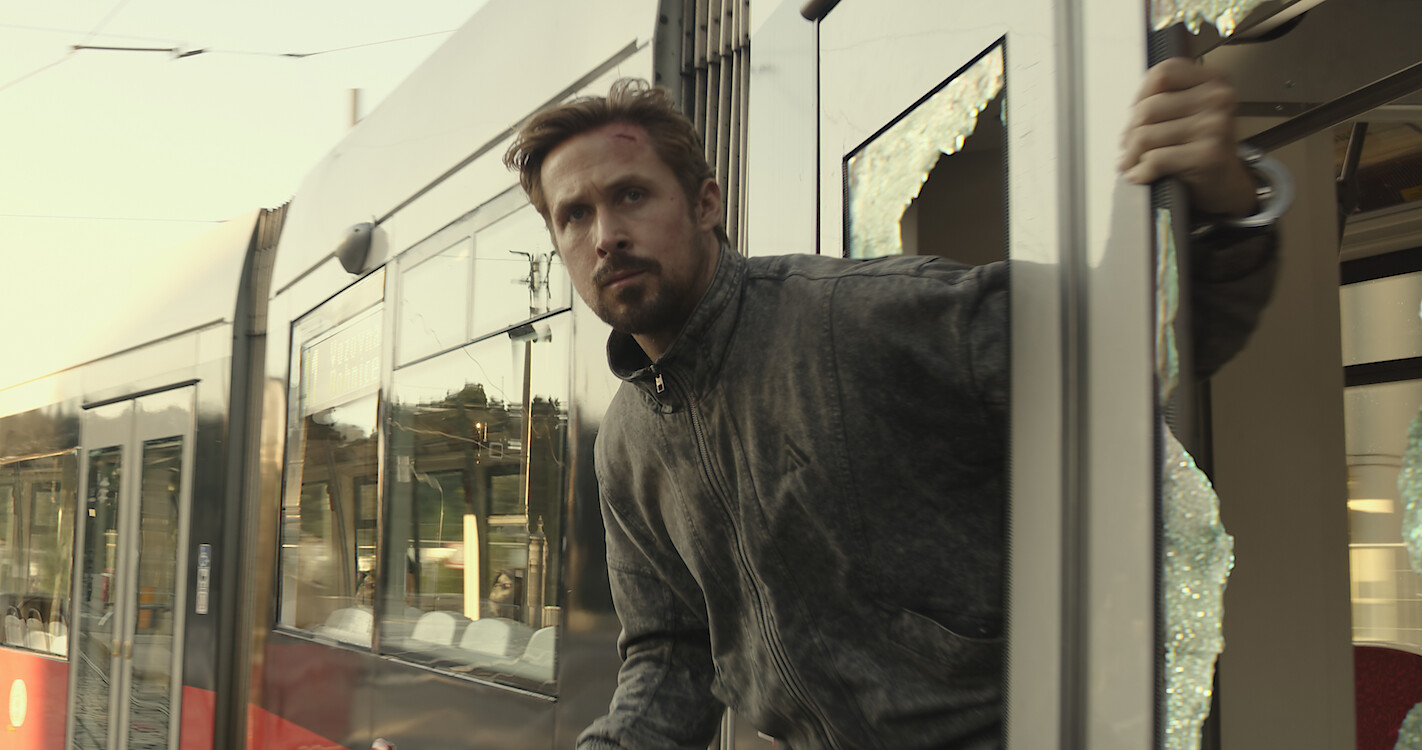
Directors Joe and Anthony Russo, known for big, bombastic Marvel Cinematic Universe movies, take on the action genre from a comic-book free perspective with a relatively original tale about a convicted criminal turned CIA assassin trapped in a world of political espionage and intrigue.
And while the screenplay from Joe Russo along with Christopher Markus and Stephen McFeely certainly doesn’t break any new ground in the genre, their film The Gray Man delivers solid entertainment with some terrific action sequences, a convincing cast of character driven actors and some inventive stunt work.
The film finds Six stuck in prison without a hope of parole for decades when a CIA officer hands him a get-out-of-jail-free card in exchange for lifetime service as a company hitman taking out bad guys off the books at Washington’s request. When Six is asked to take out a spy with compromising intel on the new bosses at Langley, he’s forced to go on the run in search of answers.
It’s clear from the outset that the titular character is intended to be an offshoot of Matt Damon’s famous Jason Bourne character without the memory loss and in reality, this shouldn’t work as anything more than a subpar copycat. But Ryan Gosling’s exceptionally dry performance offsetting his natural charisma gives Six a more well-rounded personality than one might expect from what’s on the page.
Even as things become more chaotic and the world around him spins into disarray, Gosling’s performance is unfrayed. Six’s motivations are rarely in doubt and his skills never questioned simply due to the instant gravitas Gosling brings to the role and the commitment he has to the drama in fight sequences.
Lines in the script like “You want to make an omelet? You gotta kill some people.” are especially cringy, but Chris Evans does such a terrific job relishing the over-the-top nature of his villainous mercenary Lloyd that the ridiculous becomes comical in the best way. Evans plays up every moment with a zeal befitting an 80s wrestling heel, complete with an absurd crewcut/macho mustache straight out of a Jean-Claude Van Damme direct to DVD release.
The Gray Man also boasts a bevy of very capable supporting performers smartly cast to accent the two leads. No Time To Die scene-stealer Ana de Armas proves why she rightly deserves her own action movie with a wonderful blend of defiant energy and stunt prowess, while Billy Bob Thornton and Alfre Woodard are exceptional as Six’s former handler/father figure and a CIA station chief respectively.
The one sore spot in the cast, unfortunately, is Bridgerton star Rene-Jean Page, whose turn as a CIA deputy director with secrets to hide doesn’t rise to the same level as Gosling and Evans, making his Denny Carmichael miserably weak and ineffective, almost totally skippable as audiences await a Gosling/Evans faceoff.
Action sequences litter every inch of The Gray Man with engaging hand-to-hand combat moments transitioning in and out of much larger, showy sequences with massive explosions that ramp up both the violence and the unbridled entertainment. For a movie about rival hitmen, The Gray Man puts the most creativity and passion into its action, which makes it immensely watchable regardless of the relatively flimsy premise that surrounds it.
While it’s a film that probably benefits greatly from a big screen setting like its limited theatrical debut last week, its ease of access as The Gray Man hits Netflix on Friday makes it an easy choice for action genre fans and those willing to turn off their brains for a couple of hours for mindless entertainment.
As has been the case for several films now, Marvel Studios finds themselves at a crossroads in a post-Avengers: Endgame era of their cinematic universe.
Many of their most popular characters are gone from the franchise and the massive decade-long arc came to a head several years ago now, leaving fans clamoring for the breadcrumbs of what’s to come in every single new movie, post-credit sequence or hidden Easter egg.
It’s as if in the indecisiveness of figuring out what’s next and who Marvel is going to be, everyone forgot about the simple fun of heroes beating up bad guys.
Taika Waititi’s second foray into the Marvel Cinematic Universe challenges this unease by ignoring it altogether, opting for a relatively straightforward comedy with some deep seeded emotional stakes that doesn’t care about what’s happening in the larger picture. It’s honestly refreshing, harkening back to the early days of the MCU where films were less serial and episodic and more bottled into one storyline that ends when the credits roll.
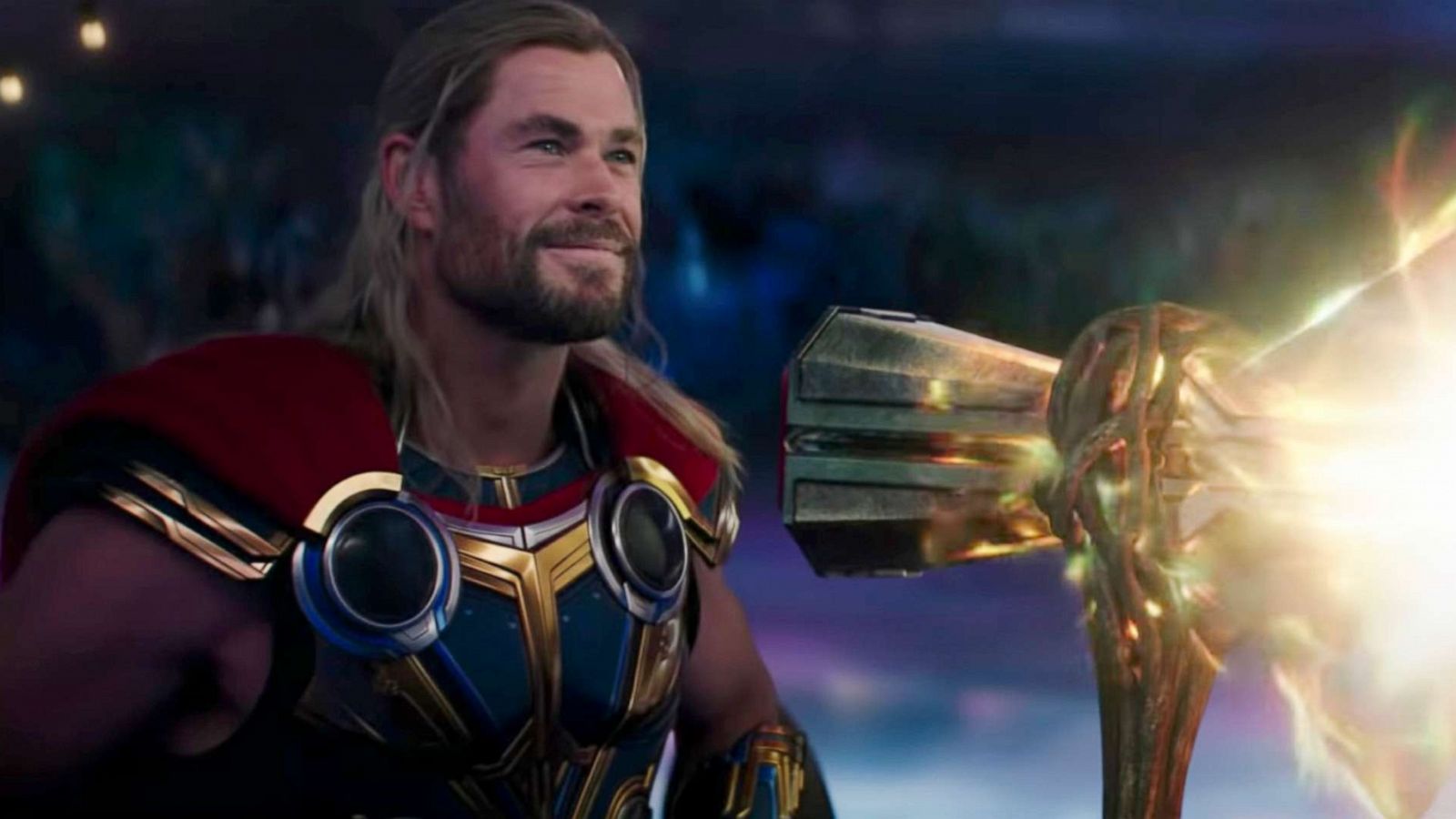
Thor: Love and Thunder is technically the fourth film to feature the Norse god turned superhero and Chris Hemsworth’s lighthearted performances in recent Marvel films as the titular Thor culminate in a genuinely nuanced turn for a largely comedic actor with the physique of an action star.
Waititi’s film finds Thor at a similar crossroads to Marvel, somewhat bloated and unsure where to go next. When a wayward devotee to a different god loses faith completely, Thor must stop this alien Gorr before he slaughters every god across the galaxy.
Hemsworth is giving perhaps his most well-rounded turn now eight Marvel films deep as Thor, relishing in every opportunity to ham it up comedically but also finding the range to be more convincing emotionally. It’s especially difficult to pull off when working opposite computer generated images and Hemsworth is equally adept at subtle facial comedy playing off an ex-girlfriend, new girlfriend gag with Thor’s axe as he is at deeper moments opposite Natalie Portman.
Christian Bale – best known to superhero film fans for his work as Batman in Christopher Nolan’s Dark Knight trilogy – takes a walk deep into the shadows for his haunting turn as Gorr the God-Butcher. With a look reminiscent of Voldemort from the Harry Potter films and a horror-influenced demeanor, Bale is largely unrecognizable for much of Thunder and drives his performance through genuine emotion and character work often lacking in MCU films.
In reality, it’s pretty clear that Bale hasn’t seen many – if any – Marvel movies and is approaching Gorr more dramatically than most villains in the series, which helps make Gorr one of the best antagonists in the entire franchise.
It also helps that Waititi’s strongest moments directorially are in the visuals surrounding Gorr’s character, stripping color and boosting the contrast to the brink to bring the shadow world the character creates to its maximum haunting potential.
Although the CGI doesn’t always land crisply throughout the film, the hyper-stylized black and white contrast in these sequences add a lot to both the character development and horror-tinged elements of Thunder.
Portman returns to the Thor films after a nearly-decade long hiatus and is funnier than one might expect in a naivety sort of way as love interest Jane Foster and it’s her ability to bring emotional gravitas in needed moments that helps round out Thor’s character arc relatively smoothly.
Thunder firmly sits as a middle of the road entry in the larger Marvel Cinematic Universe, not offering enough in either long-term world building nor fully engaging storyline to crack the top tier of MCU movies. But it’s hard to question the film either as it’s clearly superior to many of the early sequels like the second and third Iron Man films and especially Thor: The Dark World.
Waititi and Hemsworth’s complete transformation of the Thor character from where it was in 2013 as a stiff Shakespearean caricature to arguably the most entertaining Marvel superhero outside of Spider-Man needs to be recognized.
Thunder does exactly what it needs to, help bridge the gap for Thor after the losses in “Avengers: Endgame” and craft a clear path moving forward.
A quirky comedy with a decent amount of heart and some entertaining action sequences along the way, Thor: Love and Thunder is probably a Marvel film ardent fans of the franchise will grow to appreciate more after its theatrical run.
 Cinematic Considerations