

“War Dogs” seeks to answer a pretty simple question asked by CNN’s Wolf Blitzer in the film’s trailer.
“How did two 20-something young men land a $300 million Pentagon contract?”
If you keep watching the rest of the trailer, the film attempts to highlight the exploits of Jewish-American gunrunners with the same comedic precision of “The Wolf of Wall Street.” It even extolls the virtues of the film’s director, Todd Phillips, A.K.A. the “Hangover” guy.
Yes, “War Dogs” is a hilarious film, perhaps even the best comedy of the year. But it also aspires to become much more than that and largely succeeds in bringing in powerful dramatic moments as well.
Viewers become introduced into the world of “mostly” legal gunrunning through the eyes of David Packouz (Miles Teller) who quit his job massaging Miami’s rich and famous when his childhood best friend Efraim Diveroli (Jonah Hill) convinces him to become partners in a small arms dealing business that works exclusively on government contracts. As the size of the contracts grow, the tension and danger grow for David, who’s hiding his business from his peace-loving pregnant girlfriend.
“War Dogs” jumps off the screen early in the film with its often bombastic comedy, but settles in to a nice medium between humor and surprisingly compelling dramatic moments. Viewers will likely never expect the film’s emotional stakes and might even miss some subtle beats of drama amid all the laughter.
Much like his Academy Award nominated turn in “The Wolf of Wall Street,” Hill dazzles with another outstanding effort as Diveroli. His work is just on the cusp of being over-the-top in many scenes which harken back to Hill’s time with teenage raunch comedies like “Superbad.” But it’s beautifully juxtaposed against terrific scenes of calm clarity that make Diveroli a complexly manic and depraved man who attempts to become the Al Pacino character from “Scarface” that he so admires.
While many audiences will key in on Hill’s antics and chaotic performance, Teller continues to impress with his understated, controlled effort as Packouz in both his role as the narrator and the main character of the film. Hill is able to play the gambit of emotions with Diveroli because Teller balances out the dynamic between the two friends/business partners so well. Playing against type, he does a masterful job of being the rationale everyman character to give viewers someone to relate to amid all the insanity of the gunrunning world.
Oscar nominated actor and frequent Phillips collaborator Bradley Cooper makes a small, but important appearance as an arms dealer hoping to partner with the leads on a major government contract. His performance is relatively uneven, but efficient in bringing the necessary gravitas to the part that allows for the plot to move forward convincingly.
“War Dogs” feels like a departure for Phillips, who’s spent years making R-rated comedies to varying degrees of success. But while his previous efforts like “Old School” and “The Hangover” trilogy skimp on the dramatic counterbalance to all the flatulence and sex jokes, “War Dogs” has some real moments of clarity and drama in its final act. The humor’s still there throughout and the entire film feels like a nice change of pace for Phillips and Teller, while continuing the same path of serious comedic work Hill has been choosing the last several years.
The gunrunning film doesn’t stray too far to examine the morality of these “war dogs” making money off of violence and murder, nor does it examine the issue from the side of the government purchasing all the weapons to arm third-world nations. “War Dogs” stays firmly entrenched in the bizarre series of circumstances that allowed two young relative unknowns to become major players in war profiteering business enterprises and how ridiculous these circumstances are.
With its unique blend of comedy, drama and just a pinch of action, “War Dogs” is without a doubt the best mainstream film of the summer and a must see film for adult audiences willing to check their opinions at the door and not let political leanings one way or the other affect their movie going experience.
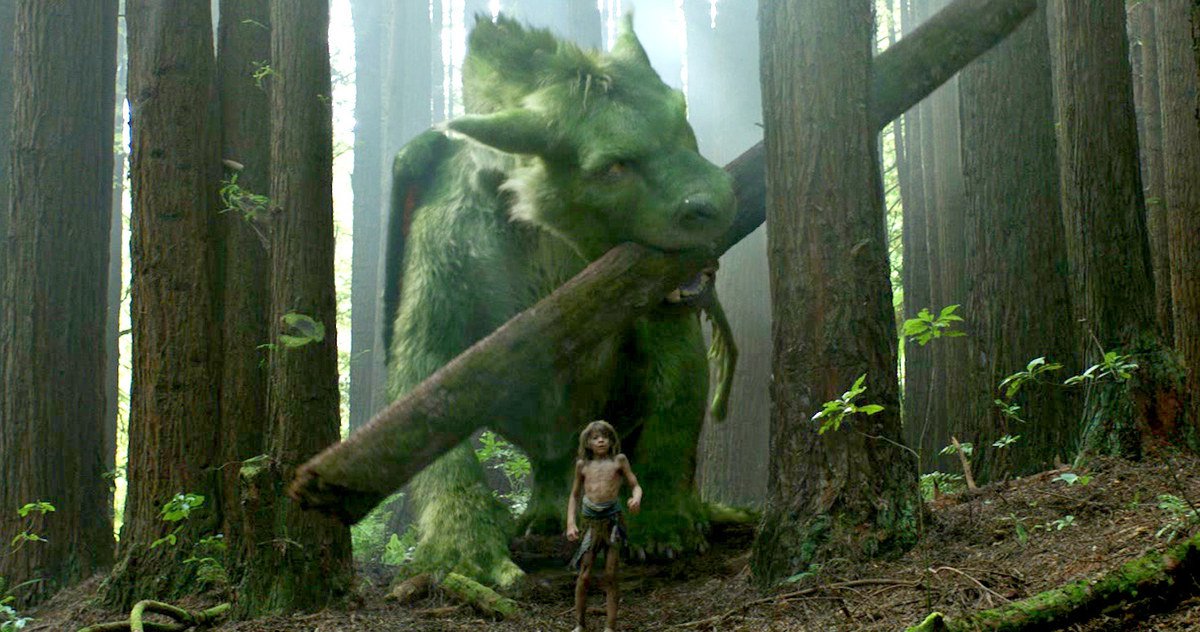
Dragons might be an unusual choice for a childhood best friend, but the love between a young boy and his fire-breathing friend make for a captivating, heartwarming tale in the Disney remake “Pete’s Dragon.”
Moviegoers needn’t worry about having seen the 1977 animated musical version of the film as nearly everything from the original version has been scrubbed over and re-written by Texas native writer/director David Lowery.
Pretty much all that remains is an orphaned boy named Pete (Oakes Fegley) is helped by a mysterious, yet friendly dragon he calls Elliot and the two live for many years out in the Pacific Northwest forest. Several years later when logging crews begin to tear down his wooded home, Pete is discovered and taken in by a forest ranger named Grace (Bryce Dallas Howard). Separated from his only friend, Elliot must track down Pete while avoiding workers who want to capture a dragon.
“Pete’s Dragon” marks the first major film role for Fegley, who delivers a heart-wrenching, soulful performance as Pete. Forced from the outset to display a wide array of emotions, Fegley handles each scene with proper care and is especially touching at the film’s outset when tragedy forces Pete to go it alone in the woods. It’s much too early to determine Fegley’s future given the fickle nature of child actors, but he should be a staple in similar roles for the next several years.
Howard continues to elevate her profile with a terrific effort in “Pete’s Dragon” following a breakout in last year’s franchise smash “Jurassic World” opposite Chris Pratt. As Grace, Howard is far from the best thing about “Pete’s Dragon,” but adequately fills a pretty formulaic role.
Oscar winner Robert Redford delivers one of his best performances in several years in a supporting role as Grace’s father and town storyteller who happens to be the only other person to have ever seen a dragon. It’s a touching, memorable effort from Redford, who has a natural charm with the young performers he works opposite and easy father-daughter chemistry with Howard.
Awards aren’t given to these sorts of supporting performances, but Redford takes the small, simple part and knocks it out of the park with grace.
“Star Trek” actor Karl Urban is enjoyably evil-adjacent as the film’s requisite villain, a logger who leads a team of nameless henchmen deep into the forest to capture Elliot in hopes of making money. It’s a decent change of pace for Urban coming off three sci-fi adventure films, though his work here is not as thoughtful as in previous films.
If you’re still looking for a reason to catch “Pete’s Dragon” in theaters, look no further than Elliot the dragon, a CGI marvel on par with the animals in Disney’s other 2016 hit remake “The Jungle Book.” Elliot looks much more menacing in three-dimensional computer graphics than the flat animation of the 1977 original, but what is really stunning about Elliot is how gracefully the animators are able to digitally melt Elliot in and out of the background like a chameleon. This next-level CGI work helps flesh out the performances of actors who are emoting against thin air and the film feels a lot more authentic as a result in spite of the film’s inauthentic premise.
Indie film director Lowery shows an adept, expert hand at the wheel of the smartly paced adventure, in much the same way as his 2013 romance drama “Ain’t Them Bodies Saints” starring Casey Affleck and Rooney Mara. Like Colin Trevorrow with “Jurassic World” before him, Lowery proves that talented independent directors can successfully make the jump to big-budget films quite nicely.
“Pete’s Dragon” is one of the year’s most refreshing surprise hits and definitely worth a trip to the theaters for movie lovers of all ages.

Bad guys you may or may not have ever heard of get coerced into fighting for good in the latest “superhero” film from Warner Brothers and DC Comics.
“Suicide Squad” is a largely enjoyable mess of a movie where director David Ayer invites viewers on a nearly two-hour thrill ride, but moviegoers have to concede some things first.
Sure, you’ve likely never heard of or seen most of these villains (or the actors playing them) before, but just go with it.
It’s true that “Suicide Squad” underwent massive changes following the poor reception for DC’s last film, the fatally flawed “Batman v Superman: Dawn of Justice.” Just go with it.
And yes, there are characters in the “Suicide Squad” who don’t really say much or have any impact on the plot in any way, shape or form. Just go with it.
If you’re able to buy in and ignore all of these conceits, forgetting the fact that much of the plot makes no sense whatsoever, you’re in for a pretty fun ride.
The plot is relatively straightforward. Following the events of “Batman v Superman,” the world is in need of some extra protection and the government decides to launch a program where a team of supervillains – including ultra-sniper Deadshot (Will Smith) and psychotic assistant Harley Quinn (Margot Robbie) — are assembled Avengers-style to combat an unknown threat to Gotham City. To keep them in line, a bomb is inserted in their neck and will be detonated if they disobey. Then off to war they go.
Robbie, who has constantly been a standout performer lately, delivers the single best performance in “Suicide Squad,” bordering on delirious, deranged and delightful as villainess Harley Quinn. The film plays to Robbie’s strong suits using her beauty and quirky humor and her chemistry is especially clear with “Focus” co-star Smith. Given how good Robbie is in the role, Warner Brothers and DC are already developing a film based around the Harley Quinn character, a smart move by the studio.
Smith is solid in a large ensemble role as expert hitman Deadshot. For a character never previously introduced in DC’s cinematic lore, Smith and Ayer do a great job of quickly developing the character for unfamiliar audiences. Smith feels freer as an actor in “Suicide Squad” freed from the burden of carrying the film. Deadshot is one of Smith’s better performances this decade, which feels wasted in an otherwise middling movie.
In what ultimately becomes nothing more than an extended cameo appearance, Jared Leto is the film’s biggest misfire as the iconic Batman villain The Joker. Granted, Heath Ledger’s Oscar-winning performance as The Joker in “The Dark Knight” was a nearly insurmountable hill for Leto to climb to put his own stamp on the part.
His haphazard performance paired with the weird 20s gangster direction Ayer and Leto decided to take the character fall completely flat. It’s the single biggest disappointment for an actor playing a part in a film based on a comic book ever.
It’s difficult to tell if Ayer is truly at fault for the disjointed storytelling and tone of “Suicide Squad,” which ping-pongs from character to character at the drop of a hat, sometimes for no real reason. Ayer claims that the film viewers see in theaters represents his cut of the film. It’s hard to believe him given the many reports of Warner Brothers developing their own separate cut of the film and how different “Suicide Squad” feels from Ayer’s other films like “End of Watch” and “Fury.”
There are plenty of things to like about “Suicide Squad,” especially Robbie’s maddeningly brilliant take on a classic Batman villain. Though not a flawless movie, the action thrill ride represents the last true summer blockbuster film in 2016 and is worth checking out for those looking to turn off their brains and have a fun evening at the theater.
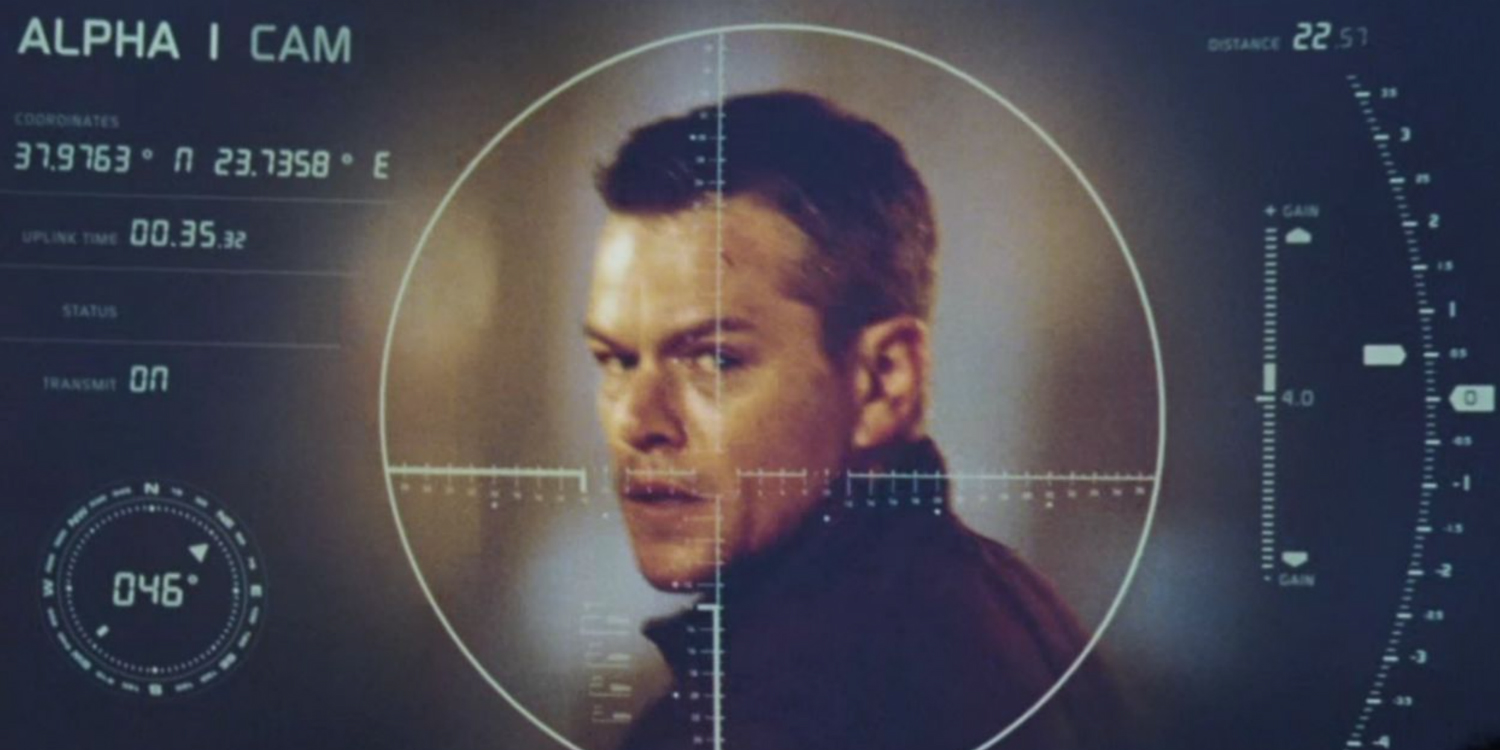
Actions speak louder than words.
Matt Damon doesn’t say a whole lot in “Jason Bourne,” his fourth turn as the amnesiac assassin out to find himself in a clandestine world. But he doesn’t need to either.
The world around Bourne has changed dramatically since his last on-screen appearance nearly a decade ago in “The Bourne Ultimatum.” NSA contractor Edward Snowden’s releasing of classified documents outlining secret U.S. surveillance programs watching over everyone all the time have a profound impact on “Jason Bourne.”
It’s probably a good idea not to say very much when every conversation, movement and keystroke is being compiled, catalogued and analyzed at every turn. The world of the original “Bourne” trilogy has evolved into a much darker and scarily plausible one.
“Jason Bourne” finds a tortured Bourne putting himself through unnecessary pain as a way to atone for his sins as an assassin, when former CIA colleague turned radicalized hacker Nicky Parsons (Julia Stiles) tracks down Bourne after stealing information on covert kill-squad programs like the one Bourne was born from. Using the intel, Bourne goes on an intercontinental quest for answers, including startling information about his father.
Despite how similar “Jason Bourne” is to all the other “Bourne” films, it’s still the best traditional action movie to hit the big screen since last year’s “Mission Impossible: Rogue Nation.”
Damon gives yet another dazzling performance, saying much more with his body language than he has to in the approximately 25 lines of dialogue Bourne has in the film. The ruthless, almost robotic efficiency he displays during action sequences is wonderfully offset by moments of genuine emotion as he flashes back to memories of his father.
Texas native and Academy Award winner Tommy Lee Jones takes aim at bringing Bourne down as CIA director Robert Dewey, a character that feels like an older version of Jones’ iconic U.S. Marshal Sam Gerard in 1993’s “The Fugitive.” It’s a solid, unspectacular role-filling performance that gets consistently shown up by whichever other stars are in the scene, which is unfortunate as it constantly feels like there’s more Jones could give to the role.
Oscar winner Alicia Vikander breathes new life into the “Bourne” franchise as CIA cyber-ops chief Heather Lee, perhaps the most complex and dynamic character outside of Bourne himself in the entire series of films. Vikander shows an adept hand at playing both sides (the government and Bourne) against the middle while she seeks out her own unknown end.
The biggest lesson that Hollywood can learn from films like “Jason Bourne” is that superior acting talent can elevate standard action fodder to new heights, something the “Bourne” franchise has shown time and again with performers like Clive Owen, David Strathairn, Chris Cooper and Joan Allen.
Veteran character actor Vincent Cassel is yet another example of this at work, following in the footsteps of Owen and Karl Urban before him as the nameless, shadowy killer just one step behind hunting Bourne. Viewers learn more about Cassel’s character, known simply as “The Asset,” than previous iterations of this character and Cassel is a perfect actor to carry the heavier load. His performance is menacing, yet elegant and a terrific counterbalance to both his rival, Bourne, and boss Dewey.
The biggest weakness in “Jason Bourne” has to be the mediocre direction of Paul Greengrass, now on his third turn at the helm of the franchise. Greengrass’ insistence on over-utilizing the shaky-cam motion style of cinematography he popularized in “Bourne Supremacy” makes the new film extremely herky-jerk, even in static scenes of dialogue that don’t need any stylistic frills.
While the shaky-cam style provides a frenetic energy to action sequences, “Jason Bourne” suffers from the fact that there is so much chaos in everything from major car chases to the simplest of hand-to-hand combat scenes. Greengrass gets in his own way trying to replicate the visual style and thoroughly impedes viewers’ understanding of most of the major set pieces in the film.
For all its limitations, “Jason Bourne” is anything but a bad movie and every single installment in the “Bourne” franchise proves to be a superior piece of action filmmaking, including the much maligned “Bourne Legacy” offshoot starring Jeremy Renner.
Moviegoers are probably going to want to watch the first three “Bourne” movies with Damon before heading out to catch “Jason Bourne” on the big screen. But watch quickly as “Jason Bourne” is a deadly fun time and an absolute must see at a local movie theater.
There might not be a more fun movie-going experience this summer than the sci-fi adventure film “Star Trek: Beyond,” which sees Chris Pine return for a third go-round as the iconic Captain James T. Kirk in a role made famous by William Shatner.
Several years into a deep space mission, the crew of the U.S.S. Enterprise are tasked with rescuing the crew of a wrecked ship on an uncharted planet, until the ship is destroyed by a mysterious villain named Krall (Idris Elba) and most of the Enterprise’s crew is captured.
For much of the film, “Star Trek: Beyond” feels more like a fancy television episode with intense and picturesque special effects rather than an elevated theatrical production and the film drags slightly in the middle third as a result.
In reality, the difference between the first two “Star Trek” reboot films and “Beyond” is the difference between “Star Wars: The Force Awakens” and “Fast and Furious 6.” Or in other words, the difference between directors J.J. Abrams and Justin Lin.
Abrams left the “Star Trek” franchise after two successful installments to breathe life into the next generation of “Star Wars” films, paving the way for blockbuster action director Lin to take the helm.
Lin’s directorial approach focuses on style over substance and “Beyond” feels incredibly flashy as a result. It should come as no surprise that the best scenes in “Beyond” are the action sequences – Lin’s bread and butter developed over four “Fast and Furious” installments.
While the “Star Trek” franchise works best as an ensemble piece, Pine has the ideal charisma and cavalier attitude to lead the team as Kirk. “Beyond” doesn’t require Pine to flex his acting muscles very much, but he finds a way to maintain the pretty refined character developed over two prior films without getting in his own way too much.
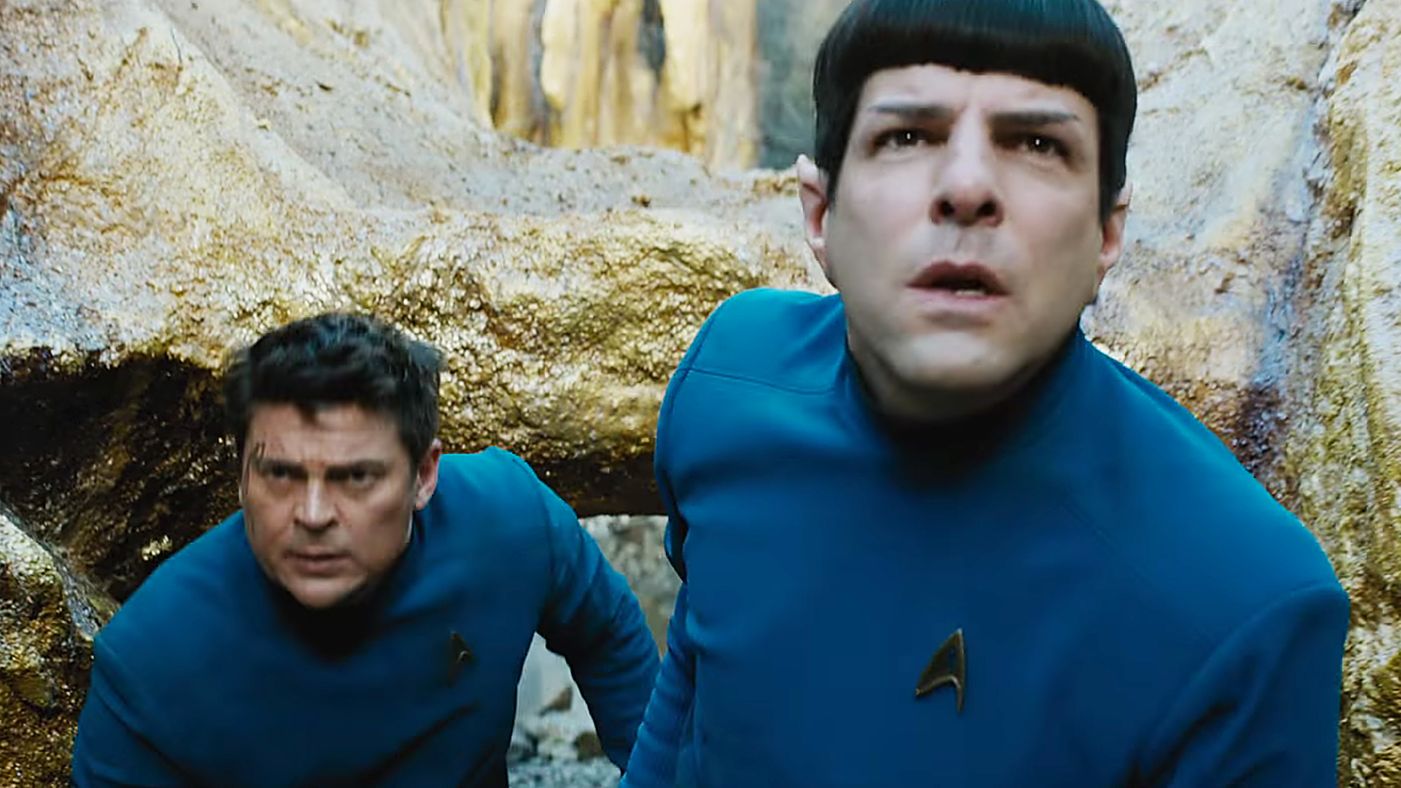
The real stars of the show are Zachary Quinto and Karl Urban in their love-hate relationship as first mate Spock and medical officer ‘Bones’ McCoy. The film’s script co-written by star Simon Pegg, who plays engineering chief Scott, peaks in scenes between Spock and McCoy. The unlikely pairing makes for some of the film’s funniest moments as well as most of its best dramatic ones as well.
The reboot “Star Trek” films have been defined, in part, based on strong performances from veteran character actors in the main villain role. Following Eric Bana and Benedict Cumberbatch, Elba is a fantastic choice to play the nefarious warlord Krall, though it’s unclear whether Lin knows exactly what to do with him.
Elba is nearly unrecognizable as Krall buried under mounds of makeup, which limits his ability to emote using facial expressions and takes away a key part of Elba’s acting arsenal. Given the bland way in which his character is written, Elba does a solid, yet unmemorable job as the baddie with a grudge to settle.
“Beyond” also features a touching homage to Leonard Nimoy, the original Spock, who passed away following his final turn in the role in “Star Trek: Into Darkness.” It’s fair to expect a similar homage to Anton Yelchin, who died in a car accident shortly after filming his scenes as Chekov in “Beyond.”
The film also has a much lighter, family friendly tone both in cinematography and storytelling than the brutal previous installment “Star Trek: Into Darkness.” Though it sits firmly in the PG-13 rating category, the third “Star Trek” film is a much more inviting film for younger audiences unfamiliar with the franchise’s rich television and film history.
“Beyond” is a more than worthy entry into the “Star Trek” film franchise canon and without a doubt the most exciting summer blockbuster film so far this year. While it doesn’t quite have the same substance as the other two reboot entries, “Star Trek: Beyond” has more than enough style to keep the Enterprise’s engines running for quite some time.
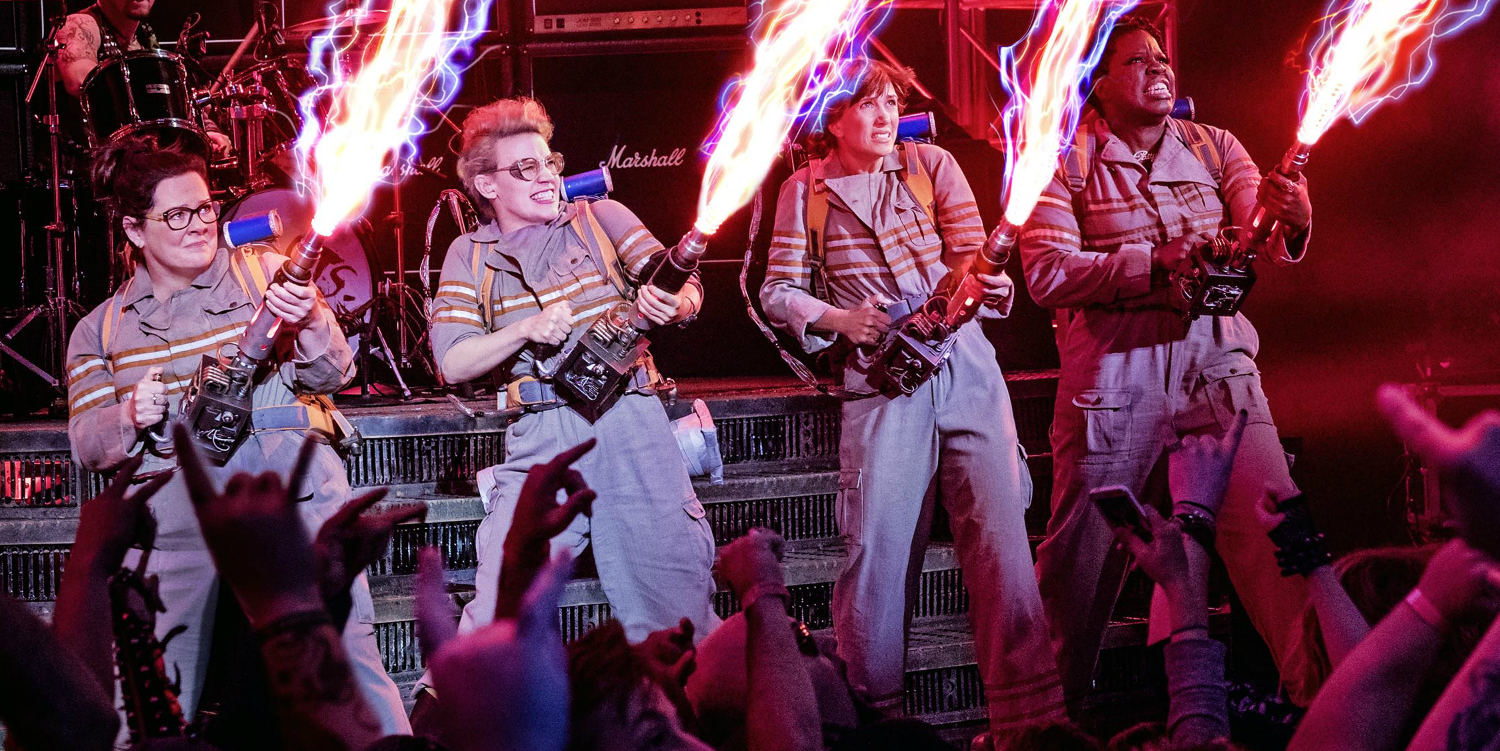
Nothing about the recent all-female remake of “Ghostbusters” could accurately be described as original.
But luckily for moviegoers, that isn’t a death knell for the film’s enjoyment prospects or even something to lament. The fact that nothing about the film does a disservice to the Dan Aykroyd and Harold Ramis penned series from director Ivan Reitman is by all means a good thing.
The aptly titled “Ghostbusters” doesn’t offer a shot-for-shot remake of the original Reitman film, but writer/director Paul Feig’s turn at the helm doesn’t try and stray too far from the formula that worked so well in the 1980s.
The film follows former best friend paranormal scientists Abby Yates (Melissa McCarthy) and Erin Gilbert (Kristen Wiig) as they team up with eccentric engineer Jillian Holtzmann (Kate McKinnon) and subway worker Patty Tolan (Leslie Jones) to investigate reported ghost sightings across New York City.
Fans of the original films will certainly recognize all the not-so-subtle references and plot points in Feig’s by-the-numbers screenplay, many of which push past the point of homage to a borderline unfunny insistence on appeasing skeptical “Ghost Busters” devotees.
McCarthy certainly is the biggest name attached to the sci-fi/comedy reboot, but somehow casts the smallest shadow in the film as the comedic heavyweight is outdone by all three of her ghostbusting colleagues over the course of the two hour film. “Ghostbusters” continues the concerning trend of McCarthy’s hit-or-miss career where – aside from “The Heat” and “Spy” – her best work comes in films where she plays a supporting role to a bigger star.
Wiig is solid, not spectacular as Gilbert, playing her usual everywoman fans of Wiig’s film career have seen from her many times before. But in the context of a larger ensemble film, the performance fits in well.
“Thor” star Chris Hemsworth’s turn as the Ghostbusters’ attractive and ditzy receptionist seeks to mimic his scene-stealing effort in the less successful comedy remake “Vacation.” However, the jokes don’t hit home quite the same this time around for Hemsworth, who’s game for ridiculous dance numbers and showing an inability to answer phones.
By far the best part of “Ghostbusters” is the hilarious “Saturday Night Live” actress McKinnon, who hammers home every punchline she’s given in the film with ruthless efficiency. McKinnon proves herself to be a future comedy film star with her performance in much the same way McCarthy became a breakout herself following “Bridesmaids.” McKinnon is the single best part about “Ghostbusters” and her performance is worth the price of admission alone.
Fellow “Saturday Night Live” standout Jones will hopefully receive a higher profile and more comedic film opportunities with her sidesplitting performance. Jones often can dominate a scene with her pitch-perfect timing and joke delivery with her slapping a demon out of McCarthy’s body being the single funniest moment in the entire film.
Director Feig has shown an affinity for drawing the best out of his female leads, most notably McCarthy in “Bridesmaids,” “The Heat” and “Spy.” Though his fourth project with McCarthy isn’t the best effort for either the actress or the director, “Ghostbusters” has genuinely funny moments from its supporting cast to still make it the most successful comedy to come out so far in 2016 anyways.
While it certainly isn’t the best use of a talented cast or crew, “Ghostbusters” feels like the best possible iteration of a remake/reboot of the 1984 comedy classic and something worth taking a chance on in theaters. Not every punchline will be a hit but there’s enough laughs for a night out, which is what these sort of summertime blockbusters are for.
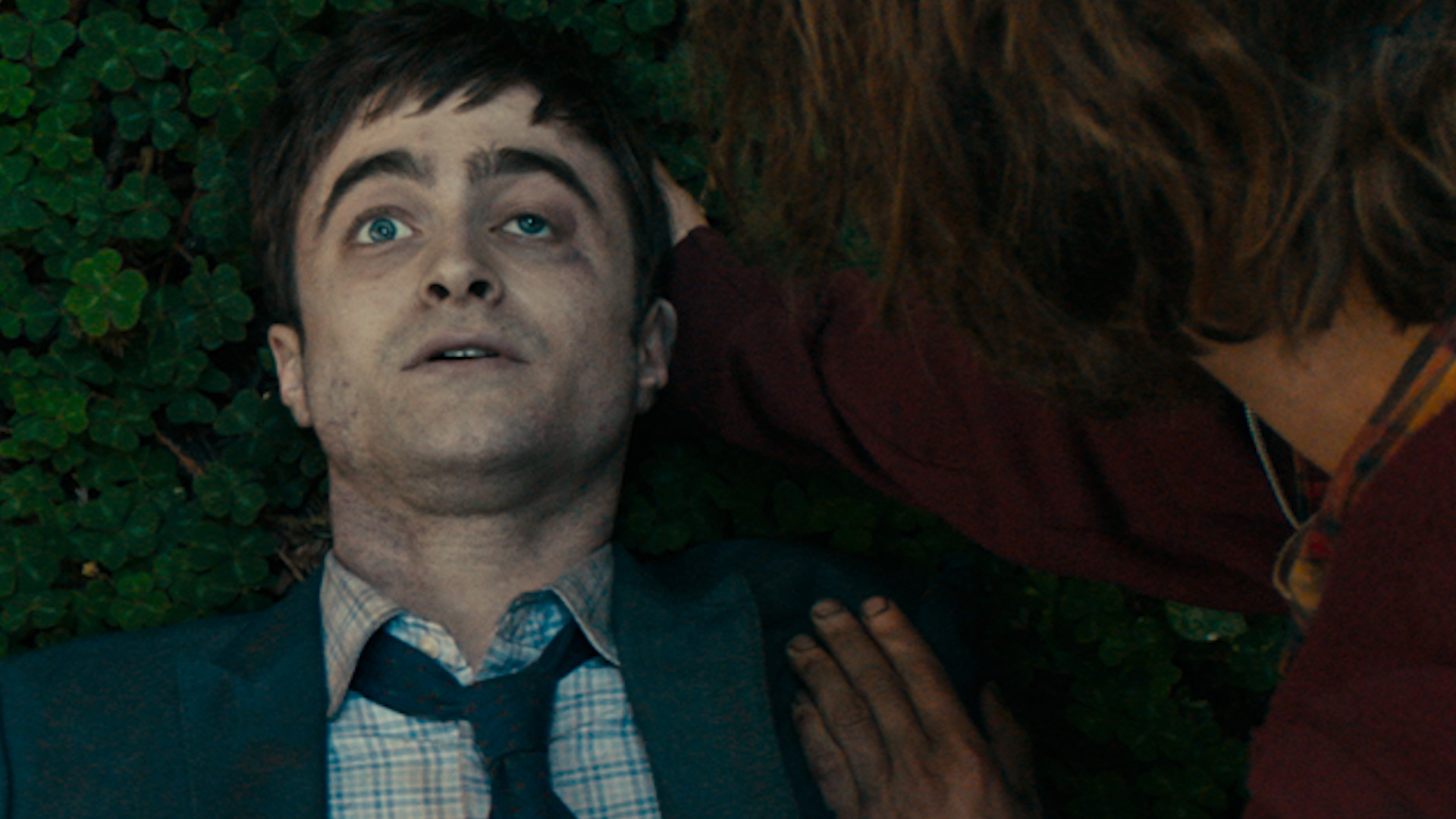
Eight out of 10 average moviegoers probably won’t like “Swiss Army Man,” the new independent dramedy starring Paul Dano and Daniel Radcliffe.
This isn’t to say the Sundance Film Festival award-winning film for best direction isn’t visually breathtaking, layered and complex storytelling. “Swiss Army Man” certainly is all of those things and more.
Simply put, too many potential moviegoers will likely be put off completely by a constantly flatulent corpse — played with the utmost care by Radcliffe — because as the film readily admits, “People don’t like other people’s farts.”
And for those who can make it past that initial conceit (and those still reading this review), “Swiss Army Man” will prove to be one of the most inventive cinematic experiences in several years, on par with the terrific Spike Jonze Oscar winning feature “Her.”
When the film opens, viewers are introduced to Hank (Dano) as he prepares to hang himself out of loneliness after being stranded on a desert island for an indeterminate amount of time. As he is about to end his life, a corpse he later names Manny (Radcliffe) washes up on shore and changes his fate.
Hank discovers he can use Manny’s indestructible, undead body as a human Swiss Army knife to make his way home. Along the way, Hank discovers Manny’s countless powers, including the ability to speak, providing Hank with the companion he’s long been searching for.
Alone in the woods for the main duration of the film, Dano literally carries Radcliffe throughout “Swiss Army Man,” though the chemistry between the duo once Manny sort of comes back to life is remarkable.
Dano runs the emotional gambit over the course of “Swiss Army Man” as protagonist Hank, bouncing effortlessly from suicidal to gleeful to lonely and inquisitive and back again like only the most manic of actors could pull off. While not as showy of an effort as the former “Harry Potter” star Radcliffe, veteran character actor Dano holds the weight of the entire film on his shoulders – both figuratively and literally – and does so in the most authentic, natural way possible.
It feels cliché to suggest that Radcliffe brought life to a monotone, flat character in Manny, but that’s exactly what occurs. He perfectly allows viewers to discover Manny in different ways as Radcliffe himself finds them through self-exploration of the character. It’s a stunning performance that will go overlook because of who his character is, but Radcliffe gives what will be one of the year’s best acting efforts nevertheless.
Daniels – the writing/directing team of Daniel Scheinert and Daniel Kwan – imbue their debut film with a visual vibrancy reminiscent of Michel Gondry’s “Eternal Sunshine of the Spotless Mind” or Jonze’s “Her.” The middle third of the film where Dano and Radcliffe do most of their travelling through the woods is especially gorgeous, as Daniels take advantage of natural lighting and a spectacular wooden area to create compelling, rustic imagery to help frame the action.
The film also features one of the most unique soundtracks you’re likely to find with acapella singing from Dano and Radcliffe kicking off nearly every song on the mesmerizing, existential score from Manchester Orchestra.
While “Swiss Army Man” certainly has the fart jokes and other “dirty” material prevalent in main-stream R-rated comedies today, everything within the film has a distinct, nuanced purpose beyond the simplicity of the sound of gas being released from a person’s backside. “Mike and Dave Need Wedding Dates,” this is not.
If you’re horrified watching the trailer for “Swiss Army Man” and don’t want to see it, force yourself into the theater. If you’re disgusted 10 minutes into the first act and want to walk out, force yourself into staying the other 80-plus minutes. And if you leave the theater after watching the entire film thinking it was the worst thing you’ve ever seen, go and watch it again.
“Swiss Army Man” is a film that will grow on smart, adventurous moviegoers willing to give independent filmmakers a chance rather than seeing Zac Efron, Seth Rogen and others make similar, yet much cruder jokes 8-10 times a year in theaters across the country.
Sadly, there’s very little chance of “Swiss Army Man” winning any major accolades at the end of the year, though a slew of Independent Spirit awards wouldn’t be at all surprising. The film is by far one of the three or four best features to arrive in theaters in 2016 and worth seeking out in theaters for any mature moviegoer unafraid of a little gas.

Tarzan, classic vine-swinger and “lord of the jungle,” returns to theaters with a muddled, haphazard effort from Warner Brothers entitled “The Legend of Tarzan.”
Unfortunately for moviegoers, nobody’s really sure what that legend truly is.
Unlike previous incarnations of the Tarzan film series, “Legend of Tarzan” opens 10 years following Tarzan’s first meeting with Jane. They’re now happily married and living in a family estate in England, when John Clayton (aka Tarzan) receives an invitation from the King of Belgium to visit Clayton’s birthplace, the Congolese jungle he has just colonized. The rest of the primary storyline involves an nefarious plot to turn Tarzan over to a vengeful tribe warlord seeking to kill Tarzan in retribution for the death of his son.
“Legend of Tarzan” feels like the sequel to an origin film that never got made. As a result, scenes dedicated to Tarzan’s youth being raised by gorillas in the jungle are crammed into the storyline. Compelling though they may be, the frequent flashbacks often muddle an otherwise paint-by-numbers screenplay from Adam Cozad and Craig Brewer. In trying to tie in young Tarzan, older Tarzan and civilized John Clayton together in one cohesive script, Cozad and Brewer don’t get any of the three right.
“True Blood” star Alexander Skarsgard certainly looks the part of Tarzan with his long flowing locks and chiseled, muscular exterior. Since “Legend of Tarzan” essentially makes Tarzan into a superhero, looks are pretty much all Skarsgard needs to be effective in the role.
However, much of the early portion of “Legend of Tarzan” focuses on Tarzan’s alter ego, John Clayton, the British aristocrat Tarzan was to become before his English parents died in the jungle. The film opens with Skarsgard as Clayton and it’s easy to see how uncomfortable Skarsgard is with the role, simply biding his time before the shirt comes off and his hulking grunts can take over. A better actor could have conveyed both sides of John Clayton/Tarzan well, but filmmakers clearly opted for style over substance with Skarsgard.
Margot Robbie, on the other hand, clearly handles the balance between British life and jungle life well as Tarzan’s wife, Jane. It’s uncertain whether Robbie’s magnetism or Skarsgard’s underwhelming performance is responsible for making Jane a more interesting and compelling character to watch throughout the film, but Robbie proves herself to be the single best thing about “Legend of Tarzan.”
Oscar winner Christoph Waltz has made a career out of playing mustache-twirling villains, but his portrayal of nefarious, power hungry Belgian emissary Leon Rom feels more cookie-cutter bland than usual. Rom isn’t menacing or conniving, just a mediocre brand of evil without much character development. Waltz hasn’t underperformed this much since his failed villain turn in “The Green Hornet.”
Well versed at stealing films from a supporting role, Samuel L. Jackson does just that as American emissary George Washington Williams, a marksman with a rifle who ultimately serves as Tarzan’s right-hand man in the jungle.
A small, but important part of “Legend of Tarzan” deals with colonial Belgium enslaving the tribes of Congo. Within this poorly-written screenplay, Jackson is able to breathe life into complex issues of race relations and equality while still serving the greater goals of the movie. Jackson is the perfect choice for the film and the only actor who could have made Williams more than a stereotype.
David Yates, best known for his work helming the final four “Harry Potter” films, essentially does the directing equivalent of treading water, keeping audiences afloat with largely engaging action sequences and well-shot scenery. But Yates never takes “Legend of Tarzan” to the same level as “The Jungle Book,” Disney’s superior CGI-heavy film adapting a classic jungle tale to the big screen.
“Legend of Tarzan” probably isn’t for younger viewers either as the film certainly earns its PG-13 rating in violence and a sexually provocative scene between Skarsgard and Robbie early in the film.
Moviegoers will certainly not be disappointed in any money they spend to see “Legend of Tarzan” in theaters, but it shouldn’t be spent at the expense of vastly superior films still in theaters like “Finding Dory.”
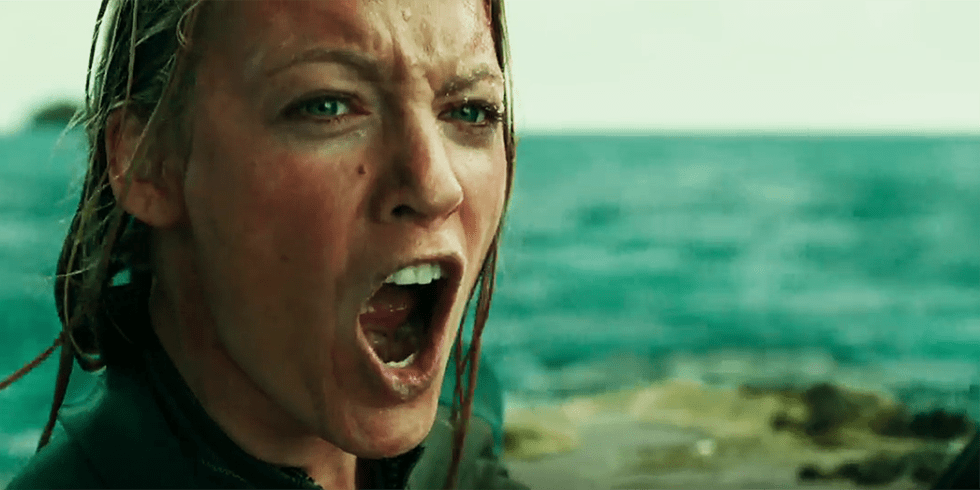
Blake Lively going toe-to-toe with a great white might sound more like the next installment of the “Sharknado” franchise than a surprise summer smash.
But somehow, someway, “The Shallows” manages to defy the expectations and provide frightening, largely enjoyable material and the best shark movie since Steven Spielberg scared people out of the water for decades with 1975’s “Jaws.”
The concept is simple. Lively plays Nancy, a woman looking for alone time surfing on a remote Mexican beach who is attacked just before nightfall by a tremendous great white shark. Against all odds, she is able to maneuver herself onto a small rock several hundred yards from shore with the shark lurking in the shallow water.
Describing the film – especially when you say it out loud – sounds like the worst kind of cinema one could imagine. Executing this unlikely hit in a compelling manner is a credit to director Jaume Collet-Serra and Lively as leading lady, because Anthony Jaswinski’s lackluster script just doesn’t work.
Proving once again to be one of Hollywood’s top young actresses, Lively delivers a homerun performance in a film probably undeserving of one. The part is clearly intended to go to an attractive bombshell who can memorize lines. Lively doesn’t write “The Shallows” off the way many potential moviegoers might.
Her ability to manufacture credible emotion and character development from subpar material is exceptional. There are so many reasons “The Shallows” shouldn’t work as a movie and Lively fixes nearly all of them with an all-or-nothing performance.
In the script, Nancy makes miracles happen out of sheer willpower and hokey convenience as it’s clear Jaswinski was watching countless episodes of “MacGyver” reruns while penning his screenplay. Though she doesn’t have chewing gum and a paper clip, Nancy is astonishingly able to avoid certain death numerous times and Lively somehow makes all of this reasonably plausible.
There aren’t really co-stars in “The Shallows” as Lively is left out to dry by herself, with the exception of a computer generated shark and a real seagull Nancy dubs “Steven Seagull” that is unable to fly away due to an injured wing.
One of the disappointments of the film comes in the shark itself. Whether by design or limited budget, “The Shallows” rarely features its ominous, underwater villain and most of the shark attacks occur off camera. When viewers can see the shark, the effect largely works in terrifying moviegoers. Unfortunately, Collet-Serra plays it safe by taking the camera underwater to signal an impending attack and then pulling away seconds before it happens, leaving viewers with only the aftermath.
Aside from this flaw, “The Shallows” is a gorgeous film shot in New South Wales, Australia, which doubles for a picturesque remote beach on the coast of Mexico. The views cinematographer Flavio Martinez Labiano is able to find and develop help to round out the film and give moviegoers something to be in awe of during the film’s frequent slower moments. “The Shallows” also does a terrific job of flawlessly transitioning above and below water as Collet-Serra calls for that particular shot.
Pacing, however, is a huge struggle within “The Shallows,” something nearly unforgivable for a film that lasts just over 80 minutes. The film progresses like ocean waves, building quickly to incredibly high peaks and then dropping viewers down to a monotonous, boring valley where nothing happens until the next wave arrives.
In this way, “The Shallows” firmly establishes itself in a tier below superior survival movies like “Gravity,” “All is Lost” or “The Martian,” films whose slower moments are equally as compelling as the intense action sequences. But for viewers who know what they’re getting into, “The Shallows” is terrific summer popcorn fodder in the same vein as last year’s surprise hit “San Andreas,” right down to the absolutely absurd events in the final 15 minutes of each movie.
With Lively driving the action in picturesque locales, “The Shallows” is definitely worth a shot in theaters for moviegoers willing to turn off their brains for an hour or so and enjoy the ride.
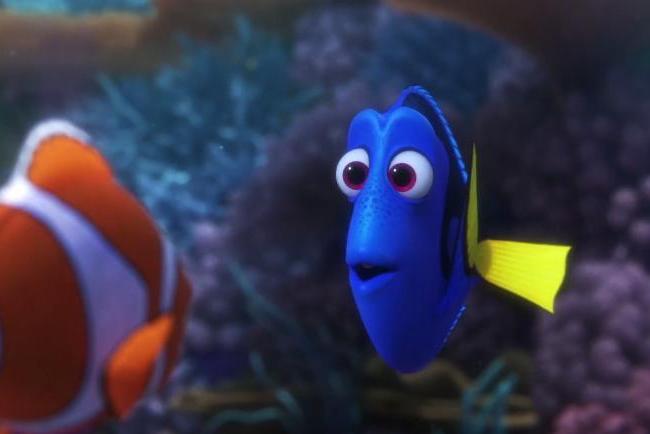
Rarely does a film sequel exceed high expectations, let alone surpass the original movie it is based on.
“Finding Dory” is one of those sequels.
More than a decade after the release of Pixar’s Oscar-winning “Finding Nemo,” the Disney-owned company returns with a nearly flawless follow-up and prove that oftentimes the best sequels are the ones that studios take the extra time to get right.
Dory, a loveable blue tang fish with short term memory loss, heads across the Pacific Ocean in search of the parents she forgot one year following the events of “Nemo.” When she loses her way and is captured by a California aquarium, her clownfish friends Marlin and Nemo must come to her rescue and help Dory reunite with her family.
Though the plotline is a little bit on the nose given its incredibly similar narrative to the first film, “Dory” is otherwise a perfect family-friendly animated film and surprisingly improves on “Nemo” at nearly every turn.
With more of the spotlight on Dory this go-round, Ellen Degeneres is spectacular voicing the charming, yet aloof star and elevating the material from writer/director Andrew Stanton to the next level. More than a decade later, Degeneres’ vocal performance in “Nemo” is still the main highlight of one of Disney/Pixar’s most iconic film and she’s even better in an expanded role.
Many critics have argued for the inclusion of a voice performance in acting category nominations at the annual Academy Awards and few efforts seem more perfect for honoring than Degeneres. The way she is able to infuse Dory with wonder, confusion, heart, humor and life simply by reading words on a page is remarkable.
Voice actors have the seemingly impossible task of bringing a story to life without benefit of seeing the scene they’re acting in, with animators designing each character around a pre-recorded vocal performance. Dory’s visual demeanor, attitude and vibrancy on screen is equally attributable to Degeneres’ imagination and acting. No voice actor has been more instrumental to the overall success of their film than Degeneres to “Nemo” and “Dory.”
Albert Brooks returns to voice Dory’s fatherly friend Marlin, while Hayden Rolence takes over the part of Nemo from Alexander Gould, whose voice has deepened since “Finding Nemo” premiered in 2003. Neither character is as fully developed in “Dory” as Stanton rightly focuses most of the storyline on Dory’s quest and introduces several new characters to the mix.
“Dory” also sports an impressive supporting cast including Diane Keaton and Eugene Levy as Dory’s parents, Kaitlin Olson as a near-sighted whale shark and Ty Burrell as a beluga whale. Veteran television star Ed O’Neill voices disgruntled octopus Hank, who begrudgingly forms a friendship with Dory.
Among the newcomers to the film, O’Neill stands out as the highlight, perfectly matching Degeneres step for step as Hank and Dory make their way through the aquarium. Pixar gives Hank a chameleon-like ability to blend into any background, which stands as the most visually impressive part of a stellar cinematic experience.
“Finding Dory” is also buoyed by what is likely to be next year’s Academy Award winner for best animated short with “Piper,” the most visually stunning piece of animation in years.
“Piper” follows a baby sandpiper bird learning about water along a beach, something that doesn’t in and of itself seem all that remarkable. The true brilliance of “Piper” is when audiences realize that they’re watching animation and not something filmed by Disneynature. The short’s director, Alan Barillaro, spent years fine-tuning flawlessly realistic animation of the tiny sandpiper with additional care taken to every feather. “Piper” pairs amazingly well with “Dory” to create a sublime movie going experience.
Well worth the price of admission, “Finding Dory” is sure to be an iconic animated film on the same level as “Finding Nemo” before it and should be the front-runner to take home the Academy Award for best animated film over Disney’s “Zootopia” and a promising slate of family-friendly films still to be released later this year.
Ordering tickets online well in advance of show time is highly recommended as “Dory” is going to be one of those films audiences return to see multiple times in theaters, especially families with small children. An instant classic, “Finding Dory” is more than your typical kids’ movie and a must-find for moviegoers of all ages.
High level cinema isn’t being produced by only major Hollywood studios anymore.
Internet based companies like Amazon and Netflix have both made major strides in creating and developing their own award-worthy films.
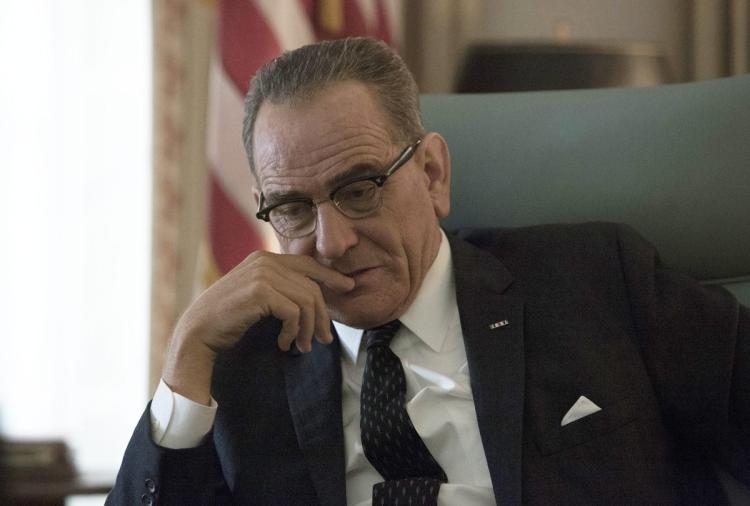
Now HBO has re-entered the cinematic landscape as a producer of original film content with the transcendent docudrama “All The Way,” featuring a likely Emmy-winning effort from Bryan Cranston as legendary president and Texas Hill Country native Lyndon B. Johnson.
Based on the Tony Award winning play of the same name by Robert Schenkkan, “All The Way” opens immediately after the assassination of President John F. Kennedy in Dallas and follows Johnson’s self-proclaimed “accidental presidency” over the course of the next two years.
Though LBJ was known for a number of landmark legislative achievements, “All The Way” limits the scope to Johnson’s determination to hold the Democratic Party together and get re-elected while passing a then-controversial civil rights bill.
“All The Way” touches on Johnson’s local connection to the Texas Hill Country throughout the film. Johnson is frequently beset with nightmares of his great-grandmother having to hide from Comanche raiding parties and the film regularly shows Johnson’s life outside Washington D.C.
In one scene, LBJ scares future running mate Hubert Humphries by driving his amphibicar off-road and into the Pedernales River near Johnson City, while in another, Johnson passionately argues for passage of the civil rights bill to reporters gathered around at the Texas White House in Stonewall.
For a film so focused on Washington politics and civil liberties in Mississippi, the film more than accurately portrays Johnson’s affinity for the Texas Hill Country and how it influences every decision that he makes.
Cranston is almost completely unrecognizable as Johnson, melting into the role both as an actor and under the phenomenally transformative makeup that makes it hard for viewers to recognize the actor within.
The four-time Emmy winner is equally adept infusing Johnson with a lighthearted, folksy charisma as he is at navigating the film’s most complex dramatic monologues. Many actors have brought United States presidents to life on screen, but none have felt as authentic and natural as Cranston, who doesn’t just play LBJ. For a little over two hours, he is LBJ.
Anthony Mackie – best known for playing the superhero Falcon in the Marvel Cinematic Universe – is less transformative than Cranston as civil rights leader Martin Luther King, Jr.
While it’s unclear whether King was meant to play a secondary role to LBJ in the film, Cranston’s otherworldly performance dominates the screen so much that it is impossible not to feature Johnson more prominently in “All The Way” as a result. This takes nothing away from a solid effort from Mackie, who makes the iconic King a compelling counterbalance to Johnson.
Oscar-winner Melissa Leo has an understated, elegant turn in limited screen time as the revered Lady Bird Johnson. While “All The Way” does not focus much on the marriage between LBJ and Lady Bird, Leo is able to easily convey an unassuming strong-hearted love for Johnson in convincing fashion. A separate film with Cranston and Leo centered around the couple would make for a wonderful mini-series as both actors provide so much depth to the Johnsons’ relationship in a short amount of time.
Tony Award winner Frank Langella’s turn as ranking Democratic senator Richard Russell, Jr. convincingly shows the other side of the coin politically from LBJ, rounding out how LBJ’s civil reforms reshaped American politics as we know it today.
Director Jay Roach gives “All The Way” a crisp, clean feel cinematically, while providing ample opportunity for both Cranston’s individual performance and a superior script from Schenkkan to shine.
Schenkkan adapts his own play for the screen and masterfully balances the many characters influencing LBJ from FBI Director J. Edgar Hoover to civil rights activists working in Mississippi to Defense Secretary Robert McNamara handling U.S. troops in Vietnam.
Thanks to Schenkkan’s superior storytelling, “All The Way” makes the seemingly mundane process of gathering votes for the civil rights bill intriguing, with LBJ swapping presidential cufflinks for support and telling King that lobbying Congress is a lot like hitting on women.
While just a small segment of Johnson’s historic presidency that could have spanned a dozen films, “All The Way” feels like the best possible way to encapsulate LBJ as a man and as a legislator. Since the movie skipped theaters and premiered on HBO, Cranston will miss out on an otherwise automatic best actor nomination and will have to likely settle for a fifth Emmy.
“All The Way” is a must-see political docudrama now showing daily on HBO channels and available on demand from HBO Go.
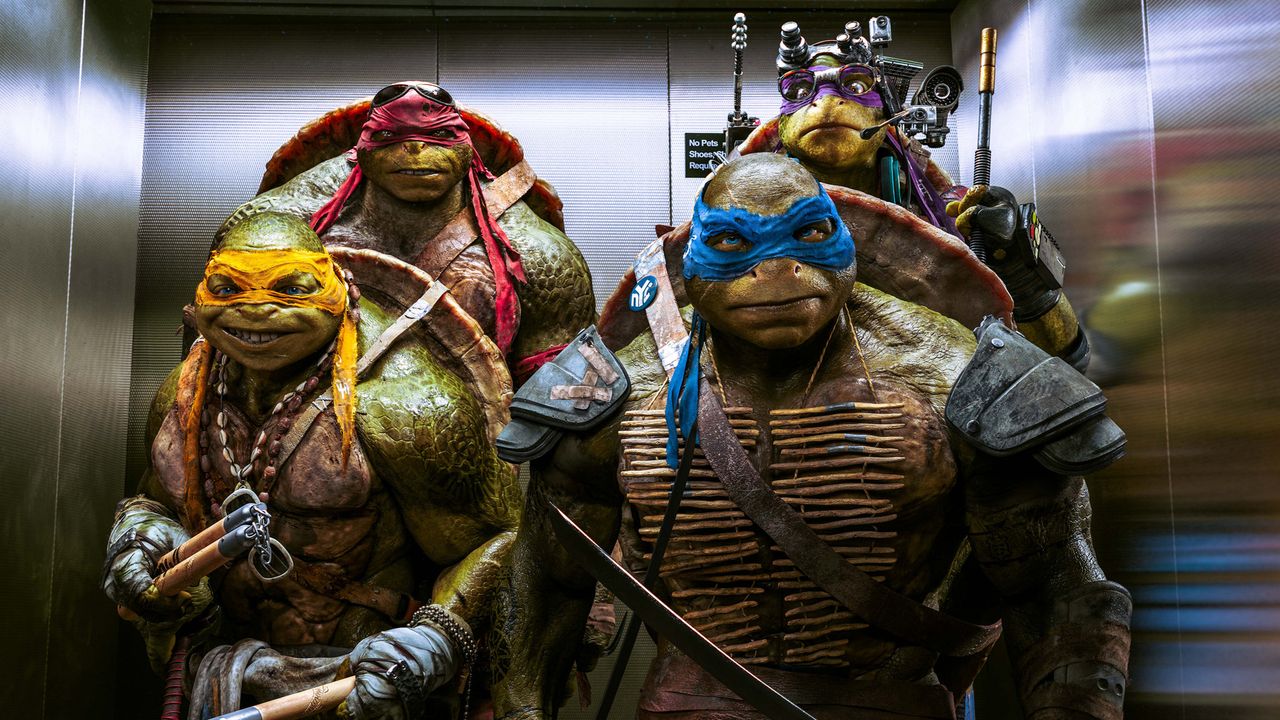
“Teenage Mutant Ninja Turtles: Out of the Shadows” was made for the 12-year-old boy in all of us. The one who loves gooey cheese pizza and ninja stars and beating up bad guys just because.
After a recent film reboot, the self-proclaimed “heroes in a half-shell” from late 80s and early 90s Saturday morning cartoon lore are back to save New York City once again and keep children largely entertained for about 90 minutes.
In this installment, the four turtles – Leonardo, Raphael, Michelangelo and Donatello – must stop their arch-nemesis Shredder and his goons from opening a portal to another dimension for aliens bent on world domination. If this sounds like a pre-teen version of the plot to “Marvel’s The Avengers,” it’s because it probably is.
The turtles, along with mutant rhinoceros Rocksteady and warthog Bebop, are filmed via motion-capture, just like the villainous Gollum was performed by Andy Serkis in the “Lord of the Rings” and “The Hobbit” trilogies.
The animations used to turn actors in green suits into cartoon animals with fighting abilities doesn’t work quite as well as the filmmakers might have hoped. Given the next-level computer graphics of Disney’s recent reboot “The Jungle Book,” these turtles can’t quite cut it visually and the voice talent behind these CGI characters can’t elevate a pedestrian script from Josh Appelbaum and Andre Nemec.
After breaking out in the first two “Transformers” films as the stereotypical hot girl following around large superheroes trying to save the world, Megan Fox returns to the TMNT franchise as April O’Neil, an attractive TV news reporter following the turtles around as they try to save the world. Surprisingly enough, Fox gives the best performance in the entire film, which should tell you everything you need to know about “Out of the Shadows.”
Television star Stephen Amell of “Arrow” fame joins the cast this go-round as the iconic TMNT sidekick Casey Jones, a vigilante cop sporting hockey gear as weapons. Amell doesn’t have much character development or story arc to go on, an unfortunate, yet all too frequent occurrence among the actors portraying humans in the film.
The film’s four primary villains – Shredder (Brian Tee), Bebop (Gary Anthony Williams), Rocksteady (Stephen “Sheamus” Farrelly) and Krang (Brad Garrett) – are all comically undeveloped, with the whole purpose to just become meaningless obstacles for the turtles to overcome. While not all superhero films have deep, purposeful connections between hero and villain, a lot more work could have been done in the script-writing phase to make “Out of the Shadows” more well-rounded cinematically.
Tyler Perry, the film’s most high-profile star, plays a smaller supporting role as the possibly evil, but definitely mad scientist Baxter Stockman. The character, and especially Perry as an actor, deserve a shot to be the primary foil for the turtles in an inevitable sequel as Perry’s squirrely performance is the most interesting acting audiences will find in a “Teenage Mutant Ninja Turtles” film.
Because the film is produced by heavyweight action film director Michael Bay, “Out of the Shadows” is most successful in its biggest, loudest moments where the turtles take on Shredder and his Foot Clan head on. While not entirely original, the battle sequences are bold, frantic and largely compelling at an age-appropriate level for the pre-teens in the film’s target audience demographic.
In this regard, the turtles seem to be a more viable starter option than the Avengers of Marvel’s cinematic universe for kids not quite ready for the complexities of more adult action-adventure films.
Where “Out of the Shadows” falls flat, however, is in the action-less rest of the film, which proves to be ultimately boring and comparable filler meant to bridge the gap between fight scenes. It’s a shame as Fox and Perry both show enough promise in their roles to develop a reasonably smart storyline around.
What director Dave Green ultimately relies on to propel the film forward is forgiveness on the part of younger viewers just excited to see the action scenes and 80s/90s nostalgia on the part of older audiences with enough background knowledge on the cartoon and comic book series to overcome the film’s shortcomings.
For fans of the 2014 reboot, “Teenage Mutant Ninja Turtles: Out of the Shadows” proves to be on par, if not a little above the previous entry in the TMNT franchise worth giving a shot in theaters.
Newcomers, however, might want to rent or stream “Teenage Mutant Ninja Turtles” first before committing to more of the same.
 Cinematic Considerations