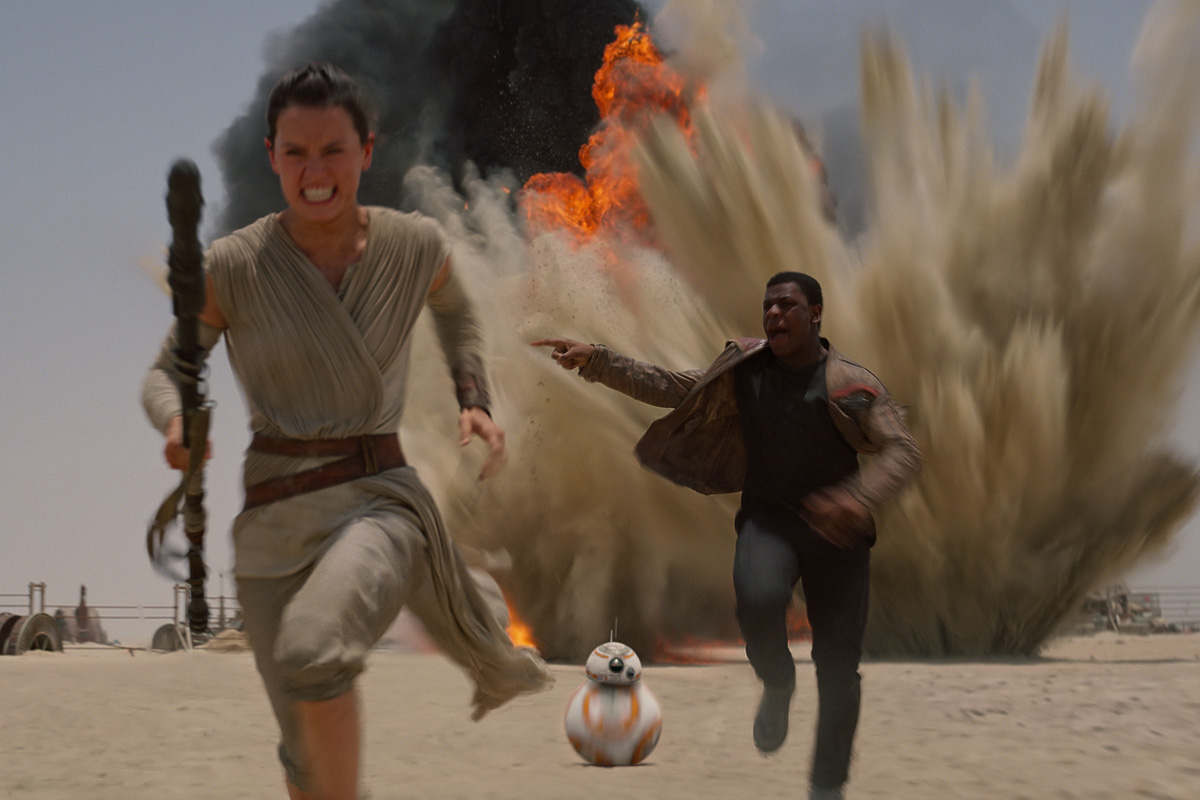

Heading in to the seventh installment in the famed science fiction franchise, it seemed almost certain that “Star Wars: The Force Awakens” – which opened Thursday evening – would either bomb or blow viewers away. There didn’t really seem to be an in-between.
Fans were right to be cautiously optimistic about the first true sequel in the series after being let down when a much-hyped “Star Wars Episode I: The Phantom Menace” debuted to less than glowing reviews from both critics and die-hards alike in 1999. Two subsequent prequels – “Attack of the Clones” and “Revenge of the Sith” – fared better, but neither felt up to par with the original trilogy.
Sixteen years later, “The Force Awakens” fulfills the promise of what “The Phantom Menace” could have been – a true space adventure that takes advantage of modern technology filled with everything fans decked out in Jedi robes and Stormtrooper costumes lining up outside theaters hours in advance of the first showing had hoped for.
Visually, the film is the best entry in the entire catalog of “Star Wars” installments, which should surprise no one. While the action sequences don’t quite rise to “The Empire Strikes Back” level of enjoyment in storytelling, combat on the ground and in the skies is more compelling than it probably ought to be thanks in large part to director J.J. Abrams layering of smaller moments to create tension and character development throughout each sequence.
What sets “The Force Awakens” apart from the rest of the franchise, even more so than the spectacular cinematography and effects, are the talented cast members added to the “Star Wars” universe in the seventh episode of the series.
Perhaps the biggest flaw of the “Star Wars” prequel trilogy was poor acting from major characters in the film, most notably Hayden Christensen’s stiff, lifeless portrayal of a pre-Darth Vader Anakin Skywalker. That, coupled with a largely racist caricature akin to the crows of “Dumbo” in Jar Jar Binks and subpar screenwriting, led to a disappointing series that hardcore fans either force themselves to watch or ignore completely.
Abrams, coming off a widely successful turn rebooting the “Star Trek” franchise, hits the mark with three “Force Awakens” cast members brand new to the
“Star Wars” series.
John Boyega offers up the series’ most emotionally conflicted performance as a young Stormtrooper struggling to perform his duties in service to an evil new alliance. Unknown to American audiences with a cult British film under his belt, Boyega could easily prove to be the new face of the “Star Wars” franchise in much the same way Mark Hamill was 30 years ago.
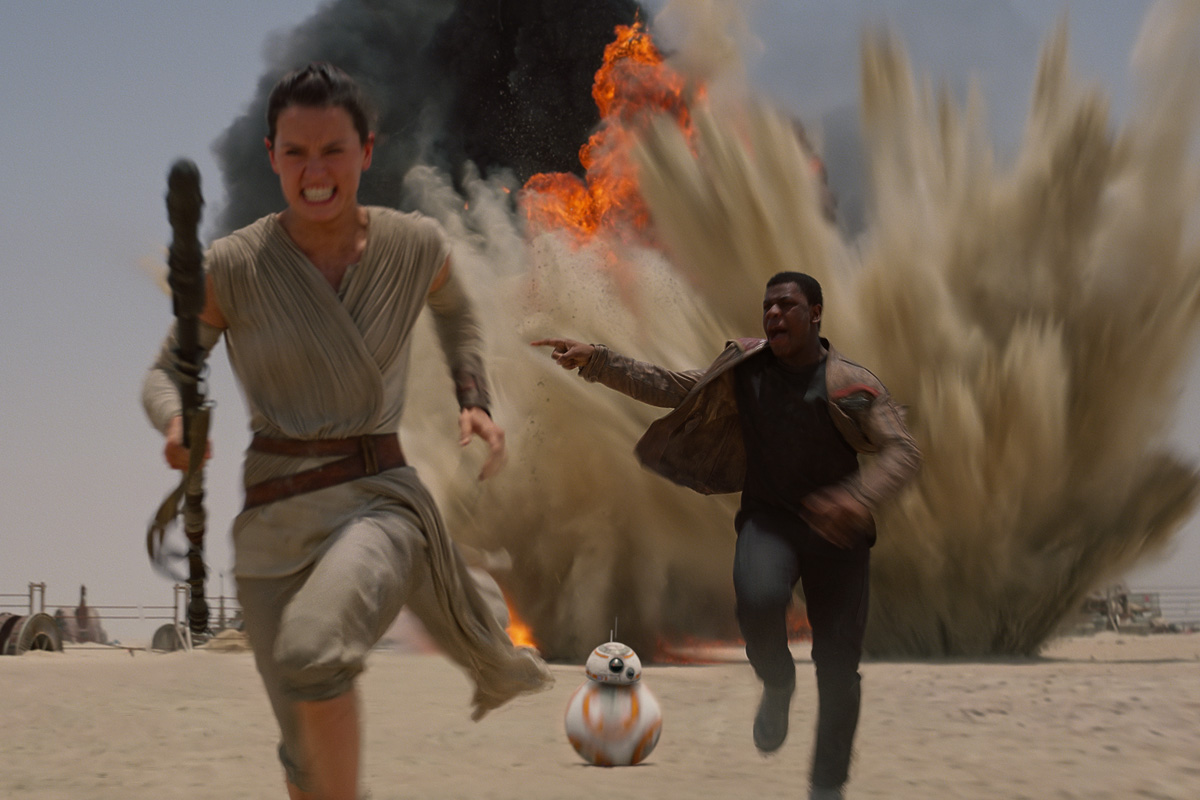
The film’s true star, Daisy Ridley, is a revelation as Rey, a young scavenger on Jakku who gets thrust into a pivotal role in yet another civil war by happenstance. Her performance is more layered and effective than either Natalie Portman’s Padme Amidala in the prequel trilogy or Carrie Fisher’s iconic, yet one-note turn as Princess Leia in the original trilogy.
While it’s still early in her career, “The Force Awakens” could be the star making action vehicle for Ridley that “The Hunger Games” was for Academy Award winner Jennifer Lawrence. Female characters have largely been underdeveloped caricatures in the science fiction genre, though Ridley absolutely nails the mold-breaking character of Rey. Leaning the future of the “Star Wars” franchise on her shoulders wouldn’t be the worst way to move the series forward.
The most famous of Abrams’ three new stars, Oscar Isaac of the critically acclaimed “Ex Machina” and “A Most Violent Year,” actually has the least to do in the film as the Rebellion’s best pilot. His role as Poe Dameron feels more like a teaser for a much bigger part in future installments and while Isaac is one of the best character actors around, there isn’t much room for him to show off his stuff.
Shorting Isaac screen time was probably for the best as it saves room for extended sequences featuring screen legend Harrison Ford as his iconic rebel without a cause, Han Solo, and Peter Mayhew as the formidable Chewbacca. Ford’s return is especially memorable and while not necessarily on par from an acting perspective, his fourth turn as Solo is as crucial to making “The Force Awakens” work as a film as Sylvester Stallone as Rocky Balboa in “Creed.”
The only true flaw within the latest “Star Wars” adventure lies in its clunky, derivative screenplay, which at times feels more like a remake of the 1978 original film than a new adventure. The disappearance and later return of one major character with only a cursory explanation feels like an afterthought rather than true decision making about how to utilize the part.
While advances have been made in almost all aspects, the seventh episode’s script is almost comically formulaic, as if screenwriters Lawrence Kasdan, Michael Arndt and Abrams copied previous entries in the “Star Wars” franchise and copy-pasted new character names and dialogue over a template plot structure.
A major twist in the plot revealed to viewers two-thirds through the film could have completely ruined a lesser version of “Force Awakens,” but Abrams handles the rest of the film with such care and aplomb that the impact of the franchise altering twist will be sustainable in the long term. Having talented new actors to carry the torch forward certainly helps.
As a standalone movie, “Star Wars: The Force Awakens” is solidly one of 2015’s five best films, on par with George Miller’s post-apocalyptic masterpiece “Mad Max: Fury Road” and just a step or two below Ridley Scott’s “The Martian.”
In the context of the “Star Wars” franchise, “The Force Awakens” far exceeds the trilogy from the late 1990s and early 2000s and serves as the true return for cinema’s premiere space adventure series.
Oftentimes as fans, we build up in our heads what another film continuing the stories of our favorite movies might look like, who we’d cast in it, what would happen and how awesome that would be if filmmakers could pull the movies we have in our minds out of our heads and onto the big screen for all to enjoy.
Normally, when those films actually come out, we end up having to say, “Well, it wasn’t as good as what I thought it’d be.”
Don’t worry. You’re not going to be saying that about “The Force Awakens,” as both Jedi and Sith alike can rejoice that the newest “Star Wars” film gives them everything they were hoping for and more.
Every once in a while, a movie comes along that shows its viewers the power of no-frills, no-nonsense drama in a way that just smacks you in the face, shakes you awake and says “This is what good cinema is truly about.”
“Spotlight” is one of those films.
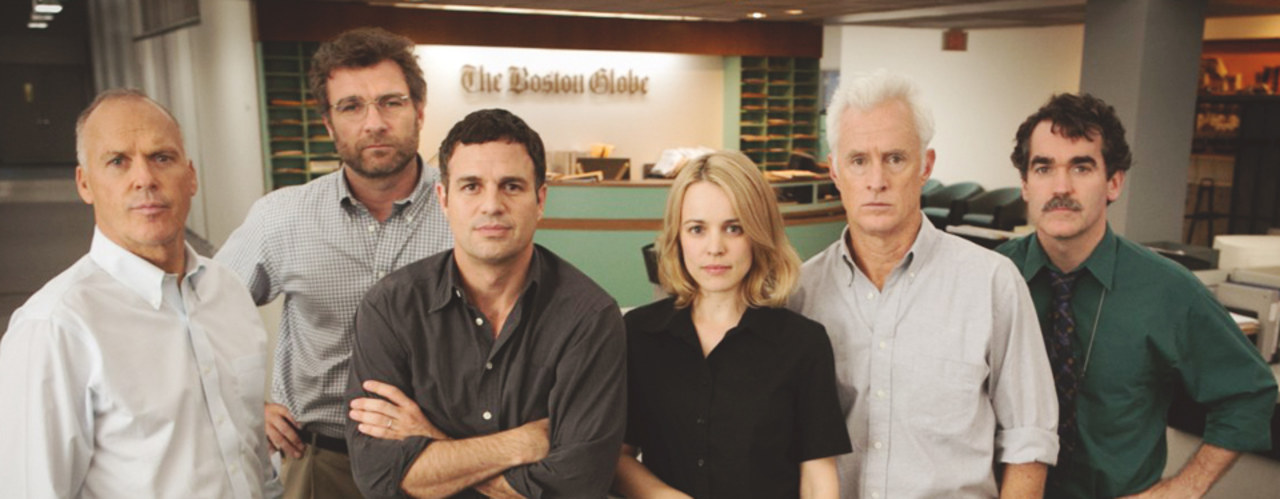
Tom McCarthy’s film, based on a script he co-wrote with Josh Singer, follows the four person Spotlight investigative reporting team of the Boston Globe as they discover a massive cover up by the Catholic Church to hide Boston area priests who used their position to sexually assault children.
Their work, done over the course of months-long investigation in 2001-02, culminated in a Pulitzer Prize award for the Globe team as well as massive legal settlements for the hundreds of abuse victims across the Boston archdiocese and thousands of victims nationwide.
While the film follows real life events, “Spotlight” focuses on the reporters building the story, rather than the acts of the priests themselves in much the same way that the iconic journalism film “All The President’s Men” followed Woodward and Bernstein and not the Nixon administration’s downfall following the Watergate break-in.
“Spotlight” is a love letter to journalism in its truest form, when hard-working, well intentioned reporters set out to cover important stories that aren’t easy to tell. McCarthy’s film follows the team’s investigation from the fringes inward, unpeeling layers of the scandal like an onion in a way that hasn’t been done since “All The President’s Men.”
Probably the biggest achievement for McCarthy as co-writer and director is how “Spotlight” takes a relatively mundane, dialogue-heavy plot structure and molds it into engaging, vibrant cinema. Few other films could have made searching through thousands upon thousands of church and legal documents as intriguing as “Spotlight” does.
With as dialogue heavy of a film as “Spotlight” is, its success lives and dies by its ensemble cast, led by the four person Spotlight team which features Academy Award nominees Mark Ruffalo and Michael Keaton as well as one of Hollywood’s best young actresses in Rachel McAdams.
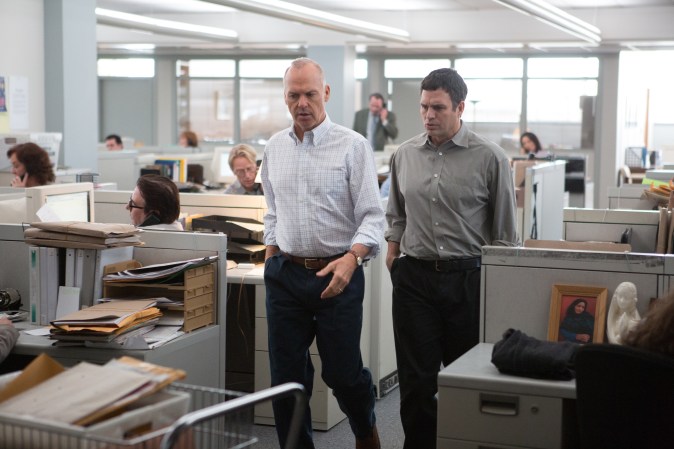
Ruffalo plays the dogged veteran reporter struggling with the moral and religious implications of his team’s investigations with ease, bringing the most complexity to his character out of any of the film’s 10 major performances. His scenes interviewing Stanley Tucci’s Mitch Garabedian are some of the best segments in the entire film and serve as a reminder to younger audiences that Ruffalo has some serious acting chops when he’s not trampling around as the Incredible Hulk in the “Avengers” movies.
His performance, along with Keaton’s as team leader ‘Robby’ Robinson, should earn him a well deserved Academy Award nomination alongside Matt Damon of “The Martian” and Leonardo DiCaprio of “The Revenant” in the lead actor category, though many have campaigned for all the “Spotlight” cast members in supporting categories arguing that the film doesn’t have a true lead.
Keaton should be a shoo-in as well in the supporting actor race, which boasts an increasingly crowded field along with Mark Rylance of “Bridge of Spies,” Sylvester Stallone of “Creed” and Idris Elba of “Beasts of No Nation.”
McAdams also fares well as the team’s lone female reporter, a position that doesn’t make her a lesser member but aides her as she is able to compassionately draw information from many of the film’s most prominent sources, the boys now men who were victims of assault by their priest.
All three lead reporters – Ruffalo, Keaton and McAdams – take turns serving as the film’s catalyst and it’s difficult to separate these performances from each other, which is why “Spotlight” should be a lock to win any best ensemble cast awards.
The secondary characters of “Spotlight” including Globe bigwigs played by Liev Schreiber and John Slattery and sources played by Jamey Sheridan and Stanley Tucci help round out the film’s stellar cast in a production where each scene is only valued by its weakest on screen performer. “Spotlight” has no weak links.
Aside from one climatic scene in the film’s later stages that will ultimately serve as Ruffalo’s highlight reel for Oscar voters, “Spotlight” opts for substance over style, meticulously driving forward scene by scene as viewers hop from one piece of the investigation to another as the Spotlight team uncovers it.
The film also serves as a love letter to Boston, with McCarthy taking painstaking care to ensure that each and every detail within “Spotlight” feels regionally centered around one of the nation’s most tight-knit cities.
Understanding Boston during the time of the investigation is a key element in the viewing experience, giving moviegoers added insight into the difficulties of pursuing a story in a town where silence and unquestioned loyalty are primary virtues.
In the same way, McCarthy’s film is perhaps the most authentic film about the inner workings of newspaper journalism in more than 20 years. Newsroom scenes were shot largely in the actual offices of the Boston Globe with actual Globe reporters in the background.
Everything about how reporters interacted, interviewed sources and collaborated feels real in a way most films about the profession haven’t been able to match. “Spotlight” joins a pantheon of elite newspaper journalism films alongside “Citizen Kane,” “Zodiac” and the quintessential “All The President’s Men.”
Not only is “Spotlight” one of the year’s top two or three movies, it’s perhaps one of the five most important films released in the past several years.
The film serves as a reminder to its viewers both of the need for quality, well researched journalism in a “give it to me now” news era and of the virtues of simple, yet effective movie-making.
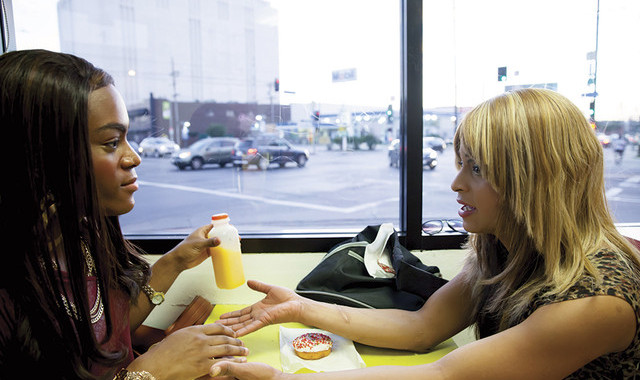
In an era of selfies, Snapchats and Instagram videos, it’s hard to fathom why more young filmmakers haven’t emerged from behind their smartphones.
Thousands upon thousands of smart, talented people from all walks of life are documenting their entire youth through bursts of short videos, but few have realized those clips into a fully formed, quality feature film.
Inspiration for this YouTube generation has arrived, though five minutes in, it’s hard to remember that this year’s best independent film was shot using three iPhone 5s smartphones and some Steadicam equipment.
Sundance breakout “Tangerine” takes a gritty and realistic look at the world of transgender sex workers in Los Angeles through the eyes of Sin-Dee, who just got released from prison in time for Christmas Eve, and Alexandra, her best friend. Once Alexandra tells Sin-Dee that her boyfriend/pimp is cheating on her, “Tangerine” takes viewers on a wild cross-town ride following Sin-Dee’s vendetta rampage.
Each element of the film – from the pitch perfect performances by a pair of first time actresses to the soundtrack to the script and the near flawless way it was shot – would be noteworthy on its own merits if it were the single highlight of an independent film, but the way director Sean S. Baker layers them together puts “Tangerine” in elite company as one of the 10 best films to be released so far in 2015.
Within minutes of the snappy, quick-hitting dramedy, it’s easy to forget that the film was shot using three iPhone 5s. All the colors are inflated, benefitting from the same stylistic choice of saturating the film that George Miller did with his visionary “Mad Max: Fury Road” earlier this year.
Each frame of the movie feels like a connected set of photographs taken for a slice of life collection ready for display in some high-end art gallery. Baker’s devotion to raw authenticity can be seen as much in the visual look of “Tangerine” as it can be felt in the performances of its leads, who keep “Tangerine” rising above its low-budget means.
As the antihero Sin-Dee, Kitana Kiki Rodriguez bulldozes through scenes like a wrecking ball, leaving emotional (and sometimes physical) carnage in her wake like an out of control hurricane. Had this role been played by a more famous actor – especially a male one – everything about the performance would have felt false, stereotypical and insensitive. Baker treads difficult waters in writing the part.
But Rodriguez hammers home such brutal honesty that even her most irrational decisions feel genuine and well-reasoned because of the bravado she brings to Sin-Dee. Like Abraham Attah in “Beasts of No Nation,” sometimes it’s hard to beat newness in an actor or actress, and with Rodriguez in her first feature film performance, “Tangerine” hits all the right notes.
Conversely, fellow newcomer Mya Taylor has to play best friend Alexandra with subtly and restraint relative to Sin-Dee’s emotional hurricane, though Taylor’s Alexandra shows her own aggression in scenes where she isn’t running around trying to calm the waters. It’s hard to appreciate Taylor’s work without it being overshadowed by Rodriguez’s tour de force, however.
While “Tangerine” will likely get lost in the awards shuffle amid more high-budget art pieces about the LGBT community like “Carol” and “The Danish Girl,” Baker’s $100,000, iPhone-shot film is by no means a gimmick movie. The raw emotion Taylor and Rodriguez are able to pull out of real life experiences can’t be duplicated by even the best straight actors playing a LGBT part.
The film is helped tremendously by its variety soundtrack, which ping pongs across the musical spectrum from classical to trance and everywhere in between, perfectly matching the sounds with the visual moments created on screen.
“Tangerine” is a story about relationships, love and pain told through the eyes of transgender sex workers in the same way that “The Fighter” with Mark Wahlberg and Christian Bale is about family and drug abuse told through the lens of a boxing film. In fact, “Tangerine” feels more like a less violent Quentin Tarantino film shot using smartphones or a heightened version of Franco’s “Spring Breakers” than anything else.
Brash and loud, one of the year’s best films – and an independent masterpiece – has received nearly universal acclaim and after a very limited theatrical run this summer, “Tangerine” can now be seen on Netflix or via other video on demand platforms.
“Tangerine” is vulgar and crass in ways you might expect a Seth Rogen-James Franco joint venture to be, though the film’s lewdness seems less for shock value than authenticity, stripping away the pretenses that other award contenders will ultimately cloud their movies around. “Tangerine” isn’t about the transition from one gender to another like “The Danish Girl” or TV’s “Transparent.” It’s about real transgender people living normal lives.
We appreciate films for their artistic honesty. It’s why movies like “The Theory of Everything” and “Boyhood” resonate with critics and viewers alike. At the end of the day, it’s about the story and how it’s told, not the cultural differences of its content. “Tangerine” is an honest story well told in spite of its independent background and low budget, and as a result, it’s a beautiful experience.
Seven years ago, Steven Spielberg attempted to pass the torch of cinematic icon Indiana Jones from Harrison Ford to Shia LeBeouf in the disastrous “Indiana Jones and the Kingdom of the Crystal Skull.”
What resulted was a shoddy, poorly conceived disaster that has kept the franchise grounded in a movie-making era where anything and everything has been remade or rebooted in pursuit of the almighty dollar. All too often, this spells a franchise’s death knell for years to come.
Similarly, Sylvester Stallone attempted to atone for the sins of the abhorrent “Rocky V” with the release of the mediocre “Rocky Balboa,” which limped a once iconic character to presumably the finish line in spite of the 1976 Oscar-winning original film “Rocky” in 1976.
Six films in, Rocky had no more punches left to throw.
Enter Ryan Coogler.
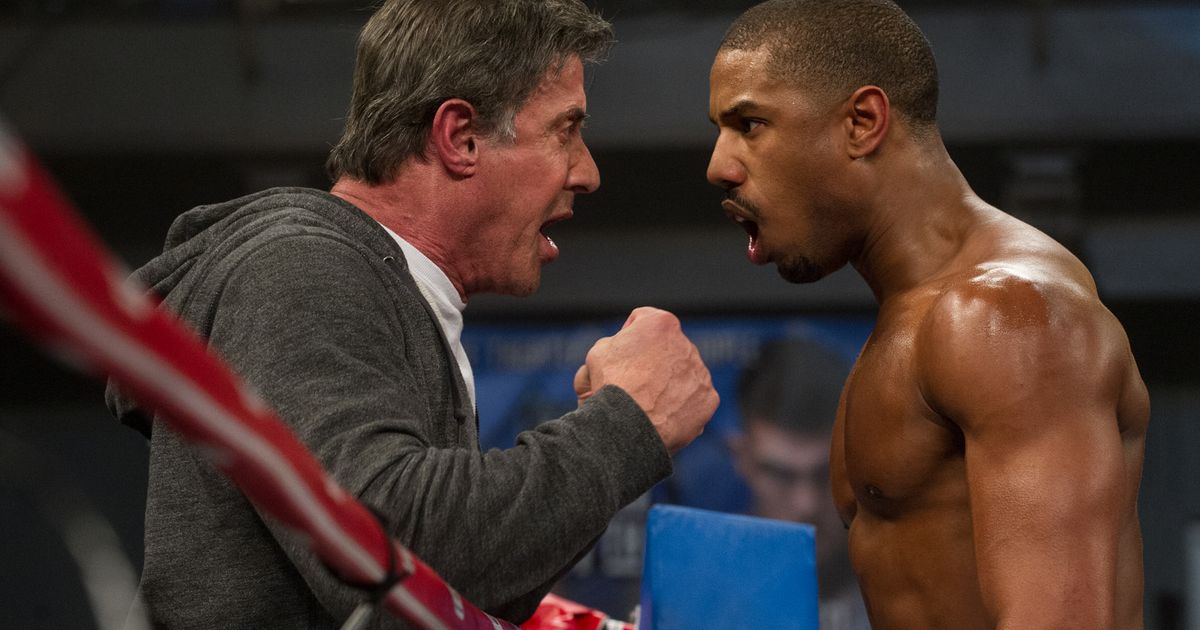
Coogler, writer-director of the critically acclaimed “Fruitvale Station,” formulated a compelling and dynamic way to continue the legacy of Rocky Balboa by having him serve as mentor to the illegitimate son of his friend and former rival, Apollo Creed.
“Creed,” which stars “Fruitvale Station” lead Michael B. Jordan as the up-and-coming boxer, packs a cinematic heavyweight punch as the newest entry in the Rocky series leaves the camp of III, IV and especially V behind, focusing on the interpersonal relationships of both Adonis and Rocky in deep, complex ways
that haven’t been felt since the original “Rocky.”
As the only actor to star in all seven films, it’s only fitting that the true success or failure of the film rests on the broad shoulders of Stallone, who ceded both writing and directorial credit for the first time with “Creed.” Stallone shows a vulnerability to Rocky that viewers haven’t seen in nearly two decades, and while the focus is clearly on the younger fighter, it’s Stallone’s character arc in the film that’s most compelling.
At age 69, Stallone is no spry chicken and has seldom flashed the acting chops that earned him acclaim in 1982’s “First Blood” as well as an Academy Award nomination for his performance in “Rocky.” However, his return to the role – which doesn’t seem like a final time with the success of “Creed” – is his best performance this century and is worthy of an Oscar nomination for Best Supporting Actor, though Idris Elba’s turn as a rebel warlord in “Beasts of No Nation” should be a lock for the award itself.
Jordan, an actor who seems to rise to the level of the script he’s given, more than handles his own as an upstart boxer struggling to make his own name while living in the shadows of his father, the iconic Apollo Creed. While most of the heaviest moments are reserved for Stallone’s Rocky to shine, Jordan is a willing and deserving mantle to place the future of the franchise on, especially with added emphasis on the stories outside the ring.
The only thing that doesn’t really ring true in “Creed,” unfortunately, are its female characters, who are either misused or underused within the script. Tessa Thompson, who plays Creed’s neighbor turned love interest, doesn’t really offer much of a compelling performance as a struggling artist and comes off as
rather brash and whiny. Her plot line feels pulled together rather abruptly in service of the main plot, which isn’t her fault, but doesn’t help.
On the other hand, Phylicia Rashad – best known as Clair Huxtable on “The Cosby Show” – makes the most out of a very limited role as Creed’s motherly figure. Every moment she is on screen, especially in a jail cell opposite a younger Adonis, is remarkably compelling and leaves viewers wanting more. The mother-son dynamic Rashad and Jordan have within “Creed” is something that could have been explored more thoroughly in place of the romantic subplot.
Inside the ring, “Creed” is dynamic and authentic, with Coogler going out of his way to engage viewers in the fights from each fighter’s perspective more than a usual boxing film. While both Balboa-Creed fights from the first two movies are certainly more iconic than the battles in “Creed,” the actual mechanics and visual storytelling within the final fight are the best of the series.
To this end, Coogler is helped significantly in the fact that all of the boxers Creed faces in the film were played by real life fighters, a problem the Rocky numeral films all shared. Heavyweight fighter Tony Bellew, though not a great actor in the film, is a terrific in-ring foil to Jordan and helps add another layer of authenticity to the movie’s final scenes.
Much of the film is well written by Coogler and co-writer Aaron Covington, who especially show a good grasp on the complexities of the Rocky Balboa character as established in the first few films before who Rocky is took a backseat to who Rocky was fighting. Viewers new to the franchise expecting more of a traditional sports film might be disappointed as “Creed” hits heavy on character based drama, signaling a return to what made “Rocky” so great in the first place.
What viewers should be taking away from “Creed,” however, is respect for Coogler, one of Hollywood’s top young directors, and a desire to watch his “Fruitvale Station” as well as the early Rocky films. “Creed” does for the Rocky franchise what “Casino Royale” did for James Bond and is a must see film in theaters.
The violence is finally over.
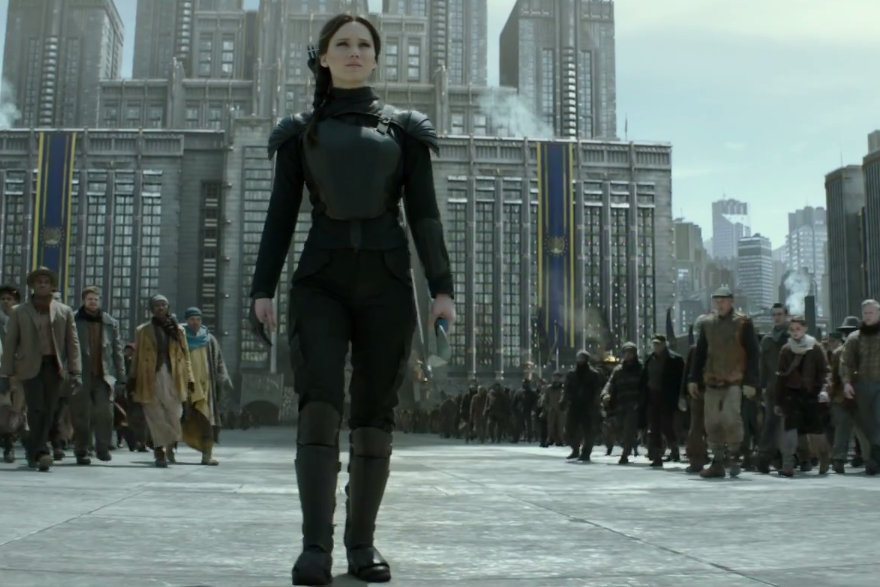
After four feature-length films about the ravages of state-sponsored murder and outright civil war, today’s premiere young adult movie franchise has come to a close with the release of “The Hunger Games: Mockingjay Part 2,” based on the latter half of the third novel in the series written by Suzanne Collins.
What makes this franchise stand apart from its young adult dystopian apocalypse franchise brethren – most notably the “Divergent” and “Maze Runner” empires – is the casting of then-unknown and now Academy Award winner Jennifer Lawrence in the leading role of Katniss Everdeen, a Joan of Arc-esque female warrior reluctantly forced into combat time and again for the survival of herself, her family and her people.
Lawrence brings a gravitas to the role that few other actresses her age could ever aspire to and is able to create a complex character in a genre typically lacking in depth. Even as the series wanes in its final sequels, it’s Lawrence who is able to keep an otherwise depressing and mind-numbingly dull fourth film watchable to the bitter end.
“Mockingjay Part 2” picks up a few days after the events at the conclusion to “Part 1,” by far the worst of the four films due to over exposition and a lack of quality action set pieces. “Part 2” suffers from many of these same flaws, but is redeemed by a terrifically haunting sequence in tunnels below the Capitol where Everdeen and her friends are raiding to kill the villainous President Snow. The monsters – called muttations – are on par with the quality of mindless attackers found in zombie prestige pieces like “I Am Legend” and to a lesser extent, “World War Z.”
Given how amazing both the original “Hunger Games” and its sequel “Catching Fire” were at balancing action and drama in compelling ways, both of the series’ “Mockingjay” entries significantly underwhelm as director Francis Lawrence remains so faithful to the source novel that it feels like both viewers and filmmakers were simply checking scenes off a list.
As a result, what should have been one of the year’s biggest action movies ultimately is nothing more than a film that ardent fans of the “Hunger Games” will need to see to find closure on the franchise, not pure enjoyment of the movie. By the end of “Mockingjay Part 2,” the entire viewing experience becomes an obligation, especially when the final action sequences concludes with more than 20 minutes left to go.
Aimed for pre-teen and teenage audiences, the fourth “Hunger Games” film is remarkably dark in tone throughout and raises many complex questions about the consequences of war, post traumatic stress and betrayal that parents might want to discuss with their children following the movie. There’s nothing in “Mockingjay Part 2” that will feel unfamiliar or new for readers of the source novel, however.
Probably the best thing about “Mockingjay Part 2” is that Lawrence – one of Hollywood’s premiere actresses – can finally get back to pursuing dramatic projects like “American Hustle” and the upcoming “Joy” that she was clearly meant to do.
Her immense talent feels largely wasted now in this final chapter of the “Hunger Games” saga, as it’s clear her heart’s not really in scenes opposite young heartthrobs Josh Hutcherson and Liam Hemsworth. Hemsworth especially feels stiff and uncomfortable opposite Lawrence, which limits the effectiveness of the love triangle director Francis Lawrence has been attempting to foster for the last three films.
The biggest disappointment about the film isn’t about what’s on the screen, but a scene left out due to tragic circumstances. “Mockingjay Part 2” marks the final film in the illustrious career of veteran character actor Philip Seymour Hoffman, who died midway during shooting.
As a result, moviegoers are left without getting to enjoy what likely would have been one of the franchise’s best moments, a farewell scene between Hoffman’s Plutarch Heavensbee and Lawrence’s Everdeen. Putting the franchise’s two best actors alone in a room and letting them work for five minutes is exactly what the conclusion of “Mockingjay” needed to tie the series up in a neat bow, but instead viewers are left with an awkward sequence where Woody Harrelson reads a letter from Hoffman’s character. It just doesn’t feel right.
There’s a lot of quality acting depth in the movie from Harrelson and Julianne Moore to “Game of Thrones” actress Natalie Dormer, but the best supporting work in the film comes from stalwart Donald Sutherland, who plays a menacing antagonist President Snow to great effect. Indeed, many of the best dialogue scenes in the entire franchise are the banter between Snow and Everdeen as they engage in verbal duels, perfectly counterbalancing each other.
Unfortunately, there’s not enough of these moments to elevate “Mockingjay Part 2” as a film.
When the dust finally settles on the “Hunger Games” franchise, it will be remembered for its quality first and second entries, led by fantastic performances from Lawrence and superb balance between action and exposition. “Mockingjay Part 2” prevents the franchise from going out with a bang instead of a sad wail, but does offer a fulfilling end to a quality movie series that need not be explored further.
A true staple of holiday entertainment, Charlie Brown and his gang of misfit elementary school students stormed the big screen last weekend after nearly a 40 year break from theaters.
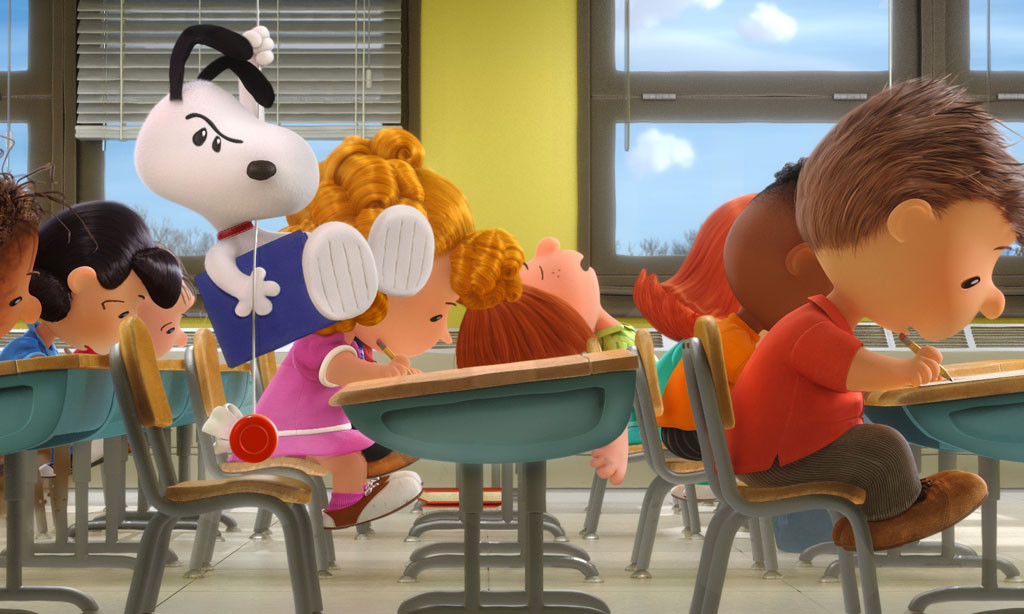
Created by “Ice Age” and “Rio” filmmakers Blue Sky Studios, “The Peanuts Movie” is by far the most visually impressive iteration of the classic comic strip penned by Charles Schulz, released on the 50th anniversary of the TV special “A Charlie Brown Christmas.”
Though “The Peanuts Movie” is an original tale which sees Charlie hide from and later try to impress the new red-headed girl in his class, everything about the film is honest and nostalgic to Peanuts lore, offering the best reboot of a classic family-friendly franchise in at least a decade.
Director Steve Martino – no doubt with help from comedy savant Paul Feig of “Bridesmaids” and “The Heat” – does a tremendous job blending the classic characters with modern animation advances and just a few of today’s biggest musical hits to delight both young moviegoers new to Charlie, Snoopy, Lucy, Linus and Woodstock as well as their parents, who will no doubt identify with the film while remembering “It’s The Great Pumpkin, Charlie Brown.”
The only true flaw of the film, which is incredibly minor given how well made “The Peanuts Movie” is, comes from its overuse of Snoopy’s daydreaming adventures as World War II-era fighter pilot The Flying Ace trying to save a female poodle from his archrival The Red Baron. While a true classic plotline within Peanuts lore, Martino goes to the Flying Ace well probably one more time than he should have, putting Snoopy on equal footing with Charlie Brown instead of just one half-step behind.
Admittedly, this becomes nothing more than nitpicking in an otherwise fantastic family-friendly feature worth making a trip to the theaters for this holiday season.
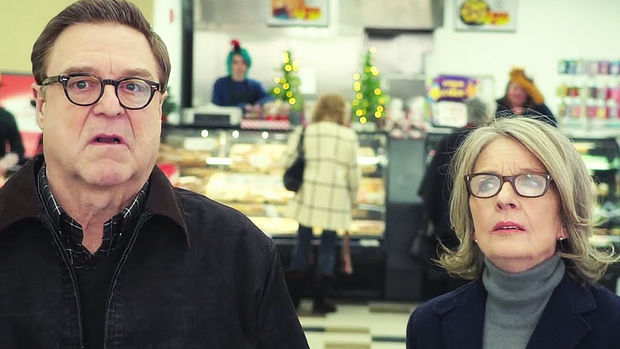
Thanksgiving is still more than a week away, but that hasn’t stopped Hollywood from looking ahead to Christmas as yet another home for the holidays film hit theaters Friday.
“Love, The Coopers” assembles a talented cast of all ages – from Alan Arkin to Diane Keaton and Marisa Tomei to Amanda Seyfried and Ed Helms – for a holiday themed family dramedy that finds a bevy of individually flawed stereotypes all seeking some form of love, acceptance and redemption.
The film follows the basic plot structure of the vastly superior “Love Actually,” which still feels fresh and cohesive more than a decade after its release in 2003.
Like “Love Actually,” “Valentine’s Day,” “He’s Just Not That Into You” and so many other ensemble-heavy films, “Love, The Coopers” tries to cram seven different interpersonal relationships as primary storylines in the film, all the while splashing in several gags involving a desperately hungry dog, a young girl who can’t stop cursing and an aging relative who forgets where she is.
All of these gags start off humorous and then quickly lose their luster as “Love, The Coopers” goes back to the well too many times to offset the dramatic tension in most of the film’s primary storylines.
The biggest flaw of “Love, The Coopers” is the poorly written screenplay from Steven Rogers, which acts as if conversations begin and end with sayings ripped out of greeting cards with sappy, over-the-top mantras that could be featured as segments on Dr. Phil.
Steve Martin offers the film’s best work as the never-seen, often-heard narrator responsible for guiding viewers through the convoluted train wreck of a plot.
It’s a shame that Martin doesn’t get to share screen time with Keaton, though John Goodman does yeoman’s work with a rather mundane character arc.
June Squibb of the critically acclaimed “Nebraska” plays a generally funny, but horribly underdeveloped caricature of the older family member slowly losing their mind in a way that feels more backwards than charming novelty.
Talented actor Anthony Mackie is completely squandered as a closeted cop whose arrest of a shoplifting Tomei turns into an off kilter therapy session from the back of a squad car. Both performers would have been better served if their characters had been left totally out of the film, freeing them up to do more useful work.
The remainder of the veteran cast all gets muddled together in a variety of cliché storylines that viewers will see coming a mile away. There’s no real freshness to any of these tired plot points, yet Olivia Wilde’s spunky rebel is a highlight among lowlights.
“Love, The Coopers” tries very hard to live up to films it emulates – “Love Actually” and “It’s Complicated” – but clunks its way through a plodding 107 minutes that feels much longer than it actually is. There will be plenty of opportunities to catch quality films this holiday season, with the final installment of “The Hunger Games” franchise coming this weekend. Seek out those opportunities as “Love, The Coopers” is a film that can be saved for a Netflix viewing next Christmas.
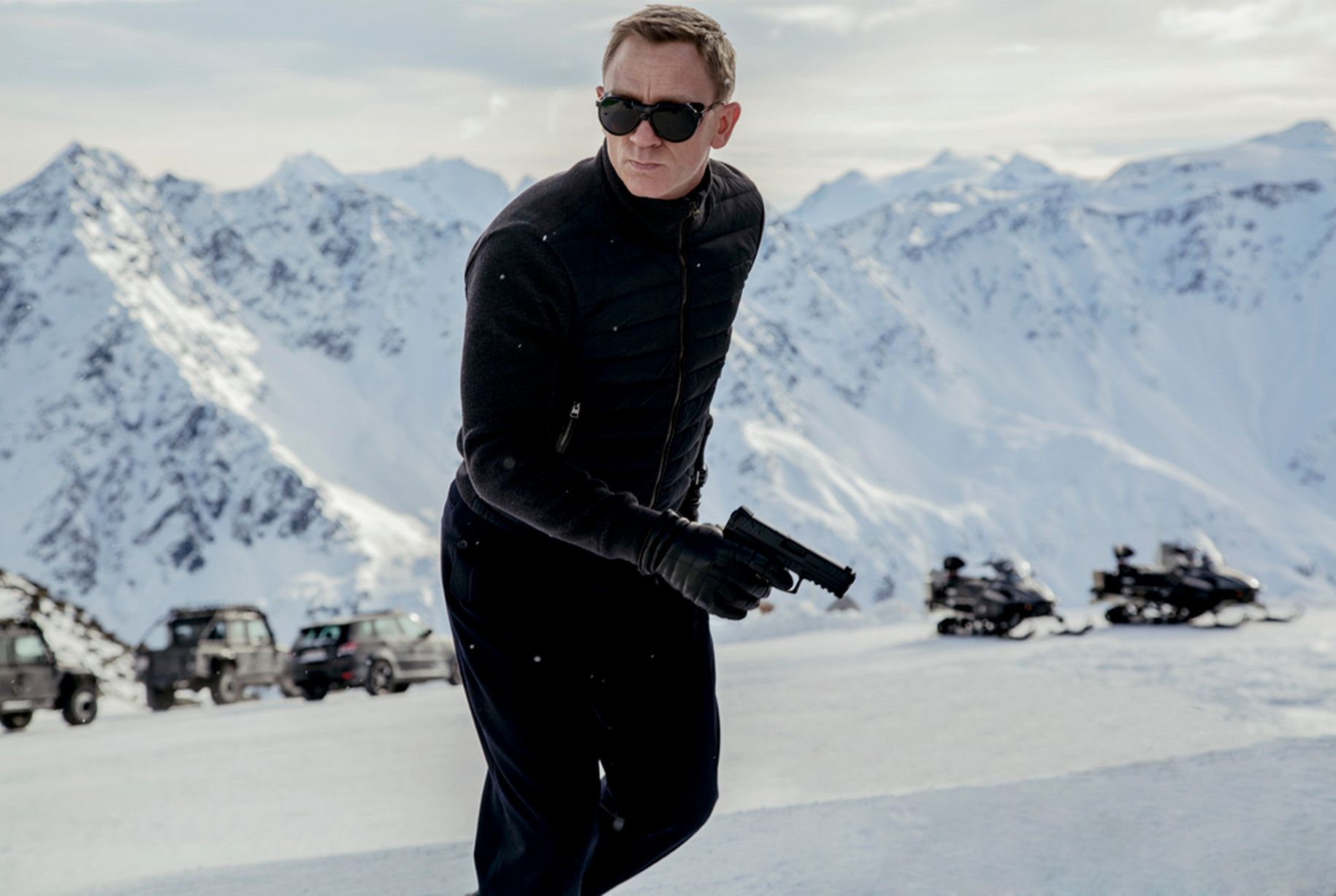
For all of the explosions, near death experiences and high speed car chases in the blockbuster smash hit “Spectre,” Daniel Craig’s fourth performance in the longest running film franchise in history is — at the end of the day – a love letter to James Bond.
There’s the iconic hand-to-hand combat scene on a train lifted from “From Russia With Love,” gadget-rigged luxury sports cars and picturesque secret bases stashed away in remote foreign locales.
Expert fans can probably find a reference or two from every single previous Bond film, right down to the skeleton suit Craig dons in tribute to the recently deceased Geoffrey Holder, who played the memorable villain Baron Samedi in Roger Moore’s Bond debut “Live and Let Die” in 1973.
“Spectre” marks the 24th original movie in the series made by Eon Productions, though a pair of films – 1967’s “Casino Royale” with Peter Sellers and 1983’s “Never Say Never Again” with original Bond Sean Connery – were also made outside of the official franchise.
More so than any other film in the franchise, “Spectre” treats longtime Bond fans to the most well rounded film in the series as director Sam Mendes is able to balance modern screenplay and cinematography with vintage Bond motifs in a largely compelling way. While his first Bond film, “Skyfall,” debuted to much acclaim in 2012, it lacked the panache and bravado inherent in the series, opting for more of an introspective character study than an action-adventure film.
“Spectre” turns up the heat from the outset, leading with a visually stunning opening action sequence during a Day of the Dead festival in Mexico City, where Bond faces off with a terrorist on the side of a helicopter mid-flight. Cinematographer Hoyte van Hoytema of “Interstellar” and “Tinker Tailor Soldier Spy” offers moviegoers a bold, yet gritty viewing experience, maintaining the tone of “Skyfall” while upping the ante.
Moviegoers brand new to the 007 franchise will likely struggle to keep up with all of the overt and obscure references made to previous Bond films in “Spectre,” which continues a four-film plot arc started in 2006’s “Casino Royale” and picks up several months following the end of 2012’s “Skyfall.”
There’s less spying going on in “Spectre” than an one-man vendetta for bloodshed, continuing a downward spiral for a cinematic icon that hasn’t been explored in detail since George Lazenby took on the role for “On Her Majesty’s Secret Service” in 1969.
James Bond, the character, is unquestionably different things to different people based simply on their favorite actor to take on the role, usually the one playing the part when they were younger.
While Connery’s Bond is still the most iconic version of the role – the debonair super spy who uses his charms and above average fighting skills to stay alive in service to Britain – the role has evolved significantly over time, with Craig’s Bond almost entirely dropping the word spy entirely. In fact, Craig’s iteration has become a cold, ruthless killer and is described as an assassin rather than spy at nearly every turn.
To this end, Craig is effective and captivating as Bond, further cementing his place as the best performer in the role since Connery, though no one will mistake his attempts at Moore-esque humor as noteworthy. In fact, the incredibly dry nature of the humor in “Spectre” largely falls flat, though Rory Kinnear’s second go-round as gadget maker Q does hit most of the marks in the film’s funniest moments.
As Mendes delves further into the psyche of Bond by reliving his childhood and his tumultuous relationships with women, “Blue is the Warmest Color” actress Lea Seydoux faces the unenviable task of trying to match Bond toe to toe on an intellectual and physical level, but can’t keep up. This makes their obvious romantic connections fall flat as Seydoux isn’t able to convincingly challenge Bond like Eva Green in “Casino Royale” or Diana Rigg in “On Her Majesty’s Secret Service,” of which “Spectre” takes most of its inspiration.
Great Bond films can be defined as much by the quality of their villains as the quality of their Bonds and “Spectre” swings for the fences with Christoph Waltz, an actor whose body of work has felt like resume-building for his role as Franz Oberhauser in this 24th adventure of 007. Waltz comes out with the exact gusto required of a classic Bond villain, but is cut off at the knees by the screenplay, which limits his potential impact.
If the writers of “Spectre” had given Oberhauser a monumental speech like Javier Bardem got with his rat monologue midway through “Skyfall,” viewers would probably be viewing Waltz’s performance much differently.
The choice to include “Sherlock” villain Andrew Scott In “Spectre” was an inspired one, though the script reduces his character to a character limiting, one-note viewpoint that wastes Scott’s incredible talents. Ironically, the best supporting performance in “Spectre” is given by the nearly-mute Dave Bautista, a former professional wrestler who evokes classic Bond villains Oddjob and Jaws while providing a terrific physical counterbalance to Bond.
Where “Spectre” really falters, however, is in its normally iconic title sequence – which usually features scantily clad women and shadowed figures in an entrancing scene choreographed to the film’s theme song. Everything about the title sequence in “Spectre” is in a word, wrong.
Sam Smith’s whiny, desperate song “Writing’s on the Wall” is a huge disappointment vocally in spite of it actually being good music lyrically. Smith’s frantic wailings combined with the subpar title sequence make for a largely disengaging moment in the film that viewers will likely be fast-forwarding through when “Spectre” comes out on Bluray and DVD.
The most important thing for moviegoers to remember about “Spectre” heading into the film is that it isn’t “Skyfall 2.0” and wasn’t meant to be. “Skyfall” had a definitive and finite plot structure that came to a firmly resolved conclusion, making it necessary for Mendes to explore a completely different part of Bond. Viewing “Spectre” as simply the follow-up to “Skyfall” isn’t the right mentality to have and will largely leave moviegoers thinking that way disappointed.
If Twitter, Facebook and scores of film critics abounded in 1965, Connery’s now-classic “Thunderball” would have been raked over the coals for not living up to the expectations of the film that preceded it: “Goldfinger,” still one of the three or four best Bond films in the franchise five decades later.
“Spectre” isn’t the best Daniel Craig film in the Bond franchise, but it still ranks as one of the series’ most complete and creative installments and is worth making the effort to seek out in theaters.
Netflix is changing the entertainment business. Again.
After revolutionizing how we consume home video with their DVD mailing and online streaming services, the Internet mega-power broke barriers with their original television content, winning Emmys for “House of Cards” and “Orange is the New Black.” This massive change allowed viewers to binge watch an entire season within days of watching the season premiere while never having to stop for a commercial break.
Netflix is back again with another groundbreaking endeavor, seeking to revolutionize feature films once again by producing their own full length feature films and releasing them simultaneously online and in theaters. While a major threat to the movie theater industry, such efforts could be game changing for audiences and for independent filmmakers trying to expand their reach.
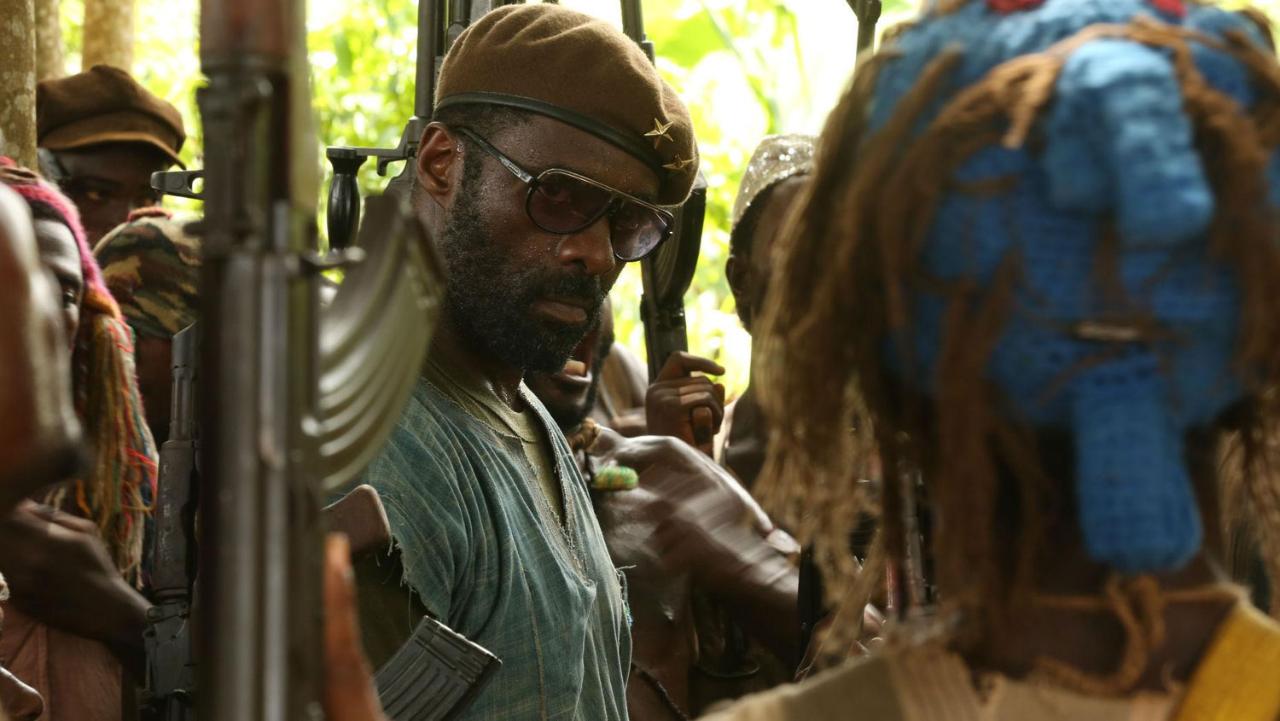
While Netflix has been successful in the past with documentaries “The Square” and “Virunga,” their biggest foray into feature filmmaking, “Beasts of No Nation,” is sure to leap right into the middle of Academy Award consideration in both the Best Picture and Best Supporting Actor categories.
Based on the 2005 novel of the same name by Uzodinma Iweala, “Beasts” follows a young West African boy, Agu, taken in by a charismatic warlord known simply as Commandant after his family is murdered by the government’s army amid civil war. Expertly made, the movie is a gripping, soul searching tailspin through one of the most devastating situations realistically imaginable. While fictional, every single second of “Beasts” is plausible and drags the viewer through an experience not to be missed.
Abraham Attah, a newcomer from Ghana, leaps into the hearts of audiences with his bold and soulful portrayal of Agu, a young boy forced into manhood under the worst possible circumstances. Attah plays Agu like an open book and with no apprehensions, providing an unique authenticity to “Beasts” that few other actors – experienced or otherwise – could have pulled off. While his journey onto the screen is most similar to Oscar nominee Barkhad Abdi of “Captain Phillips,” Attah’s effortless performance far surpasses Abdi’s and would be more deserving of acclaim in the Best Actor race, though that field will inevitably be too crowded for Attah to break through.
Idris Elba mesmerizes as Commandant, dominating the screen both in his aggressive demeanor and impactful, charismatic soliloquies. Even those familiar with his work on “The Wire” or his turn as Nelson Mandela in “Mandela: Long Walk to Freedom” will find Elba nearly unrecognizable as he melts into the brutal soothsayer. The performance clearly establishes Elba as the frontrunner for Best Supporting Actor, though some voters will be turned off from the gruesome brutality “Beasts” displays.
Without a doubt, the authenticity of “Beasts of No Nation” is undeniable. Though almost every viewer has no clue what life in a war-ravaged, third world country is like, director Cary Fukunaga transports audiences into realities that few have ever experienced so vividly. “Beasts” is certainly not for the faint at heart as the heart pounding war drama has Agu being forced to hack a man to death with a machete, rape and other graphic violence during the final two thirds of the film. Not all audiences will be able to make it through these challenging scenes.
But Fukunaga balances the brutality in such a way that it’s hard not to be in awe of the beauty of his work at times on a shot by shot, scene by scene basis – especially in a gorgeous section of “Beasts” where Agu participates in a village raid while high on a herbal hallucinogen. Fukunaga overexposes and accentuates the reds to a brilliantly stunning degree, making the actual events of the scene somewhat more tolerable to bear.
The film is written, directed and shot by Fukunaga, best known for the 2011 adaptation of “Jane Eyre” and directing the first season of HBO’s “True Detective.” Bold and beautiful from the outset, “Beasts of No Nation” is made for the big screen with its bold and vivid colors, probably needing movie theater technology to fully enjoy its nuances, especially during night scenes.
However, the film stands up on smaller screens for those enjoying at home or on the go via Netflix. “Beasts” is too good a movie and far too accessible for the average audience to be avoided. Viewers of appropriate age need to make whatever effort is needed to seek out “Beasts,” and the Netflix connection will help boost viewership far beyond whatever it might have drawn in only a limited theatrical release.
When the film’s content becomes almost too much for the viewer to stand, that’s when Fukunaga takes over, with his unique and picturesque visual style compensating for the brutality of “Beasts” with beauty. This counter-play works splendidly from start to finish, entrancing audiences in a way that war has not been shown since “Saving Private Ryan.”
Definitely among one of the five best films released so far in 2015, “Beasts of No Nation” has to be a serious contender for major awards early next year and firmly plants the flag in the ground for Netflix as someone to be reckoned with in feature filmmaking going forward.
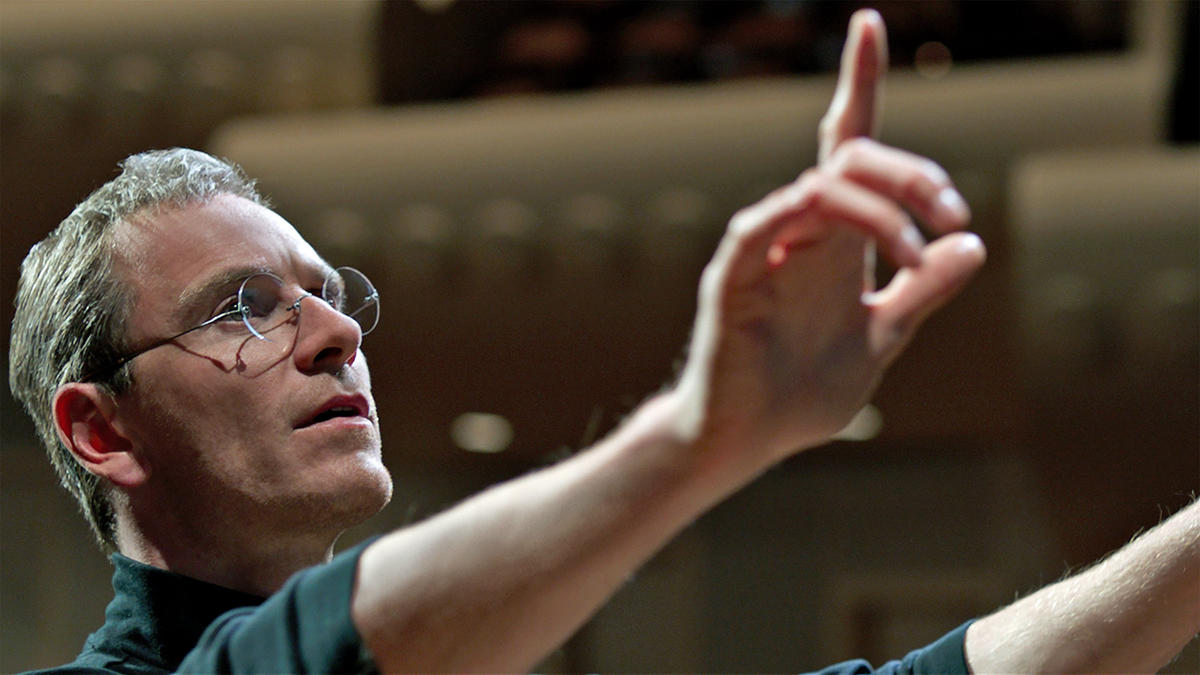
Steve Jobs was an innovator.
The man behind the iPod, iMac and one of the enduring beacons of the tech industry hasn’t been gone five years and Hollywood’s already on their second biopic about the enigmatic and fractured genius.
Two years ago, an independent feature with actor/model/Jobs-lookalike Ashton Kutcher as the Apple co-founder was released to little fanfare and critical derision despite a solid effort done in quick turnaround following Jobs’ death.
Recently, a much more ballyhooed film that focuses on key moments in his industrial years, “Steve Jobs,” arrived in theaters much to the delight of national critics and to the general shrugs of the general public.
Since the Kutcher version is — in essence — Intro to Jobs 101, this year’s effort is Jobs 401, designed to be a master class for those seeking to explore the complexities of a man that even his closest friends couldn’t completely relate to or understand.
It’s in this realm that screenwriter Aaron Sorkin, who spearheaded the film, and director Danny Boyle attempt to wade into previously tread waters with a movie that feels like what might have happened had Jobs made the biopic himself.
“Steve Jobs” is dazzlingly brilliant when it feels like it; painfully unaware of or brazenly antagonistic about how obtuse it becomes at times; visually appealing in an artistic sense and a film that leaves audiences scratching their heads wondering what the heck just happened.
Unlike Jobs the man, “Steve Jobs” the movie doesn’t really care much for how the general public will consume the film. Sorkin and, to a lesser extent, Boyle go out of their way to make “Steve Jobs” sardonic and un-relatable, making grandiose assumptions about how much people know about Jobs’ history heading into the film.
Sorkin — who was probably nominated for an Academy Award for this film when it was announced he would be penning the screenplay back in May 2012 — dominates “Steve Jobs” from the opening seconds until the closing credits without ever appearing once on screen.
His script utilizes the same three-act structure as Quentin Tarantino’s far superior “Inglourious Basterds,” highlighting three specific events in time and using each as a tent pole of the film, with product launches for the Macintosh in 1984, the NEXT Cube in 1988 and the iMac in 1999 as inciting incidents for “Steve Jobs.”
Sorkin’s screenplay comes off more like a theatrical play — and would probably be far better off as one — with Jobs lobbing verbal grenades back and forth with nearly everyone he comes into contact with on screen.
For as much as he is revered by the technology-minded masses, the Jobs character written on the page for talented character actor Michael Fassbender to play is neither hero nor anti-hero, but comes across largely as the endearing villain that audiences await to reform.
It should come as no surprise that the former Apple employees who consulted with Sorkin on the script — co-founder Steve Wozniak, former Apple CEO John Scully, tech expert Andy Hirtzfeld — come across as sympathetic.
Structurally, the film is geared as Jobs-centric, with scenes, characters and even the camera to a large extent circling Jobs like planets to the Sun. It’s an innovative way of storytelling that we’ve seen before with last year’s Best Picture winner “Birdman,” though Best Director winner Alejandro González Iñárritu pulls off the task much better than Boyle, who largely takes a backseat to Sorkin’s script and the actors’ performances.
Fassbender does yeoman’s work carrying the heavy burden of both being the iconic title character and bearing the weight of the film on his shoulders. But as Jobs believes in the film that he is the conductor and everyone else around him are the musicians playing the tunes, in the world of “Steve Jobs,” Sorkin is the conductor with Fassbender, Kate Winslet, Jeff Daniels and even director Boyle just strumming along to his tune.
Winslet and Daniels are solid in their performances as Apple marketing head Joanna Hoffman and Scully, respectively, though neither give Oscar-worthy efforts in spite of seemingly inevitable nominations.
The film’s biggest outlier — perpetual stoner actor Seth Rogen — is an oddball choice even for a film filled with eccentricities. Following the lead of his “Freaks and Geeks” brethren James Franco and Jonah Hill, Rogen delves into serious, heady drama with full gusto, but at no point in time does Rogen melt away into the world of Wozniak long enough to make viewer forget the guy from “Knocked Up” is on screen. Hill’s recent successes in “Moneyball” and “The Wolf of Wall Street” help give insight as to why Sorkin and Boyle chose Rogen for the role, but they would have been much better off casting Hill himself instead.
Katherine Waterston — daughter of “Law and Order” actor Sam Waterston — gives the film’s best performance as Chrisann Brennan, Jobs’ ex-lover and mother to Lisa, whom Jobs denied is his child.
In a film filled with big name actors playing much more compelling parts, Waterston shines as a woman struggling to make ends meet while the father of her child is one of the world’s richest men. She plays Chrisann with an undeniable vulnerability and draws the audience’s eyes to her despite Sorkin and Boyle’s insistence on a Jobs-centric film.
Waterston — along with Dakota Johnson’s limited, yet breathtaking work as ‘Whitey’ Bulger’s lover in “Black Mass” — helps cement the makings of a quality next generation of actresses focused on substance over style, continuing the path paved by Jennifer Lawrence in higher-profile films the last several years.
Seeking to be the iPhone of cinema, “Steve Jobs” is more like the NEXT Cube — innovatively designed without much underneath the surface. It’s also a film that insists upon itself, where viewers feel burdened to appreciate the film more because of its cast and subject matter.
“Steve Jobs” has the makings of a significantly better film than it actually is, though a nuanced screenplay and solid performances will likely make it an awards contender early next year.
While worth checking out, audiences shouldn’t be breaking down the doors or waiting in line for hours on end as if it were the iPhone-equivalent the filmmakers hoped “Steve Jobs” would be.
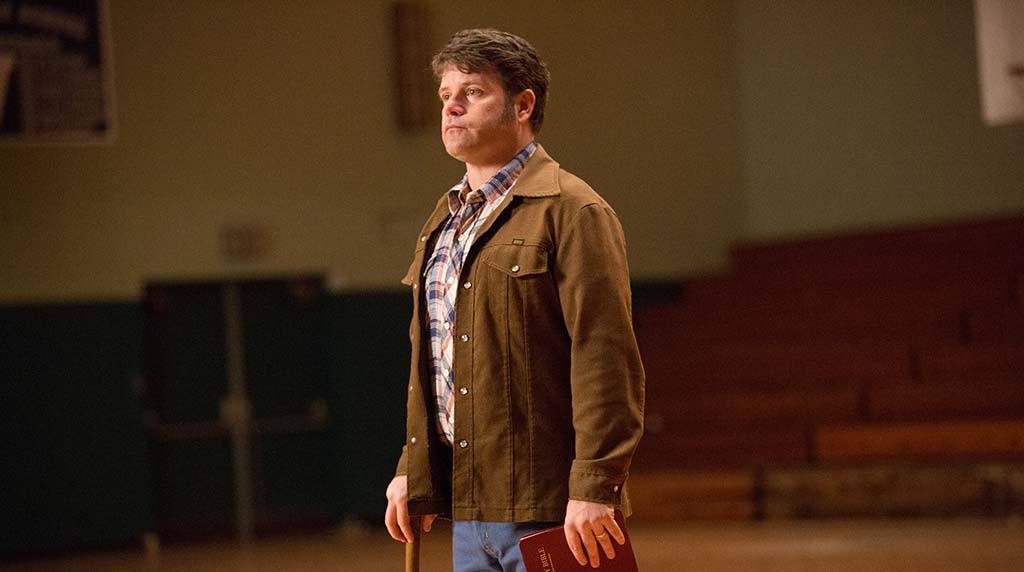
It’s been a long, uphill battle for Christian filmmakers.
Their films, no matter how religious the movie’s message might be, will get labeled with the politically correct “faith-based” genre tag, an almost instantaneous death knell to the financial profitability of the project.
Sure there have been some exceptions to the rule – “Passion of the Christ” and to a lesser extent “God’s Not Dead” and “Heaven Is For Real” – but on the whole, these “faith-based” films won’t ever receive the development or marketing budgets that a major blockbuster would, limiting the potential for commercial success.
Sports films have traveled that same road, albeit with greater success, but much of that can be attributed to more swings of the bat. For every “Rudy” there’s four or five “Million Dollar Arm”-esque flops.
Unwittingly, viewers’ expectations for films in faith-based and sports genres are lower than a similar quality film in another genre. No matter how much some viewers might try to deny them, these stigmas exist, floating around in the back of our minds as we watch films in these genres.
For faith-based films, the recent success of “War Room” – which significantly outperformed critical and commercial projections – may have marked a turning point in the genre.
The new release “Woodlawn” doubles down on religious and sports movie stigmas, pairing football and faith in a based-on-a-true-story feature from the Erwin Brothers, makers of “Moms’ Night Out.” Odds favored the film being a flop based on historical evidence.
But like the story it tells, “Woodlawn” overcomes the stereotypes. In spite of an independent-level budget, the Erwin Brothers offer viewers not only the highest quality “faith-based” film in recent memory, but one of the best sports movies not about boxing this decade.
The film follows Woodlawn High School – a predominantly white and recently integrated school in Birmingham, Alabama during the early 1970s – as its football team converts to Christianity and spreads a message of love and mutual respect on the football field and in the community to help heal one of the country’s most racially divided metropolitan areas.
It’s no coincidence that the Erwin brothers turned to Sean Astin, beloved by moviegoers as the relentless underdog Rudy Ruettiger in the iconic sports film “Rudy,” to play an evangelist who spreads God’s love to the Woodlawn team and helps both black and white players succeed on and off the football field.
In a cast of relative unknowns, it’s Astin’s steady hand and familiar face – along with an assist to the legendary Jon Voight as equally legendary Alabama football coach Paul “Bear” Bryant – that grounds the movie and helps maintain viewers’ interest in scenes where poor screenwriting and inexperienced acting cause “Woodlawn” to become a little shaky. Cable television actor Nic Bishop gives a solid performance as Woodlawn’s assistant principal and head football coach Gerelds as well.
The film’s breakout star, Caleb Castille, plays African American tailback Tony Nathan, a superstar in the making if he can ever get off the bench and onto the field. Castille, a former defensive back for the University of Alabama, portrays Nathan with a humble innocence and grace one would expect to see from a lead character in a “faith-based” film, though his performance has much more authenticity.
“Woodlawn” certainly made the most out of its production budget with one of the sharpest, most well thought out cinematic efforts in the faith-based genre. The film is clearly meant for the big screen, especially in its grandiose football sequences.
The film’s soundtrack is firmly engrained in the 1970s and rivals major studio efforts, led by The Doobie Brothers’ rendition of “Jesus is Just Alright,” “Spirit in the Sky” from Norman Greenbaum, Bob Dylan’s “Knocking on Heaven’s Door” and, of course, “Sweet Home Alabama” from Lynyrd Skynyrd.
The script, penned by Quinton Peeples and Jon Erwin, isn’t up to par with the rest of the film’s production, especially in scenes where one might expect high racial tension. Segregation – an incredibly divisive time in American history – is sadly treated with kid gloves beyond the point of where it needs to be. It’s true that the writers made the right call by opting not to include racial slurs in the film, but a film about how faith and love overcomes hate gets chopped off at the knees when the hate viewers observe on screen doesn’t come remotely close to what those who lived through the era remember.
In spite of its flaws, “Woodlawn” continues what may be a turning of the corner in the “faith-based film” genre following the success of “War Room,” and is an improvement on that more popular movie in nearly every respect.
Audiences wanting to see more faith-based films on the big screen will want to take advantage of this unique opportunity to not only support the genre in hopes of sending a message to film studios that moviegoers want more faith-based projects, but also to catch what may likely be one of the best films in the genre this decade.
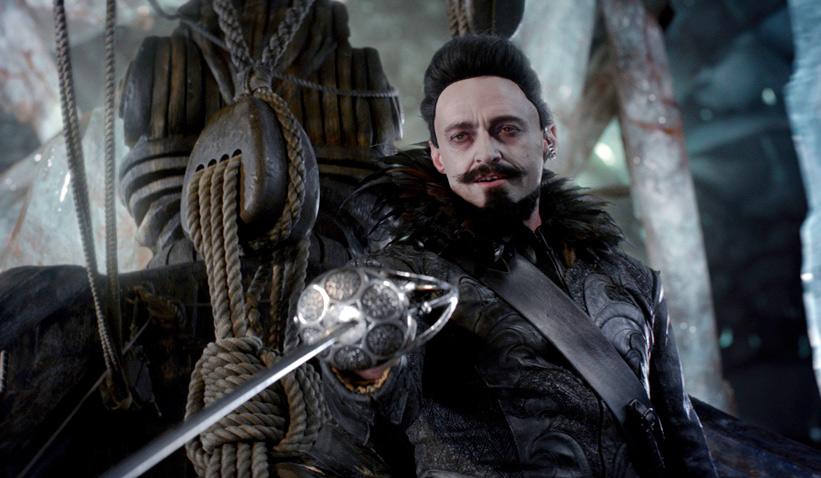
Hugh Jackman and a chorus of hundreds beckons the call: “Here we are now; entertain us!”
Over and over and over again in a melancholic work camp chant, they intone, pleading to be quenched in their thirst for violent justice, screaming Kurt Cobain-penned, 90s grunge rock lyrics.
The chaotic, post-apocalyptic scene feels like something straight out of George Miller’s epic fantasy “Mad Max: Fury Road,” but that would make just too much sense.
Instead, what viewers are left with in this very real scene is director Joe Wright’s earliest departure from convention and plot coherency in the atypical children’s film “Pan,” a prequel retelling of the familiar Peter Pan tale.
It’s scenes like this – and a subsequent attempt to cinematically murder young kids by forcing them off the plank into a pit while chanting “Blitzkrieg Bop” by the Ramones – that are the kind of irrational, obscure nonsense Wright peddles throughout the film that makes viewers wonder just what in the world they’ve gotten themselves into.
The whole affair – nearly two hours in length – is a children’s apocalyptic nightmare crafted by Wright, whose work is a directorial Frankenstein of Miller and “Alice in Wonderland”-era Tim Burton.
Dark and brooding at times when Wright wants to elevate the “steampunk” motifs of the film’s World War II era England settings, “Pan” shines bright visually once viewers transition to Neverland. Wright’s use of enhanced, over-brightened color palettes is reminiscent of Miller’s “Fury Road” as well as Wright’s fantastic 2010 action-thriller “Hanna,” just without the dynamic plot or performances that make those two films stand out.
Despite secondary lead status in terms of screen time, Jackman dominates the frame both in star power and charisma. Like Angelina Jolie in “Maleficent,” his villainous pirate captain Blackbeard is the reason to show up for “Pan” and he truly looks like he’s enjoying every minute of the experience. Glad someone is.
Newcomer Levi Miller is capable, though not very memorable as Peter, giving the type of performance you’d expect from an actor playing Pan as if a supporting role and not the titular main character of the film.
Media concerns about “white-washing” a Native American part aside, Rooney Mara gives exactly the type of off-kilter, quirky look that Wright had to have been going after as native princess Tiger Lily. Like all her performances, Mara commits fully to the role, though there’s not much within the rather generic script to work with.
The film’s other leading ladies – Amanda Seyfried as Peter’s long lost mother and Cara Delevigne of “Paper Towns” fame as a school of mermaids – aren’t given enough screen time or character development to be relevant to the film, no matter how many mute mermaids Delevigne awkwardly model-faces her way through on screen. Having five sea creatures with Delevigne’s face plastered on them doesn’t change the fact that none of them are worth watching for any length of time. Wright completely misses the mark here.
Traditionally the villain, Garrett Hedlund’s Captain Hook is friend, not foe, to Peter Pan, though it’s next to impossible to recognize Hedlund as Hook when he thinks he’s playing Indiana Jones. Generic khaki ensemble, dry wit and an aversion to dealing with children make Hedlund less a future pirate and more a Harrison Ford starter kit, except Hedlund lacks the charisma to pull it off. Everything about Hook’s character in “Pan” oozes of a sequel that will likely never get made and viewers are left hanging waiting for something worthwhile to happen. Spoiler alert: nothing ever does.
In another world where the film’s $150 million budget doesn’t feel like an anchor weighing the pirate adventure film down, Wright’s highly artistic auteur style might actually pay off. There’s several individual moments within “Pan” where viewers will say “That was really cool.” But Wright can’t seem to bridge the large gaps in time between these scenes and in the kids’ film genre, boredom equals doom.
Audiences are expected to irrationally embrace the absurd and surreal in ‘Pan’ without cause or justification. Better films have been made in this style – even Wright’s own ‘Hanna’ – but none of those are children’s films. The style simply doesn’t work in a genre where the attention spans of audiences wane so much.
Nothing overty offensive occurs in the film in either script or storytelling, but there’s not much there for children to enjoy either. There’s a much greater chance that younger audiences will leave bored rather than scarred. “Pan” ends up being a decently made film intended for kids, but made for adults.
All the warning signs are there. Ninety percent of audiences who weren’t born when Nirvana made “Smells Like Teen Spirit” the anthem for a new era of rock rebellion and have no idea who the Ramones are simply aren’t ready for the visual and cultural subtexts an auteur like Wright attempts to salvage his film by cramming into “Pan.”
At the end of the day, kids who catch the film are going to go home and cry out: “Here we are now; entertain us!”
“Pan” simply won’t do the trick.
 Cinematic Considerations