

Studios often bank on the fact that younger audiences don’t really care about what they’re watching, as long as it’s entertaining in the moment.
That’s probably a large part of the reason why Universal has crafted five films around yellow henchmen that ramble in an incoherent blend of languages indecipherable beyond an occasional word or generic phrase that helps kids figure out what’s happening.
A sequel to the spinoff of the Despicable Me franchise, the villainous Gru and his team of seemingly endless assistants returns for the first time since 2015 with Minions: The Rise of Gru, the summer’s biggest family-friendly animated feature released just in time for the Fourth of July weekend.
Set in 1970s America, this Minions sequel finds the dopey, yet lovable henchmen early in their service to Gru, needing to rescue their pre-teen leader from more experienced villains seeking an ancient Asian relic that would grant the wearer unlimited dragon power.
As with most of these non-sensical animated films, the plot – especially with the relic’s Macguffin nature – isn’t really important and just sets up increasingly ridiculous scenarios for lead henchmen Kevin, Stuart and Bob to overcome alongside Otto, a newer Minion who loses the relic needed to save Gru.
Pierre Coffin, who directed and co-directed the first four installments of the Despicable Me franchise, returns as the solo voice for all the Minions and his vibrant, eccentric tones perfectly synch up with the comedic moments and help differentiate the various Minions’ personalities vocally.
The film is at its most entertaining when Coffin is essentially talking to himself as Kevin, Stuart and Bob are all alone in an unfamiliar world and the theatricality in Coffin’s cadence and tone helps bring the bright colors alive beyond simple animation techniques.
Steve Carell returns as Gru and while his characterization remains consistent throughout the entirety of the Despicable Me series, there isn’t as much for Carell to do and almost no heart or character development from which Carell can emote like he does in the 2010 original film.
Likewise, the majority of new cast members playing the movie’s antagonists in the “Vicious 6” are nearly unrecognizable vocally even though most are leaning into type like Jean-Claude Van Damme’s lobster-claw toting baddie Jean-Clawed or Dolph Lundgren’s evil skater Svengeance. Almost all the secondary characters are so interchangeable that it doesn’t really matter who voices them.
The primary exceptions are Alan Arkin, who does a solid job being both vengeful and mentor figure to Gru as the original villain Wild Knuckles, and Michelle Yeoh, who comes out of nowhere to steal scenes as a massage therapist and Kung Fu master that trains Kevin, Stuart and Bob in martial arts.
For the most part, this sequel leans on solid animation techniques to maintain the visual style of the Despicable Me franchise and pushes bright color schemes to keep younger children engaged while a bevy of 70s music and other references to the era fly over their heads.
It’s also likely that Minions: The Rise of Gru will be a strong contender for animated awards later this year, although it’s less certain if it will be the second film in the franchise to earn an Oscar nomination after 2013’s Despicable Me 2.
Probably the most forgettable film in the series thus far, Minions: The Rise of Gru still has enough working in its favor to be a mildly entertaining 88-minute ride for younger audiences that shouldn’t offend adults taking their kids out to a summer film.

When a film is titled after one of its characters, 99 times out of 100, that movie is almost entirely about that person. (Save for Private Ryan, of course.)
This is even more true when it comes to biopics, especially when the titular character happens to be one of the most iconic musicians of all time, the King of Rock and Roll himself.
But writer/director Baz Luhrmann’s epic, nearly three-hour depiction of Elvis Presley, simply titled Elvis, is only half about the musical legend. There’s a character hiding in the shadows behind the pomp and circumstance that Luhrmann forces into center stage, often pushing Presley to the side for his own redemption and glory.
Much of the rise and fall of Presley is told from the perspective – and often through languishing narration – by his carnival barker-esque manager Colonel Tom Parker to the point where Luhrmann’s overall message about exploitation for profit gets muddled.
It feels unfair to begin a discussion of an Elvis Presley biopic by talking about something other than the man himself because of his irreversible impact on generations of popular culture, music, and American history, but it’s exactly the position Luhrmann wants to take with his film.
Elvis isn’t about Elvis.
At least not entirely.
Oscar winner Tom Hanks turns in his most baffling performance in years as Parker, waffling through a waning, vaguely European accent that feels more like caricature than imitation. Hanks wades frequently into the waters of the conman grifter, then uses his natural charisma to try and charm audiences back in as Parker continues to pull the wool over Presley’s eyes.
It’s a very broad, showy performance that’s audacious and self-congratulatory in a film where audiences are looking for the focus to be elsewhere.
And this isn’t to say that Luhrmann is pushing Hanks to the forefront because the up-and-coming actor playing Presley isn’t worthy of the spotlight. The complete opposite is true.
If Elvis is worthy of consideration for awards in any respect, Austin Butler’s magnetic, almost hypnotic transformation into the man who would become King of Rock and Roll certainly deserves all the praise he will likely get for the next six months.
It isn’t just that Butler sounds like Presley to the point where viewers with their eyes closes couldn’t tell the difference between the real thing and the copy. It’s also not just because expert craftspeople in the makeup and costume departments take a young actor who looks like Presley and perfectly accentuate his look to maximize the effect.
Butler’s physicality, relentless energy, and emotional core transport audiences into everything that is and was Elvis Presley. Concert sequences evolve along with Presley’s musical style because Butler can slowly, then more brazenly contort his body and gyrate to make viewers young and old swoon.
It’s also the way Butler’s able to lift the entire film by connecting with Presley’s heart in such a way that the more tender, emotional moments feel genuine and contrast the bombastic nature of the swirling film around it.
Never one to shy away from audacious cinematography or excessive editing, Luhrmann keeps Elvis at a rigorous pace that has audiences on their toes for much of the run time and it’s only in the final act that the 159-minute feature burdens viewers with the weight of it all. There’s so much going on that often overshadows the brilliant work that Butler is doing in the title role that keeps Luhrmann’s film from being great, or at times even watchable.
But there are other moments, often in concert sequences or the terrific filming of Presley’s 1968 television special meant to be a Christmas ad concert for Singer sewing machines, where Elvis really shines and has Presley’s signature larger than life attitude.
The bloated runtime, excess focus on Parker and the uneven tone of Luhrmann’s extravagance makes Elvis cumbersome to engage with as an audience and this isn’t even to speak of the film’s option not to address Presley’s political and societal implications outside of entertainment.
For ardent Presley fans and those who love Luhrmann’s more avantgarde filmography like Moulin Rouge and The Great Gatsby, Elvis might be worth taking a chance on in theaters. More casual audiences should probably wait until it hits at home rental or streaming services to break the film up into smaller, more manageable chunks.
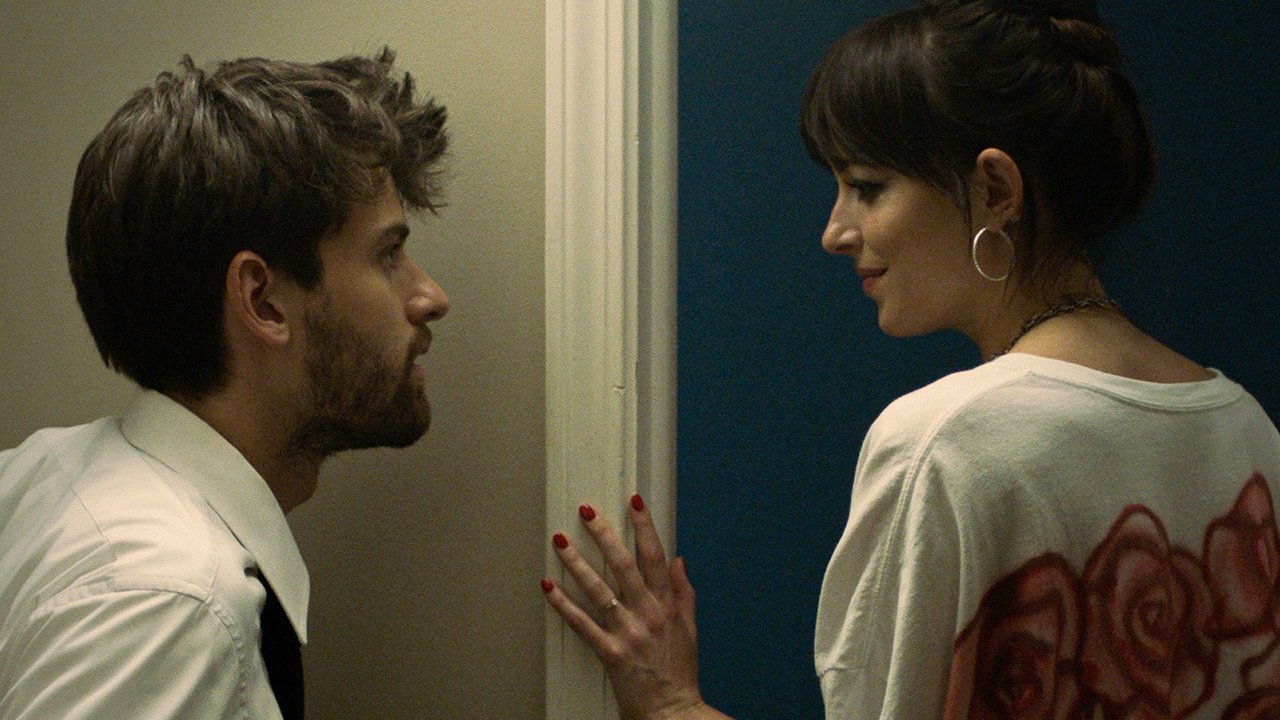
The best movie characters, ones audiences take to and see themselves in, aren’t always idyllic.
Filmmakers find genuine beauty in flaws and imperfections in their personalities and psyches that allows viewers to naturally respond and become more fully transported into another world.
Cooper Raiff’s second feature film – an audience award winner earlier this year at the Sundance Film Festival – screened this past week at the Tribeca Festival before debuting in select theaters and Apple TV+ on Friday.
The Dallas native wrote, directed and stars in Cha Cha Real Smooth, featuring Raiff as Andrew, a down on his luck recent college graduate working as a Bar Mitzvah party host who befriends an isolated mother and her autistic daughter. It’s a film with boundless heart, flawed characters who don’t always do the right thing and an unflinching, un-fakeable authenticity.
Cha Cha Real Smooth feels more genuine and honest about personal flaws than any coming-of-age dramedy since 2017’s Lady Bird and there’s a sentimentality to Raiff’s screenplay and direction that seeps into every crevasse of the film to tug at viewers’ heartstrings at the perfect moments.
Raiff portrays Andrew with an unbridled passion for life that he just can’t seem to control. His work shows Andrew as a man who wants to be great but has no idea who he is or wants to be come and there’s a frantic energy to every interaction Andrew has in Cha Cha Real Smooth that reflects Andrew’s longing for a real life to start.
There’s a distinct feeling viewers get watching the film that Andrew (as well as Raiff as a filmmaker) cares so deeply about almost every character that he will do whatever it takes to make others as happy as he wants to be himself. The sentimentality of that notion shines through in Raiff’s performance and drives much of Andrew’s motivations.
Raiff’s work is perfectly counterbalanced in the film by Dakota Johnson’s more free-spirited, yet melancholic turn as Domino, a young mother of an autistic teen whose life hasn’t gone the way she probably wanted. The duo creates a chemistry between Andrew and Domino that has a magnetic push and pull of emotional infatuation rather than true romantic connection.
Both Andrew and Domino make decisions in the film that audiences may cringe at, but Cha Cha Real Smooth approaches it through Raiff’s screenplay in such a way that there aren’t really any judgments, rather an appreciation for the complexity of real life.
Every performance in Smooth has to work perfectly for Raiff’s script to shine as much as it does and the acting across the board is nothing short of pitch perfect.
The film’s young actors should be stealing the show, but Raiff and Johnson have a distinct and palpable energy to their chemistry that takes Smooth to another stratosphere.
Newcomer Vanessa Burghardt is heart-melting as Domino’s daughter, Lola, and there’s a winning charm to her interactions with Andrew as she warms up to his presence in her life that the entire movie could have been built around.
Evan Assante’s bond with Raiff as Andrew’s tween brother David and the instantaneous love felt for Andrew’s relationship with Leslie Mann’s turn as his mother allows audiences to warm up to Andrew in a more well-rounded way, showing his inherent sweetness on a familial level as much as an idyllic romantic level.
As a director, Raiff gives his film a very distinct vibe by often turning up the color contrast to deepen the shadows and highlight the bright colors, which especially work wonders during night scenes and the frequent party sequences of the film. It’s as if the visuals match the frantic energy racing through Andrew’s head.
Cha Cha Real Smooth deserves to be a major awards contender later this year, especially Raiff’s wholly original screenplay and Johnson’s magnetic supporting performance. The one downfall, however, may be Apple’s focus on the much more star-studded upcoming Martin Scorsese film Killers of the Flower Moon that may pull voters’ eyeballs away from a smaller, more intimate movie.
Raiff’s second feature film will be a crowd favorite worth heading to theaters to revel in the humor and emotion with others, though its ease of access on Apple TV+ helps ensure Cha Cha Real Smooth becomes an instant hit with an even larger audience than a normal independent dramedy might.

Adam Sandler’s prolific career on Saturday Night Live and a plethora of mid-1990s comedies haven’t kept the funnyman from large swings and misses during the past seven years as his Happy Madison Productions has partnered exclusively with streaming service Netflix to create content.
The laughs haven’t quite landed for the comedian in quite some time, though Sandler has proven to be exceptional playing against type in more dramatic roles with films like 2017’s The Meyerowitz Stories and 2019’s Uncut Gems.
Hopefully, Sandler may have found the formula to success with his production company, leaning more dramatic than comedic with his latest Netflix partnership, the sports dramedy Hustle, which finds Sandler portraying a basketball scout traveling the world to find the missing piece of a championship team for the Philadelphia 76ers.
Director Jeremiah Zagar’s film works with a more subdued Sandler perfectly matched opposite real NBA player Juancho Hernangòmez of the Denver Nuggets, who plays a diamond-in-the-rough prospect from Spanish mean streets that Sandler’s Stanley Sugarman must bring to the U.S. and convince teams that Bo has what it takes to be a star.
Sandler leans into the everyman, blue-collar personality of Stanley that’s quiet when he needs to be and demonstrative when he has to be. The character doesn’t truly come alive until he meets Bo, and audiences can clearly see the light come on in Stanley’s eyes when he realizes just how special Bo is as both a player and a person.
The drive that Sandler showcases in these training scenes with Bo is highly reminiscent of another classic Philly sports movie, Rocky, with Sandler perfectly becoming the Mickey-like father figure to Bo’s Rocky. Hustle leans into this connection strongly, especially in the extended montages and sequences where Bo has to run up a hill faster and faster each day to demonstrate his work ethic and emerging talent, much in the same way as the iconic steps sequence in the Oscar-winning boxing film.
For a first-time actor, Hernangòmez is ideally cast as Bo and while it’s clear that he has the basketball chops to nail the role, what sets him apart from other athletes-turned-actors is the effortlessness he can pull off the emotional moments of the film. It’s rare for someone with as little experiences as Hernangòmez must genuinely develop chemistry with other actors and have a naturalness to his performance that will make audiences forget who they’re watching and live in the world of the film.
This is also true to a lesser extent for other basketball players playing roles instead of themselves. Minnesota Timberwolves star Anthony Edwards does a terrific job playing the trash-talking antagonist Kermit Wilt-Washington and former Houston Rockets guard and TNT analyst Kenny Smith is a natural as Stanley’s ex-teammate and player agent Leon Rich.
Hustle is also accented nicely with veteran character actors filling key supporting roles with Robert Duvall making a terrific extended cameo as the team’s owner, Ben Foster as his son and a primary antagonist for Stanley, and Queen Latifah as Stanley’s mostly supportive wife.
Zagar does a great job of making Hustle feel more cinematic than the average sports dramedy, cutting the frame to a more widescreen 1x85x1 to elongate the visuals horizontally. This works especially well in the basketball segments to help viewers feel the width and length Bo has as a tall, dominant player as well as the overall chaotic movement street hoops can achieve as audiences watch all the players simultaneously.
Combined with a mood-driven score and heavy contrast on colors, there’s an inherent gritty quality to Hustle that helps establish the credibility of the film overall.
Hustle is exactly the sort of mid-budget sports dramedy that should have been played theatrically, but Netflix also gives the film a much wider potential audiences immediately and Zagar’s film puts Sandler in the right position to make a movie that viewers should go out of their way to check out.

Nearly 30 years ago, director Amy Heckering transported audiences into the world of Jane Austen’s classic novel Emma through the lens of 1990s Beverly Hills high school with Clueless.
The bright, quirky satire provided a clever twist on what might be viewed as stuffy literature and made Austen more accessible for younger audiences.
Comedian Joel Kim Booster found inspiration in another Austen classic, Pride and Prejudice, for his feature film debut Fire Island, writing the screenplay and starring as Noah, loosely based on the Elizabeth Bennett character from the original novel.
The Searchlight produced film from director Andrew Ahn debuted on Hulu this past weekend and follows a group of five late-20s/early-30s gay men as they travel to a resort outside New York City for a week filled with debauchery, hookups, and relaxation. Noah has vowed to remain celibate until he can find someone for his best friend Howie, while the larger group laments the fact that this may be their last trip to the island.
Booster is a solid lead actor with a performance that’s easily likable and allows audiences to relate to Noah’s plight, but there’s nothing exceptionally notable about his work apart from the terrific chemistry he has with Saturday Night Live standout Bowen Yang. Clearly, the film works best when these two actors are able to banter and feed off each other’s energy in a friendship that goes well beyond the movie itself.
Yang is the best thing about Fire Island, offering a complex, emotional turn as Noah’s best friend Howie. It’s a performance that immediately draws sympathy while maintaining a good humor and the way Yang can emote naturally without it feeling forced or fake is a welcome quality for SNL alums in their film work.
Veteran comedienne Margaret Cho grounds the craziness of events with a largely calming, yet funny presence as the group’s maternal figure who owns the house the boys all stay at every year.
The breakout star of Fire Island is former Fredericksburg Theater Company actor Zane Phillips, who makes his feature film debut as Dex, a somewhat sympathetic island attendee with secrets that make him both mysterious and controversial. Phillips plays the role with an inherent kindness that slowly melts away as Dex’s true character is revealed.
Ironically, his supporting performance is better than either of the intended love interests, Conrad Ricamora’s Will or James Scully’s Charlie, who lack the sort of effortless chemistry that Booster and Yang showcase as longtime friends.
There are some obscure jokes that will only make sense for those familiar with the Keira Knightley-led film adaptation of the novel or this film’s wayward start as a comedy series for now defunct streamer Quibi.
By in large, the jokes almost always land for a chuckle but rarely rise to the level of hearty belly laugh. This is mostly due to the even keel tone in both Booster’s script and Ahn’s direction that maintains a lighter tone during more serious moments but limits the ability to create large moments of gut-busting laughter required of a theatrically released comedy.
Fire Island is considerably more explicit, even by romantic comedy standards, than films like Clueless or even crude Judd Apatow-produced features like Superbad have been as the R-rated flick skips a theatrical release and heads straight to Hulu.
Ahn’s film is exceptionally sex positive and open about the number of casual encounters and hookups that occur on the island, being clear and direct to showcase homosexual relationships visually in the same way a director might focus on heterosexual lovemaking. This could easily dissuade more conservative viewers from enjoying the larger film, but for the most part, the sexuality is secondary to the larger story and Ahn never makes a performance out of sex for show, only to further the plot.
While the film may sail over the heads of some casual viewers or put off conservative audiences, Fire Island has a commitment to the notion of found family and genuine entertainment that other viewers might find worth taking a chance on thanks to its easy access as a Hulu original.

There’s a moment early in Tom Cruise’s first film in four years where his character must lay everything on the line and push himself beyond all the limits to save his team.
It’s a constant theme in the nearly 60-year-old actor’s latter career as Cruise constantly strives to top himself for the sake of blockbuster cinema, attempting to save theatrical releases by dangling from tall buildings, freefalling from heights unfathomable by anyone who isn’t a stuntman and literally flying fighter jets to show his face in the cockpit at Mach speeds.
Cruise’s endless bravado – a seemingly equal balance of boyish charisma and belief in his own invincibility – propels every choice he has made as an actor the past decade and a half, culminating in a death-defying Mission: Impossible franchise and now the resurgence of his 1980s classic Top Gun.
Director Joseph Kosinski reteams with Cruise for the first time since 2013’s “Oblivion” to modernize the aerial combat action drama, taking full advantage of cinematography advancements and Cruise’s obsession with creating unbelievable movie moments. Top Gun: Maverick puts Cruise back in the cockpit as Captain Pete “Maverick” Mitchell, a former ace pilot called back into active duty to train the next generation of combat aces for a practically incompletable mission.
As with every film he attaches himself to these days, Cruise carries the weight of the entire project on his back from start to finish as audiences play co-pilot to Maverick’s rebellious nature that makes him the world’s premier dogfighter and rubs most of those around him the wrong way.
It’s a role Cruise has played many variations on over the years, but this return to the character is more self-reflective and emotional than one might expect as viewers can feel the weight of unrealistic expectations Maverick places on himself in Cruise’s face. Although there isn’t as much character work done on the post-traumatic stress that Maverick clearly hasn’t totally worked through, it’s easily overlooked thanks to Cruise’s relentless energy and charisma.
The film’s ensemble cast does well to work around the gravitational pull that the last true movie star brings to Top Gun: Maverick and the next generation of pilots led by a very nuanced turn from Miles Teller as a pilot with ties to Maverick and Glen Powell as his cocky rival help draw viewers into the larger story.
Val Kilmer’s return to Top Gun provides the most emotional impact in the film and his performance is incredibly bittersweet and poignant despite the lack of heavy drama surrounding Maverick’s PTSD amid the burdens he carries.
Fervent fans of the original film will find a lot of similarities in this legacy sequel, from near identical opening credits and orchestral themes to the flight school rivalries and shirtless sporting events that mirror the 80s classic.
Where the biggest changes are, however, are in the visuals.
The most arresting moments of Top Gun: Maverick come in the lengthy, spectacular aerial combat sequences, filmed practically with several IMAX cameras attached to the cockpit and nose of F-18 fighter jets that capture both the dazzling maneuvers flown by true elite Navy aviators as well as the genuine reactions and performances of the actors who are in the planes themselves and not acting in a green screen environment.
Aerial combat has never felt as real and dynamic on screen as it does here, far surpassing the limitations of technology in the 1980s original film and creating a level of harrowing, yet magnetic cinema that viewers could easily watch several hours of regardless of a storyline.
Hundreds of hours of footage captured by these Navy pilots both with the actors and through external jets following the action are meticulously edited into a crisp, supersonic freight train of exhilaration that will keep audiences on the edge of their seats and vault Top Gun: Maverick into contention for the year’s best film.
Though there will likely only be room for one, perhaps two, early blockbusters come awards season, Top Gun: Maverick has the firepower cinematically to edge out The Batman and Everything Everywhere All At Once as the first half of the year hit to earn a Best Picture nomination and it’s all but certain to receive nods in editing, sound and best original song for Lady Gaga’s “Hold My Hand,” which plays over the end credits.
Top Gun: Maverick has absolutely everything one might expect from a Cruise-led movie: Tom riding a motorcycle, Tom running at full speed, Tom grinning like he just stole something, everyone else around him in awe of Tom being Tom. Cruise’s magnetism and the dynamic thrills of the aerial artistry make this summer hit one of the best blockbuster films of the last 10 years and something cinephiles need to see in the biggest screen possible.

Most children’s movies have special references or hidden jokes for parents to enjoy that will sail over the heads of younger audiences.
It’s a general kindness afforded to adults whose theater going experience may be limited to family friendly films for several years and many of these movies are downright entertaining for older audiences as much, if not more so, than the kids that are the intended audience.
Every once in a while, a “kids’ movie” comes along that is so much better when viewed as an adult than as a child and it’s a surprise pleasure to watch regardless of age.
Disney didn’t quite understand the diamond in the rough they had when they dropped a seemingly routine reimagining of a 1990s syndicated cartoon show, Chip ‘n Dale: Rescue Rangers.
Director Akiva Schaffer perfectly blends live-action performances with a wide assortment of animated characters in various styles that both pay homage and poke fun at the world of comedically drawn characters. The film, which takes its name directly from the 90s television series, is exceptionally well-written for a children’s movie by screenwriters Dan Gregor and Doug Mand and leans heavily on meta-commentary as Chip and Dale fight through a modern era filled with bootlegs, knockoffs and reboots.
It’s a script that allows younger viewers to simply watch two small chipmunks play detective while searching for their missing friend, while adults will get plenty of opportunity to smirk or outright laugh at inside jokes about everything from Pogs to “Rugrats” to failed CGI animation itself.
Rescue Rangers is set in the present several decades after the show originally aired with Dale longing to recapture the magic and nostalgia for their old detective show while Chip lives alone selling insurance. When their former co-star Monterey Jack is kidnapped to make endless bootleg versions of animated movies, Chip and Dale reunite to work with a rookie cop to save Monterey and take down cartoon crime boss Sweet Pete.
Andy Samberg gives a playful charm as the voice of Dale and the oafish innocence that he brings to the role doesn’t really diminish Dale as a dope but accentuates his naivety nicely in a way that helps endear the character to audiences young and old. As the central character of the film, Samberg helps draw viewers in with a kind and warm brightness to his affectation and while it’s constantly clear to those familiar with his work that it’s Samberg behind Dale’s voice, Schaffer does a great job of creating visual moments with Dale that help pull the wool over and maintain the suspension of disbelief.
It’s tougher to separate the nasal, almost monotone cadence that John Mulaney’s vocal work does as Chip, although the role works in Mulaney’s favor as the more straight-laced, rule following Chip has a stick-to-it-ness that plays into Mulaney’s comic strengths.
The secondary vocal cast are strong as well with Seth Rogen getting to relish in the dialogue of a foolish henchman who gets face to face with several other Rogen-voiced characters from films like the CGI version of The Lion King and Monsters and Aliens as well as Oscar winner J.K. Simmons leaning into his authoritative type as the deputy police chief in charge of the investigation who just happens to be made of putty.
Besides the entertaining and humorous screenplay, what really stands out in Rescue Rangers is the seamless work done by the film’s animation team to blend live actors like Kiki Layne with both hand-drawn and computer-generated animation.
Dale has a distinctive 3-D texture to his animation that accentuates his rounded chipmunk physique that contrasts nicely with 2-D hand-drawn Chip and his more flattened texture. Animators also get several fun opportunities to tease less successful renderings of famous characters in the various “bootleg” versions of iconic characters like Flounder from The Little Mermaid and the reoccurring gag about the initial design for Sonic The Hedgehog dubbed “Ugly Sonic” is a terrific, yet playful jab.
It’s stunning that this fun blend of animation and live-action would skip a theatrical release and head straight to the Disney+ streaming service given the lack of competition in the early part of the year for children’s movies, but Chip ‘n Dale: Rescue Rangers is well worth the 90-minute ride for young and old audiences alike.

Movie fans haven’t seen Australian comedienne Rebel Wilson on the big screen for a couple years now after her last comedy The Hustle, a subpar remake of the 1980’s classic Dirty Rotten Scoundrels opposite Anne Hathaway, bombed at the box office just prior to the COVID-19 outbreak.
With Wilson, originality is key as parts where she’s inventing something new allow her humor to pop a bit more on screen. Though there is some very basic tropes to her new comedy that make director Alex Hardcastle’s feature film debut a bit formulaic, Senior Year is a fun throwback to late 90s-early 2000s mid-budget comedies that movie studios just aren’t making that much anymore.
At its core, Senior Year is a slightly more risqué version of the 1999 rom com Never Been Kissed with a twist.
Wilson plays Steph, a 37-year-old woman who awakes from a 20-year coma after a cheerleading accident a month before graduation. Determined to finally get the prom queen crown she felt she deserved back in 1999, Steph reenrolls at her old high school to become popular in an era of social media and community activism she’s completely unprepared for.
The key to this film working on any level is Wilson, who elevates a very middling script with her brash, yet bubbly personality that endears viewers to Steph from the outset and allows audiences to roll with the punches as Senior Year does a roller-coaster ride between genuinely funny and cringe funny moments.
As solid as Wilson is at carrying the film, Angourie Rice steals every scene she’s in as the 1999 version of Steph with a confidence and charm that plays a fun twist on the Lindsey Lohan character from Mean Girls.
Mary Holland teeters on the edge of being too grating while complicating Steph’s life as her former best friend turned high school principal Martha. It’s a performance that makes viewers want to grab Martha and shake some common sense into her, but Holland is able to keep from going completely overboard with Martha’s rigid adherence to not offending anyone at any cost. Martha almost completely sucks the fun out of Senior Year at times, but Holland helps Wilson to make a bigger impact as a result.
Clueless star Alicia Silverstone is a welcome sight in what amounts to an extended, yet pivotal cameo as one of Steph’s idols while Saturday Night Live alum Chris Parnell brings a sweet affable charm to Steph’s dad in both timelines that helps hold the film together.
The film’s screenplay penned by Andrew Knauer, Arthur Pielli and co-star Brandon Scott Jones is probably the weakest element as its best jokes are more visual than written and the majority of the plot points are telegraphed so obviously that audiences will know exactly where things are headed by the 15-minute mark.
Light nostalgia for the “Total Request Live”-era of the late 1990s is the most fun part of “Senior Year” both from the countless references in dialogue as well as a hysterical shot-for-shot reenactment of the classic Britney Spears music video for “You Drive Me Crazy” that allows Wilson to put her physical comedy chops to the best use since the Pitch Perfect trilogy.
It’s strange that Paramount would essentially sell off this movie to Netflix instead of premiering it in theaters or on their own streaming service, Paramount+. Senior Year is equally as charming and entertaining as 2019’s Isn’t It Romantic, another Wilson-led rom-com that made $48 million on a $31 million budget.
Perhaps streaming services will be the new forever home for mid-budget romantic comedies in a post-COVID landscape, but this lighthearted fare also seems to be the perfect Friday date night movie for younger couples to enjoy in a cinema landscape increasingly devoid of alternatives.
While not a laugh out loud riot for two hours, Senior Year certainly is a comedy with enough humor to keep casual audiences interested with its ease of access on Netflix.
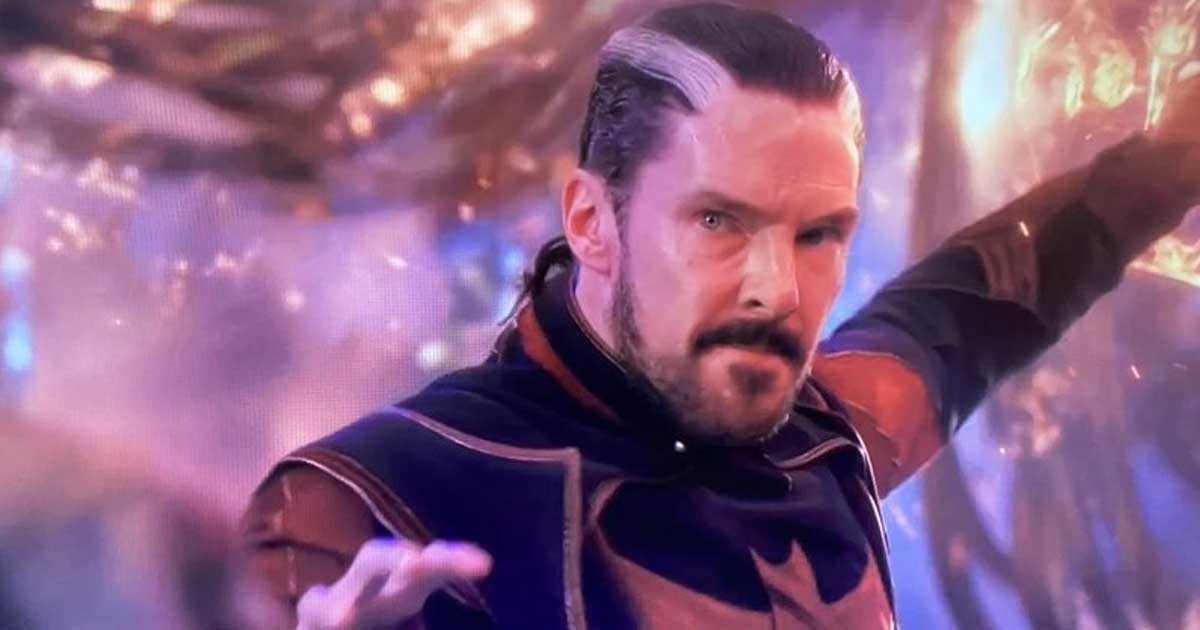
Marvel Studios, the comic book film division of Disney, has pushed audiences for more than a decade that a bigger plan is always in the offing.
It took three phases and over 20 movies for producer Kevin Feige to complete his Infinity Gauntlet saga culminating in Avengers: Endgame and along the way there were times in which things didn’t make a whole lot of sense.
It’s safe to say Marvel has gone back to the beginning in a post-Endgame world, throwing things against the proverbial wall to see what sticks and then piecing it all together down the road.
There isn’t a clear vision in their latest film, Doctor Strange In The Multiverse Of Madness, a movie that isn’t entirely about the titular Strange at all. It’s one that requires viewers to watch the Disney+ show WandaVision in order to understand character motivations and blurs exactly what the long term plan is for the larger Marvel Cinematic Universe as a whole to the point that it’s unclear if Feige even knows.
The simplest way to describe the plot of Madness is that it follows Strange as he ventures across multiple alternate timelines to protect multiverse jumper America Chavez from an unexpected threat to humanities far and wide along the way.
Director Sam Raimi, working with Marvel again for the first time in 15 years since concluding his own Spider-Man trilogy, has to slog his way through a wildly underwhelming screenplay from Michael Waldron that puts almost no actor in a position to succeed.
Much of the early portion of Madness has the signature Marvel sheen that seems to sugarcoat most of the MCU outside of the final Avengers films and it isn’t until things take a darker, more sinister turn midway through that Raimi’s directorial eye is allowed to shine through.
Madness is also unique in that it’s the first film in the MCU to directly pull from Marvel’s Disney+ limited series in order to fully understand the plot of the movie as Raimi’s movie requires audiences to have familiarity with WandaVision and several episodes of the animated What If… to have context for plot points the screenplay glosses over or assumes viewers understand.
Benedict Cumberbatch does a solid job in his return as Strange, especially with some of the alternative versions of the character audiences meet along the way. But by in large, his character mainly serves as a vehicle to drive the story forward and Strange’s uneasy chemistry with Rachel McAdams’ Christine from the first Doctor Strange film continues to be middling here.
Elizabeth Olsen is able to pull a rabbit out of her hat by crafting some truly inspired work as Wanda Maximoff, a fallen Avenger mourning the loss of her love in a path twisted by the events of Avengers: Infinity War and WandaVision. She provides Raimi’s film with an intensity that is showcased largely through the cinematography and direction that other actors just don’t seem to rise to the level of.
Newcomer Xochiti Gomez is serviceable as Chavez, although Waldron’s script basically reduces her character to a Macguffin that is the excuse to tell the story the film does, while not really saying anything about who Chavez is as a person or hero, a larger flaw of the entire screenplay as a whole.
In a way, the rapid pacing of Madness hinders just how good of a movie it is overall because audiences can’t fully appreciate the nuance of what Raimi achieves cinematically. There’s little time to linger on the wide panoramic shots of the visually stunning worlds Raimi’s production team creates because it has to quickly move on to fan-service cameos or random moments that won’t be fully realized until movies years from now.
The same is true of the terror-inducing moments he turns simple chase sequences into, with a race down an underground tunnel being the most creative and impactful cinematic moment in a Marvel film for several years.
There’s a point in the film where it becomes easy for audiences to tell which parts Raimi had control over the style and direction and which were spoon-fed to him by producers reliant on pre-visualized storyboards made before Raimi was ever brought on board.
Doctor Strange In The Multiverse Of Madness isn’t the groundbreaking horror comic spectacle that some audiences might have been hoping for in a Marvel reunion with Raimi, but his directing is the best part of this middling MCU movie and the main reason to see the film in theaters outside not wanting to be spoiled.

The directing duo of Dan Kwan and Daniel Scheinert, collectively known as Daniels, have created a brand of cinema flavored with creative ingenuity blended with the bizarre and outlandish that have seen them mystify viewers with flatulent corpses and dark humor with films like 2016’s Swiss Army Man and 2019’s The Death of Dick Long.
Their third feature together, Everything Everywhere All At Once, takes their obsession with the absurd to new heights cinematically as the pair forge a strange, genre-bending tale that mixes Hong Kong martial arts with sci-fi hijinks, comic book universe hopping with family drama in a compelling, original film unlike anything audiences will see in 2022.
Michelle Yeoh of Crouching Tiger, Hidden Dragon and Crazy Rich Asians fame stars as Evelyn, a down on her luck Chinese immigrant whose business is on the verge of collapse and her marriage on the brink of divorce. While heading to an IRS audit meeting, Evelyn is confronted by an alternate version of her husband, Waymond, who believes she is the only person capable of stopping the nefarious Jobu Tupaki from collapsing every possible universe.
While the film could probably have been successful simply based on the Daniels’ creativity, Yeoh brings All At Once to the next level with a nuanced performance that is often frantic, sometimes melancholic, and ever transformative. She becomes a terrific stand-in for the audience as the film progresses with Yeoh’s initial confusion to the world Evelyn is forced into mirroring the bewilderment of viewers.
As Evelyn grows in confidence and learns skills from alternate reality versions of herself, Yeoh is able to showcase her martial arts prowess and then immediately fall back into a stupor that is practical and convincing to Evelyn’s increasingly outlandish plight and as Evelyn comes to accept the ridiculousness of her situation, Yeoh makes it easier for audiences to suspend their disbelief as well and enjoy the ride.
Yeoh is aided by a wonderful ensemble cast who must make even wider transformations between their character’s normal selves and bizarre variations.
Ke Huy Quan returns to acting for his first role in two decades and steals nearly every scene he’s in as Evelyn’s sheepish, yet adorable husband Waymond. No matter what version of Waymond is in the moment – and all versions are incredible – Quan gives his whole heart to Waymond in a way that just leaps off the screen.
Newcomer Stephanie Hsu is a revelation as the couple’s daughter Joy, a complicated blend of both her parents that allows Hsu to be more eccentric with her alternate versions and Jamie Lee Curtis is almost unrecognizable in a hilarious supporting turn as the IRS agent assigned to Evelyn’s audit.
All At Once is even more spectacular in terms of its visual effects, which was developed by a team of only five to create over 500 different shots in the film. Daniels use both practical and computer-generated effects to showcase Evelyn’s bridge between the versions of herself, dubbed “verse jumping” in the movie, and the look of Yeoh rapidly falling backwards is a constant blur of motion and imagery that keeps viewers at the edge of their seats.
The film also moves at an intensely rapid pace thanks to distinct and swift editing by Paul Rogers that makes the most of the dynamic action sequences that perfectly blend martial arts with the strange science fiction elements of the plot.
Daniels also create a fully realized, wholly immersive world with some of the best production design and costuming that will probably be featured in all of 2022. The depth to which the filmmakers transform a simple office building into a plethora of avenues for creativity cinematically is astonishing and the costume work, especially on Curtis’s Deirdre and also Jobu Topaki showcase the avantgarde uniqueness and originality unmatched in this era.
Because All At Once is so outside the box – there’s literally worlds with hot dog hands and pinatas – it’s unclear how a film released in the first half of the year will stay in the conversation long enough to earn the awards season acclaim it deserves, but Daniels’ film definitely deserves to stand alongside The Batman as the two features to release before July that need to be remembered by voters months from now.
Though it will be a fun experience at home for audiences who can’t find it close to them, there’s no doubt that the visual thrill ride of Everything Everywhere All At Once deserves a trip to the cinema to see the Daniels’ vision on the biggest screen possible and this strange, yet heartfelt will no doubt be a top film of the year.
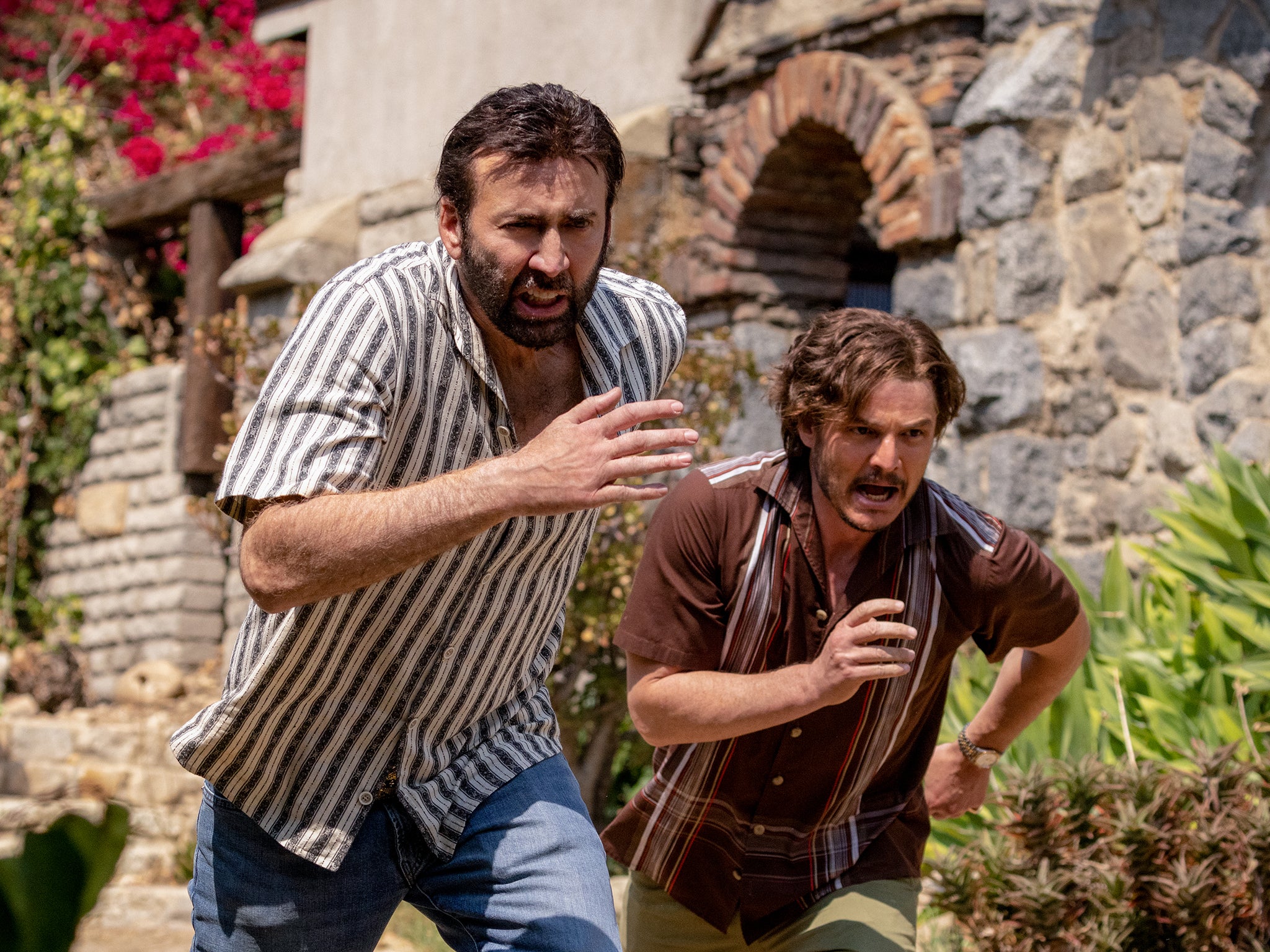
What does it truly mean to be a celebrity on a global level? What does that recognizability, especially for those with boisterous personalities, do to an actor’s psyche as the shine starts to fade?
It’s a nuanced examination that comes from the most unlikely of places, a zany surreal action dramedy where former A-list actor Nicolas Cage takes on perhaps his most challenging role: himself.
With The Unbearable Weight of Massive Talent, Cage showcases every side of his acting persona, cranking up the volume of his “Cage-yness” to 11 in a performance that’s incredibly neurotic, exceptionally thought out and cerebral, yet quintessentially heartfelt and emotional in a way only the Academy Award winner could.
The film from writer/director Tom Gormican and co-writer Kevin Etten is a cinematic love letter to Cage’s illustrious and exotic film career, taking audiences on a journey with Nicolas as he battles his inner demons and quite literally talks to his younger self in a wonderful homage to True Romance, the most Nicolas Cage film he was never cast in.
Talent finds this fictionalized Cage on the brink of retiring from acting following another failed audition when an invitation (and million-dollar incentive) to attend a wealthy businessman’s birthday party in Mallorca, Spain, leads Nick to bond with Javi over vintage German horror films upon his arrival and begin to develop a movie idea together, all while covertly working for the CIA.
The incredulous nature of the story, while often going to the brink of inexplicable, works amazingly well simply because Cage commits so fully to the fantasy world Gormican and Etten have crafted that viewers cannot help but be carried along for the ride of R-rated hijinks, deep philosophical conversations, and increasingly meta diatribes about the art of screenwriting and hooking audiences into watching a movie.
Even though the entire film veers into the surreal, there’s a subtle through-layer of Cage working through his own struggles with his public persona and how “out there” he gets in his films leaking into his private life. In a way, Talent is the perfect opportunity for Cage to fully free himself from the crazed 90s action star persona and continue a career revitalization that began with last year’s Pig.
It’s also so easy to fall in love with this wonderfully strange version of Cage because of how genuine Pedro Pascal’s adoration of Nick pours out in every moment of his performance as Javi.
Cage and Pascal have a vibrant chemistry that makes silly interactions over the common love of a children’s movie, or an LSD trip feel whimsical and lighthearted rather than completely ridiculous. The affection both actors have for each other seeps into every aspect of their performances and from the 30-minute mark onward, the best parts of the film are Cage and Pascal’s random conversations that could have nothing to do with moving the plot forward, but are riotously entertaining nevertheless.
Sharon Horgan and Lily Sheen as Cage’s fictional ex-wife and daughter are solid in smaller supporting roles that help ground his performance as a struggle between career and family, while Tiffany Haddish and Ike Barinholtz as two CIA agents pushing Nick to spy on his new friend have some funny moments but are largely just filler to flesh out the incredulous story.
Gormican doesn’t muddle the frame with big explosions or fancy camera tricks in an homage to Cage’s action roots, but Talent does have a fast pace thanks to exceptionally witty dialogue and the joyride audiences go on is generally smooth despite his relative lack of experience behind the director’s chair.
The Unbearable Weight of Massive Talent is a phenomenal, quirky love letter to one of Hollywood’s most eccentric fan favorite actors and Cage’s winning performance paired with terrific chemistry opposite Pascal make this unlikely buddy dramedy a major surprise hit in theaters for 2022.

It’s been two decades since teenage wizard Harry Potter and his friends made their cinematic last stand in the eighth film based off the novels by J.K. Rowling.
For a variety of reasons, attempts to keep the magic alive today have lost their spark with the third installment in a prequel franchise based on one of Potter’s school textbooks arriving with a whimper both critically and financially.
Fantastic Beasts: The Secrets of Dumbledore follows magical zoologist Newt Scamander as he’s pulled into an escalating war between good wizards led by Hogwarts headmaster Albus Dumbledore against Gellert Grindlewald, a former love of Dumbledore seeking to establish wizards’ dominance over non-magical humans.
The biggest problem is that, by and large, this third installment is relatively uneventful and boring, largely circulating around election stealing and magical politics that will put younger audiences to sleep and make adults groan.
What made the original Harry Potter film franchise so successful was the idea that audiences knew in advance where things were going but were excited to see how they would unfold in cinematic fashion. It also helped that viewers could grow up with Daniel Radcliffe, Emma Watson and Rupert Grint along the way, but the main issue with the stumbling Fantastic Beasts franchise is that the path is far less certain and much less entertaining along the way.
There’s no consistency in this cobbled together trilogy, which has changed the actor portraying the primary villain, Gellert Grindelwald, in each entry and stumbled through its integration of Harry Potter lore into a prequel where most fan favorite characters haven’t been introduced yet.
In its attempts to become a more serious film, Dumbledore removes much of the wonder and magic from the Fantastic Beasts franchise in order to reorient the franchise around Jude Law’s titular character to bring the films closer to the world of Harry Potter but further from what made the first film entertaining.
The beasts themselves, which were the highlight of each of the first two entries, take a relative backseat for much of the nearly two-and-a-half-hour film with fan favorites like lock picking Bowtruckle named Pickett and the gold obsessed Niffler. The primary new “beast” of note is largely used as a Macguffin to further the plot and kept out of sight for the majority of the film.
In fact, perhaps the best sequence of the entire film involves Newt charming crab like creatures with a fanciful dance.
Director David Yates and screenwriter Rowling also make the baffling decision to largely sideline major characters from the first two films, reducing Ezra Miller’s prominent role as the “obscurial” Creedence to a mere bit part and benching Katherine Waterston’s Tina, a co-lead with Redmayne for the first two films, almost entirely for Victoria Yeates’ turn as Newt’s longtime assistant, a less interesting and largely unmemorable character.
But there are some highlights to Dumbledore.
Law is terrific in the title role and offers some sincere emotional complexity even when it’s not entirely earned. Mads Mikkelsen is somewhat understated taking over the role of Grindelwald and the hints of faded love yet uneasy respect between him and Law are some of the best acting in the entire Fantastic Beasts franchise.
This isn’t to discount the work of Eddie Redmayne as Newt, either. Redmayne’s genuine affability successfully allows audiences to place themselves in the story seeing things through Newt’s eyes and it keeps large segments of the film afloat.
While Fantastic Beasts: The Secrets of Dumbledore will need to do big business at the box office to sustain the life of the franchise going forward, the film itself will largely become nothing more than a minor footnote in the larger Wizarding World of Harry Potter and isn’t worth seeking out in theaters.
 Cinematic Considerations