

Adapting the works of William Shakespeare from the stage to the screen is a time-honored tradition of prestige filmmakers.
Bringing the bard’s words to life in a way that casual audiences can understand and appreciate is perhaps the most difficult task of any director, theater or film. Shakespeare’s complicated lyrical prose uses far too many metaphors and overly floral language for the lay person to understand without a dictionary or several times reviewing and understanding the text.
Joel Coen, working for the first time separately from his brother and filmmaking partner Ethan, takes aim at one of the English playwright’s most demanding works, a five-act epic with misery, madness, murder and mayhem.
The Tragedy of Macbeth, trimmed to a 105-minute retelling, finds the titular character immediately after winning a major battle for the Scottish army when three mysterious witches tell him that he is to become a higher noble, and soon after, king. This destiny manifests itself through treachery at Macbeth’s hand pried on by his manipulative wife and results in the destruction of countless noble lives.
Denzel Washington is at his most compelling, yet manic performance that he’s given in years as the titular Macbeth, operating calmly, frantically and devolving to outright insanity in a matter of moments. His Macbeth seamlessly devolves into madness without any grandiose gestures or raving soliloquies. It’s a slow burn descent fueled by inner pain.
At his right hand, Frances McDormand revels in the classic lyrical style of Shakespeare’s language and delivers Lady Macbeth’s dialogue with a poisonous tongue fitting of the villainess but with a self-righteousness that belies the evil within her heart.
The film is also bevied by a tremendous supporting cast including Brendan Gleeson’s commanding presence as Duncan and Corey Hawkins’ redemptive hero in Macduff.
Coen’s most masterful piece of filmmaking comes not from the expert performances he pulls, but from the bizarrely wonderful visual moments he creates from 4×3 framed black and white cinematography that blends the world of theater with cinema in sharp, eccentric ways.
Cinematographer Bruno Delbonnel takes the intimate soundstages Coen chooses to stage his theatrical play on and coats them with layers of cinematic light and shadow to create a much more elegant backdrop than the film actually deserves.
Visually, The Tragedy of Macbeth is among the year’s sharpest, most engaging features and left on silent, it would make a constant moving art gallery worthy of its own show in New York or London.
Unfortunately, the film is painstakingly dense and inaccessible to the point that its ease of access streaming on Apple TV will make Coen’s film something audiences will frequently pause or outright turn off. There isn’t enough dynamic cinema to maintain a solid interest for the full run time and the weight of the faithful adaptation of Shakespeare’s dense language will force some viewers to stop, Google and rewind scenes several times just to figure out exactly what is happening or what is being said.
This ultimately lays on the feet of the filmmaker himself, who truly isn’t making The Tragedy of Macbeth for anyone but himself. And while the most deliberate of cinephiles or Shakespearean scholars will love the authenticity of the project, most of the nuance will fall flat for those who either don’t know what to look for or can’t interpret Coen’s film properly.
Because this is a prestige film with A-list actors with a classical background, it’s nearly impossible to believe that The Tragedy of Macbeth won’t be a major contender come awards season with acting nods for Washington and McDormand almost a certainty and a best picture nomination increasingly likely by the day.
The Tragedy of Macbeth is far from the easiest watch in 2021, not simply from the content itself, but just as much from how Coen struggles to bring Shakespeare to life in an easily digestible way. Nevertheless, the film’s star power and quality moments however frustrating make The Tragedy of Macbeth something worth taking a chance on for those already with an Apple TV subscription.

Slice of life Americana films only truly work about once in every six or seven attempts.
Most of the time, these period-driven, small town family dramas attempt to bite off more than they can chew by introducing more characters than they can give adequate time to or by muddling the narrative with time jumps or by simply being bland.
All these things, unfortunately, are true of George Clooney’s latest directorial effort, The Tender Bar, recently released in theaters and now streaming on Amazon Prime.
Based on the memoir by Pulitzer Prize winner J.R. Moehringer, The Tender Bar follows a young boy with an absentee father growing up on Long Island in search of male role models and finding wisdom in his uncle’s tavern.
Writer William Monahan, most notable for his screenplay for Oscar winner The Departed, provides Clooney with a wildly uneven script that has some terrific individual moments between a young JR and his uncle but languishes for far too long on JR’s college years without providing enough emotional connection to his youth.
The result is an often tedious melodrama that leans heavy on the hard luck story of Moehringer’s youth much like last year’s Hillbilly Elegy, a big-budget, R-rated version of a Hallmark movie that fails to pay off emotionally in the end and will leave some viewers bored.
By far the most compelling performance in the entire film, Ben Affleck shows incredible depth of heart behind a mostly stern and solemn face as JR’s uncle Charlie. Affleck is given the best lines in Monahan’s screenplay and delivers them with an unspoken compassion that radiates off the screen and allows audiences someone to bond with emotionally.
He does a fantastic job introducing audiences to first-time actor Daniel Ranieri, who plays a nine-year-old JR with wide, inquisitive eyes and with a vast admiration for his uncle Charlie. Conversations between Ranieri and Affleck have genuine affection that leave viewers wanting more from the relationship than what Clooney and Monahan are willing to offer.
Lily Rabe does a capable job of playing JR’s mother throughout, but with limited character development and Monahan largely sidelining her to highlight Charlie, there’s not much beyond a surface level examination of any of the women in JR’s life. His grandmother largely serves as a stand-in background character and audiences never truly get a picture of why JR becomes obsessed with his college girlfriend.
Ty Sheridan plays the collegiate JR well, but the whole older JR experience is so clumsily written and staged that it’s impossible to separate his performance from the poor craftsmanship around it.
There’s almost entirely no need for a voiceover in The Tender Bar, though Clooney and Monahan feel compelled to push one into the narrative randomly to help provide context that it appears they couldn’t put into the actual film through character work or an additional scene.
Even though Ron Livingston’s cadence keeps in tone with the overall narrative, his presence simply cheapens the entire film and somewhat jars audiences the first time Livingston narrates.
There are some sharp visuals at times from cinematographer Martin Ruhe and the score from composer Dara Taylor does well to round out some more compelling moments.
Affleck received a Golden Globe nomination for best supporting actor for his work on the film, but it’s highly unlikely that it will translate to an Oscar nomination despite being the only real shot for The Tender Bar to receive acclaim from The Academy.
The family-driven melodrama shouldn’t be anything potential viewers rush out to theaters to see, but the ease of access through Amazon Prime and exceptional work from Affleck in a large supporting role make The Tender Bar a mild, yet tepid recommendation.

Stanley Kubrick made Dr. Strangelove, a quintessential black comedy of the 1960s starring Peter Sellers as a treatise against the uneasy relationship between America and Russia’s nuclear arms race.
It’s one of the driest modern comedic films with a biting screenplay and pitch-perfect acting that fully realizes its auteur’s vision and works on numerous levels for casual as well as fully engaged audiences.
Adam McKay, the filmmaker behind several of this generation’s most beloved comedies, must be a huge fan of Kubrick’s seminal classic, as his latest feature takes a similar approach to modern politics and the public’s relative disinterest in the possibility for natural global catastrophes.
Don’t Look Up is the third in a series of sardonic, topical films from McKay and his first collaboration with Netflix, an overly stylized movie that aims to be far cleverer than it actually is and misses the mark about half the time as the comedian strives to make too many social and political points.
Oscar winners Leonardo DiCaprio and Jennifer Lawrence star as a pair of Michigan State University scientists who discover a massive comet on a direct collision course with planet Earth that will wipe out all civilization. Although this is the basic premise behind disaster films like Armageddon and Deep Impact, McKay’s film takes a much calmer, more esoteric approach more in keeping with Kubrick’s passive-aggressive approach to message-based storytelling in Strangelove.
Lawrence makes her cinematic return after several years off with her trademark sarcasm cranked up to an 11. The Academy Award winner relishes every opportunity to sink her teeth into cutting remarks written by McKay that seem targeted at other characters in the film but are truly meant for audience members at home to reflect on their own world view.
By contrast, DiCaprio has the more mellow of the two lead performances, if such a thing is possible and masks his natural charm and good looks behind poor hair and shoddy glasses to allow a quiet, nuanced character to emerge. His Randall suffers from several psychological maladies from anxiety to depression that give DiCaprio a wide berth from which to play his most skittish role and often the most amusing character on screen.
The film boasts an impressive ensemble cast with Tyler Perry and Cate Blanchett being the perfect foils for DiCaprio as a morning talk-show team that challenges his morality and sanity in a Network-esque fashion, while Meryl Streep and Jonah Hill are more frustratingly over-the-top as the inept president and her son, the chief of staff, meant to exaggerate the trivialities of the Trump administration.
McKay actually has an impressive screenplay that is more sardonic and cutting than either of his Oscar-nominated films The Big Short and Vice. But as a director, he fails to bring his own writing to life consistently by keeping audiences out of the joke for far too long at moments and being overly ambitious in the editing room.
Don’t Look Up jumps back and forth between scenes at a rapid-fire pace in an attempt to jar audiences awake to the messages McKay espouses in his narrative, but he goes to this well far too often so that it becomes messy and unnecessarily convoluted.
A big swing from an award-contending director with the most star-studded cast this season, Don’t Look Up likely won’t receive the accolades that Netflix might have hoped for when the studio acquired the project from Paramount Pictures and spent $75 million to make the film. There’s too much talent involved to completely count the picture out of races, but it’s unlikely that Netflix will push too hard with the more well-received drama The Power of the Dog also in the fold for the streamer.
McKay’s film has a lot of individual moments that make Don’t Look Up a terrific black comedy warning about political and social divisiveness in a way that reflects Strangelove. But it’s terribly inconsistent in both its comedy and narrative structure, which makes the feature a frustrating film to watch.

Always the most cunning and captivating wordsmith, Oscar winner Aaron Sorkin grows increasingly sure-handed behind the director’s chair with each new project he takes on.
Much like his writing, Sorkin becomes more daring as his confidence grows in his third feature film released last week in theaters and on Amazon Prime reflects both his drive and ambition to make prestige cinematic drama.
Being the Ricardos is a quintessential Sorkin project filled with high-octane, rapid fire dialogue, intensely dry humor and an a stage play mentality that creates an alluring two hours for cinephiles to sink their teeth into.
This isn’t to say that the film is accessible to all audiences or will resonate with casual moviegoers. Sorkin takes a lot of liberties consolidating two years worth of real life drama in the lives of Lucille Ball and Desi Arnaz into one week’s worth of events surrounding the taping of an episode of their hit television show “I Love Lucy.”
A radio broadcast accuses Lucille of being a Communist and a tabloid profiles Desi as a serial cheater all while the couple are announcing their second pregnancy to the show’s staff. It’s a cavalcade of events that Sorkin orchestrates with a deft pen and often compelling directorial eye.
Yet, Sorkin’s script feels more authentic if you consider the entire project a more fictionalized account that just happens to be based on real people rather than an honest work of nonfiction.
He litters his screenplay with fictionalized retrospective interviews, often jumbling the timeline of events to fit a mood rather than provide clarity to the audience.
The star of Being the Ricardos isn’t Lucille and Desi, nor A-listers Nicole Kidman and Javier Bardem who capably play both the real people as well as the “I Love Lucy” characters. It’s Sorkin, the guy waving his wand like a feverish maestro making a performance of his band leadership. There’s never a moment in the film that doesn’t have the good and bad of Sorkin’s growing auteurism stamped all over it.
It’s honestly too bad at times because Kidman is especially offering a compelling turn as Lucille and her ability to demonstrate both the unique physicality that Lucille had to set her apart as a comedienne and the deep thinking that helped shape the show and the people around her.
Kidman carries the film on her shoulders for much of the 135-minute run time and wonderfully rallies viewers to Lucille’s side with charm and becomes an ideal focal point for all the chaos that surrounds her. It’s a truly engaging look at the inner monologue of one of America’s first true television icons and while Kidman often doesn’t “look” the part, her ability to become Lucille and to a lesser extent, Lucy, is considerable and powerful.
Bardem, by contrast, doesn’t give a character driven performance as Desi as Sorkin isn’t truly interested in finding Desi’s motivations.
But Bardem brings charisma and machismo in spades and the turn is filled with a bravado that lights up the energy of the film at the drop of the hat. Desi’s scenes are always the most compelling because Bardem’s larger-than-life persona radiates off the screen and his chemistry with Kidman perfectly captures the hot and cold unevenness of Desi and Lucille’s marriage.
The ensemble cast all give excellent turns as well with Nina Arianda’s Vivian Vance aka Ethel Merman and Tony Hale’s executive producer Jess Oppenheimer being standouts.
The film’s considerable production design pays off in a big way as viewers will easily feel themselves transported to 1950s Hollywood and its classical glitz and glamour. Cinematography from Jeff Cronenweth only adds to the luxurious feel while also offering a sense of smoky haze pouring in during long office scenes.
Likely Amazon’s premiere contender for accolades this awards season, Being the Ricardos will probably fall short of expectations with only Kidman a probable Oscar nominee in Best Actress. Sorkin is always a threat for a screenplay nomination and films about Hollywood traditionally over-perform with Academy voters.
Being the Ricardos is a bold statement from Sorkin that will leave some viewers behind as he tries to be audacious as a dialogue driven filmmaker. But with the ease of access seeing the film on Amazon Prime, the mostly true story of the people behind Lucy and Ricky Ricardo is worth taking a chance on.
Marvel Studios has had a problem for the better part of two years now.
Ever since the release of Avengers: Endgame in 2019, the Disney-owned franchise has been wallowing in a dilemma partially due to the COVID-19 pandemic and partially due to their own making.
With most of their Avengers core retiring from the Marvel Cinematic Universe, producer Kevin Feige has had to start from scratch building characters like Shang-Chi, countless Eternals and elevating secondary characters through their Disney+ miniseries.
Their one saving grace: a web-slinging superhero with the charisma and comic book nostalgia to bring the MCU into a post-Endgame era and reinvigorate dying box offices for theaters across the country.
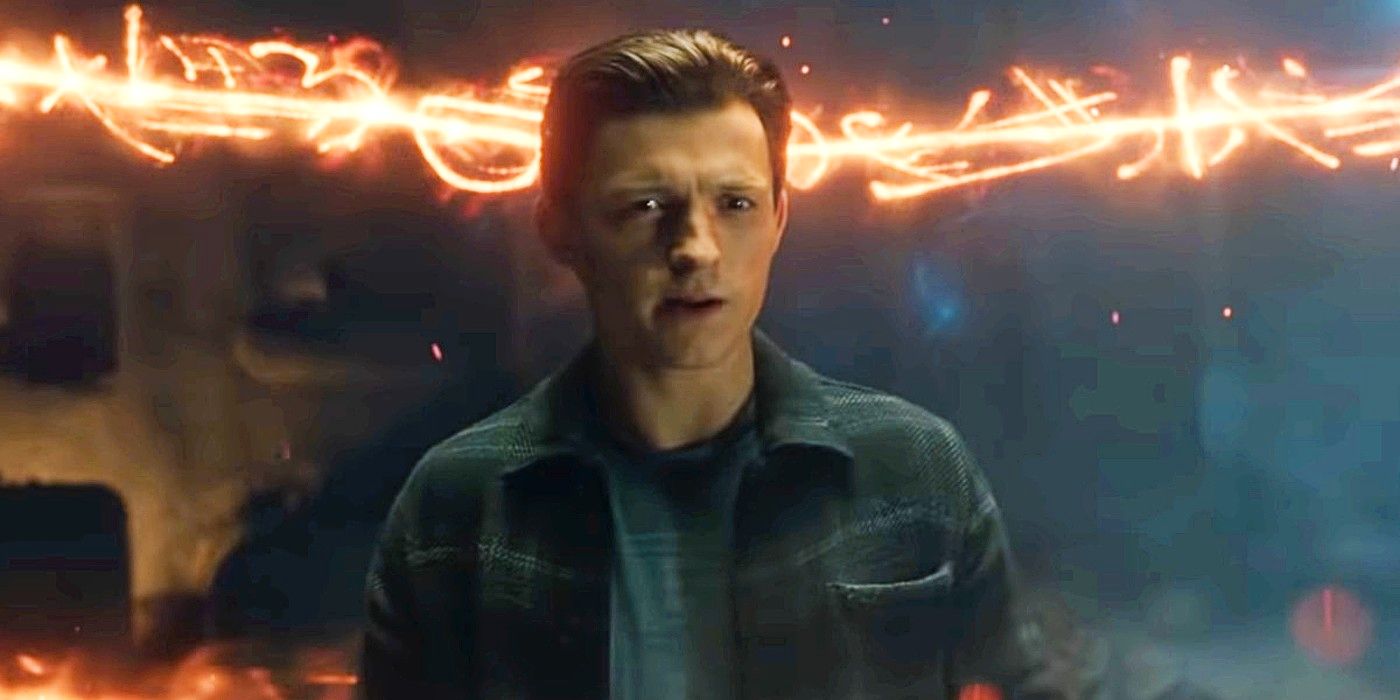
Spider-Man: No Way Home, the third in a trilogy of films from director Jon Watts, brings Tom Holland back inside his spandex suit to take on even more classic villains, push a film franchise forward and captivate audiences with the most powerfully dramatic superhero film in two years.
It’s a film that does almost everything possible to rectify the star power issues created by the end of the Avengers saga and is the first universally beloved blockbuster since the pandemic changed how audiences watch movies.
Coming immediately on the heels of the events from Spider-Man: Far From Home, the final film in this particular trilogy finds the hero facing unwanted celebrity status after his secret identity is revealed to the whole world. When he asks Doctor Strange to cast a spell to make everyone forget his identity, the fabric of reality is torn and villains from other universes are thrust into Peter Parker’s path for him and his friends to capture.
Holland gives the best performance in his MCU career as Peter/Spider-Man, providing a deeper emotional impact than in previous films. It’s clear that at this point in his career Holland knows how to balance a character driven performance with a lighter, more accessible touch common to blockbusters.
He’s also deft at being a capable scene partner against any of the many more outrageous villains and other supporting characters, giving people like Willam Dafoe and Alfred Molina the width to delve into classic characters they haven’t visited in more than a decade.
His pivotal scenes opposite Dafoe and also Marisa Tomei’s Aunt May are among the most emotional of the entire MCU and maintain a darker tone that helps propel Spider-Man into a new era of cinema.
Benedict Cumberbatch as Doctor Strange ably plays the surrogate father figure to Peter that Robert Downey Jr. once did as Iron Man. While not carrying the film, Cumberbatch gives a great counterbalance emotionally to Holland that helps set up Peter’s uneasy relationship with the film’s many villains.
No Way Home features an assortment of classic Spidey bad guys, but the standouts among them are Dafoe’s return as Norman Osborn and Molina’s second stint as Doctor Octopus. Both veteran actors perfectly tiptoe the line between friend and foe with Peter and elevate relatively cheesy comic book dialogue with gravitas.
Watts does a phenomenal job of balancing the film’s complicated narrative with special fan service moments intended to satisfy comic book nerds and fans of the Sam Raimi trilogy or Marc Webb Spider-Man films.
Nothing feels too heavy for casual audiences and ardent Marvel fans who are careful enough to avoid major spoilers will be rewarded with truly special moments that will make audiences gleefully applaud.
There are several surprise cameos – both brief and extended – that elevate No Way Home and it’s the final ones that bring both unparalleled comedic and emotional impact that will help finalize decades of unresolved Marvel-related conversations.
One Oscar-nominated actor is the film’s most valuable character in spite of not appearing until the final act, offering up a heartfelt, earnest performance that reflects on Spider-Man films past and opens opportunities for new features.
No Way Home is the strongest entry in the Marvel Cinematic Universe since Endgame and helps to balance a franchise struggling to find their footing both creatively and at the box office.
Cinephiles and comic book fans who crave being in the middle of the conversation about big blockbuster films like this should rush to theaters as soon as possible to see 2021’s most impactful studio movie.
There really isn’t such a thing as a bad Steven Spielberg movie.
Regardless of the film, one of America’s quintessential directors has crafted a career so illustrious and celebrated that it’s impossible to consider anything he makes bad.
So when it was announced that Spielberg would attempt to reinvigorate the 1957 Broadway musical and 1961 Academy Award Best Picture winner West Side Story, there’s no question that whatever he came up with would be visually stunning and magical from start to finish.
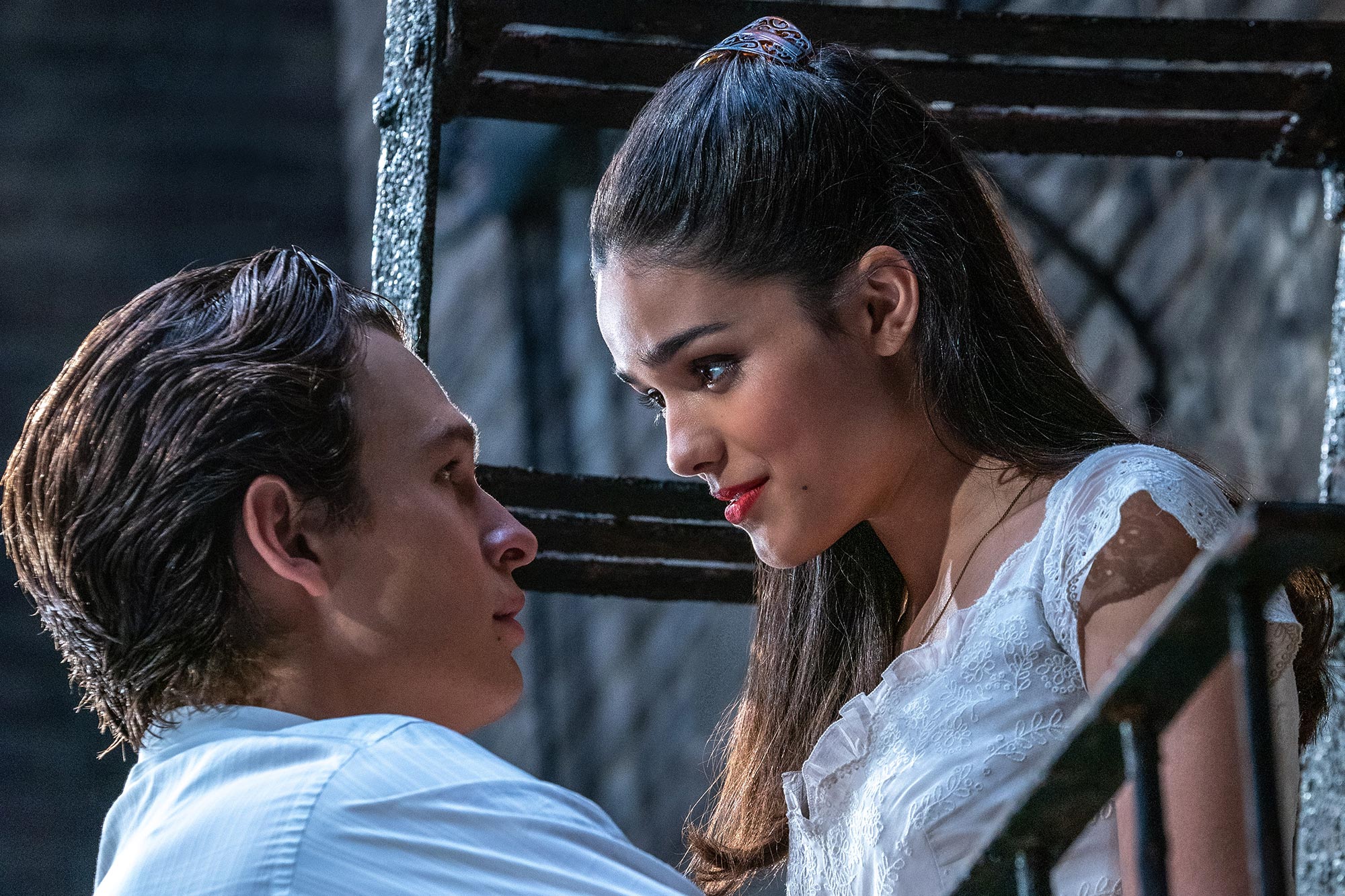
And it’s clear from watching the new version with Baby Driver star Ansel Elgort and newcomer Rachel Zegler as the star-crossed lovers at the center of the film that Spielberg watched the classic Natalie Wood/Rita Moreno film with adoration and an eye for how he could do better.
The film follows Tony, a former street gang leader trying to do right after spending a year in prison. He meets and falls for Maria, a Puerto Rican girl and sister of rival gang leader Bernardo, in a “Romeo and Juliet” like love affair that starts off a war between the Jets and Sharks in 1950s New York City.
The biggest flaw of West Side Story is the biggest star of the film, which holds the entire feature back from being something truly remarkable.
Elgort is exceptionally stiff in contrast to his castmates, an actor thrust into the world of Broadway as opposed to performers translating their talents to the silver screen. For the Tony and Maria relationship to work as quickly as Spielberg needs it to, Elgort has to be far more charming than he comes across here and it often feels like he’s marking out his character beats in long strokes as one might do in rehearsals where you don’t want to strain your energies before the real performance.
Conversely, Zegler brings a youthful wonder to the role of Maria, along with rapturous vocals needed to carry some of the musical’s most iconic numbers like “Tonight” and “I Feel Pretty.” Her performance has a great deal of theatricality to it and Spielberg knows exactly how to frame Zegler’s innocent face in ways that radiate Maria’s joy and her pain.
However, the true stars of West Side Story are its supporting ensemble led by Broadway actor Mike Faist as Riff, the leader of the Jets. There’s such a dynamic energy to his performance from the way Riff carries himself through each moment to the vibrant urgency Faist delivers his dialogue. It’s a perfect blend of the theatrical roots of the story and a truly cinematic performance.
Ariana DeBose gives her all as Anita, though it’s hard to compare with Moreno’s Oscar winning turn in the same role as the focus shifts even more away from the character. Moreno herself returns to the story with her Valentina replacing the traditional character Doc as Tony’s caretaker/mentor and Moreno’s Hollywood legacy combined with a strong turn should earn her strong consideration for another Oscar nomination.
Spielberg’s film unquestionably contains some of the year’s best scenes. The showdown between the Jets and the Sharks in an abandoned salt warehouse leaps off the screen with a dynamic energy thanks to sharp lighting and crisp cinematography from Janusz Kaminski. Spielberg places audiences fully in the moment and the climatic action, while feeling theatrical, still comes across with total impact emotionally and becomes the catalyst for the final moments of the film.
Conversely, West Side Story breezes through large portions of the narrative, especially the romance between Tony and Maria which goes from meeting to complete devotion almost at the drop of a hat without genuine chemistry between Elgort and Zegler.
With Spielberg at the helm, it’s very unlikely West Side Story will fall by the wayside come awards season with the film almost certainly a lock for best picture and best director nominations. Kaminski has enough visually spectacular moments to overcome some of the more blatantly phony CGI scenes and land a best cinematography nomination while Faist should be the first member of the cast to be considered for an acting award for his exceptional turn as Riff.
West Side Story is one of Spielberg’s most visually impressive and dynamic films in the latter stages of his career and although the narrative and especially Elgort don’t pop with the same energy, it’s still a film worth checking out in theaters or at home in advance of its eventual Oscar contention run.

There’s no gunfights in Netflix’s largest awards contending release, a western starring Oscar nominee Benedict Cumberbatch as a Montana rancher in the 1920s.
Director Jane Campion’s first film in more than a decade, The Power of the Dog is a subtle, slow-burn character driven drama examining life in the rural hills, what it means to be a man and the things we all too often leave unspoken.
The highly acclaimed film will likely land on any number of “best-of” lists from critics and awards groups this spring, though its languishing melancholy and leisurely pace will likely inhibit casual viewers or traditional fans of the western genre from enjoying Campion’s technically brilliant work.
Based on the novel of the same name by Thomas Savage, The Power of the Dog follows the Burbank brothers, Phil and George, as they run their family’s Montana ranch. Their normal lives change permanently when George marries meek widow Rose and brings her and her socially awkward son Peter to live with them.
Cumberbatch is the antithesis of expectations as Phil, the bullying ranch foreman whose misogyny pervades every inch of the film, endearing him to his workers and reviling him to Rose and Peter. Because he doesn’t have the physicality to domineer over other actors, Cumberbatch terrorizes the screen with his intimidating facial expressions and sharply delivered dialogue done with a menace that oozes out of every frame.
It’s a performance that’s heliocentric to The Power of the Dog with all the other leads basing their work as a reaction to what Cumberbatch brings to the screen as Phil.
Kirsten Dunst’s ability to wonderfully showcase Rose’s increasing isolation and emotional spiral seems reflexive, a complete character haunted and defined by the specter of Cumberbatch’s ominous presence.
Jesse Plemons’s George is largely crafted around his fragile relationship with his brother and the dynamic between Plemons and Cumberbatch teeters on the brink of a confrontation between the brothers that is years in the making but just hasn’t happened yet.
The soft to Cumberbatch’s hard, Plemons approaches George with a light touch as if gently brushing those around him with a feather, which makes Rose and George’s relationship as implausible as possible while still setting the stage for the real emotional weight of the film between Phil and Peter.
Australian actor Kody Smit-McPhee hides much of Peter’s guile behind a wall of fragility that keeps him away from some of Phil’s wrath. While the physicality of his performance has a brittleness as if Peter will crumble under the weight of toxic masculinity, there’s just a gleam of awareness in his eye or the miniscule facial tic that clues audiences in to Peter’s ever moving mind.
Campion’s narrative structure breaks the film into chapters that bounce the audience forward in time as necessary to advance the simplest parts of the story while overlooking those unimportant to Campion’s gaze. The biggest sacrifice in this, unfortunately, is Rose and George’s romance, which is almost exclusively implied and never stated. Their love is set off at a distance and fades considerably after the first 45 minutes.
There is a sense that this makes the film somewhat empty as nearly half the film is dedicated to moments of increasing tension without dialogue, but when the almost silent moments do land, they are incredibly effective.
The most striking thing about The Power of the Dog is the masterful cinematography from Ari Wegner, who relishes in the robust visual tapestry of the New Zealand locations used to mimic Montana and creates arresting moments in wide angle panoramas to help Oscar nominee Jonny Greenwood’s transfixing score to set the emotional tone of the film.
Campion and Wegner actively engage audiences with intriguing camera angles and offsetting vantage points that take a traditional scene and turn it on its head. Regardless of what is happening, there’s always a keen sense of the physical geography that gives audiences a sense of place within the ranch or beyond, most notably when actors are in frame together but at considerable distance.
It seems impossible that The Power of the Dog will not be a major awards season contender, especially in Best Picture, Best Actor for Cumberbatch and Best Director for Campion. The film’s production elements from design to cinematography to score to costuming all feel like certain nominations as well.
Ardent cinephiles will likely become enraptures with the slow, deliberate energy of Campion’s feature while casual viewers won’t be pleased by the tediousness of its melancholy. Luckily, its position as the premier film to debut this month on Netflix makes it worthy of a cinematic flyer for patient audiences.

Octogenarian filmmaker Ridley Scott is among the hardest working directors in Hollywood.
With over 50 movies to his credit – including a pair of new releases this year and another two currently in production – Scott doesn’t stop for much of anything, let alone the coronavirus pandemic.
After completing his medieval epic The Last Duel during the latter part of 2020, Scott immediately sought to prepare his next elaborate undertaking in the spring of this year, an Italian fashion drama that wrapped in May only to release in theaters with a showstopping 157 minute run time six months later.
With more time and preparation, The Last Duel is unquestionably the better and more cohesive of Scott’s 2021 offerings, but this isn’t to say that his new feature isn’t just as dynamic and likely more universally watchable.
Gucci is perhaps the most elaborate, luxurious, well-acted soap operas in years, an embarrassment of riches that doesn’t always live up to the price tag but never fails to provide interesting moments and debatable filmmaking decisions.
Inspired by true events, the film follows the rise and fall of Patrizia Reggiani, a middle class woman thrust into the world of elite tastemakers when she happens to meet and fall in love with Maurizio Gucci, heir to the fashion empire, only to see her world crumble to the point where she plots his murder.
Lady Gaga will almost certainly receive her second Best Actress Oscar nomination for her magnetic work as Patrizia after just missing out on a win for 2018’s A Star is Born.
She thrives and relishes in the juicy dialogue writers Becky Johnston and Roberto Bentivegna pen to cultivate an alluring world of intrigue. Though none of the Italian accents in the film feel incredibly authentic, every word oozes out of Gaga’s lips with a captivating intensity that hides the subtle physical changes she’s able to bring out in Patrizia over time.
It’s in great contrast to Adam Driver, who offers the most complex, introspective performance in the film as Maurizio, an overly cautious man that is constantly being manipulated by those around him until he learns from Patrizia’s ways. Driver is a deliberate actor whose use of restraint always leaves audiences wondering what Maurizio is truly thinking.
Gucci is also perhaps the most restrained turn from Oscar winner Al Pacino in years, whose Aldo Gucci warmly comes across as the charming uncle and when tested, his reactions feel far more natural and not comically over the top.
This is not the case with Jared Leto’s performance as the Gucci family’s black sheep, Paolo, which is so far beyond being in the same movie as the other actors that it feels like Leto just beamed himself down in a fat suit from another planet. His Paolo is what it would be like to have Fredo from The Godfather films portrayed by Luigi from Super Mario Brothers.
Gaga, Driver, Pacino et al uniformly balance the tone between serious melodrama and lighthearted humor, while Leto’s caricature dances around the screen as if in a complete farce. Audiences could easily be driven out of the world of Gucci entirely by Leto’s outlandishness if not for how committed everyone around him is to a more restrained style.
Conversely, Salma Hayek’s limited role as Patrizia’s confident and psychic Pina adds a unique twist to Gaga’s character and allows her to find the darker side needed to be as ruthless as Patrizia becomes. But her role is so limited – and worse yet, the storytelling introducing Pina into the narrative so haphazard – that her inclusion doesn’t totally work in the larger picture either.
As a film of its stature, profile and budget would naturally require, House of Gucci looks and feels the part of a glamorous blockbuster. Each set is lavish and meticulously crafted with the production team partnering with Gucci’s archival team to find and authentically style the actors in period designer clothing.
Cinematographer Dariusz Wolski’s visuals are uniformly crisp and bold and help bridge the gaps in storytelling where audiences may be missing pieces of the puzzle to understand the narrative timeline and how characters are impacting the events of the film.
House of Gucci has the Oscar-bait aura around it with the glitz, glamour and big name stars, although it’s difficult to see a Best Picture nomination due to a muddled tone and storytelling flaws. Gaga feels like an acting lock with Driver a strong possibility as well, with several technical nominations likely.
While not the best film from Scott this season – The Last Duel being a must-see drama – House of Gucci has the widespread appeal, beauty and drama worthy of checking out at a local cinema or early next year upon its release on Paramount+.
When we are young, the fuller picture of the world around us isn’t clear.
Things that affect us directly – things that happen on the street where we live, the other children in class, our families – become seared in our memories.
Understanding things that happen in the periphery simply have less significance because the impact is lesser.
Such is the case with Belfast, a semi-autobiographical film from writer/director Kenneth Branagh, whose remembrances of his home city in Ireland and the tumultuous civil war between Catholics and Protestants during the late 1960s are clouded by the shroud of youth.
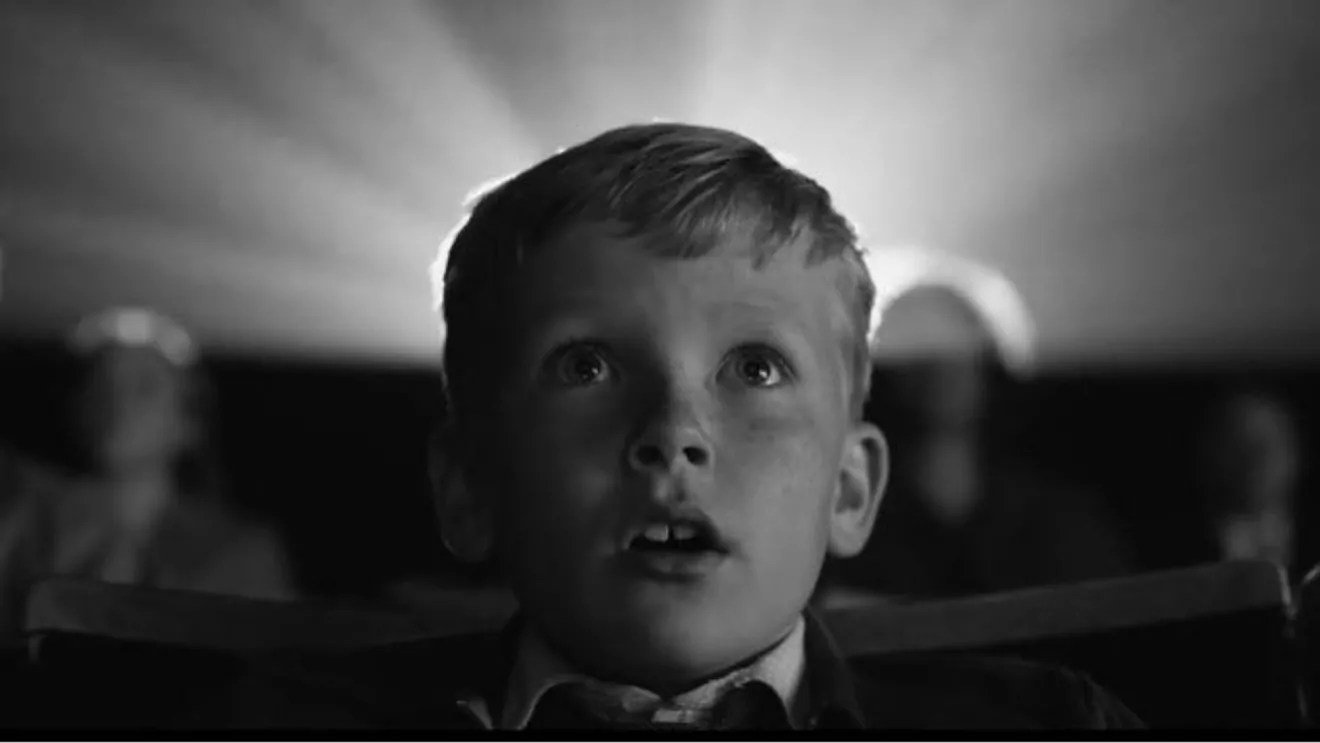
It’s for this reason that Belfast works as a charming crowd-pleasing film in spite of its setting as the film is almost exclusively seen through the eyes of young Buddy, an elementary school student focused more on the girl he likes that sits at the front of the class than the rioting and violence that creeps just outside his door from the opening moments of the film.
Branagh makes the most personal, heartfelt feature of his illustrious career with Belfast, largely simple storytelling woven together in a series of vignettes about everyday life for Buddy, his older brother, Ma and Pa, as well as his grandparents on a single street in Belfast.
Nearly half the 97-minute film could be completely separated from what’s really happening outside the barricade that protects Buddy’s street from attacks. The true scope of the violence eludes the audience because it’s outside Buddy’s purview as viewers experience Belfast through his eyes, real or imagined.
Newcomer Jude Hill is a revelation as Buddy, a precocious actor that approaches every scene with a blending of kindness and childlike wonder and it’s the immediate attachment he’s able to create with an audience that makes viewers fearful for him and his family’s safety during the most trying of moments in Belfast that wouldn’t otherwise work so well.
Jamie Dornan gives a career-best effort as Buddy’s father, absent for much of the film due to working in London, but his presence in Belfast is felt long after he leaves as the steady hand wanting to do right by his family and find a better life for them even if it costs them their home in Ireland.
Caitroina Balfe is often electric as Ma, hiding her fragile state in front of her boys to a great extent as she exudes a matronly persona, but it’s in the one-on-one scenes opposite Dornan that Ma’s emotions are able to release even slightly and Balfe can truly showcase the wear and tear keeping her family safe during civil war has on Ma’s mental and emotional state.
Ciarán Hinds is perhaps the best performer in the entire film with a genuine warmth and wry sense of humor that leaps off the screen every time his Pop appears. The instant chemistry he’s able to develop with Hill as grandfather and grandson becomes a cornerstone of the entire film. An underutilized Dame Judy Dench as Hinds’ wife Granny has her moments, but never feels on the same level as the other main characters.
Belfast boasts strong production design and a pitch-perfect soundtrack penned by Belfast native Van Morrison that helps create the world of the film.
Where there’s a slight stumble, however, is in the cinematography from Haris Zamarloukos, which is bookended with over-sharpened, almost chamber of commerce level visuals in color that look like an advertisement to visit Belfast, perhaps a requirement for funding the film.
Almost all of the film is shot in black-and-white with a variation of sharpness to help accentuate the blurred lines between Buddy’s realities and the way he sees things, especially when he’s watching television, movies or theater that come across in shimmering technicolor to showcase just how fantastical Buddy’s world can be.
Without a doubt, Belfast will be a significant player come awards season as a frontrunner for the Best Picture Oscar with surefire nominations for Branagh in directing and screenplay. It’s quite possible that both Hinds and Dornan earn Best Supporting Actor nominations, while Balfe is the strongest acting contender of the ensemble.
Still expanding into more theaters over the course of the winter, Belfast is bound to be one of the more talked about dramas over the next three-to-four months and has cemented its spot as one of the 10 best films of 2021, making it a must see in theaters.

Pablo Larraín doesn’t approach his biographical subject manner in any traditional sense.
His 2016 film Jackie, which was nominated for three Oscars, followed Natalie Portman as the recently widowed wife of United States President John F. Kennedy in the immediate days after his assassination and took a more artistic stance on relatively recent historical record.
The second in what is expected to be a trilogy of uniquely crafted biopics, Spencer, bears the Larraín’s overall aesthetic but is considerably more avantgarde and brooding in tone, a sort of neo-horror drama of melancholia in the British countryside.
Likely Academy Award nominee Kristen Stewart portrays Princess Diana during a Christmas holiday with the royal family at the rural Sandringham estate, where her stress and fatigue from media scrutiny has caused mental health issues and rumors of impropriety have led her to decide to end her marriage to Prince Charles.
Spencer isn’t simply unique for focusing on a brief moment in Diana’s tragic life, but it’s in the way every second is painstakingly captured to isolate, frighten and turn Stewart’s character against herself.
It’s pseudo-psychological thriller masquerading as character driven period drama and Larraín methodically tears down Diana’s walls through imaginative allegorical imagery. At one point, a dead bird lying in the road positioned in the front of Larraín’s frame is meant to stand in for Diana herself as the royal convoy drives over the camera and bird without a care in the world.
Most will comment on Stewart’s transformation into Diana as a character-based one. Her accent work is nothing short of excellent and the light airy quality Stewart gives to her affectations is only slightly muffled by the hesitancy and care with which Diana often uses the little words she speaks in the film.
But the more astonishing work done is how Stewart morphs herself physically within the moment, with her body constantly skittish and on the edge as if Diana will recoil herself at the slightest pin drop. It’s remarkably considered in expressing the fragility of Diana’s mental state and her wavering self-confidence, especially when she feels she’s being watched.
The ensemble cast takes considerable lengths to distance themselves from Stewart’s performance, even so much as Larraín to keep the actress away from preparations and rehearsals until the very last moment to maximize the chilling cold between Diana and members of the royal family.
All the supporting performances help build Stewart up, but it’s Sally Hawkins’ pivotal role as one of Diana’s dressers that solidifies and crystalizes Stewart’s Diana as the single best work of her career and one likely to carry her to a Best Actress Oscar.
Claire Mathon’s cinematography has a distinct faded quality to it, as if glimpsing through an old photo moving in real time and Larraín’s eye for placing the camera uncomfortably close to Stewart’s face to press the emotion or exceedingly wide for artistic effect makes for a constantly striking work of art to look at.
Paired with Jonny Greenwood’s cutting and wave-balancing orchestral score, Spencer often feels like a ghost story playing out in real time.
The film’s unique style opting to show the audience through visual language rather than scenes of intense dialogue will likely make it inaccessible for some audiences who need a simpler story and understandable character beats. There isn’t an “Oscar reel” moment for Stewart where Diana lashes out physically or screams emotionally at Charles and the Queen.
Diana’s pain is expressed in what she refuses to say or cannot bring herself to express and the specter of Anne Boleyn haunting her every action over the course of the weekend can be one of the more confusing elements of the storyline for those who don’t buy in early.
A haunting portrait of looming tragedy amid callousness in a regal backdrop, Spencer is unquestionably one of the year’s top films, a major contender come awards season and something the most ardent of cinephiles should seek out in theaters now or at home viewing early next year.
There were five movies of build up before Iron Man, Thor, Captain America, Black Widow, Hawkeye and the Incredible Hulk teamed up to save New York City from an invading horde of aliens in 2012’s The Avengers.
But with the ever expanding universe of spinoff streaming miniseries, fill-in-the-blanks back stories and new character creation, Marvel Studios simply doesn’t have time to develop the necessary lead up to their latest endeavor, a grandiose left-turn in telling a humanistic tale through the eyes of an immortal alien race hiding on Earth for thousands of years.
Director Chloé Zhao, fresh off an Academy Award for her Best Picture winner Nomadland, bites off more than audiences can easily chew over the course of 150-plus minutes in attempting to introduce 10 new heroes familiar only to the most hardcore of comic book readers while also bouncing back and forth between 7,000 years of history.
Eternals strives to be a ground-breaking cinematic achievement, Marvel’s experimentation with 2001: A Space Odyssey blended with super-hero team-ups. Selecting Zhao to lead the most expansive, wholly new project in the Marvel Cinematic Universe reflects this desire to broaden the horizons creatively.
This 26th film in the MCU feels like the studio is stretching their storytelling formula to the widest point imaginable without breaking it entirely, and while Zhao’s directorial style clashes with more bombastic comic book elements, Eternals certainly has more going for it than working against it.
Zhao’s film tells the saga of the titular alien race sent to Earth by the Celestial Arishem to protect the planet from genetically engineered monsters threatening to devour all life.
With so much exposition and relatively unknown characters to introduce, it’s hard for any of the expansive “Eternals” cast to develop significant personalities or build a deeper connection for the audience, although the effort is largely good throughout.
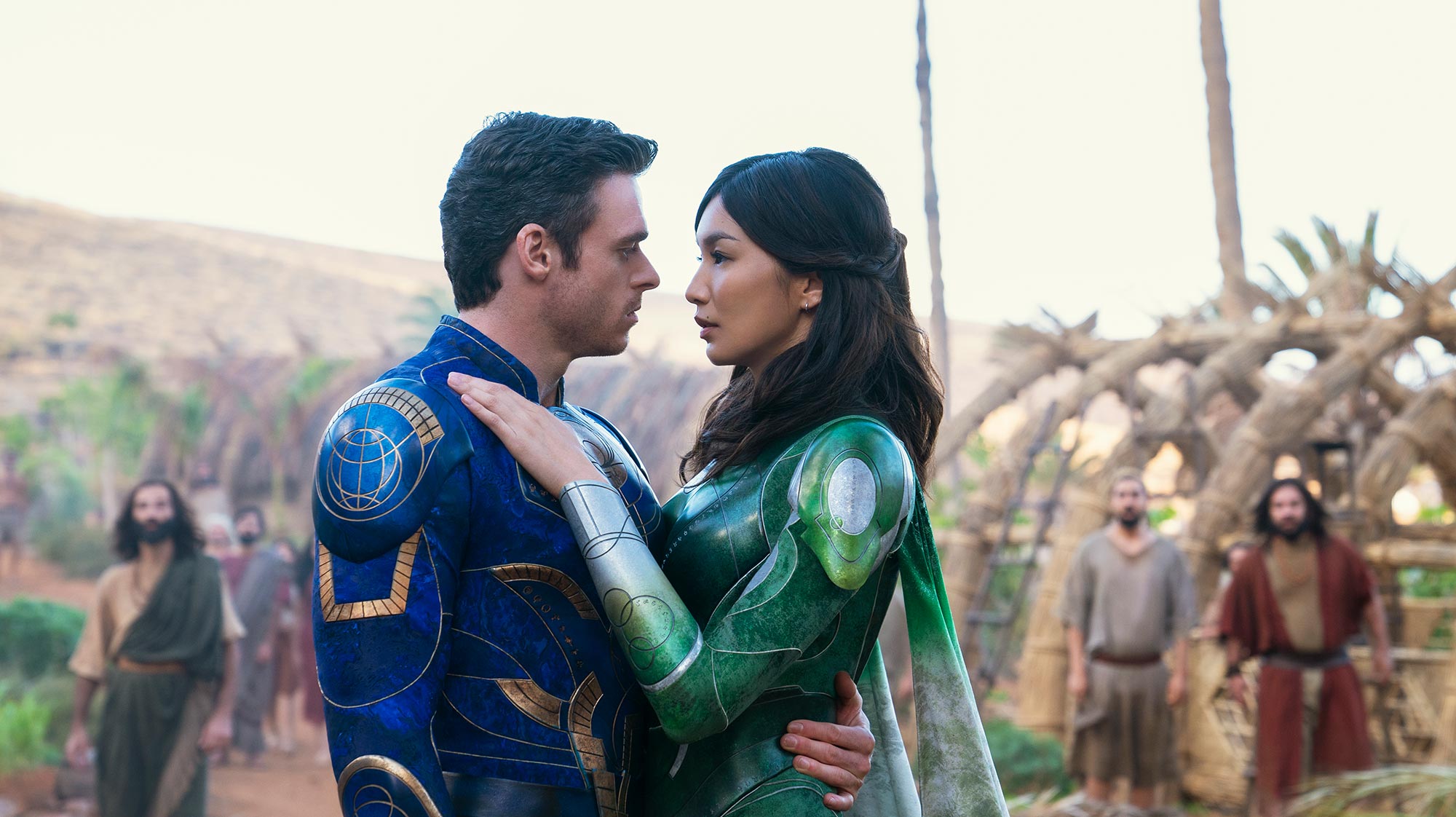
Gemma Chan centers the story as Sersi and often becomes a way in for viewers to hope to find an emotional tie to the plot as Chan’s ability to empathize radiates off her face and in the tone of her voice. It’s clear in her performances that Sersi’s one true love is the people that she secretly protects, while her chemistry with both romantic interests Richard Madden and Kit Harrington are less dynamic.
Madden is largely effective as a strong, brooding superhero though it isn’t till the final hour in which audiences will understand the conflict in his performance. His chemistry opposite Chan works better when staged in silence under Zhao’s dynamic visuals rather than in dialogue.
Stars like Angelina Jolie and Salma Hayek bring both high-profile and distinct character work to Eternals, but both are sidelined for large portions of the film and are overshadowed by more compelling performances from Brian Tyree Henry’s more empathic Phastos as well as Kumail Nanjiani and Harish Patel’s Kingo and Karun bringing much needed levity to the slow-burn pacing.
The film’s largest flaw is trying to do too much, and in doing so, disjointedly tossing viewers in and out of moments to connect with a character only to have three more spring up. It’s why there rarely is enough screen time given to Barry Keoghan’s most conflicted Druig or the bond Jolie’s Thena carves out with Don Lee’s sympathetic Gilgamesh.
Eternals looks its best when it’s in Zhao’s element as a director, outdoors in practical settings using natural light to give off a cinematic warmth that strives for something more dynamic than usual in a Marvel production, but often the overlaying of CGI-elements like the Deviant creatures the heroes fight clash harshly with the aesthetic Zhao is going for.
Bringing ten new major characters into a firmly established franchise like the MCU is a gigantic order for any single film to accomplish, and it’s too tall a task for Eternals to match the overall quality of films like Avengers: Endgame, Captain America: Civil War or Thor: Ragnarok.
But Eternals also opens so many intriguing possibilities for the future of the franchise both from a storytelling perspective and from a directorial one that its impact on the grand scheme of Marvel will likely be felt long after the film itself falls from cultural relevancy.

Wes Anderson movies are by in large an acquired taste.
Exceptionally dry and increasingly niche in form, his filmography represents an auteur’s sensibilities with relative apathy for how easy it would be for casual audiences to become immersed into and enjoy the worlds Anderson painstakingly creates.
Such is the case with The French Dispatch, an amalgamation of various French cinema styles combined with twee Anderson kitsch in an anthology design that makes use of elaborate production design, an extensive ensemble cast and a smorgasbord of visual easter eggs that reward multiple viewings and delight ardent fans of his cinematic eccentricities.
The film is structured around the style of the fictional New Yorker-like magazine it covers, opening with a brief introduction and then proceeding into a series of short stories that provide the framework for The French Dispatch as a whole. There’s no interconnectivity to them aside from being written by members of the magazine’s illustrious staff with occasional asides to the editor-in-chief played by Bill Murray.
Murray’s performance as Arthur Howitzer, Jr. is meant to be the emotional centerpiece of The French Dispatch, but his segments are so disparate and the information audiences learn about his character is so sparing that it’s hard to connect beyond a shallow, superficial level.
This often holds true of actors in each individual segment of the film, which range from about five to 30 minutes in length and provide such thin constructs of detail in a character’s humanity that it’s difficult not to see the actors themselves instead of those they are portraying, with two notable exceptions.
Benicio del Toro layers a conflicted soul prone to anger but with an artist’s eye and a noticeable emotional side as Moses Rosenthaler, the primary character of the first major story arc, The Concrete Masterpiece. His gruff persona is played both for comedic laughs and serious intensity and it’s in the softer moments opposite Léa Seydoux or Adrian Brody that a hidden warmth starts to emerge and makes his segment the most compelling of the entire feature.
Similarly, Jeffrey Wright’s take on a James Baldwin-esque character narrating and living through the events of a kidnapping set in the backdrop of a profile on police cuisine seems outlandish at first glance. But it’s played with such calm, considered patience as his Roebuck Wright slowly meters out dialogue as if savoring each word like the last morsel of a fine French dessert that keeps viewers intrigued by what’s still to come.
It’s harder for Wright to pull this off, especially, as his segment comes towards the end of the laborious feature and immediately follows a dense yet meandering political satire featuring Oscar winner Frances McDormand and Timothée Chalamet that is the most taxing on viewers’ patience and the least accessible to casual audiences.
The overextended ensemble cast virtually assures few stand out and all blend together in a larger tableau of ennui that seems deliberate on the part of a filmmaker who quite literally sets his film in a French town called Ennui.
Robert D. Yeoman’s cinematography is striking throughout in spite of Anderson’s seemingly at random leaps between color and black and white and the occasional hand drawn animation as well. It’s framed in such a way to highlight the intricacy of Adam Stockhausen’s production design and maintain a constant visual spectacle for audiences to get lost in.
Alexandre Desplat’s uniquely kitsch yet charming score provides a wonderful, world-building ambiance to each story and helps loosely bind the disparate parts together.
While not truly in contention for major accolades this season, award nominations seem likely for The French Dispatch in many technical categories such as production design, costuming, hair/makeup and lesser odds for cinematography and editing in crowded fields.
As is the case with almost all of his films, there’s too much quality filmmaking being done in The French Dispatch to totally dismiss this latest Anderson feature, no matter how filled it is with European-influenced eccentricity. However, it’s only recommended for the most ardent of cinephiles willing to engage with the high-brow humor and dense subject matter to find the core of what makes an Anderson film memorable.
 Cinematic Considerations