

World building in cinema can be a richly rewarding experience that will encircle and fully immerse the audience, pulling them out of their everyday lives and transporting them beyond their mind’s eye.
Crafting something intricate that will stand up to scrutiny and encourage repeat viewings while not overwhelming casual audiences is an especially tricky feat to accomplish. It’s one that director Denis Villeneuve tackles head-on with a flair for dramatic, picturesque visuals with a moving art gallery aesthetic that will surely thrill many and confound others.
Based on the Frank Herbert science fiction novel of the same name, Dune follows the son of a noble family charged with protecting valuable natural resources on the galaxy’s most dangerous planet while being thrust into a destiny beyond his understanding.
Villeneuve takes exceptional care to fully design and intricately flourish every note of Herbert’s novel to the point where the 155-minute run time of a film originally titled Dune: Part One feels narratively incomplete.
Because things are so long-winded in exposition and orienting viewers in the smaller details of the world of Arrakis, Dune can occasionally feel hollow and emotionally distant as characters pontificate about religious prophecies that never fully flesh out or political relationships that won’t come into play until an expected second film finishes Herbert’s original narrative.
Timothée Chalamet delivers a relatively commanding performance as the main character Paul, especially in more intense moments where Paul seemingly loses control over his emotions. Much of his role has softer tones as Paul attempts to find his way through a strange new world and because of the film’s structure, the work he’s doing likely will not pay off until the sequel bridges the gap.
Dune has a star-studded ensemble cast to surround Chalamet with, all of whom give considered, meaningful turns to help create the world of Villeneuve’s film.
Rebecca Ferguson gives the most emotionally resonant performance as Paul’s mother and it’s in the smaller moments opposite Chalamet or the confrontational moments with Charlotte Rampling that she truly shines.
Oscar Isaac is much more stoic and polished here than audiences may have seen him as more brash in the Star Wars sequels, but his Duke Leto is a drumbeat from which Villeneuve is able to build the political world of Dune.
For most of the 155-minute run time, Zendaya’s Chani appears simply as a clairvoyant vision in Paul’s dreams, a far-away whisper of things to come while not providing much to the actual film. Her presence is mainly to foreshadow the importance of her character in a potential second film not yet greenlit for production.
Smaller turns for Dave Bautista, Josh Brolin and Stellan Skarsgård also feel like placeholders for part two, though it’s Jason Momoa’s strongest theatrical turn as Paul’s weapons trainer and confidant Duncan Idaho that serves as standout among the secondary cast.
Villeneuve’s films have always had magical, artistic cinematography at the forefront and Dune is no exception with Greig Fraser’s visuals providing the backbone of the entire movie in keeping casual audiences engaged during the many overwrought and confusing moments for those unfamiliar with the novel’s canon.
It’s clear every frame of Dune has meaning beyond the simple visuals seen at first glance and exploring the nuance and unspoken iconography translated from Herbert’s novel will be a treasure trove that ardent fans will be scouring and debating over for years to come.
Even without dialogue or Hans Zimmer’s pulsating, ever-present score pounding in the ears of audiences, Villeneuve and Fraser have created a tapestry of art that transcends most big-budget blockbuster films and will remain the largest selling point for skeptical first-timers.
With a production as audacious and bold as Dune is, the exceptional quality of technical aspects of the film make it ripe for nominations, and likely wins, come awards season in below-the-line categories like cinematography, production design, editing and original score. In all likelihood, a Best Picture nod at the Oscars would make too much sense while voters could opt for more developed performances in other films rather than recognizing the ensemble cast of Dune in any notable way.
The spectacle on such an epic scale almost demands audiences seek Dune out in the largest theater possible to maximize the “experience” of it all, though the relative ease of access on HBO Max for more casual audiences to pause, rewind or segment out the film’s exceedingly dense subject matter and world building is more than acceptable as well.
Regardless, Villeneuve has crafted one of the year’s most complex and artistic cinematic films worthy of both acclaim and moviegoers’ time.
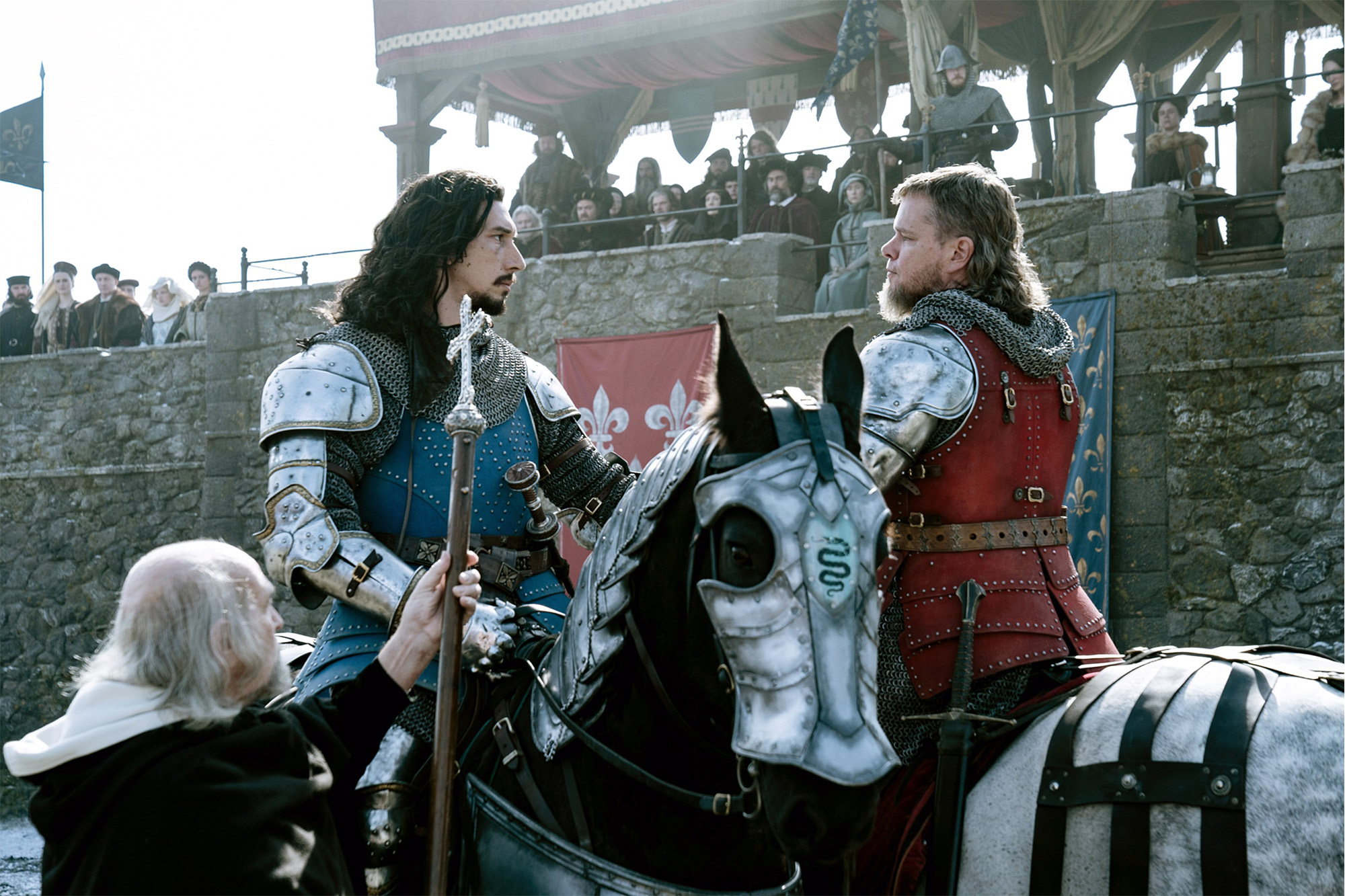
Two men – former close friends – battle to the death for honor and the truth in God’s eyes.
It’s a singular moment in time that frames director Ridley Scott’s latest film, an epic two-and-a-half hour medieval odyssey featuring the first script penned by Ben Affleck and Matt Damon since the duo won the Oscar for original screenplay for 1997’s Good Will Hunting.
But The Last Duel is about so much more than a brutal fight played out in front of thousands of Parisians.
While audiences see Sir Jean de Carrouges and Jacques Le Gris being dressed for combat, a third person is also readying for this moment, de Carrouges’ wife Marguerite, and it’s her equal footing to two polar opposite men that truly gives The Last Duel a unique and remarkably compelling narrative to draw viewers in.
Based on the true story of the last sanctioned duel in France, the film follows the lives of three individuals over the course of a decade during the 1360s and the rape allegation that brought all three to the brink of death in front of the king.
All three lead performances are distinctly intertwined because of the narrative structure segmenting out the events of the film into chapters, each focused from the vantage point of the primary character of the chapter.
This creates a dynamic energy to scenes as they unfold a second or third time, allowing the actors to change tone, physical presence or mannerisms with the same blocking and dialogue to completely transform everything audiences have come to know about the character up until that point.
Damon’s de Carrouges maintains the physicality and brutishness of a battle-tested soldier whose rough edges put him at a distance from those around him and leave him on the outside of high society. In the first chapter from his perspective, de Carrouges has a softer underbelly of emotion for both his mother and his wife, Marguerite, that sets him up to be the hero of the tale.
When the story turns to Marguerite or even more darkly to Le Gris, Damon sheds the emotional heart and plunges into a bitter, vindictive persona that indicates how those around him perceive de Carrouges to be.
Conversely, Adam Driver’s exceptionally shrewd work as Le Gris has a smarm-filled villainy that makes him easily reviling but does a remarkable job of rounding out the character during the middle chapter that makes Le Gris the opposite side of the coin to de Carrouges as one who uses his charm and smarts to curry favor rather than by brute force.
The film’s best work comes from Killing Eve star Jodie Comer, whose presence lingers throughout much of the film but truly comes alive once The Last Duel essentially cedes itself over to Marguerite for the final lead-up to the duel. Her performance is warm and cheery, somber and melancholic, up and down as the moment and perspective calls for.
Marguerite’s motivations are the least clearly defined of the three characters, which increases the degree of difficulty in pulling off such a magnetic performance, but Comer astounds with terrific poise and wonderful chemistry (or lack thereof as is called for) with her co-stars.
The exceptional screenplay weaves moments in time seamlessly by replicating them through the eyes of each of the three main characters, giving audiences perspective on how each sees the world by showing how events (or perceptions of events) differ based on who is living through them.
While this plays out solidly in interactions between de Carrouges and Le Gris, what’s more compelling is how approaching the narrative in a tri-fold, blended manner impacts the sexual dynamic of how the men believe their interactions with Marguerite are before revealing the truth through her eyes.
Putting Marguerite on equal footing with the two men in her life requires a deft screenplay, rounded out by writer Nicole Holofcener who takes the lead in the final chapter and creates the film’s most emotional moments in establishing Marguerite’s state of mind as she fights for agency in a world of men who never truly believe her.
The Last Duel is the kind of quality epic period drama that the Academy usually recognizes heavily come Oscar season though it’s unclear whether this will be the Scott-directed, Driver-starring feature voters will lean towards with the crime biopic House of Gucci still to come this fall. It certainly has the ability to earn Best Picture and Best Actress nominations in addition to several below-the-line categories but could be passed over for flashier films.
There’s a brutality to the violence that could be off-putting to more casual viewers, but ardent cinephiles looking for a grandiose big-budget drama with movie stars at the top of their game will easily find what they are looking for with The Last Duel.

What defines James Bond, the longest running character in cinema history?
Is it the suits that make the man or the boundless charisma that gets him to have his way with women? Does it have to do with the gadgetry he receives from MI-6’s Q-Branch, the exotic locations he travels to or the megalomaniac villains he faces off against?
Depending on where audiences fall on this question, their mileage may vary somewhat wildly with No Time To Die, Daniel Craig’s fifth and final outing as Ian Fleming’s iconic British spy.
It’s a definitive endcap to a nearly two-decade run that began with 2006’s Casino Royale as the series wove an increasingly intricate plotline with devastating emotional impact to Bond and those left in the wake of the trail he made globetrotting for queen and country.
Director Cary Joji Fukunaga cements Craig’s legacy as a premiere, top-shelf Bond with a final chapter that a wonderful job of capping off the good and bad of the previous four films.
Every aspect that could be left open-ended is clearly wrapped up in a neat bow riddled with bullet holes, tears and blood, while delivering on some classic Bond tropes that make No Time To Die reminiscent of early 007 formulaic plotlines.
The film largely takes place five years following the events of Spectre, with Bond in retirement on a beach in Jamaica until old friend and CIA operative Felix Leiter convinces 007 to return to action in search of a missing MI-6 scientist working on a nano-technology that could have devasting global impact. Along the way, Bond encounters the remnants of the Spectre organization with a blood vendetta against him, his former flame Dr. Madeleine Swann and a new foe shrouded in mystery and grudges of his own to bear.
In his final turn as the premiere spy, Craig turns in his most complicated, conflicted and poignant work as Bond. It rivals his turn in Skyfall as one of the best in the entire franchise as Craig carries the emotional weight of constant and perpetual loss around Bond. The five-film series has deconstructed the 007 character than any arc or actor has in the past and the burden has given the ability for Craig to find a depth to the character that bears out magnificently in the final moments of No Time To Die.
For much of the film, it’s a heavier drama that focuses on Bond coming to terms with himself in his retirement while the world changes around him and watching Craig grapple with the finality of moments as they occur is exceptionally special.
His chemistry with Léa Seydoux, who returns from Spectre as Bond’s love interest Madeleine Swann, is somewhat rocky at best, though the screenplay does a much better job of fleshing out her backstory in this installment and allowing Seydoux to find genuine emotion and character motivation to play with.
Her best work, ironically, comes in scenes without Craig where Seydoux is able to wrestle with Madeleine’s demons head on. One striking moment that truly showcases the acting quality that comes out in large segments of No Time To Die is in Swann’s office where she is confronted unexpectedly and directly by her own childhood trauma in a way that alters her performance and sets in motion the remainder of the film in a terrific way.
Academy Award winner Rami Malek imposes an often terrifying, methodical gravitas as poison merchant of sorts Lyutsifer Safin. There’s a pace and control to Malek’s line delivery that exudes a brooding malicious streak bubbling just underneath the surface and highlights just how cunningly smart Safin is in order to manipulate situations to his advantage. Safin becomes one of Bond’s most formidable foes not by physical force, but through psychological warfare.
Though his time opposite Craig in the same scene is rather limited by Bond franchise standards, the impact of their moments together is monumental in the magnitude of the impact on the series, and more importantly, as stand-alone scenes where two terrific actors can play and make the most of some of the best written parts of No Time To Die.
Fukunaga approaches the unenviable burden of summing up the Craig 007 story with an emphasis on creating visually engaging, character driven moments that allow the actors freedom to experiment and create on their own terms, but also have a dynamic energy that keeps audience engagement high.
No Time To Die is the longest of any film in the franchise, which speaks to how much Fukunaga as well as producers Barbara Broccoli and Michael G. Wilson aim to fully close the chapter on Craig’s tenure as 007. While some could rightfully argue that the nearly three hour running time is excessive, the film rarely drags once it gets its footing and audiences actively engaged in the plot shouldn’t feel any pull to check their watch.
Cinematographer Linus Sandgren, who won an Academy Award for his work on La La Land, gives No Time To Die a vibrant palette of colors that come in stark contrast to mood driven visuals from Roger Deakins in Skyfall and Hoyte van Hoytema in Spectre. Much of the look of the film has a distinctly modern interpretation of the visual style from early Sean Connery films like Dr. No and Thunderball thanks to the sharp eye of Sandgren focusing on warmer colors to give No Time To Die an exotic feel.
Sandgren captures both the extravagant locales and intimidate moments with such precision that they truly need to be experienced on the biggest screen possible and many action sequences were designed and are best in the massively immersive IMAX format.
The 25th entry in the Bond franchise features some magnificent and thrilling action sequences from a wild getaway chase in a remote Italian village with 007’s signature Aston Martin DB5 to a sexy and inventive shootout in Cuba alongside Ana de Armas who doesn’t get nearly enough screen-time as her character deserves.
The final act of No Time To Die blends weighty drama with intense action well and all across a large compound that production designer Mark Tildseley and his team make so expansive that it adds to the grandiose nature of Bond villain lairs while also keeping with recent tradition of grounding them within a larger realm of believability.
Billie Eilish’s melancholic title track perfectly sets the stage for what’s to come over the next two-plus hours. With lyrics that capture the impact of the opening preamble, Eilish’s mix of light airy whispers and stronger punches of tone make for an Oscar-worthy song that actually resonates over the course of No Time To Die.
It’s far too early to determine where exactly No Time To Die fits in the larger scale of the James Bond legacy, although it would be hard to see a way another film could do a better job of showcasing Daniel Craig’s immense talent and care for the part as well as create edge-of-your-seat thrills.
It’s not Casino Royale or Skyfall, but No Time To Die sits comfortably on a tier or even half-tier below those masterful films and is definitely worth the time and effort to watch the conclusion to this era of James Bond on the biggest screen possible.

Making a masterpiece is hard enough.
Following it up with something as good or better feels almost impossible, not just because it’s so hard to recapture the magic that brought the film to life but that there’s so much expectation for what comes next.
Sam Mendes created one of the most iconic entries in the James Bond canon with Skyfall and the weight of the world just comes right squarely onto his and Daniel Craig’s shoulders to create something on par with a film that should have been in the Best Picture conversation at the 2013 Academy Awards.
Ardent Bond fans heaped on even more pressure and expectation with the announcement of the title to the follow-up, Spectre, the alias given to the network of spies and assassins 007 has battled over decades led by Ernst Stavro Blofeld, the final boss so to speak in the entire franchise.
But there’s one major problem.
Spectre is not Skyfall. Not even remotely close.
They’re two very different films trying vastly diverse ideas with only the common threads of having the same characters and Spectre following the events of Skyfall.
While the first Mendes film is introspective and demure in its scope, focusing mostly on Bond’s inner demons and ability to perform his job, Spectre has a more outward gaze with Mendes bringing back more of a classic 007 tone, placing more emphasis on the pursuit of villains and world building those challenging Bond.
Here, Bond is on the hunt, with Craig becoming even more ruthless in his pursuit of everyone responsible for the death of M. It’s a colder performance than usual for the steely-eyed Craig, who is exacting with his actions and forces Bond’s emotional walls all the way back up.
While this creates a relentless, vicious Bond, leaning too hard into the colder parts of the character make it difficult for Craig to have good chemistry with most of the supporting cast and many exchanges feel transactional.
In perhaps one of the most scrutinized roles in recent Bond entries, Oscar winner Christoph Waltz does a terrific job of keeping the spirit of Blofeld’s film history alive while making the character his own, leaning into a more developed backstory to base his performance on. Again, it’s difficult to view Waltz’ Blofeld in a bubble without comparison to the perfection of Javier Bardem’s villainous work in Skyfall, but Waltz revels in the mystery of the character’s slow-burn introduction and handles the immense challenge well.
For as important of a character as Madeleine Swann becomes, there’s very little substance given to Léa Seydoux to work with beyond being an object of Bond’s desire and one of great mystery. Most of her performance is shrouded behind endless whispers in service of intrigue and her chemistry with Craig is skittish and standoffish at best, which makes their romance all the more out of left field and unlikely.
But Seydoux takes the role of Bond girl on with vigor and it doesn’t completely stop the tracks of the film, especially when taken into consideration with what’s to come for Swann in the future.
The supporting cast all do solid, yeoman’s work with Dave Bautista an especially terrific standout as a near silent hitman in the Spectre organization who relies on an imposing physical presence and brutality to strike fear into the hearts of viewers in a role that becomes a mix of classic Bond henchman Jaws and Oddjob.
This especially bares out to be true in one of the film’s most nostalgic moments, a fight scene between Bautista’s Mr. Jinx and Bond through a series of train cars that evokes the pivotal brutality of the final fight between 007 and Kronsteen in From Russia With Love.
Other action sequences in Spectre are a mixed bag with the opening sequence in Mexico City being a highlight of the entire film while the final 20 minutes of the film bounce back and forth between Bond’s pursuit of Blofeld and M’s confrontation with C, resulting in a sequence where neither plotline gains much momentum or traction with audiences and feels somewhat anticlimactic.
Mendes does a solid job navigating the world of Bond on a much larger scale, although his second foray into the Bond franchise feels far less personal given the increased stakes and doesn’t quite have the same gravitas that Skyfall did. As a pure action adventure film, however, Spectre benefits greatly from having Mendes at the helm to navigate the tonal shifts between action and exposition.
One of the film’s biggest strengths is the rich visuals captured by cinematographer Hoyte van Hoytema, who returns to shooting on film after Roger Deakins used digital cameras for Skyfall. The result is a textured, yet sharply framed picture that elevates the robust, unique settings for Spectre as Bond jet-sets across the globe in pursuit of Spectre.
Hoytema does an exceptional job of evoking a feeling of intense heat during sequences in Mexico City and Tangier, while thrusting viewers into the brisk cold of an Austrian lake as Bond goes to confront the Pale King.
Sam Smith’s powerful ballad “Writing’s On The Wall” strives for the level of Adele’s title theme from Skyfall, even winning the same Academy Award for Best Original Song. But the whiny, nasally vibrato doesn’t really fit the overall vibe of the story, especially not in keeping with the rhythmic drum tones prevalent in the opening action sequence during Día de los Muertos in Mexico City nor the return to London that immediately follows the animated credits.
Composer Thomas Newman returns to provide Mendes with another soaring and majestic score with which to set the tone for both intense and intimate moments.
Spectre returns to the traditional action-adventure format that Bond fans were more prevalently used to prior to the Craig era films. Though it rushes through creating the villainous world of 007’s most famous adversaries, it does serve as a solid bridge between Skyfall and No Time To Die, setting the stage for a dramatic and climatic end to a two-decade long buildup.
This is the fourth in a series of retrospective reviews of the James Bond film franchise as made by EON Productions in anticipation of the release of the 25th entry in the series, “No Time To Die,” which arrives in American theaters on October 8th.

There are Bond films and then there is Bond cinema.
Most entries into the canon of 007 are Bond films, the ones that find Roger Moore battling giant men with metal teeth or Pierce Brosnan facing off against an old friend over satellites that can destroy financial markets.
Director Sam Mendes’ debut in the filmography of Ian Fleming’s British spy isn’t just a film. It’s pure Bond cinema magic, with an endless array of breathtaking shots that feel ripped from paintings in an art gallery to a boundlessly engaging score to the most intimate and personal character-based drama the franchise has ever seen.
Skyfall is a two-plus-hour endless love letter to James Bond, secret agent man, in his most baseline, essential form. Mendes directs with an emphasis on substance over style and yet his first foray into the world of 007 is among the most lavish, brooding and breathtaking of the entire franchise.
The film’s plot is built on the back of key relationships, most notably M’s handling of her agents, the current 007, James Bond, and a former agent out for revenge.
After Bond and up-and-coming agent Eve are unable to stop the theft of a list revealing the identities of spies infiltrating terrorist organizations, an attack on MI-6 brings 007 back into the fold on the trail of former agent Raoul Silva, who seeks to discredit and kill M.
Craig gives a career-best performance as a Bond whose age may be getting the better of him, struggling to get back to form both physically and mentally. There’s a small, considered amount of exhaustion to his work that comes across as being worn down to the point where the mind is willing but the body might not be capable.
Over the course of the film, Craig finds Bond’s vigor first in physical, hand-to-hand combat while bathed in neon light in a Shanghai skyscraper and later emotionally as he connects with, and then loses, Séverine as a means to hopefully get over the death of Vesper Lynd. Bond’s dismissiveness of his past, be it a hardened exterior to loss or an unwillingness to discuss his youth, plays out incredibly well in Skyfall because of Craig’s control of inner anguish and concerted efforts to mask out the pain as long as possible, which plays out well especially when he physically breaks down at the end of a training session.
The payoffs of Skyfall also don’t hit as hard if not for Dame Judi Dench, who exudes dignity, confidence and emotional subtlety as M. As the walls come crumbling down around M, Dench portrays every moment as if it could be M’s last, but with a steely resolve that feels quintessentially British and in keeping with the tradition of spies flying into the face of fear without regard for their own safety.
Javier Bardem brings a magnetism to the screen as the film’s antagonist, Raoul Silva, that reflects both the character’s background as a former 00 agent like Bond as well as a sadistic streak that stems from his perceived betrayal by M.
Silva’s entrance into the franchise – a long foreboding walk to camera where he tells Bond an allegorical tale about killing rats – hits the mark better than any introduction of a villain in the 007 filmography outside of the reveal of Blofeld in Connery-era Bond.
The character’s immeasurable power comes from Bardem’s strength not as a physical imposing brute, but in mentally superiority that asserts itself in the most vengeful ways. It’s to Bardem’s credit that Silva leaps off the screen from the jump and relishes in each and every delicious way he can get under the skin of his adversaries. There’s a magnetism to his performance that only matches something like what Anthony Hopkins does with Hannibal Lecter in Silence of the Lambs, bad guys that audiences want to see fall but can’t help but rally behind all along the way.
Skyfall also boasts a tremendous secondary cast that helps to form the key pieces for the rest of Craig-era Bond films including Ben Whishaw’s wry, almost too smart for his own good Q, Naomie Harris’ brash and combat ready Eve and the incomparable Ralph Fiennes as Mallory, a former special operative with governmental oversight on MI-6 that proves to be a formidable adversary for both M and Bond.
Mendes utilizes his theater directing background to ground Skyfall in character-forward drama. Events in the film don’t happen in order to simply move from set piece to set piece or in spite of massive logic flaws as is the case with many 007 films. There are clear motivations behind each decision that cause events to unfold in a natural way, especially when it comes to Silva’s intentions as a villain hoping to exact psychological torture as much, if not more so, than physical pain.
The film wouldn’t be nearly the masterpiece that it is without Roger Deakins’ striking, transfixing cinematography that encapsulates Bond in a post-modern world with a distinctly retro feel, as if the exceptional storytellers of the 1960s had been transported to 2012 and given the technology to produce content with digital cameras.
There are countless iconic visual moments across Skyfall that will stand the test of time: Bond appearing through the shadows with his Walther PPK as a lone beam of sunlight pulls him into frame; M looking on in somber despair over a series of caskets covered in British flags; a tuxedoed 007 standing tall and intimidating as he floats on a water taxi to a casino in Macao passing through the mouths of dragons; the vivid imagery of the night siege on Bond’s childhood home, especially the underwater battle between Bond and a nameless thug in a frozen pond and M’s escape to the chapel.
Action sequences in Skyfall are grandiose in their impact and flow seamlessly from set piece to set piece within the larger scene as a whole that keeps viewers constantly on the edge of their seats. The opening pre-title pursuit widely varies in tone from slow-burn to shootout to driving to thriller moments on a train without any gaps, thanks in large part to sharp editing and a majestic score by Thomas Newman.
Mendes is able to blend action with high drama in the film’s final action sequence, a lengthy siege of Bond’s childhood home where he, M and the manor’s keeper Kincade are holed up in. Each portion of the sequence has its own unique style, going from an elevated Home Alone style booby trap section to a more demonstrative assault that evokes more high cinema war films and culminating with the most poignant of death scenes in franchise history in the family’s church. It’s a majestic ending to cap off and solidify Skyfall as a top three entry in the filmography and cement Bond’s shattered state of mind with resolve moving forward.
Adele’s rapturous title ballad is the first Bond theme song in franchise history to win an Academy Award and rightfully so. Returning to the big, audacious style of classic Bond themes, her dulcet, yet melancholic tones set a somber, introspective mood for Mendes’ film and are wonderfully encased by an animated title sequence that foreshadows the final showdown in Scotland and the impactful opening moments where Bond seemingly falls to his death after being shot off a train and into the river below.
Skyfall will stand with both Casino Royale as well as classic Sean Connery era films like Goldfinger and From Russia With Love as the standard by which all James Bond movies are judged upon. Skyfall is also unique in that it feels the closest in keeping to the character created in the Ian Fleming novels while not being directly based on one of his books.
One of the most dramatic, intensely thrilling entries in the entire 007 canon, it’s easily arguable that Skyfall is the best film in the decades long series with its unique blend of modern cinema and nostalgic feel for Bond in bygone eras.
This is the third in a series of retrospective reviews of the James Bond film franchise as made by EON Productions in anticipation of the release of the 25th entry in the series, “No Time To Die,” which arrives in American theaters on October 8th.

Following the events of Casino Royale almost immediately, Quantum of Solace takes a strong first step towards being a worthy follow-up film in Daniel Craig’s second outing as the famed British spy James Bond.
But midway through, it feels as if director Marc Forster forgets about the globally intricate network of villains established in the first three hours of Craig’s career as 007 and shoves off on a side quest to thwart an ecologically driven heist in the vast empty wastelands of Bolivia.
Throughout Quantum of Solace, Bond pursues lead after lead on the trail of Mr. White, one of the final contacts Vesper Lynd made before her death and a key player in a shadowy organization that MI-6 and the CIA know almost nothing about. Along the way, 007 links up with a former Bolivian intelligence operative on the trail of a non-profit CEO with a questionable history in South America.
Craig is best when he’s exuding a callousness that some define as coming from a quest of vengeance over the death of his love Vesper at the end of Casino Royale, but that feels just as much coming from a near-robotic dedication to finishing the job at whatever cost, no matter how reckless.
Still coming into his own as the character, it’s as if Craig and Bond are both finding themselves by digging deeper into the work with a relentless brutality and cold, unnerving steel blue eyes. Without question there’s an anger to his performance that constantly bubbles under the surface and it’s to Craig’s great credit that his true motivations are never fully realized.
Olga Kurylenko’s Camille is far from a normal Bond girl as she has little to no interest in sleeping with the spy, uses the men around her in order to get closer to her target and is on a simple quest for revenge.
On the whole, Kurylenko lacks the personality required to make Camille a memorable character, which could also be said of the film’s primary villain, Mathieu Amalric’s Dominic Greene. Aside from the rapist general that Camille wants to kill, Greene is the only other new villain of note in Quantum and for the most part, his character comes across rather intentionally as a smarmy little worm that folds under pressure.
Whether that comes from direction by Forster, the screenplay itself or from Amalric’s performance, having a villain so weak undoes a lot of the great work Casino Royale does in establishing Bond’s bonafides as a hero. Because Greene feels like a minor speedbump in Bond’s way to something bigger, so too goes the film as a whole.
Quantum of Solace ramps up the dynamic between Bond and his handler, M, putting long-time series veteran Judi Dench in a well-deserved, more prominent role. It’s clear in Dench’s performance that M has a unique soft spot for Bond, serving as his protector while giving Craig the business verbally with disappointment that jut borders the line of derision. It’s clear in the few moments on screen together that there’s a great affection between the actors as well as the characters, which helped to create the atmosphere that will come to fruition in Skyfall.
The direction has its moments, especially early, but Forster can’t stick the landing.
He opens with traditional Bond: a car chase through a hilly Italian countryside, quick cross-cutting to ramp up the intensity as 007 pursues a double-agent through the street of Siena, luxurious espionage at an Austrian opera house.
Forster’s truly going for it in the latter scene, muting the volume at one point to let the sullen score from the opera Tosca provide the anthem for a chaotic chase sequence that marks the end of high-octane Bond cinema.
But the final hour pushes Bond to the outer edges of society, a vast barren wasteland that often renders a largely grandiose franchise muted and neuters the film overall, especially deflating audiences’ expectations that had been built up to that point.
Early action scenes have a lot of pizzazz with the high-stakes car chase through narrow tunnels and across a gravel yard maintaining the same dynamic energy Martin Campbell did with Casino Royale. There’s also a heightened sense of brutality in fight sequences where audiences can literally feel Bond going for the jugular at every turn, not caring about the body count that he racks up.
As the film progresses, however, the quality of the action dilutes quite considerably and by the time of the final showdown in the desert, a brief five minute sequence that doesn’t stay with Bond the whole way and is largely hidden by fire feels more rushed than it should.
Jack White and Alicia Keys’ theme song “Another Way To Die” pushes the film’s secondary narrative that for a spy, there’s no one you can really ever trust but it doesn’t really match what Forster is doing on screen. The title credit sequence foreshadows Bond’s journey to the sandy dunes of Bolivia and the culmination of Quantum’s ecological/economic warfare and yet the stilted way in which Forster transitions into animated title cards and then plunges audiences back into a world of relative opulence feels disjointed.
Quantum of Solace will ultimately be regarded as a lesser Bond film for its lackluster back half and how boring the villain and his ecologically driven scheme are in the grand scale. It does feature another strong, committed turn from Craig as 007 and one that helps make the films around it (Casino Royale before and Skyfall after) seem even better by comparison.
This is the second in a series of retrospective reviews of the James Bond film franchise as made by EON Productions in anticipation of the release of the 25th entry in the series, “No Time To Die,” which arrives in American theaters on October 8th.
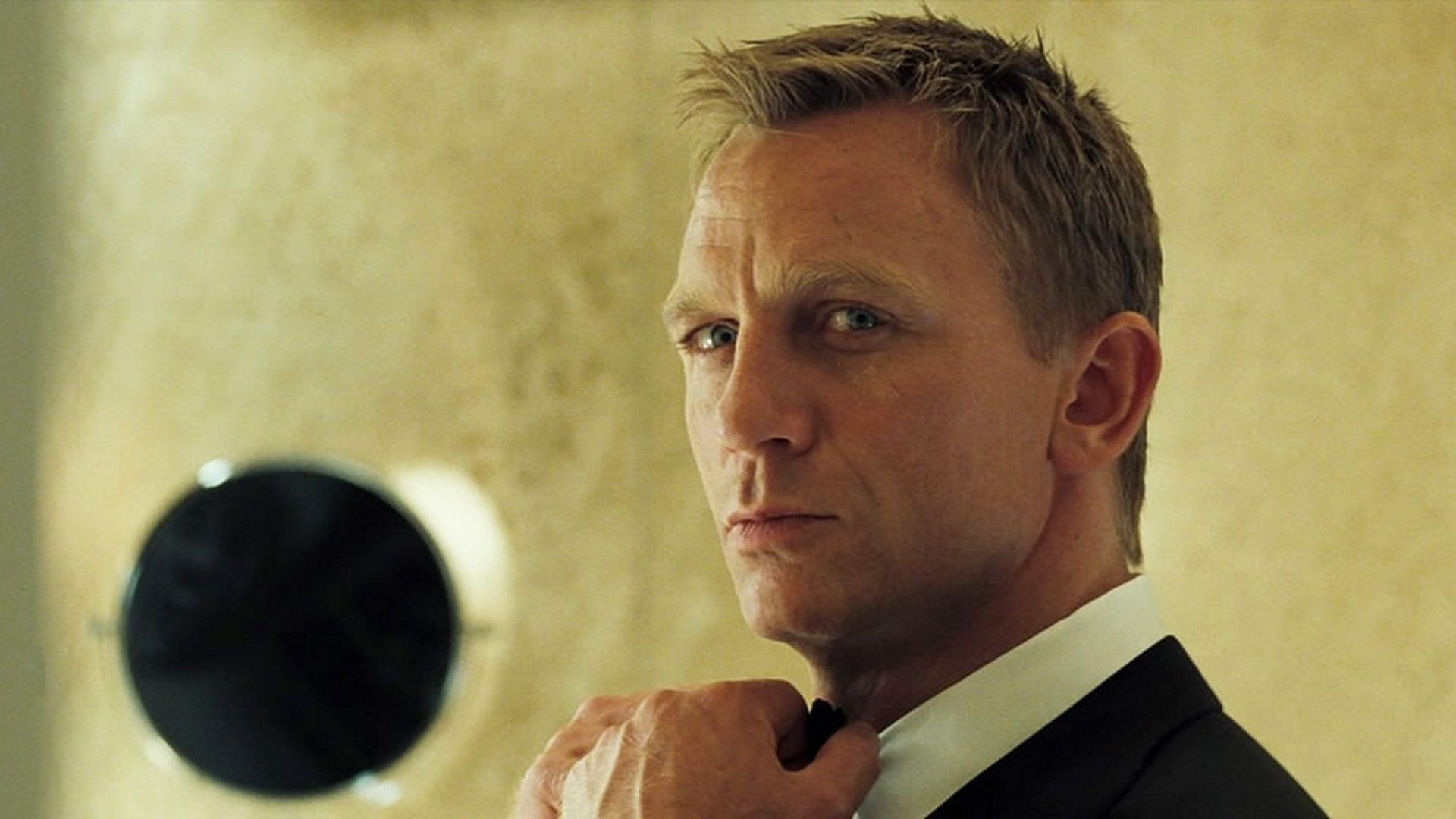
James Bond has been revived several times over the past six-plus decades, but never has a debut film felt as electric as when Daniel Craig achieved his double-0 status with a brutal bathroom assault and classic espionage hit shrouded in black and white.
Director Martin Campbell’s 2006 film “Casino Royale,” a vivid modern reimagining of Ian Fleming’s first novel, completely resets the debonair British secret agent languishing after the laughable “Die Another Day” and shows him as a raw, vulnerable man relying on talent and training to overcome the odds.
To many, the film was a true introduction to the character as Craig became the Bond for the 21st century in much the same way that Sean Connery was the character for Generation X or Pierce Brosnan the 007 of millennials.
“Casino Royale” marks Bond’s first mission after having earned his license to kill and set out on the trail of the world’s premier financier to terrorists, Le Chiffre, which sets him on a jet-setting adventure across the planet and into a high-stakes poker game.
From the opening moments, it’s clear that Craig will be a different sort of spy than audiences are used to as James Bond. His performance is ruthless and methodical, with a callousness that evokes both a blind service to king and country as well as a hardened exterior that masks years of deep internal pain.
Much of the film is centered around Bond’s judgement and reading of people, something that plays out well in the poker hands he squares off in against terrorists and in his assessment of friend versus foe. There’s a cerebral quality to Craig’s line delivery in almost every situation that borders upon being a suave robotic monotone and it colors nearly every relationship his Bond forms in the film with one major exception.
It’s rare to see a Bond girl truly challenge James both in written dialogue and in magnetic performance quite like what Eva Green brings to the role of Vesper Lynd.
While it’s clear that she’s the ultimate sexual conquest and will eventually subdue herself to Bond’s charms, the cat-and-mouse game Green and Craig play with witty verbal repartee that begins with genuine loathing, molds into mutual respect and then a searing love built from the flames of near-death experiences is palpable and exhilarating to watch unfold.
It’s clear that what Bond achieves with his hands and a gun, Lynd is capable of with her words and a pen and it is incumbent on Green to maintain unwavering confidence that matches Craig beat for beat until the pair bring down each other’s walls towards the film’s climatic ending.
Mads Mikkelsen is among the best, most cunning villains in the history of the franchise as Le Chiffre with a stoic and chilling stare that accentuates the character’s trademark eye scare and weeping blood. It’s as calculating and exact a performance as Craig, almost as if Le Chiffre was an evil mirror of this new Bond and one that helps to put Craig over as a super spy by showcasing just how strong of a villain 007 overcomes.
One of the hallmarks of “Casino Royale” that sets the tone for the entire vision of Craig’s five-film tenure as James Bond is how the franchise goes back to its more subdued, natural roots. Mostly excised are the outlandish and implausible plans for world domination and this Bond becomes driven like a bullet relentlessly moving forward at a cold, steady pace towards his target, whatever that may be.
This is especially true of the film’s many action sequences, which have a dynamic and kinetic energy firmly rooted in reality. Bond chasing a bombmaker through a construction site and into an embassy in Madagascar leaps off the screen with a frantic pace, jaw-dropping parkour artistry and highlights the contrasts in style between the 007s of old and this youthful agent freshly minted with a license to kill.
Craig is the most physical of the Bonds, participating in the most stunt work and ramping up the aggression as this James would rather run straight through an obstacle than stealthily find a way around it.
Chris Cornell’s blasting rock anthem “You Know My Name” helps set the aggressive tone for a new era of James Bond, while the film’s wonderful score by composer David Arnold melds older melodies from 007 days gone by with the cadences and rhythms of the Cornell song to help accentuate scenes.
Campbell is sometimes too on the nose with his directorial style and editing, being excessively forward with where things are headed within scenes like hard cutting to a security camera to overemphasize Bond being recorded in action or making product placement for Sony brands comically noticeable.
But when he’s on his game, Campbell and cinematographer Phil Meheux do a terrific job of paying homage to the origins of both the character and the film franchise, visually linking Craig with Connery in a way that leaves the distinct impression that both men could have been doing the same job in different eras under the same code name.
Gender-bending the iconic shot of Ursula Andress emerging from the water onto a sandy beach in “Dr. No” with Craig doing the same on the shores of the Bahamas is an exceptionally inspired choice that canonizes the new Bond with links to the past.
The debut film for any actor taking on the mantle of James Bond is critical to his success in future films and “Casino Royale” is on par with “Dr. No” in terms of best establishing its lead as THE James Bond rather than just A James Bond.
Cold, menacing and yet one of the most dramatic entries in the entire canon, “Casino Royale” is a top tier 007 film that cements Daniel Craig as a generational action star and rebuilds an iconic character from the ground up for years to come.
This is the first in a series of retrospective reviews of the James Bond film franchise as made by EON Productions in anticipation of the release of the 25th entry in the series, “No Time To Die,” which arrives in American theaters on October 8th.
With originality dwindling in the blockbuster cinema marketplace, it’s often that viewers might feel like they’re watching the exact same film all over again.
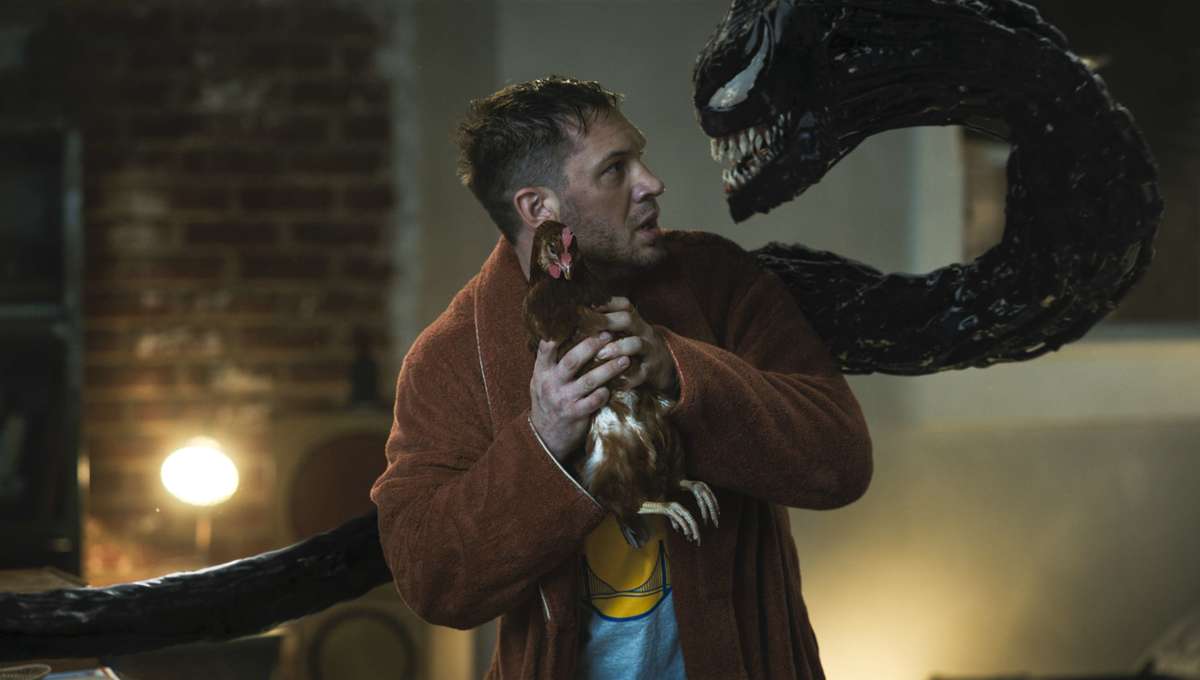
Three years ago, Sony broke through the comic book ranks with a quirky cult hit spin-off for a classic Spider-Man villain that had a unique charm with an awkward buddy comedy dynamic mixed in with Marvel lore.
Returning to the well, the follow-up to Venom has pretty much all the same story beats as the first film, an even shorter cut that reduces the film to an episodic feel; the one you’d have to see to understand the ones to follow.
Venom: Let There Be Carnage takes its rudimentary shape from serial killer films like Silence of the Lambs as reporter Eddie Brock gets exclusive access to death row inmate Cletus Kasady to tell his story and possibly convince him to reveal details of unsolved murders. When Kasady becomes infected by some of Brock’s blood containing a portion of the symbiote Venom that lives inside Brock, Kasady turns into the villainous Carnage and begins a rampage to find his long-lost love.
The primary reason the Venom films work at all is Tom Hardy’s committed, manic dual performance both as Brock and the voice of Venom. It’s a blend of comedy and impassioned, positive psychopathy that creates an anti-hero audiences would want to follow around.
On his own, Hardy’s Brock is pretty much a big loser as Venom admits time and again in both films. He’s a bland, unremarkable reporter with a questionable ability to relate to others and Hardy can be pretty boring to watch when portraying Brock.
But it fits perfectly with his pitch-perfect voice work as Venom, taking the gravelly tones of his work as Bane in The Dark Knight Rises and twisting them with a quirky naivety that makes Venom the star and comic relief of the film. The script from Kelly Marcel isn’t much beyond a series of cliches and literary references that young viewers won’t recognize, but Hardy’s ability to breathe life into words on a page works exceptionally well. It’s clear that Hardy’s performance as Brock is triggered by listening to his recordings as Venom so Brock literally talks to himself.
A better movie might have been had if the rest of the film matched Hardy’s dedication and forethought.
Woody Harrelson has his occasional moments as serial killer Kasady, although whatever nuance he was attempting early in the film fades away into obscurity as Harrelson is covered over by a big red CGI symbiote. By the final half-hour, Harrelson is almost doing nothing more than occasional facial expressions, which is sadly more than is given to the women of the film.
Michelle Williams returns as Brock’s former fiancée Anne Weying, a pivotal character from the comics that gets pushed off to the side as damsel in distress. Functionally, there’s not much of a reason for the character to be introduced into the film at all other than to advance plot points.
At least, Naomie Harris’ unrecognizable turn as Kasady’s imprisoned lover Frances Barrison has a significant backstory and moments to shine, even if they are in service of the man in her life.
This Venom ramps up the violence pretty significantly and teeters close to the edge of an R-rating with the chomping of heads, gruesome stabbings and savagery that often happens in a bloodless way or off-screen to keep the film from losing half its target audience. Much of the action occurs in the shroud of darkness, which helps mask the viciousness of what would actually be occurring if the events took place in real life but also helps to hide the flaws in Sony’s CGI-work.
There’s nothing exceptionally special that makes the second Venom film worth a trip to the theaters aside from being spoiled about the major plot aspects as well as a critical mid-credit sequence with significant ramifications for the future of the franchise over the coming years. It’s a brisk 90-minute adventure that could provide younger viewers with the occasional thrill on a weekend where other new releases aren’t on their radar, but Venom: Let There Be Carnage wallows in its relative mediocrity compared to other superhero films like Shang-Chi and the Legend of the Ten Rings.

When viewers are first introduced to Tammy Faye Bakker, it’s 1994.
She’s caked in layers of makeup, some of which are permanently tattooed onto her face. Her cheeks are bloated as she sucks down a can of Diet Coke and her nasally, Betty Boop-esque voice pierces through like nails on a chalkboard.
If this is a sign of things to come, things aren’t looking good for The Eyes of Tammy Faye, director Michael Showalter’s latest film and a biopic drama about the infamous 80s televangelist and her husband Jim’s rise to prominence and fall from grace.
But the film succeeds wholly on the back of Oscar nominee Jessica Chastain, who takes Tammy Faye as an innocent, precocious ingenue and carries her through decades of blind faith, tribulations and an unrelenting warmth with open arms and an open heart.
In traditional biopic fashion, The Eyes of Tammy Faye reverts back to her youth as a child of divorce in a church system that viewed her as both a memory of her mother’s shame and as a prodigy of evangelism. As she meets Jim Bakker in college and swiftly marries him to start a career as traveling preachers together, Showalter and Chastain slowly build up Tammy Faye beyond the possibility of caricature while simultaneously adding layers of makeup to mask the pain she hides from everyone around her.
Her performance is electric and always on the forefront, elevating Tammy Faye’s larger than life personality with a midwestern charm and an endless devotion to people that would come off as fake or put on in the hands of an actress not engulfed by Tammy Faye’s spirit the way Chastain is here. There’s an enthusiasm to every element from the singing Chastain records herself to the countless small interactions Tammy Faye has with minor characters that make things feel authentically as if the present moment is the most important thing in Tammy Faye’s life.
Andrew Garfield is an interesting, yet solid choice to play Jim Bakker as the chemistry he has on screen with Chastain doesn’t quite feel right most of the time but that also feels accurate to Jim and Tammy Faye’s relationship in general. Garfield sees considerably less screen time and isn’t given much opportunity to develop Jim as a character, but what comes across very strongly across his performance is a quirky charm that draws Tammy Faye in and slowly twists into something much more deceptive.
There’s a constant feeling that Jim is hiding something from Tammy Faye, whether that be financial troubles or his wavering sexuality, and this could easily be overplayed. Garfield deliberately makes choices that push Jim to the edge of something but never falls over. It’s a terrific balance he finds in showing cracks in Jim’s persona while leaving everyone in the dark about his true motivations.
Cherry Jones does a solid job as Tammy Faye’s religious, moderately disapproving mother, though the secondary scene stealer is unquestionably Vincent D’Onofrio’s turn as Rev. Jerry Falwell, who he imbues with a presence that can be felt well before Falwell walks into a room and long after he leaves.
His Falwell is like a mob boss for the Christian conservative movement of the 1980s, menacing not in his actions but in his softly spoken, sharply chosen words that allow D’Onofrio plenty of room to chew the scenery in the best possible way.
A different film might have more closely examined how Tammy Faye’s increasing celebrity status molded the bright, always-on persona she portrayed on screen into something so ingrained in her that she could never turn it off to grief or feel hurt.
But The Eyes of Tammy Faye attempts to convince its viewers of her relative naivety to Jim’s illegal activities and her disinterest in confronting accusations that he may have had affairs with men. Jim’s one-time dalliance and payoff to secretary Jessica Hahn is only briefly mentioned, almost as an aside to help explain the Bakker scandal and downfall.
It’s a concerted decision by Showalter and screenwriter Abe Sylvia to keep viewers’ attention so narrowly focused through Tammy Faye’s point of view that significant gaps in the storytelling emerge with everything that Jim is doing just outside the frame. This helps root audiences firmly in Tammy Faye’s corner but leaves a lot to be desired from an overall cinematic perspective.
The film wants to be a lot of different things at one – serious character driven drama, a comprehensive biopic of Tammy Faye’s life, a subtly piercing dark comedy – and Showalter struggles to keep things from swaying back and forth between these elements. Technical aspects of the film are exceptionally well done; the production design firmly plants viewers inside the 1980s better than most films looking back on the era and the makeup/hair design makes tremendous sense when compared to the real subjects.
From an awards perspective, it’s difficult to see the film earning nominations outside of Chastain’s brilliance in the title role and while this performance is significantly better than Renee Zellweger’s Oscar-winning turn as Judy Garland in Judy two years ago, it’s unlikely that Chastain will have anything more than an outsider’s chance to receive a nomination in spite of how much she probably deserves an outright win.
Audiences who remember the Bakker controversies should find themselves transported back to that period while younger viewers will certainly gravitate to Chastain’s singular, masterful performance. The Eyes of Tammy Faye” may not end up on a top 10 list at the end of 2020, but it’s certainly one worth seeking out in theaters.
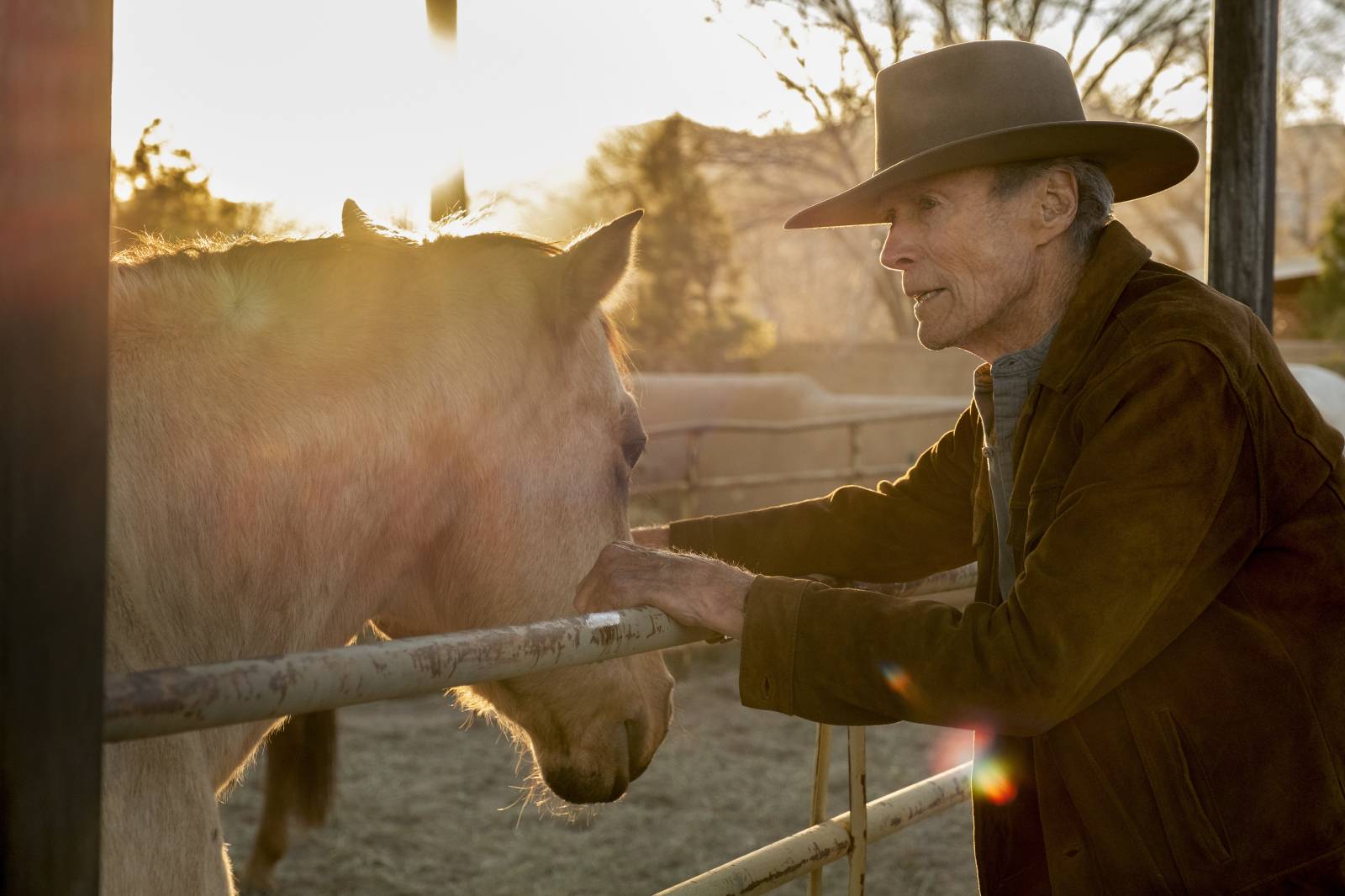
Clint Eastwood, one of the greatest actor/filmmakers of all time, doesn’t know how to quit.
At 91, the two-time Academy Award winning director makes history by being the oldest person ever to star above the title in a movie with Cry Macho, which arrived in theaters and on HBO Max this past weekend 50 years after the debut of his directorial debut Play Misty for Me in 1971.
Eastwood has become famous as a quick filmmaker, opting to lock in scenes in as few takes as possible. While the degree of difficulty to maintain quality in such a rapid pace is hard enough, it’s even harder when Eastwood is directing himself and isn’t able to watch scenes play out from behind the camera.
This causes some issues in Cry Macho, a wonderfully shot film that places Eastwood in the center of the frame for 100 minutes as a former rodeo star and ranch hand coerced into traveling to Mexico in hopes of reuniting an old friend with his teenage son. As the aging Mike and brash youth Rafo make their way to the border, they both learn about themselves, each other and what it means to be macho.
Eastwood’s age often gets the better of him as Mike, a man whose days of cowboying should have been ten to twenty years in the past rather than thirty or forty. This awkwardness makes it difficult for audiences to not feel Mike too brittle for the journey he partakes, especially as he stumbles around trying to catch a rooster, bend down to check beneath a car or ride a wild stallion.
But because it’s Eastwood and because it’s impossible to separate the man himself from the character he’s portraying, viewers will latch onto Mike relatively quickly and forgive these shortcomings as an eccentricity rather than a fatal flaw.
Eastwood is effortlessly transfixing to watch, balancing a rough exterior with a gentle undertone better than any western actor. It’s as if viewers are seeing Eastwood confront his own filmography covered with bravado and machismo and struggling to figure out what to do when the fire begins to smolder.
Eduardo Minett challenges Eastwood every step of the way as Rafo, the aimless teen fending for himself on the streets of Mexico City. Though the screenplay somewhat neuters Rafo’s unbridled personality by limiting him to simple false bravado, Minett does a solid job of matching Eastwood’s tone.
His performance is not exceptionally showy although Minett is capable of being both a worthy pseudo-antagonist to Mike as well as a misguided soul that audiences can feel a sense of compassion toward.
Cry Macho suffers from a narrative perspective, where audiences are forced to accept wild leaps of unlikely responses to situations that feel logically impossible. It’s hard to imagine the events of the film playing out without Mike being seriously injured or killed within the first act.
This also extends out to the supporting characters themselves who feel like afterthoughts in terms of motivation or purpose outside of being narrative plot points. Mike and Rafo are clearly fleshed out both in the screenplay and in the larger film itself, but many of the smaller parts feel ripped from the pages of an old western: the nosy buffoonish sheriff, the strong-willed yet submissive love interest, the friend willing to send the protagonist out to die in order to make a quick buck.
Cinematographer Ben Davis uses natural lighting to create a number of artistic, visually engaging shots that help profile Eastwood as the sun sets on his career. It’s moments like Mike camping out underneath the stars set to the tunes of composer Mark Mancina’s terrific score or slow dances with Mike and Marta in a dust-filled room that will leave viewers breathless.
If Cry Macho is the final film in Eastwood’s illustrious career, then it serves as a solid coda worthy of his generational talent, especially when paired with his other later years self-reflective melancholic pieces Gran Torino and The Mule. The visuals are worthy of checking out on the big screen, although they don’t lose any luster in an at-home viewing on HBO Max.

One of Hill Country Film Festival’s greatest success stories makes its theatrical debut this weekend.
Last Night in Rozzie, directed by Sean Gannet from a screenplay by Ryan McDonough, won both the Cinema Dulce (Best of Fest) and Best Feature Film award at the 12th annual festival this summer and will open in limited release on the big screen as well as premium video on demand this Friday.
The film originally screened for its world premiere as a short film in 2017 before filmmakers secured the financing to expand their 14-minute piece into a full length feature. Both versions of Rozzie have the same basic outline, although the 80-minute version changes some significant plot choices and recasts the lead actors.
Last Night in Rozzie follows Ronnie, a New York City corporate lawyer pushed back to his roots in the small Boston suburb of Roslindale to reunite his dying friend Joey with his young son and confront the demons 25 years in his past. What complicates things is Joey’s request that Ronnie facilitate the visit without letting his ex-wife – and Ronnie’s childhood crush – Pattie know.
This conceit drives the central narrative and complicates a relatively straightforward story. While it works well to enhance the relationship between Ronnie and Joey, things become a bit wobblier between Ronnie and Pattie as there’s an uncomfortable tension to the core of their interactions placed by the narrative that the film can’t seem to get away from.
Neil Brown Jr. makes the transition from television to movie lead with his first major feature role after several successful seasons on CBS’s Seal Team.
As Ronnie, Brown Jr. is very approachable and engaging to follow for audiences as viewers bounce around Roslindale almost never leaving his side. Often he portrays Ronnie as being wound so tightly that he’s on the verge of breaking, which works in the larger melodrama but also makes Ronnie very inaccessible and distant in relationships.
Without question, the highlight of the entire film is Jeremy Sisto’s magnetic performance as Joey. The energy in scenes doubles any time Sisto is on screen regardless of Joey’s physical state and he constantly draws viewers back into the heart of the film whenever they may begin to disengage from events outside the hospital.
The veteran character actor best known for a four season run on hit NBC crime drama Law and Order commands a range of emotions from humor to anger to deep seeded sadness that moves fluidly throughout. Sisto is brilliant at making the most of a role that keeps him largely confined to a hospital bed and yet it’s as if Sisto’s looming presence dances around scenes he’s not in, elevating occasionally marginal melodrama.
Nicky Whelan is solid in an underdeveloped role as Pattie, a fiercely independent mother who wants nothing more than to shield her son from things of the past. On her own, it’s a strong performance but a constant standoffishness between Ronnie and Pattie makes her work feel relatively disjointed from the rest of the film.
Part of the narrative hook of Rozzie relies on a series of flashbacks to slowly reveal information to the audience about both Ronnie and Joey’s close, yet fractured relationship as well as why Ronnie left town and spirals downward upon his return.
Gannet measures his usage of these scenes, which sharply cut into the flow of the film in order to push the audience emotionally and the effect works moderately well especially at the pivotal moments, though the return to the current timeline can be a bit off-kilter at times.
Visually, Rozzie is exceptionally sharp for an independent film and puts too lush a shine on the more somber story. This decision by Gannet and director of photography Matt Suter doesn’t really make sense until the final moments of the film, where a haze is laid over the screen to bring audiences deeper into Ronnie’s devolving state of mind and helps solidify the film’s ending.
Last Night In Rozzie may not have the star power of large scale adult melodramas, but its independent spirit, universal story and Sisto’s remarkable performance might be the right find for local cinephiles who missed out on its summer screening in Fredericksburg wanting to check it out at home.
Note: Matt Ward is a programmer for the Hill Country Film Festival.

Marvel’s latest action-adventure comic book movie, Shang-Chi and the Legend of the Ten Rings, is groundbreaking in a number of ways.
It’s the milestone 25th film in their cinematic universe to be released and the first to feature an Asian lead, predominantly Asian cast and an Asian director in Destin Daniel Cretton, a massive step forward for representation in American cinema.
The film also comes at a transition point for the studio, which has finally begun to introduce new characters and worlds following the events of Avengers: Endgame, and places a lot of hopes on relative unknown Simu Liu to break out and help lead the next wave of inevitable sequels and spinoffs.
Shang-Chi introduces audiences to Shaun, a slacker working as a valet at a downtown San Francisco hotel with his best friend Katy, when thugs attack him on a bus and he reveals expert level martial arts training that allows him to fend off his attackers and spiral the pair down into a world of ancient mysticism and international terrorism.
The problem with the film’s narrative, however, comes from the fact that it almost isn’t Shang-Chi’s origin story at all. It’s the origins of a much larger universe and the unlikely love between his parents, the villainous leader of a crime syndicate known as The Ten Rings and a woman living in a hidden village empowered with mystic martial arts.
As Shang-Chi discovers who his parents truly are, audiences begin to see his skill set as a fighter and his moral compass, but there’s not really a character for Liu to build himself around. His Shang-Chi is a steady presence and an excellent fighter to choreograph action sequences, but Cretton and co-writers Dave Callaham and Andrew Lanham saddle the title character as the least interesting out of all the main figures in the film.
This isn’t to say Liu isn’t a star in the making as Shang-Chi. It’s clear that Marvel has big plans for the character in their expanding universe of content and Liu’s chemistry with Awkwafina as Katy is stellar both emotionally and comedically. He’s also an exceptional fighter, doing most of the stunt work himself.
Tony Leung as the film’s erstwhile villain steals the entire feature with a layered, emotional performance as a man grief-stricken by the loss of his wife and completely blinded by anger and frustration that builds to rage.
Fight choreography throughout the film is perhaps some of the strongest in all Marvel movies, focusing heavily on the beautiful artistry of hand-to-hand martial arts combat in sequences that evoke everything from Crouching Tiger, Hidden Dragon to Rumble in the Bronx to the John Wick franchise.
These sequences are masterfully shot by cinematographer Bill Pope, who floats in and out of each fight like a bird dancing around, moving the frame in such a way that large chunks of the film feel more like ballet and less like fisticuffs. This is especially true of the best moment in the entire film – a flashback recalling how Shang-Chi’s parents first met – that is exquisitely captured and filled with playful, colorful romanticism unlike anything audiences have ever seen in a comic-book movie.
As is usually the case with Marvel films, however, the final third of Shang-Chi ventures a bit too much into the CGI-heavy, bombastic set pieces that stretch a simpler story beyond the bounds of the director’s intent and infuse it unnecessarily with a cataclysmic battle for humanity that dissociates viewers from all the great work leading up to that point.
There’s so much opportunity for growth and Shang-Chi is on the cusp of a great entry into the Marvel Cinematic Universe that the final 20-25 minutes leave a somewhat bitter taste.
Given the promise of Liu as a mainstay moving forward and the important of the film to the larger franchise as a whole, there’s enough in Shang-Chi to make it a must see though an in theater versus at home screening will depend on viewers’ willingness to not be spoiled in advance.
 Cinematic Considerations