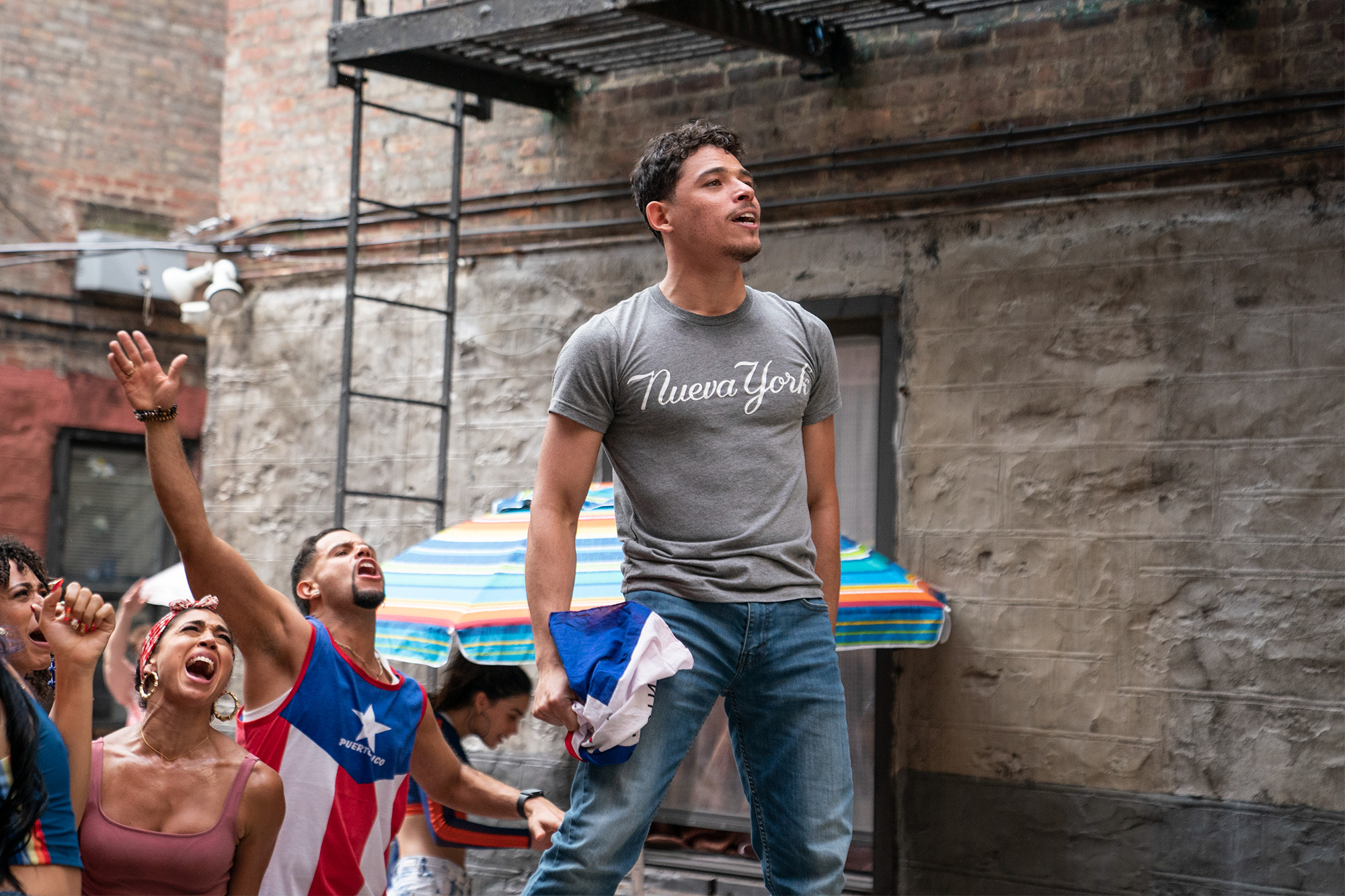

Much of great filmmaking comes down to proper world building, creating a community within the narrative to help bring the audience into an unfamiliar, unique place.
Filmmakers often showcase the worlds in which they come from, which makes authentic portrayals of diverse communities rarer than they should be.
Lin-Manuel Miranda’s first Broadway smash hit took audiences into his community, a melting pot of Latino immigrants from all walks of life. Paired with the vision of “Crazy Rich Asians” director Jon M. Chu, In The Heights pushes underrepresented voices to the forefront of major box office cinema with one of the year’s most vibrant and joyous film.
Based on the Tony Award winning musical, In The Heights follows a summer in the lives of four young residents in the Washington Heights district of New York City, a diverse immigrant community staving off gentrification and generational expectations.
After breaking out in Miranda’s “Hamilton” and the 2018 remake of “A Star is Born,” Anthony Ramos should be a full-fledged star after this performance as Usnavi, a young bodega shop owner with dreams of returning to the Dominican Republic to rebuild his father’s beachside bar.
It’s within Ramos’ eyes that audiences are pulled into the world of the film and his everyman persona carries the narrative through its relatively disjointed moments leaping between multiple storylines.
Melissa Barrera is a revelation to American audiences as the Mexican actress breaks out in a big way with a passionate, wide-eyed turn as Usnavi’s love interest, Vanessa, who longs to leave her job at the local salon to become a high-end fashion designer.
A secondary love story between Leslie Grace’s Nina and Corey Hawkins’ Benny worked better in the Broadway production than in the film version as neither character gets the full character development needed to get audiences to buy in to their romance.
“NYPD Blue” star Jimmy Smits provides a commanding, fatherly presence as taxi cab company owner Kevin Rosario, while Miranda himself takes on a smaller role as the piragua salesman that doubles as a sort of Greek chorus to reinforce the larger community presence.
The best work in the entire film comes from Olga Merediz, who offers a simply perfect turn as the neighborhood matriarch Abuela Claudia. In what becomes the emotional core of In The Heights, Merediz personifies the immigrant struggle masterfully over the course of a single song and her portrayal of Abuela’s quiet confidence and faith in God becomes a guiding light for not just the community but the other actors as well.
The tenderness in Abuela and Usnavi’s relationship is exceptional and bridges the gap between the first and second act perfectly.
Chu has the ability to create visual spectacle that becomes cinema magic in short bursts. The style he developed for “Crazy Rich Asians” translates incredibly well for the musical moments in this film. Bright, vivid imagery that radiates joy into the hearts of audiences are perfectly edited to match the rhythms and flows of Miranda’s music.
The bombastic showstopper “96,000” set at a local pool features a cast of nearly a hundred basking in the outdoor sun while slamming their hands into the water and encapsulates the pulse of the community in one hopeful set of images.
Conversely, Chu’s nuanced, almost theatrical take on “Pacencia Y Fe” is far more intimate, trapping audiences in narrow, confining hallways meant to symbolize the struggles immigrants faced in their new life in America. It’s a breathtaking sequence that will likely help Merediz contend for an Academy Award as a supporting actress after earning a Tony nomination for the same role as a part of the original Broadway cast in 2008.
If there are shortcomings to the musical adaptation, the most glaring comes out in between songs as the energy and vibrancy are tempered down by exposition. Chu struggles in these moments to provide the amount of urgency needed to maintain the audience’s attention, but it’s swiftly regained as soon as the next number kicks off.
The driving force of the narrative is a sweltering heat wave that leads to a blackout in the neighborhood, but visually, In The Heights lacks the ability to indicate just how hot it is on the block besides sweat stains on the backs and underarms of shirts even though the characters aren’t sweating themselves.
In The Heights will likely be a popular prediction for major nominations next awards season, but an early June release and the looming West Side Story remake from Steven Spielberg slated this December could leave the crowd-pleaser on the outside looking in.
Film lovers intrigued by In The Heights should make the effort to seek out the film both in theaters and on HBO Max. The musical format lends itself to easy viewings on a streaming service at home as audiences can create their own intermissions between musical sequences and Chu’s visual language makes a perfect backdrop for the casually engaged.
But it’s also important to catch In The Heights on the biggest screen possible, where the spectacle of the vibrant musical can be fully appreciated.
More importantly, it’s a chance to vote with the almighty dollar to convince studios that culturally diverse cinema is not a niche market and offers something for every moviegoer.
In that regard, In The Heights is a true triumph.
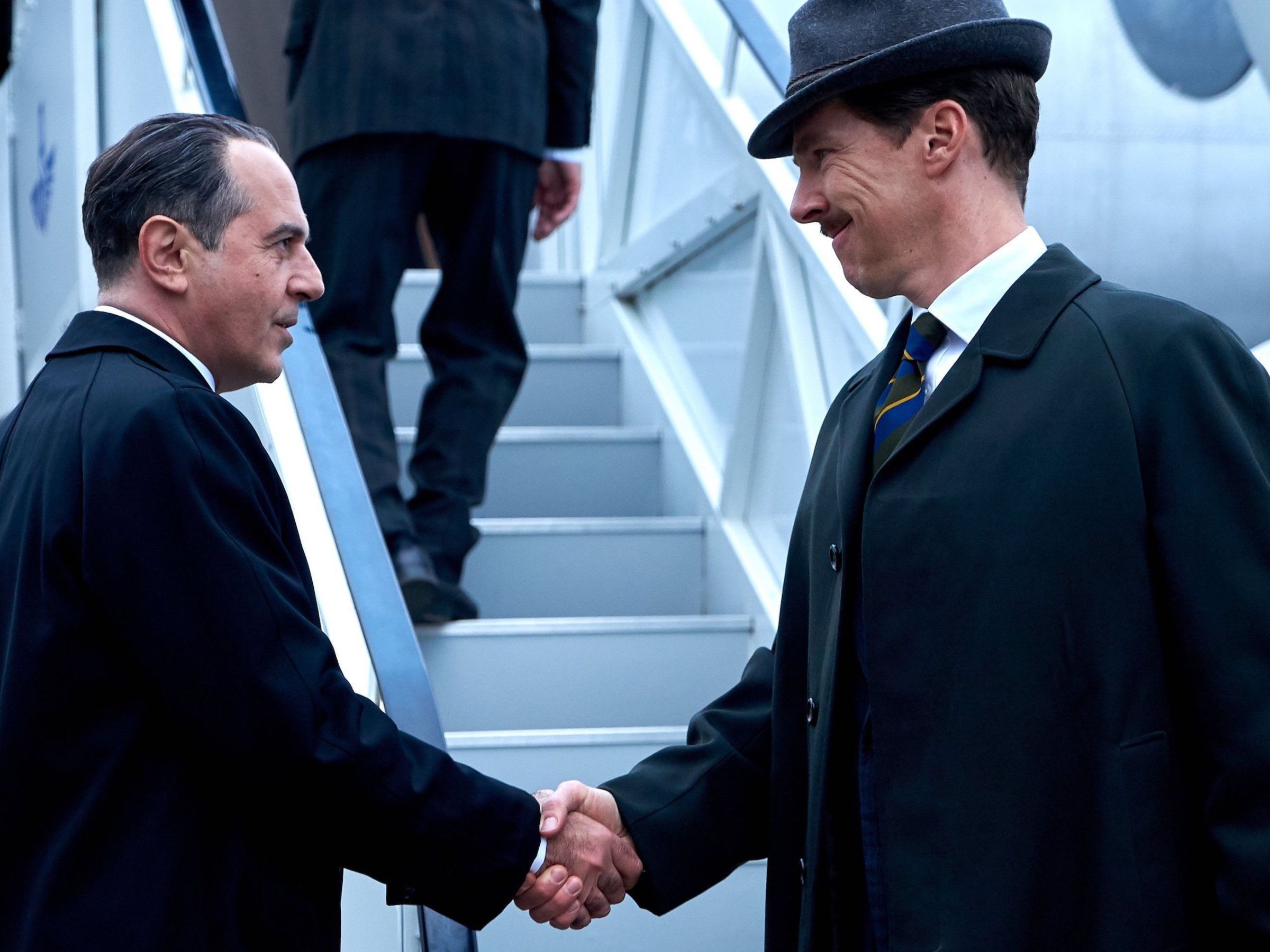
British period dramas often have a reserved, stuffy quality to them that keeps the audience at a distance.
While viewers get to know the characters and feel for their plight, it’s hard to connect as an audience member to the genre.
Director Dominic Cooke keeps his latest feature in this standoffish distance, but it becomes something more with compelling characters and intriguing spy-craft at the ready.
Based on real events, The Courier follows businessman Greville Wynne who is recruited by American and British intelligence to serve as an intermediary traveling to the Soviet Union in order to receive vital information that could put an end to the Cuban Missile Crisis.
At the core of The Courier are a pair of exceptional leading performances that elevate the entire film beyond simple period drama or espionage thriller territory.
Academy Award nominee Benedict Cumberbatch gives a stirring performance as Wynne, invigorating the character with a nervous energy that heightens his portrayal of the “amateur” spy. Cumberbatch is a very deliberate actor whose internal monologue often reads like a book across his face, which serves him well here as the everyman Wynne begins to fray at the edges under immense pressure.
His sincerity and earnestness make Cumberbatch a perfect counterpart to Merab Ninidze, playing the Soviet informant Oleg Penkovsky with a hardened shell that melts quietly over the course of the film as Wynne and Penkovsky form their unlikely bond.
Ninidze approaches the role from the burden Penkovsky feels weighing on him, knowledge that could lead to nuclear war and conflict over if and how to provide a warning to the other side in order to stop it.
The film’s supporting cast does a solid job of supporting Cumberbatch in his performance within Britain, especially Rachel Brosnahan as an ambitious CIA operative trying subtly to take charge of the operation and Jessie Buckley as Wynne’s suspicious wife whose appearance doesn’t truly come into its own until her final scenes.
Penned by Tom O’Connor, the screenplay approaches Wynne and Penkovsky’s relationship as a dance, an unromantic courtship of wary acquaintances seeking to prevent nuclear war.
While the spy work is important to propelling the story forward, the film takes great care to fully establish trust between the pair – and through Cumberbatch and Ninidze’s performances – pull the audience into the narrative because of the characters as much as what they are doing.
The Courier grounds itself within the true history of the Cuban Missile Crisis by frequently using news broadcasts and speeches from figures like President John F. Kennedy to set the stage for events to come.
The only exception in this regard, however, is when Cooke puts the focus on Communist Party chairman Nikita Khrushchev, casting actor Vladimir Chuprikov to play the Soviet leader so audiences can see Penkovsky attending high-level meetings to blend the world of reality and docudrama.
The film’s pacing is cumbersome and meticulous as serious period spy films tend to be and casual viewers could become bored or lost in the minutia. The Courier doesn’t have the splashy spectacle of undercover spy-craft that propels action forward, but the distinct dramatic dialogue on a scene-to-scene basis reminds favorably of the Tom Hanks-led 2015 film Bridge of Spies.
A demonstrative, rousing score from composer Abel Korzeniowski heightens the cerebral tension within scenes, especially as suspicions begin to rise from all sides as The Courier hurtles its way toward the tumultuous third act.
In many ways, The Courier perhaps suffered more than most films did as a result of the COVID-19 pandemic. After a solid debut at the 2020 Sundance Film Festival, it was set up for a strong fall theatrical release through Lionsgate that would have drawn in ardent cinephiles hungry for period drama.
Three times delayed and pushed back, The Courier stumbled out in March to little fanfare as a relative afterthought during the midst of awards season.
Now available widely to rent or stream on demand, the solemn, yet powerful character-focused espionage drama should prove to be worth the wait for fans of John le Carré novels and slow-burn cinema.

Growing up on animated films, there are any number of terrifying villains that easily scare young children with their wicked and cruel nature.
One such baddie with a demonic last name and a penchant for turning puppies into fashion statements felt especially repulsive and scary to adolescent cinephiles.
After two Angelina Jolie-led features putting the antagonist of Sleeping Beauty at the center of the plot, the Mickey Mouse company has set its sights on a redemption – or at least anti-hero – arc for Cruella De Vil.
Director Craig Gillespie’s Cruella far exceeds the expectations of previous live action iterations of classic Disney animated IP and is a ton of fun for adults who grew up on either the 1961 animated feature One Hundred and One Dalmatians or Glenn Close’s turn as the villainess in 1996’s live-action 101 Dalmatians.
The film is essentially an origin story for the character, set in London during the punk-rock 1970s as a young Cruella seeks to make a name for herself in the fashion world while also picking pockets alongside a pair of thieves she befriends along the way.
It’s an incredibly difficult task for Gillespie and Disney to salvage the Cruella character and it shouldn’t be possible given just how reviling her intentions have proven to be.
Simply put, the only reason Cruella works at all is casting Oscar winner Emma Stone in the title role.
Her performance as the reimagined Cruella is very against type for her and yet exactly what Gillespie needs to center the entire film. Audiences need to be magnetized by the actor in the tole to overcome the fact that they are conditioned to be reviled at a villainess who eventually plots to turn dalmatians into a fur coat.
Cruella also provides the additional challenge of presenting the title character as a dual personality – the kinder, more reserved Estella and the darker, aggressive Cruella. Stone has to maintain a keen sense of where the character is within the context of the script and within each scene and does a terrific job of blending the two into one cohesive performance.
Emma Thompson does a terrific job as fashion designer The Baroness, who serves as the film’s antagonist. Alongside Joel Fry’s charming work as Jasper, Paul Walter Hauser continues to prove why he’s one of the best character actors in Hollywood today with a delightfully humorous turn as absent-minded henchman Horace.
Gillespie certainly leaves his mark on the film for better (dynamic visuals and cutting dialogue) and for worse (unnecessarily long handicam shots, excessive run time at over 130 minutes).
The technical aspects of Cruella are especially alluring with two-time Academy Award winning costume designer Jenny Beavan making the film an absolute must re-watch simply for the endless plethora of fantastical, outlandishly fashionable pieces of art that Stone, Thompson and countless extras wear scene to scene.
In a film that sparks from a woman’s obsession with fashion, Beavan creates a whole world within each stitch, color palette decision and cut. Often viewers are so drawn in by what Stone is wearing that her magnetic performance becomes somewhat hidden behind artistry in black and white.
The visual paradise of Cruella extends to its entire production design – a hallmark of any top-caliber Disney film – as 1970s London engulfs the screen through elaborate staging and crisp, emboldened cinematography from director of photography Nicolas Karakatsanis.
A signature of Gillespie’s style in 2017’s terrific biopic I, Tonya, major moments in Cruella are themed with ‘needle drop’ infusions of a variety of era-appropriate punk rock anthems. In one or two instances, these ‘drops’ add to the larger personality of the film, but often the ‘Now That’s What I Call Music!’-esque soundtrack drowns out Oscar-winning composer Nicholas Britell’s masterful mood-setting score.
Cruella could easily become a frontrunner in technical categories come awards season, especially in costumes and production design.
Where the film may get lost, however, is in its marketing as parents of younger children may simply see the Disney origin story as a family friendly outing at the movies.
Gillespie’s film is much darker and more relentless with its pace than a typical Disney venture and children may get lost, confused or bored by large stretches of the film. Adults, though, should revel in just how uniquely ambitious this interpretation becomes.
It’s incredibly reductive to suggest Cruella is an amalgamation of Joker, Birds of Prey and The Devil Wears Prada, but there’s certainly parallels there that are unmistakable comparison points between this film and those “influences.”
The least Disney movie of all traditional Disney films in quite some time, Cruella marches to the beat of its own black and white drum while simply not caring about audience expectations or response.
Perhaps the most pleasant surprise so far in 2021, Cruella is certainly worth seeking out in theaters although probably not quite worth a $29.99 price point for home viewing on Disney+.
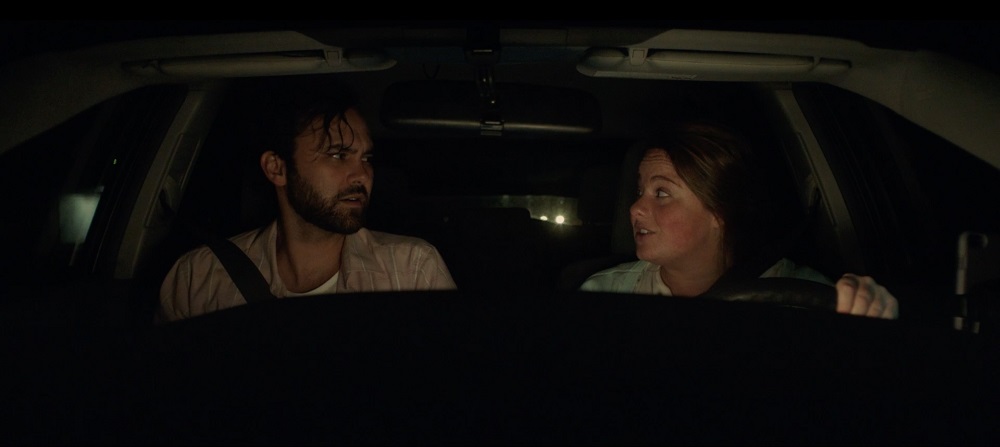
Will Bakke’s latest film wasn’t made with the pandemic in mind.
Shot over 12 nights in a house on the edge of Austin, Bakke and co-writer Michael B. Allen sought to simply create the feel of a Friday night party that everyone has been to in their twenties.
There’s the overly friendly guy, the girl who just wants to leave as soon as possible, so-and-so who’s been out of town so long it feels like they’re a totally different person.
Life always seems to converge in these house parties and The Get Together definitely strives to evoke an early Richard Linklater Slacker, Dazed and Confused vibe with its brisk, engaging narrative.
The Get Together follows four people who all end up at the same party but didn’t come as a group. Homebody August stumbles into the situation after a strange encounter as an Uber driver; Damien gets interrupted trying to propose to his girlfriend Betsy by a quirky former classmate; and thirty-something Caleb sullenly tries to find himself after both his bandmates quit on him in the same night.
Though it purports itself to be a party movie, the festivities themselves become more of a backdrop to the characters themselves and their arrival feels genuinely coincidental and could happen in a variety of ubiquitous scenarios beyond a post-college rager.
Courtney Parchman kicks things off with an instant infusion of energy as the frantically overwhelmed August, a loner whose uncomfortability in large parties will immediately resonate with generations of wallflowers wanting to be a part of the action but awkwardly unsure of how to proceed. Her performance is effervescent and endearing, immediately drawing the audience into the narrative in a way that jars viewers when the night restarts from a new perspective.
Alejandro Rose-Garcia melds a relaxed confidence with exasperation and longing to recapture the glory days of his fading youth as Caleb. It’s an impressive effort from the Austin-based musician better known as Shakey Graves, who helps anchor The Get Together with chill bravado masking a wounded soul.
The Get Together mixes its tones between the serious and playful well, but Chad Werner’s all-too-naïve, fun-loving oddball Lucas tiptoes the line of eccentricity without falling over into caricature. Werner is the comedic center of the entire film and despite not being the focus of the film, Lucas is by far the most memorable character and will draw the biggest reactions in a love-him or hate-him way.
The film is reminiscent of many one-night party films, but Bakke and Allen’s decision to restart the night at each act break complicates the structure. The narrative moves precisely to reveal just enough of the larger picture, teasing things to come in such a way that new revelations change the entire outlook.
As a director, Bakke does a terrific job of keeping the audience informed of time and place, something that could easily get confusing over the course of 70 minutes with viewers bouncing back and forth between the same moments from different perspectives.
It’s important in timeline-bending films like these that the filmmaker properly orients us in the visual geography.
The filmmaking team accomplishes this by making the geography visually distinctive. Each location within the house are colorfully hued to trigger in the viewer’s mind where events are taking place. Garrison’s bedroom is shaded in a deep red; the outdoor patio and pool area pop with neon pink and yellow; and the main living areas have a blueish hue.
Made prior to the pandemic, The Get Together is the sort of small indie film that will help remind audiences of what life was like before social distancing and masks, when drinks were shared freely and elbow bumps didn’t take the place of big hugs.
Charming and sure to put a smile on faces, The Get Together deserves a look on demand for independent film lovers ready to engage with friends after considerable time apart.
NOTE: The Get Together was a 2020 selection for the Hill Country Film Festival, where this critic serves as a film programmer. The Get Together was screened Sunday afternoon as part of the organization’s Indie Film Series at Hoffman Haus.

Taylor Sheridan has a mind for creating thoughtful, tense cinema based in the harsh realities of open country.
The screenwriter world building around West Texas bank robbers in Hell or High Water and Mexican drug cartels for a pair of Sicario films successfully transition to the director’s chair in 2017, adapting his own script with his debut feature Wind River, a cold, blistering murder mystery thriller.
Sheridan, creator of the Kevin Costner-led hit television show Yellowstone, returned to the big screen this past weekend with Those Who Wish Me Dead, the most bombastic of his efforts to date and a notable departure from the intimate character dramas that made Sheridan a rising star in cinema.
His second major directorial effort appears to be Sheridan’s take on the 90s midbudget action thriller, pitting Angelina Jolie in the middle of a Montana forest in a story that feels like a strange amalgamation of Backdraft and Last Action Hero.
The Oscar winner stars as a firefighting park ranger alone in the wilderness only to stumble across a teenage witness on the run from the hitmen who murdered his father in front of him.
Jolie does a solid job of portraying a woman haunted by her past and yet her performance feels out of place in this otherwise mundane B-level thriller.
The opening act of Those Who Wish jumps back and forth between Jolie’s Hannah and the inciting incidents that put the hitmen on the trail of Finn Little’s Connor.
Jolie strikes a compelling balance between reckless and somber as Hannah relives tragedy in constant post traumatic stress. Small moments are intimately captured and well-acted, showing glimpses of what a quality Sheridan film can be. Seconds later, this becomes abruptly shattered as the story wanders off to something else.
Little has some heartfelt sadness to his performance although hunted characters in thrillers often are as one-note as Sheridan has written Connor.
The same is true of the two ex-military brothers played by Aiden Gillen and Nicholas Hoult, whose banter is less witty than slightly nefarious and only rises to a slight level beyond mindless goon because Gillen and Hoult are strong character actors who help the material with inflected line delivery.
Sheridan’s strongest point as a storyteller is how a forest fire impacts the entire feature in its second half, becoming both the visual anchor for the final act as well as a clock to drive momentum and trap the hunters and the hunted in the forest.
Cinematography from Ben Richardson is exceptionally strong for a mid-budget thriller. At times, the computer generated images that give the fire its power feel strike an awkward tone where audiences can easily imagine actors performing in front of a green screen. Richardson comes alive, however, in open air moments with a naturalistic approach to his visuals.
Sheridan’s screenplays have been known for both their cruel, realistic violence and subtle poetic nuance, but his latest film telegraphs every moment from start to finish.
While straightforward storytelling has its merits in thrillers like this, Those Who Wish projects itself to be a much deeper feature.
Yet it offers a remarkably outlandish amount of implausible action and adventure sequences one might expect from a Dwayne Johnson vehicle rather than a Sheridan-penned drama. Massive forest fires, characters attempting to outrun lightning strikes and over-the-top senseless violence give the film an intensely pulpy quality that makes Those Who Wish exceptionally forgettable.
As Warner Brothers continues to release their entire 2021 film slate in theaters and simultaneously on HBO Max, Those Who Wish Me Dead benefits from ease of access as Jolie’s star power should prove to be enough of a draw to interest moviegoers and the terse pace of Sheridan’s film will keep audiences engaged enough for an at-home viewing that might only be slightly better on a bigger screen.
As theaters begin the arduous process of trying to bring audiences back on a regular basis after more than a year away, it’s imperative that studios deliver signature films that represent the best of what cinema can do in every genre.
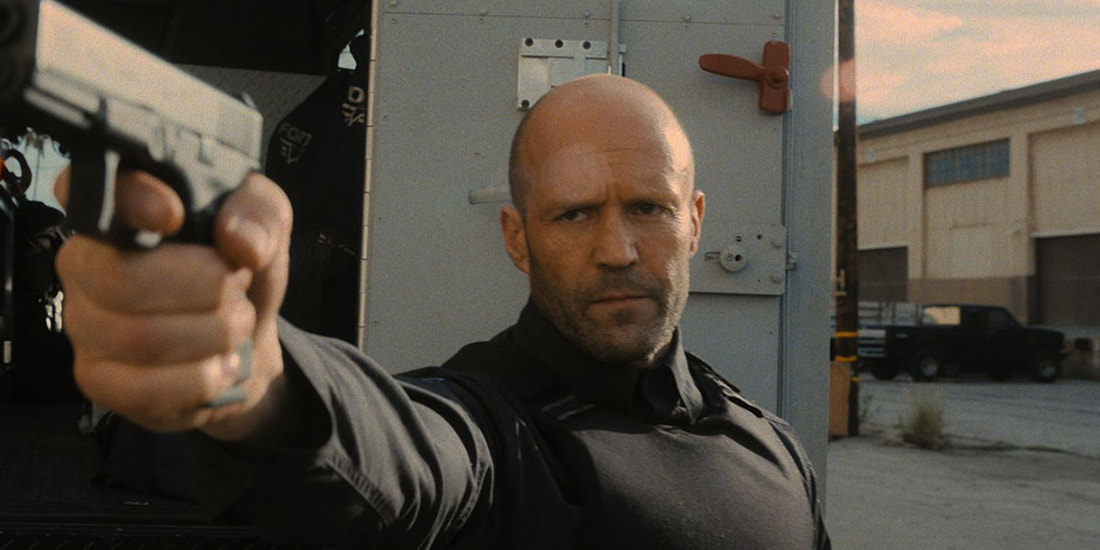
Wrath of Man, the first film pairing action star Jason Statham with British auteur Guy Ritchie in over 15 years, is without question of that caliber.
Oozing with pitch black villainy, the heist drama is Ritchie’s best film in a decade and makes the most out of a cold-blooded Statham performance.
Based on the 2004 French film Le Convoyeur, Wrath of Man centers around a mysterious new employee known as H working at a cash truck company moving millions of dollars in and around Los Angeles. The less audiences know about Ritchie’s film before heading to theaters, the better as the immersive screenplay crafts a world of intrigue and violence that needs to unfold naturally.
It’s a heist thriller that’s not about the money although there’s a lot of it to be thrown around. Characters by and large view the cash they obsess over as a means to an end rather than riches and as a result, the chilling evil of Wrath of Man is relative on a sliding scale rather than having clear cut good guys and baddies.
Statham has made a career out of playing wry, charming characters who can beat the hell out of bad guys. But with Wrath of Man, he’s exceptional at delving into a more menacing, reserved persona as H, leaving audiences fully questioning his motivations as the nefarious plot unfurls.
To the audience, H becomes a vigilante antihero doing “things in two weeks that it would take (the government) 20 years” and Statham’s cerebral performance accentuates the grit and brutality of the most violent film in Ritchie’s filmography.
One of Ritchie’s strength as a filmmaker has always been getting the most from large ensemble casts and Wrath of Man showcases the strengths of each of its performers, big and small.
Whether it’s former heartthrob Josh Hartnett chewing the scenery as a cocky yet skittish driver named “Boy Sweat” Dave, Scott Eastwood as a mildly psychopathic former Special Forces operative or rapper Post Malone leading a crew of robbers, each primary cast member has their chance to shine.
No one takes advantage of their opportunity quite like Holt McCallany, a recognizable character actor given the space to feed off of Ritchie’s morally ambiguous script. His truck crew foreman Bullet is among the most complex, layered performances in the entire film and McCallany perfectly runs the gambit of psychological expressions from fear to cynicism to humor to calming strength.
There are a lot of moving parts in Wrath of Man with multiple plotlines and character arcs to be dealt with, but Ritchie expertly blends the narrative around one or two key events, showcasing them from different perspectives.
Crisp, distinct editing from James Herbert turns scenes on a dime with his cutting of Ritchie’s film, making events revisited later in Wrath of Man still feel fresh and unique.
Brooding visuals toned by dark, shadowy lowlights are a signature look of the film and cinematographer Alan Stewart expertly frames each shot to cast characters in just the right amount of texture to maintain a sharpness to the feature. A series of wide arcing, extended camera shots highlight outdoor locations to provide geographical context needed throughout the film and often help key audiences in to what might be happening next.
Composer Christopher Benstead’s deep, haunting score sets the tone from the opening moments and brilliantly incorporates sounds within the scene like squeaky hinges or pistols loading to fully integrate an ominous dread throughout. One chilling montage set to a piece of Benstead’s score melded with Johnny Cash’s “Folsom Prison Blues” is especially effective at inspiring terror and dread.
An exceptionally bleak, brutal film, Wrath of Man relentlessly attacks each moment with stylized vigor and is the heart-stopping thriller certain to coax moviegoers back to the cinema.
While it may not resonate with everyone, as in true Guy Ritchie fashion, it’s a film certain to generate a cult following like Snatch or Lock Stock and Two Smoking Barrels with endless re-watchability for years to come.

Somber can be a valuable emotion in espionage thrillers.
Cold, calculated violence from an agent infiltrating behind enemy lines to extract a target, steal intelligence or disrupt the opposition at any cost is often engaging, entertaining drama ripe for cinema.
Amazon’s attempt to get into the spy genre, however, is so emotionless that it becomes a stale, forgettable journey across the globe featuring faceless villains with horrible aim, melodramatic fodder passing itself as character development and serviceable action sequences.
Based off the novel, Tom Clancy’s Without Remorse intends itself to be a gritty action thriller with a mixture of modern espionage and good old fashioned brutality, yet director Stefano Sollima can’t communicate clearly with his audience aside from handing the plot over way too quickly.
Creed star Michael B. Jordan gives a solid effort as John Kelly, a Special Forces operative on a quest for vengeance after his wife and unborn child are murdered by a professional hit squad in his home.
But his work is consistently, painstakingly undercut by a screenplay revived by Sicario writer Taylor Sheridan that takes the loosest adaptation of its source material and weaves a by-the-numbers revenge thriller that never gets off the ground. Without Remorse becomes the 2020’s equivalent of a 90’s Steven Seagal film with Jordan a marked improvement as an actor.
Jordan offers the grit to bring Kelly’s callous nature to bear after the murder of his wife, but these moments often feel hollow because there isn’t any palpable chemistry between Jordan and Lauren London as Pam.
Jordan domineers over his costars to the point they almost aren’t acting in the same movie. He brings energy and intensity to each scene that isn’t ever matched, leaving scenes to feel disjointed or one-note.
The supporting cast has talent, although Sollima cannot compel nuance from those around Kelly.
Jodie Turner-Smith, a radiant actress in Queen and Slim, is an overly rigid wall of stoicism as Kelly’s military partner. While it’s clear she put in the work to handle herself in action sequences, there’s a robotic quality to her performance that comes across as mechanical and devoid of personality.
The same is true of Jamie Bell’s CIA deputy director Robert Ritter and Guy Pearce’s Defense Secretary Clay, who play the role of secret-keepers so tight to the chest that the audience is rarely clued in on what’s going on in their heads.
Though it makes sense that a film about covert operations would largely take place at night, Sollima does an inadequate job of framing its stars distinctly in natural or added light to keep Jordan or his antagonists out of the shadows even in moments of pure dialogue.
Hiding most of the action under cover of smoke and darkness masks subpar choreography and large sections of Without Remorse require viewers to slog through the scenery to make heads or tails of the nonsensicalities.
In the moments where the action is well thought out, Sollima showers the scene with warmer light to accentuate the hand-to-hand combat of a close-quarters fight in a prison cell or the dying fluorescents of an airplane cargo bay.
It often feels like Without Remorse is an audition tape for Jordan to helm a different action/adventure franchise as his talents feel largely wasted here with a middling to subpar script and exceptionally poor direction telegraphs every plot twist from a mile away.
Paramount sold off the film to Amazon Studios in late 2020 after pulling it off its release schedule twice due to the COVID-19 pandemic and the online streamer pushed Without Remorse out with little fanfare last weekend.
Ultimately, Without Remorse is a middling thriller where the bullets fly fast and loose and the drama takes a backseat to R-rated, yet bloodless violence. Jordan’s effort and the occasionally fun action sequences make it a casual watch candidate while doing chores at home.

“One day very, very soon take everyone you know into a theater, shoulder to shoulder, in that dark space and watch every film that is represented here tonight.” – Three-time Academy Award winner Frances McDormand, accepting the Best Picture Oscar for her film Nomadland
Those who believe the Academy Awards don’t matter will point to Sunday evening’s ceremony as a prime example.
After a tumultuous year where moviegoers were prevented from seeing a majority of the nominees on the big screen, the Oscars were meant to be a celebration of the industry’s perseverance and hope for the future.
But the disjointed, often disingenuous gala held inside Los Angeles’ Union Station will forever dampen the luster of its nominees and winners – especially its Best Picture honoree Nomadland, Chloé Zhao’s intimate portrait of life on the open roads during harsh economic times in the American West.
When people should be celebrating this magnificently small independent feature and star Frances McDormand’s wolf cry to propel moviegoers back to the cinemas, it will be forever tarnished by winning that prize before the final commercial break only to have McDormand with very little left to say after her Best Actress win and Sir Anthony Hopkins a no-show to accept his Best Actor prize for The Father.
The real question now becomes, will moviegoers even bother to watch Nomadland at home where it can easily be streamed with a subscription to Hulu, let alone head out to the nearest cineplex to see such a quiet film “shoulder to shoulder” with fellow theater patrons as McDormand put it.
A haunting yet powerful portrait of a hidden life across the heartland, Nomadland finds some of the best of America wandering across the country in search of boundless freedom and of themselves.
McDormand stars as Fern, a seasonal worker traveling the country in an inauspicious white van following the death of her husband and collapse of the town they lived in after the US Gypsum plant closed down. Along the course of her travels, she meets a variety of interesting characters living as van-dwellers.
Nomadland meanders slowly through its 105-minute running time with a subtle grace that allows for deep reflection. Zhao’s film is an unassuming portrait of Americana through the lens of a woman unable to cope with massive changes in her life.
Nomadland is a quiet road movie filled with introspection, genuine performances from raw untrained talent and endlessly striking cinematography that maximizes natural light.
It’s truly disappointing that director of photography Joshua James Richards’ brilliance behind the camera isn’t readily available to be seen at movie theaters across the country as the billowing landscapes and intimate moments he captures transcend what home viewing experiences can provide.
Richards masterfully utilizes an extended wide angle lens to frame the long, empty vastness of the film’s outdoor landscapes and mirrors that by pulling his camera in close to characters, tightening the frame to the point where there’s nowhere else to look but people telling stories.
McDormand is certainly worthy of acclaim for this, her third Academy Award for Best Actress following 1996’s Fargo and 2017’s Three Billboards Outside Ebbing, Missouri, the true stars of Nomadland are the ancillary characters Fern meets along the way.
Real life nomads playing themselves deliver a large majority of the film’s emotional stakes and authenticity. Characters like the reclusive Swankie or energetic Linda May provide Nomadland with a sense of color, bursting any superficial sheen that studio features might have.
At times, Zhao’s film becomes almost a documentary with McDormand playing tour guide to an unknown world of America’s heartland. Her film honors the nomadic culture with quiet reverence and respect, allowing these wandering seniors to express themselves in pure honesty that radiates off the screen.
For the first time since 1971, Best Picture wasn’t the final award handed out at the Academy Awards.
In doing so – to try and create a moment – the producers ripped away a potential moment for the second female filmmaker to ever win Best Director and a celebration of small, independent filmmaking.
Nomadland is certainly a worthy Best Picture winner that hopefully will long outlive this miscue and reach a much wider audience in a revitalized movie theater setting or in the comfort of their own homes.

First time filmmakers delivering quality debut features has been a staple of this year’s award season with Emerald Fennell’s Promising Young Woman and Regina King’s One Night in Miami… as standouts.
Dramatist Florian Zeller has also become a name to watch in cinema, adapting his critically acclaimed stage play for the big screen and earning five Academy Award nominations including Best Picture, two acting nods and best adapted screenplay.
The Father finds Anthony trying to maintain his independence in spite of his advanced age while his daughter Anne hopes to find a caretaker to help him with his daily life. As he balks at the help of others, Anthony finds himself doubting those around him, his own mind and even reality itself.
At the core of the film is a terrifically nuanced turn from Sir Anthony Hopkins, for whom Zeller wrote the titular role and named the character after. The Oscar winner is especially adept here at guiding audiences through the tonal shifts in the drama through his performance, which finds Anthony more and more unsure of himself over time.
Hopkins uses the non-verbal to communicate these changes with both a widening or narrowing of his eyes to give viewers clarity into Anthony’s mental state, but also in his physicality as Hopkins’ gait, shoulder movement and posture inform the larger picture that Anthony’s words cannot express.
This is especially true as Anthony meets (or more likely re-meets) characters throughout The Father as Hopkins expresses an individuality to each interaction that matches the mood of the scene and yet allows for Anthony’s fading memory to befuddle or confuse things.
Hopkins’ strongest moments come opposite Olivia Colman as Anne. The pair have an ability to emotionally express how Anthony’s situation has become a burden onto Anne, but in a way that shows off a deep-rooted bond somewhere between comradery and love.
Zeller’s screenplay is ripe with emotionally taxing yet fulfilling moments that genuinely display the effects mental illness have on the elderly and those who love them. Where it turns from solid script to truly inspired drama, however, is during a second viewing of the film as the pieces are all assembled and early moments take on new meaning with greater context.
The Father has a very large influence from its theater roots, often feeling immensely small in scale with dialogue-intensive exchanges in tight quarters.
But the film becomes something much more in its cinematic form thanks to expert, Academy Award nominated editing from Yorgos Lamprinos. Scenes are tied together in such a way – always from Anthony’s perspective – that audiences wander through the film trying to piece together its mysteries like how Anthony attempts to understand an everchanging environment.
In its stage form, it would be difficult for characters to melt in and out of the action in the same way they do in Zeller’s film. A simple, well-timed cut away masks this process and allows scenes that would change dramatically on stage to occur without incident.
The fact that the editing enhances viewers’ understanding of Anthony’s mental and emotional predicament is astounding and very similar stylistically to Tara Miele’s indie fantasy drama Wander Darkly.
Visually, The Father suffers slightly from Zeller’s shot construction and staging as his eye for the theater can cause imbalanced framing with slightly askew cameras positioned over the shoulder of actors as they are blurred at the edge of a frame to highlight another.
The Father is a strong contender this Sunday at the Academy Awards with Hopkins a co-frontrunner for Best Actor alongside the late Chadwick Boseman for Ma Rainey’s Black Bottom. Colman, a recent Oscar winner herself, could be a surprise as well in supporting actress although she is likely running third behind Yuh-Jung Youn in Minari and Maria Bakalova in Borat Subsequent Moviefilm.
A solid drama with compelling lead performances, The Father certainly deserves the honors it has been bestowed this awards season although it’s safe to say that Zeller’s film could wait until a reasonably priced home viewing rather than premium on-demand rental or a trip to the theater.
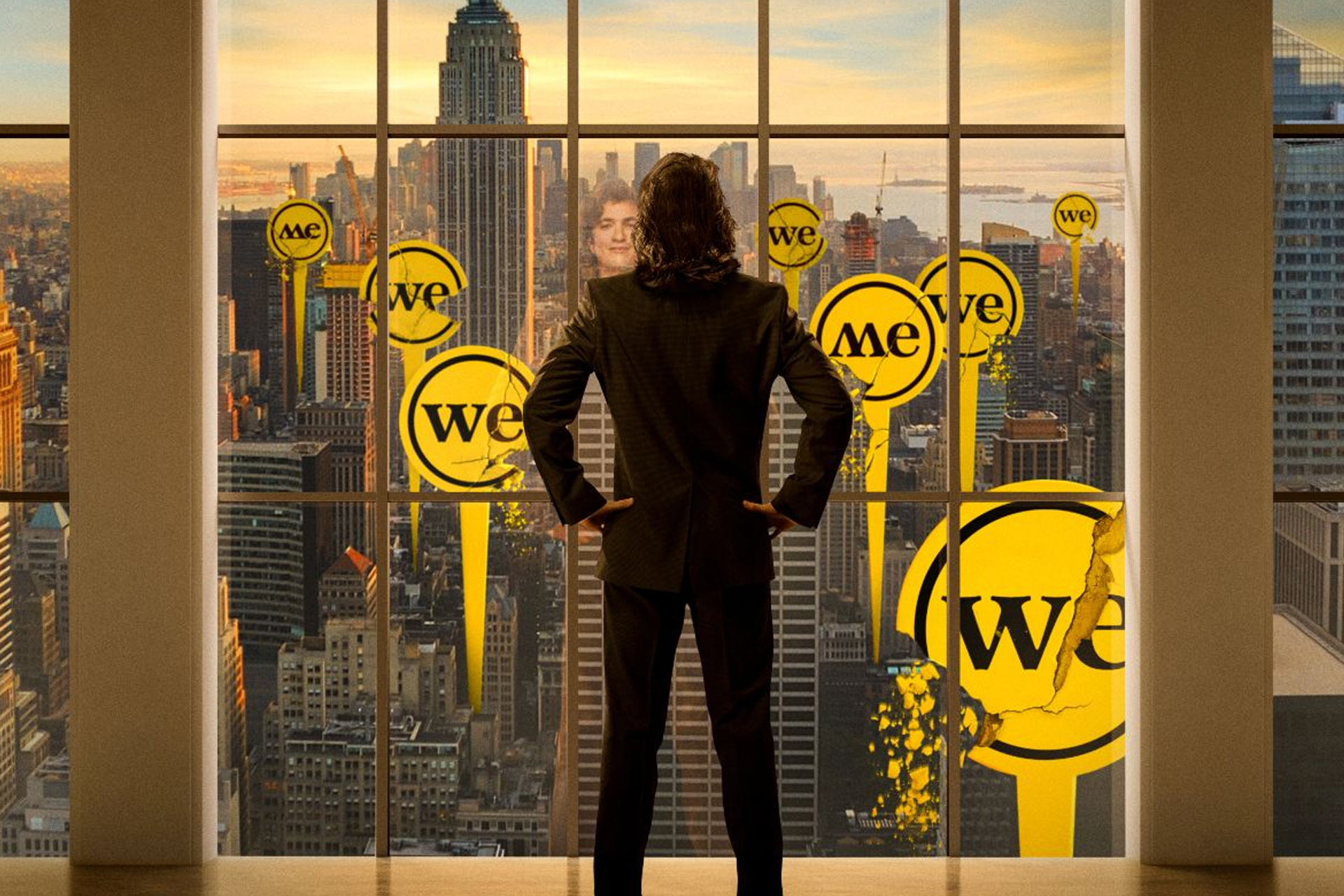
“If you tell a 30-something male that he’s Jesus Christ, he’s inclined to believe you.” – Scott Galloway, marketing professor at N.Y.U.
An attractive, tall man stands in front of the camera, confident and charming in his demeanor yet fumbling over his words as he attempts to explain a “fundamental shift” in the real estate business.
Quite suddenly, he lifts his leg and passes gas, which comes across as endearing and mildly funny until time passes with an unfinished monologue underscored by news anchors discussing the financial collapse of his company.
It’s a tonally mixed, but exactly on point introduction to Adam Neumann, then co-founder and CEO of a tech/real estate startup that ballooned to massive size in ten years only to fall by the wayside in weeks.
Neumann – and to a certain extent, his company – are the focus of Academy Award nominated director Jed Rothstein’s latest documentary WeWork: or The Making and Breaking of a $47 Billion Unicorn, which dropped on Hulu earlier this month after an impressive debut at this year’s South by Southwest Film Festival.
WeWork combines the ruthless business ambition of Facebook critique The Social Network and last year’s Fyre Festival documentaries with cult-centric docudramas like The Vow.
From the outset, Rothstein allows audiences into the world of WeWork through founder Neumann’s captivating, almost Svengali-like personality boosting big dreams of a connected world through co-habitated work spaces and integrated, communal living.
Rothstein focuses less on the company itself, which developed real estate in New York City as open plan office buildings for startup businesses and freelancers. Instead, WeWork is almost entirely about the culture, the man behind its vision and how greed and relentless expansion brought the whole thing tumbling down.
Neumann declined to be interviewed for the documentary, but through a plethora of archival footage, his magnetic presence reverberates across each and every moment.
There’s something striking about the way films like WeWork come together, often with a massive backlog of behind-the-scenes footage originally commissioned by the subject themselves. It’s clear at times that Neumann is thinking of a grandiose, flattering documentary about his company as he pontificates to camera about his communal ideals.
Rothstein infuses millennial pop culture sentimentality into his feature that give WeWork a hip style very much in keeping with the free-spirited tone Neumann aspired to for his company.
The film is very detail oriented about technical business lingo and numbers that may be confusing to those outside corporate structures. Rothstein combats this through the use of computer graphics that simplify the data and present it in a visually digestible way.
A thirty second summary of WeWork’s philosophy on “EBITDA” or earnings before interest, taxes, depreciation and amortization takes a complex business evaluation metric and uses quick, flashy graphs to explain to lay viewers exactly how the company was hoodwinking investors.
The biggest gap within the WeWork documentary is the void of discussion about co-founder Miguel McKelvey, who remains a part of the company and is shown rarely and mentioned even less. It’s astounding – and almost inconceivable – for a player to have such a significant impact on the creation and operation of a multi-billion dollar business and not become a focus of the documentary.
In this regard, it’s as WeWork isn’t about the company at all, but more the singularity of Neumann as a mythical figure whose rise and fall glorifies corporate CEOs undeserving of golden parachutes.
An interviewee late in the documentary says that “when you focus the story on Adam, you miss how many people worked really hard to bring this impossible vision to life.” That’s true both of the company itself and of Rothstein’s documentary, which uses former WeWork employees to carry the bulk of the interviews but mostly in the context of talking about Neumann and his impact on the company and their lives rather than the group as a whole.
WeWork will also set the stage for an upcoming miniseries from Apple on the fall of the company with Oscar winners Jared Leto and Anne Hathaway set to star as Neumann and his wife, Rebecca. A second miniseries and additional feature films are also slated according to reports from major industry outlets.
An early contender for one of the year’s best documentaries, WeWork is a must see experience sure to captivate and likely anger viewers.

Large scale spectacle often serves as a primary reason moviegoers head to the theaters, whether it be epic battles between rival medieval armies or spies preventing world destruction or comic book heroes saving the universe.
In hopes for a big screen surge, Warner Brothers has put its faith in another tried and true blockbuster genre – the monster movie – with a gigantic showdown long in the making.
Director Adam Wingard’s Godzilla vs. Kong is exactly what it sounds like, a faceoff between the two most well-known movie monsters, each with a storied cinematic history and primed for a fight expected to draw viewers out of their homes for old school thrills.
A decision to move King Kong from his remote refuge in search of his native home puts Kong and his protectors in the path of an enraged Godzilla, back on land after three quiet years for unknown reasons.
At its best, Godzilla vs. Kong lives up to the promise shown in earlier installments like 2014’s Godzilla and 2017’s Kong: Skull Island. At its worst, it devolves into a Pacific Rim-esque mess.
Godzilla vs. Kong puts the wrong giant at the front as it’s the king of the jungle who truly takes center stage in Wingard’s film.
Uprooted from his home in Skull Island and forced into a journey of self-discovery, Kong has the most dramatic character development of the entire film while Godzilla slithers in occasionally from underwater to wreak havoc. Both creatures are shown in all their glory from a visual standpoint and the action sequences have a good amount of energy to them.
Most notably, this third Godzilla entry is perhaps the first this century to showcase the monster in bright daylight for extended periods of time, allowing audiences to truly get the most out of what they came to see: giant creatures beating each other to a pulp and destroying major cities.
The battles are the focal point for the entire film, receiving the best treatment from Wingard and intricate, thoughtful examinations of how a sea lizard and land-bound monkey might duke it out. An early sequence with Kong transported by boat only to come face to face with Godzilla in the middle of the ocean is especially engaging and creative in this regard.
The human characters in Godzilla vs. Kong, however, continuously fight an uphill battle for relevance as pretty much all the actors are saddled with outlandish plot devices and laughably subpar dialogue that drags most of the emotional weight out of the film.
While it’s great to see talents like Rebecca Hall, Julian Dennison, Millie Bobby Brown and especially the underutilized Brian Tyree Henry earn sizable screen time, viewers can easily tell that the material is holding actors back.
The one exception to this is Kaylee Hottle’s Jia, the one character besides the monsters actually written with purpose and care.
A deaf character played by a deaf actress, Jia comes across as the most genuine character in the film with a wide open heart and a connection to Kong through sign language that makes sense and helps propel the story forward both logically and emotionally, a rare feat in this action-adventure.
Wingard and his team take great care to muffle or outright mute the sound at times to put viewers in Jia’s shoes during her interactions with Kong and the ways they inventively craft the relationship between a young girl and a massive giant is perhaps the best human-titan interaction in the entire series.
It’s impossible to fully divorce a review of Godzilla vs. Kong from a debate about how to watch the film as it is currently playing both in theaters and streaming on HBO Max for the next several weeks.
If Warner Brothers was intent on releasing one of their tentpole intellectual property features in order to revitalize theaters coming out of the coronavirus pandemic, they would have put their four-hour odyssey Zach Snyder’s Justice League on the big screen rather than making it an exclusive selling point for their affiliated streamer.
In a normal year, Godzilla vs. Kong would have been a run-of-the-mill, turn-your-brain-off action blockbuster that came and went just as unimpressively as prior Godzilla entry King of the Monsters did in 2019. Wingard’s film feels more important now because, by in large, there is no real competition.
Truly, the CGI battle sequences and renderings of the titular iconic titans are worthy of the big screen where their grandiose majesty can be fully taken in by the audience. However, these scenes are not transcendent enough nor make up enough of the film’s running time to justify skipping a home viewing experience where Godzilla vs. Kong is certainly worth a shot.

Danish teenagers play an unusual drinking game at the beginning of director Thomas Vinterberg’s new film.
Teamed in pairs, they run around a large lake carrying a case of beer and must finish the entire load before they can cross the finish line, where adults cheer them on and police idly look on.
It’s a familiar tradition in Denmark, a country whose laissez-faire attitudes towards alcohol create the backdrop for the most intriguing premise to a feature film.
Another Round, starring Mads Mikkelsen, follows four high school teachers plagued with the malaise and minutia of ordinary everyday life. Their solution to rouse them from lethargy in the hopes of being better teachers, more attentive spouses and to feel alive again is to test a theory that they will improve their lives by keeping a constant, yet moderate amount of alcohol in their system.
If it were an American film, Another Round would be a rumpus comedy that might blend Animal House with American Beauty. But Vinterberg keeps a more deliberate tone that feels looser and free from genre constraints, floating in and out of pace in a naturalistic sense that pervades the lead performance as well as the filmmaking itself.
Mikkelsen is more subdued than one might expect from a character experimenting with alcohol as intoxication brings out layers within Martin, both positive and negative that Mikkelsen balances to create a sense of believability without excessive sloppiness.
The shallow lethargy of Martin to open the film, almost to the point where audiences can touch the glazed-over look in Mikkelsen’s lifeless eyes, begins to awaken as alcohol flows into his system to validate the group’s hypothesis. Mikkelsen and Vinterberg take great care to ensure that the path to inebriation feels fluid and in keeping with a larger dramatic narrative rather than for comedic show.
Within Mikkelsen, viewers are able to feel the pulsating highs and crashing lows of alcoholism in revealing, entertaining ways that ground Vinterberg’s tragicomedy.
While Martin provides the center of the film, his three comrades in drink – Tommy, Peter and Nikolaj – give Another Round added depth by exploring the differences alcohol may have on people mentally and physically. Thomas Bo Larsen, Lars Ranthe and Magnus Millang perfectly capture the relatable way in which close co-workers can bond together and yet lead separate lives hidden away in solitude.
The narrative is framed through segments that follow the trajectory of the group’s “research,” with Vinterberg often interrupting the visual space with black screens and small text to indicate text message conversations or lines from the study the group is writing as it is being crafted. Smartly, this also clearly defines for the audience the degree to which Martin and his colleagues are intoxicated, often showing the blood alcohol content level rise on screen as breathalyzers are used.
Vinterberg’s screenplay – written with Tobias Lindholm – draws the audience in by giving Martin the words to express his emotions as the alcohol increases, but also starts to remove those words at the same rate with a potent poignancy that culminates in one of the year’s most rousing cinematic endings.
A clear front runner for Best International Feature at this year’s Academy Awards, Another Round also snuck into the Best Director category for Vinterberg, ousting expected nominee Aaron Sorkin for The Trial of the Chicago 7 and contender Regina King for One Night in Miami.
Another Round isn’t an advertisement for alcohol use in excess, nor is it a treatise on the moral consequences of substance abuse. Countless films have engaged with the subject matter in that way.
Through Mikkelsen’s splendid performance and a thoughtful screenplay, Vinterberg has captured a largely hopeful outlook that celebrates life and second chances – literally another round of living – that audiences should seek out now that the Oscar contender has arrived on Hulu.
 Cinematic Considerations