
Tag: Michael Keaton

  • Spotlight: Journalism docudrama an instant classic

    Spotlight: Journalism docudrama an instant classic

    Every once in a while, a movie comes along that shows its viewers the power of no-frills, no-nonsense drama in a way that just smacks you in the face, shakes you awake and says “This is what good cinema is truly about.”

    “Spotlight” is one of those films.

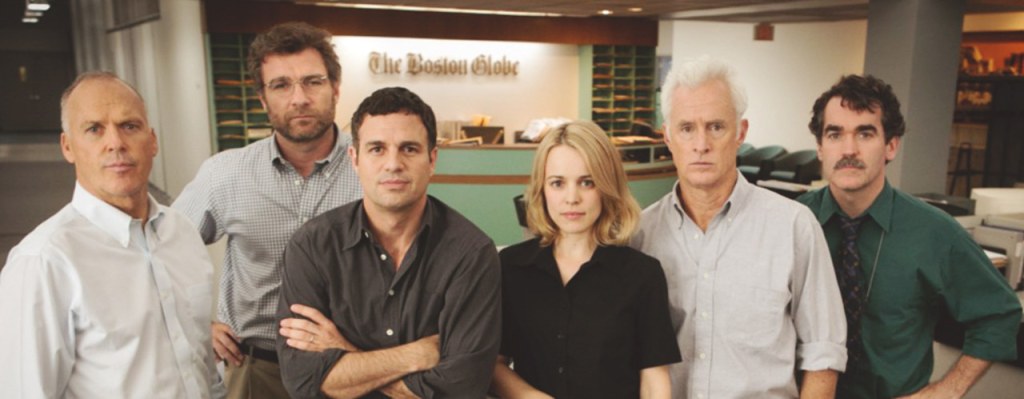
    Tom McCarthy’s film, based on a script he co-wrote with Josh Singer, follows the four person Spotlight investigative reporting team of the Boston Globe as they discover a massive cover up by the Catholic Church to hide Boston area priests who used their position to sexually assault children.

    Their work, done over the course of months-long investigation in 2001-02, culminated in a Pulitzer Prize award for the Globe team as well as massive legal settlements for the hundreds of abuse victims across the Boston archdiocese and thousands of victims nationwide.

    While the film follows real life events, “Spotlight” focuses on the reporters building the story, rather than the acts of the priests themselves in much the same way that the iconic journalism film “All The President’s Men” followed Woodward and Bernstein and not the Nixon administration’s downfall following the Watergate break-in.

    “Spotlight” is a love letter to journalism in its truest form, when hard-working, well intentioned reporters set out to cover important stories that aren’t easy to tell. McCarthy’s film follows the team’s investigation from the fringes inward, unpeeling layers of the scandal like an onion in a way that hasn’t been done since “All The President’s Men.”

    Probably the biggest achievement for McCarthy as co-writer and director is how “Spotlight” takes a relatively mundane, dialogue-heavy plot structure and molds it into engaging, vibrant cinema. Few other films could have made searching through thousands upon thousands of church and legal documents as intriguing as “Spotlight” does.

    With as dialogue heavy of a film as “Spotlight” is, its success lives and dies by its ensemble cast, led by the four person Spotlight team which features Academy Award nominees Mark Ruffalo and Michael Keaton as well as one of Hollywood’s best young actresses in Rachel McAdams.
    spotlight-michael-keaton-mark-ruffalo.jpg

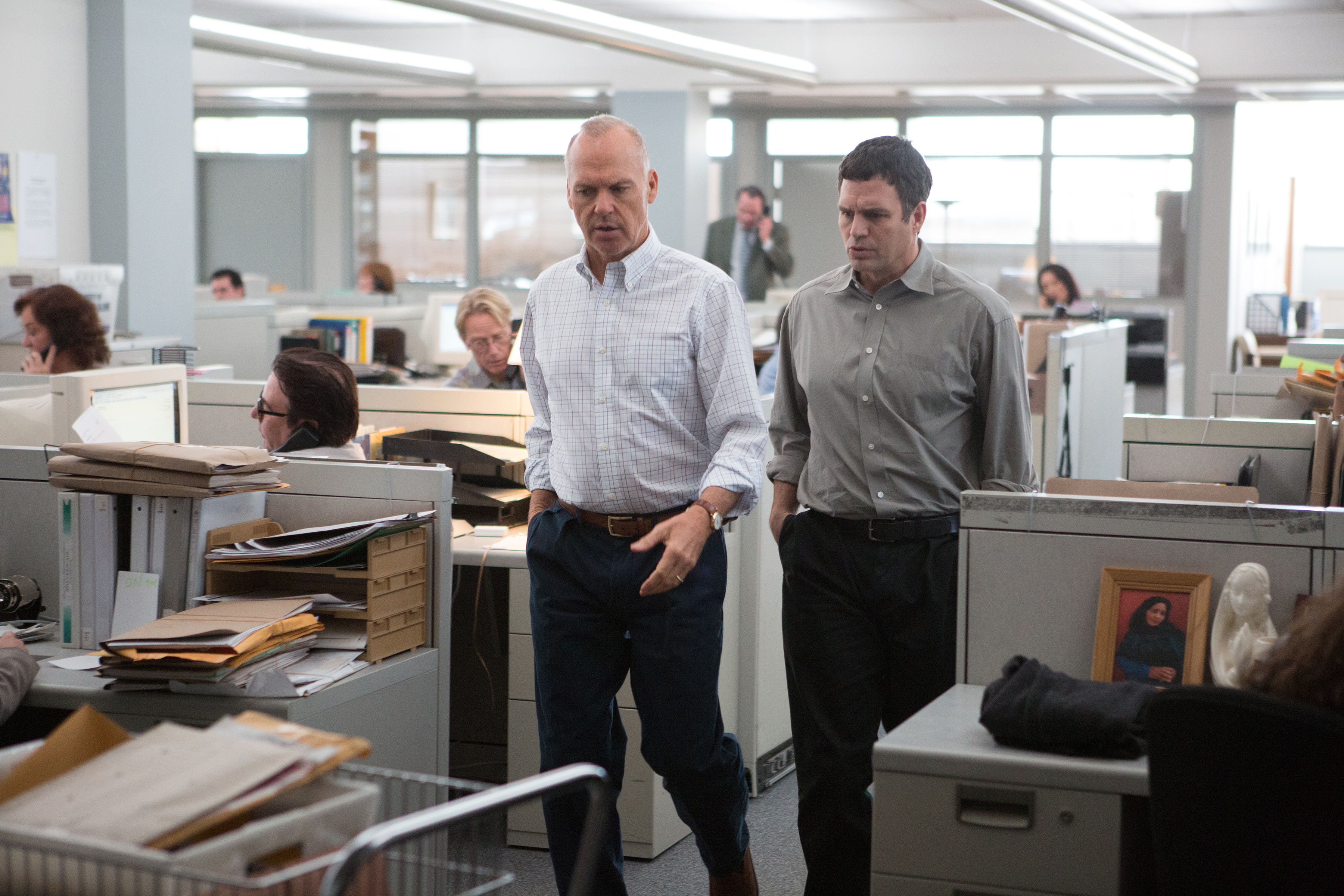
    Ruffalo plays the dogged veteran reporter struggling with the moral and religious implications of his team’s investigations with ease, bringing the most complexity to his character out of any of the film’s 10 major performances. His scenes interviewing Stanley Tucci’s Mitch Garabedian are some of the best segments in the entire film and serve as a reminder to younger audiences that Ruffalo has some serious acting chops when he’s not trampling around as the Incredible Hulk in the “Avengers” movies.

    His performance, along with Keaton’s as team leader ‘Robby’ Robinson, should earn him a well deserved Academy Award nomination alongside Matt Damon of “The Martian” and Leonardo DiCaprio of “The Revenant” in the lead actor category, though many have campaigned for all the “Spotlight” cast members in supporting categories arguing that the film doesn’t have a true lead.

    Keaton should be a shoo-in as well in the supporting actor race, which boasts an increasingly crowded field along with Mark Rylance of “Bridge of Spies,” Sylvester Stallone of “Creed” and Idris Elba of “Beasts of No Nation.”

    McAdams also fares well as the team’s lone female reporter, a position that doesn’t make her a lesser member but aides her as she is able to compassionately draw information from many of the film’s most prominent sources, the boys now men who were victims of assault by their priest.

    All three lead reporters – Ruffalo, Keaton and McAdams – take turns serving as the film’s catalyst and it’s difficult to separate these performances from each other, which is why “Spotlight” should be a lock to win any best ensemble cast awards.

    The secondary characters of “Spotlight” including Globe bigwigs played by Liev Schreiber and John Slattery and sources played by Jamey Sheridan and Stanley Tucci help round out the film’s stellar cast in a production where each scene is only valued by its weakest on screen performer. “Spotlight” has no weak links.

    Aside from one climatic scene in the film’s later stages that will ultimately serve as Ruffalo’s highlight reel for Oscar voters, “Spotlight” opts for substance over style, meticulously driving forward scene by scene as viewers hop from one piece of the investigation to another as the Spotlight team uncovers it.

    The film also serves as a love letter to Boston, with McCarthy taking painstaking care to ensure that each and every detail within “Spotlight” feels regionally centered around one of the nation’s most tight-knit cities.

    Understanding Boston during the time of the investigation is a key element in the viewing experience, giving moviegoers added insight into the difficulties of pursuing a story in a town where silence and unquestioned loyalty are primary virtues.

    In the same way, McCarthy’s film is perhaps the most authentic film about the inner workings of newspaper journalism in more than 20 years. Newsroom scenes were shot largely in the actual offices of the Boston Globe with actual Globe reporters in the background.

    Everything about how reporters interacted, interviewed sources and collaborated feels real in a way most films about the profession haven’t been able to match. “Spotlight” joins a pantheon of elite newspaper journalism films alongside “Citizen Kane,” “Zodiac” and the quintessential “All The President’s Men.”

    Not only is “Spotlight” one of the year’s top two or three movies, it’s perhaps one of the five most important films released in the past several years.

    The film serves as a reminder to its viewers both of the need for quality, well researched journalism in a “give it to me now” news era and of the virtues of simple, yet effective movie-making.
  • What we talk about when we talk about Birdman

    What we talk about when we talk about Birdman

    It shouldn’t come as a total shock that “Birdman or (The Unexpected Virtue of Ignorance)” — a very inside acting film — would continue the trend of movies like “The Artist” and “Argo,” winning the Best Picture prize at Sunday’s Academy Awards.

    Now three of the last five films to win the most prestigious award in Hollywood are about Hollywood, actors or some combination of both, and that’s certain to upset a lot of members of the general public, whether they’re indie die-hards who were mystified by Richard Linklater’s 12-year filming odyssey “Boyhood” or patriotic Clint Eastwood backers supporting a box office smash hit in “American Sniper.” But when you watch or re-watch “Birdman” — now out on DVD and Bluray — it’s important to realize just how complete a film “Birdman” is and what exactly we should be talking about when we talk about “Birdman.”

    From the opening seconds, “Birdman” establishes itself as a film that’s going to draw moviegoers in with its visual brilliance, then keep them entranced with stunning performances from its deep and talented cast of actors.

    Newly crowned Best Director Alejandro González Iñárritu, whose previous films include “Babel” and “21 Grams,” provides the initial hook, opting to stage the film in narrow, tight hallways inside the backstage of the St. James Theater in New York City to provide added tension, then flipping cinematic standard on its head by fusing each scene together so that “Birdman” feels like one never-ending, 120-minute shot.

    Each scene is stitched together seamlessly thanks to the artistic savvy of “Gravity” cinematographer Emmanuel Lubezki — recent winner of back-to-back cinematography Oscars — and editors Douglas Crise and Stephen Mirrione.

    Each scene transitions to the next without interruption, mostly done through extended segments of 10 minutes or more. The necessary technique to pull off such a terrific stunt is a beautifully choreographed dance between actors and crew.

    A great deal of technical care has been taken in the movie, which rivals “Gravity” as the most forward-thinking and visually dynamic film in years.

    This sort of digital skill is becoming commonplace — especially in the superhero film genre “Birdman” constantly derides — but never with such grace. It’s a breath of fresh air to see the technical wizardry of a film accent highly skilled and complete acting performances, rather than having gimmicks or special effects operate as a replacement for quality acting.

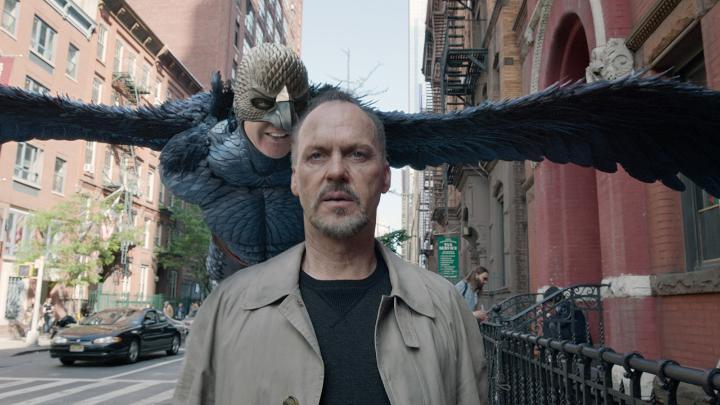
    Much in the same way that David Fincher used who Ben Affleck is as a public figure to great effect in “Gone Girl,” Iñárritu’s choice of former “Batman” star Michael Keaton as the titular “Birdman,” given Keaton’s struggles to overcome the shadow of his role as Batman parallel his character Riggan’s difficulty separating himself mentally from the super hero character Birdman that made him a movie star 20 years ago.

    As a moviegoer, it’s nearly impossible to completely separate Keaton, the actor, with Riggan the character and in the case of “Birdman,” the film takes full advantage of this duality to create a deeply personal and emotionally rich character wanting to prove himself to the world while mistaking adoration for love.

    Keaton, who narrowly lost out to “Theory of Everything” star Eddie Redmayne for a Best Actor Oscar, gives the performance of a lifetime in the role, which ironically enough, should redefine Keaton as a passionate actor outside of the comic book realm.

    Edward Norton, who would have won Best Supporting Actor in a year where J.K. Simmons didn’t blow people away in “Whiplash,” provides Keaton with a sounding board to lob emotional volleys to, both in the film itself and in the Broadway stage show Riggan is producing, an adaptation of the Raymond Carver short story, “What We Talk About When We Talk About Love.”

    Emma Stone — who is slowly, but surely proving herself to be something much more than the limited characters she’s been playing on screen — makes the absolute most out of every second in her performance as Keaton’s drug-addled daughter looking to stay clean while helping her dad reform his own image. The subtle co-dependence the two characters share in their mutual rehabilitation is one of the many great sub-plots in an intricately woven tale.

    Outside of “The Grand Budapest Hotel,” moviegoers would be hard pressed to find such quality acting from so many talented performers — Naomi Watts, Zach Galifianakis, Amy Ryan, Andrea Riseborough.

    But the question still remains: What do we talk about when we talk about “Birdman?”

    How do you explain a meta, highly self-referential dramedy that seems to demean its audience by lavishly deriding the common blockbuster experience?

    Quite simply, “Birdman” is the next step forward in a cinematic evolution that began with James Cameron’s visually transformative “Avatar” and continued with Guillermo del Toro’s space adventure “Gravity.”

    Adding new depth in acting to lofty and innovative cinematography makes “Birdman” the obvious next step in filmmaking, led by Iñárritu, who is up to the task of making all the moving pieces work fluidly and beautifully.

    “Birdman” checks off on all the critical elements of a complete cinematic experience — visual brilliance, acting talent giving top notch performances, elite technical skill and a blue-chip script — and is worthy of its Best Picture statue.

  • Birdman (or the Unexpected Virtue of Ignorance): Keaton shines in superhero actor rebound

    Birdman (or the Unexpected Virtue of Ignorance): Keaton shines in superhero actor rebound

    It isn’t quite fair to say Michael Keaton is back thanks to his often brilliant performance in “Birdman (or The Unexpected Virtue of Ignorance) because, despite his long absence, Keaton has never performed at this high a level.

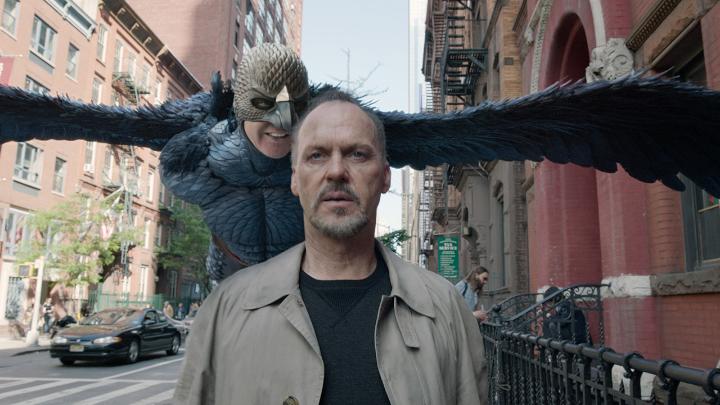
    Fact melds well with fiction as Keaton’s struggles to overcome the shadow of his role as Batman parallel his character Riggan’s difficulty separating himself mentally from the super hero character Birdman that made him a movie star 20 years ago.

    The angst Riggan feels throughout the film is identifiable for the viewer because of Keaton’s presence on screen. George Clooney and Matt Damon cannot make that kind of connection with the audience because of how personal the role feels for Keaton.

    Though Keaton is tremendous in a role clearly built for him, he’s not the reason to see perhaps the most innovative film in 2014.

    Director Alejandro González Iñárritu, best known for “21 Grams” and “Babel,” has plotted an intense thriller schemed as a black comedy through the use of extended one-take camera shots that leave the viewer wondering how in the world filmmakers pulled it off.

    Well-pulled off digital trickery as well as creative camera and editing work make “Birdman” feel like one continuous long take with seamless transitions from one scene to the next.

    “Birdman” also boasts a terrific supporting cast, including Emma Stone as Keaton’s recovering addict daughter, a calm Zach Galifianakis as Keaton’s best friend and lawyer and Oscar nominee Amy Ryan as Keaton’s ex-wife.

    All give quality performances, but pale in comparison to the tour de force effort from Edward Norton who provides the perfect foil as Keaton’s acting partner.

    It’s going to be difficult for “Birdman” to find wide mainstream appeal as its highly complex psychology and frantic cinematic style won’t resonate with a larger percentage of audiences.

    It doesn’t help that the film lambasts these same viewers in its not-so-subtle critique of the Hollywood superhero film genre.

    “Birdman” seeks out more sophisticated viewers — the kind who prefer a dramatic Broadway play to “Iron Man 3” — and makes no bones about the latter being a lesser form of art.

    Viewers need to appreciate “Birdman” for the artwork and not necessarily the message if they want to enjoy one of the year’s most innovative pieces of filmmaking.