

It’s still the time of year where movies just seem to run together in a way that makes them devoid of anything special or unique.
Though Hollywood isn’t quite out of this annual funk, the cinematic landscape is starting to escape from the winter wasteland where films go to die and emerging in a spring season that gives moviegoers hope for a quality 2015.
“Woman in Gold,” despite its flaws, is one of those films that viewers can hang their hopes on, thanks in large part to the acting prowess of Dame Helen Mirren.
It shouldn’t come as a surprise to regular moviegoers that her dynamic on-screen talent can mesmerize viewers to believe the unbelievable and ignore flaws within the filmmaking.
Morgan Freeman — and to a lesser extent Meryl Streep — have this same ability.
Based on a true story, “Woman in Gold” finds Mirren portraying elderly Austrian immigrant Maria Altmann seeking to be reunited with a famed portrait of her aunt stolen from her family by the Nazis and held in legal red tape by Austria.
The film is well-intentioned, but doesn’t really quite have a true direction, which should fall at the feet of either director Simon Curtis, screenwriter Alexi Kaye Campbell or both.
Within “Woman in Gold” are three distinctive movies that feel like puzzle pieces that fit together without mashing, but yet are just off enough to not be in the right spot.
There’s the period drama that focuses on a young girl’s escape from a Nazi-controlled Austria, there’s the courtroom battle drama which finds a mediocre attorney given the case of his lifetime and then there’s the somber reflection drama where an old woman seeks to reclaim a part of her family legacy.
Put bluntly, “Woman in Gold” is “Schindler’s List,” “A Few Good Men” and “Philomena” all wrapped into one slightly misshapen package.
But the film works thanks to its leading lady.
If Helen Mirren says you should take co-star Ryan Reynolds seriously as a fledgling young attorney, then you by golly better take him seriously.
Indeed, Reynolds gives an admirable effort as Mirren’s lawyer Schoenberg, though it’s still hard to overcome the sly grin subtly belying the actor’s performance.
It’s as if Reynolds is constantly faced with an overwhelming wave of smarmy typecasting that he bravely swims upstream against in “Woman in Gold,” but the Canadian actor has yet to overcome the stigma of his filmography the way Bradley Cooper did with films like “Silver Linings Playbook” and “American Sniper.”
Reynolds, in a dramatic role, only works when Mirren is able to elevate the scene as a whole.
The film’s secondary stars are a mixed bag as Katie Holmes is given almost nothing to do in a wasted role, while Golden Globe nominee Daniel Brühl does yeoman’s work in a critical expository role as an Austrian contact for Mirren and Reynolds.
The real emerging star of “Woman in Gold” is Tatiana Maslany of “Orphan Black” fame, whose performance as a young Maria, living as a Jewish woman in Austria during World War II, gives the film — and Mirren’s performance — the weight needed to resonate with viewers.
While the transitions in and out of flashback sequences featuring Maslany are clunky to say the best, each time viewers are established in the WWII-era, the film speeds along.
“Woman in Gold” establishes itself as the second landmark film in the latter stages of Mirren’s career, joining her work as Queen Elizabeth II in 2006’s “The Queen” as one of the best performances in her illustrious, four-decade career.
Her decadent work is worth the price of admission alone in an otherwise flawed, but successful period drama.

This week’s biggest release, “Paul Blart: Mall Cop 2,” arrives in theaters on the assumption that bigger is better — both figuratively and literally — when it comes to sequels.
Yet, like the lackluster “Dumb and Dumber To” before it, “Blart 2” is a sequel no one really asked for.
The premise of star Kevin James getting an all-expenses paid vacation to Las Vegas and saving art from being stolen from the Wynn casino is flimsy.
Somehow, the jokes — which even the youngest viewers can see coming from miles away — are worse.
To be sure, this is probably family-friendly filmmaking, but “entertainment” might not be the best word to describe what “Blart 2” ends up being.
Moviegoers, especially families, deserve better from Hollywood studios than this. Their voice needs to be heard at the box office.

Sometimes life gets too tough and you want to shut the world out.
Imagine being able to close out everything and everyone as soon as you get home from work, only to realize you’re not as alone you think.
It’s the premise for a horror film, right?
Not exactly.
Try Texas-based independent drama.
Dallas-based filmmaker Courtney Ware will bring the Texas premiere of her feature film debut, “Sunny in the Dark,” to this year’s Hill Country Film Festival.
“‘Sunny in the Dark’ explores the tension between our greatest fear and our greatest desire, and that is to be truly known,” Ware said. “The really unique thing about our film is that there is this sort of your worst nightmare of this woman who’s living in the crawlspace above you and she’s spying on your every move taking notes and watching every moment of your life.”
World building
The film, which centers around family therapist Jonah and his apprehension interacting socially with the outside world, utilizes cinematography as much as script or character development to develop a unique dichotomy between Jonah and the homeless girl, Sunny, living in the ceiling of his apartment.
“The cinematographer, Jake Wilganowski, and I had conversations early on, just about this very vertical world and how do we move the camera in a way that allows us to see it horizontally and move the camera so that we see this world in a vertical way,” Ware said. “We have a few tracking shots that show Jonah and Sunny in the same space, but it’s of course broken up by time or by physical space. It was something that we were very keen on early on.”
The contrast between worlds — Jonah’s life outside, his isolation at home and Sunny’s cramped crawlspace — is most adeptly realized through Ware’s use of light (or lack thereof).
Each scene is carefully crafted and dynamic visually, with a nuanced attention to every shadow falling in the nooks and crannies of Jonah’s world.
The warehouse-esque location that serves as Jonah’s apartment building added new layers of cinematic depth, with a single window providing light into the interior space, Ware said.
“We were actually able, when we were shooting, to easily go between day and night, which you normally don’t get the luxury of being able to go back and forth that way,” she said. “It kind of helped us bring a consistency to our shots to be able to shoot a direction and to shoot all of the day and the night stuff at that certain direction. I’m so thrilled with how visually everything came together.”
Acting in the void
For much of the film, Jay Huguley (Jonah) and Hannah Ward (Sunny) are isolated in solo scenes with no one to lean on, save for a few choice moments with Jonah’s mother, played by famed ‘Batman: The Movie’ actress Lee Meriwether.
“It’s an interesting thing to have actors sharing scenes where they’re not acting against each other,” Ware said. “Both of them just blew me away when the edit started with how seamlessly their scenes were coming together.”
While Huguley does a steady job advancing the storyline and keeping the audience engaged, “Sunny in the Dark” works only because of the depth in character Ward was able to pull out of Sunny, a young girl whose complexities are never fully realized but always on display.
Over 4,000 actresses competed for the role of Sunny, Ware said, but it was Ward’s unique blend of non-verbal cues — which come out in full force in “Sunny” — that helped land her the role.
“The audition itself was very hard because you’re not speaking dialogue,” Ware said. “I remember very specifically that she was doing something with her hands, just very small movement with her hands and the way that she would touch the floor below her and it was those things that immediately told me that Hannah was the one to play Sunny.”
Ward, a Hill Country Film Festival nominee for Best Actress, will be in attendance for this year’s event.
“Hannah Ward does an exceptional job of playing a character (Sunny) that is not quite right. Her performance deserves a ‘best actress’ nomination,” Chad Mathews, HCFF executive director, said.
Evolution as a filmmaker
Spending most of her directorial career making short films, “Sunny in the Dark” is the feature-length debut for Ware as a filmmaker, who saw the additional time to tell the story as both a challenge and a reward.
“The most fun and the most difficult (part) was figuring out how do we tell this story in over a long period of time,” Ware said. “For me as an editor, figuring out what does pacing mean for a feature film and how do we emotionally bring the audience through over this long period of time and honestly keep the audience interested.”
While it’s easy to label female directors based on their gender — and Ware admits that the rarity of women in the industry has changed her perspective on the issue — it’s probably appropriate to tag the young director with a different label: Texan.
“I grew up in this area (Dallas) and I would say I grew up in this industry here,” she said, working as an intern and production assistant at age 18.
“It’s been a really exciting journey because the crews that I learned from and grew up with are crews that then turn around and worked on my film, which is really incredible to have those relationships and to have that type of trust and ability to work together,” she noted.
Ware also represents a growing trend of Texas-based filmmakers holding on to their roots and staying grounded in the Lone Star State.
“Everyone always is asking me, ‘Well when are you moving out to LA or New York?’ and for me, just the types of truths that are in Dallas, it’s a family here,” she said. “I have a great love for working here and I can do everything here that I would need to do elsewhere and I would much prefer to do it with family that I’ve grown up with than anywhere else.”
The film is just starting out on the festival circuit, with its world premiere held earlier this month at the Arizona International Film Festival.
Ware hopes that the film continues to connect with audiences as it makes its way across the country, stopping in Dubuque, Iowa, and Newport Beach, California, before coming to Fredericksburg.
“Hopefully, you fall in love with Sunny and you follow the way that she learns to care for Jonah. It takes a terrifying thing and turns it into really a beautiful relationship, if you will,” Ware said. “It’s a different film. It’s one that has bits of other genres in it but it’s one that I’m extremely excited to share.”
More information about “Sunny in the Dark” can be found online at sunnyinthedark.com.
(Note: Film critic Matt Ward is a programmer for the Hill Country Film Festival.)

Wake up, bicycle until you can’t really move anymore, set up camp, go to bed, then repeat ad nauseam for the next five and a half months.
It’s a formidable challenge for anyone, let alone a filmmaker attempting to chronicle the journey every step of the way, but for Texas native Chandler Wild, it was something he felt compelled to do in order to process his father’s suicide several years earlier.
The end result of this cycling odyssey spanning 6,700 miles and over 700 hours of footage — Wild’s “Mount Lawrence” — is perhaps the most compelling independent documentary in quite some time and definitely the most visually spectacular.
It follows the young director as he takes off from New York City with a friend on bicycle, bound for Homer, Alaska, and a date with an unnamed mountain he would hike and rename after his father.
One of the top nominees for Best Feature at this year’s event, the film will be shown later this month at the Hill Country Film Festival.
Visual travel journal
“Mount Lawrence” opens with a montage of gorgeous still shots framed in Kodak Ektachrome slides, the ones all too familiar from those family slide shows of days gone by.
It’s an important tone setter for the remaining 95 minutes of the film, crafted into what Wild described as a “personal essay” but feels more like a visual travel journal as viewers are taken along for the ride — sometimes quite literally, thanks to GoPro technology.
Each and every frame of the film evokes a wildlife photographer’s sense of visual style, making the most of what ultimately becomes a cinematic love letter to America as much as it is a documentary about understanding loss, depression and suicide.
Limited crew and the toll of the road forced Wild’s hand as a filmmaker, creating the need for a personal essay style of documentary, he said.
“It became very apparent as soon as we took off that that wasn’t going to be a reality because I didn’t have the luxury to have a huge team of people,” he said.
Daily journal notes kept on the road became the footage map of the film as the “Mount Lawrence” team was unable to finance an assistant editor to log each day’s shots.
“When I went back and edited the whole thing, really the only notes I had were my personal ones about what happened each day,” he said. “As I was working on and writing my outline for what it was going to be, I took mostly from those notes, so I think that’s kind of where that feel comes from.”
The lonely road
Even though much of “Mount Lawrence” is a self-reflective solo venture, Wild’s trip — and subsequently the look and feel of his film — became more dynamic with the involvement of various travel companions, who also served as cinematographers chronicling Wild’s journey.
“In a selfish, narcissistic way, I thought the film was going to be more about me when I initially took off. I’m glad that it wasn’t,” Wild said. “I’m glad that we had these people join because that’s what the film actually came to be about.”
Sharing
a personal struggle
The film works on a larger level — besides just being a visually stunning documentary — because of the very real emotion and heart that seeps through in an authentic manner during Wild’s voice-over commentary track, which help bridge the segments of the film together.
Because the journey was so personal for Wild, finding that right balance between being the subject and the filmmaker was key to the documentary’s success with audiences.
“I didn’t know if it was going to be translatable for someone who didn’t know me or my family or my dad and if they would be able to connect with it,” Wild said. “So, on the very top level this feeling that people are connecting with it is a very satisfying and gratifying feeling.”
The film touches on depression and suicide not in a typical fact-based documentary style, but through Wild’s unique voice as a family member of someone afflicted by the disease, providing a new perspective on the topic.
“I think that a big part of the growing process personally for me while making the film was suddenly for the first time actually saying the words suicide and depression,” he said. “It takes away from any worry that I have that I’m giving up too much personally to know that people are watching the film and hopefully having conversations about suicide and depression in hopefully a way that allows us to destigmatize this disease in our country.”
Home movies
Audiences are able to connect with Wild and his journey thanks to family-made videos that help capture the essence of Wild’s father for viewers who never knew the man.
“People have responded to it because I think we’re at this point now where since everyone has 20 years of home videos now and the camcorder has become such a part of our lives that it’s almost like they’re not my home videos,” he said. “Everyone has home videos and sees these images of the people in their lives that they’ve lost and there’s this kind of feeling that we get from them that I think that we haven’t totally fleshed out yet as a people.”
The film uses small clips of Wild’s father in his element — camping in the outdoors — to help put things in context for viewers in a truly authentic way.
“A lot of people have responded to those really viscerally and it’s pretty cool to see,” Wild said.
The victory lap
While it may feel like Wild’s journey starts and ends on a bicycle, some of the most compelling and rewarding elements of “Mount Lawrence” happen off bike — from backpacking in the Pacific Northwest to climbing the Alaskan mountain he would later rename after his father.
“I got to the end and I could see the mountain, so I was kind of like ‘This is like my victory lap,’” he said. “I genuinely thought it was going to be a nice easy walk to the top.”
Three days and miles of Alaskan scrub brush later, Wild finally made it to the top where he was only able to spend a short time before weather forced him back down.
“It really wasn’t until I got to the top and I was able to see the end of the road that I really started to feel like ‘Wow I made it to the end of the road,’” he said.
Though things were finally settling in about the completion of his journey, the drive back reinforced just how long the road had been.
“Day by day (on bicycle), it just kind of became a way of life and I thought less about how much distance I had travelled and how much more I had to go and it was more like just wake up and bike,” Wild said, realizing the length of the journey during the 12 days of driving required to get back to New York from Alaska.
Cutting it all together
Putting the film together in the editing room became a new mountain to climb in itself as Wild and his editor faced 700 hours of footage to traverse and cut down to a 98-minute feature film.
“It was almost an exercise in the complete opposite of what the movement of the journey,” he said. “As much as I was moving in the film, I was stationary behind a desk for four months and we just tore through it.”
“I think if I knew then what I know now it would have been a very difficult process to jump into but I almost jumped into it blind,” he added. “I did the biking portion and now we just have to finish the film portion.”
Bridging the gap
Wild is out on the road again, promoting “Mount Lawrence” on the film festival circuit and will take the film on a regional bicycle tour later this year.
Additionally, his journey making “Mount Lawrence” led to the development of a non-profit group called Healing by Adventure.
“I knew I wanted to do something to help, but I also knew that I didn’t have any of the education, experience or facilities to offer any kind of psychological support,” Wild said. “I came up with the idea that the best way to bridge those two would be to create a scholarship organization to bridge the gap between outdoor leadership schools and organizations that deal with depression and other mental illnesses.”
More information on the film is available online at mountlawrencefilm.com.
(Note: Film critic Matt Ward is a programmer for the Hill Country Film Festival.
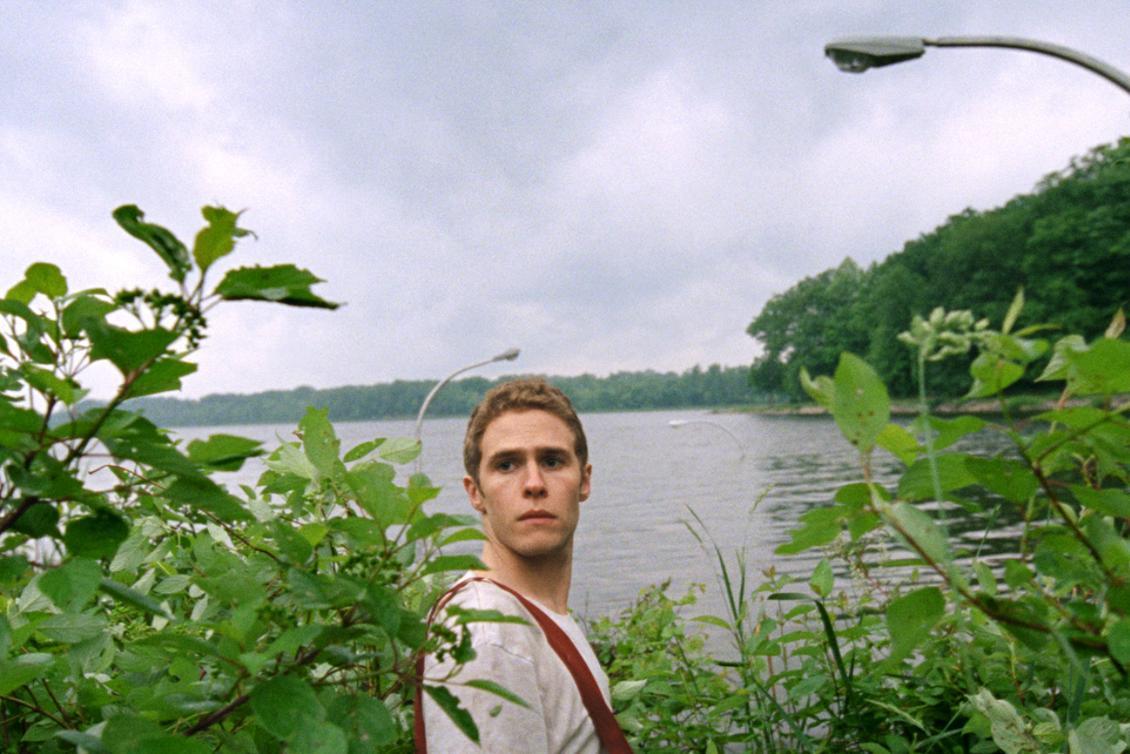
Almost a year following its world premiere at the 2014 Cannes Film Festival, “Lost River,” the directorial debut of mercurial talent Ryan Gosling has finally wandered onto screens across America via video on demand.
It’s likely that the loud chorus of boos that the film received from the Cannes audience has shelved the film for this long, but it’s important to remember that Cannes audiences also took Harmony Korine’s South Beach odyssey “Spring Breakers” — a film that holds up surprisingly well in retrospect — to task.
It certainly wouldn’t be surprising if critics will continue their boisterous disapproval as “Lost River” finally makes its way over to America, but a word of caution: Don’t lose sight of the forest for all of the trees when it comes to this film.
Released commercially in the United Kingdom with a limited U.S. run on Friday, the film has glimpses of brilliance masked in a world of confusion. Nothing about what happens in the 95-minute feature makes any sense.
For all the negativity surrounding this movie — and it will come washing down like the dams that symbolically flooded entire towns to help create the world of “Lost River” — what may very well be lost (no pun intended) within the discussion is that, at its core, it’s an art film.
Like its kindred spirit “Beasts of the Southern Wild,” Gosling’s debut feature is an independent showcase of visual artistry loosely framed around recent socio-economic problems in the U.S. with dank, Detroit-esque Lost River replacing the Louisiana bayous found in “Beasts.”
There’s a whole of talent — including “Mad Men” veteran Christina Hendricks, former “Doctor Who” Matt Smith, Gosling love Eva Mendes and Saoirse Ronan of “The Grand Budapest Hotel — found onscreen for the tale of a single mother and her two sons trying to survive in a semi-post-apocalyptic outskirt of what is likely Detroit.
Two parts sci-fi, one part melodrama with splashes of horror tossed in for good measure — the film is not for the faint at heart as both Hendricks and Mendes perform graphic and grotesque mutilation scenes as part of an underground violence disco styled like a strip club.
Enigmatic from start to finish, “Lost River” bathes in its own uniqueness, reveling in an attempt to make every shot of the film feel like a canvas hanging in the Metropolitan Museum of Western Art.
Gosling directs like an artist who believes he is painting a cinematic masterpiece with broad strokes of genius and he’s not entirely wrong in that assumption.
But yet again, the fatal flaw of “Lost River” is that none of it — from the acting to the plot to the cinematography and soundtrack — makes any sense. It’s a point that cannot be expressed enough.
Fans of Gosling hoping to catch a glimpse of the next stage of his career need to understand that the future holds more “Drive” than “The Notebook.”
How he navigates the waters of his own journey as an auteur will likely decide the ultimate fate of “Lost River,” a film that moviegoers need to make their own decisions about.

Thank God for Alan Alda.
For all the talk about the emergence of Clint Eastwood’s son, Scott, if there’s one thing that should be absolutely clear to moviegoers following a screening of “The Longest Ride,” it’s that Alda is a cinematic treasure we all need to be thankful for.
The latest in an increasingly predictable line of films based on Nicholas Sparks novels finds the younger Eastwood as a pro bull rider and the perfect Southern gentleman who falls in love with a young art student played by Britt Robertson of the upcoming “Tomorrowland.”
There’s nothing really memorable or overly heartwarming about their romance beyond the superficial. In fact, their love affair isn’t even the one that viewers will cling to by the time the film ends.
Clint isn’t coming to rescue his son from himself or from viewers, but Alda saves the day as the charming and charismatic patron saint of the film, an elderly gentleman saved by the young couple who both take a respectable Southern shine to him.
Through flashback sequences, Alda shares the story of his own great love affair portrayed by “Boardwalk Empire” star Jack Huston and Oona Chaplin, granddaughter of the famed silent film star Charlie Chaplin.
The depth of character development taken by all three elder actors completely outshines Eastwood and Robertson, though that may very well be due in part to better material.
Viewers become much more invested in the film during the Huston-Chaplin love affair as described by Alda, ironically causing moviegoers to inherently care more about the secondary romance between Eastwood and Robertson in spite of its relative campiness.
Alda’s performance in the film — by far the best work by any supporting actor so far this year — is reason enough to go and see an otherwise pedestrian romance film.
There’s likely a better date night movie on the way with the release of the Blake Lively-led “The Age of Adaline” on April 24, but for couples who just can’t wait to get to the movies, you can’t go wrong with “The Longest Ride.”
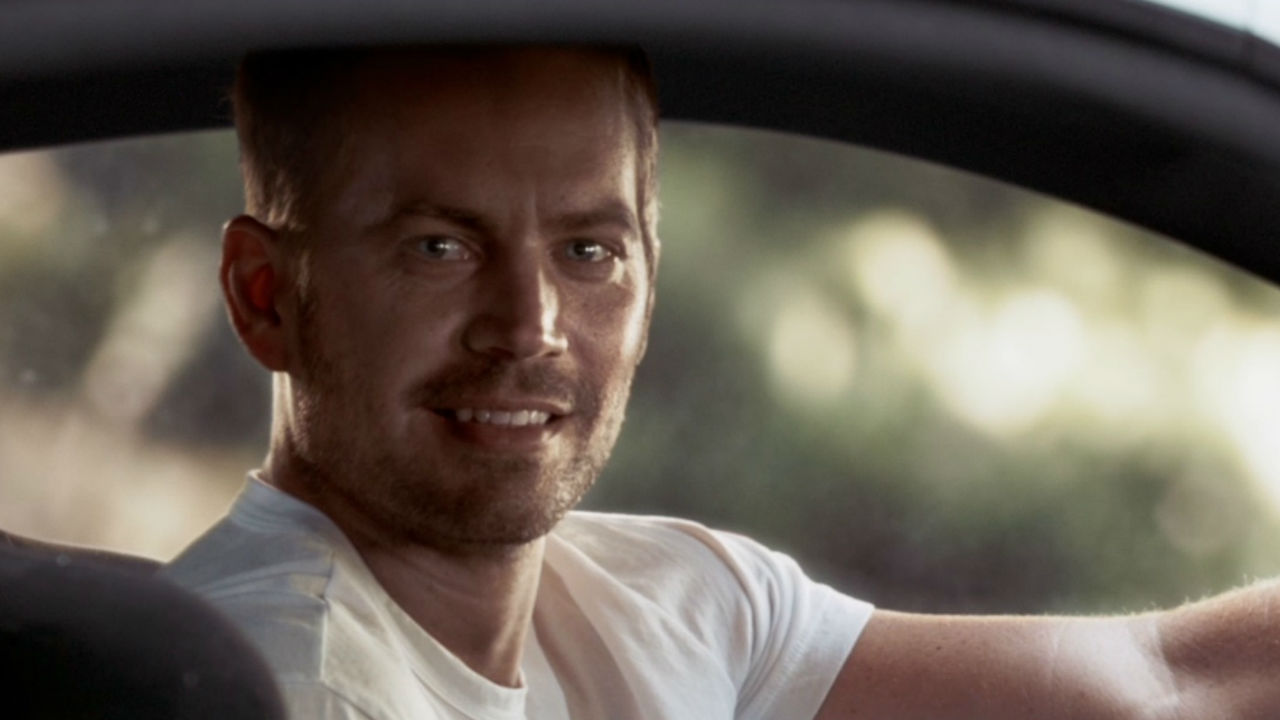
“Furious 7,” the latest in the street racing “The Fast and the Furious” franchise, will forever be tied to the tragic death of leading man Paul Walker, who makes his final on screen appearance nearly two years after a fatal, yet unrelated, car accident.
It’s a tragedy tied to a film in much the same way that Heath Ledger’s death looms large over “The Dark Knight,” a film Ledger posthumously won a Best Supporting Actor Oscar for as the perfect superhero villain Joker.
Walker’s untimely death hovers in the background of “Furious 7,” never more poignant than in scenes where street racing crew members Tyrese and Ludacris vow never to attend another funeral for a member of their unlikely band of antihero criminals. Family plays a large role both on and off screen in “Furious 7” as stars Walker and Vin Diesel became as close as brothers.
Every moment within the film, otherwise a straightforward action sequel, takes on a new depth that is unmatched within the genre and also unrepeatable within cinema.
Few moviegoers who have followed Walker’s career, mostly through this series of films, will be able to leave theaters with dry eyes. The film’s final moments — a touching retrospective look at Walker and a final scene with Diesel — represent the most authentic cinema the action genre has produced in at least a decade.
But unfortunately for newcomers, this impact will be largely missed as “Furious 7” requires — and almost insists upon — viewers having previously seen the first six iterations of the franchise. Even the outlier third film “The Fast and The Furious: Tokyo Drift” plays a significant role in the plot of “Furious 7.” Clearly, the film isn’t intended for drop-in, first time viewers, but there’s still enough consistent action pacing “Furious 7” to keep newcomers engaged in the movie.
One of the more successful movie franchises out there, these notably top notch, B-rate action fodder films work consistently from sequel to sequel because the franchise slowly builds up its cast of characters, not over burdening viewers with too much back story to decipher in a genre that demands less thinking. Adding a major player like The Rock in the series’ fifth iteration — and now Jason Statham in its seventh — is a slow burn that works much better than “The Expendables” franchise at developing a series the right way.
“Furious 7” ascribes to the “bigger is better” school of action films largely populated by the work of director Michael Bay, but director James Wan makes the most of his debut in the “Furious” franchise. Cars parachuting from airplanes like soldiers and crashing through skyscraper after skyscraper works because of the trend set by the franchise.
On the whole, “Furious 7” rightfully serves as Walker’s cinematic swan song and respectfully honors his memory in a way that still leaves the door cracked open just enough for the racing to continue on for many years to come.

Things would have been better off if Kevin Hart and Will Ferrell teamed up to develop a remake of the classic Eddie Murphy-Dan Aykroyd comedy “Trading Places.”
It’s the direction that their latest film, the double-entendre heavy “Get Hard,” heads down and the part of the raunchy comedy that actually works.
Aside from some gratuitous rear nudity from Ferrell to “set the mood,” the first 20 minutes of “Get Hard” is actually inspired comedy, filled with thoughtful, well-conceived jokes that skirt the outside edges of decent taste without outright jumping the shark.
Once the plot really takes shape and a straight-laced Hart has to fake a prison record to help a frightened Ferrell prepare for jail time, things go from funny to sad in short order.
There’s no reason for most of what ensues, as every racial stereotype under the sun is broadly reinforced in highly amateurish ways.
For every five failed attempts at humor — most notably Hart’s lazy attempts to give Ferrell permission to call him the N-word — there’s a single smart sequence, like when Hart tells Ferrell the story of how he went to prison by stealing the plot line of “Boyz N The Hood.”
Hart’s character, a self-proclaimed “Cliff Huxtable”-type African American working man, is nothing more than the racial stereotypes that Ferrell’s character believes him to be. Increasingly, Hart has become reliant on debasing and reinforcing these stereotypes in pursuit of the almighty dollar, countermanding all the work films like “Selma” do to advance African American cinema.
Worse than the culturally-insensitive racial overtones of “Get Hard” is the incessant homophobic double entendre that pervade the film.
Because the film assumes the notion that the only way to survive prison is to endure constant male-on-male rape, Ferrell subjects himself to countless “preparations” for this stereotypical “don’t drop the soap” culture.
“Get Hard” features more jokes about “keistering” items up a man’s backside than any film that has been released in the past five years and also crosses the boundaries of shock comedy in a bathroom sequence where Ferrell wipes his face down exposed male genitalia.
It’s important to note all this “comedy” in specifics to reinforce the notion that potential moviegoers, especially parents of teenagers, need to do the appropriate amount of research about a movie before heading to the theaters.
Somewhere within “Get Hard” is a clever and thoughtful film that attempts to bring Ferrell’s stagnant comedic persona back to life.
However, “Get Hard” softens in the middle, unveiling a seedy underbelly that will likely disappoint more casual filmgoers.
If gross out comedies are your thing, “Get Hard” is exactly what you’re looking for in theaters this week. If not, you might want to pop in a copy of “Trading Places” instead.
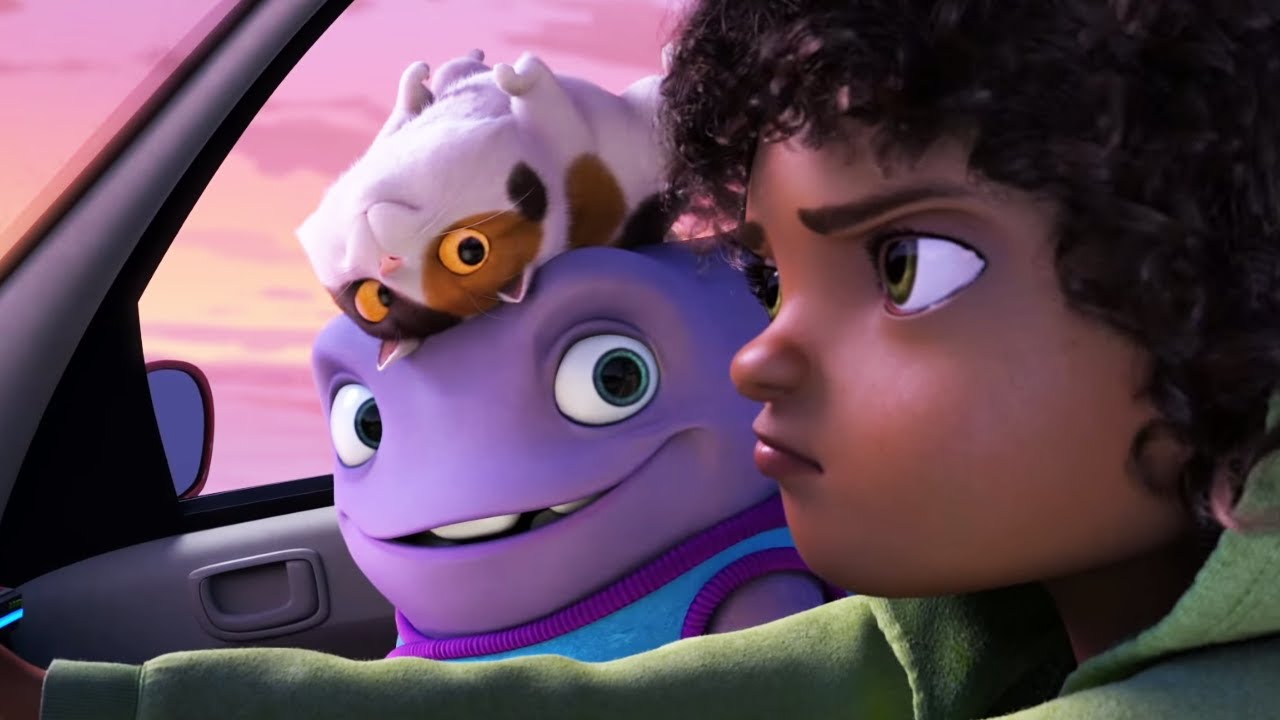
“Home,” the latest animated feature film from DreamWorks Pictures, doesn’t break any new ground in family-friendly entertainment. You can see each and every twist coming from a mile away.
What sets this animated tale of a lost girl and her unlikely alien friend apart is the terrific voice acting work from “Big Bang Theory” star Jim Parsons, whose animated career will surely take off following the success of his pixelated debut this week.
So much of “Home” can be broadly labelled as just OK, successful but generally mediocre — from the plotline viewers can see coming from miles away to an often flat visual style and subpar voice acting from singers Rihanna and Jennifer Lopez, likely done in order to get the popular artists to donate singles to the film’s soundtrack.
Large portions of the end of “Home” take on music video qualities as the story and character dialogue are muted for ambient music selections by both singer/actresses.
What saves “Home” for moviegoers is Parsons, who brings everything fans love about Sheldon, his Emmy-award winning character from television’s “The Big Bang Theory,” to his small alien character Oh.
In a role that had to be written specifically with Parsons in mind, Oh speaks in an adorable Yoda-like broken English that teeters on the edge of annoying without crossing all the way over.
It’s easy to see that the Boovs, the alien race of “Home,” are little more than rip-offs of the widely successful Minions from the “Despicable Me” franchise that are getting their own feature this summer.
Parsons, however, brings the Boovs (and the film in general) out of mediocrity with his affability and charm, giving warmth to Oh that most other voice talent wouldn’t be able to provide.
“Home” isn’t a “Frozen”-like instant animated classic by any means, but for families looking to get out of the house on the weekend, it’s a solid movie sure not to offend or largely disappoint audiences.
Powerful and bold performances from young women have dominated the cinematic landscape early in 2015, from Dakota Johnson’s career-changing performance in “Fifty Shades of Grey” to a Disney blockbuster in “Cinderella.”
While the year’s most gripping performance from a leading actress so far — Jennifer Lawrence in the limited release “Serena” — has been relegated to the second tier of cinema known as video on demand, the first quarter of 2015 will be capped off with yet another top young actress ruling the box office.
Shailene Woodley, star of last year’s summer romance “The Fault in Our Stars,” returns to blockbuster action with “The Divergent Series: Insurgent” now blasting its way into theaters.
The sequel to last year’s “Divergent” is cinematic fun at its most basic level. Though the film sits at nearly two hours long, events fly by a crisp pace and press viewers into the back of their seat, forcing them to remain engaged in order to keep up with all of the moving parts.
Newcomers to the series — based on a trilogy of books from Veronica Roth — will be largely lost, however, as Tris (Woodley) and her small band of fellow rebels flee from a controlling army led by Jeanine, played by a screen-chewing Kate Winslet.
Scenes fly from peace-loving Amity to post-apocalyptic Factionless to ultra-sleek Candor so quickly it’s hard to tell exactly how much time has passed.
However far along you think you are into “Insurgent,” subtract about 15 minutes and you’re probably in the right ballpark.
It’s because the plot advances with machine-gun-like urgency that “Insurgent” finds itself falling short of greatness.
There’s so many moving pieces that it’s nearly a complete waste of the film’s talented cast of stars, save for leads Woodley and Theo James as her tag-along boyfriend suffering from major daddy issues.
All the key players from the original “Divergent” film return from Oscar-winner Winslet and Ashley Judd to rising stars Miles Teller and Ansel Engort.
Throw another couple of heavy-hitter actresses in Octavia Spencer and Naomi Watts into the mix and there should be a quality movie lost in there somewhere.
Though it’s a major concern for the cast across the board, Woodley can’t act within the context of this film and not because she lacks the talent. Her work in 2011’s “The Descendants” and 2013’s “The Spectacular Now” are clear reflections of a budding superstar on the rise.
“Insurgent,” directed by Robert Schwentke from a script treated by at least three separate writers, swaps character development for the sake of additional action – a tradeoff the makers of “The Hunger Games” series haven’t forced upon its star, Lawrence.
For Woodley to play the heroine, she is required to act with one hand tied behind her back, given nothing to mold a character from.
Stripped away are Tris’ emotional stakes as it’s hard to care much about a character who can only feel the weight of her parents’ death when it’s convenient to advance action scenes.
For as much as the frantic pace of “Insurgent” keeps viewers engaged in the plot, lack of character development and Schwentke’s lack of direction in general has the “Divergent” franchise running in neutral, good enough to keep the money rolling in for the future of the series, but not on par with “The Hunger Games” shadow the series finds itself hiding within.
Action scenes within the film are dynamic and highly technical, significantly ramping up the visual effects in the second go-round of the series.
It’s clear that key scenes were shot with the intent of making them feel iconic. Schwentke becomes incredibly heavy-handed during the film’s pivotal simulation testing scenes, forcing Woodley to break down glass barriers ad nauseam in order to make the most of his 3D effects budget.
Watching “Insurgent” on a 2D screen, as most moviegoers will do, fails to achieve the intended effect, however.
A solid B-rate blockbuster intended primarily for the teenage demographic, “The Divergent Series: Insurgent” is worth a look in theaters as much of the film’s action sequences will be further diminished on a smaller screen.
2015 might not become the year of the leading lady — there’s still a lot of big-name actors yet to take a bow on screen this year — but significant strides have been made in recent months to put young actresses at the forefront of cinema, a good sign of things still to come.


Somewhere in between “Maleficent” and “Snow White and the Huntsman” lies the latest live-action fairytale feature film adaptation, Disney’s “Cinderella,” starring Lily James in the title role and Cate Blanchett as the evil stepmother.
A very familiar tale to most moviegoers, “Cinderella” doesn’t stray much from conventional Disney retellings of the fairytale, though there is an added emphasis on Cinderella’s parents prior to their off-screen deaths in order to help strengthen the backstory. Director Kenneth Branagh utilizes his Shakespearean roots to full effect as he elevates pedestrian conversations to uneven effect. Some scenes, especially between Cinderella and her father, hit home, while conversations between the Prince and his father feel unnecessarily heavy. While younger viewers will happily ignore the depths of Branagh’s effort, older viewers may feel the film too heavy in terms of its emotional stakes for a traditional Disney fairytale.
While James is supposed to draw viewers’ attention as Cinderella, it’s hard to keep your eyes off Blanchett, who replicates Glenn Close’s performance from “101 Dalmatians” to a near-perfect T. There’s just enough smirk and power to Blanchett in the role that dominates the screen while not feeling over the top.
It’s a little jarring at first to see Helena Bonham Carter — frequently the dressed-down villainess in these sorts of films (i.e. “Harry Potter” franchise, “Sweeney Todd”) — as a light-hearted and effervescent Fairy Godmother, but like Blanchett, Bonham Carter fills up the screen every second she appears in the film without completely overpowering James. In fact, “Cinderella” feels like a training course for the young “Downton Abbey” actress, who is likely to emerge as one of Hollywood’s better young actresses.
“Cinderella” will definitely work its way back into conversation later this year as the film is a near lock to be nominated for a number of technical Academy Award nominations, including production design and costumes as well as hair and makeup.
Computer-generated imagery does have a significant place within “Cinderella,” which is a strange thing to say, given how vivid the hand-drawn animated classic from the 1950s was.
Fans of the “golden age” film will likely feel a little uneasy at some of the technological advancements which have made nostalgic elements of “Cinderella” seem faded, especially as it relates to the Fairy Godmother and her magic.
Where Disney’s CGI specialists have improved on the classic film is the development of Cinderella’s four mice friends, who become humorous sidekicks with individually developed personalities over the course of the movie. Known more as an actor’s director than a technician’s director, Branagh has improved significantly as a director dealing with special effects and CGI in “Cinderella” since the release of “Thor” in 2011.
The film, while a quality feature mainly aimed at families, is really a secondary attraction compared to its seven-minute counterpart, a delightful animated short film called “Frozen Fever” which precedes “Cinderella.”
Mostly done to whet viewers’ appetites until the release of the recently announced “Frozen 2,” audiences will be able to check back in with Elsa, Anna, Olaf and the whole gang from 2013’s best-selling animated juggernaut as Elsa tries to throw Anna a birthday party while suffering from a cold, which ultimately causes her to sneeze out mini-snowmen.
For the most part, “Frozen Fever” is little more than an extended music video for a new song from Idina Menzel (Elsa) and Kristen Bell (Anna) entitled “Making Today a Perfect Day.” It’s not quite as dynamic as “Let It Go,” but definitely on par with the secondary “Frozen” hits like “Do You Want to Build a Snowman” and “In Summer.”
There’s no need in denying it; you’re probably going to see “Cinderella” in theaters for the “Frozen Fever,” but be sure to stick around and enjoy a quality family film, which seem to be fewer and farther between in the Hollywood landscape.

Shouldn’t it be a given by now that it’s not a good idea to mess with Liam Neeson’s family?
It’s getting to the point where these stories don’t even really need to be told. Viewers can just replicate an entire Liam Neeson movie in their mind based on the most simplistic plots.
Reteaming with the director of such lackluster Neeson action films as “Unknown” and “Nonstop,” “Run All Night” is no exception. Neeson, this time lightly disguised as an aging Irish hit man, has just murdered his boss’s son in order to save his own estranged child. Both Neeson and his son, played by Joel Kinneman in a performance just this side of Jamie Dornan in “Fifty Shades of Grey” awful, have to “run all night” to hide from Ed Harris.
Director Jaume Collet-Serra does the right thing in casting — with a few major exceptions — pairing Neeson on screen with some of Hollywood’s best character actors in Harris, “Full Metal Jacket” star Vincent D’Onofrio and Nick Nolte. Though those four actors never all share screen time together, having all four involved in the project should have resulted in a better movie than “Run All Night” ends up being.
It’s a little out of sorts to see Common — now an Oscar winner after the success of his collaboration with John Legend for the hit song “Glory” in the film “Selma — as a stereotypical and largely silent assassin hunting down Neeson and Kinneman. We’ve seen quality actors take on these small, but important hitman roles to great effect in the past, but Common is no Clive Owen in “The Bourne Identity.”
There’s no subtlety to Common’s performance, but that’s probably blame that needs to be placed on Collet-Serra, who just doesn’t seem to find the right balance between quality acting and quality action. It’s possible to have both in the same film, but there are only flashes of that in “Run All Night.”
This isn’t to say that “Run All Night” isn’t still worth seeing. The film is definitely what viewers probably thought they were going to get with Neeson’s last movie, “A Walk Among The Tombstones,” which played out more crime procedural than dark action-packed thriller.
Led by quality performances from Neeson (who can probably sleepwalk through a couple more action movies without viewers noticing) and the always rock-steady Harris, “Run All Night” is just the kind of B-level action movie that some viewers need this time of year to help prepare them for the onslaught of summer blockbusters to come.
 Cinematic Considerations