There’s something beautifully simple about the complexity of “Arrival,” Denis Villeneuve’s captivatingly science fiction drama.
While the film’s premise feels cookie-cutter cliché, “Arrival” asks more rhetorical questions than it ultimately answers and should serve as a conversation starter about understanding instead of fearing our allies, enemies and the unknown in trying political and social times.
Villeneuve’s third major feature film is the perfect counterbalance to the more popcorn “Star Trek” and “Star Wars” of the cinematic lexicon and redefines artistic science fiction filmmaking in a clearer way than Christopher Nolan’s star-studded “Interstellar.”
Amy Adams stars as Dr. Louise Banks, a linguistics professor brought in by the United States military to interpret and communicate with an alien race after large oval-shaped UFOs land in 12 hotspots throughout the globe. Paired with theoretical physicist Ian Donnelly (Jeremy Renner), Banks has to provide the foundation for interspecies communication under the pressures of global politics all while grieving over the loss of her daughter Hannah.
http://m.youtube.com/watch?v=tFMo3UJ4B4g
For all its visual wizardry and narrative complexity, “Arrival” lives and dies by the success or failure of Adams’ lead performance as Banks, who drives the entirety of the action from start to finish. Fortunately for moviegoers, Adams hits it out of the park with her best performance since 2010’s “The Fighter.” Her Banks is logical, yet deeply emotional both from the death of her daughter and the harrowing position the military puts her in. While other actresses might have played Banks on a more one-dimensional level to let the technical aspects shine, Adams elevates her performance to the same level with a thoroughly layered, nuanced turn that will likely be on award voters’ minds as a part of her expected nominated for the yet-to-be-released “Nocturnal Animals” later this month.
The always solid Renner does a terrific job in a supporting role as Donnelly, balancing a fine line between challenging and supporting Banks throughout her mission. A slight character adjustment one way or another would have made Donnelly a pushover or a bully, but Renner keeps Donnelly right in the sweet spot in between to advance the film forward and accentuate Adams’ terrific performance.
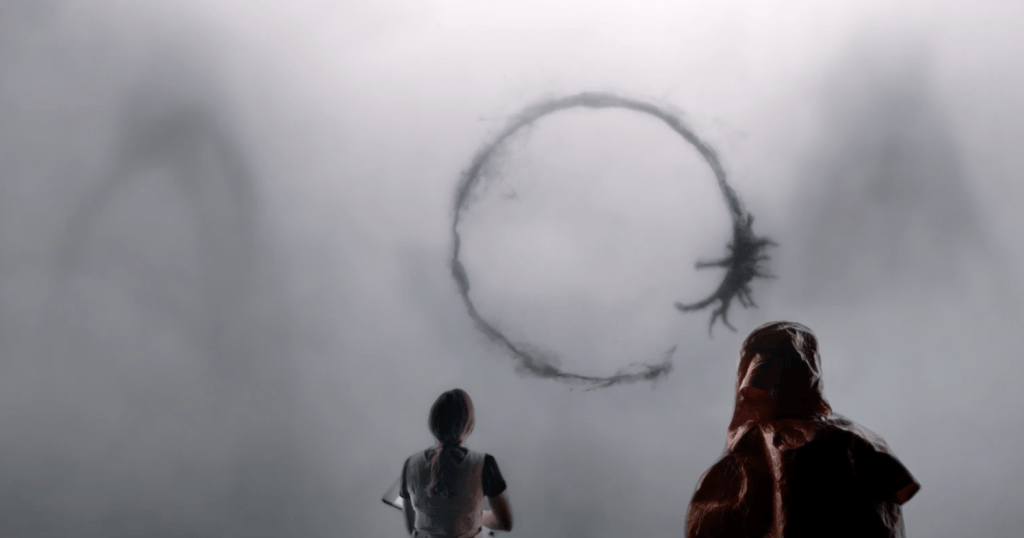
What viewers will likely remember first when looking back on “Arrival” are the beautifully grotesque aliens that Banks and Donnelly encounter, known in the film simply as heptapods. While describing the heptapods at great length would ruin the surprise of their initial appearance, Villeneuve and his creative team do a masterful job of making such a strange, unappealing creature look stunning nevertheless. The visual artistry displayed in “Arrival” when it comes to these alien lifeforms is worth the price of admission alone.
“Arrival” confirms Villeneuve as one of the top three to five directors working in Hollywood today following the critical success of the kidnapping drama “Prisoners” and the Oscar-nominated thriller “Sicario.” His film is the perfect thinking man’s sci-fi drama as Villeneuve and crew engage audiences in spirited debate about the meaning of language, reacting out of fear and using communication as a tool to bring people together rather than one to tear people apart.
The film is a surprisingly poignant think piece that forces moviegoers to question their own interactions and sense of right and wrong on interpersonal and geopolitical levels. The intellectual depth that “Arrival” richly bathes in makes it a prime candidate for multiple screenings in the theaters to better understand the complexities of the film’s underlying themes.
Cinematographer Bradford Young masterfully crafts each shot with piercing technical skill to reflect the mood and tone of every scene. The visuals developed over the course of the film become key to the movie watching experience as Villeneuve and Young separate the audience from the narrative in a cold, clinical way. It’s as if moviegoers are watching events unfold like tourists visiting a large aquarium or, in a sense, become the scientists engaging with the heptapods through a clear wall as shown in the film.
It’s unlikely that Villeneuve will see the same sort of awards season success that “Sicario” did sneaking into the Oscar race last year, though a nomination in the technical categories for Young’s cinematography isn’t entirely out of the question given the expected backlash from 2016’s #OscarsSoWhite movement. Regardless, “Arrival” is a film that stays with viewers long after they leave the theater and will likely end up as one of the five best movies in 2016.
“Arrival” isn’t the alien encounter film anyone has been asking for. It’s the one smart moviegoers deserve. Don’t make the mistake of passing it up.
This is a incredibly spoiler-filled review of Captain America: Civil War. Do not scroll past the trailer unless you have already seen the film. It may ruin the entire experience for you. Seriously. Don’t do it.
There will be a spoiler-free review of this movie as well. This isn’t it.
Also, nearly all of Cinematic Considerations is written in third person form. This column is different. I’m going first person and speaking directly to you, the reader. Thank you for being here. It means a hell of a lot to me.
Don’t go past the trailer if you haven’t seen this movie. You’ve been warned. Twice now.
Okay, let’s begin.
You guys.
Seriously.
What an incredible film.
If we’re ranking all 13 films in the Marvel Cinematic Universe (and not counting any of the Netflix series, Agents of S.H.I.E.L.D. and Agent Carter), doesn’t Captain America: Civil War go straight to the top of the list? It has to, right?
We’re looking at the cream of the crop here – your Marvel’s The Avengers, your Guardians of the Galaxy, your Captain America: The Winter Soldier – and Civil War improbably outdoes them all.
I walked into the theater cold after having not re-watched any of the 12 prior MCU films. I’m all caught up on Agents of S.H.I.E.L.D., but it’s pretty obvious that Civil War isn’t going down the Inhumans/Kree storyline.
Every single trailer seemed to foreshadow the death of a major character, but unless you consider Crossbones (a.k.a. the military guy that committed suicide trying to kill Captain America at the beginning of the film) a major character, then thankfully nobody important died.
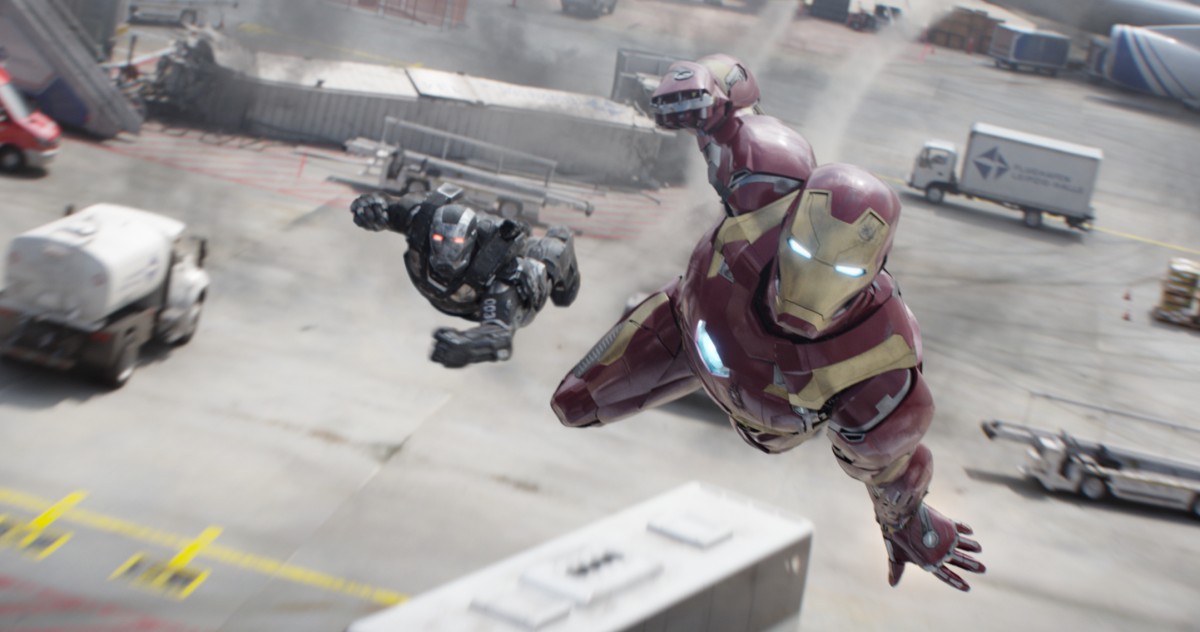
Yes, it looked that way several times over. At some point during the film, I counted at least four different major character that I believed could reasonably bite the bullet during Civil War (obviously War Machine, Captain America, Winter Soldier and even Iron Man late in the movie).
None of those things happened and I think Marvel, and better yet we the audience, are better off for it. Until a full slate of new stars are established in the MCU led by Peter Parker (we’ll get to him shortly), Marvel needs Chris Evans and Robert Downey, Jr. in the roles. Not a recast Iron Man or Sebastian Stan’s Bucky Barnes taking on the Captain America mantle. Chris Evans and Robert Downey, Jr. Period.
What sets Captain America: Civil War apart from DC Comics’ rushed attempt to play catchup with superhero movies (Batman v. Superman: Dawn of Justice) is well-established lead heroes with talented recognizable actors in the roles.
There’s a reason three Iron Man films, two Captain America films and two Avengers movies were made before the classic Civil War storyline from the comics was developed into the MCU. Audiences had to develop a love for these characters with specific actors playing the same role all the way through (Sorry Mark Ruffalo.)
Viewers were treated to the third installment of Steve Rogers’ to-the-death friendship with Bucky Barnes, finally putting Captain America and Winter Soldier on the same side for once, even though they weren’t exactly fighting bad guys the whole time. It’s an important arc moving forward if Marvel decides to make the move to put Stan in a more prominent role in the MCU once Evans steps aside. Captain America is developing our love for the Winter Soldier by proxy. The same thing was started in Civil War in a mentor-mentee relationship between Tony Stark and Peter Parker (and I promise we’re almost there.)
As much as this felt less like Captain America 3 and more like Avengers 2.5, Civil War did deliver a lot of Tony Stark and Co. over on #TeamIronMan.
RDJ was as good as he’s been since 2008’s original Iron Man. Even though we still don’t know what the deal is with superheroes being unable to keep a girlfriend – I’m looking at you Natalie Portman – I can still hold out hope for Tony Stark to work things out with Pepper Potts in the long run.
After carrying the bulk of the character work in both Avengers films, Tony takes a relative backseat to the Bucky-Steve relationship in Civil War, but Downey Jr. still knocks the character out of the park. It’s a testament to how perfectly cast RDJ was nearly a decade ago and to his commitment in keeping the character alive for hopefully another 10 years.
Civil War also laid some important groundwork for the upcoming Avengers: Infinity War films by foreshadowing some interspecies (I guess) romance between android Vision and super-powered human Scarlet Witch. Elizabeth Olsen’s terrific performance and great chemistry with Chris Evans and Jeremy Renner (Hawkeye) make her a shoo-in to be a long term member of the MCU, while I think this could be a set-up to give Scarlet Witch some added emotional stakes if/when Vision bites the dust during Infinity Wars.
No cameos or extended appearances for Avenger regulars Chris Hemsworth (Thor) or Mark Ruffalo (Hulk), which is okay as that decision opened up some screen time for others and helped build the anticipation for both of their returns in next year’s Thor: Ragnarok.
Several newcomers joined the core of the Avengers section of the MCU and none disappointed.
I believe everyone has to be incredibly pleased with Tom Holland’s version of Spiderman, which is already better in the 30 minutes of screen time in Civil War than Andrew Garfield was in two Amazing Spiderman films. Just sayin’.
There’s something so vintage about having an actual teenager play web-slinger Peter Parker and delivering on all of the promise adding Spidey to the MCU could have possibly brought. The quips previous film versions of Peter either tried and failed to connect with or left out completely worked like magic in Civil War. Spiderman referencing The Empire Strikes Back when trying to coordinate battle strategy was so perfect and out of left field, but yet on point at the same time. Ridiculously amazing.
Teaming him with Iron Man and having him upgrade the Spiderman suit was a brilliant way to show a realistic growth in the character in limited screen time and set things up for what hopes to be a spectacular solo film with Spiderman: Homecoming.
Having Marisa Tomei play Aunt May helps skew Peter’s character younger and helps establish Spidey as a key figure in what a post-Robert Downey Jr. and Chris Evans MCU might look like.
Also, if you left the theater after the first post-credits scene (more on that later), then you missed another small, but interesting tease for Spiderman: Homecoming at the end of the credits. It’s not as good as the iconic shawarma scene at the end of The Avengers, but it’s worth staying until the end for.
As much as I love having Spidey in the MCU, without a doubt my favorite secondary character in Captain America: Civil War has to be Scott Lang’s Ant-Man.
In concept, I wasn’t originally as high on bringing Ant-Man into the MCU at all, but the wonderful Peyton Reed film of the same name was beyond my wildest expectations for the on-screen prospects of the incredible shrinking man. Key to the success of the character was the inspired casting of comic actor Paul Rudd as Lang.
Rudd brings a new dynamic energy to the screen every time he appears and his second turn as the former thief turned miniature superhero was no exception. Rudd’s performance in the hilarious scene where Lang turns fan-boy about meeting Captain America and Scarlet Witch was the single funniest scene in any MCU film – though Michael Pena’s storytelling in Ant-Man is pretty damn close. Pairing Ant-Man and Spiderman and bringing them into Civil War at about the same time was an inspired way of keeping the two teams as close to balanced as possible. Still, #TeamCap.
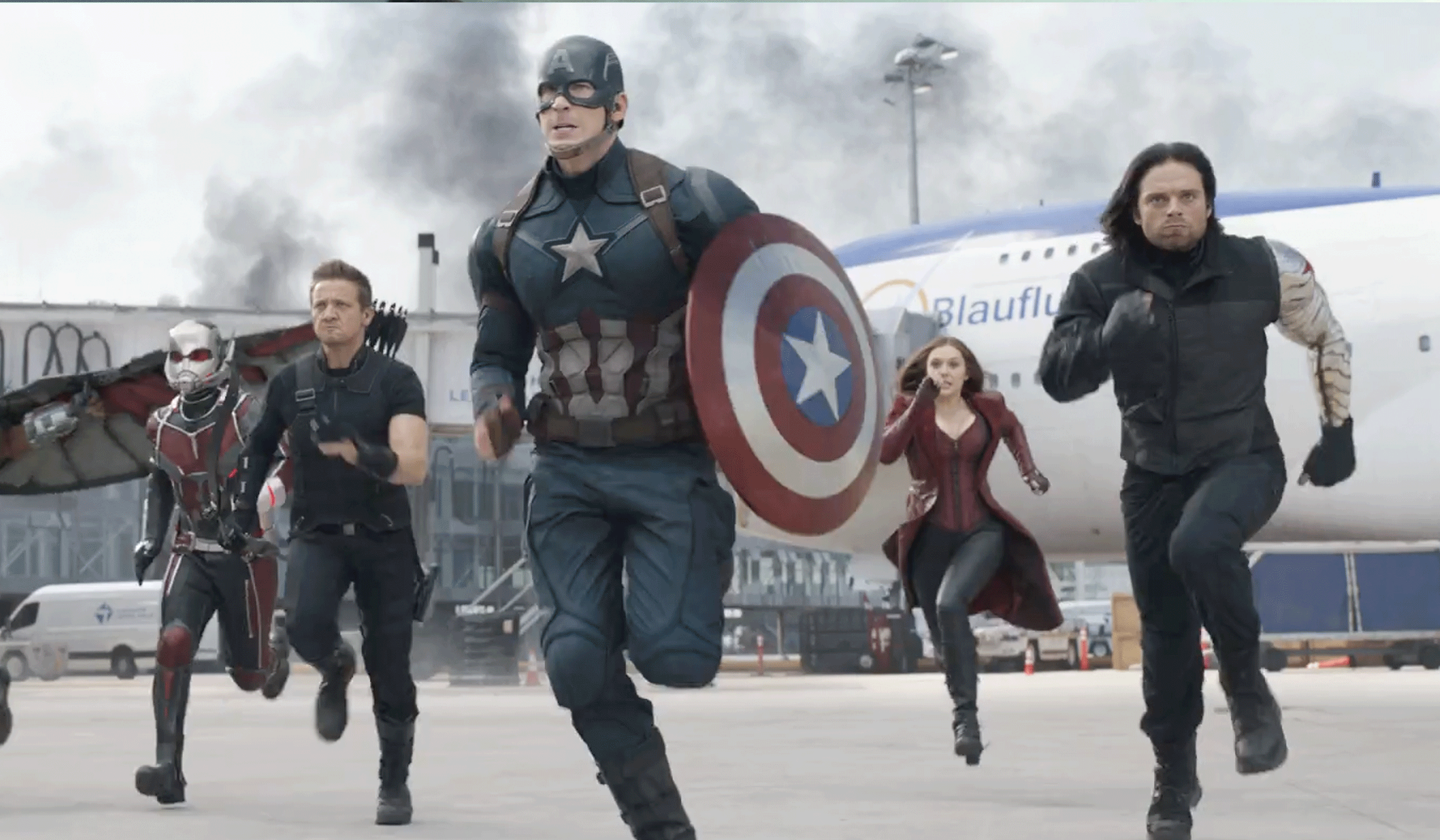
While Captain America: Civil War was visually spectacular from start to finish, nothing topped the reveal of Ant-Man’s colossus “Giant Man” appearance at the tail end of the airport battle. Like the miniature CGI from the first appearance of Lang in last year’s “Ant-Man,” the effortlessness of Marvel’s ability to grow Ant-Man to massive size without reducing the quality of the action or the cinematography was fantastic. You couldn’t pull that off five years ago. Wow. Simply breathtaking.
I feel bad for Chadwick Boseman, who deserves a more complete introduction into the Marvel Cinematic Universe than the one we ended up getting for King T’Challa and his iconic alter-ego, Black Panther. As integral to the storyline as he was, viewers still don’t know much of anything about the super-human with a suit of vibranium.
Honestly, Boseman in Civil War reminds me a lot of Renner’s Hawkeye in Marvel’s The Avengers, which paid off with a much larger role in Avengers: Age of Ultron. There’s enough promise with the talented Boseman that this cursory introduction could boost expectations for 2018’s Black Panther solo movie. We know enough to get a little excited, but not too much that could turn viewers off if they don’t like the direction Marvel and Boseman are taking the character.
Joe and Anthony Russo have proven themselves to be capable caretakers of the Marvel Cinematic Universe legacy left by outgoing Avengers director Joss Whedon. After helming the terrific Captain America: The Winter Soldier and outdoing themselves with an early contender for blockbuster of the decade (Sorry Star Wars) in Civil War, I feel much more confident in a successful two-part film series with Avengers: Infinity War coming out in 2018 and 2019.
While there’s still a lot we don’t know about the direction Marvel is headed moving forward into Phase 3 of the MCU, Captain America: Civil War does make up for the flaws in Avengers: Age of Ultron and help bridge the gap until the next time we see most of these characters. Aside from Spiderman and Iron Man in next year’s Spiderman: Homecoming, audiences probably won’t see Black Widow, Hawkeye, Captain America, Ant-Man, Scarlet Witch, Vision and many more on screen for over two years.
And that’s okay.
I forgot to miss Samuel L. Jackson’s Nick Fury in Civil War, which is something I never thought I’d say about the MCU.
If The Avengers was the film that solidified Marvel Studios for years to come, Captain America: Civil War proves that studio head Kevin Feige and his crew can do whatever genre, pull whatever obscure comic book hero out of a hat, cast, or recast (Apologies to Edward Norton and Terrance Howard) however they want to. They’ve proven they can pretty much do no wrong.
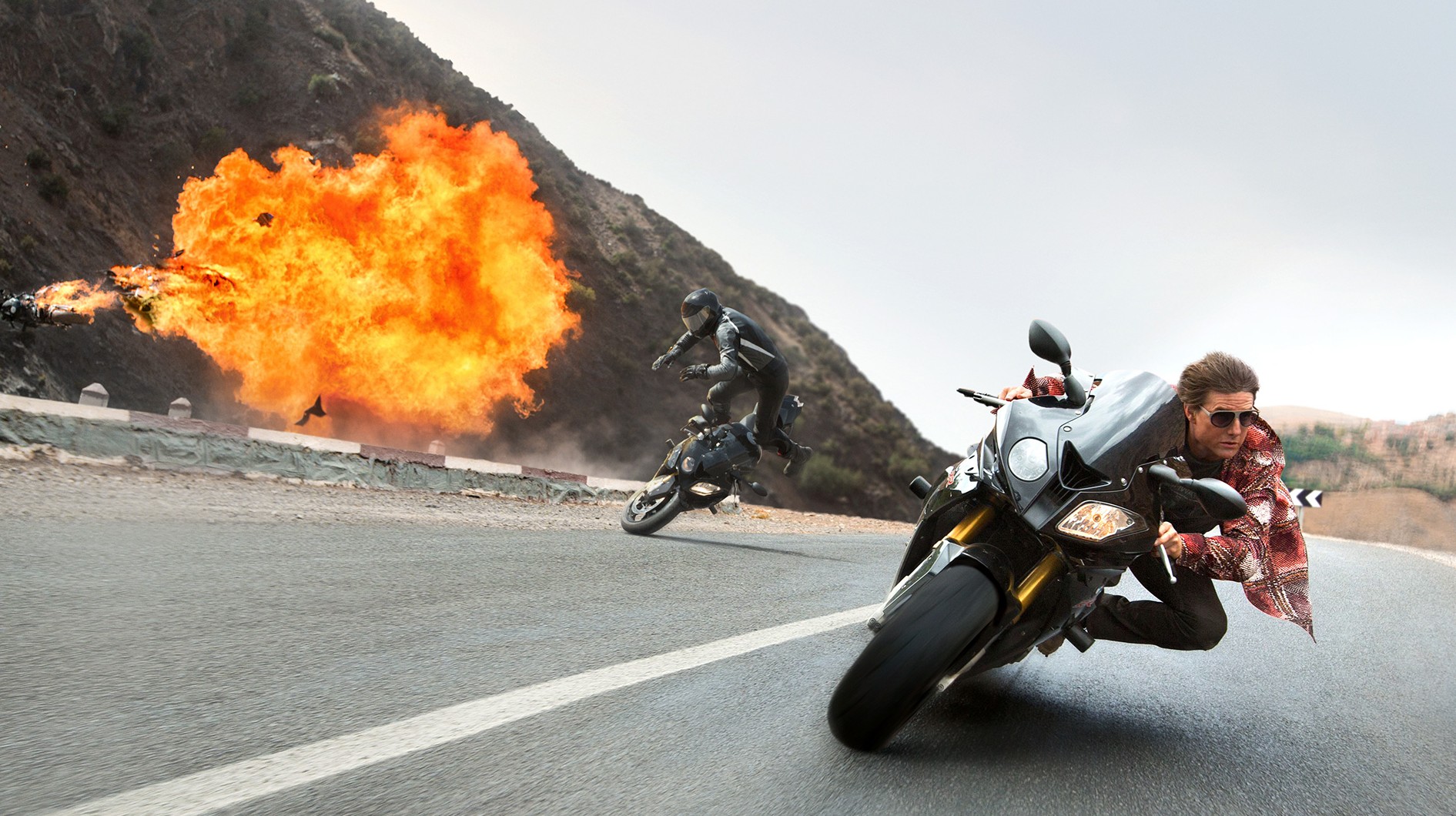
It doesn’t matter that he’s flying down a winding Moroccan highway on a motorcycle at break-neck speed without a helmet while assassins are buzzing around him trying to kill him.
Exploding cycles falling off the sides of cliffs don’t bug him, nor does the threat of imminent doom if he leans over a centimeter too far one way or the other.
At the end of it all, his hair never really flutters, and that’s all the proof needed to conclude Hollywood’s worst kept secret.
Tom Cruise is the last true movie star.
“Mission Impossible,” the feature film franchise spawned from the 1960s television show of the same name, has lived through several mediocre sequels thanks to Cruise’s box office draw before reemerging with 2011’s “Ghost Protocol” and last weekend’s smash hit “Rogue Nation.”
Yes, viewers are drawn to the screen by the increasingly outlandish stunts, wondering just how crazy Cruise is for willingly dangling himself off the side of an Airbus A400 at the start of the film.
But, equally as refreshing is the vintage spy craft that is more prevalent in the 1996 original film or in recent James Bond films starring Daniel Craig. “Rogue Nation” is a near 50-50 blend of the original “Mission Impossible” film and “Ghost Protocol,” which cranked the stunts up to 11 in gorgeously shot locations.
Writer/director Christopher McQuarrie, best known as the writer of the mind-blowing narrative in “The Usual Suspects,” finds exactly the right balance between giving viewers just enough action, with hints of classic spy films and that iconic Tom Cruise grin that has kept viewers on the edges of their seats for decades.
Each action sequence seems to build upon the tension of the last, with the 120-foot free fall into a tank of water without oxygen for up to six minutes standing out among the pitch perfect sequences.
These films will rise and fall with Cruise — who recently announced a sixth installment — and everything about his performance in “Rogue Nation” is vintage Cruise at his peak.
The dry charm, fearlessness in taking on each action sequence himself without a stunt double and even the occasional bravado he brings to the screen remind viewers what they loved about Tom Cruise so much before he started jumping up and down on Oprah’s couch.
Several of the regular sidekicks from “Mission Impossible” films past return in “Rogue Nation,” led by the increasingly essential Simon Pegg, whose wit and humor lightens the mood in scenes and offers a genuine counterbalance to Cruise.
Academy Award-nominee Jeremy Renner, who can hold his own in action movies like “The Bourne Legacy” and Marvel’s “Avengers” films, is criminally underutilized as a field agent torn between helping Cruise’s Ethan Hunt and hunting him down.
Newcomer Rebecca Ferguson, whose role of whose-side-is-she-on assassin is well-written, doesn’t really provide for viewers to grasp onto in a flat, static performance.
It’s a shame that the “Impossible” franchise has yet to figure out how to add a quality role for a female actress. To be sure, several women appear on screen throughout the course of the franchise, but none really rise to the challenge of matching Cruise toe to toe.
Many Bond girls have more gravitas on screen than the underwhelming performances in the franchise offered by Ferguson, Paula Patton and Michelle Monaghan.
The film’s villain, Solomon Lane, is only in focus long enough to give Cruise and Co. another hurdle to overcome on their international adventure from Morocco to Austria and London,
It’s a shame that Sean Harris, the talented actor filling the role, had pivotal scenes left on the cutting room floor.
But “Rogue Nation” is Cruise’s party, and as such, the fifth “Impossible” film certainly supplants “Jurassic World” as the summer’s biggest blockbuster, with Cruise leading the charge in an action-packed thrill ride that doesn’t need gimmicks to keep viewers entertained.
What exactly do we as viewers want out of superhero movies anymore?
Last weekend’s release of the cinematic blockbuster “Avengers: Age of Ultron” has moviegoers questioning themselves and everything they know about the emerging titan genre of cinema.
It’s almost as if it’s not enough for a quality superhero movie to be engaging and thrilling and witty with quality direction, a good script and compelling performances.
Nothing seems like it’s going to come close any time soon to the apex of the genre, Christopher Nolan’s cinematic experience, “The Dark Knight,” but when it comes to true fantasy superhero films, things don’t get much better than BOTH “Avengers” films.
Director Joss Whedon’s first foray into the Marvel Studios world was a culmination of years executing a carefully crafted vision that took comic book films to a whole other level. Anticipation grew with every post credits teaser and film announcement. “The Avengers” rode in on so much positive momentum that it feels as viewers have cheated themselves out of a great movie, expecting a life changing experience.
The Marvel Cinematic Universe — a franchise beginning with 2008’s “Iron Man” and spanning 11 released films through “Age of Ultron” — is a highly integrated world that continues to expand in scale with each installment. In fact, 11 more films are already on the books through 2019, with “Ant-Man” expected to debut July 17.
It’s certainly not impossible to catch on to the events of “Age of Ultron” without catching up on all the carefully constructed backstories expounded on in the franchise, but understanding what’s going on scene to scene will be extremely difficult.
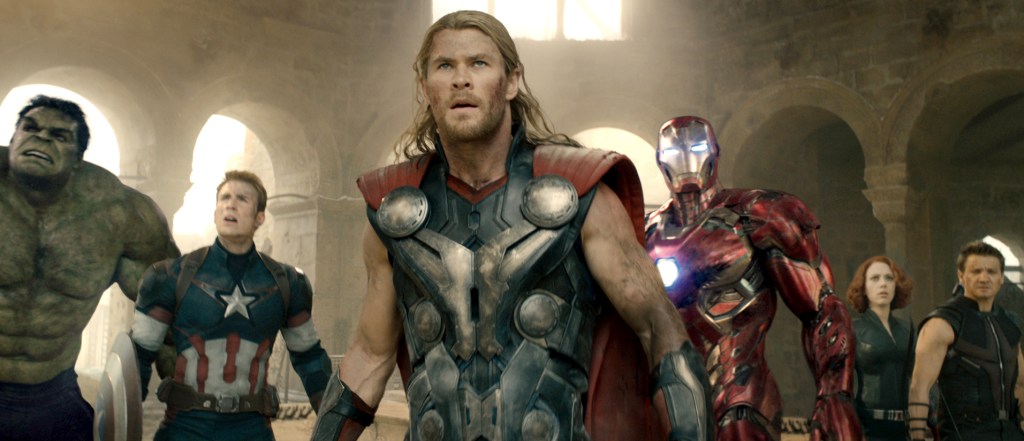
“The Avengers” is nothing more than the “Ocean’s 11” of superhero films as Iron Man, Captain America, Thor and the gang are all back in the fold for world saving part two with a handful of secondary characters like War Machine and Falcon tossed in for good measure.
The real star of the second Avengers go-round is Jeremy Renner, whose Hawkeye character went from mindless servant in the first film to the emotional core of “Age of Ultron.” Renner, perhaps the most talented actor among the leading men, handles his role with a quiet, yet firm control. Viewers are best able to understand the stakes of each mission through his eyes, especially as his Hawkeye is one of the most human characters in the Marvel franchise.
Robert Downey Jr. and Chris Evans continue to build tension between their respective Iron Man and Captain America characters, further laying the groundwork for an expected battle between the two in next year’s “Captain America: Civil War.” Downey, who usually overwhelms any scene he’s in as Iron Man, is more relaxed and has taken a relative backseat in “Age of Ultron,” despite being the impetus for much of the film’s plot.
Chris Hemsworth does yeoman’s work as the background character tasked with making the mundane expository information seem interesting, though there’s so much going on in “Age of Ultron,” it’s hard to see how Whedon could have expanded his role without significantly increasing the 150 minute running time.
As the power-crazed robot Ultron, James Spader provides the most compelling villain in the Marvel universe. His Ultron is calculated, yet multidimensional and there’s no other actor that could have pulled off the dry wit and candor that Spader provides to add depth to a relatively simple character. It would have been very easy for Spader to simply phone in his performance, recording everything via voiceover and calling it a day. Spader’s on-set work, especially in the motion capture work, is readily apparent on screen and helps to round out Ultron.
The “Age of Ultron” script benefits greatly from Whedon’s comedic barbs, which worked so well in “The Avengers.” In fact, the first half of the film is quite possibly the funniest movie to have been released in the last six months.
Violence typical of superhero movies is prevalent in “Age of Ultron,” though only slightly darker than the first “Avengers” installment. Parents need to be aware that a romantic subplot between Mark Ruffalo’s Hulk and Scarlett Johannsson’s Black Widow involves discussion of forced female sterilization.
Ultimately, the question of whether or not individual viewers will enjoy “Age of Ultron” comes down to what they want out of superhero movies nowadays.
Those not content with simply enjoying popcorn films and that crave a deeper level of thinking will probably leave theaters disappointed. Make no mistake, however, this latest Marvel installment is leaps and bounds better than the three most recent films featuring Avengers in solo missions — “Iron Man 3,” “Thor: The Dark World” and “Captain America: The Winter Soldier.”
It’s interesting that the most unknown superheroes put on screen, last year’s surprise smash hit “Guardians of the Galaxy,” arrived in theaters immediately before “Age of Ultron.” It seems that this film in particular — with its originality, humor and likeable cast of misfit characters — has changed the way that viewers approach “Age of Ultron.” Flip the release dates of these two films and there’s little doubt that audiences would respond better to both films, especially “Ultron.”
For those viewers who can’t get enough of the Marvel Cinematic Universe — the ones who have forgiven the significant flaws in “Iron Man 3” and don’t mind multiple Hulk recastings (Eric Bana in “Hulk” to Edward Norton in “The Incredible Hulk” to Ruffalo in the Avengers films) — this installment in the franchise is everything they could have possibly wanted out of the film and more.
Fans will geek out over that incredible fight between Iron Man and the Hulk that’s been taunting them in trailers and, save for Clark Gregg’s Coulson character who migrated over to ABC’s “Agents of SHIELD,” everything they love about “The Avengers” is back, bigger and louder than before.
To be sure, “Age of Ultron” probably needs multiple viewings before judgment is passed because there’s so much going on in every scene. But for a franchise that has given audiences top-notch entertainment for nearly a decade and surprised at every term, doesn’t the Marvel Cinematic Universe deserve the benefit of the doubt?
Whedon’s “Age of Ultron,” probably his last Marvel film in the foreseeable future, has exactly the right amount of action, emotion, humor and heart that should keep audiences on the edge of their seats clamoring for more. At the end of the day, isn’t that what viewers ultimately want out of their superhero films?