Perhaps the biggest flaw in blockbuster films, especially the superhero variety, is that they rarely account for all of the carnage, death and destruction left behind by all of the fight sequences and explosions audiences come to expect from these big-budget cinematic cash cows.
“Captain America: Civil War” refuses to shy away from the consequences of war, making it the centerpiece of the entire 2.5 hour movie and using it to drive the film’s central conflict.
There’s still all of the computer-generated mega powers, hand-to-hand fisticuffs and balls of flame one comes to expect in a film from Marvel Studios, but it leaves audiences wondering at what cost can these actions be justified.
A quick primer:
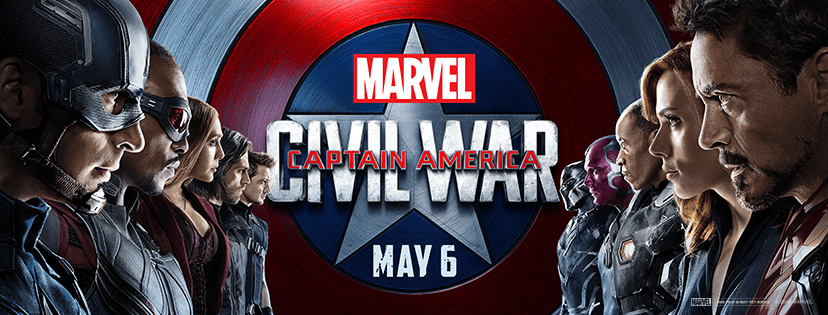
Following the basic outline of the iconic comic book storyline of the same name, “Civil War” finds Iron Man and Captain America on opposing sides of the law after the United Nations establishes the Sokovia Accords to regulate the actions of superheroes. Captain America and a group of other heroes refuse to sign the accords, while Iron Man builds a separate coalition to sign the treaty. That coalition is then tasked with tracking down Team Captain America and arresting them for operating outside the law.
First time viewers hoping to jump right into Marvel movies with “Civil War” will probably be considerably lost. The film pretty much insists on audiences having prior knowledge on most of the characters’ origin stories and relationships built up over the 12 prior entries into the franchise known as the Marvel Cinematic Universe (MCU).
In fact, for moviegoers to really enjoy “Captain America: Civil War,” it’s almost absolutely necessary that they have already seen half of the MCU – “Iron Man,” “Iron Man 2,” “Captain America: The First Avenger,” “Marvel’s The Avengers,” “Captain America: The Winter Soldier” and “Avengers: Age of Ultron” – before stepping foot in a theater for Civil War.
If you’ve been religiously keeping up with superhero movies since the release of “Iron Man” in 2008, you should be good to go. Otherwise, you’ll probably wind up a little bit lost for a large chunk of the film.
Make no mistake. “Captain America: Civil War” will probably be the blockbuster of the year. It’s undoubtedly the best film out of all 13 MCU films and better than probably every other Hollywood box office smash still to come in 2016.
Most of the heroes established in the MCU are back for Civil War, led by Robert Downey Jr. as Iron Man and Chris Evans as the titular Captain America. Downey does yeoman’s work in taking a relative backseat in “Civil War,” though he’s still as good in the role as he’s ever been.
Evans, meanwhile, proves more than capable of picking up the slack, anchoring the film with a stoic reliability. His ability to emote Captain America’s “do the right thing even when it’s the unpopular thing” mentality is sensational here.
Regular Avengers Thor (Chris Hemsworth) and Hulk (Mark Ruffalo) sit this film out as they are off waging war across the galaxy in 2017’s “Thor: Ragnarok.”
In their stead, Tom Holland and Chadwick Boseman are given ample ability to establish new characters to the MCU as Spiderman and Black Panther, respectively. While Boseman does everything needed of him with a relatively obscure comic book hero, Holland proves to be an exceptional choice to take over as Marvel’s resident wall-crawler.
Two older actors (Tobey Maguire and Andrew Garfield) have already taken up the cloth as Peter Parker, but neither fits the bill as perfectly as Holland, whose youthful look, effortless naivety and mastering of verbal repartee make him the best Spiderman in cinema history in spite of having around 30 minutes of screen time. Holland is a star in the making and the upcoming “Spiderman: Homecoming” solo film should solidify that standing.
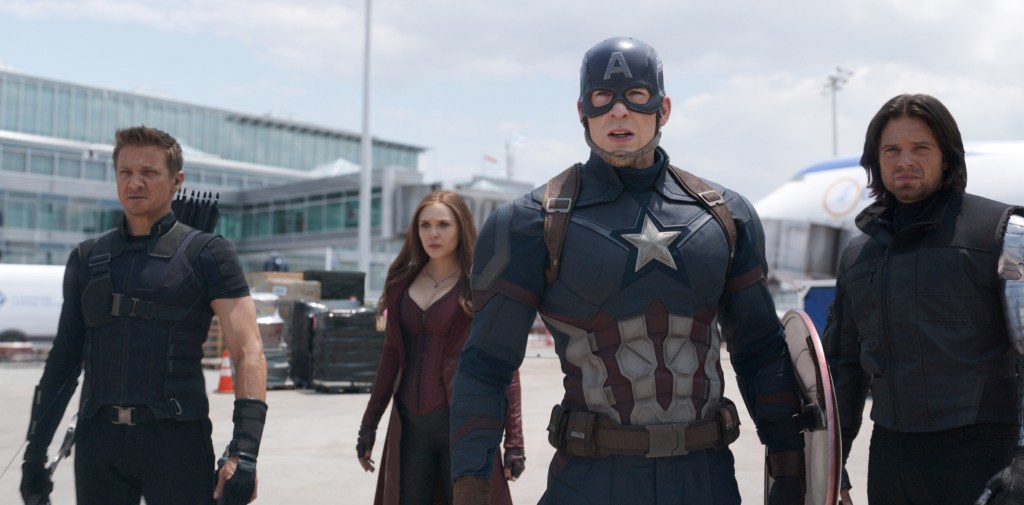
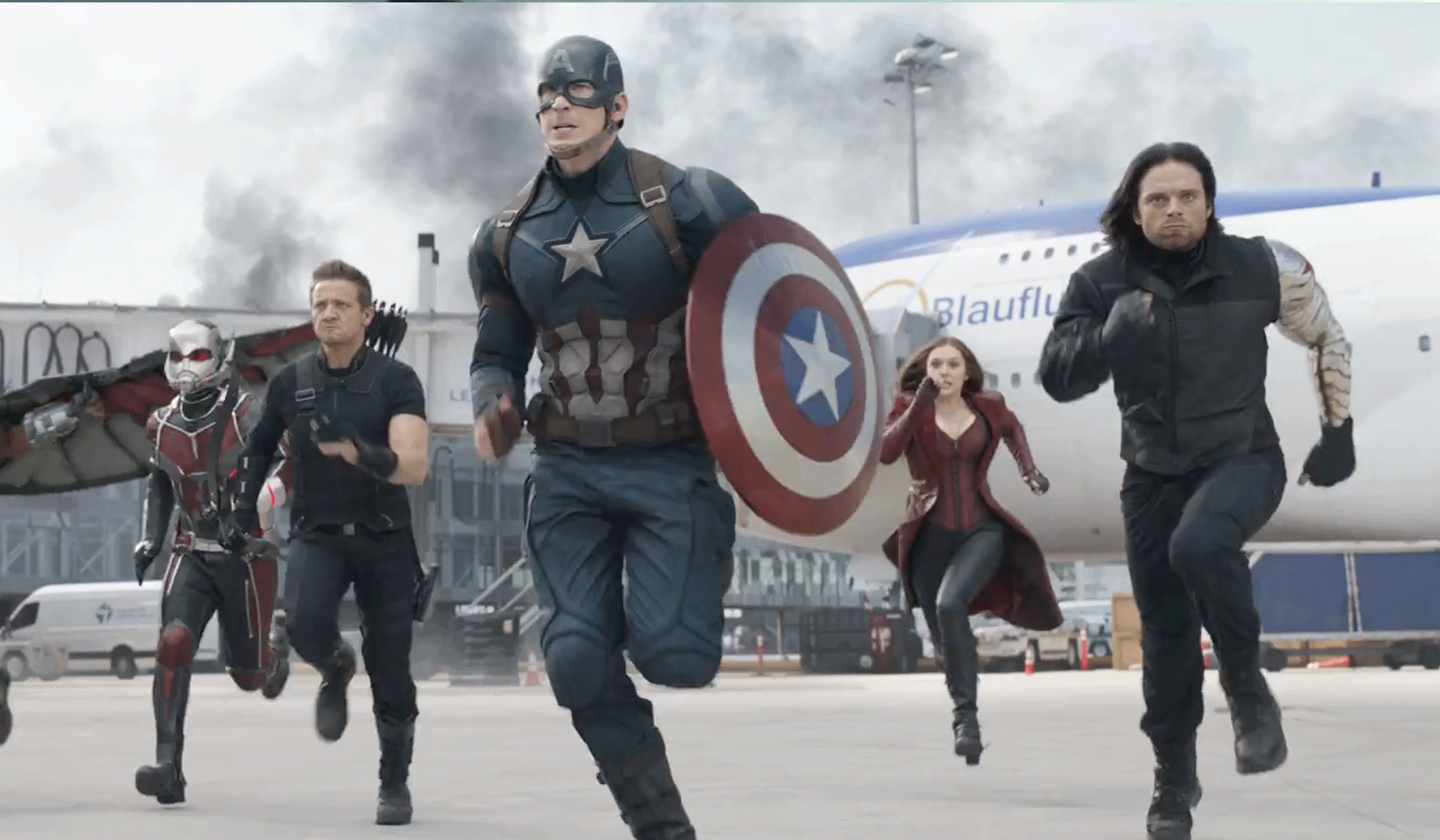
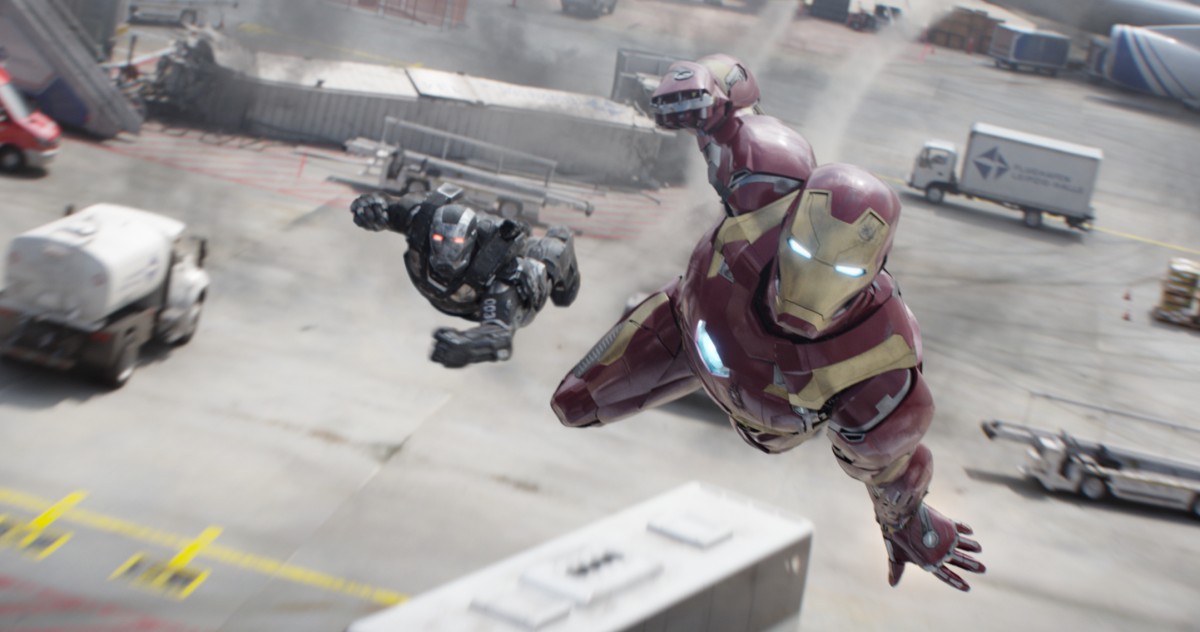
“Captain America: Civil War” also delivers on the visual wonders audiences have come to expect from Marvel Studios with a terrific 10-minute action sequence in an abandoned airport and all fights including Paul Rudd’s Ant-Man being standout moments. Marvel has taken the innovative looks filmmakers were able to establish with the shrinking superhero in “Ant-Man” and expand on them in colossal ways with “Civil War.”
The airport battle should also go down as one of the five best action sequences in a superhero movie of all time, rivalling the final battle sequence against the invading Chitauri aliens in “The Avengers.”
Fans of comic books and/or the Marvel Cinematic Universe will absolutely love every second of this thrill ride. It’s funny, thought provoking, engaging, well-crafted storytelling that doesn’t come easily found at the movies.
Those who haven’t kept up with superhero films might want to make an effort to play catch up. This is a superhero movie that needs to be seen on the big screen. “Captain America: Civil War” is worth the price of admission and more, probably several times over again.
This is a incredibly spoiler-filled review of Captain America: Civil War. Do not scroll past the trailer unless you have already seen the film. It may ruin the entire experience for you. Seriously. Don’t do it.
There will be a spoiler-free review of this movie as well. This isn’t it.
Also, nearly all of Cinematic Considerations is written in third person form. This column is different. I’m going first person and speaking directly to you, the reader. Thank you for being here. It means a hell of a lot to me.
Don’t go past the trailer if you haven’t seen this movie. You’ve been warned. Twice now.
Okay, let’s begin.
You guys.
Seriously.
What an incredible film.
If we’re ranking all 13 films in the Marvel Cinematic Universe (and not counting any of the Netflix series, Agents of S.H.I.E.L.D. and Agent Carter), doesn’t Captain America: Civil War go straight to the top of the list? It has to, right?
We’re looking at the cream of the crop here – your Marvel’s The Avengers, your Guardians of the Galaxy, your Captain America: The Winter Soldier – and Civil War improbably outdoes them all.
I walked into the theater cold after having not re-watched any of the 12 prior MCU films. I’m all caught up on Agents of S.H.I.E.L.D., but it’s pretty obvious that Civil War isn’t going down the Inhumans/Kree storyline.
Every single trailer seemed to foreshadow the death of a major character, but unless you consider Crossbones (a.k.a. the military guy that committed suicide trying to kill Captain America at the beginning of the film) a major character, then thankfully nobody important died.
Yes, it looked that way several times over. At some point during the film, I counted at least four different major character that I believed could reasonably bite the bullet during Civil War (obviously War Machine, Captain America, Winter Soldier and even Iron Man late in the movie).
None of those things happened and I think Marvel, and better yet we the audience, are better off for it. Until a full slate of new stars are established in the MCU led by Peter Parker (we’ll get to him shortly), Marvel needs Chris Evans and Robert Downey, Jr. in the roles. Not a recast Iron Man or Sebastian Stan’s Bucky Barnes taking on the Captain America mantle. Chris Evans and Robert Downey, Jr. Period.
What sets Captain America: Civil War apart from DC Comics’ rushed attempt to play catchup with superhero movies (Batman v. Superman: Dawn of Justice) is well-established lead heroes with talented recognizable actors in the roles.
There’s a reason three Iron Man films, two Captain America films and two Avengers movies were made before the classic Civil War storyline from the comics was developed into the MCU. Audiences had to develop a love for these characters with specific actors playing the same role all the way through (Sorry Mark Ruffalo.)
Viewers were treated to the third installment of Steve Rogers’ to-the-death friendship with Bucky Barnes, finally putting Captain America and Winter Soldier on the same side for once, even though they weren’t exactly fighting bad guys the whole time. It’s an important arc moving forward if Marvel decides to make the move to put Stan in a more prominent role in the MCU once Evans steps aside. Captain America is developing our love for the Winter Soldier by proxy. The same thing was started in Civil War in a mentor-mentee relationship between Tony Stark and Peter Parker (and I promise we’re almost there.)
As much as this felt less like Captain America 3 and more like Avengers 2.5, Civil War did deliver a lot of Tony Stark and Co. over on #TeamIronMan.
RDJ was as good as he’s been since 2008’s original Iron Man. Even though we still don’t know what the deal is with superheroes being unable to keep a girlfriend – I’m looking at you Natalie Portman – I can still hold out hope for Tony Stark to work things out with Pepper Potts in the long run.
After carrying the bulk of the character work in both Avengers films, Tony takes a relative backseat to the Bucky-Steve relationship in Civil War, but Downey Jr. still knocks the character out of the park. It’s a testament to how perfectly cast RDJ was nearly a decade ago and to his commitment in keeping the character alive for hopefully another 10 years.
Civil War also laid some important groundwork for the upcoming Avengers: Infinity War films by foreshadowing some interspecies (I guess) romance between android Vision and super-powered human Scarlet Witch. Elizabeth Olsen’s terrific performance and great chemistry with Chris Evans and Jeremy Renner (Hawkeye) make her a shoo-in to be a long term member of the MCU, while I think this could be a set-up to give Scarlet Witch some added emotional stakes if/when Vision bites the dust during Infinity Wars.
No cameos or extended appearances for Avenger regulars Chris Hemsworth (Thor) or Mark Ruffalo (Hulk), which is okay as that decision opened up some screen time for others and helped build the anticipation for both of their returns in next year’s Thor: Ragnarok.
Several newcomers joined the core of the Avengers section of the MCU and none disappointed.
I believe everyone has to be incredibly pleased with Tom Holland’s version of Spiderman, which is already better in the 30 minutes of screen time in Civil War than Andrew Garfield was in two Amazing Spiderman films. Just sayin’.
There’s something so vintage about having an actual teenager play web-slinger Peter Parker and delivering on all of the promise adding Spidey to the MCU could have possibly brought. The quips previous film versions of Peter either tried and failed to connect with or left out completely worked like magic in Civil War. Spiderman referencing The Empire Strikes Back when trying to coordinate battle strategy was so perfect and out of left field, but yet on point at the same time. Ridiculously amazing.
Teaming him with Iron Man and having him upgrade the Spiderman suit was a brilliant way to show a realistic growth in the character in limited screen time and set things up for what hopes to be a spectacular solo film with Spiderman: Homecoming.
Having Marisa Tomei play Aunt May helps skew Peter’s character younger and helps establish Spidey as a key figure in what a post-Robert Downey Jr. and Chris Evans MCU might look like.
Also, if you left the theater after the first post-credits scene (more on that later), then you missed another small, but interesting tease for Spiderman: Homecoming at the end of the credits. It’s not as good as the iconic shawarma scene at the end of The Avengers, but it’s worth staying until the end for.
As much as I love having Spidey in the MCU, without a doubt my favorite secondary character in Captain America: Civil War has to be Scott Lang’s Ant-Man.
In concept, I wasn’t originally as high on bringing Ant-Man into the MCU at all, but the wonderful Peyton Reed film of the same name was beyond my wildest expectations for the on-screen prospects of the incredible shrinking man. Key to the success of the character was the inspired casting of comic actor Paul Rudd as Lang.
Rudd brings a new dynamic energy to the screen every time he appears and his second turn as the former thief turned miniature superhero was no exception. Rudd’s performance in the hilarious scene where Lang turns fan-boy about meeting Captain America and Scarlet Witch was the single funniest scene in any MCU film – though Michael Pena’s storytelling in Ant-Man is pretty damn close. Pairing Ant-Man and Spiderman and bringing them into Civil War at about the same time was an inspired way of keeping the two teams as close to balanced as possible. Still, #TeamCap.
While Captain America: Civil War was visually spectacular from start to finish, nothing topped the reveal of Ant-Man’s colossus “Giant Man” appearance at the tail end of the airport battle. Like the miniature CGI from the first appearance of Lang in last year’s “Ant-Man,” the effortlessness of Marvel’s ability to grow Ant-Man to massive size without reducing the quality of the action or the cinematography was fantastic. You couldn’t pull that off five years ago. Wow. Simply breathtaking.
I feel bad for Chadwick Boseman, who deserves a more complete introduction into the Marvel Cinematic Universe than the one we ended up getting for King T’Challa and his iconic alter-ego, Black Panther. As integral to the storyline as he was, viewers still don’t know much of anything about the super-human with a suit of vibranium.
Honestly, Boseman in Civil War reminds me a lot of Renner’s Hawkeye in Marvel’s The Avengers, which paid off with a much larger role in Avengers: Age of Ultron. There’s enough promise with the talented Boseman that this cursory introduction could boost expectations for 2018’s Black Panther solo movie. We know enough to get a little excited, but not too much that could turn viewers off if they don’t like the direction Marvel and Boseman are taking the character.
Joe and Anthony Russo have proven themselves to be capable caretakers of the Marvel Cinematic Universe legacy left by outgoing Avengers director Joss Whedon. After helming the terrific Captain America: The Winter Soldier and outdoing themselves with an early contender for blockbuster of the decade (Sorry Star Wars) in Civil War, I feel much more confident in a successful two-part film series with Avengers: Infinity War coming out in 2018 and 2019.
While there’s still a lot we don’t know about the direction Marvel is headed moving forward into Phase 3 of the MCU, Captain America: Civil War does make up for the flaws in Avengers: Age of Ultron and help bridge the gap until the next time we see most of these characters. Aside from Spiderman and Iron Man in next year’s Spiderman: Homecoming, audiences probably won’t see Black Widow, Hawkeye, Captain America, Ant-Man, Scarlet Witch, Vision and many more on screen for over two years.
And that’s okay.
I forgot to miss Samuel L. Jackson’s Nick Fury in Civil War, which is something I never thought I’d say about the MCU.
If The Avengers was the film that solidified Marvel Studios for years to come, Captain America: Civil War proves that studio head Kevin Feige and his crew can do whatever genre, pull whatever obscure comic book hero out of a hat, cast, or recast (Apologies to Edward Norton and Terrance Howard) however they want to. They’ve proven they can pretty much do no wrong.
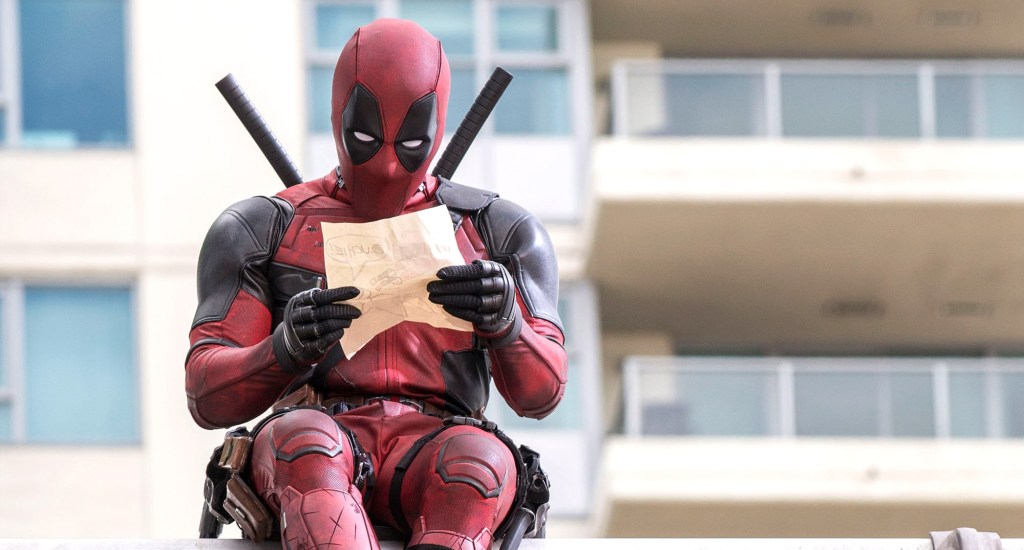
After two failed runs at superhero glory, the Canadian-born actor finally strikes gold with this weekend’s release of Deadpool, a film more than 15 years in the making.
Reynolds has already had one crack playing Marvel Comics’ resident “merc’ with a mouth,” but this iteration – essentially a complete reboot – feels much more authentic Wade Wilson, the Special Forces operative turned self-healing renegade and occasional vigilante.
While a Deadpool origin film has been in the works since 2000, it wasn’t until the secret leaking of screen test footage spread like wildfire across the Internet during the summer of 2014 that the ball really got rolling.
Reynolds and his band of misfit toys – including first time director and visual effects guru Tim Miller – propelled a once-dead character to what could very well be an Iron Man like fame, though Robert Downey Jr.’s Tony Stark would never say half the s*** that comes out of Deadpool’s mouth (including s***)
Deadpool is the perfect star vehicle for Reynolds, who can maximize his wry wit and charm (applied in the film as snark) within the comic book world’s most wisecracking anti-hero. The passion Reynolds exudes for the character radiates every minute he’s on screen, elevating even the more generic superhero scenes crafted out of a cookie-cutter superhero script.
Reynolds’ previous two outings in comic book movies – a CGI-laden turn as Green Lantern and an universally derided first go round as a different version of Deadpool in X-Men Origins: Wolverine – are frequently lambasted by screenwriters Rhett Reese and Paul Wernick (though Reynolds probably had to get some jabs in himself).
Ironically, Deadpool doesn’t fully learn the lesson of bad CGI heroes, leaning heavily on a poorly computer generated metal monstrosity – the X-Man Colossus – to provide some muscle and moral compass for anti-hero Wilson.
It’s clear that 20th Century Fox wanted to tie Deadpool in with its X-Men franchise as soon as possible – and even insists on pushing the issue by having Colossus repeatedly beg Wilson to join the mutant super group. As all the other studios attempt to play catch up to the Marvel Cinematic Universe, what they all too often forget is that franchise building takes time and each film and major character need time to breath on their own.
Colossus – and to a lesser extent the much more enjoyable Negasonic Teenage Warhead (aka the girl who tweets) – don’t really have a real place in the first Deadpool film and feel incredibly crammed in.
Ed Skrein, most famous for his role in the recent reboot The Transporter: Refueled, underwhelms beyond even the low bar he has previously set for himself as Deadpool’s primary villain, Ajax. More a casting issue than an acting one, Skrein simply isn’t capable of matching wits with Reynolds.
For as good as so much of Deadpool is, a terrible villain limits just how good a superhero movie can be. Simply put, Skrein can’t cut the mustard (and yes, there probably should be some double entendre joke here to keep in with the film’s snarky sex humor, but it just isn’t in me.)
Not all the supporting cast underwhelms as veteran comedian TJ Miller is on point playing Wilson’s equally snarky bartender/best friend and Morena Baccarin is a solid simple choice to play an overly generic damsel in distress girlfriend who may or may not be in distress.
Both actors are able to go toe to toe with Reynolds trading verbal jabs, which is proving essential to the success of any major characters in the franchise moving forward.
The film enters a much more fan-friendly environment for cruder, darker subject matter thanks to the cult hit status of British indie dark comedy Kick-Ass and Marvel’s two Netflix miniseries – Daredevil and Jessica Jones – which are considerably more violent than the Avengers’ solo and team-up movies.
Parents of younger potential audience members need to take caution and probably should view the film first before allowing their child to see this hard R-rated film. While not as overtly crude as the subpar Dirty Grandpa with Zac Efron and Robert De Niro, Deadpool has more than its fair share of double entendre sex jokes, hardcore violence and general “potty humor.”
The sheer amount of Easter eggs and random pop culture references – akin to the tone of Marvel’s surprise smash hit Guardians of the Galaxy – lends itself to multiple viewings, though the monotone plot line will likely become tiresome midway through a second screening. There’s signs of greatness within Deadpool, especially when Reynolds isn’t tied down by CGI metal men or hacky, second rate villains.
An inevitable sequel is already in pre-production and should be fast-tracked for a quick turnaround with a possible $65-70 million opening four-day weekend on track. Stick around through the credits for just enough more snark and a possible spoiler for Reynolds’ second go round in red spandex.
Grab some chimichangas and head to theaters for an unsurprisingly fun time. If you can handle the gore, language and snark, you won’t be sorry.
What exactly do we as viewers want out of superhero movies anymore?
Last weekend’s release of the cinematic blockbuster “Avengers: Age of Ultron” has moviegoers questioning themselves and everything they know about the emerging titan genre of cinema.
It’s almost as if it’s not enough for a quality superhero movie to be engaging and thrilling and witty with quality direction, a good script and compelling performances.
Nothing seems like it’s going to come close any time soon to the apex of the genre, Christopher Nolan’s cinematic experience, “The Dark Knight,” but when it comes to true fantasy superhero films, things don’t get much better than BOTH “Avengers” films.
Director Joss Whedon’s first foray into the Marvel Studios world was a culmination of years executing a carefully crafted vision that took comic book films to a whole other level. Anticipation grew with every post credits teaser and film announcement. “The Avengers” rode in on so much positive momentum that it feels as viewers have cheated themselves out of a great movie, expecting a life changing experience.
The Marvel Cinematic Universe — a franchise beginning with 2008’s “Iron Man” and spanning 11 released films through “Age of Ultron” — is a highly integrated world that continues to expand in scale with each installment. In fact, 11 more films are already on the books through 2019, with “Ant-Man” expected to debut July 17.
It’s certainly not impossible to catch on to the events of “Age of Ultron” without catching up on all the carefully constructed backstories expounded on in the franchise, but understanding what’s going on scene to scene will be extremely difficult.
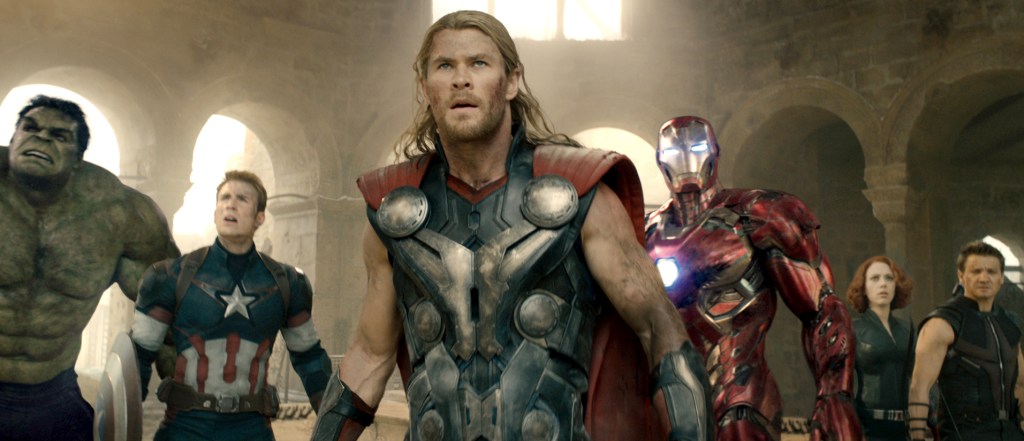
“The Avengers” is nothing more than the “Ocean’s 11” of superhero films as Iron Man, Captain America, Thor and the gang are all back in the fold for world saving part two with a handful of secondary characters like War Machine and Falcon tossed in for good measure.
The real star of the second Avengers go-round is Jeremy Renner, whose Hawkeye character went from mindless servant in the first film to the emotional core of “Age of Ultron.” Renner, perhaps the most talented actor among the leading men, handles his role with a quiet, yet firm control. Viewers are best able to understand the stakes of each mission through his eyes, especially as his Hawkeye is one of the most human characters in the Marvel franchise.
Robert Downey Jr. and Chris Evans continue to build tension between their respective Iron Man and Captain America characters, further laying the groundwork for an expected battle between the two in next year’s “Captain America: Civil War.” Downey, who usually overwhelms any scene he’s in as Iron Man, is more relaxed and has taken a relative backseat in “Age of Ultron,” despite being the impetus for much of the film’s plot.
Chris Hemsworth does yeoman’s work as the background character tasked with making the mundane expository information seem interesting, though there’s so much going on in “Age of Ultron,” it’s hard to see how Whedon could have expanded his role without significantly increasing the 150 minute running time.
As the power-crazed robot Ultron, James Spader provides the most compelling villain in the Marvel universe. His Ultron is calculated, yet multidimensional and there’s no other actor that could have pulled off the dry wit and candor that Spader provides to add depth to a relatively simple character. It would have been very easy for Spader to simply phone in his performance, recording everything via voiceover and calling it a day. Spader’s on-set work, especially in the motion capture work, is readily apparent on screen and helps to round out Ultron.
The “Age of Ultron” script benefits greatly from Whedon’s comedic barbs, which worked so well in “The Avengers.” In fact, the first half of the film is quite possibly the funniest movie to have been released in the last six months.
Violence typical of superhero movies is prevalent in “Age of Ultron,” though only slightly darker than the first “Avengers” installment. Parents need to be aware that a romantic subplot between Mark Ruffalo’s Hulk and Scarlett Johannsson’s Black Widow involves discussion of forced female sterilization.
Ultimately, the question of whether or not individual viewers will enjoy “Age of Ultron” comes down to what they want out of superhero movies nowadays.
Those not content with simply enjoying popcorn films and that crave a deeper level of thinking will probably leave theaters disappointed. Make no mistake, however, this latest Marvel installment is leaps and bounds better than the three most recent films featuring Avengers in solo missions — “Iron Man 3,” “Thor: The Dark World” and “Captain America: The Winter Soldier.”
It’s interesting that the most unknown superheroes put on screen, last year’s surprise smash hit “Guardians of the Galaxy,” arrived in theaters immediately before “Age of Ultron.” It seems that this film in particular — with its originality, humor and likeable cast of misfit characters — has changed the way that viewers approach “Age of Ultron.” Flip the release dates of these two films and there’s little doubt that audiences would respond better to both films, especially “Ultron.”
For those viewers who can’t get enough of the Marvel Cinematic Universe — the ones who have forgiven the significant flaws in “Iron Man 3” and don’t mind multiple Hulk recastings (Eric Bana in “Hulk” to Edward Norton in “The Incredible Hulk” to Ruffalo in the Avengers films) — this installment in the franchise is everything they could have possibly wanted out of the film and more.
Fans will geek out over that incredible fight between Iron Man and the Hulk that’s been taunting them in trailers and, save for Clark Gregg’s Coulson character who migrated over to ABC’s “Agents of SHIELD,” everything they love about “The Avengers” is back, bigger and louder than before.
To be sure, “Age of Ultron” probably needs multiple viewings before judgment is passed because there’s so much going on in every scene. But for a franchise that has given audiences top-notch entertainment for nearly a decade and surprised at every term, doesn’t the Marvel Cinematic Universe deserve the benefit of the doubt?
Whedon’s “Age of Ultron,” probably his last Marvel film in the foreseeable future, has exactly the right amount of action, emotion, humor and heart that should keep audiences on the edge of their seats clamoring for more. At the end of the day, isn’t that what viewers ultimately want out of their superhero films?
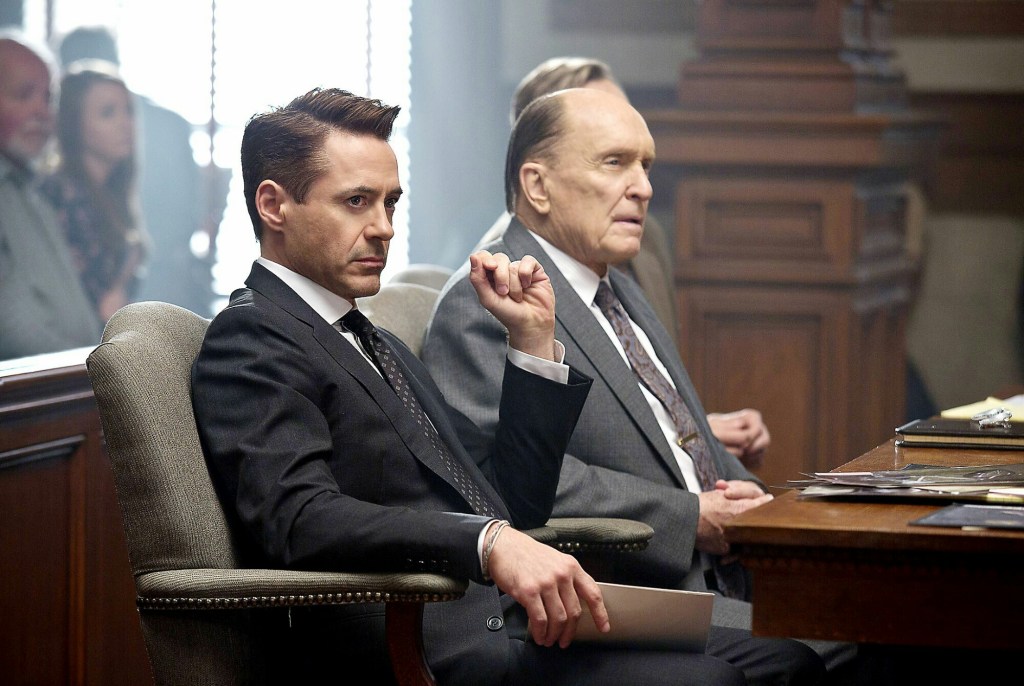
“The Judge” has a fantastic cast led by Robert Downey Jr. and Robert Duvall along with wonderful cinematography, so why is it so underwhelming?
The fatal flaw in “The Judge” is in an uneven script from Nick Schenk and Bill Dubuque, the sum of which isn’t as good as its individual parts.
A film about relationships blanketed within a courtroom drama, each element of “The Judge” is very well done, but none of the elements fit together.
Duvall and Downey Jr.’s up and down relationship is the heart and soul of “The Judge,” and in that respect, the film works. Scenes that feature the duo alone are the best in the film.
However, it’s the unnecessary placement of Dax Shepherd as a bumbling lawyer assigned to Duvall’s case and Vera Farmiga as Downey Jr.’s ex-girlfriend that overextend the 141-minute film by at least 25 minutes.
“The Judge” is worth a rental for Duvall and Downey Jr.’s performances, but doesn’t hit enough high points to make it worth rushing out to see in theaters.